 Roxy’s Downtown: Photographing a Small Stage Room
The Kansas State University Alumni Center, Manhattan: The One Decision That Governs Everything
Limestone is a reflector, not a surface. Deciding whether to use it comes before every other choice.
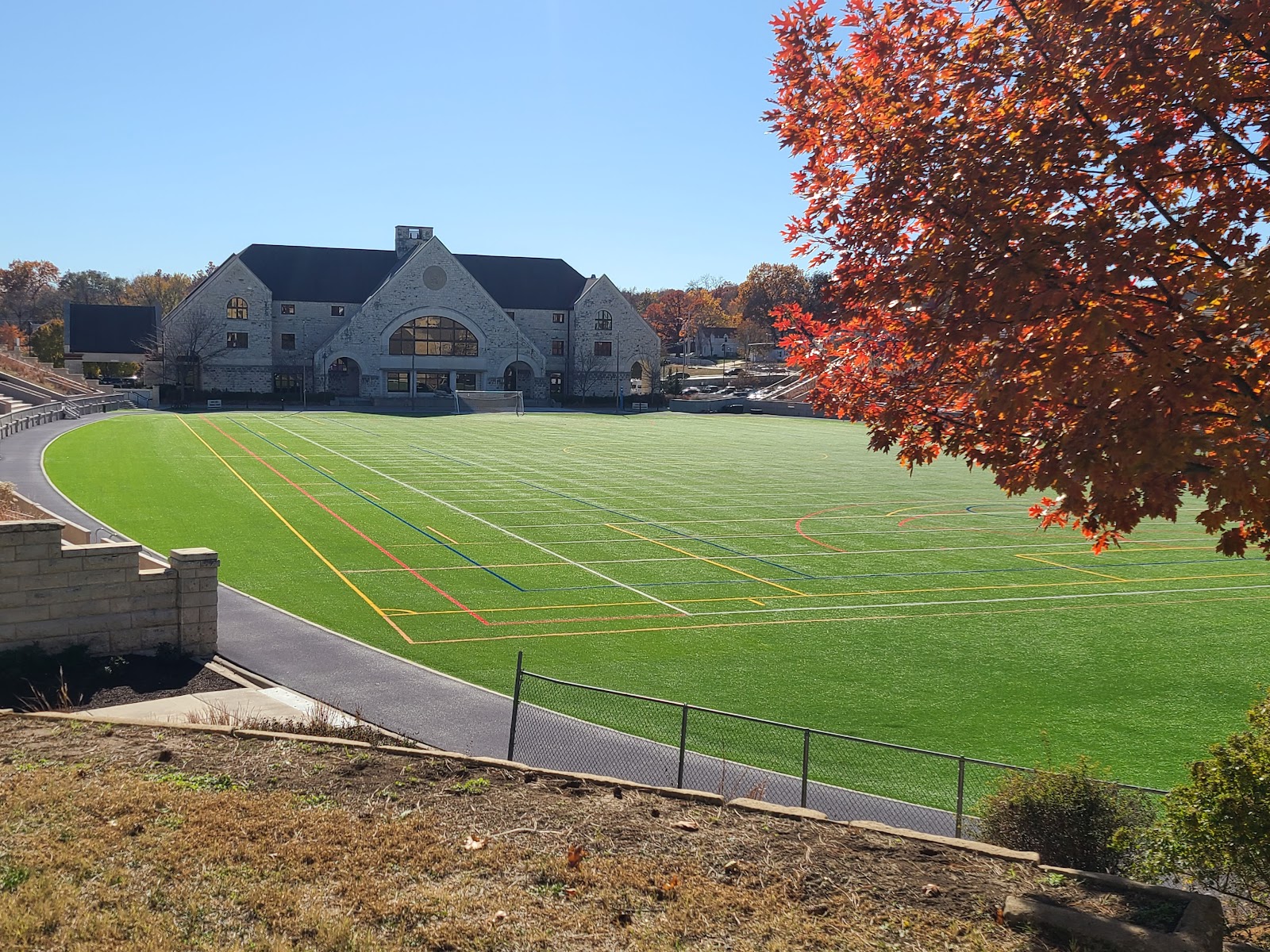
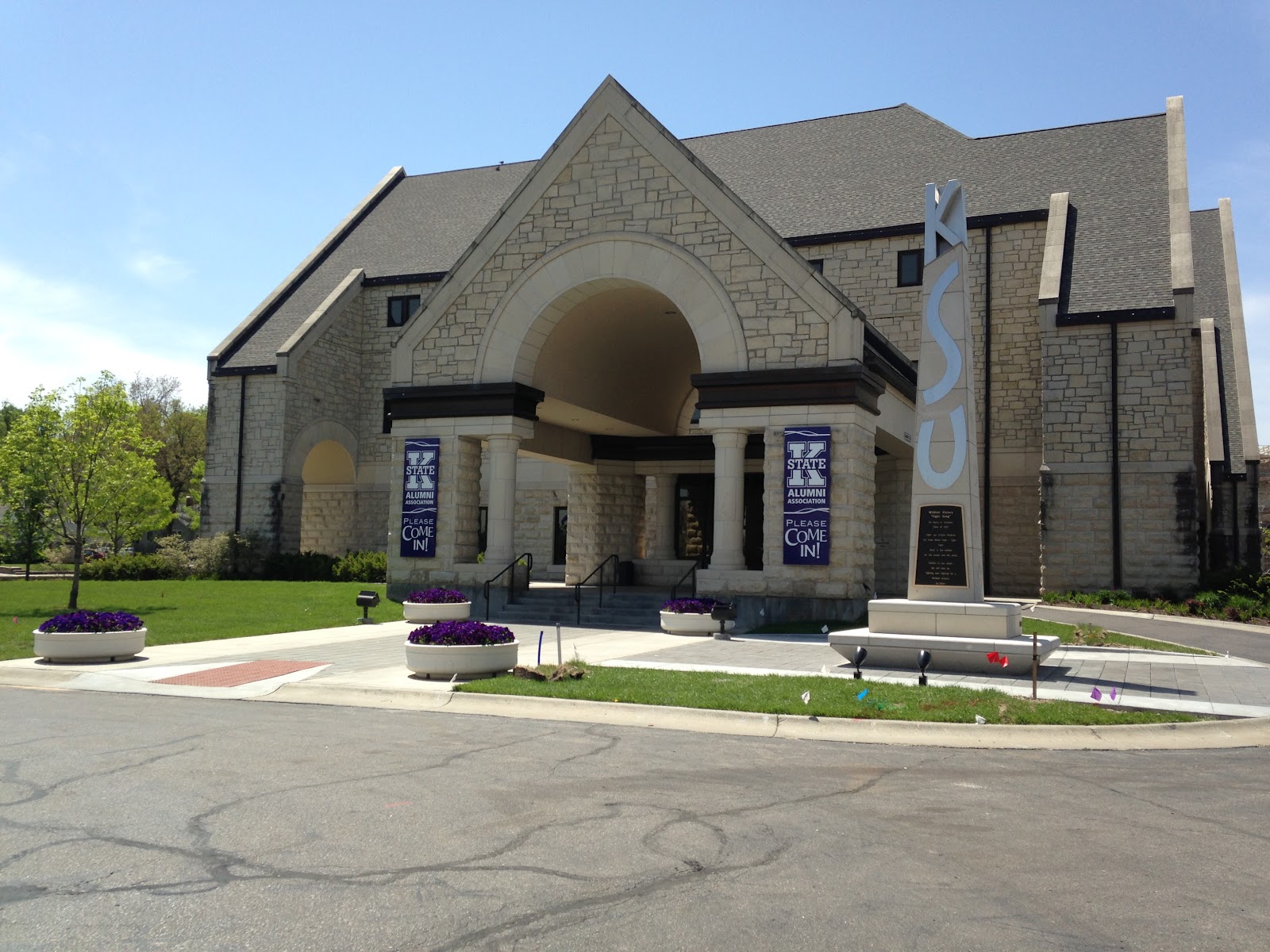
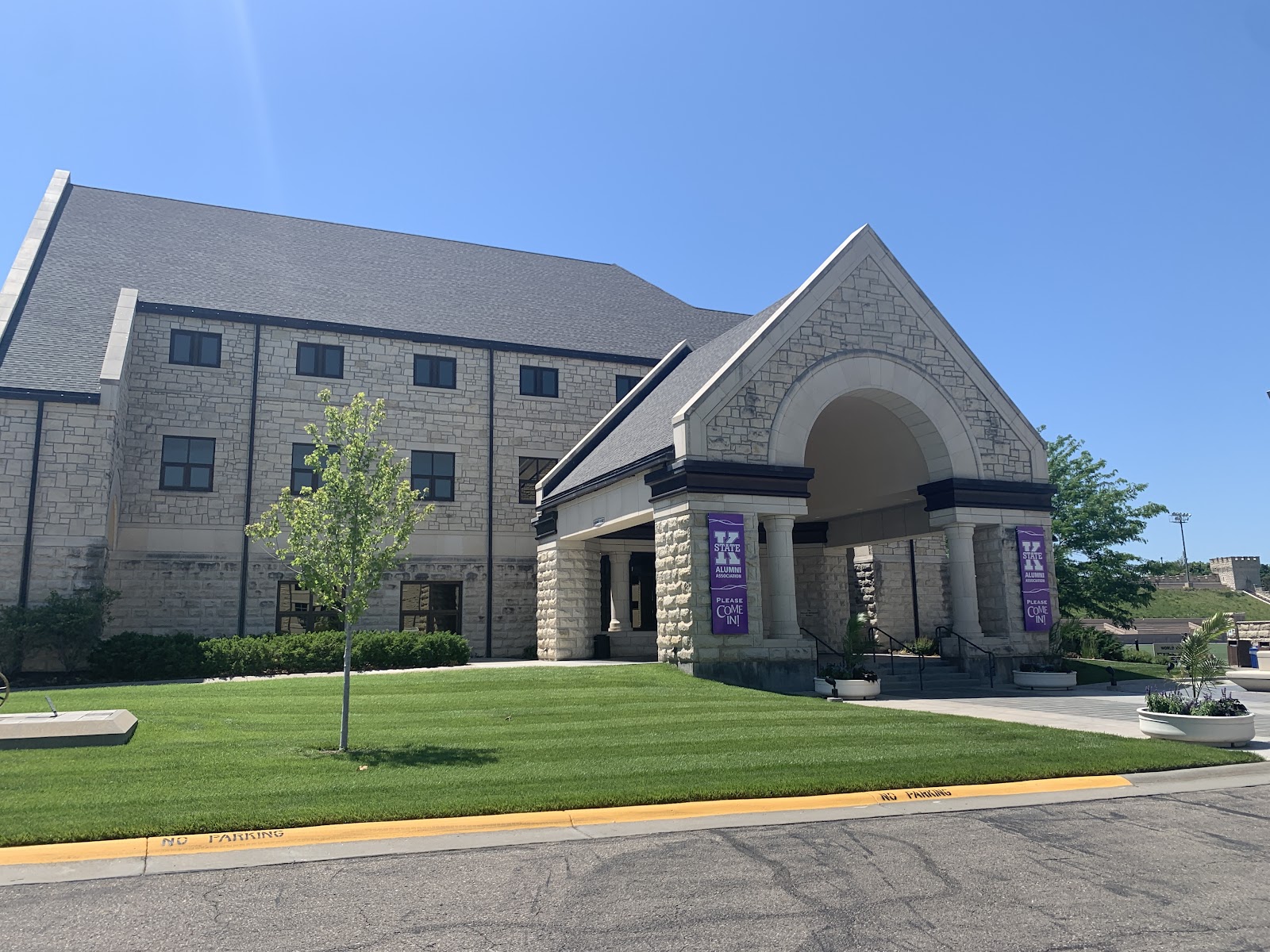
The buildings here are made of native Kansas limestone, and that single material fact produces the governing photographic decision at any venue built from it.
Limestone is not a neutral surface. It is pale, cream-to-buff in colour, coarse in texture, and it reflects a great deal of the light falling on it — which makes a limestone wall a large, warm, directional source rather than a background. A couple standing three metres from a sunlit limestone elevation is being lit by that wall, whether or not anyone intended it.
So the decision is whether to use the stone as the light or to work against it. Using it means positioning so the couple is lit by bounce off the wall, which gives soft, warm, flattering light with no equipment at all — the best free light on any limestone property. Working against it means accepting that the bounce will arrive as a strong one-sided warm cast that global white balance cannot remove, and taking control of the faces with your own source.
Both are correct. Not deciding produces the failure, which is faces lit warm on one side by a wall nobody accounted for. We have not photographed a wedding at the Kansas State University Alumni Center; limestone buildings behave consistently. Which spaces are included, whether there is outdoor access and whether the lighting is adjustable are questions for their team.
The Kansas State University Alumni Center at a glance
| Where | Manhattan, Kansas, in the Flint Hills |
| The material | Native limestone: pale, warm, coarse, and a strong reflector |
| The decision | Let the stone light the couple, or take control of the faces |
| Using it | Soft warm directional bounce, free, at three to four metres from a lit wall |
| Ask first | Spaces included, outdoor access, lighting control, fixings |
Using the stone, and working against it
Using limestone as a light source is the easier and frequently better choice, and it works on a simple geometry. Find an elevation that is in direct sun, stand the couple in the shade three or four metres out from it, and face them towards it. They are then lit by a source the size of a wall — soft because it is large, directional because it comes from one side, and warm because the stone is warm.
That is a genuinely good portrait light and it costs nothing. The positions worth finding on arrival are the ones where a sunlit limestone face is opposite a shaded standing place, and at a building of this material there are usually several at any hour.
Two refinements. The distance matters: closer than two metres and the fall-off across two faces becomes uneven; further than five and the bounce has weakened to the point where the open sky above is the dominant source instead. Three to four metres is the working range.
And the white balance has to be set for it. Limestone bounce is markedly warmer than daylight, which means a daylight setting renders it orange. A custom white balance set on a face in the position being used gives correct skin and keeps the stone the colour it is — which is the whole point.
Working against the stone is the other choice and it is the right one when the frame requires the couple lit from a direction the wall does not supply, or when the background matters more than the light. Then the same bounce becomes a problem: it arrives on the shadow side of a face from whichever direction the wall sits, localised and therefore not separable by a global correction.
The method is one source of your own, off the camera axis at face height, gelled warm to sit near the stone’s own colour with white balance set to the gel, at about a stop above the ambient. That lets the light you control own the faces while the stone remains part of the picture rather than part of the lighting.
What fails is an ungelled flash. An ungelled source is considerably cooler than limestone bounce, which produces a face lit from two directions at two temperatures — cool from the flash, warm from the wall — and that cannot be corrected afterwards in any satisfactory way. One gel solves it.
The texture is the third property of the material and it needs raking light. Coarse limestone reads as stone only when light runs along it, lifting every tool mark and every course; the same light facing it flattens the wall into a pale field. So the elevations worth photographing are the ones the sun is skimming rather than striking square, and a short walk to find them is worth more than any accessory.
What follows: the interior, and the prairie edge
Inside, a building of this kind generally pairs the stone with generous glazing, and the two behave very differently.
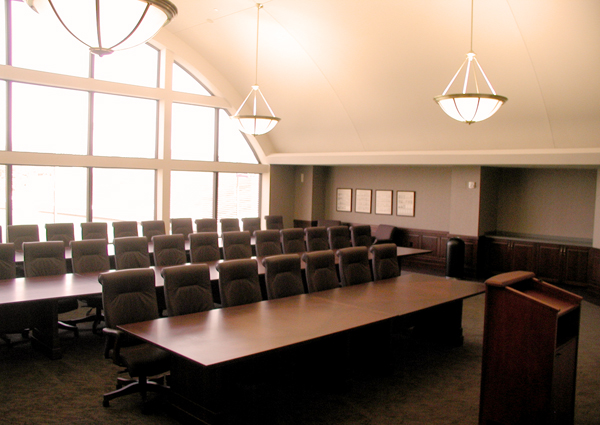
Glazing is the best interior light and it behaves like a large window — shaded side or overcast rather than direct sun, and about three metres back from the glass so a row of people is evenly lit rather than dropping off the far end. That three metres is what makes a glazed interior capable of lighting a group formal with no equipment, which most venues cannot do.
Where limestone appears inside as well, the bounce logic follows it indoors: an interior stone wall in daylight is a warm reflector, and a subject positioned relative to it is being lit by it. The same decision applies and the same custom white balance solves it.
The interior difficulty is the modern-room one wherever the stone is absent: pale, evenly lit, hard-surfaced spaces give no natural separation, because the wall behind a face is as bright as the face. The fixes are geometric — five metres of distance rather than one, the darker end of the room, a background that is depth rather than a near surface, and a source brighter on the face than the room is on the wall.
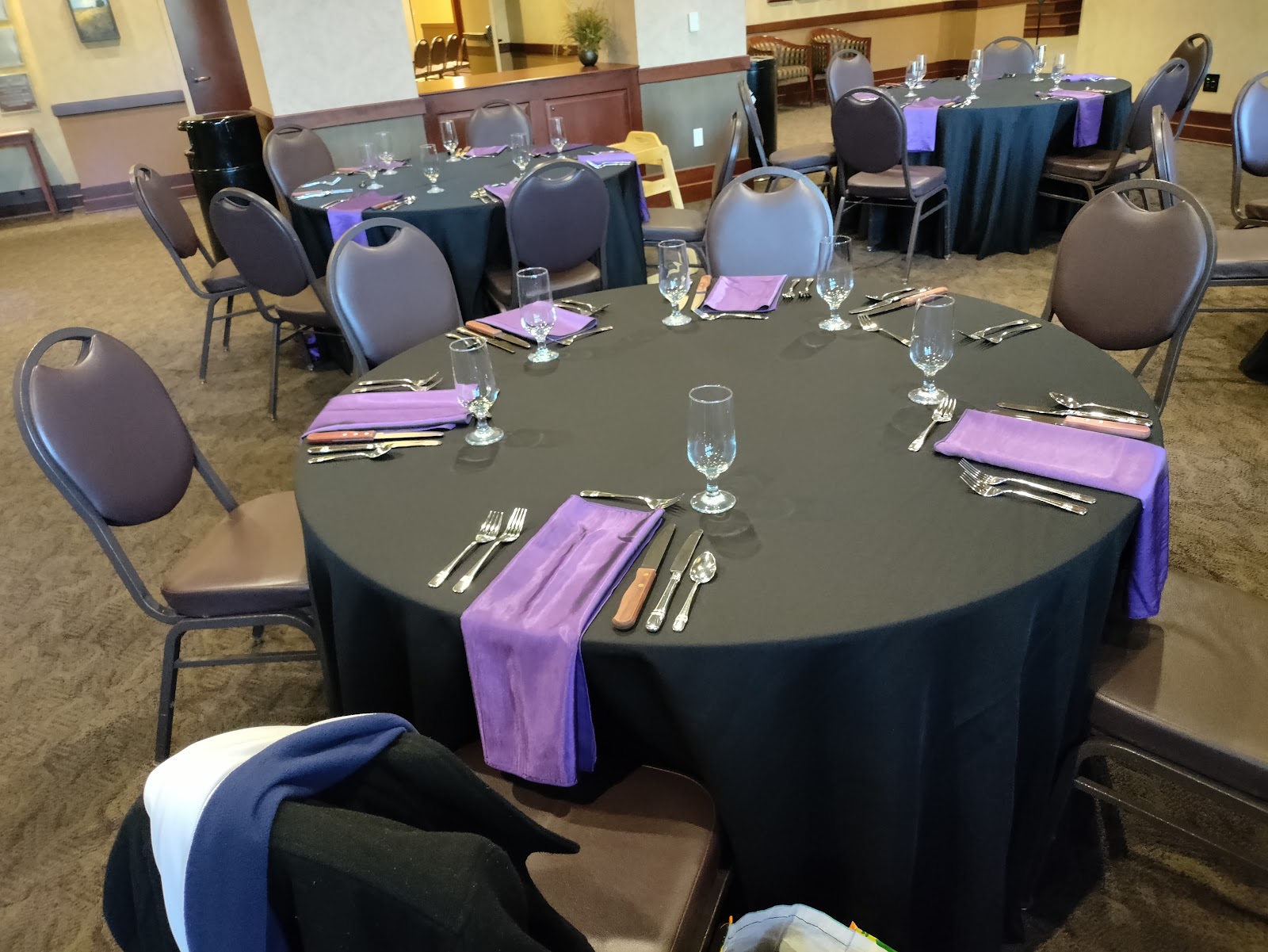
Mixed colour is the standing condition after dark: warm decorative fittings, cooler recessed downlights, and any coloured uplighting installed for the event. Pick the one that should be correct, set white balance to it, and switch off or overpower whatever else lands on skin. Coloured uplighting is usually the worst offender and frequently the easiest thing to have turned off for ten minutes.
Ceiling heights decide the bounce and it varies by space: function rooms with tall ceilings return little, while meeting rooms and circulation areas frequently work. One test frame per space is thirty seconds well spent.
Outside, Manhattan sits in the Flint Hills at the confluence of two rivers, with limestone bluffs above the valley — which means there is genuine relief here rather than the flat prairie people expect, and a position with elevation is available.
That matters because the sky is the dominant element in any wide frame in this country: the horizon is rolling and open with very little tall cover, so the sky occupies most of the picture and the exposure should be set for it with faces lifted by a close source. Metering on skin produces a white sky, which is the commonest failure here.
And the material logic extends outdoors. A limestone bluff or outcrop in low sun is a warm reflector at landscape scale, which means a shaded position facing a lit rock face gives the same free bounce the building does — and the low sun raking a stone outcrop lifts its texture in a way midday light never does.
- Three to four metres from a sunlit limestone wall, facing it
- Set a custom white balance on a face; limestone bounce is much warmer than daylight
- Gel any added source to match the stone — an ungelled flash gives two temperatures
- Rake the stone to make it read; face-on it flattens to a pale field
- Expose the prairie frames for the sky, not the faces
The Flint Hills year
Manhattan sits in the Flint Hills, which is the largest remaining expanse of tallgrass prairie in North America — and it survived for the reason the material story above depends on. Layers of flint-bearing limestone close to the surface made the hills unploughable, so they were grazed rather than cultivated and the original grassland remained. The same rock that built the buildings preserved the landscape.
That gives a photographer rolling open hills with limestone outcrops near the tops, very little tree cover, and an enormous sky — and a ground surface that changes through the year more dramatically than almost any other.
Tallgrass is the reason. Big bluestem and Indian grass grow through the summer and by late August stand well above head height, which makes them a foreground and a background at once — a couple in tallgrass is enclosed by it rather than posed in front of it, which is a frame available almost nowhere else. In autumn it turns bronze and russet and holds that colour standing through winter, so the prairie has warm colour in January when nothing else does. Bronze grass against pale limestone is the region’s own colour combination.
Spring brings the burning and it is worth knowing before a date is chosen: ranchers burn the grassland in late March and April to control woody growth, giving blackened ground, smoke on the horizon, and then an intense green flush of new growth within a few weeks. Three completely different landscapes inside two months, and late April into May — the vivid even green — is the strongest outdoor window of the year.
Wind is the constant and on open prairie there is very little to break it. A lightstand outdoors is a liability rather than a tool, a veil behaves unpredictably, and a held diffusion panel is a sail — so the source goes in a hand or on a bracket, and a position on the lee side of a building or a bluff is worth walking to. Moving grass and fabric is a good picture when it is anticipated rather than fought.
The seasons are emphatic. Summer is hot and humid, with the moist air softening shadows and slightly flattening the rolling distance, and severe thunderstorms a real possibility from spring onward — a genuine hazard on open ground, and at an indoor venue a decision rather than a lost picture. A storm approaching over open prairie is visible for a long time, which is both a warning and the most dramatic sky the landscape gives.
The fogging problem is the equipment issue in this climate: a body carried from an air-conditioned interior into July air fogs on every surface at once and does not clear quickly, so a bag opened twenty minutes early is the whole fix.
Autumn is reliable and comfortable, with the grass at its bronze best from October, clear air and low sun at a civilised hour. Winter is cold, with a December midday sun at about twenty-seven degrees above the horizon, which makes the whole short day raking light — and low winter sun on pale limestone is the best that material ever looks. Snow is the best natural fill available outdoors, lifting exactly the shadows a low sun carves while fooling a meter by about two stops, and snow against warm limestone is a strong and genuinely local colour contrast.
More frames from The Kansas State University Alumni Center
The Kansas State University Alumni Center wedding photography: common questions
Why does limestone force a decision?
Because it is a strong warm reflector rather than a neutral surface. A couple three metres from a sunlit limestone wall is being lit by that wall whether or not anyone intended it.
How do you use it as a light?
Find an elevation in direct sun, stand the couple in shade three to four metres out, and face them towards it. It gives soft, warm, directional light for nothing.
What white balance does that need?
A custom one set on a face in the position being used. Limestone bounce is markedly warmer than daylight, so a daylight setting renders it orange.
What happens with an ungelled flash?
A face lit from two directions at two temperatures — cool from the flash, warm from the wall — which cannot be corrected afterwards. One gel solves it.
How should the stone itself be photographed?
Raked. Coarse limestone reads as stone only when light runs along it; light facing it flattens the wall into a pale field.
When does limestone look best?
Winter. A December midday sun at about twenty-seven degrees rakes it all day, and snow against warm limestone is a strong local colour contrast.
More Kansas venue guides
We are writing a photographer’s guide to every venue we would happily shoot in Kansas. Here are three more, plus the full index:
- The Manhattan Arts Center, Manhattan: A Walk Through the Building
- The Barn at the Ranch, Goddard: Field Notes
- The Chase County Courthouse: A Walk Through the Building
Planning a wedding at The Kansas State University Alumni Center?
The stone decides, unless you do. Tell us your date and we will decide first.