 Overhills Mansion: Who This Venue Suits, and Who It Doesn’t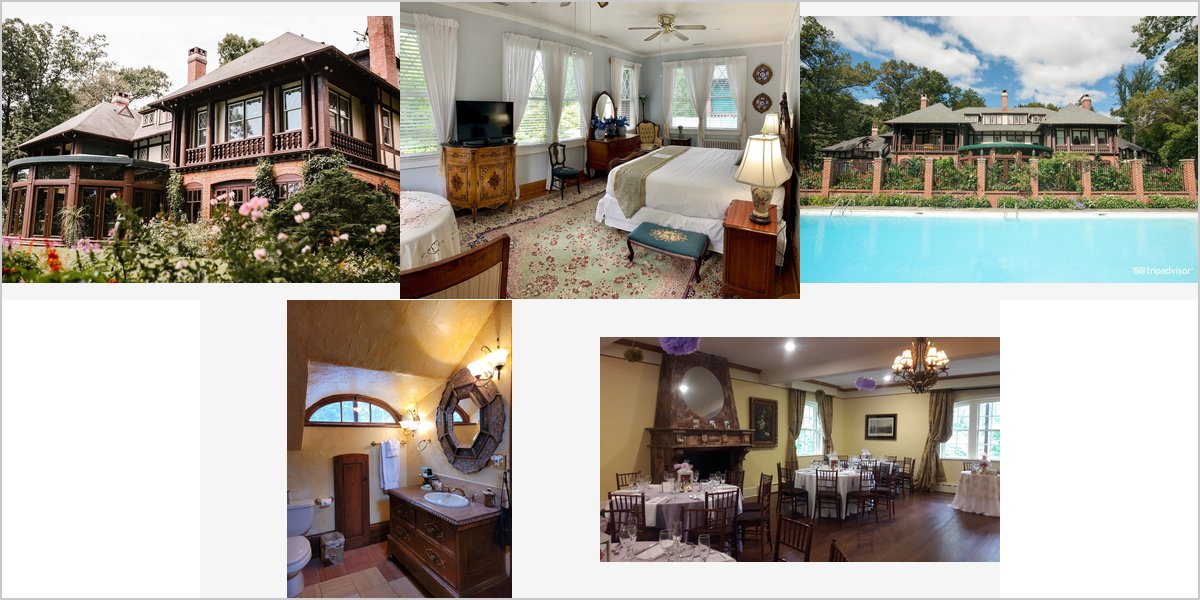
June 25, 2026
Gramercy Mansion: Field Notes on a Country Estate
Estate venues give you space and take away control. Four problems — distances, mixed light, tree cover and weather dependency — and what to do about each.
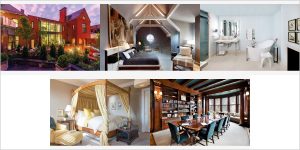
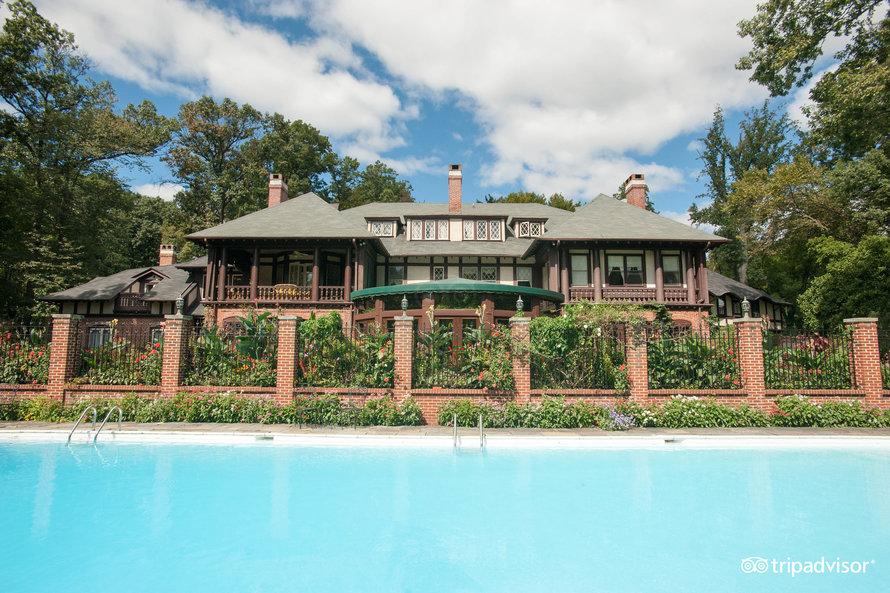
Gramercy Mansion sits on roughly 45 acres at Stevenson, in the wooded countryside north-west of Baltimore. The house is Tudor revival in style, built in the early twentieth century, and the grounds include formal gardens, a pool terrace, woodland and an organic farm operation.
Estate venues are a distinct category with a consistent set of photographic characteristics. The good ones are obvious: space, privacy, mature planting, multiple distinct locations, and no strangers in frame. The problems are less obvious and they are mostly logistical rather than optical — distances eat your timeline, and a site defined by outdoor space is exposed to weather in a way a hotel is not.
These are field notes on four problems. We have not photographed a wedding at Gramercy. The behaviour of canopy light, the optics of a Tudor interior and the arithmetic of walking distances are all predictable. Which areas are included, capacity and house rules are for their team.
Gramercy Mansion at a glance
| Where | Stevenson, Maryland — north-west of Baltimore, roughly 45 acres |
| Character | Tudor revival mansion with formal gardens, pool terrace, woodland and an organic farm |
| Light | Deep shade under mature trees; full sun on the terraces and gardens |
| Biggest practical issue | Distance between locations, in formalwear, on soft ground |
| Plan around | Genuine weather dependency, and dark leaded-window interiors |
Problem one: distance is the thing that breaks the timeline
Forty-five acres sounds like an asset and it is, but it is also a logistics problem that couples consistently underestimate. Moving a wedding party from the house to a garden to a woodland edge to a terrace involves real walking, on grass and gravel, in formalwear and heels. Each move costs ten to fifteen minutes that nobody budgeted.
The consequence is predictable: a shot list of six locations becomes three, and the three that survive are the ones nearest the house rather than the ones with the best light. That is how estates end up producing galleries that look like they were shot in a car park.
The fix is to choose two or three locations in advance, pick them for light rather than convenience, and treat travel time as scheduled items rather than gaps. If a golf cart or similar is available, ask — at a venue this size it can genuinely double the number of locations you get through.
Problem two: a Tudor interior is darker than any other period style
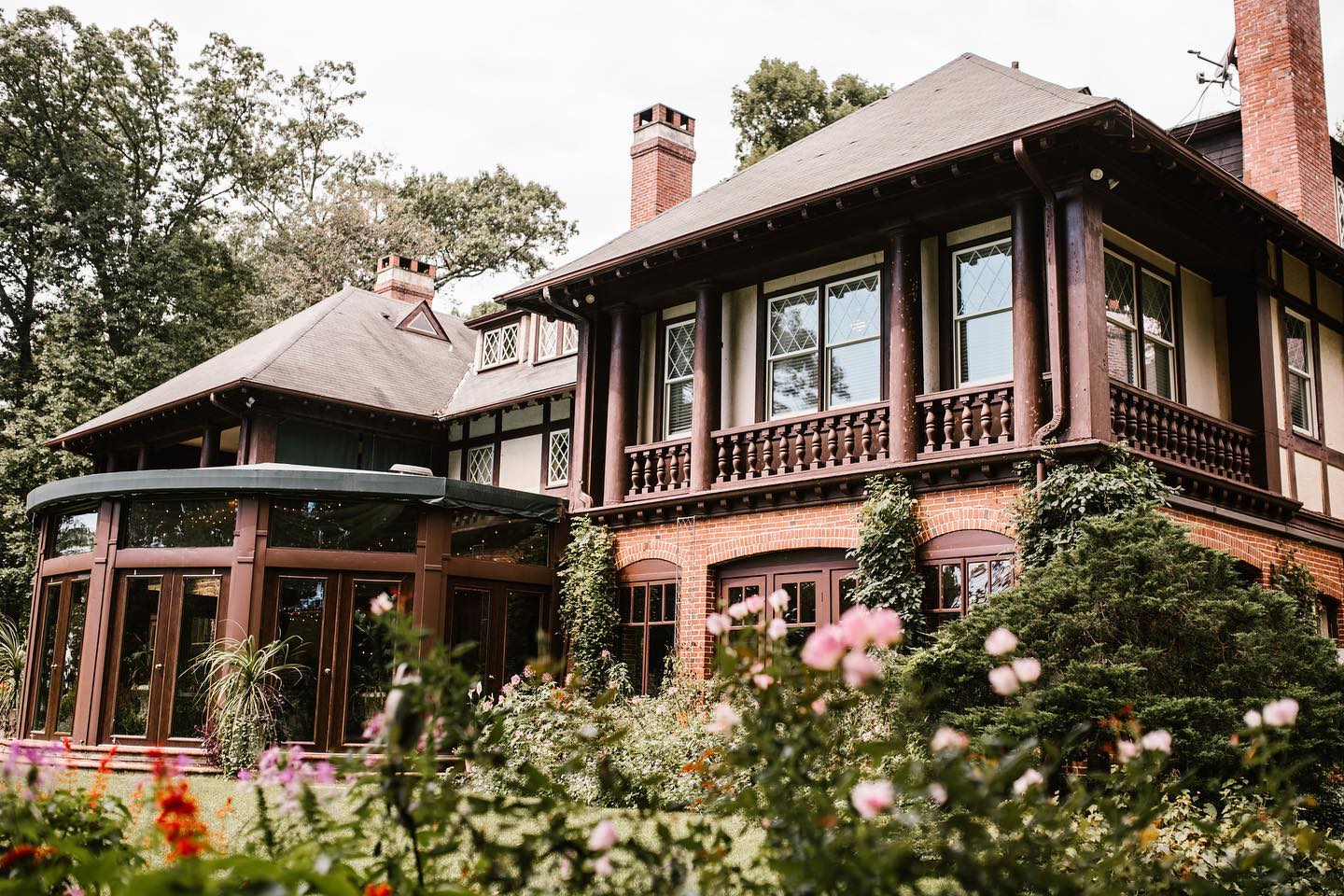
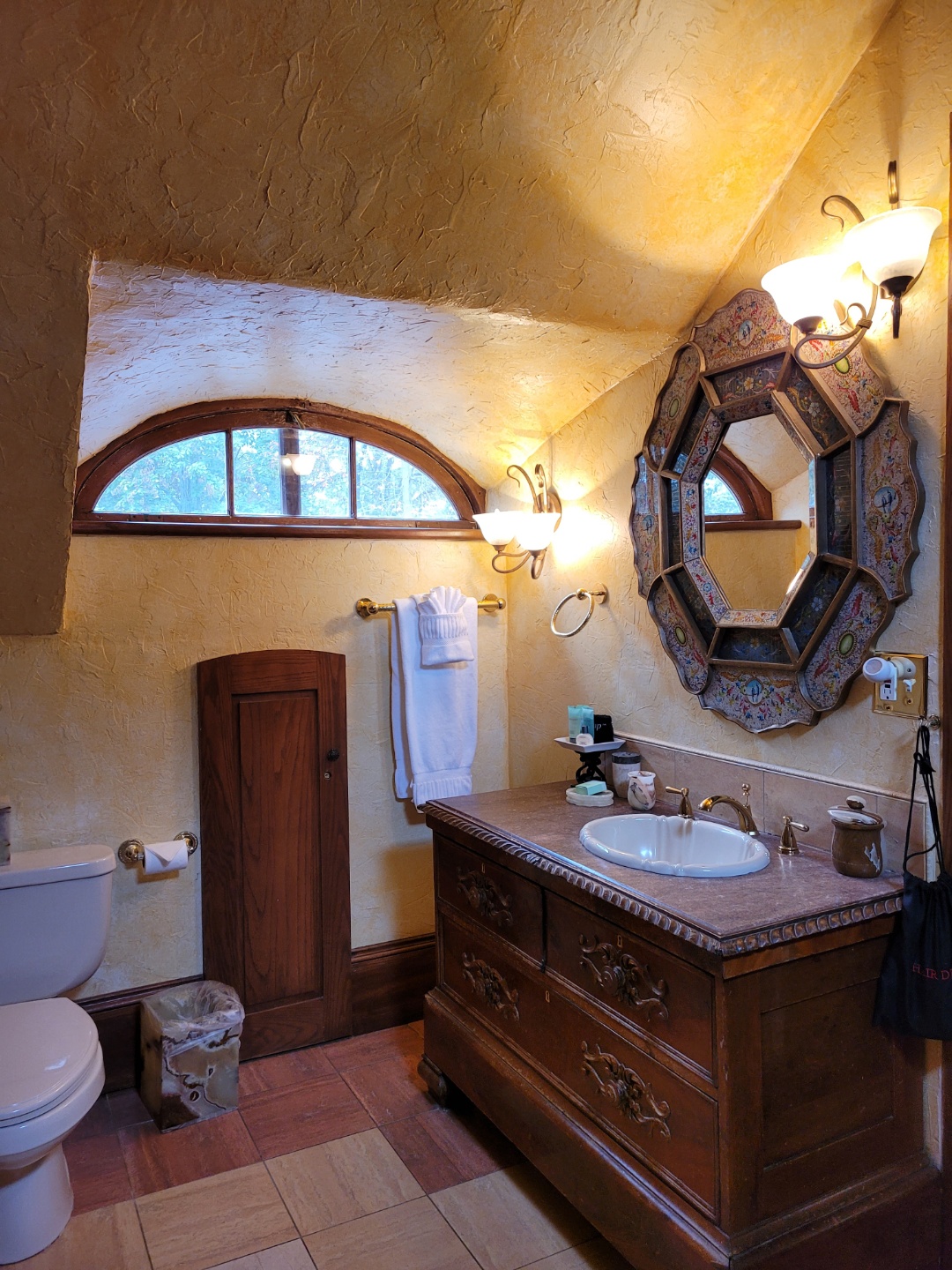
Tudor revival means leaded windows with small panes, dark timber, heavy plaster and often low ceilings relative to the room size. Every one of those reduces light. Leaded windows in particular are much less efficient than plate glass: the lead came blocks a meaningful proportion of the opening, and small panes scatter rather than transmit cleanly.
So expect the interiors to be genuinely dark, warmer than they look, and to need lighting for anything beyond a portrait right at a window. Low ceilings do have one advantage — bounce flash works better than it does in a high ballroom, because there is actually a surface within reach. If the ceilings are pale, an on-camera bounce is a reasonable tool here, which it is not in most historic venues.
Leaded glass also gives you something worth shooting: the pattern of the lead against bright outdoor light is a graphic detail, and a figure silhouetted against a leaded window is a frame you cannot get anywhere else.
Problem three: mature tree cover splits the site into two exposures
A wooded estate gives deep shade under the canopy and full sun on the open gardens and terraces, and between them there is no middle ground. On a clear summer day the difference is four or five stops across thirty metres of walking, which means every location change is an exposure reset.
That is manageable but it has to be deliberate. The shade is the flattering environment and should carry the portraits; the open terraces are for the last ninety minutes when the sun is low enough to rake rather than beat down. Midday on an open terrace in a Maryland summer produces squinting, hard shadows and blown highlights on a white dress.
Watch for dappling at the canopy edge, which is the single hardest light at any wooded venue. The boundary between shade and sun looks attractive to the eye and is unphotographable, because a patch of direct sun on a face exceeds what the sensor can hold alongside the shadow. Work well inside the shade or well out in the open, not on the line between.
Problem four: weather dependency, and what the rain plan must actually cover
An estate’s value is its outdoor space, which means weather is not a minor risk here. Maryland summers bring genuine afternoon thunderstorms, and spring and autumn bring the ordinary wet days. A vague hope that it stays dry is not a plan.
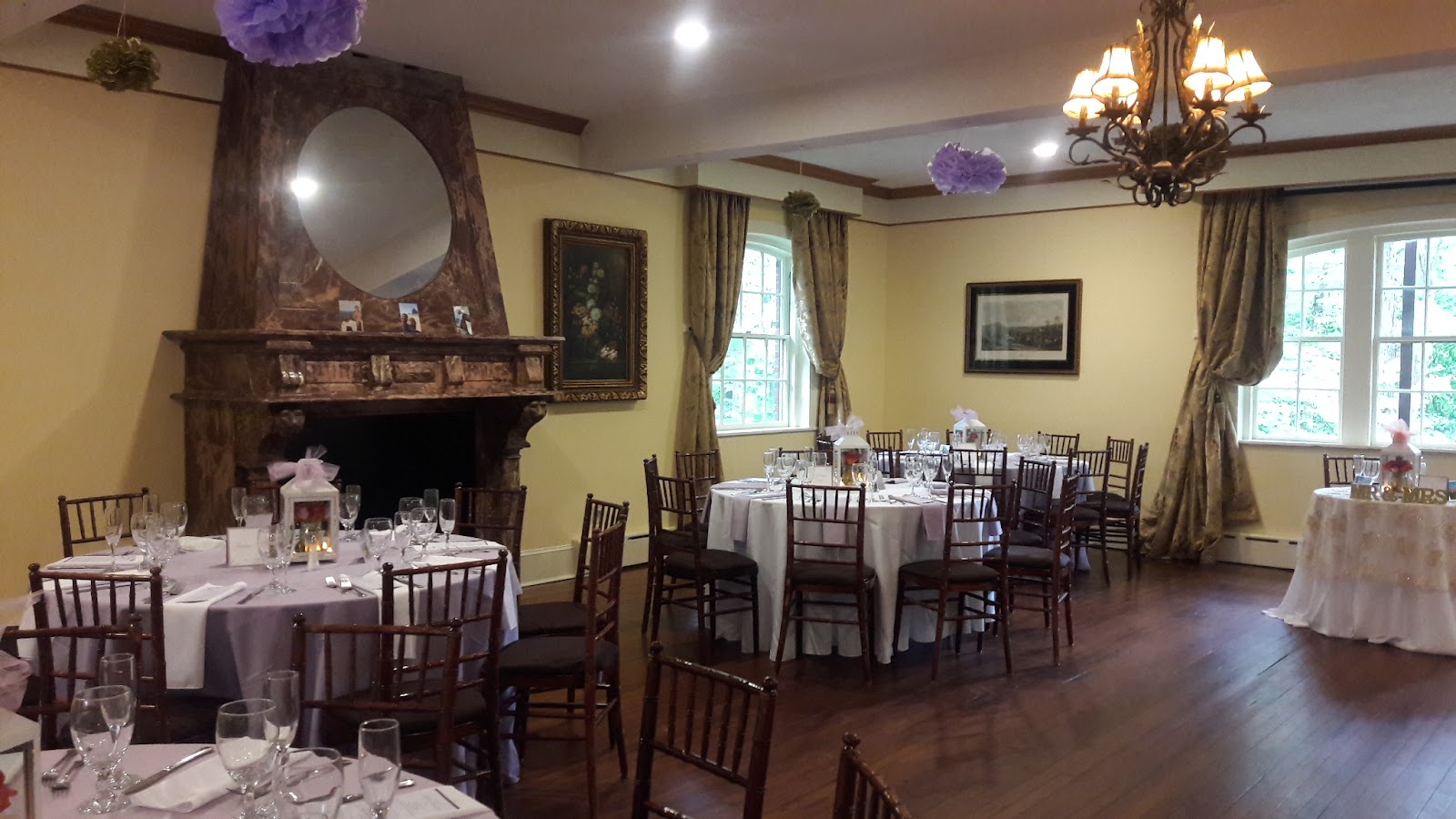
The rain plan needs to answer three specific questions: where does the ceremony happen, where do thirty relatives stand for a group photograph, and where do the couple’s portraits happen. A marquee answers the first. The second and third usually have to happen inside the house, which — given dark leaded-window interiors and domestic room sizes — is worth thinking about in advance rather than improvising.
For what it is worth, the photographic news on rain is better than the logistical news. Wet woodland saturates beautifully, a Tudor house under grey sky looks appropriate rather than diminished, and clear umbrellas keep faces neutrally lit. It is the standing-around arithmetic that needs solving, not the aesthetics.
What works in your favour
- Forty-five acres of privacy with genuinely distinct locations — woodland, gardens, terrace, house
- Mature tree cover gives deep open shade, the most flattering outdoor light there is
- Low ceilings mean bounce flash actually works indoors, unlike most historic venues
- Leaded windows give graphic silhouette and pattern frames unavailable elsewhere
- Wet weather improves the look of woodland and a Tudor house, even if it complicates the logistics
What to plan around
- Distances eat the timeline — each location change costs ten to fifteen minutes on grass and gravel
- Tudor interiors are the darkest period style: leaded windows, dark timber, low ceilings
- Four to five stops difference between canopy shade and open terrace; every move is an exposure reset
- Dappled light at the canopy edge is unphotographable and must be avoided, not managed
- Real weather dependency; the rain plan must cover ceremony, groups and portraits separately
More frames from Gramercy Mansion
Gramercy Mansion wedding photography: common questions
What is the biggest practical problem at an estate venue?
Distance. Moving a wedding party across 45 acres on grass and gravel in formalwear costs ten to fifteen minutes per location change, and those minutes are never budgeted. The result is a six-location shot list collapsing to three — usually the three nearest the house rather than the three with the best light.
Why are Tudor interiors so dark?
Leaded windows with small panes transmit much less light than plate glass, because the lead came blocks a real proportion of the opening and small panes scatter light rather than passing it cleanly. Add dark timber and heavy plaster and the rooms are genuinely dim. The one upside is that lower ceilings make bounce flash usable.
How do you handle the difference between shade and sun?
Treat them as two separate environments and never work on the boundary. Canopy shade is the flattering light and should carry the portraits; open terraces are for the last ninety minutes when the sun rakes rather than beats down. The dappled edge between the two is unphotographable — a sunlit patch on a face exceeds the sensor’s range.
What should the rain plan cover?
Three separate things: where the ceremony happens, where a thirty-person group photograph happens, and where the couple’s portraits happen. A marquee solves the first. The other two usually fall back to the house, which is dark and domestic in scale, so work that out in advance rather than on the day.
Does rain ruin the photographs?
No — wet woodland saturates beautifully and a Tudor house under a grey sky looks entirely appropriate. Clear umbrellas keep faces neutrally lit. Rain is a logistics problem at an estate, not an aesthetic one, which is precisely why it is solvable with planning.
More Baltimore venue guides
We are writing a photographer’s guide to every venue we would happily shoot in Baltimore. Here are three more, plus the full index:
- The Ivy Hotel: Reading the Light in a Small Mansion Hotel
- The Lord Baltimore Hotel: Lighting a 1928 Art Deco Ballroom
- Overhills Mansion: Who This Venue Suits, and Who It Doesn’t
All Baltimore Wedding Venues →
Planning a wedding at Gramercy Mansion?
Estates are won and lost on the timeline. Tell us your date and we will pick two or three locations for the light rather than for convenience, and build the walking time in so nothing gets cut.