 Choctaw Hall: What a Gazebo Ceremony Does to the Photographs
The Duff Green Mansion, Vicksburg: The Light Through a Day
In a house with tall windows on several sides, the good room changes every two hours. Knowing which is the job.
A substantial town house with tall windows on more than one elevation is unusual among wedding venues in one specific way: the best room in it changes through the day, and it changes predictably.
That is different from a hotel, where the ballroom is the ballroom at any hour, and different from a barn, where there is one big space and one condition. Here the east rooms are soft in the morning and hard by mid-morning; the north rooms, if there are any, are soft all day; the west rooms are soft until the afternoon and then difficult; and the galleries are usable throughout.
A photographer who knows that walks into the right room at the right time. One who does not spends the day chasing light that has already moved.
This is the day in order. We have not photographed a wedding at the Duff Green Mansion; houses of this period and plan behave predictably, and orientation is geography. Which rooms are included, whether the grounds are available and whether the lighting is adjustable are questions for their team.
The Duff Green Mansion at a glance
| Where | Vicksburg, Mississippi |
| Morning | The east rooms, soft while the sun is still low behind them |
| Midday | The galleries — at this latitude the sun is near enough overhead that all are shaded |
| Afternoon | The east side again; the west rooms are carrying direct sun |
| Evening | The west front and the grounds, raked by low sun |
Morning and midday
Early morning belongs to whichever rooms face away from the rising sun, because a window with direct sun in it is a hard source with a hard edge rather than a soft one — a brilliant stripe across the floor and a face half blown, half black.
The first job on arrival is therefore to establish the house’s orientation, which takes one look outside and no calculation. Vicksburg sits at about thirty-two degrees north, which means the sun rises well north of east in June and well south of east in December — so the room that is shaded at eight in the morning in June is not necessarily the one shaded at eight in January.
Whichever room it is, the method is the same. Largest window on the shaded side, every overhead fitting switched off so the room has one colour of light rather than two landing on the same face, lamps moved out of frame, and two to three metres back from the glass. At half a metre the fall-off across two faces darkens the far one; at two or three the light is directional and even across both.
A tall sash window has an advantage worth naming: because the source extends close to the floor, the light wraps upward as well as sideways and fills under the chin, which a small high window cannot do. It is the reason a portrait beside a full-height window in an old house looks better than the same portrait beside a modern casement.
Through mid-morning the sun climbs and the shaded side shrinks, which is the moment to move rather than to fight. And the room to move to is not a room at all.
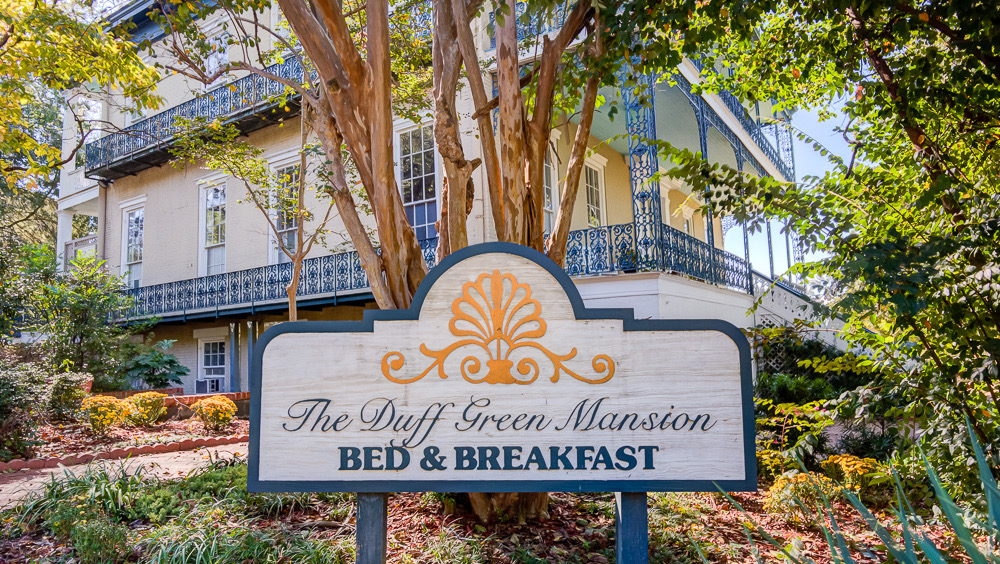
Midday belongs to the galleries, and at this latitude that is not a compromise but the best available light. The June midday sun reaches roughly eighty-one degrees above the horizon here — near enough to straight down that eye sockets go black and every chin gets a hard shadow — which means two things at once: nothing outside a gallery is usable, and every gallery is shaded because the sun is above their roofs rather than under them.
A gallery works because a roof above removes the overhead component, columns to the sides restrict the light to a horizontal band, and a pale floor bounces it back to fill from below. The working position is about a third of the way in from the columns: at the outer edge the light is strong but direct sun can reach in at the ends of the day, and against the house wall it has bounced twice and lost direction. One test frame at three depths settles it.
Two gallery checks. The ceiling colour, because a pale one fills under the chin while a strongly coloured one throws that colour onto skin from above, which global white balance cannot correct. And the background: looking along the gallery, the columns repeat into depth and the far end darkens by itself, which is the cheapest separation available anywhere; the house wall directly behind is the worst option.
Afternoon and evening
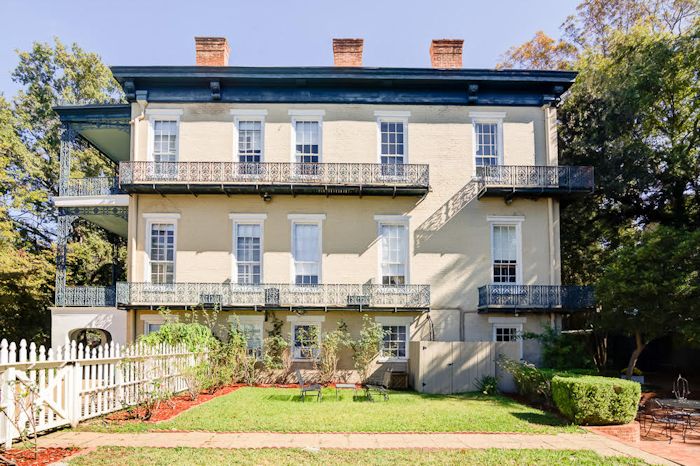
Through the afternoon the house’s logic inverts. The west-facing rooms, which were soft all morning, now carry direct sun — and a tall west window with the afternoon sun in it is one of the hardest sources a photographer meets in this climate, because the sun is high and the room is dark by comparison.
So the afternoon belongs to the east side, which is now in its own shadow, and to whatever full shade the grounds provide. The east rooms in the afternoon are the same soft directional source the west rooms were in the morning, which is the symmetry that makes a house like this workable all day.
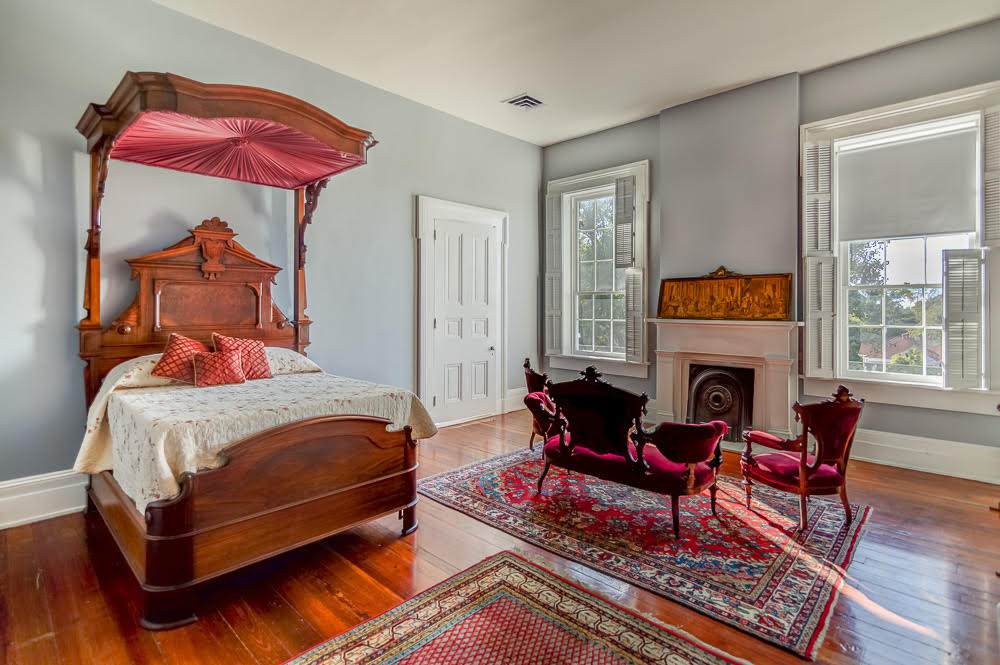
The interior conditions are constant regardless of which room is in use, and they follow from the period. Ceilings are tall because hot air rises, which means a bounced flash on the ground floor returns very little while smaller upstairs rooms may bounce well — one test frame per room is thirty seconds well spent.
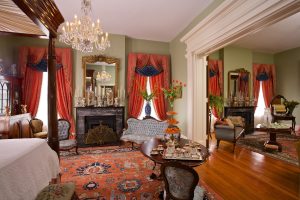
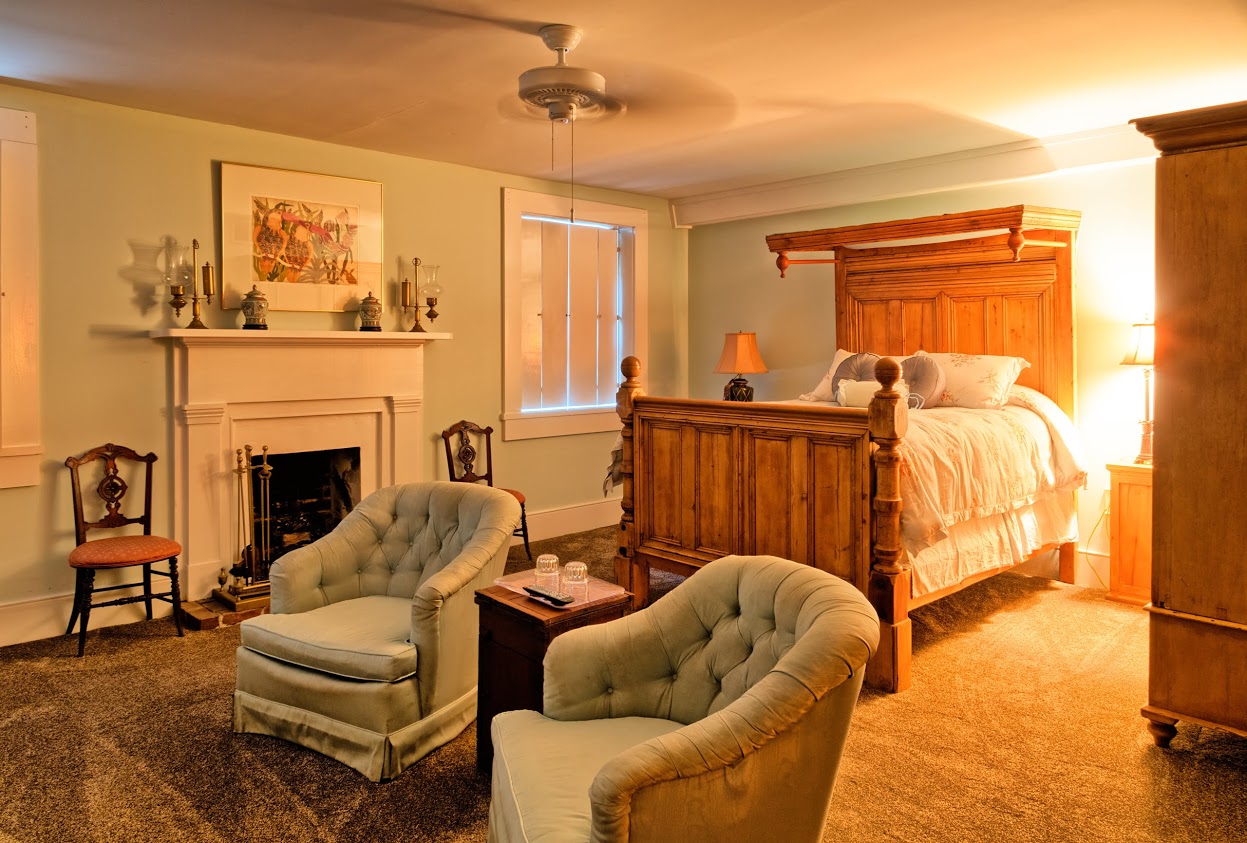
Surfaces are warm and absorbent: timber, deep paint, patterned textile and heavy furnishing put a room a stop or two below a pale one with the same fittings, and they reflect strongly warm onto the shadow side of a face from several directions at once. Because the cast is bounced and localised, global white balance cannot separate it from the subject, so one warm-gelled source with white balance set to the gel is the method — correcting globally turns skin grey and the timber the colour of ash.
Steep fall-off is the compensation and it is free separation: three metres of distance in a warm dim room puts natural darkness behind a subject with no equipment at all. In a house where one room opens into the next, that depth is already built in and the enfilade is the best background in the building.
Texture is the last interior condition and all of it needs raking light. Plaster moulding, panelling, timber and patterned textile read only when light runs along them; a source pointed at panelling makes a flat brown field. The positions where the window light already grazes a wall are the ones worth finding on arrival.
The evening belongs outside. The last ninety minutes rake the west front, making its material read and casting long shadows along any west gallery, and the grounds are backlit. And the twenty-five to forty minutes after sunset are the crossing, when the sky still holds colour while the house’s own lights come up — so one exposure holds couple, house and sky.
At this latitude that crossing is moderate in length: longer than in the desert, shorter than on the northern plains. It is a scheduled ten minutes rather than a wander, and it is the frame worth protecting above everything else, because the interior rooms are available at other hours and this one is not.
- Establish the orientation on arrival; the shaded side changes by season
- Two to three metres back from a tall window, overhead fittings off
- At midday use the galleries — every one is shaded when the sun is overhead
- Afternoon belongs to the east rooms, which are now in shadow
- Protect the crossing after sunset; the interiors are available at other hours
The grounds, and Mississippi's year
Outside, Vicksburg has a geographic distinction worth using: it sits on loess bluffs above the Mississippi, which gives genuine elevation in a region with almost none, and a west-facing prospect over very wide water. Sunset over the river from a height is the frame the town offers and almost nowhere else nearby does.
The loess shapes the ground too. Fine wind-blown silt holds a vertical face, which is why the area has steep-sided ravines and sunken lanes with earth walls rising on both sides — strong, unusual and highly local backgrounds, with deep shade, warm earth colour and light arriving from above like a natural corridor.
The planting is the third asset. Mature live oaks give full shade across a large area, which in this climate is the single most valuable outdoor condition; and where Spanish moss hangs it backlights into a translucent grey veil rather than reading as a dark mass. The shade rule applies without exception: full shade under a dense canopy is excellent, while dappled light through a thin one puts bright patches and deep shadow on the same face at a ratio nothing holds.
The climate is humid subtropical, and the humidity rather than the heat is the photographic fact. Very high dew points through the summer mean moist air that scatters light, softening shadows and flattening distance — a gift for faces and a nuisance for the long river view, which can dissolve into haze in July in a way it does not in November.
The fogging problem is severe and runs the opposite way from a cold climate: a body brought from an air-conditioned interior into July air fogs on every surface at once, inside and out, and in high humidity it does not clear quickly. At a house cooled hard against the heat the difference is large, so a bag should be opened twenty minutes before going out rather than at the door — and at a venue whose one unmovable frame is a timed crossing, a fogged lens means missing it.
Spring is the region’s best season and it is short: azaleas through late March and April, mild temperatures, and the clearest air of the growing year. Autumn, from late October into November, is the other good window and arguably better — humidity drops, the air clears, the river view returns at full contrast, and low sun arrives at a civilised hour.
Winter is mild with frost uncommon, and it is underrated here for two reasons. The midday sun still reaches about thirty-four degrees above the horizon in December, which is a genuinely useful raking angle rather than a compromise — the whole short day is good light. And the bare deciduous canopy opens sightlines that summer closes, which in a town of wooded bluffs means the views are at their most complete in January.
Summer is hot, humid and afternoon-thundery, with tropical systems capable of heavy rain in late summer. The honest advice for July is that the galleries are the venue: shaded, rainproof, and the best light on the property regardless — and rain falling beyond the columns while the couple stands dry in good light is one of the better frames a house like this gives.
One closing practicality: insects are a real consideration on a wooded bluff in the warm months, particularly at dusk, which is exactly when the crossing frame happens. That is worth a word in advance rather than a surprise.
More frames from The Duff Green Mansion
The Duff Green Mansion wedding photography: common questions
Why does the best room change through the day?
Because a house with tall windows on several elevations has a shaded side that moves. The east rooms are soft in the morning, the west rooms in the afternoon.
What is the first thing to establish?
The orientation — one look outside, no calculation. At this latitude the sun rises well north of east in June and well south of east in December.
Why are the galleries the midday answer?
Because the overhead sun makes everything else unusable and simultaneously means every gallery is shaded. A gallery removes exactly the component that ruins faces.
How should the warm interiors be handled?
One warm-gelled source with white balance set to the gel. Correcting globally for the warm bounce turns skin grey and the timber the colour of ash.
Which frame should be protected?
The crossing, twenty-five to forty minutes after sunset. The interior rooms are available at other hours; that one is not.
When is the town at its most photogenic?
Late March and April for azaleas and clear air, late October into November for contrast, and January, when the bare canopy opens the bluff views.
More Mississippi venue guides
We are writing a photographer’s guide to every venue we would happily shoot in Mississippi. Here are three more, plus the full index:
- The McRaven House, Vicksburg: The Problem, and Four Ways Out
- The Auburn Museum: Field Notes on a Freestanding Spiral Stair
- Choctaw Hall: What a Gazebo Ceremony Does to the Photographs
Planning a wedding at The Duff Green Mansion?
The right room at the right hour. Tell us your date and we will map it.