 Choctaw Hall: What a Gazebo Ceremony Does to the Photographs
The McRaven House, Vicksburg: The Problem, and Four Ways Out
A house kept as it was is a house with no room to stand in and nothing to bounce off. Four ways round that.
A historic house preserved rather than converted presents a set of problems that a renovated one does not, and they are worth naming precisely because they compound.
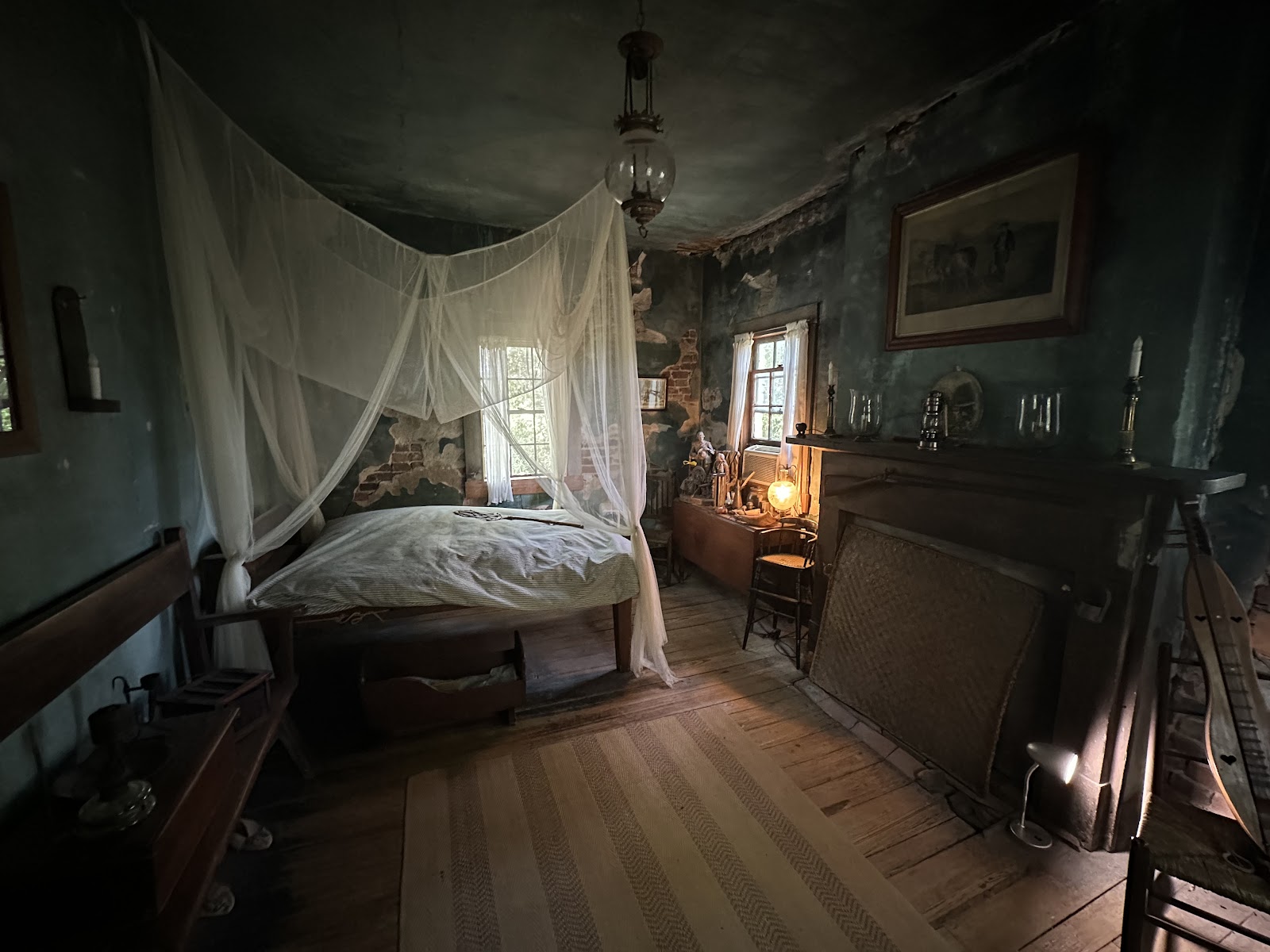
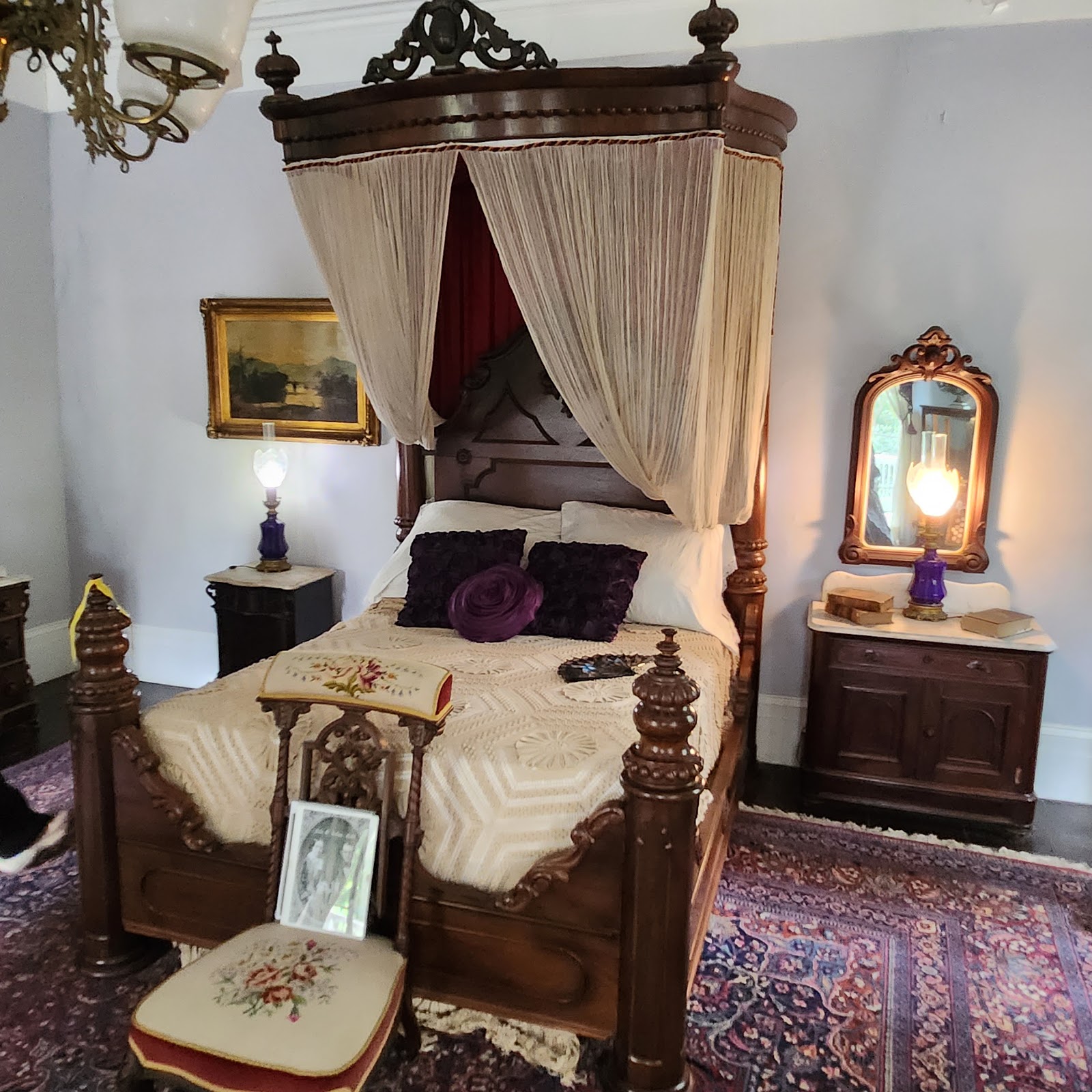
The rooms are small, because domestic rooms were. They are dark, because the windows are the original size and the surfaces are timber, deep paint and heavy textile that absorb rather than bounce. They are full, because a preserved interior is furnished — so there is furniture in every sightline and very little floor to stand on. And there are rules, because the contents are historic and a house museum protects them.
Individually each of those is manageable. Together they mean a photographer cannot get far enough back, cannot put a light where they want it, cannot bounce, and cannot move the furniture.
There are four ways out and all of them work. We have not photographed a wedding at the McRaven House; preserved house museums behave consistently. Which rooms are included, what the rules are about flash, furniture and proximity to contents, and whether the grounds are available are questions for their team.
The McRaven House at a glance
| Where | Vicksburg, Mississippi |
| The problem | Small, dark, densely furnished rooms with rules about what can be moved |
| Way one | Work from the doorway; it is the only place with distance |
| Way two | One close source. Way three: use the windows as the light |
| Way four | Take the day outside — galleries, grounds and the bluff |
Ways one and two: the doorway, and one close source
The first way out is the doorway, and in a house of small full rooms it is frequently the only workable camera position. Standing in a doorway rather than inside a room gains two or three metres of distance at no cost, which is the difference between a wide lens distorting a face at two metres and a moderate lens at four.
It also gives a frame with built-in structure. A doorway is an aperture: it frames, it darkens the edges naturally, and it puts the subject in a lit room seen from a darker one, which is separation without equipment. In a house where one room opens into the next — an enfilade — that effect compounds, and a subject two rooms away is the strongest composition the interior offers.
The related habit is to shoot through rather than into. A frame that includes the near doorway, a middle room and a subject beyond has three planes of depth in it, which is what makes an interior photograph feel like a house rather than a wall.
The second way out is one close source, and the emphasis is on close. In a small dark room there is nowhere to put a light back, and there is no need: a modifier at a metre and a half is a large soft source relative to a face, and it needs almost no power. The distance is what makes it soft, not the size of the modifier.
The position is off the camera axis at face height, and where there is no room for a stand — which there usually is not — in a hand or on a bracket. That is the correct answer here anyway, because a stand in a preserved room is a hazard to the contents as much as an inconvenience.
It must be gelled warm. The fittings in a house like this are tungsten-register or made to imitate it, and the surfaces bounce strongly warm, so an ungelled source produces a face that looks pasted into the room. Gelled, with white balance set to the gel, the added light reads as belonging to the house — and the exposure set so the room still looks warm and dim rather than lifted flat.
A stop above the ambient is enough. Two stops floats a face in blackness and discards the reason for choosing a historic house.
Bounce is worth one test frame and will usually fail on the ground floor, where the ceilings are tall because hot air rises. Upstairs rooms are frequently lower and bounce well, which is a distinction that takes thirty seconds to establish per room and changes what has to be carried.
Ways three and four: the windows, and outside
The third way out is to stop adding light and use the windows, which in a house of this period are tall, numerous and better than they look.
A tall sash window is a soft source that extends close to the floor, which means the light wraps upward as well as sideways and fills under the chin — something a small modern casement cannot do. Two to three metres back is the working distance: at half a metre the fall-off across two faces darkens the far one, while at two or three it is directional and even.
The requirements are two. Every overhead and lamp fitting switched off, so the room has one colour of light rather than two landing on the same face — which in a house with warm original fittings and cool daylight is the difference between a clean frame and an uncorrectable one. And the shaded side of the house, because a window with direct sun in it is a hard source with a hard edge and a brilliant stripe across a dark room.
Which side is shaded changes through the day, and that is the scheduling fact worth knowing: at Vicksburg’s latitude, about thirty-two degrees north, the east rooms are soft in the morning and the west rooms in the afternoon, with the changeover in the middle of the day when the June sun climbs to roughly eighty-one degrees and nothing outside is usable at all.
In a preserved house the windows have one further advantage: they are part of the subject. Original glass, shutters, interior blinds and deep reveals are all characterful, and a frame that includes the window as well as the light from it says more about the building than a frame that merely uses it.
The fourth way out is to take the day outside, and at a house of this kind that is not a retreat but the main plan.
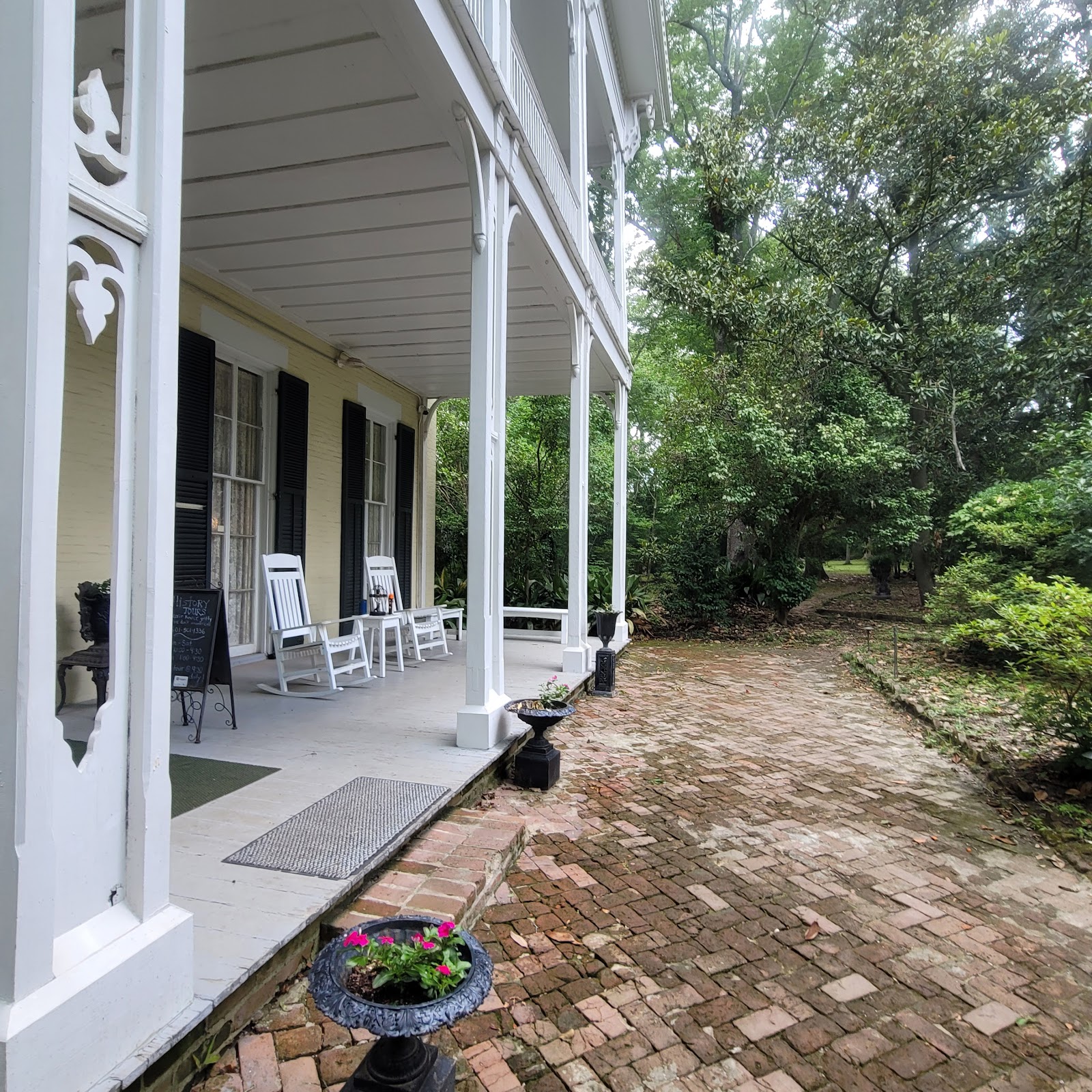
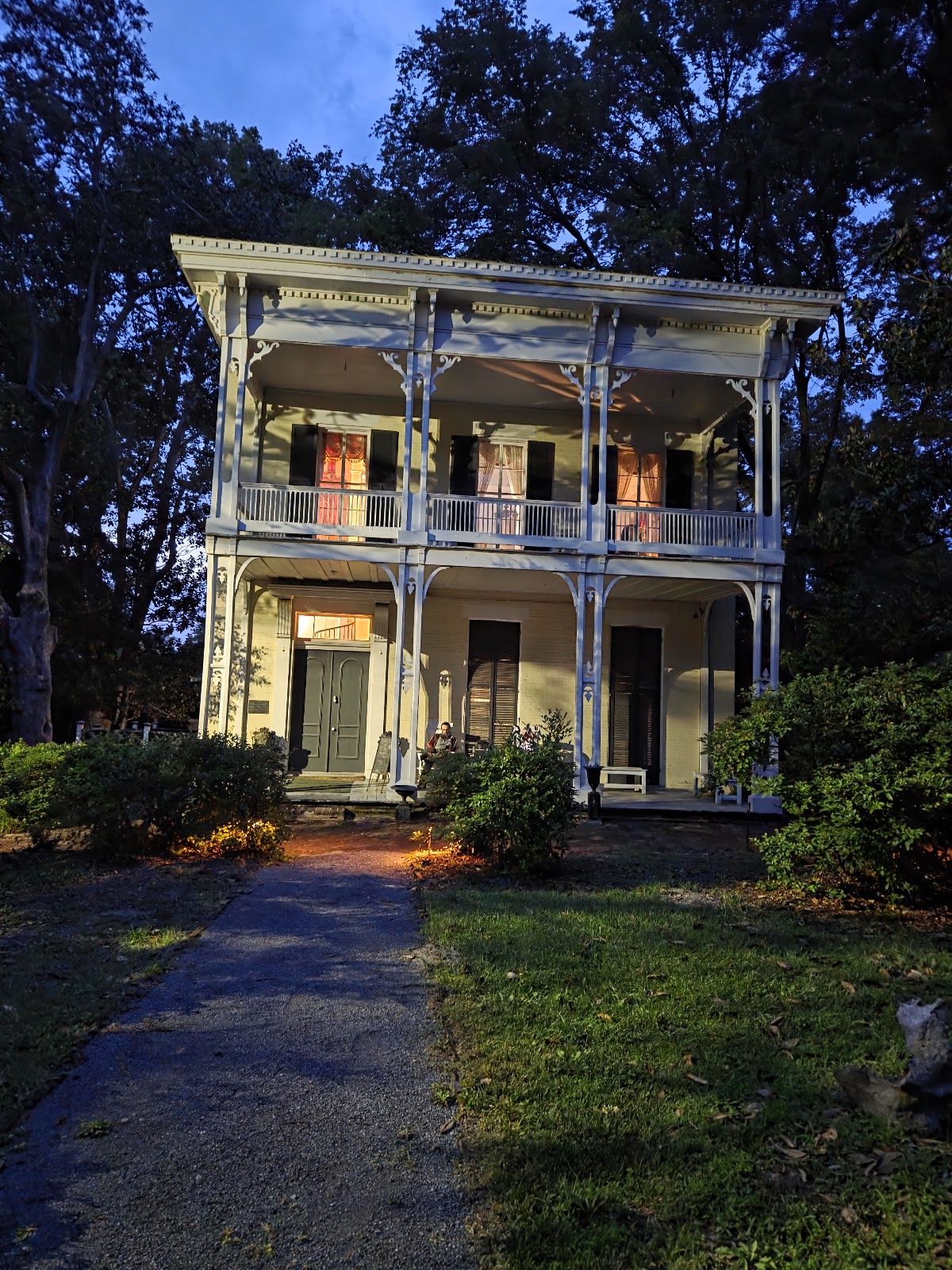
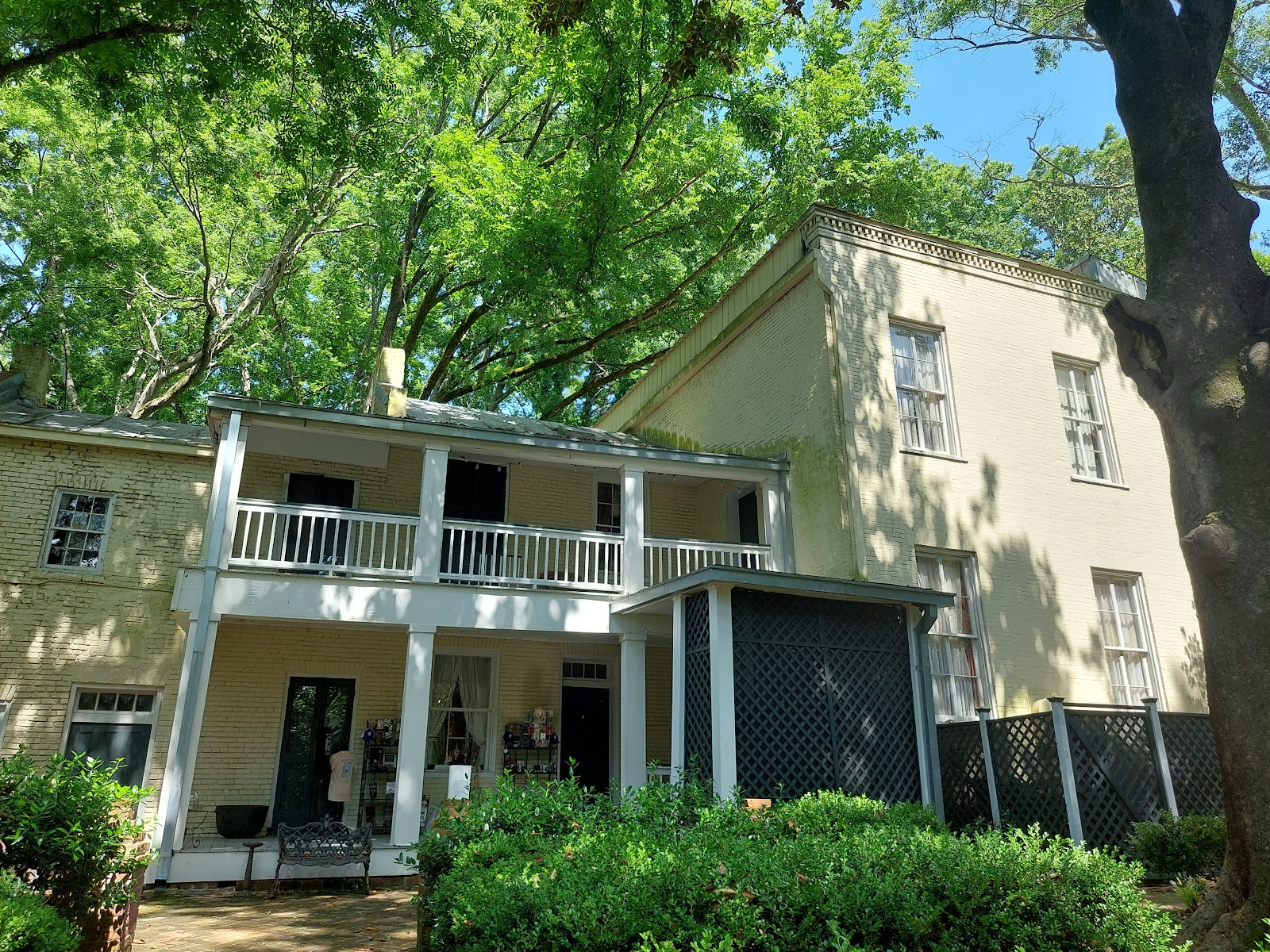
The galleries are the best light on any property in this region and they are available at any hour and in any weather. A roof above removes the overhead component that ruins faces; columns restrict the light to a horizontal band; a pale floor bounces it back to fill from below. The working position is about a third of the way in from the columns, and one test frame at three depths settles it. Looking along the gallery, the columns repeat into depth and the far end darkens by itself, which is the cheapest separation there is.
The grounds are the second exterior asset. Mature live oaks give full shade over a large area, which in this climate is the most valuable outdoor condition available, and where Spanish moss hangs it backlights into a translucent grey veil rather than a dark mass. Full shade under a dense canopy, never dappled light through a thin one — bright patches and deep shadow on one face is a ratio nothing holds.
And the loess ground is the third. Fine wind-blown silt holds a vertical face, which is why the area has steep-sided ravines and sunken lanes with earth walls on both sides — deep shade, warm earth colour, and light arriving from above like a natural corridor. Those are genuinely local backgrounds available almost nowhere else.
- Work from the doorway; it is the only position with distance
- Shoot through rooms, not into them — three planes of depth
- One source at a metre and a half, gelled warm, a stop above the room
- Every fitting off at a window; one colour of light beats two
- Treat the galleries and grounds as the main plan, not the fallback
The rules, and Mississippi's year
The rules deserve a section of their own, because at a preserved house they shape the photography more than any technical consideration and they exist for good reasons.
A furnished historic interior contains textiles, paper, painted surfaces and dyes, all of which fade under light cumulatively and irreversibly, and furniture and floors that damage easily. So expect restrictions on flash, on where stands may be placed, on whether anything may be moved, on food and drink, and on how many people may be in a room at once. Those are not obstacles to be negotiated on the day; they are the terms of using the building, and they should be settled at booking.
Practically it means the working assumption is: no stands, nothing moved, a source in a hand, one or two people per room rather than a group, and the large formals outdoors. That is a workable plan when it is the plan, and a scramble when it is a surprise.
Outside, the climate is humid subtropical and the humidity rather than the heat is the photographic fact. Very high dew points through the summer mean moist air that scatters light, softening shadows and slightly flattening distance — a gift for faces and a nuisance for the long view over the river from the bluffs, which can dissolve into haze in July in a way it does not in November.
The fogging problem is severe and runs the opposite way from a cold climate: a body brought from an air-conditioned interior into July air fogs on every surface at once, inside and out, and in high humidity it does not clear quickly. Opening a bag twenty minutes before going out rather than at the door is the whole fix.
Spring is the region’s best season and it is short and specific: azaleas through late March and April, mild temperatures and the clearest air of the growing year. Autumn, from late October into November, is the other good window — humidity drops, the air clears, and low sun arrives at a civilised hour.
Winter is mild with frost uncommon, and at a preserved house it is genuinely the best season, for a reason specific to the type. The midday sun still reaches about thirty-four degrees above the horizon in December, which means it comes into tall windows at an angle rather than from overhead — so the interior light is directional and usable through the whole short day, instead of for two hours at each end. In a building whose main problem is dark rooms, that is a substantial gain.
The bare deciduous canopy helps too, both by letting more light reach the windows and by opening the bluff sightlines that summer closes.
Summer is hot, humid and afternoon-thundery, with tropical systems capable of heavy rain in late summer. At a house with deep galleries that is less of a problem than it sounds: the gallery is the wet-weather version of the outdoor block rather than its cancellation, and rain falling beyond the columns while the couple stands dry in good light is one of the better frames the building gives.
And insects are a real consideration on a wooded bluff in the warm months, particularly at dusk — worth a word in advance rather than a surprise at the one timed frame of the evening.
More frames from The McRaven House
The McRaven House wedding photography: common questions
What makes a preserved house harder than a renovated one?
The rooms are small, dark and fully furnished, and the contents cannot be moved — so there is no distance, no bounce, and nowhere to put a light.
Where should the camera stand?
In the doorway. It gains two or three metres at no cost, frames the subject naturally, and lets you shoot through rooms rather than into them.
How close should the light be?
About a metre and a half. Distance is what makes a source soft, not the size of the modifier — and at that range it needs almost no power.
Why gel the source?
Because the fittings are tungsten-register and the surfaces bounce strongly warm. Ungelled, the face looks pasted into the room.
What rules should be expected?
Restrictions on flash, stands, moving anything, and numbers per room. They protect textiles and finishes that fade or damage irreversibly, and they belong in the booking conversation.
What is the best season for a house like this?
Winter. The December midday sun is low enough to come into tall windows at an angle, so the interiors are usable through the whole short day rather than two hours at each end.
More Mississippi venue guides
We are writing a photographer’s guide to every venue we would happily shoot in Mississippi. Here are three more, plus the full index:
- The Auburn Museum: Field Notes on a Freestanding Spiral Stair
- Choctaw Hall: What a Gazebo Ceremony Does to the Photographs
- Dunleith Historic Inn: A House With a Good Side at Every Hour
Planning a wedding at The McRaven House?
Four ways round a difficult interior. Tell us your date and we will use all four.