 The Henry Clay: Lighting a 1920s Lodge Building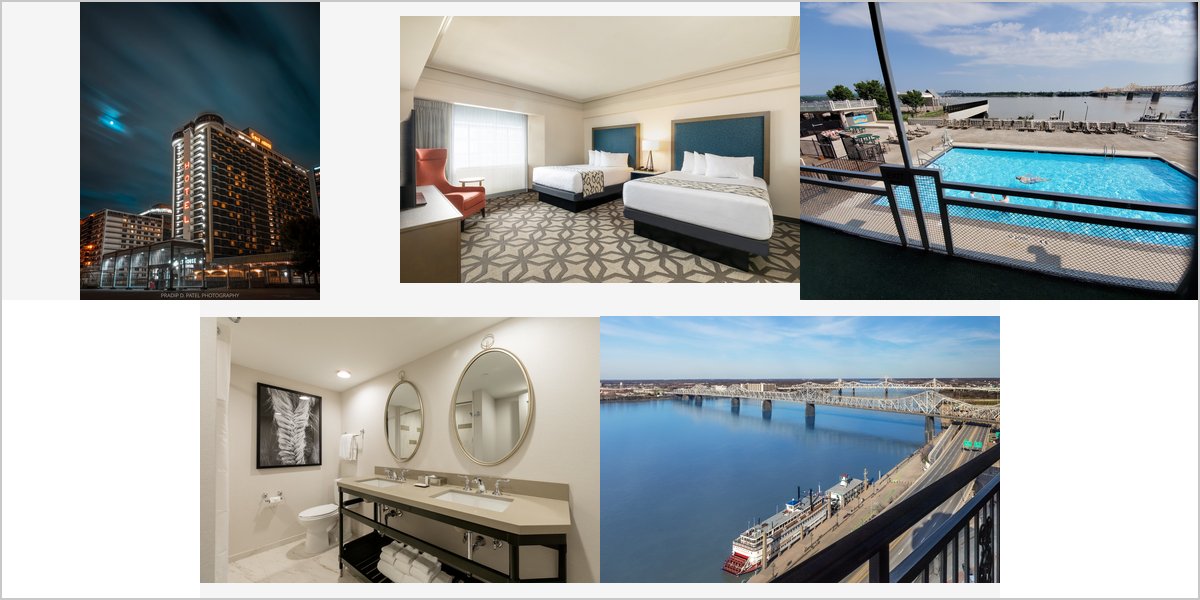
July 3, 2026
The Galt House: Working with a River-Facing Tower Hotel
This hotel faces a river running roughly east to west. That geography, not the venue’s own features, is what decides when your best photographs happen.
The Galt House is a large twin-tower hotel on the Ohio riverfront in downtown Louisville, the towers connected by a glazed walkway, with substantial ballroom and event facilities and rooms looking out over the water. It is a modern convention-scale hotel rather than a historic one, and it should be assessed on that basis.
Photographically, modern large hotels have a consistent profile: ballrooms with no daylight and neutral finishes, corridors that are functional rather than characterful, and the real assets located at the edges of the building — the guest rooms with their views, and any glazed circulation space. What makes this one genuinely interesting is the river.
The Ohio at Louisville runs broadly east to west, and the hotel faces it. That orientation determines when the water photographs well, where the sun sets relative to your frame, and what a high room can give you. This guide works from that. We have not photographed a wedding at the Galt House; the geography and the optics of glazed walkways are matters of record, while room configurations and what your booking includes are for their events team.
Galt House Hotel at a glance
| Where | West Main Street, downtown Louisville — on the Ohio riverfront |
| Character | Modern twin-tower hotel joined by a glazed walkway; convention-scale event space |
| Light | Ballrooms artificial and neutral; guest rooms and the glazed walkway have daylight |
| The real asset | River orientation and elevation — high rooms looking over the Ohio |
| Ask first | A high river-facing room, and whether the glazed walkway can be used |
The river orientation, and what it means for timing
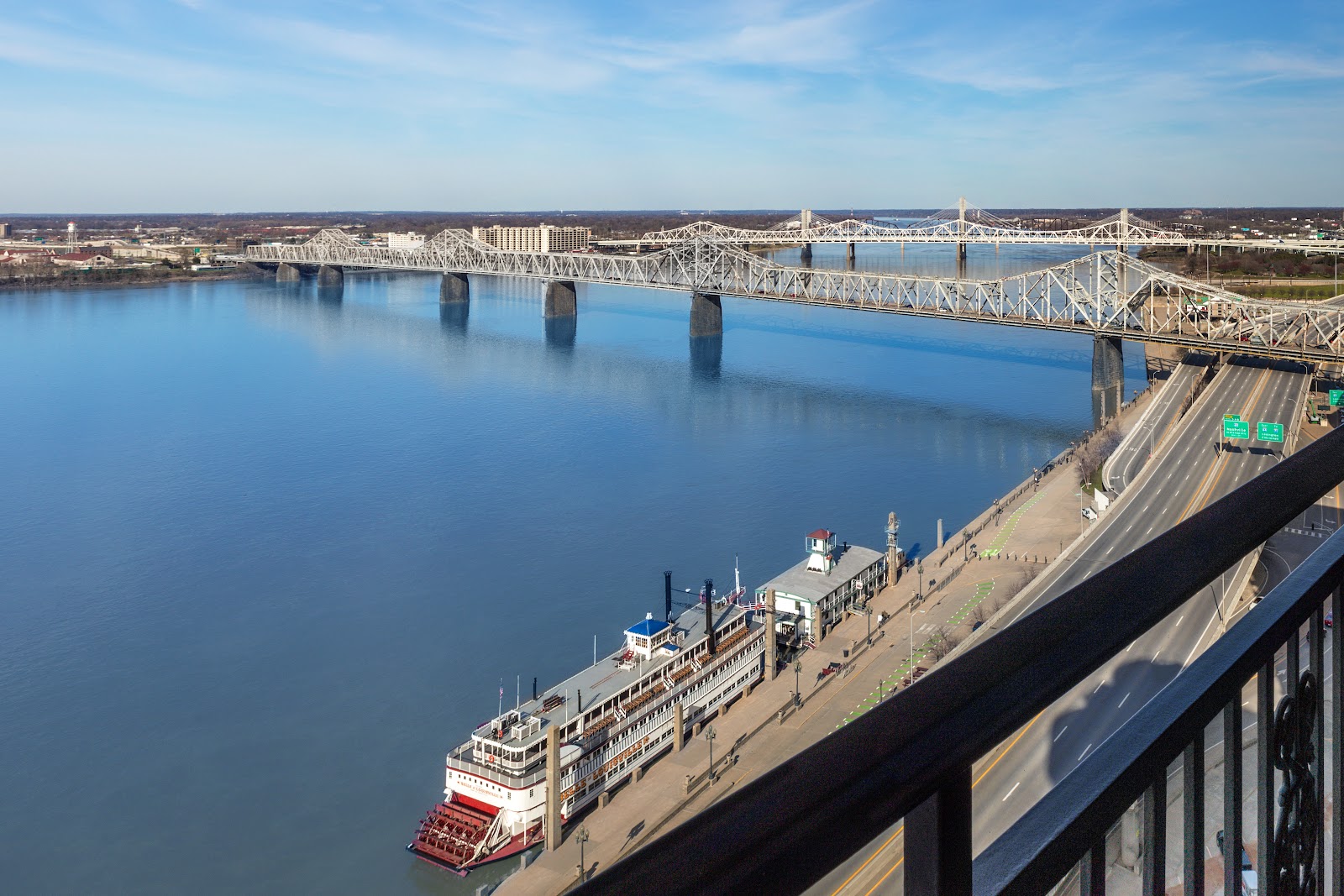
A river running east to west with the hotel on its south bank means you are looking north across the water. That has a specific and useful consequence: the sun never sets into your view and never rises into it. Instead it travels across the frame from right to left through the day, lighting the far bank and the water from the side.
Side-lit water is better than backlit water for almost every purpose. Backlighting a river gives you a blinding highlight and a silhouetted far bank; side lighting gives you texture on the surface, depth on the opposite shore, and a sky that still holds colour without being blown out. So a north-facing river view is genuinely easier to photograph than a west-facing one.
The best moments are early morning, when low light comes from the east along the water, and the twenty minutes after sunset, when the sky to the west still glows and the city lights come up. Mid-afternoon is the flattest — high sun overhead, water grey, no modelling on anything.
Guest rooms: elevation is the asset
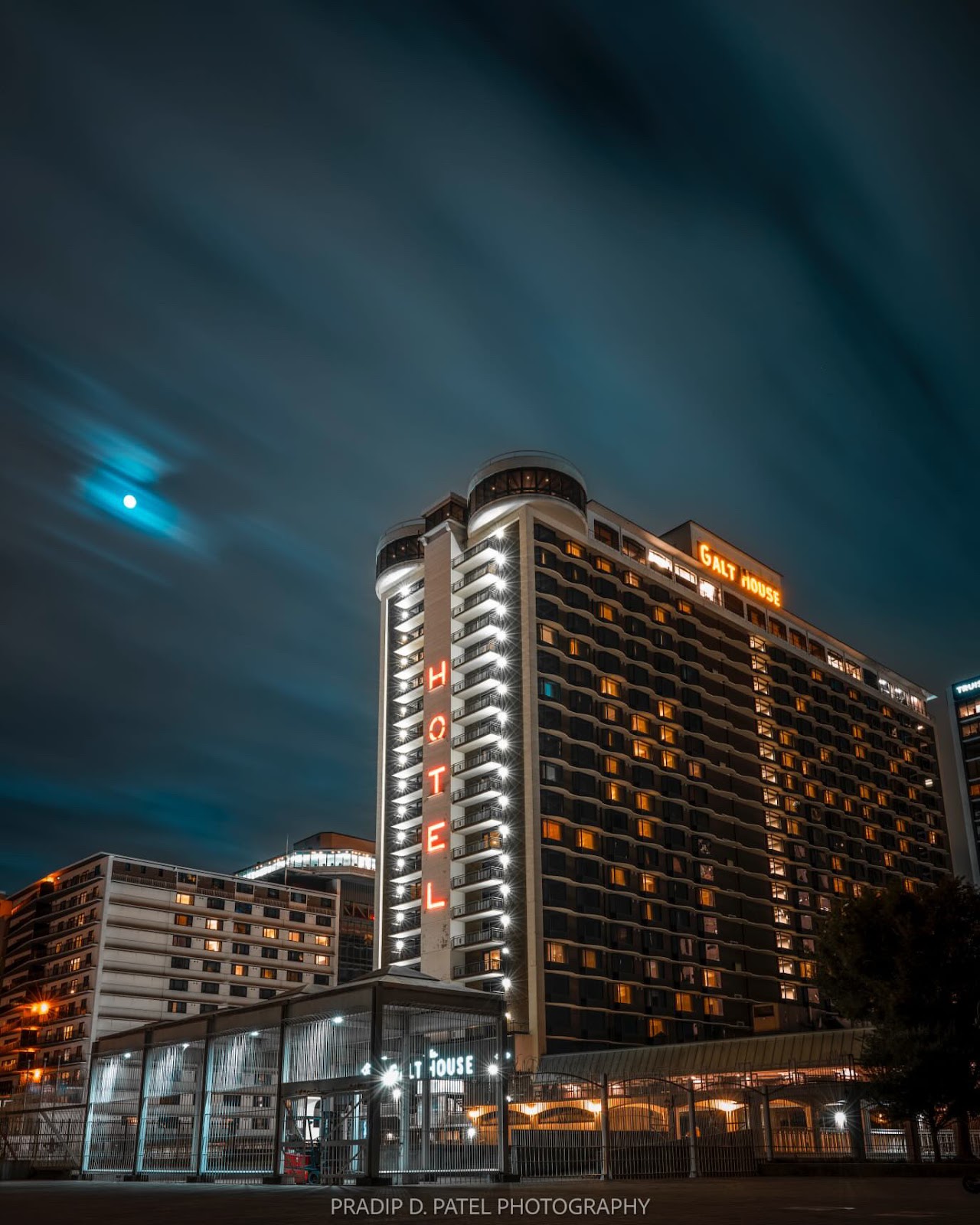
In a tower hotel the guest rooms are where the photographs are, and the higher the better. A high river-facing room gives you two things at once: soft directional window light for preparation coverage, and a genuine view as a background rather than a wall or a car park.
The routine still applies — switch off every artificial light so tungsten is not mixing with daylight, clear the clutter, move everything to within a metre or two of the glass. What changes in a tower is that you can also use the view: a figure at a floor-to-ceiling window with the river behind is a frame that a low-rise hotel simply cannot produce.
Ask for the highest river-facing room available and ask early. It is the single most consequential request you can make of a hotel like this, and it costs the venue nothing to accommodate if it is raised in advance.
The glazed walkway, and the ballrooms
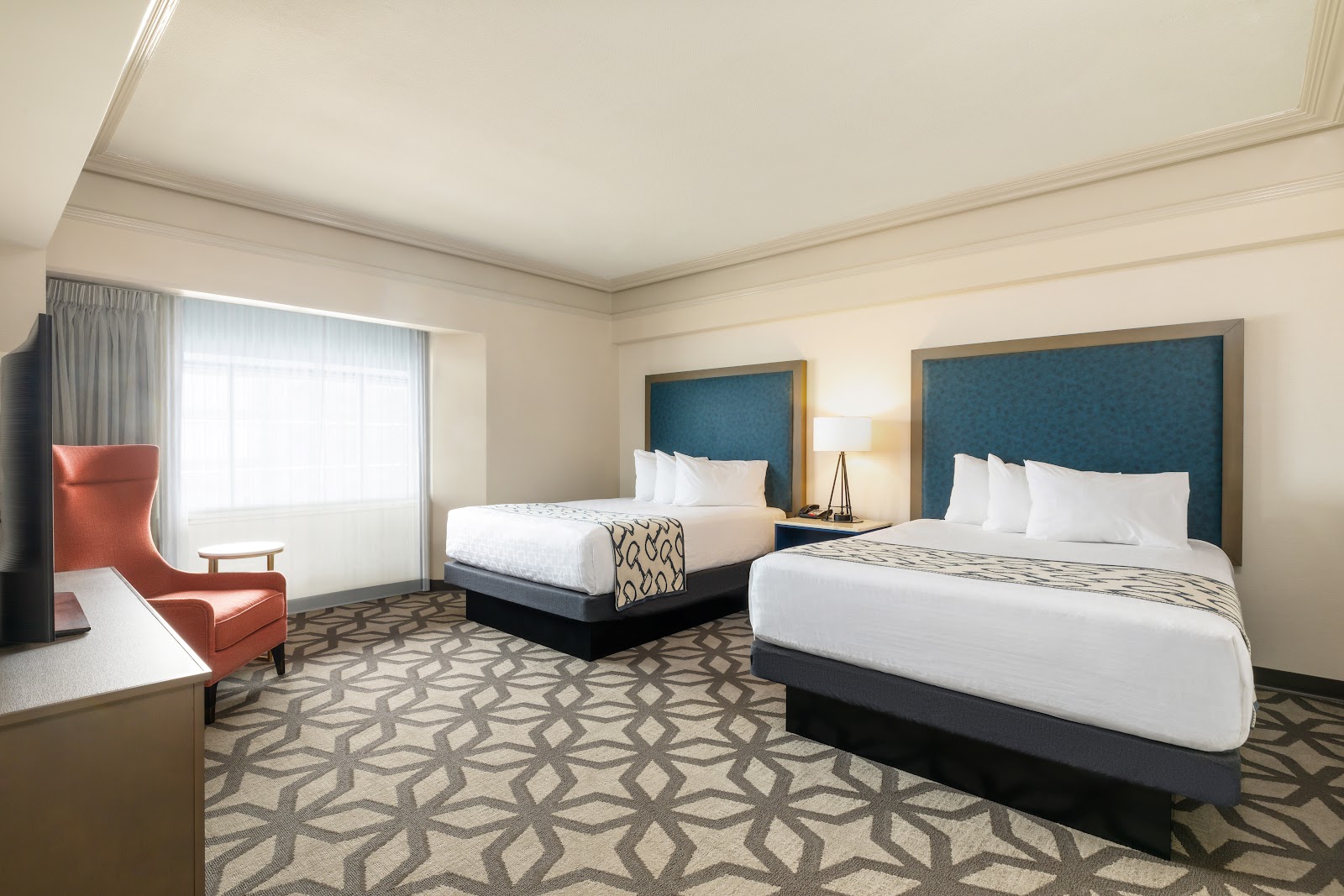
A glass walkway connecting two towers is an unusual and valuable space. It is interior — so it is climate-controlled, windless and weather-proof — while being glazed on both sides, which means lateral daylight from two opposing directions. That is cross-lighting, the same arrangement as a portrait studio, and it is available regardless of the forecast.
It also gives you a receding architectural perspective, which is scarce in modern hotels. Shot along its length with a longer lens, a glazed bridge compresses into layers of frame and reflection. Ask whether it is usable, because it is likely the best interior portrait location on the property.
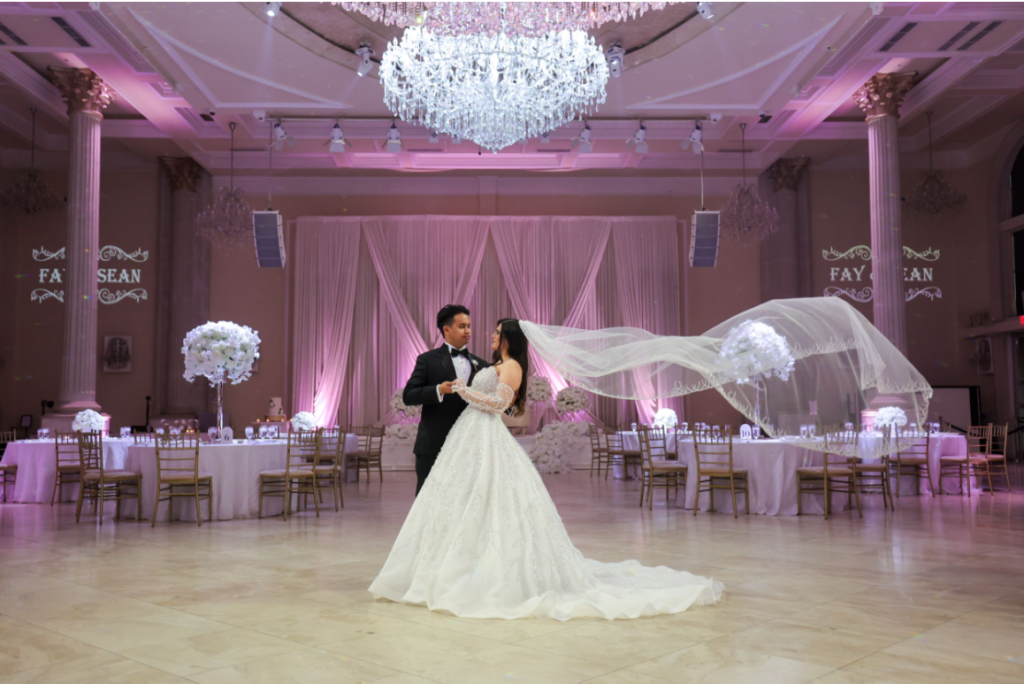
The ballrooms follow the modern convention-hotel pattern: large, neutral, evenly lit by recessed fixtures, no daylight. They take added light well — pale ceilings and walls actually return a bounced flash, unlike a dark historic ballroom — so lighting them is straightforward. What they will not do is carry a frame on their own, so plan portraits elsewhere and let the ballrooms host the party.
The timeline, and the riverfront outside
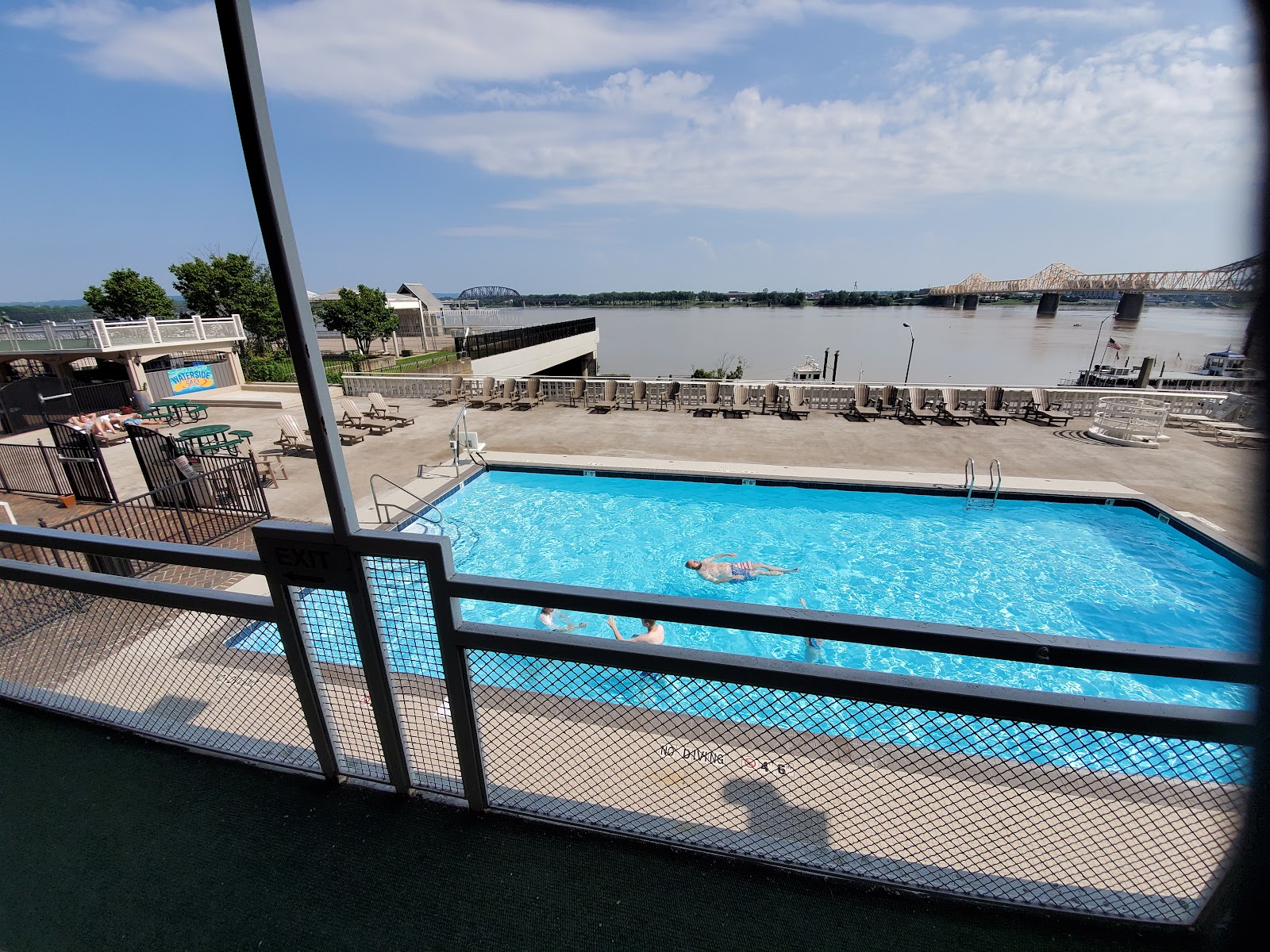
The sequence that makes the most of the building: preparation in a high river-facing room while morning light is on the water; portraits in the glazed walkway, which works at any hour and in any weather; groups in the ballroom or a pre-function space, where there is room; and then outside to the riverfront in the last hour and through the dusk window.
The Louisville waterfront immediately below gives you the river, the bridges, and downtown behind. Bridges are a genuine asset — strong structural lines, symmetry, and a receding perspective that makes an ordinary frame interesting. The Big Four pedestrian bridge area and the waterfront park are within easy reach.
Protect ten minutes for the post-sunset window. With the river to the north and the sunset to the west, you get colour in the sky, lights on the water and a lit city skyline in the same frame — the best photograph the location offers, and the one most likely to be lost if it is not scheduled.
What works in your favour
- North-facing river view means side-lit water rather than blinding backlight — genuinely easier to shoot
- A glazed inter-tower walkway gives cross-lighting indoors, weather-independent, at any hour
- High river-facing rooms give window light and a real view in the same frame
- Pale modern ballrooms accept bounced and off-camera flash easily
- Riverfront, bridges and downtown all within easy reach for dusk
What to plan around
- Ballrooms are neutral and anonymous — they will not carry a photograph on their own
- No daylight in the event spaces at all
- Convention-scale building means long distances and functional corridors
- Mid-afternoon is the flattest light of the day on the water
- The best assets — a high river room and the walkway — depend on requests made in advance
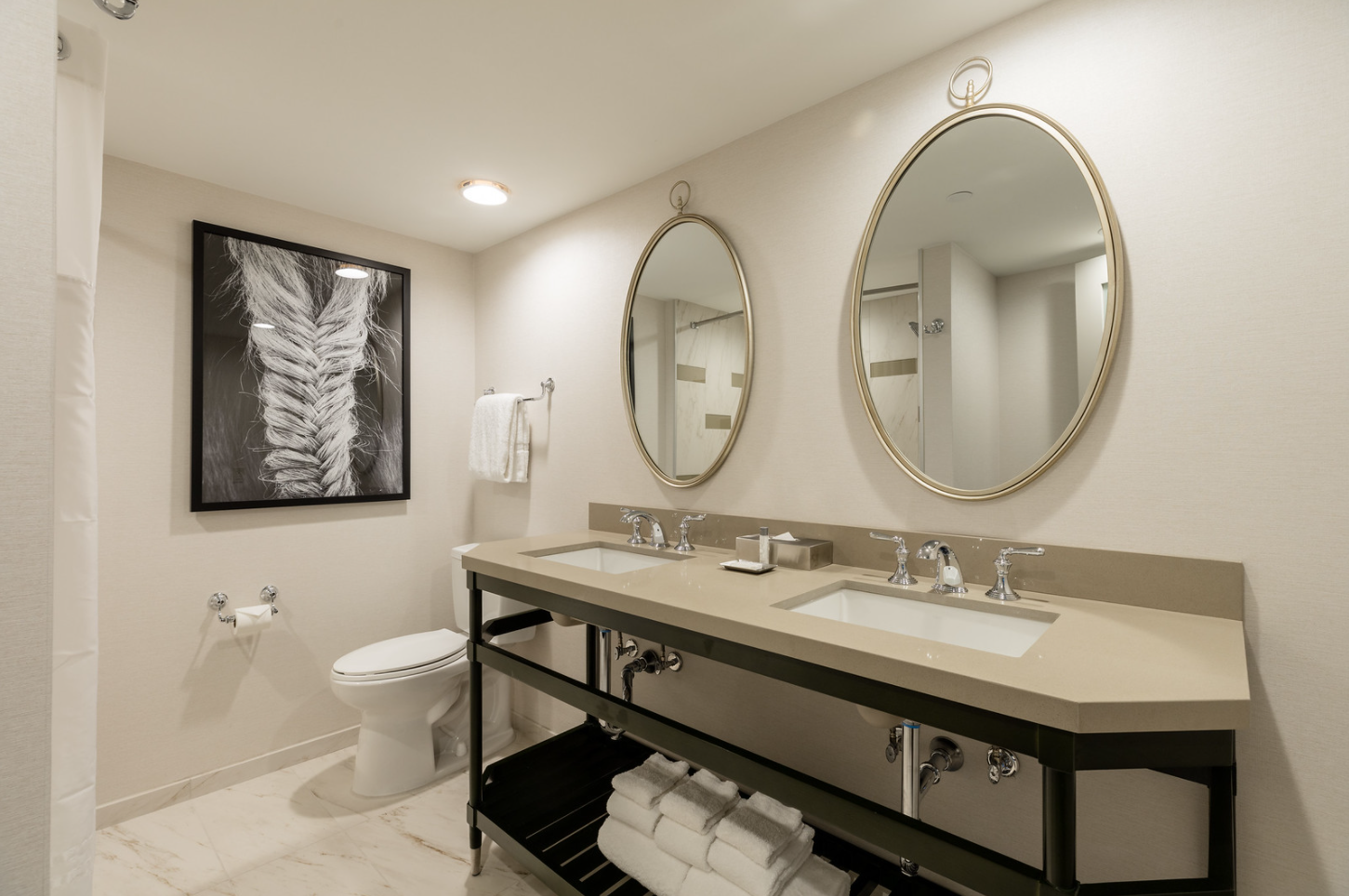
More frames from Galt House Hotel
Galt House Hotel wedding photography: common questions
Why is a north-facing river view an advantage?
Because the sun never sets into your frame. It crosses from right to left during the day, side-lighting the water and the far bank instead of backlighting them. Side-lit water gives you surface texture and depth on the opposite shore, where a backlit river gives a blinding highlight and a silhouette.
When is the best light on the river?
Early morning, when low light comes from the east along the water, and the twenty minutes after sunset, when the western sky still glows and the city lights come up. Mid-afternoon is the flattest — high sun, grey water and no modelling on anything.
What should we request from the hotel?
The highest river-facing guest room available, and confirmation that the glazed walkway between the towers can be used. Those are the two most consequential requests you can make, they cost the hotel nothing if raised early, and together they account for most of the venue’s photographic value.
Why is the glass walkway so useful?
Because it is glazed on both sides, so daylight arrives from two opposing directions — cross-lighting, the same arrangement as a portrait studio — while being fully interior and therefore weather-proof and windless. It also gives a receding architectural perspective, which modern hotels rarely offer.
Are the ballrooms a problem?
Not a problem, just neutral. They are large, evenly lit and anonymous, and they will not carry a photograph on their own. The upside is that pale modern surfaces actually return a bounced flash, so lighting them is far easier than a dark historic ballroom. Plan portraits elsewhere and let them host the party.
More Louisville venue guides
We are writing a photographer’s guide to every venue we would happily shoot in Louisville. Here are three more, plus the full index:
- The Kentucky Derby Museum: Building the Shot List
- The Louisville Palace: Field Notes on an Atmospheric Theatre
- The Seelbach: Lighting a 1905 Beaux-Arts Hotel
All Louisville Wedding Venues →
Planning a wedding at Galt House Hotel?
Two requests make this venue: the highest river-facing room, and the glazed walkway. Tell us your date and we will help you ask for both, then build the timeline around the river’s light rather than the ballroom’s.