 The Westin Book Cadillac, Detroit: A Walk Up Through a Restored 1924 Hotel
The Charles H. Wright Museum, Detroit: Four Ways Out of the Rotunda Problem
A dome is the best room a museum can have and it lights everything from directly overhead. That is the problem.
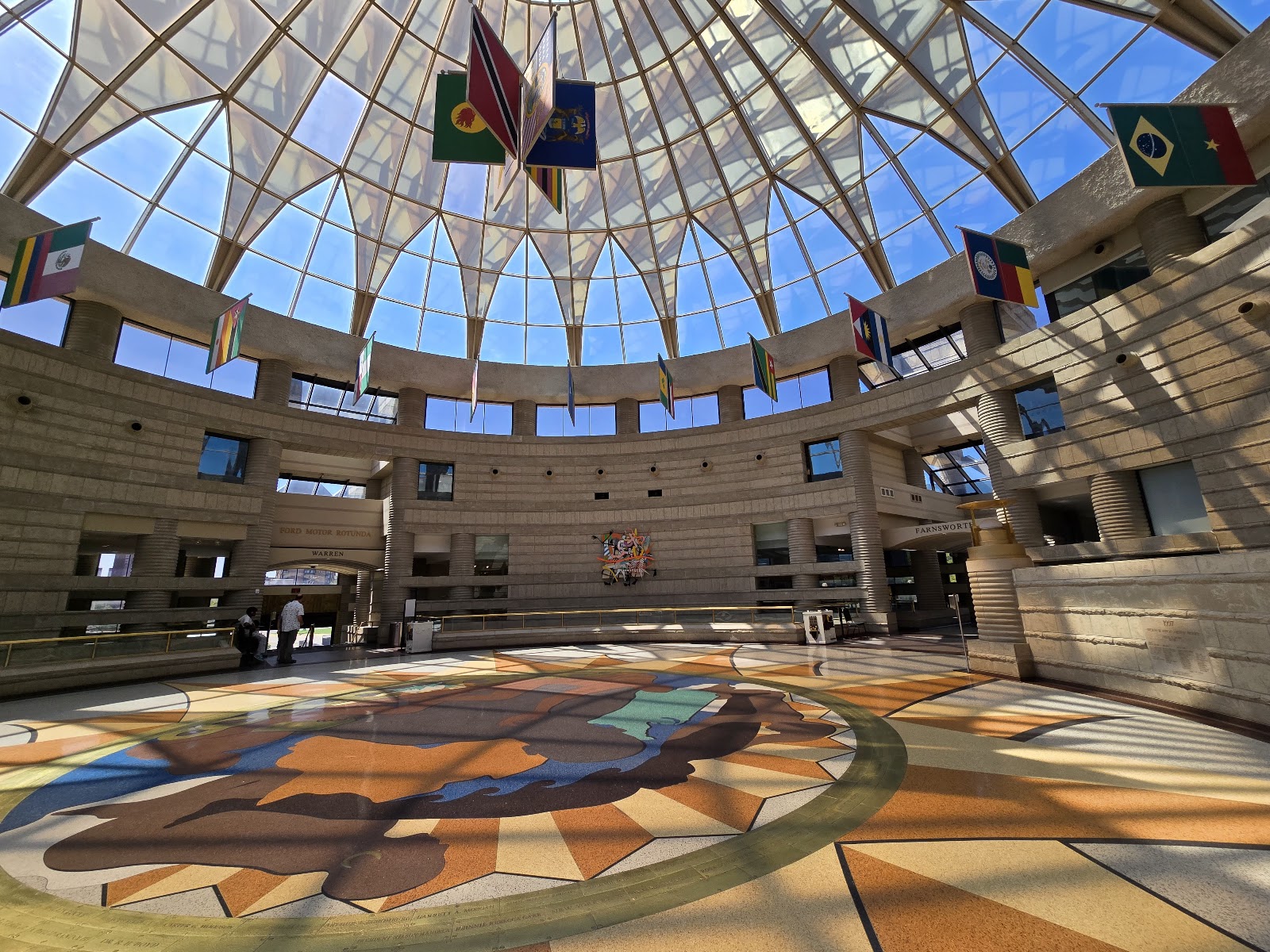
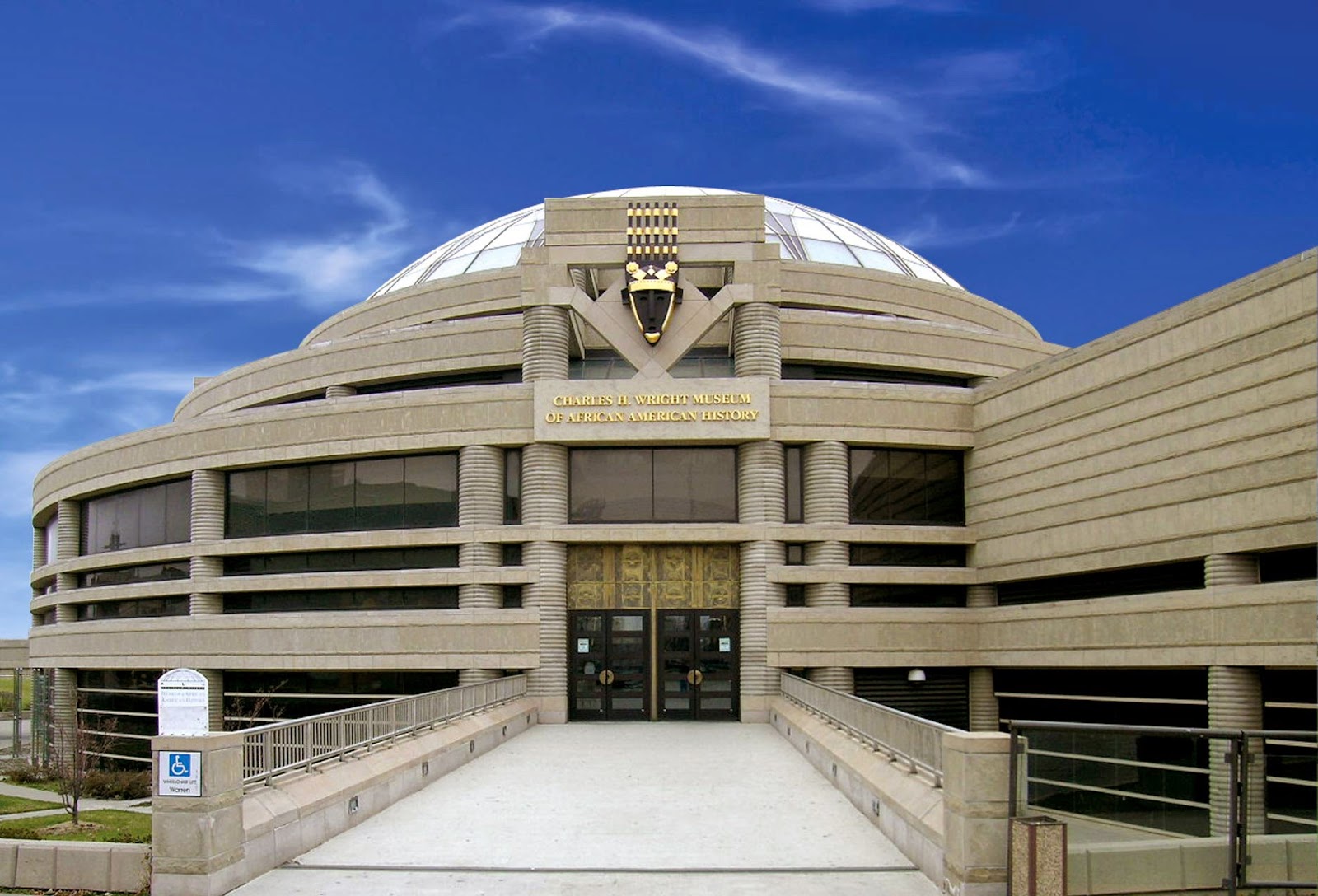
The museum’s architecture is a marvel, as its own description has it, featuring bold lines and a striking dome that promises to be photogenic.
That is accurate and the dome is worth leading with, because a domed rotunda is the best photographic room a modern museum can contain — and it has one specific, predictable problem that governs every frame taken in it.
A dome is a rotationally symmetrical volume lit from its apex, which means three things at once. The light is even and soft, because it arrives diffused from a large aperture far above. It is the same everywhere, because the geometry is circular and there is no near or far side. And it comes from directly overhead, which puts eye sockets in shadow and draws a line under the nose on everybody standing in it.
The first two are gifts and the third is a problem with cheap solutions. This is written as that problem and four ways out of it. We have not photographed a wedding at the Wright Museum; domed rotundas behave the same wherever they are built. Which spaces a booking includes, whether photography is permitted in the exhibition galleries, and whether any floor treatment or inlay in the rotunda should not be walked on are the questions for their team — the last one matters at a museum whose rotunda floor may itself be a work.
The Charles H. Wright Museum at a glance
| Where | Detroit, Michigan |
| Character | A modern museum with bold lines and a domed central rotunda |
| The gift | Even, soft light that is the same everywhere in the volume |
| The problem | It arrives from directly overhead, on everybody at once |
| Ask first | Spaces included, gallery photography, any floor restrictions |
Why overhead light is the whole problem
It is worth being precise, because overhead light is not merely unflattering in a vague way — it does three specific things and each has its own fix.
It shadows the eye sockets, because the brow projects and the light comes from above it. On a face turned even slightly downward that reads as dark hollows where the eyes should be, and it is the single most damaging thing light can do to a portrait.
It draws a hard line from the nose down onto the upper lip, which reads as a mark rather than as modelling.
And it leaves the underside of the chin and the neck unlit, which flattens the transition between face and body and removes the sense of a head sitting on shoulders.
In a dome all three apply everywhere, because the light is the same everywhere — which means there is no position that solves it. That is the important difference from a room with windows, where moving three metres changes the direction entirely. In a rotunda, moving does nothing.
The second condition is exposure. A pale dome fills the upper part of most frames and pushes a meter towards underexposure, so add half a stop to a stop over the metered reading and check that skin holds its tone rather than going grey — and that the dome itself still holds some texture rather than clipping to blank white.
The third is separation. A rotunda is usually pale and evenly lit, which means a subject and a background sit at nearly the same tone, and that is the default failure in every light-coloured space. It needs solving deliberately rather than hoped away.
And the fourth, specific to a circular room, is that there is no back wall. In a rectangular space a photographer can place a subject against something; in a rotunda every direction curves away, which means the background is always the far side of the room and always at the same distance. That sounds like a limitation and it is actually the key to the best frame the room gives.
Four ways out
The first way out is to fill from below, and it is the cheapest and most effective. A reflector held low, angled up into the face, replaces exactly the light the dome does not provide — and because the ambient is already soft and even, a small amount of fill is enough. A white surface a metre from the subject at waist height does it; a helper holding one does it better.
A lifted chin achieves much of the same without any equipment, and it is worth directing for rather than hoping for. And for anything that must be exact, one small source at face height overrides the geometry entirely: gelled to match, at about a stop under the ambient, off the camera axis.
The second way out is to use the geometry rather than fighting it. A dome is the one architectural form that reads properly only from directly beneath, looking up — and a frame taken vertically, with the dome’s ribs or coffers converging overhead and the couple small at the bottom of the picture, is the photograph the building exists to give. Almost nobody takes it, it takes one minute, and it is the frame that will be remembered.
It also rewards precision absolutely, because a dome is radially symmetrical: off centre by a metre and the radial pattern becomes an off-centre smear. Stand on the centre point, level the camera, and shoot straight up.
The third way out is the curve. Because a rotunda has no back wall, the background from any position is the far side curving away — which means a long lens compresses that curve into a band of architecture behind a couple, and the curvature reads as curvature rather than as a flat wall. That is a background no rectangular room can produce, and it is the reason to work a rotunda with a long lens rather than a wide one for portraits.
For separation, the usual tools stack: depth, a wide aperture, placement against the darkest element available — a doorway, a shaded recess, an opening to an unlit space — and negative fill, which in an evenly lit pale room works better than adding light.
The fourth way out is the exhibition galleries, and here a note of tact is needed rather than technique. A museum of African American history holds material about slavery, segregation and violence, and a celebration frame in front of that material serves nobody — least of all a couple who will live with it in an album. The right approach is to work in the rotunda and the architectural and public spaces, to ask the museum’s staff what is appropriate where, and to treat their answer as settled. Asking early costs one email and removes the question from the day entirely.
- Fill from below — a reflector at waist height replaces what the dome withholds
- Add half a stop to a stop; a pale dome pulls a meter dark
- Stand on the centre point and shoot straight up; the frame nobody takes
- Use a long lens so the curving far side becomes the background
- Work in the rotunda and public spaces; ask staff what is appropriate where
Outside, and Detroit's year
Bold modern architecture outside gives clean sight lines and strong geometry, which rewards two things: a low camera, so the horizon drops and the building’s mass occupies the upper frame; and precision, because in a spare modern composition a crooked horizontal is obvious with nothing else to distract from it.
Detroit gives an advantage almost no other American city does — there is room to stand back. Substantial open ground and surface parking mean a whole building can be photographed entire from across the street rather than in fragments, and for a bold modern museum with a dome that is genuinely useful: the dome reads as a dome only from far enough away.
Open ground also means no shade, so the building’s own shadow is the reliable midday resource, and it moves — so learning where the shade line will be at the ceremony hour rather than at the site-visit hour is the most useful piece of preparation outdoors.
That openness means low sun reaches across a wider area than in a canyon city, so the last ninety minutes give raking light on masonry and modern cladding from more positions than usual. Which elevation receives it depends on orientation, so one walk around the building is worth more than any accessory.
Michigan’s seasons are four real ones. Summer is warm and humid with afternoon thunderstorms a real possibility, which for a large museum is entirely an advantage — the day continues indoors without a decision — and the light after a cell passes, with wet paving returning reflections of a modern facade under a dark sky, is frequently the best of the day.
Autumn gives the clearest air and the best raking light of the year. Winter is cold and snowy with short days, sunset falling in the middle of the afternoon in December, which compresses the outdoor window into a couple of hours and makes an early protected block essential.
Snow is the compensation and it does two things here. Outdoors it is the best natural fill there is, lifting exactly the shadows a low sun carves while fooling a meter by about two stops. And in a domed rotunda it does something better: snow on the ground outside turns the whole area into a very large reflector, which raises the light arriving through the dome and — more usefully — adds a component from lower angles that the dome alone does not provide. A rotunda is measurably easier to photograph in after snow than in summer, and that is worth knowing.
A heated museum with cold outside air fogs a lens in both directions, so let a body come towards the temperature of where it is going before it gets there, and plan one excursion rather than several.
More frames from The Charles H. Wright Museum
The Charles H. Wright Museum wedding photography: common questions
Why is a dome's light a problem?
Because it is even and the same everywhere but arrives from directly overhead — which shadows eye sockets, marks a line from the nose, and leaves the chin unlit, on everybody at once.
Why can't you just move?
Because a dome is rotationally symmetrical, so the light is identical everywhere in it. Moving three metres in a room with windows changes the direction; in a rotunda it changes nothing.
What is the cheapest fix?
A reflector held low, angled up into the face. The ambient is already soft and even, so a small amount of fill from below is enough — a white surface at waist height does it.
What is the frame the building exists to give?
Standing on the centre point, levelling the camera and shooting straight up: the dome’s ribs converging overhead with the couple small at the bottom. It takes one minute.
Why use a long lens in a rotunda?
Because there is no back wall — the background is always the far side curving away, and compression turns that curve into a band of architecture that no rectangular room can produce.
What about the exhibition galleries?
Work in the rotunda and public spaces, and ask the museum’s staff what is appropriate where. Material about slavery and violence is not a background a celebration frame should sit in front of.
More Detroit, MI venue guides
We are writing a photographer’s guide to every venue we would happily shoot in Detroit, MI. Here are three more, plus the full index:
- The Detroit Club: Photographing a Restored Private Club
- The Detroit Institute of Arts: Four Ways Out of the Gallery Problem
- The Detroit Marriott at the Renaissance Center: What It Suits and What It Does Not
All Detroit, MI Wedding Venues →
Planning a wedding at The Charles H. Wright Museum?
One reflector and one vertical frame. Tell us your date and we will bring both.