 The House of Blues, Cleveland: What It Suits and What It Does Not
Windows on the River, Cleveland: One Frame and How It Is Made
A venue named for its windows is telling you where the frame is. The rest is timing.
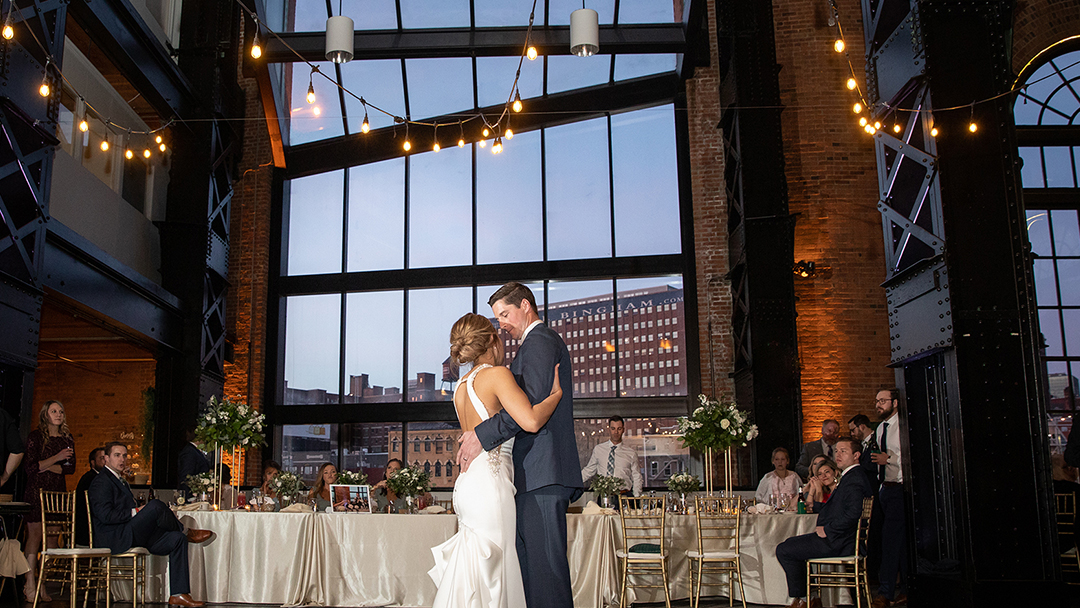
Windows on the River’s own name promises photographic opportunity, as the material we have on it notes — and that is a fair reading, because a venue named for its glazing has decided what its best frame is before anybody arrives.
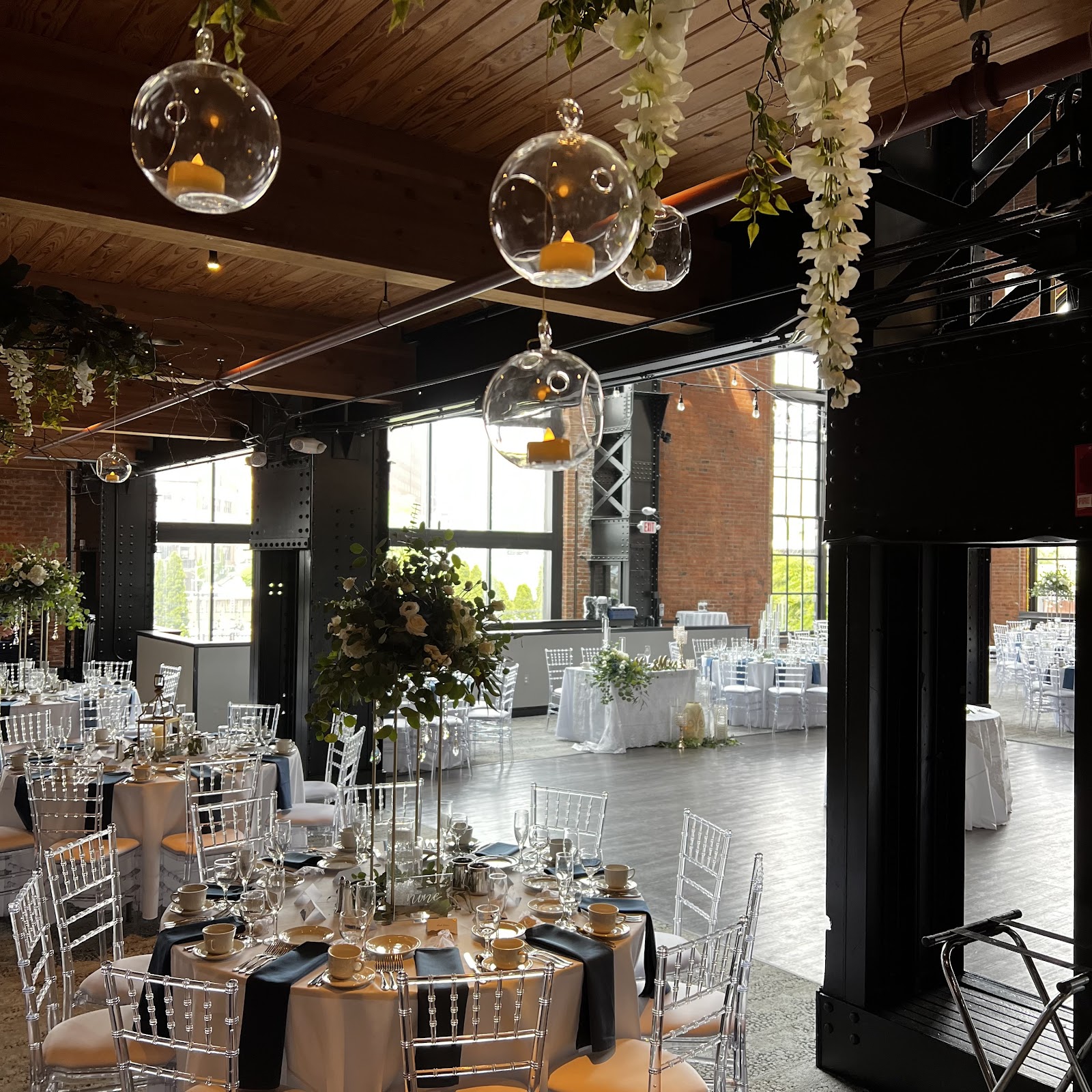
The frame is through the glass: the couple inside, the river beyond, and the industrial banks and bridges of the Cuyahoga behind that. It works because it combines two things that rarely occur together — a large soft light source close to the subject, and a background with real depth and specific character rather than a wall.
It is also a frame with a technical condition attached, and it is the same one at every glazed venue: in daylight the view outside is four to six stops brighter than the room, so no single exposure holds both a legible river and a correctly exposed face. This is written as that frame and the three things it needs. We have not photographed a wedding at Windows on the River; riverside glazed venues behave consistently. Which elevation the glazing faces, whether there is any outdoor terrace or dock access, and whether the house lighting is adjustable are the questions for their team.
Windows on the River at a glance
| Where | The Cuyahoga, Cleveland, Ohio |
| Character | A riverside event venue defined by its glazing |
| The frame | Through the glass: couple inside, river and industrial banks beyond |
| It needs | A decision about brightness, two metres of distance, and a clock time |
| Ask first | Glazing orientation, terrace or dock access, lighting control |
The frame, and the three things it needs
The first requirement is a decision about the brightness difference, made deliberately rather than discovered. There are three honest answers. Expose for the room and let the window go white, which is legitimate if chosen and gives the cleanest background available. Expose for the view and light the couple to match it, which needs real power because you are competing with daylight and needs the source well off the camera axis so it does not reflect back. Or wait for the crossing, when the levels converge on their own.
Which answer is right depends on what is actually outside, so the first five minutes are spent looking out of the windows rather than at the rooms. A working river with bridges and industrial banks is a genuinely good background worth matching or waiting for; a blank stretch of water is not, and blowing that window to white is the correct treatment rather than a compromise.
The second requirement is two metres of distance. Pressed against glass a subject is lit from a very oblique angle with the far side of the face falling away sharply; two metres back the same window covers them evenly — soft, still clearly directional, and with enough level that the room behind still reads rather than dropping to black. Turning the subject then gives three setups without moving anything: facing the glass, side-on, and back to it.
The third requirement is a clock time, because the crossing is the version of this frame that matters most and it happens once. For roughly fifteen to thirty minutes after sunset the river and the banks outside fall to about the brightness of the interior lighting, and a single exposure holds the lit room, the couple and the water with a sky that still has colour in it. Take the sunset time, add fifteen minutes, be in position with the couple already there, and bracket a sequence as the sky falls.
Water adds something specific to all of this. A river is a broad flat reflector, so a glazed room facing it receives light twice — directly from the sky and again bounced up off the surface. That raises ambient, fills shadows from below, and produces a quality of light that inland rooms do not have. It is genuinely flattering and it is the reason a riverside glazed venue is better than a glazed venue anywhere else.
At the crossing it does more: the water holds the same colour as the sky, which doubles the amount of colour in the frame and puts it below the horizon as well as above it. That is why a riverside crossing beats a city one.
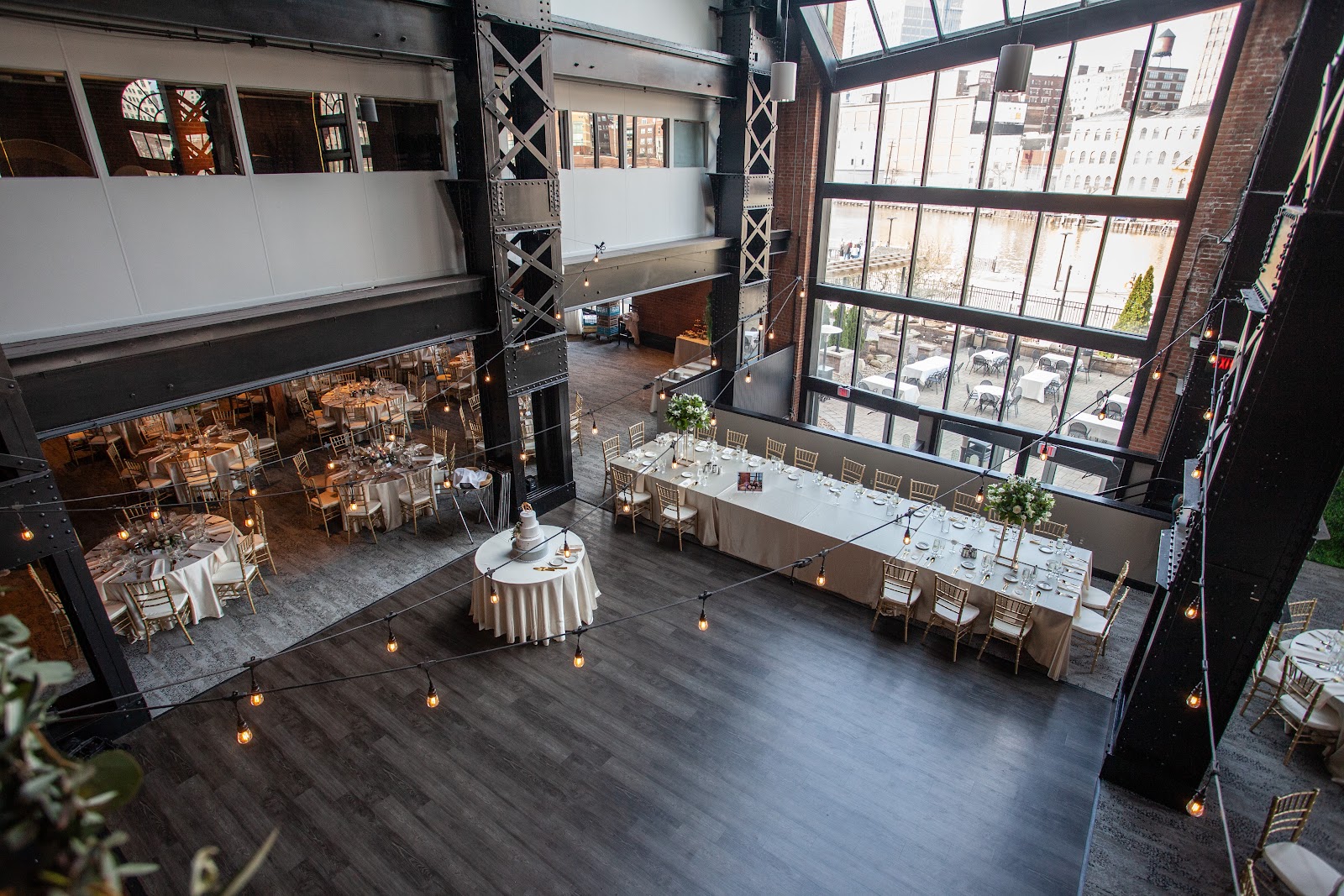
After the crossing the glass inverts completely. The lit interior becomes brighter than outside, so the windows reflect the room rather than showing the river — and at a venue where the glazing is the main feature that change is total rather than partial. Lights go off the camera axis, frames go oblique rather than square, and the reflection becomes material: a couple and a lit room doubled in dark glass with bank lights beyond is a good frame if no stand is in it. Check the glazed corners before guests arrive, because a corner reflects from both sides at once.
The river, the terrace and the industrial banks
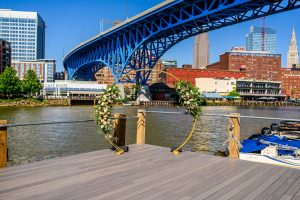
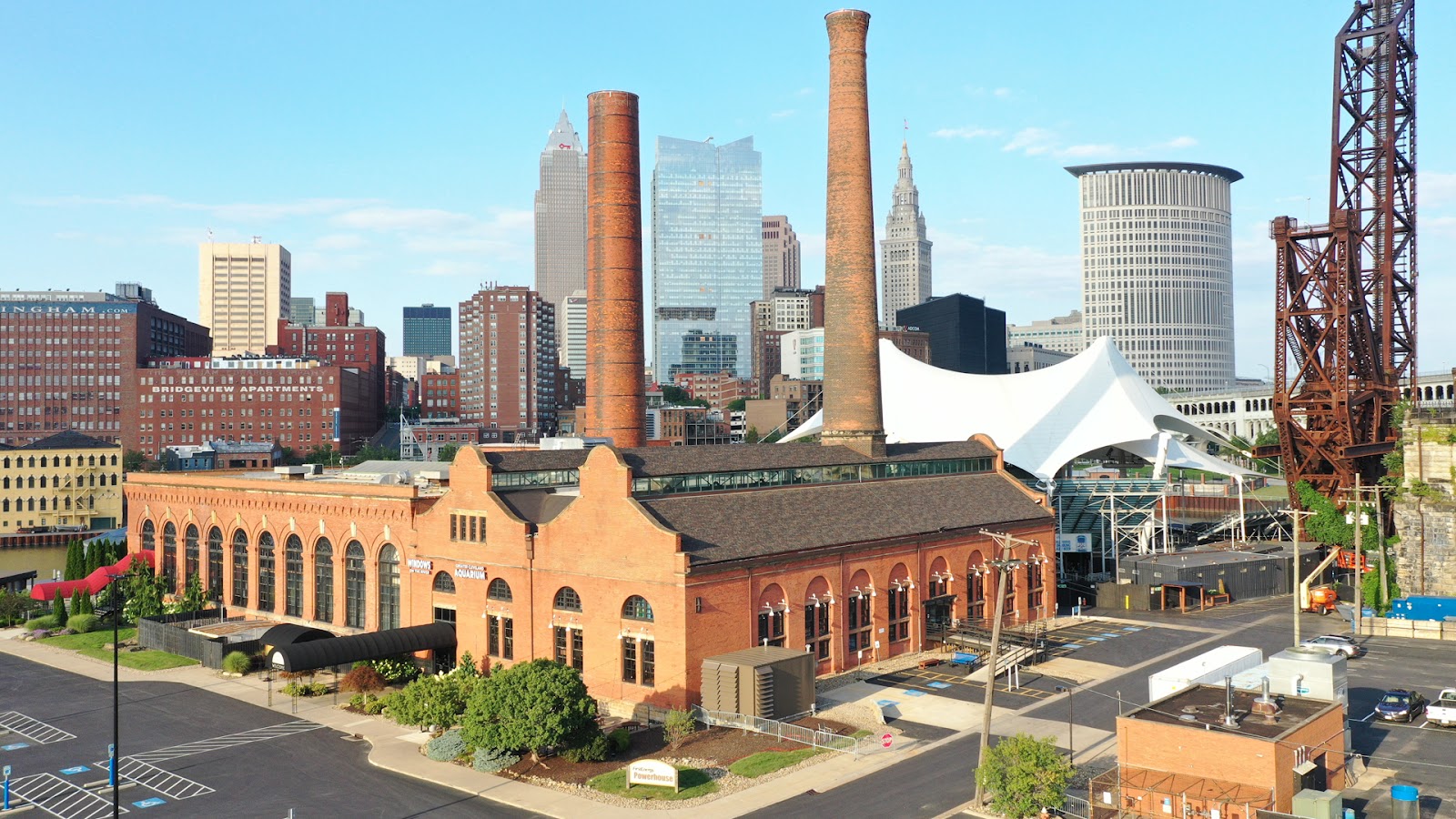
The Cuyahoga’s own character is the reason this background is worth matching. A working river with industrial banks, lift bridges and freight infrastructure is specific in a way that open water is not — it reads as a place rather than as a body of water, and it gives layers for a long lens to compress: near bank, water, far bank, bridge, sky.
That means a long lens outdoors rather than a wide one. At 135mm or 200mm the bridges and the banks stack up behind a couple as structure; at 24mm they become a thin strip under a large sky. A waterfront is almost always a long-lens environment, which is counter-intuitive because the space itself is wide.
A low camera is the other riverside technique. Dropping close to the paving or decking stretches the water’s edge towards the horizon, pushes the horizon down and lets the sky and the bridges occupy the upper frame. Standing at eye level on a dock wastes the one thing a dock gives you.
The geometry to avoid is the sun’s specular path — the hard bright lane of reflected sun running towards the camera, which at the exposure a face needs is unrecoverable white. Position the couple lit across the frame, with the water to one side or behind them but the sun not in line with it.
Still water mirrors early in the day and breaks into texture as the breeze builds, so a reflection frame is a morning proposition. And wind along a river valley is stronger and gustier than a street back from it, which matters for a veil, for hair and for any light stand.
Industrial structure gives one more thing worth using: hard geometry in the background. Bridges, cranes and steelwork read as strong lines, which means a couple placed against them separates cleanly — unlike a background of foliage or water, which is tone rather than structure. Committing to a bridge as a deliberate element, rather than letting it drift into the edge of a frame, is the difference between a located photograph and a cluttered one.
If there is any terrace or dock, it is worth asking about specifically, because a frame taken outdoors at the crossing is different from one taken through glass at the same moment — and the two cannot both be had, since they are the same twenty minutes. Choose in advance which matters more.
- Look out of the windows first; the view decides which answer is right
- Two metres back from the glass, not pressed against it
- Sunset plus fifteen, in position, couple already with you, bracketed
- Go long outside; the river’s layers need compressing, not including
- Choose between the outdoor crossing and the indoor one — not both
Cleveland's light, and the year
Cleveland’s weather deserves stating plainly because it changes the planning at a glazed venue more than at any other kind. This is one of the cloudiest major cities in the country, with persistent overcast through much of the late autumn, winter and spring — and that is genuinely good news for a building made of windows.
An overcast sky is an enormous diffuser: light arrives soft, even and shadowless with open shadows and no hard edge anywhere, which is the best portrait light there is. Under it, every elevation behaves like a shaded one, the brightness difference between inside and out narrows, and position stops mattering. A glazed venue in Cleveland is therefore workable on more days than one in a sunnier city, which is a real and underappreciated advantage.
Two adjustments come with overcast. Add half a stop to a stop, because a bright grey sky in the frame pulls a meter dark. And bring shape back subtractively — placing the couple near anything dark removes light from one side and restores a gradient — because a uniformly bright sky has no direction to work with and adding a flash usually makes a frame worse.
The lake decides the seasons and it does two specific things. In summer, Cleveland’s north-facing lakefront means the sun sets well north of west, which puts summer sunsets over water rather than over land — a fact worth knowing, because in winter the sun sets south of west and the same view has no sunset in it at all. The direction of the light at the crossing is therefore a seasonal variable rather than a fixed one.
And in winter the lake produces heavy lake-effect snow, which is localised, sudden and capable of arriving in quantity. That is a logistics question for guests as much as a photographic one, and it belongs in a conversation about a December or January date. Snow is also the best natural fill there is, lifting exactly the shadows a low sun carves while fooling a meter by about two stops — and snow on an industrial riverside, seen from a warm lit room, is a frame very few venues can offer.
Winter days are short, with sunset in the middle of the afternoon in December, which moves the crossing to the late afternoon and may put it before or during the ceremony rather than after. Cold clear air does give the deepest and longest-lasting sky colour of the year, so when the crossing does happen in winter it is better than its summer version.
One equipment note: a heated interior and cold river air fog a lens comprehensively in both directions, and the crossing will not wait. Get a body out to ambient temperature well before the window rather than carrying it out cold.
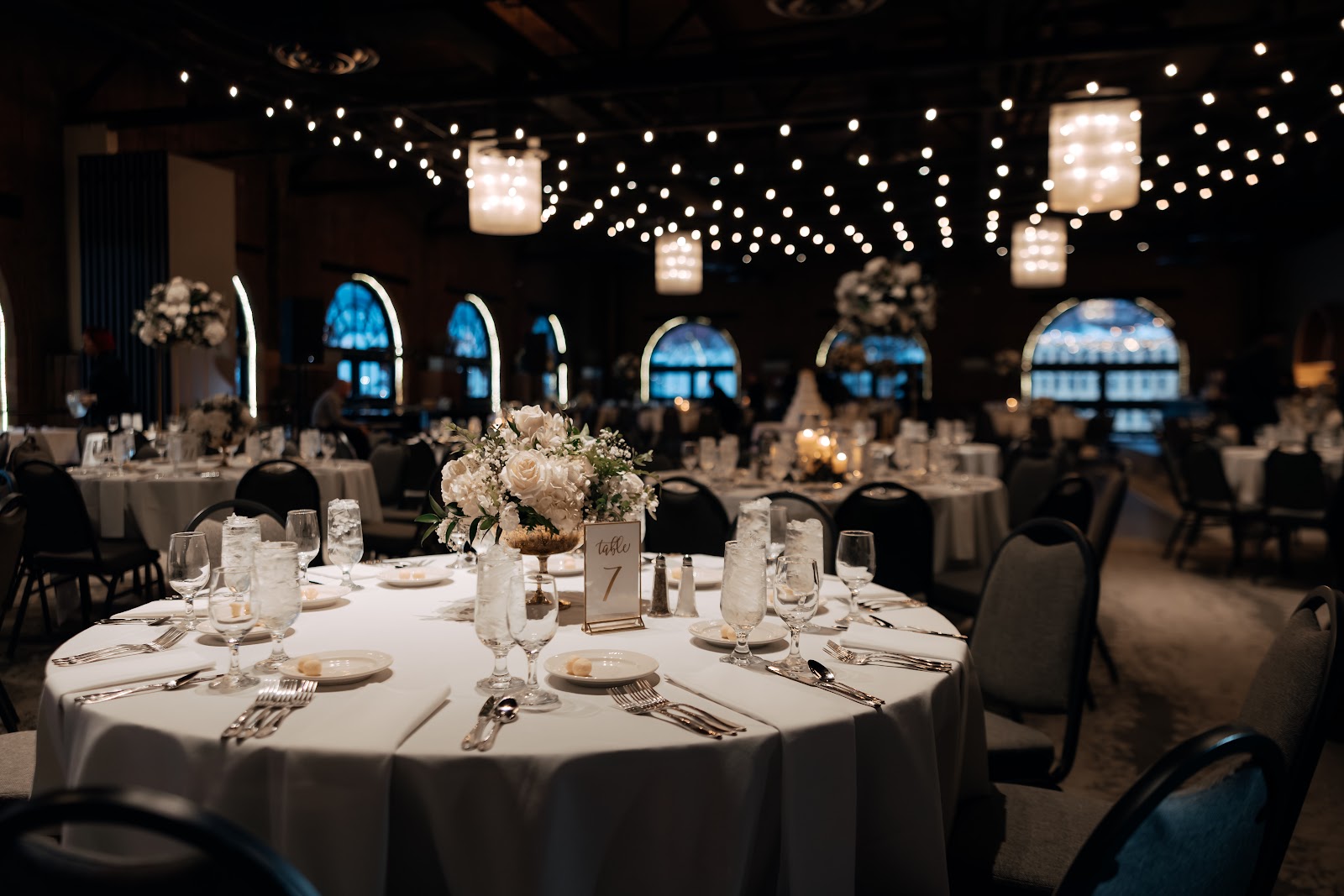
More frames from Windows on the River
Windows on the River wedding photography: common questions
What is the defining frame?
Through the glass: the couple inside, the river beyond, and the industrial banks and bridges behind. A large soft source close to the subject with a background that has real depth.
What has to be decided first?
What to do about the brightness difference — blow the window to white, light the couple to match the view, or wait for the crossing. Look out of the windows before looking at the rooms.
How far back from the glass?
About two metres. Pressed against it the light is very oblique and the far side of the face falls away; two metres back it is soft, still directional, and the room behind still reads.
Why is a riverside crossing better than a city one?
Because the water holds the same colour as the sky, which doubles the colour in the frame and puts it below the horizon as well as above it.
Does Cleveland's cloud help or hurt?
It helps considerably. This is one of the cloudiest major cities in the country, and overcast makes every elevation behave like a shaded one while narrowing the inside-outside brightness difference.
Does the sunset direction change through the year?
Yes, and it matters here. Cleveland’s lakefront faces north, so summer sunsets fall over water while winter sunsets fall south of west, over land.
More Cleveland, OH venue guides
We are writing a photographer’s guide to every venue we would happily shoot in Cleveland, OH. Here are three more, plus the full index:
- Playhouse Square, Cleveland: One Frame, and How It Is Made
- The Agora, Cleveland: Photographing a Vaudeville Theatre Turned Music Venue
- The Cleveland Botanical Garden: How the Light Moves
All Cleveland, OH Wedding Venues →
Planning a wedding at Windows on the River?
One frame, one decision, one clock time. Tell us your date and we will set all three.