 The Laniakea YWCA: A Building Organised Around Its Courtyard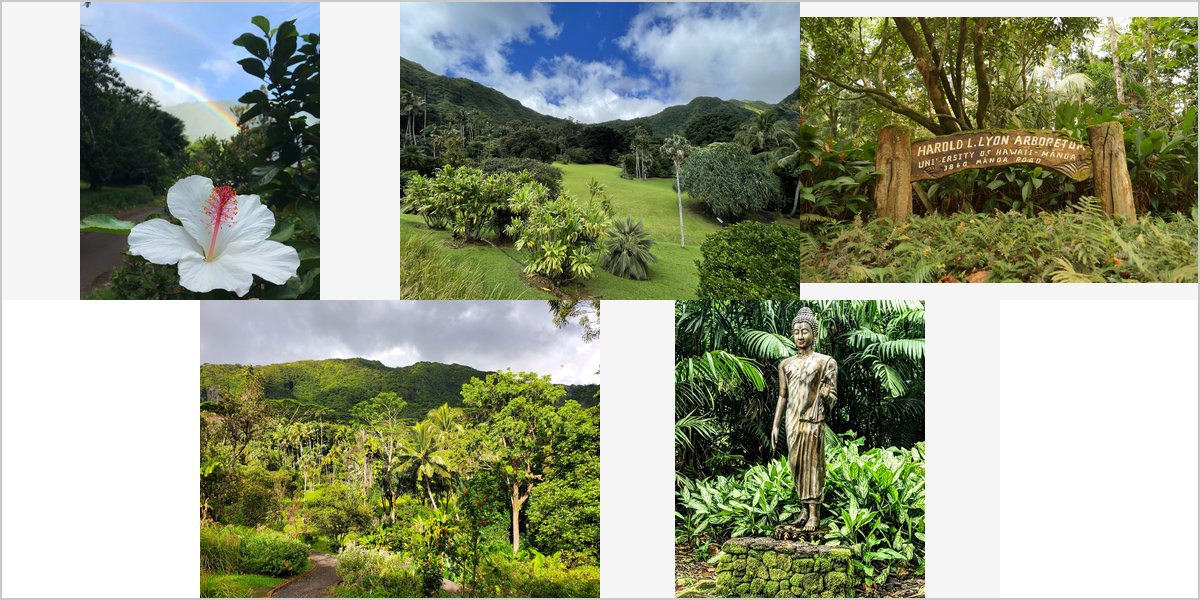
Lyon Arboretum: One Decision About Rain Governs Everything
This is a rainforest in a valley that collects cloud. Rain is not a risk here, it is the climate.
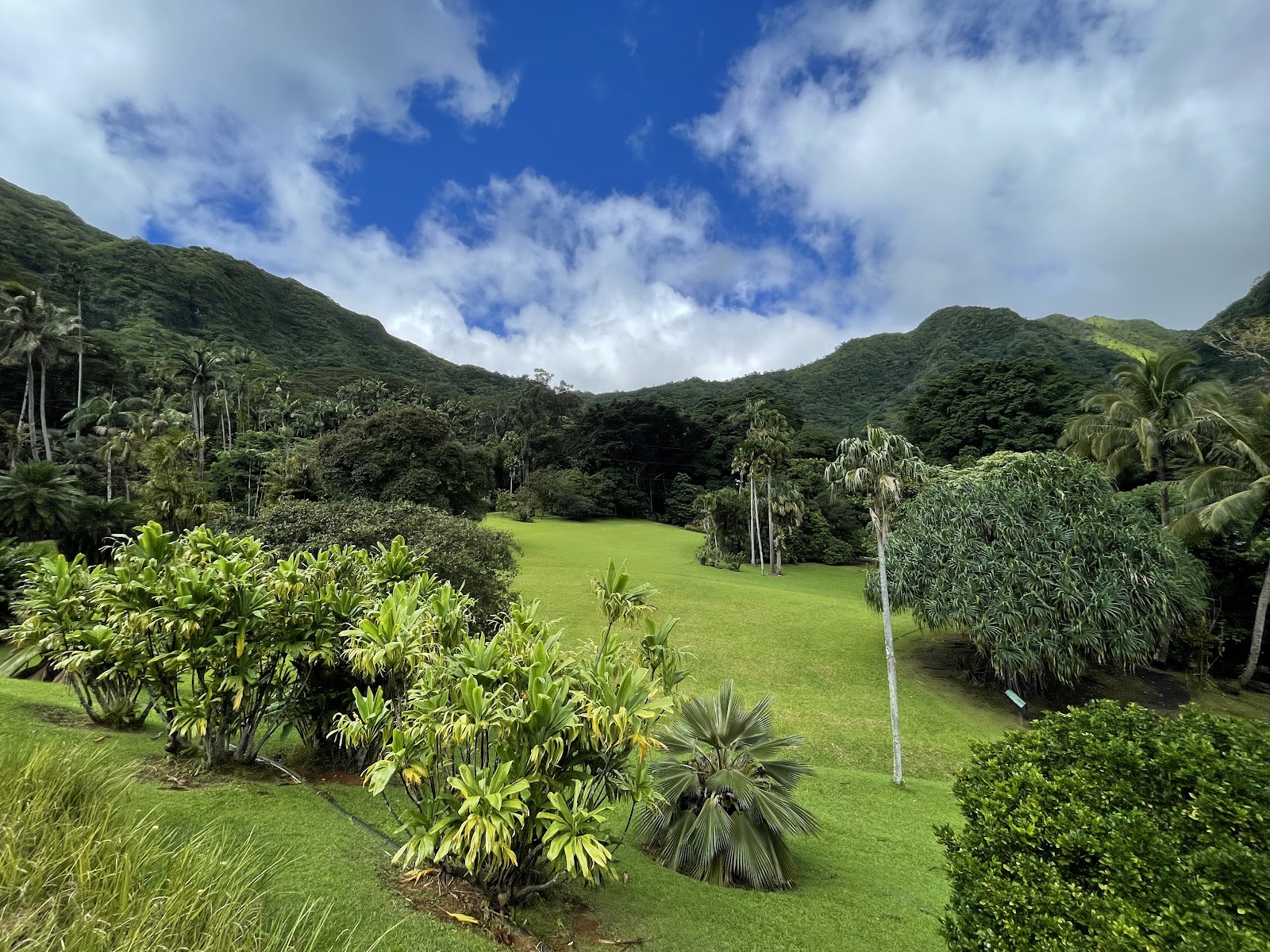
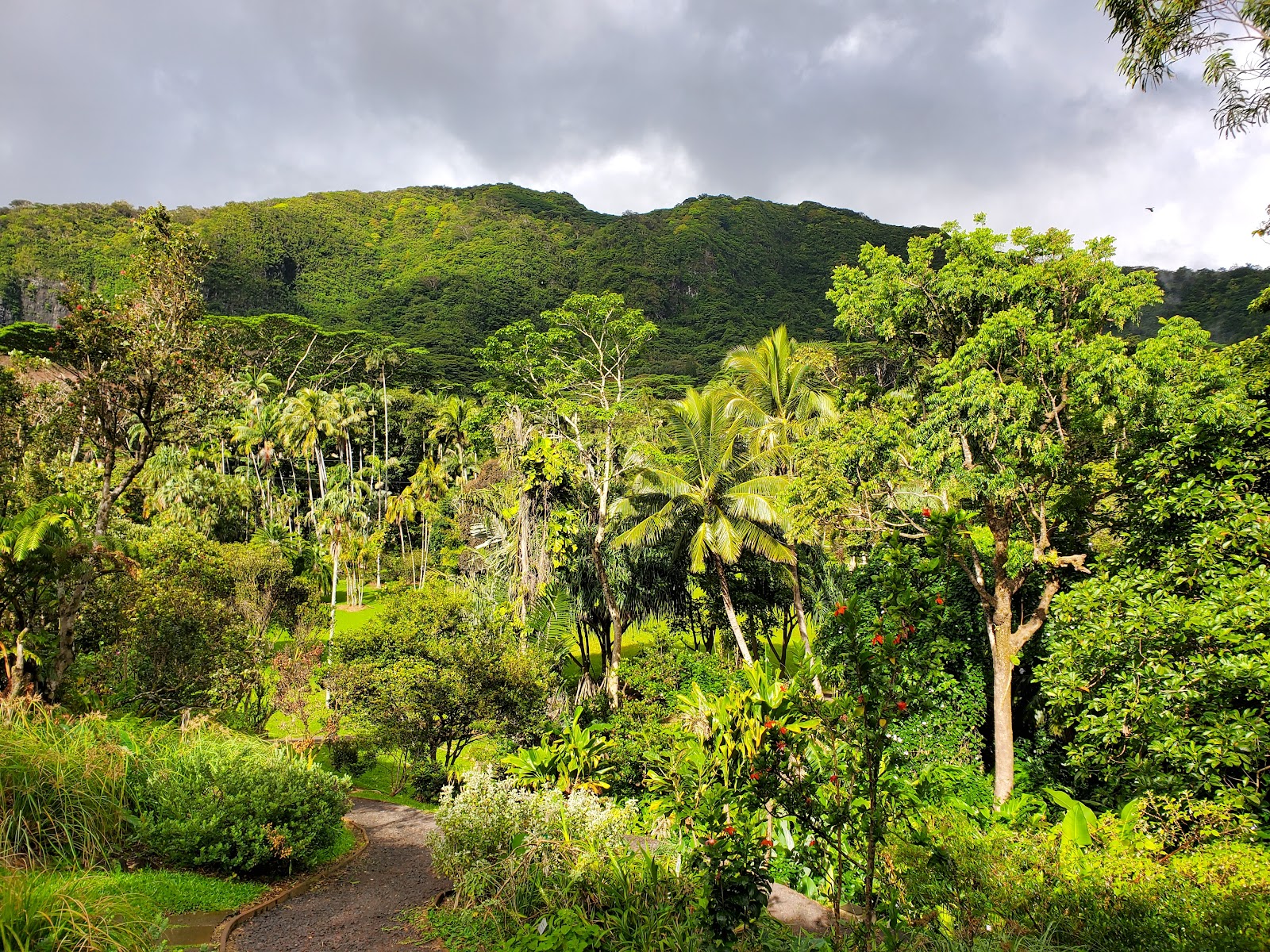
The Lyon Arboretum occupies the upper end of Manoa Valley above Honolulu, a research arboretum of dense tropical planting — fern gardens, tall canopy, understory and mountain views — set in one of the wetter places on Oahu.
That last point is the decision this venue turns on, and it needs stating plainly rather than diplomatically: upper Manoa Valley collects cloud against the Koolau range and receives rain on a large majority of days, often as brief afternoon showers rather than sustained weather. A couple booking here is not taking a weather risk that might not materialise; they are choosing a rainforest, and the photographer’s job is to decide in advance whether the plan resists that or uses it.
Both are legitimate and they produce different galleries. We have not photographed a wedding at the Lyon Arboretum; tropical rainforest light and wet canopy behave the same wherever they occur. Which areas may be used for ceremonies, what the access and footwear situation is, and what shelter exists are questions for their team — and shelter is the one that matters.
The Lyon Arboretum at a glance
| Where | Upper Manoa Valley, above Honolulu, Hawaii |
| Character | Rainforest arboretum — dense canopy, fern gardens, mountain views |
| The fact | Rain on most days, usually as brief showers rather than fronts |
| The fork | Plan around the rain, or plan with it |
| Ask first | What shelter exists, and how far it is from the ceremony site |
Planning around it: what the dry version needs
If the intention is to avoid rain in the pictures, the plan is about timing and shelter. Showers in this valley are typically short and often come through in the afternoon, so an earlier ceremony is statistically the better bet — and morning also gives the softest light under canopy, before the sun climbs high enough to create dapple.
Shelter proximity is the practical variable. A shower that passes in eight minutes is an inconvenience if there is a roof thirty seconds away and a disaster if the nearest cover is a five-minute walk with forty guests in formal clothes. That distance is the single most useful thing to establish on a site visit, and it should shape where the ceremony sits rather than being discovered on the day.
For the photographer, a dry-version plan means carrying rain protection that actually works in a downpour rather than a drizzle — a proper cover, not a bag over the body — and accepting that the gear will be damp regardless. In this humidity, condensation is constant: a lens brought from an air-conditioned car into saturated valley air will fog, and it will take longer to clear than it would in a drier climate. Acclimatise before you need the camera.
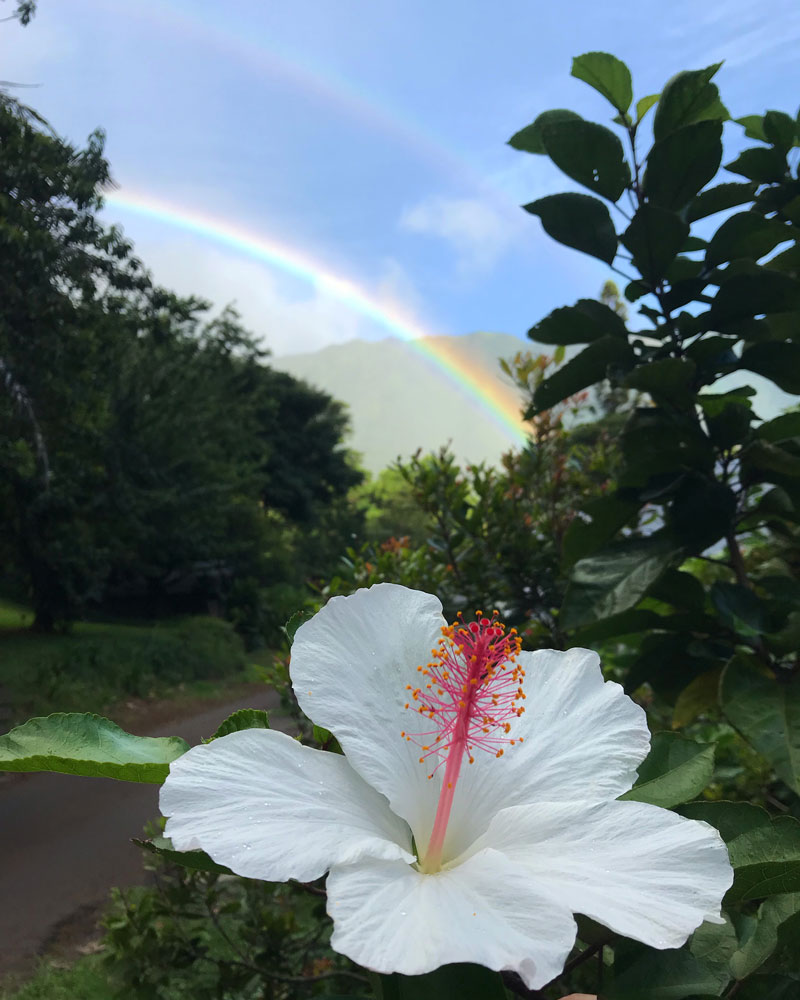
The dry version also has a real advantage worth naming. After a shower, the canopy drips and the whole forest is wet, which makes every leaf reflective and saturated — colours are deeper, the greens are richer, and low sun through a wet canopy is extraordinary. The best light at this venue often arrives in the twenty minutes after the rain stops, so a plan that waits out a shower and then moves quickly is better than one that gives up.
Planning with it: what rain actually gives
The alternative is to treat rain as the venue’s character rather than its failure mode, and in a rainforest that is a defensible and often better choice. Rain does three photographic things, all of them useful. It puts visible texture in the air, so a shaft of light through falling rain reads as atmosphere rather than as empty space. It makes every surface reflective, which deepens colour and adds highlight structure to foliage. And it justifies umbrellas, which are one of the few props that genuinely improve a wedding photograph — a clear or pale umbrella gives shape, a frame within the frame, and a reason for the couple to be close together.
Mist is the other gift, and it is specific to a valley like this. Cloud caught against the range moves through the upper valley, which means there are moments when the canopy behind a couple dissolves into soft grey depth — natural aerial perspective that separates a subject from its background better than any aperture. Those moments are brief and they are the best frames the site produces.
The technical requirement is light, because a rainforest under cloud is dark. Dense canopy plus overcast is several stops below an open garden, so expect fast lenses wide open and higher ISO than the scene appears to need — the eye adapts to green shade far better than a sensor does. A small warm-gelled source on faces also does a great deal here, both for exposure and because it separates warm skin from an overwhelmingly green surround.
A couple being asked to stand in the rain need to have agreed to it beforehand. This is a conversation at booking rather than a suggestion at the moment: some couples love the idea and some do not, and knowing which before the day determines whether the photographer is offering a great frame or creating a problem.
What works in your favour
- Rainforest canopy, ferns and mist that no temperate garden can match
- Valley cloud provides natural aerial perspective and background separation
- The twenty minutes after a shower give the richest light on site
- Rain justifies umbrellas, one of the few genuinely useful props
- Mountain views where the canopy opens
What to plan around
- Rain on most days, so it is a certainty to plan for rather than a risk
- Dense canopy under cloud is several stops darker than it appears
- Heavy green cast on skin from foliage in every direction
- Constant humidity fogs lenses and keeps equipment damp
- Shelter distance may be long, which matters with guests in formal clothes
The green cast, the canopy and the practical realities
A rainforest is the most extreme green-cast environment a photographer works in. Light arriving on a face has usually bounced off a great deal of foliage, and green on skin reads as illness in a way warm or cool casts do not. It is also cumulative here in a way it is not in a temperate garden, because the canopy is dense on all sides and above.
Two fixes, used together. Position: find the places where light reaches a subject without passing through leaves — a path, a clearing, an open edge, the space under a gap in the canopy — and work there rather than in the prettiest thicket. And a warm source on faces, which gives skin a dependable base and makes the green read as a deliberate surround rather than a fault. Set a custom white balance under the canopy rather than trusting auto, and set it again if you move into a clearing.
Dapple is the other canopy problem, and it appears whenever the sun does. Patches several stops apart, moving with the breeze, neither soft nor directional — it cannot be corrected and the only remedy is to move into full shade or full light. In a closed rainforest the good news is that full shade is easy to find; the bad news is that it is also very dark.
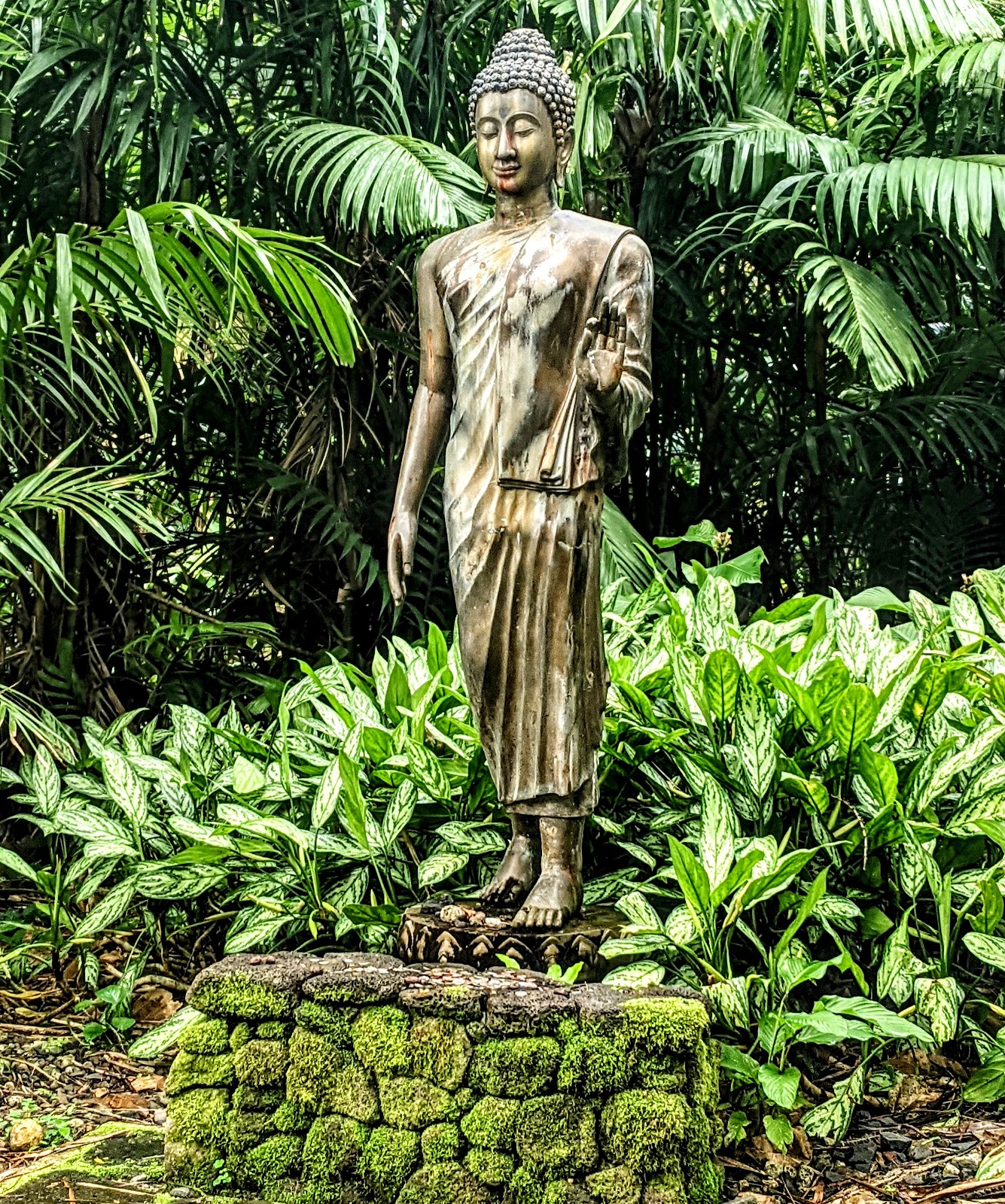
Practicalities matter more here than at most venues. The ground is wet and often muddy, which affects footwear, dresses and where anyone can reasonably stand. Access roads in the upper valley are narrow. Mosquitoes are present in standing-water areas. And the arboretum is a research institution, so planting is a collection rather than scenery — keep to paths, do not ask anyone to step into beds, and confirm in advance which areas are open for events.
The timing summary: morning for the softest canopy light and the lowest chance of a shower, the twenty minutes after any rain for the richest colour, and a short mountain-view block wherever the canopy opens if cloud allows. Everything here is short and opportunistic rather than scheduled, which is the honest description of photographing in a rainforest.
More frames from The Lyon Arboretum
The Lyon Arboretum wedding photography: common questions
How likely is rain?
High — upper Manoa Valley collects cloud against the Koolau range and gets rain on most days, usually as brief showers rather than sustained weather. It is a certainty to plan for rather than a risk that might not happen.
Is that a reason to avoid the venue?
No, but it is a reason to decide in advance whether the plan resists the rain or uses it. Both work and they produce different galleries. What fails is arriving with a dry-weather plan and no agreement about what happens otherwise.
What does rain actually give you?
Visible texture in the air so shafts of light read as atmosphere, reflective surfaces that deepen every colour, and a reason for umbrellas — one of the few props that genuinely improves a photograph. Plus mist, which separates a subject from the background better than any aperture.
When is the best light here?
The twenty minutes after a shower stops. The canopy drips, every leaf is reflective and saturated, and low sun through a wet canopy is extraordinary. A plan that waits out a shower and then moves quickly beats one that gives up.
How bad is the green cast?
This is the most extreme green environment there is, because canopy surrounds the subject on all sides and above. Position people where light reaches them without passing through leaves, add a warm source on faces, and set a custom white balance under the canopy.
What should be checked on a site visit?
How far the nearest shelter is from the ceremony site. A shower that passes in eight minutes is trivial with a roof thirty seconds away and a disaster if cover is a five-minute walk with forty guests in formal clothes.
More Honolulu, HI venue guides
We are writing a photographer’s guide to every venue we would happily shoot in Honolulu, HI. Here are three more, plus the full index:
- The Moana Surfrider: How the Banyan Courtyard Frame Is Made
- The Royal Hawaiian: Field Notes on a Pink Building by the Sea
- The Bishop Museum: Photographing Basalt, Koa and a Great Hall
All Honolulu, HI Wedding Venues →
Planning a wedding at The Lyon Arboretum?
Rain here is the climate, not a risk. Tell us your date and we will agree which version of the day you want.