 The Laniakea YWCA: A Building Organised Around Its Courtyard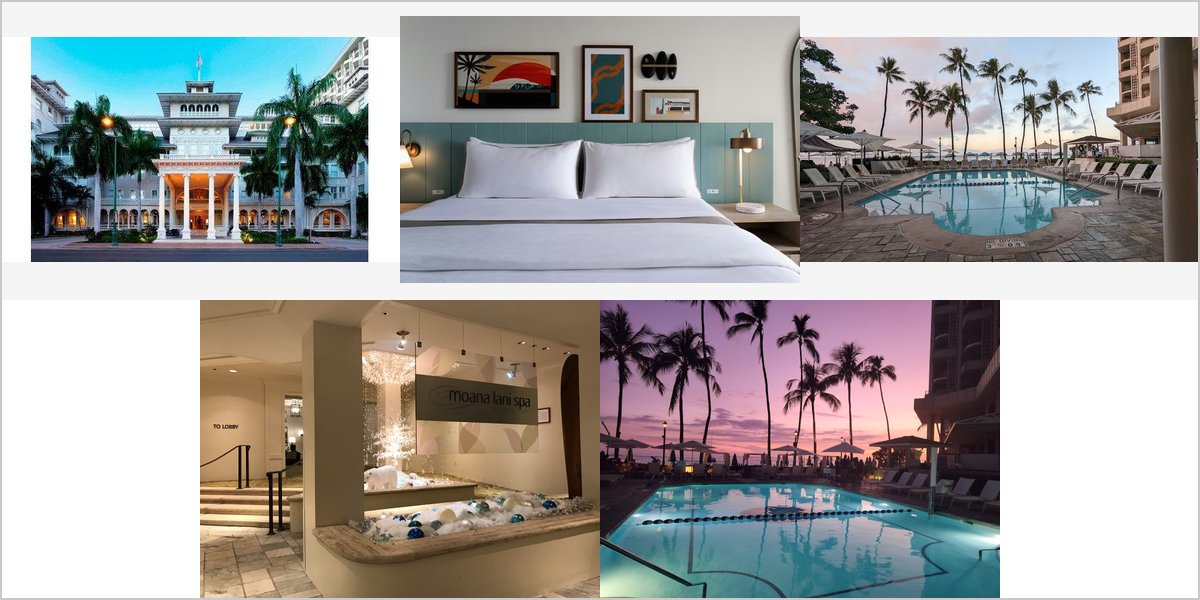
The Moana Surfrider: How the Banyan Courtyard Frame Is Made
A mature banyan is the best and hardest thing here. It is a ceiling of leaves with almost no light beneath it.
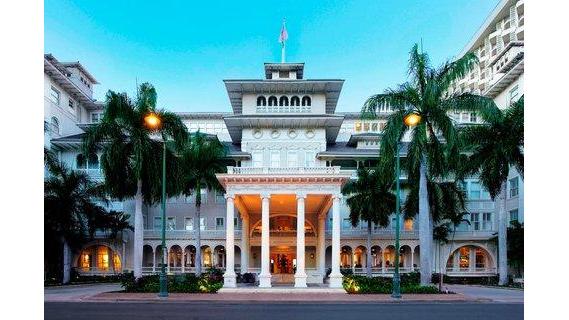
The Moana Surfrider opened on Waikiki Beach in 1901, a colonial-style hotel of white-painted timber with verandahs, private lanais and a grand staircase, and a large mature banyan tree occupying its beachfront courtyard.
That tree is what distinguishes the venue photographically, and it is worth understanding properly because it behaves unlike any other garden feature. A mature banyan is not a tree with a canopy above it; it is a structure — aerial roots dropping to the ground, multiple trunks, a horizontal spread far wider than it is tall, and a canopy so dense that beneath it the light drops several stops and goes strongly green. It produces a single distinctive frame and it fights you for it.
So this is an account of building that frame, and then what the rest of the hotel gives. We have not photographed a wedding at the Moana Surfrider; mature banyans, white-painted colonial timber and Waikiki beach light behave the same wherever they occur. Which courtyard, lanai and ballroom spaces are available are questions for their events team.
The Moana Surfrider at a glance
| Where | Waikiki Beach, Honolulu, Hawaii |
| Character | 1901 colonial hotel in white-painted timber, with a banyan courtyard |
| The subject | A mature banyan — aerial roots, multiple trunks, very dense canopy |
| The problem | Several stops darker and strongly green beneath it |
| The other trap | White-painted timber clips with nothing underneath it |
Step one: light, because there is very little under there
A banyan’s canopy is dense and broad, and the ground beneath it can sit three or four stops below the open beach a few metres away. That gradient is the first thing to deal with, because a frame that includes both the shade under the tree and the bright sand beyond cannot hold them in one exposure without help.
The reliable approach is to light the couple to within a stop or so of the background and expose for the background. That keeps the beach and sky with tone in them and the couple properly exposed — and because the ambient under the tree is low, the light needed is modest. A single source at face height does it, which is a pleasant change from competing with tropical sun in the open.
Green is the second half of the problem and it is severe here, because a banyan’s canopy is directly overhead and very dense, so almost all the ambient light on a face has bounced off leaves. Skin reads sallow. A warm-gelled source with white balance set to it fixes it completely: warm skin against a deep green surround is a strong, deliberate-looking combination, and it is the only version that renders faces properly.
Where no light is available, position is the fallback. Work at the edge of the canopy rather than under its centre, where sky light still reaches the subject directly, and keep the darkest part of the tree as background rather than as the light source.
Step two: composition, because a banyan is a structure not a backdrop
The mistake is to treat the tree as a green wall to stand people in front of. What makes a banyan remarkable is its structure — aerial roots descending in columns, trunks splitting and rejoining, a horizontal canopy pressing down — and none of that reads in a frame composed as a simple portrait against foliage.
Two compositions use it properly. Shoot through the roots: place a descending root or trunk in the near foreground, slightly out of focus, with the couple beyond it, so the tree frames them and the depth is obvious. Or shoot up and wide from beneath, with the couple small and the canopy and root columns filling the frame, which gives scale and makes the tree the subject.
The horizontal spread also means the tree provides a natural ceiling, and a ceiling is a useful compositional device — it closes the top of the frame and contains the image in a way open sky does not. Frames made under a banyan feel enclosed and intimate for that reason, which is the opposite of everything else at a beach venue and is exactly why it is worth using.
One practical note: the ground under a mature banyan is usually root-covered and uneven. That affects where anyone can stand safely in formal shoes, and it is worth a look before positioning a group.
- Light the couple to within a stop of the bright background, then expose for it
- Gel warm and balance to it; a banyan’s canopy throws heavy green
- Compose through the roots, or up from beneath — never as a flat backdrop
- Use the canopy as a ceiling that closes the top of the frame
- Check the root-covered ground before positioning anyone in formal shoes
Step three: the white building, the beach and the hours
The hotel itself carries the opposite exposure problem to the tree, and both are on the same site. White-painted timber in tropical sun is close to the brightest surface a photographer encounters: gloss paint has no texture underneath it, so once it clips there is nothing to recover, and it will sit three or four stops above a shaded face standing beside it.
The answers are the ones any white-painted classical building needs. Shoot the building in the hours when low sun rakes it rather than striking it flat, because raking light both drops the brightness into range and reveals the depth in verandah balusters and mouldings. Expose for the paint and raise the couple with fill rather than metering for them. Or work inside a verandah’s shade and shoot outward, where the white timber is a mid-tone and the bright beach beyond becomes an enormous soft source in front of the subject.
That last option is the most useful thing on the property. A deep colonial verandah facing a bright beach is a huge soft key with a dark surround — available all day, regardless of where the sun is, and better than anything a photographer could carry. Two metres inside the shade line, facing out, and the light is solved.
The beach adds the Waikiki conditions: near-overhead sun for long stretches at this latitude, strong upward bounce off pale sand and bright water pushing contrast, trade winds that make a veil a held-or-removed decision, and a busy public beach in every daylight frame. Long lens, tight framing, and early morning if the sand matters.
The grand staircase indoors is the reliable architectural set piece for the usual reason: a stair arranges people at different heights automatically, which solves large groups without any direction, and one step apart separates a couple cleanly. Interiors here are period rooms with warm fixtures — bring a key, gel it warm, let it own the faces, and let the house lighting be atmosphere.
The sequencing is straightforward once all of that is laid out: verandah shade through the middle of the day, the banyan whenever you have a light with you, the beach and building elevations in the first or last ninety minutes, and interiors as the block that can absorb any delay because nothing in them is tied to the sun.
What works in your favour
- A mature banyan giving an enclosed, intimate frame unique to the site
- Deep colonial verandahs providing the best light on the property, all day
- A grand staircase that solves group composition without direction
- An 1901 building with genuine period character on the beachfront
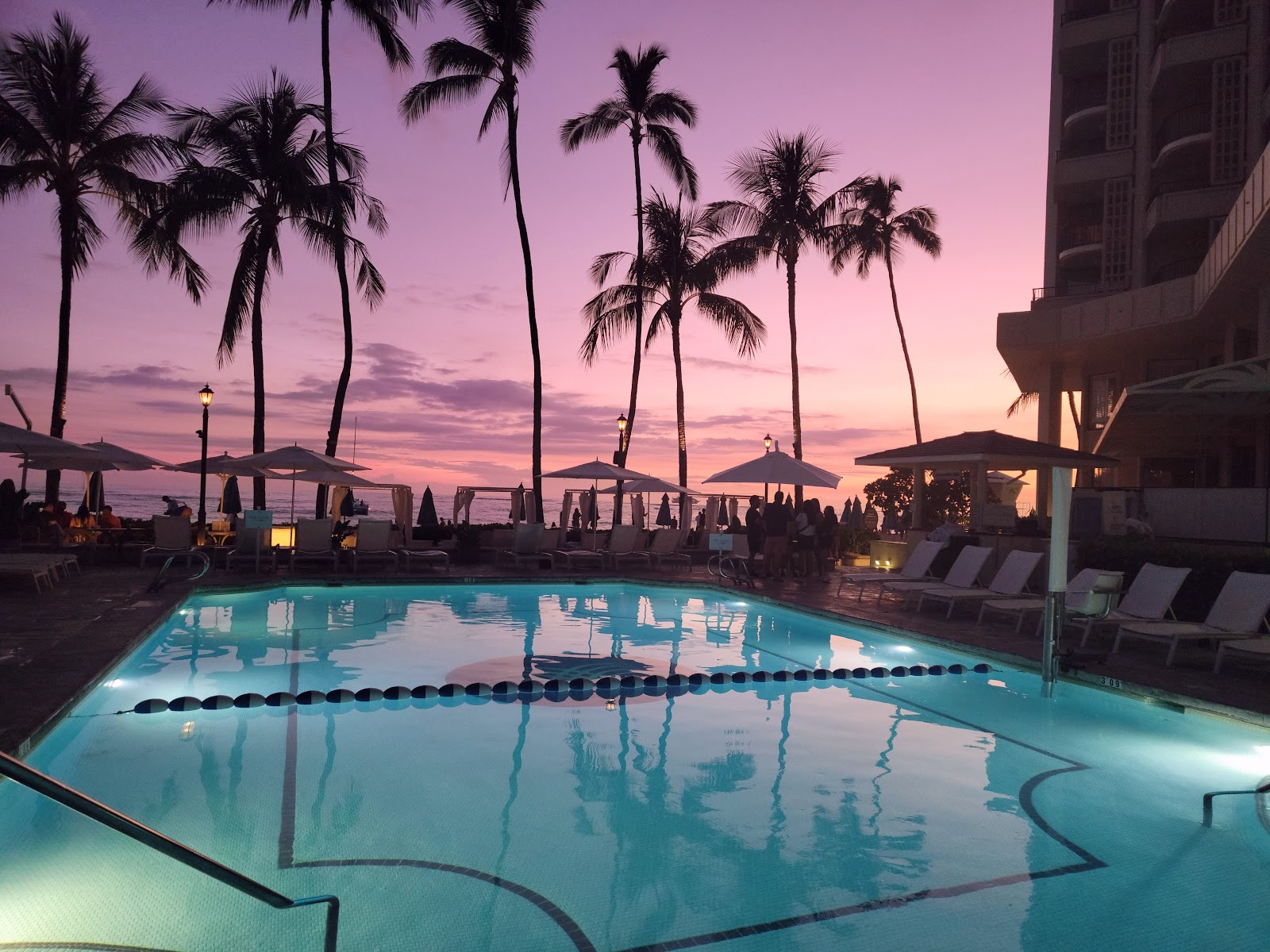
- Waikiki sunsets with a clear western horizon over open water
What to plan around
- Three to four stops darker beneath the banyan than on the sand beside it
- Heavy green cast from a dense canopy directly overhead
- Gloss white timber clips with no texture underneath to recover
- Root-covered uneven ground under the tree, in formal shoes
- Near-overhead midday sun and a very busy public beach
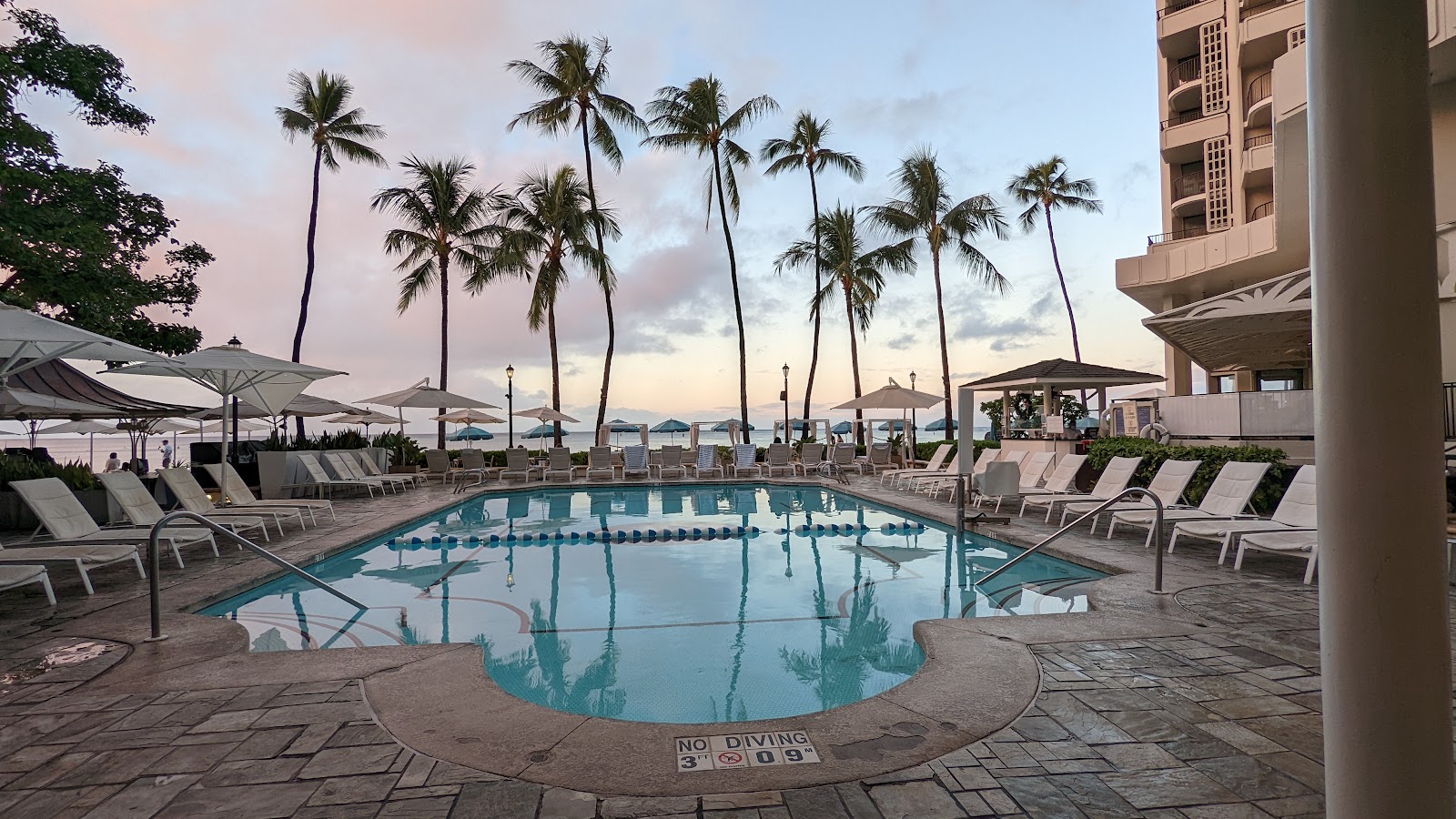
More frames from The Moana Surfrider

The Moana Surfrider wedding photography: common questions
Why are photographs under the banyan so dark?
Because a mature banyan’s canopy is dense and broad, so the ground beneath sits three or four stops below the open beach a few metres away. A frame containing both cannot hold them in one exposure without added light.
How much light do you need under there?
Less than you would think. Because the ambient is so low, a single source at face height brings the couple to within a stop of the bright background. Then expose for the background so the beach and sky keep their tone.
How do you deal with the green?
A warm-gelled source with white balance set to it. The canopy is directly overhead and very dense, so nearly all the ambient on a face has bounced off leaves. Warm skin against a deep green surround is the only version that renders faces properly.
How should a banyan be composed?
Never as a flat green backdrop. Shoot through a descending root in the near foreground with the couple beyond, or up from beneath with the couple small and the root columns filling the frame. Its structure is what makes it remarkable.
What is the problem with the white building?
Gloss white timber in tropical sun has no texture underneath it, so once it clips there is nothing to recover, and it sits three or four stops above a shaded face beside it. Shoot it in raking light, or expose for the paint and raise the couple with fill.
What is the single best light here?
Inside a deep verandah, facing out towards the bright beach. That is a huge soft key with a dark surround, available all day regardless of the sun’s position, and better than anything you could carry.
More Honolulu, HI venue guides
We are writing a photographer’s guide to every venue we would happily shoot in Honolulu, HI. Here are three more, plus the full index:
- The Royal Hawaiian: Field Notes on a Pink Building by the Sea
- The Bishop Museum: Photographing Basalt, Koa and a Great Hall
- Foster Botanical Garden: Four Ways Out of the Tall-Canopy Problem
All Honolulu, HI Wedding Venues →
Planning a wedding at The Moana Surfrider?
One tree and one white building pull in opposite directions. Tell us your date and we will plan a light for each.