 The Please Touch Museum, Philadelphia: What It Suits and What It Does Not
The Philadelphia Museum of Art: One Frame and How It Is Made
The steps are the frame. Everything else in the day is arranged around getting them right.
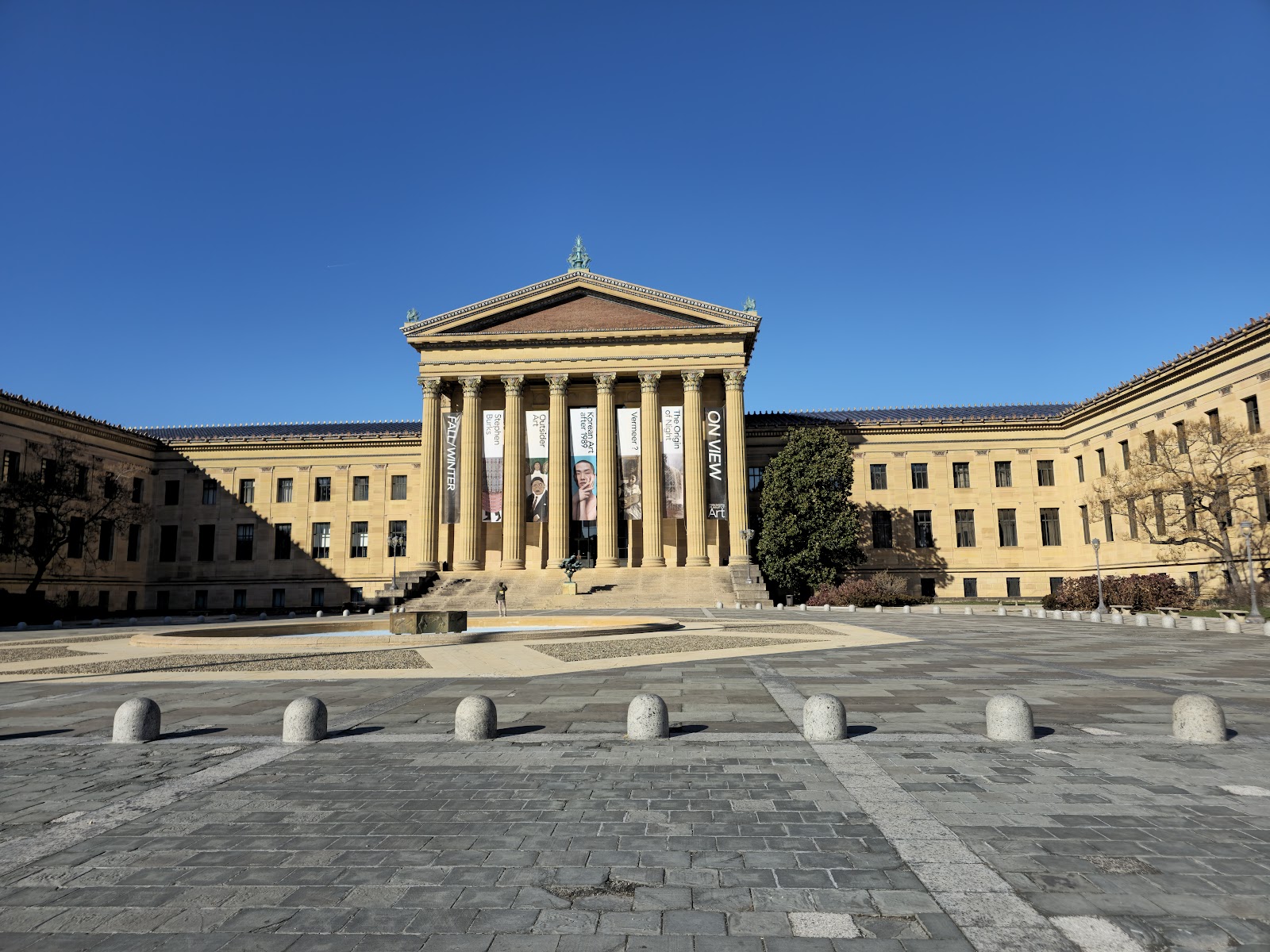
The Philadelphia Museum of Art holds art from around the world and offers an indoor ceremony option that is, as its own description has it, both elegant and awe-inspiring — and it also has the most recognisable flight of steps in the city.
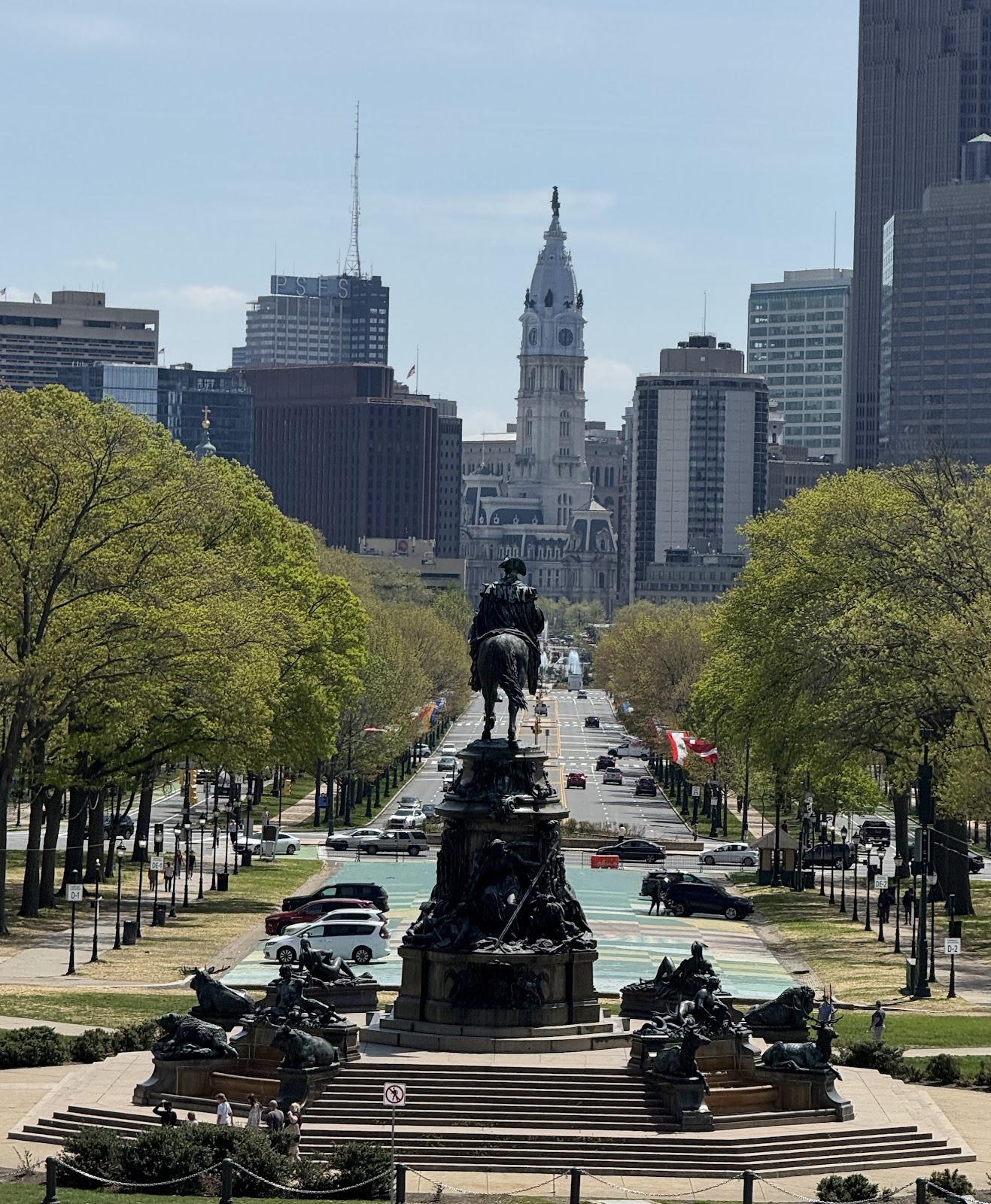
That flight is the frame worth building a day around, and it is worth being precise about why. A monumental staircase rising to a columned portico does four things at once that almost nothing else does: it gives elevation, so a couple can be genuinely above or below the camera without any interior; it gives tiers, so a group of any size arranges itself with everybody visible; it gives a strong axis, which means the composition is half made before the camera is raised; and from the top it gives a long view straight down a tree-lined boulevard, which is a background no other position in the city provides.
So the frame is on the steps, and it needs three things. We have not photographed a wedding at the Philadelphia Museum of Art; monumental civic staircases behave the same wherever they are built. Which spaces a booking includes, whether photography is permitted in galleries, and whether the steps and terraces can be used at particular hours are the questions for their team — the steps are public, which is a freedom and a complication at once.
The Philadelphia Museum of Art at a glance
| Where | Philadelphia, Pennsylvania |
| Character | A neoclassical art museum with galleries and a monumental flight of steps |
| The frame | On the steps — elevation, tiers, an axis, and a boulevard view |
| It needs | A decided viewpoint, a fix for the light, and the right hour |
| Ask first | Spaces included, gallery photography, access to the steps and terraces |
The frame, and the three things it needs
The first requirement is a decided viewpoint, because a monumental flight offers four genuinely different frames rather than four versions of one. From the bottom looking up, the steps rise away and the portico towers above the couple, which reads as scale and ascent. From partway up looking down, the treads fall away and the city opens behind, which reads as arrival. From the top looking back down the boulevard, the couple sits against a long receding avenue — the frame nobody takes because it requires climbing. And from the side, along the flight rather than up it, the treads become a set of strong parallel lines running across the picture.
All four are worth having, and the discipline is to take them in an order rather than wandering. Climbing a long flight twice in formal clothes is not a thing anyone will do willingly, so the sequence should go up, work at the top, and come down — not up and down repeatedly.
The second requirement is a fix for the light, and it depends entirely on which way the flight faces. A staircase facing towards the setting sun gives raking light along the treads in the last ninety minutes, which separates every step into a line of light and shadow and makes the flight read as a flight rather than as a ramp. A staircase facing away from it is in its own shadow at that hour — which is not a loss, because a large flight in open shade is soft even light with a clean sky background, and it is far kinder to a large group than direct sun would be.
At midday a flight of steps is the worst version of itself: a high sun flattens the treads into a grey plane, puts hard shadows down every face, and gives no relief anywhere on an open masonry surface. Anything on the steps in a Philadelphia July at noon is a welfare decision as much as a photographic one.
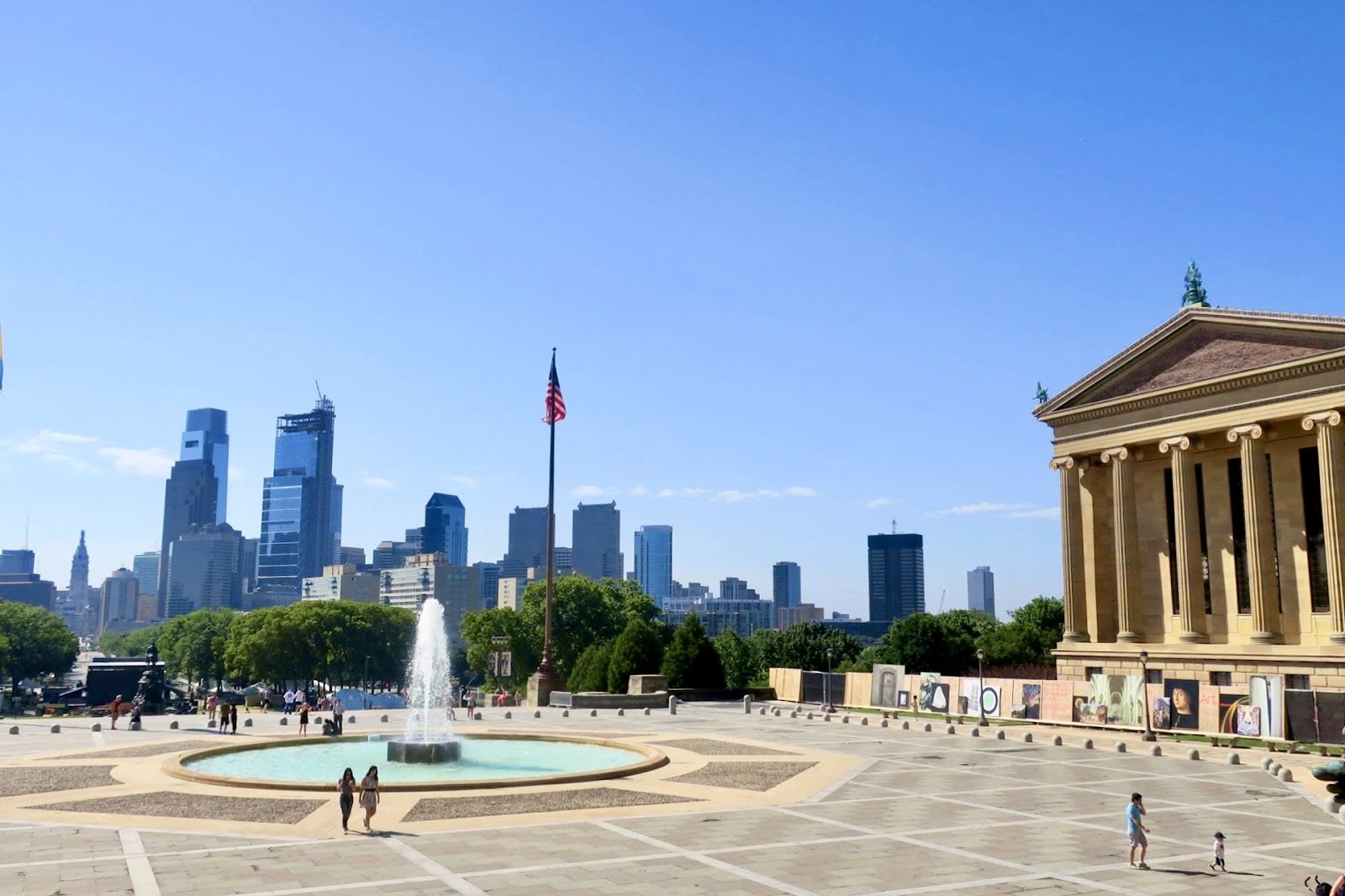
The third requirement is exposure discipline, because pale stone fills most of the frame. Light limestone and a bright sky push a meter towards underexposure, so add a stop or more exactly as for snow, and check that the stone still holds texture rather than clipping to blank cream. Pale stone also bounces neutral-to-cool light into faces, which in flat weather can render skin slightly grey — a warm reflector or a warm-gelled source is worth carrying specifically for a building like this.
One further practical point: the steps are public. Other people will be on them at every hour, some of them running up and down. Long lenses compress a busy background into unreadable tone, tight framing excludes, and early morning is the only time they are genuinely quiet — which is worth knowing if the frame matters.
Inside: the halls and the galleries
The interior inverts the usual relationship between the interesting rooms and the workable ones. Galleries hold the collection and are lit for it: conservation caps the light level two or three stops below comfortable, display fittings aim down from the ceiling, and museum sources are frequently narrow-spectrum, which renders skin sallow or plum even at technically correct white balance. No adjustment recovers a wavelength that was never emitted.
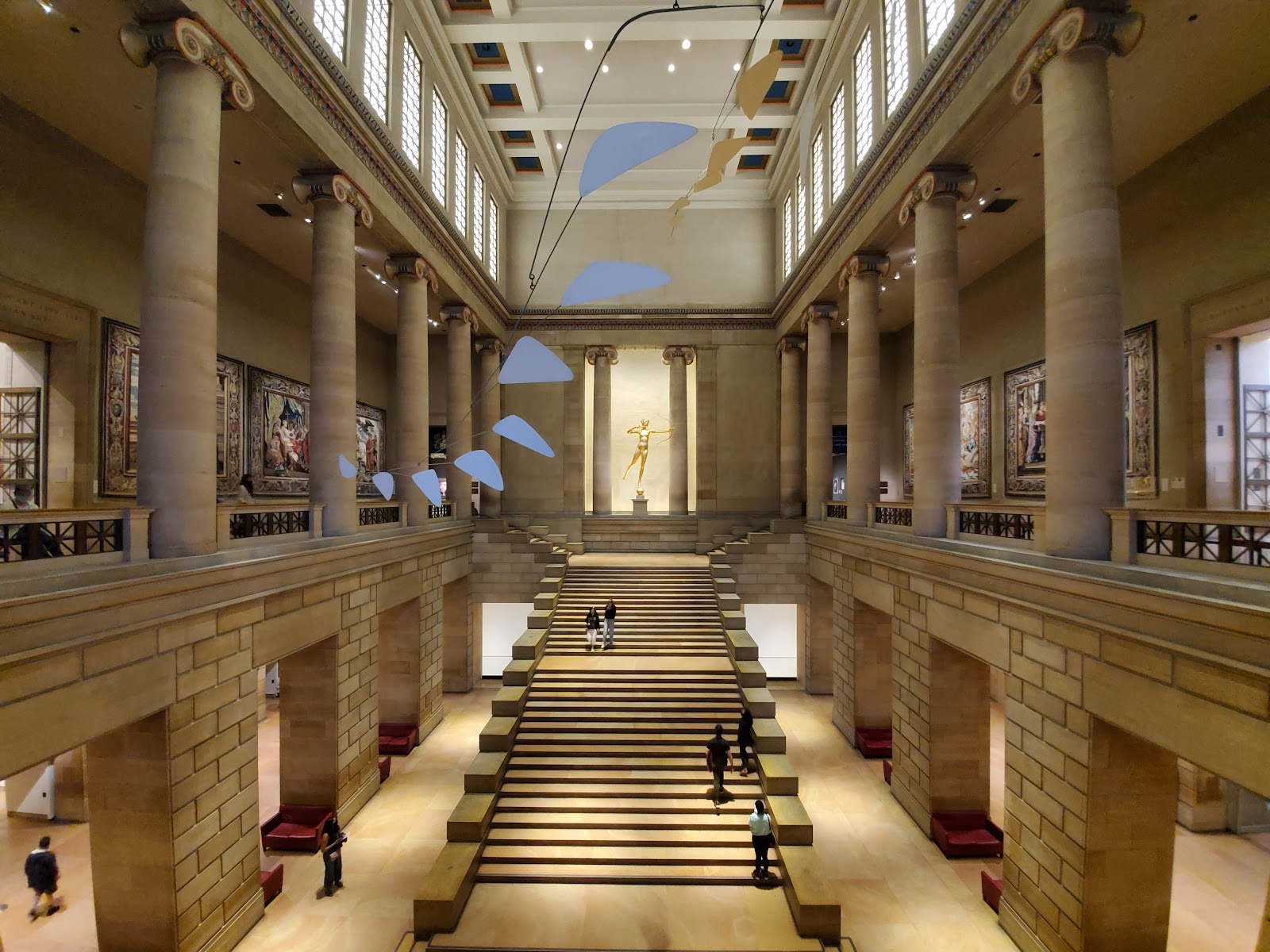
Public architecture holds nothing light-sensitive and is therefore generously lit. In a neoclassical museum that means a tall, symmetrical, pale-stone entrance hall — soft even light at a usable level, the same everywhere, which makes groups easy and position almost unimportant. That is the best interior in the building and it is the one nobody visits for its own sake.
Two adjustments come with it. The light arrives largely from above, so eye sockets darken and a line marks under the nose — fixed with a reflector held low, a lifted chin, or a small face-height source. And pale stone pushes a meter dark, so add a stop or more and watch for clipping.
Interior staircases are the other asset and the rule is the same as outside: steps make rows automatically, which no gallery floor will do. Almost every group photograph in a museum of this type belongs on its stairs, inside or out.
Symmetry rewards precision throughout. A frame centred on a neoclassical axis collapses if the camera is off centre or a degree out of level, because the columns stop being parallel and the composition reads as careless rather than deliberate. Use the electronic level and either centre exactly or clearly do not.
Where gallery photography is permitted at all, keep any added light small: a gridded source on the couple alone, spilling onto nothing, about a stop under a correct reading for the room. A dim gallery with a small pool reads as atmospheric; flooded, it reads as a lit room with pictures in it — and it is also the version most likely to breach the rules.
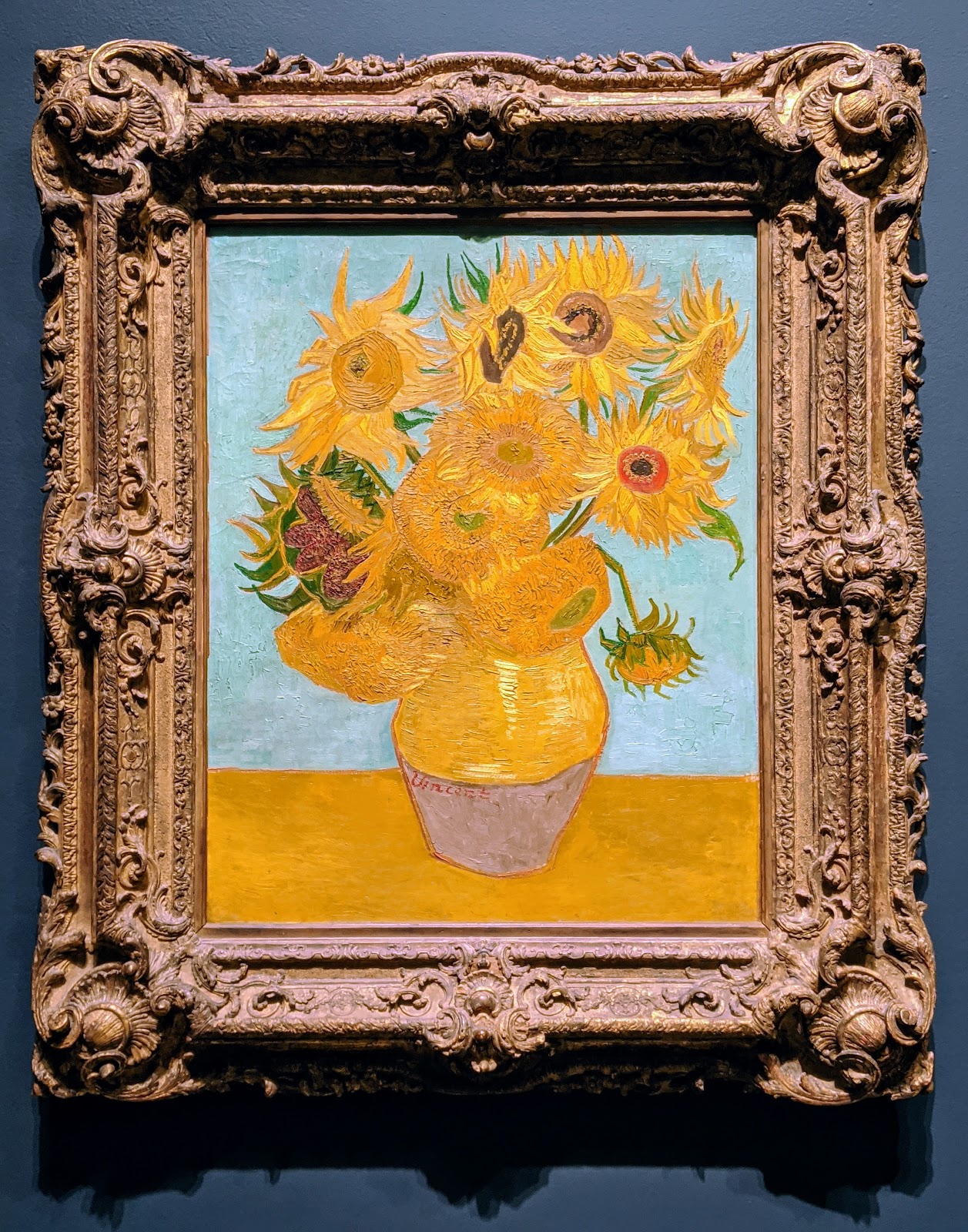
Artworks behind people need the standard decision: commit to one deliberately so both read, or subordinate everything with a long lens at a wide aperture. Half-in fails, and a large saturated canvas throws its own colour onto a nearby face.
- Take all four step frames, in one climb rather than two
- Add a stop or more on pale stone, and carry a warm reflector for it
- Nothing on the steps at midday in summer — flat, harsh and exposed
- The best interior is the entrance hall, not the galleries
- Put every group on a staircase, inside or out
The parkway, the grid, and Philadelphia's year
The boulevard in front of the museum is a specific asset and it is worth understanding why. Philadelphia’s Center City is a strict grid, oriented close to the compass, which means the east-west streets take low sun straight down their length and the north-south ones do not — a fact that can be planned from a map rather than discovered on foot, which is unusual and genuinely useful.
The parkway is the exception: it runs diagonally across that grid, which means it takes low sun at an angle no other street does, and it is tree-lined, which gives canopy shade along its length. Those two facts together make it the most useful outdoor street in the city for a wedding, and it starts at the museum’s front door.
Red brick is Philadelphia’s dominant material elsewhere and it is the friendly one: brick bounces warm and flatters skin, where the museum’s own pale limestone bounces cool and can grey it. Which surface a couple stands near changes the colour of a face here more than most people expect, and in a city of brick with a limestone museum in the middle of it, that is a decision rather than an accident.
White marble steps front many Philadelphia rowhouses and they behave as low reflectors, bouncing light up into a face to fill the shadow that overhead sun creates — a located frame that is also a lit one. Cobbled streets in the older quarters are strong texture that reads only in raking light, and a genuine trip hazard in heels, which is worth mentioning rather than discovering.
Philadelphia’s seasons are four real ones and they change the plan. Summer is humid with afternoon thunderstorms common rather than rare, which for a large museum is an advantage — the day continues indoors without a decision — and which means the steps need a wet-weather version, with the portico as the obvious answer.
Autumn colour on a tree-lined parkway in late October is a genuine asset and a short window. Winter days are short, with sunset in the middle of the afternoon in December, which compresses the whole outdoor window into a couple of hours and puts the step frame early or nowhere. Snow is the compensation and it is the best natural fill there is, lifting exactly the shadows a low sun carves while fooling a meter by about two stops — though against pale limestone the two together will clip if the exposure is not checked.
Humidity produces the season’s equipment problem in both directions: a camera chilled by a strongly air-conditioned museum fogs comprehensively on reaching warm damp air, and cold kit fogs on coming in during winter. Both take many minutes to clear, and both are avoided by letting equipment come towards the temperature of where it is going before it gets there.
More frames from The Philadelphia Museum of Art
The Philadelphia Museum of Art wedding photography: common questions
What is the defining frame?
The monumental steps. They give elevation, tiers for a group, a strong axis and — from the top — a long view down a tree-lined boulevard that no other position in the city provides.
How many step frames are there?
Four genuinely different ones: from the bottom looking up, from partway up looking down, from the top back down the boulevard, and from the side along the flight. Take them in one climb, not two.
When are the steps unusable?
Midday in summer. A high sun flattens the treads into a grey plane, puts hard shadows down every face, and there is no shade anywhere on open masonry.
What exposure adjustment do they need?
Add a stop or more, exactly as for snow, because pale stone and a bright sky push a meter dark. And carry a warm reflector, since limestone fills cool and can grey skin.
Where is the best interior light?
The entrance hall. It holds nothing light-sensitive so it is generously lit, and it is tall, symmetrical and pale-surfaced — soft even light where position barely matters.
What makes the parkway useful?
It runs diagonally across a strict grid, so it takes low sun at an angle no other street does — and it is tree-lined, so it has canopy shade along its length.
More Pennsylvania venue guides
We are writing a photographer’s guide to every venue we would happily shoot in Pennsylvania. Here are three more, plus the full index:
- The Philadelphia Zoo: Four Ways Out of the Fencing Problem
- The Please Touch Museum, Philadelphia: What It Suits and What It Does Not
- The Ritz-Carlton Philadelphia: The One Decision That Governs Everything
Planning a wedding at The Philadelphia Museum of Art?
One flight, four frames, one climb. Tell us your date and we will order them.