 The Please Touch Museum, Philadelphia: What It Suits and What It Does Not
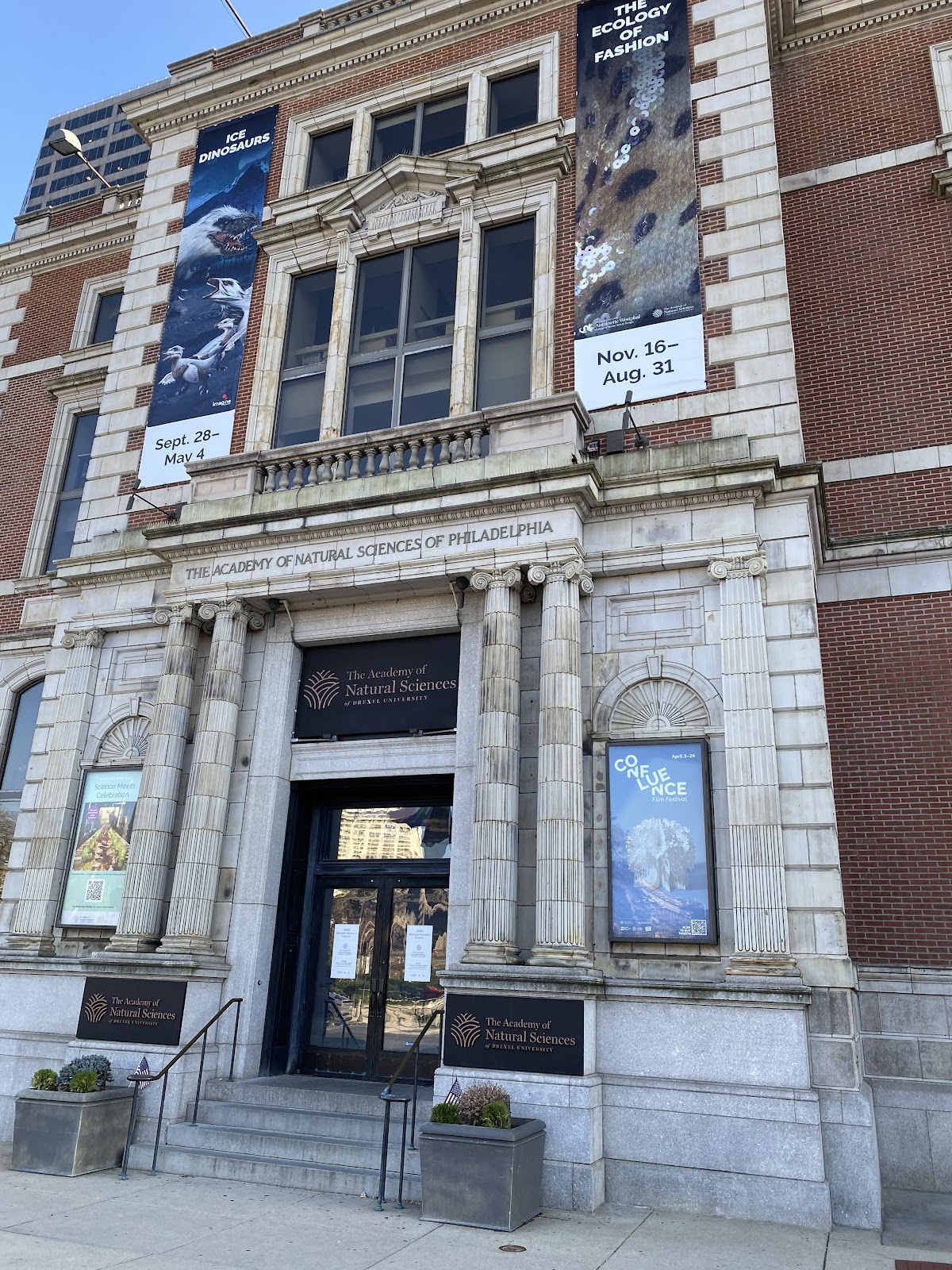
The Academy of Natural Sciences, Philadelphia: How the Light Moves
Glass ceilings mean the light changes all day. The exhibit halls do not change at all.
The Academy of Natural Sciences has ambient light filtered through high glass ceilings and bouncing off natural history displays, which its own description calls a soft natural glow — and that is an unusually accurate piece of observation.
A natural history museum with glazing overhead is a rarer photographic proposition than it sounds, because most museums are sealed against daylight. Glass overhead means the main circulation and hall spaces have real daylight, which changes hour by hour and weather by weather; the exhibit halls and diorama rooms, by contrast, are lit artificially and do not change at all. That split is the thing to plan around, because it means the day divides into spaces that must be timed and spaces that can go anywhere.
This is written as a day. We have not photographed a wedding at the Academy; natural history museums behave consistently. Which halls a booking includes, whether photography is permitted among the dioramas, and whether stands and flash are allowed are the questions for their team — and at a collection they belong in writing.
The Academy of Natural Sciences at a glance
| Where | The parkway, Philadelphia, Pennsylvania |
| Character | A natural history museum with glass ceilings, dioramas and a skeleton hall |
| The split | Daylit halls that must be timed; exhibit rooms that need not be |
| Best light | Under the glazing, two metres off the brightest patch |
| Ask first | Halls included, diorama photography, stands and flash |
Daytime: under the glass
A high glass ceiling is a very large soft source and it behaves differently from a window in one important way: the light arrives from directly above rather than from one side. That gives soft even illumination at a usable level with almost no direction — which makes groups easy and position almost unimportant, and darkens eye sockets on everybody.
The fixes are cheap and should be ready every time: a reflector held low bouncing light back up into the face, a pose with the chin lifted, or a small source at face height that overrides the geometry. Having none of them is the commonest reason portraits under a glazed roof look slightly hollow around the eyes.
The way to bring direction back is subtractive rather than additive. Placing a couple against a wall, beside a dark case, or towards the edge of the glazed area removes light from one side and restores a gradient across the face. In light this soft, subtracting works and adding another source usually makes things worse.
Exposure needs a deliberate correction, because a bright glass roof fills the upper part of most frames and pushes a meter towards underexposure. Add half a stop to a stop over the metered reading and check that skin holds its tone rather than going grey.
The weather decides the character. Under overcast, glazing overhead is at its best — cloud diffuses the light before the glass does, so it arrives from the whole sky with no hard edge anywhere, and the hall is a giant softbox. Under direct sun, the roof structure prints a lattice of hard shadow across the floor, the cases and anybody standing in them, which is a genuine exposure difference across the subject and cannot be corrected. On a sunny day the answers are to work where the structure is densest so the shadow reads as shade rather than stripes, or to use the pattern deliberately on a floor rather than on a face.
Bouncing off the displays is the other thing the venue’s own description notices, and it is worth taking seriously. Habitat dioramas are painted backdrops behind glass, often lit internally and frequently in strong greens, blues and ochres — so light bouncing off them into a nearby face carries that colour. It is localised, so white balance cannot separate it globally: set a custom white balance on a face in the position being used.
The exhibit halls: dioramas and skeletons
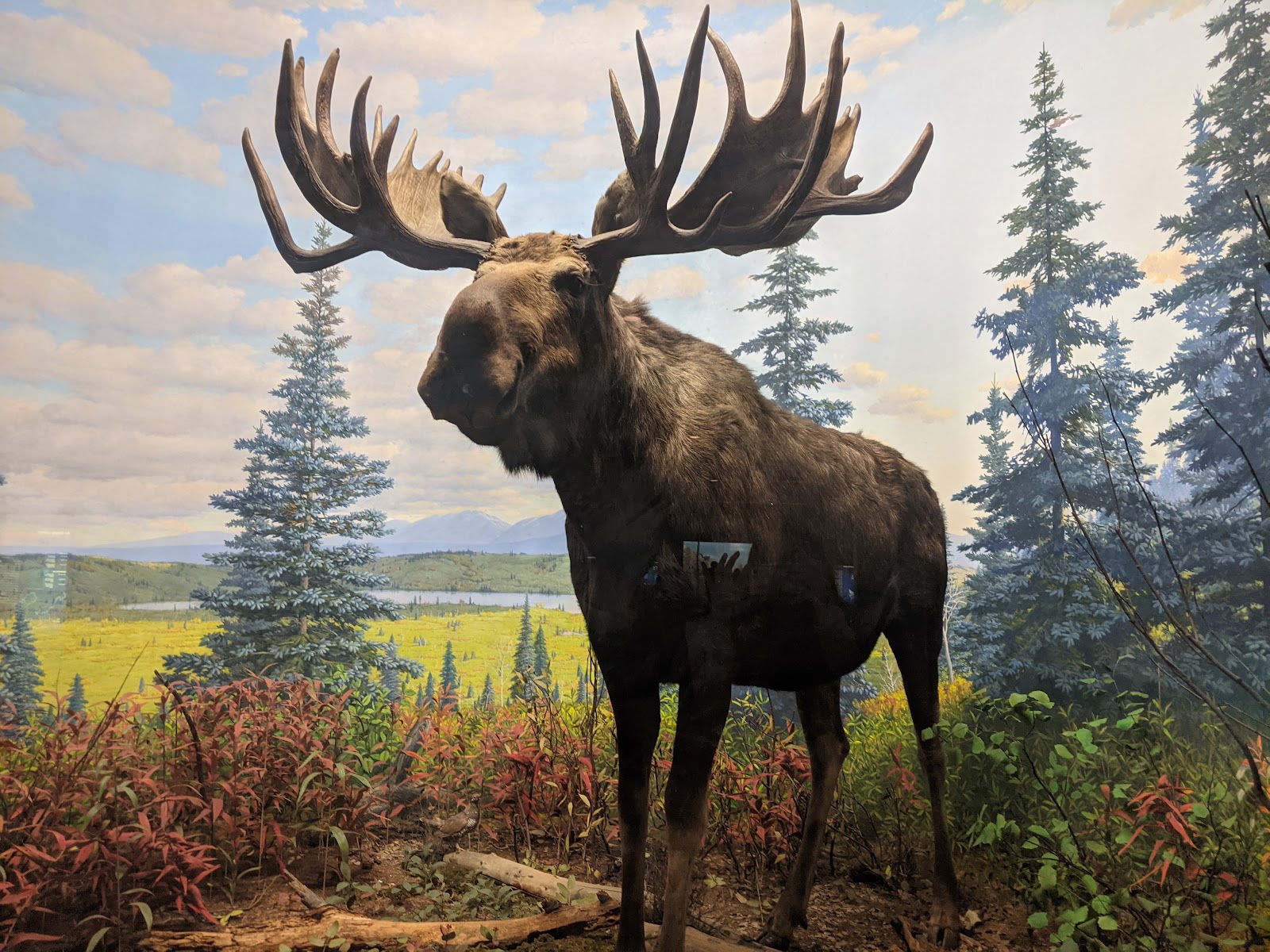
Dioramas are a specific and interesting photographic problem because they are three things at once: a painted background, a lit box, and a sheet of glass.
As a background they are strong and they compete. A painted habitat scene behind a couple reads as content rather than as tone, and it will take the eye unless it is handled — so commit to one deliberately, placing the couple so both they and the scene read, or subordinate it with a long lens at a wide aperture so it becomes a field of colour. Half-in fails.
As a lit box they are a light source, and usually a coloured one. Internal diorama lighting is chosen to suit the painted scene rather than a face, so it is frequently green or blue-heavy, and a face lit by two dioramas from two directions has two colour casts at once with no single correction available. One gelled source at face height, bright enough to dominate what falls on skin, with white balance set to it, keeps the faces consistent while the dioramas stay as coloured as they are.
As glass they reflect, predictably, because diorama glazing is flat and vertical: shoot obliquely and the reflected cone misses the lens. Used deliberately, a couple reflected in diorama glass with a painted scene behind it is a genuinely unusual frame — but it has to be intended rather than tolerated.
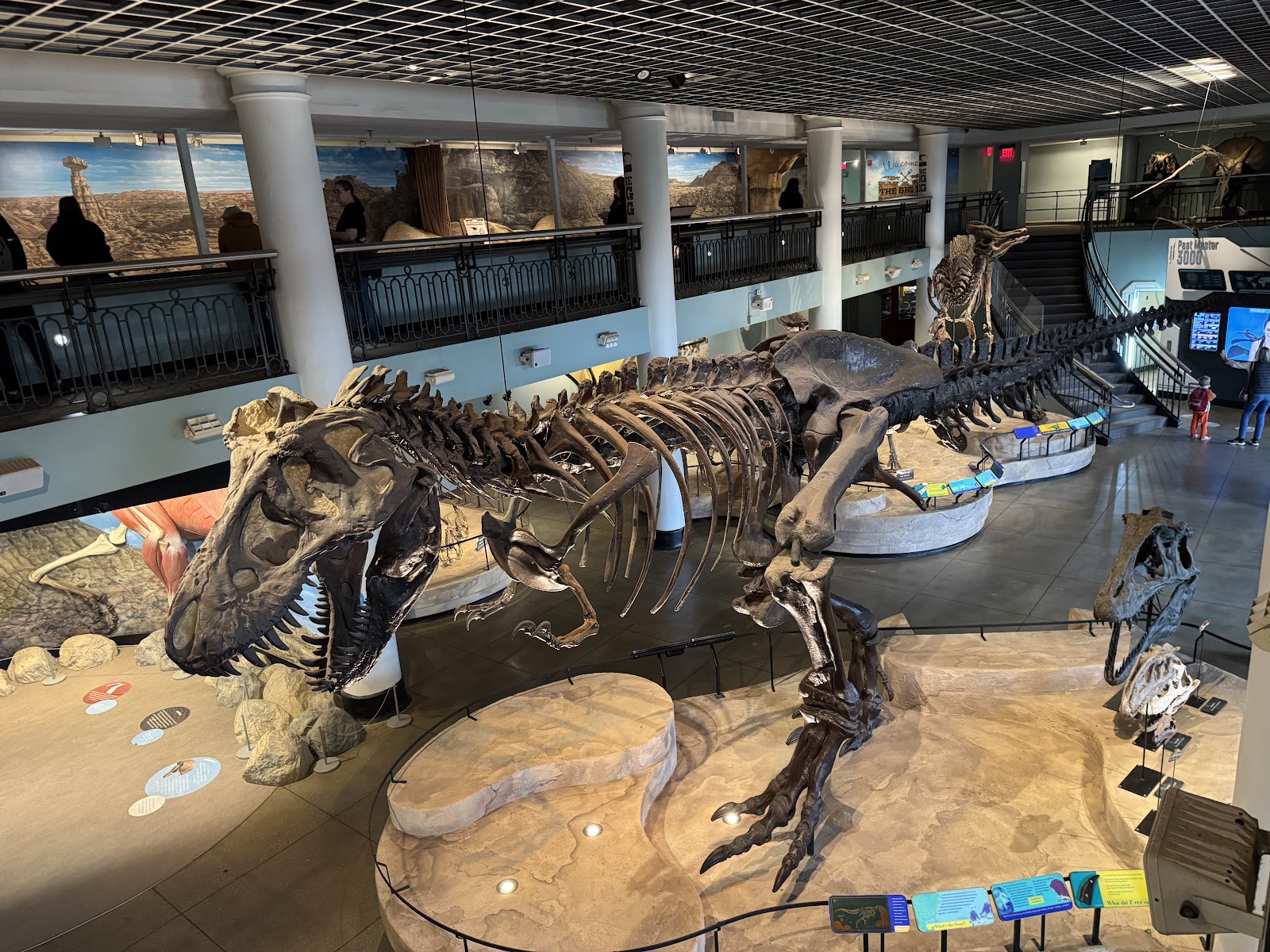
A large skeleton hall, where the museum has one, is the other set-piece and it behaves like any hall with a big object in it. Scale takes the eye the way a face does, so commit or exclude — place the couple small and let the skeleton be a co-subject, or go long and tight and leave it out.
Skeleton and specimen halls are usually dark with dark surfaces and high ceilings, which removes bounce entirely and gives steep fall-off. That fall-off is free separation: a couple three metres in front of anything else sits against natural darkness with no equipment at all.
And there is a permissions layer: whether photography is permitted among the displays, whether stands are permitted, and whether flash is permitted are three separate questions, and a museum with light-sensitive painted backdrops may well answer them differently from one without.
- Fix the overhead glazing light with a low reflector or a lifted chin
- Add half a stop or more; a bright roof pulls a meter dark
- Subtract with a wall or a dark case to bring direction back
- One gelled source owns the faces; let the dioramas stay coloured
- Shoot obliquely to diorama glass, or use the reflection on purpose
Evening, the parkway, and Philadelphia's year
After dark the glazed roof inverts: the lit interior becomes brighter than the sky, so the glass overhead stops admitting light and starts reflecting the room. A hall that was bright and airy at four o’clock becomes a dark volume with a black ceiling at eight, which is a bigger change than in a building with side windows and worth anticipating rather than discovering.
That makes the crossing the one timed frame in the building: for roughly twenty minutes after sunset the sky outside falls to about the brightness of the interior lighting, and a hall under glass holds both a lit room and a coloured sky above it in one exposure. It is a frame specific to glazed-roof buildings and it exists once.
After it, the evening is an artificial-light job throughout: one warm-gelled source at face height, exposed a stop under the room, white balance set to the gel and held for the block, and steep fall-off used as separation.
Outside, the parkway is the most useful street in the city for a wedding. Philadelphia’s Center City is a strict grid oriented close to the compass, which means the east-west streets take low sun straight down their length and the north-south ones do not — plannable from a map rather than discovered on foot. The parkway is the exception, running diagonally across that grid, so it takes low sun at an angle no other street does, and it is tree-lined, so it gives canopy shade along its length.
Canopy shade is the summer resource and dapple is its hazard: hot spots several stops above the surrounding shadow, shifting with any breeze, so full shade, open light, or wait. Green bounce from foliage is localised and needs a custom white balance set on a face in position.
Red brick away from the parkway is the friendly material — it bounces warm and flatters skin, where pale stone and modern surfaces bounce cool and can grey it. White marble steps on Philadelphia rowhouses act as low reflectors, filling the shadow overhead sun creates. Cobbles in the older quarters are strong texture in raking light and a real trip hazard in heels.
Philadelphia’s four seasons matter. Summer is humid with afternoon thunderstorms common rather than rare, which for a museum is an advantage — and rain on a glass roof, with the hall lit below, is one of the better frames a glazed building offers. Autumn colour on the parkway in late October is a short and genuine asset. Winter days are short, with sunset mid-afternoon in December, which means a glazed hall’s daylight character may be gone before guests sit down — and snow on a glass roof, seen from inside a lit hall, is worth going out of the way for. Humidity and cold both fog a lens, in opposite directions, so let equipment come towards the temperature of where it is going before it gets there.
More frames from The Academy of Natural Sciences
The Academy of Natural Sciences wedding photography: common questions
What does a glass ceiling give you?
A very large soft source, but from directly above — so the light is soft and even with almost no direction, which makes groups easy and darkens eye sockets on everybody.
How do you fix that?
A reflector held low, a lifted chin, or a small face-height source. And bring direction back subtractively, by placing people against a wall or beside a dark case.
What does direct sun do?
The roof structure prints a lattice of hard shadow across the floor, the cases and anybody in them — a real exposure difference across the subject that cannot be corrected.
Why do dioramas cause a colour problem?
Because their internal lighting suits a painted scene rather than a face, and it is frequently green or blue-heavy. Two dioramas lighting one face give two casts with no single correction.
How should a large skeleton be handled?
Commit or exclude. Place the couple small and let it be a co-subject, or go long and tight and leave it out — scale takes the eye the way a face does.
What happens after dark?
The glazed roof inverts and becomes a black ceiling reflecting the room. A hall that was bright and airy at four is a dark volume at eight, which is a bigger change than in a side-lit building.
More Pennsylvania venue guides
We are writing a photographer’s guide to every venue we would happily shoot in Pennsylvania. Here are three more, plus the full index:
- The Adventure Aquarium: Four Ways Out of the Blue Light Problem
- The Barnes Foundation, Philadelphia: One Frame and How It Is Made
- The Bellevue Hotel, Philadelphia: Photographing a Grand City Hotel
Planning a wedding at The Academy of Natural Sciences?
Time the glazed halls; the exhibit rooms can go anywhere. Tell us your date.