 The Sheraton Portsmouth: What a Conventional Hotel Actually Buys You
The Music Hall, Portsmouth: How the Lit-Stage Frame Is Made
There is one frame a theatre can make that nowhere else can, and it depends on someone touching a lighting desk.
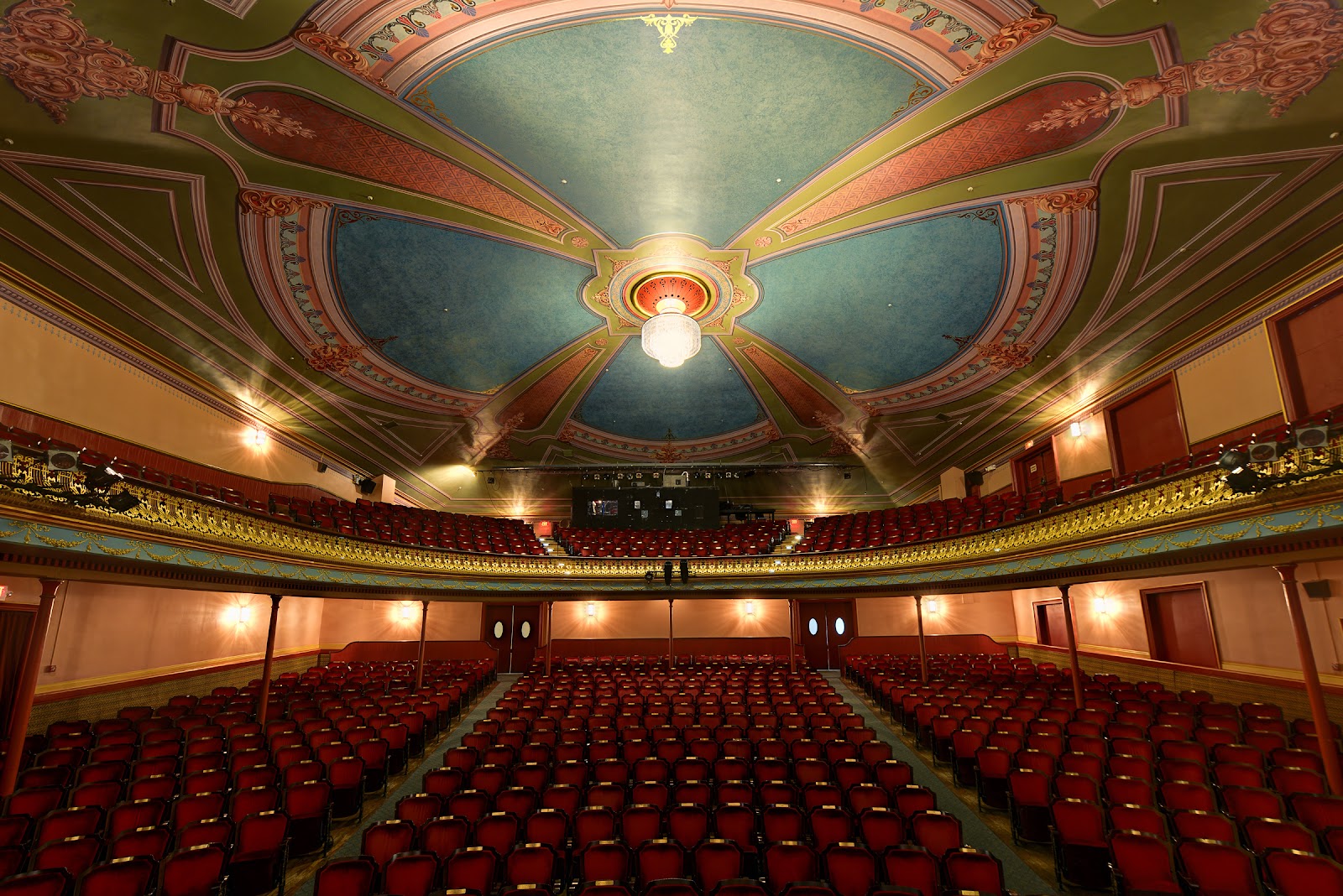
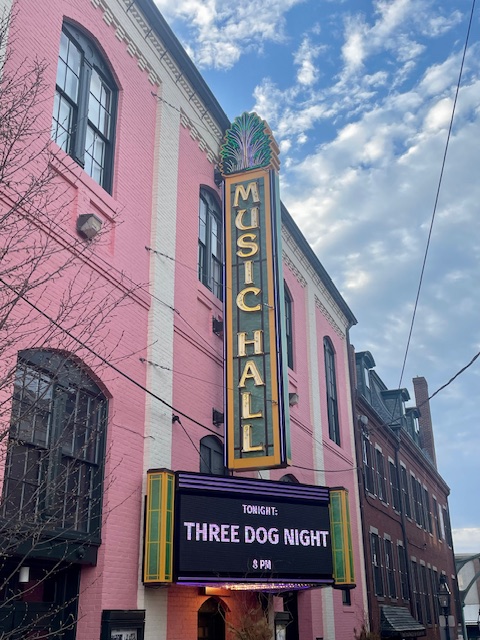
The Music Hall stands in downtown Portsmouth, New Hampshire, a theatre of 1878 with a proscenium stage, a balconied auditorium and the period detailing of a late nineteenth-century house.
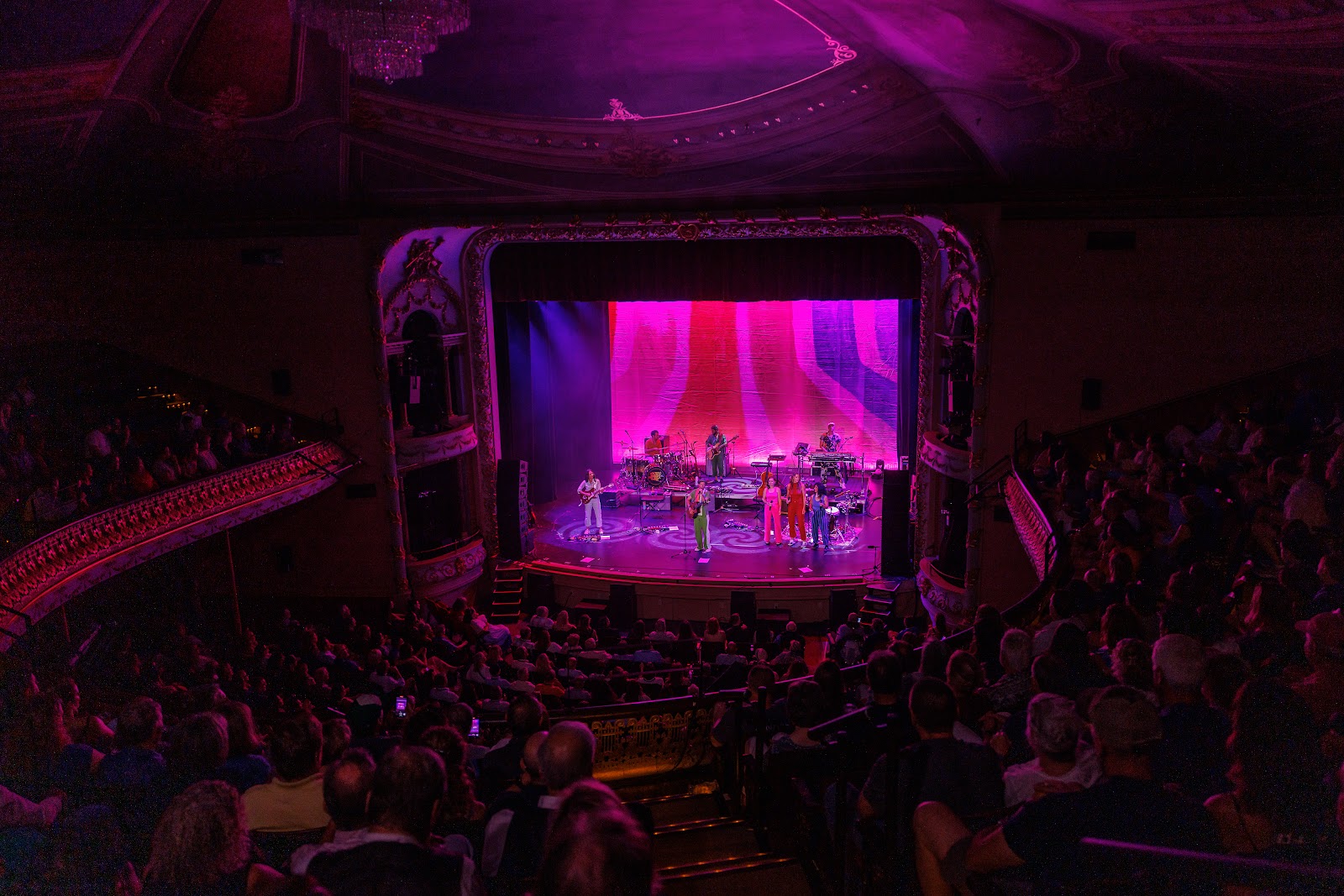
Theatres offer a photograph that no other venue type can produce: a couple standing in stage light, seen from the darkness of the auditorium, with the house falling away black around them. It works because a theatre is the only building designed to put a small brightly lit area inside a large dark one — and that is exactly the geometry a dramatic portrait wants.
It also depends on something outside the photographer’s control, which is why it is worth planning rather than hoping for. This is an account of making that frame, and of what to do when the lighting desk is not available. We have not photographed a wedding at the Music Hall; proscenium stages and period auditoriums behave the same wherever they were built. Which spaces are available, and whether house lighting can be operated for a wedding, are questions for their events team — and that second one is the whole piece.
The Music Hall at a glance
| Where | Downtown Portsmouth, New Hampshire |
| Character | An 1878 theatre with a proscenium stage and balconied auditorium |
| The frame | Couple in stage light, seen from a dark auditorium |
| It depends on | Someone being able to operate the house lighting |
| The fallback | Light the stage yourself — a dark house means no spill problems |
Step one: ask for the light, specifically
The request that makes this frame is small and precise, and it is worth making in writing well before the day: a warm front-of-house wash on the stage, and if possible a backlight from upstage. Those two together give modelled faces and a rim that separates the couple from whatever is behind them, which is all a portrait needs.
Venues that host performances usually can do this easily — it is a normal state for a lighting desk, not a special favour — but it needs a person present who knows the board, and that person needs to be scheduled. A request made on the day, to a duty manager who does not operate lighting, gets a polite no. A request made three weeks earlier, to the events team, usually gets a yes and someone rostered.
If a choice has to be made, ask for the front wash over the backlight. Front light renders faces, which is non-negotiable; a rim is an improvement. And ask for warm rather than a colour, because saturated stage colour on skin is difficult to correct and warm is what the room’s period architecture wants anyway.
One more thing worth requesting: house lights at a low level rather than off entirely. Completely dark, the auditorium disappears and the frame becomes two people in a void; slightly lit, the rows and the balcony read faintly as context and the photograph says ‘theatre’ rather than ‘darkness’.
Step two: the exposure, which is simpler than it looks
Once there is a wash on the stage, the exposure is straightforward: meter for the lit couple and let everything else fall where it falls. Because the auditorium is genuinely dark, the fall-off does the composition for you — no flagging, no shaping, no spill control. The room removes the background problem that every other venue creates.
The one technical care needed is highlight discipline. Stage washes are brighter than they look and often uneven across the stage, so the couple should be placed in the middle of the wash rather than at its edge, and the histogram checked rather than trusted. A blown cheek under a stage light is a common and irreversible error.
Shoot from the auditorium rather than from the wings or the stage itself. The whole point of the frame is the relationship between a lit stage and a dark house, and that only exists from a seat. A few rows back and slightly elevated gives the proscenium arch framing the couple, which is the composition the building was designed to produce.
A tripod helps because the shutter will be slower than ideal and you want the aperture stopped down enough to hold both the couple and the proscenium detail. If tripods are restricted, that pushes the aperture open and the arch goes soft, which is worth knowing in advance rather than discovering.
- Request a warm front wash plus, if possible, a backlight — in writing, weeks ahead
- Ask for house lights low rather than off, so the auditorium reads as context
- Meter for the lit couple; the dark house handles the background for you
- Place them mid-wash, not at its edge, and check the highlights
- Shoot from a few rows back and slightly up, so the proscenium frames them
Step three: the fallback, the balcony and the rest of the building
If the lighting desk is not available, light the stage yourself — and this is genuinely easy, because a dark auditorium is the most forgiving environment there is for added light. There is nothing nearby to bounce off, so there is no spill to manage; a single gridded source at forty-five degrees and one behind, both at low power, reproduces the effect closely. The room does the rest.
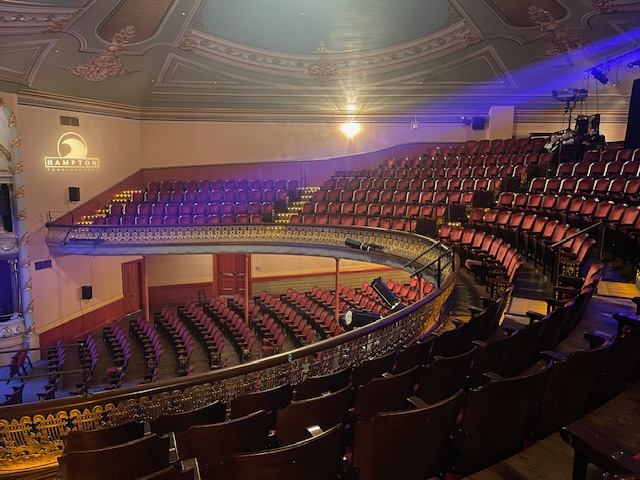
The balcony is the second frame and it is underused. Looking down from a balcony over the rows towards the stage gives a geometric composition no ground-level position offers, and it places the couple against the seating as a pattern rather than inside it as a component. It is also a much easier exposure, because the background becomes a distant tone rather than a space to fill.
The reverse frame — from the stage looking out into the dark house, with the couple in the foreground and the rows and balcony receding — is the view a performer has and almost nobody photographs. It locates the couple in the building in a way the front-on version does not, and it costs nothing but turning round.
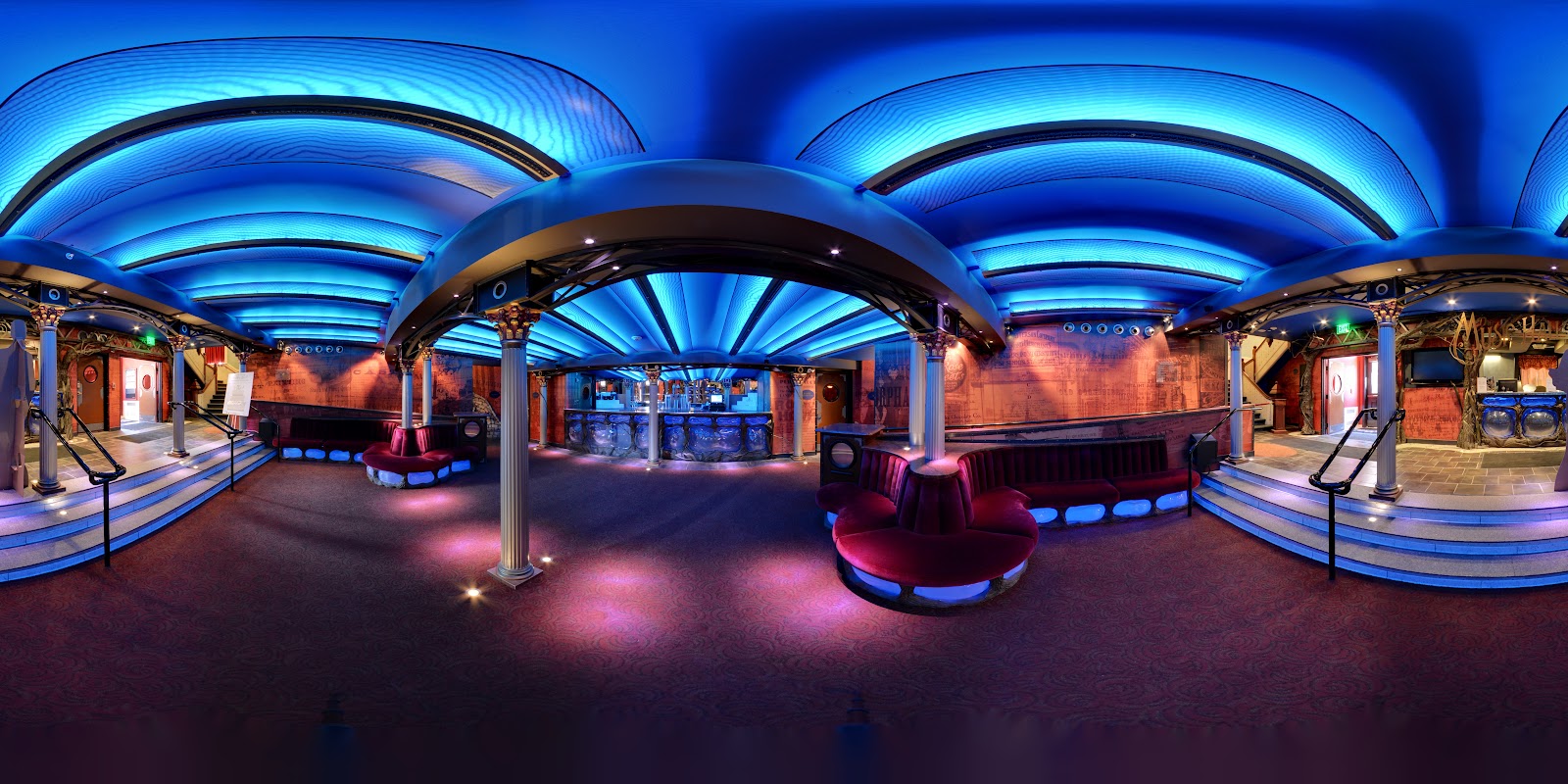
Away from the auditorium, a theatre of this period has a lobby, which is usually the brightest and most reflective space in the building and therefore the easiest: pale surfaces, high ambient, filled shadows, and period detail at close range for the detail frames. And it has back-of-house, which is the underrated asset — bare brick, steel stairs, dressing rooms with mirror lights and corridors with pipework, all with hard directional light and a completely different register from the auditorium’s plush. A gallery made only of red velvet is relentless; those frames give it grit.
Outside, downtown Portsmouth is immediately there, and it is unusually good material: a compact walkable historic centre of brick and clapboard, narrow streets, and the Piscataqua waterfront a few minutes away. Because the streets are low-rise, low evening sun reaches street level and runs their length — so a genuine golden hour exists at ground level, which a city of taller buildings cannot offer.
What works in your favour
- A lit stage in a dark house — a frame unique to theatres
- A dark auditorium means added light needs no spill control at all
- Balcony levels for geometric frames and easier exposures
- A reflective period lobby as the easiest room in the building
- Low-rise Portsmouth outside, where evening sun reaches street level
What to plan around
- The best frame depends on someone rostered to operate lighting
- Stage washes are uneven and brighter than they appear
- A completely dark house turns the frame into two people in a void
- Slow shutters need a tripod, which may be restricted
- Auditorium colour may be saturated and hard to correct on skin
More frames from The Music Hall
The Music Hall wedding photography: common questions
What is the frame worth planning for?
The couple in stage light seen from the dark auditorium. A theatre is the only building designed to put a small brightly lit area inside a large dark one, which is exactly the geometry a dramatic portrait wants.
What exactly should be requested?
A warm front-of-house wash on the stage, plus a backlight if possible, and house lights at a low level rather than off. Ask in writing weeks ahead — it needs someone rostered who knows the board, which a duty manager on the day cannot provide.
Why house lights low rather than off?
Because completely dark, the auditorium disappears and the frame becomes two people in a void. Slightly lit, the rows and balcony read faintly as context and the photograph says ‘theatre’ rather than just ‘dark’.
What if the lighting cannot be operated?
Light it yourself, which is easy. A dark auditorium has nothing nearby to bounce off, so there is no spill to manage — one gridded source at forty-five degrees and one behind, both low power, gets very close.
Where should the camera be?
In the auditorium, a few rows back and slightly elevated, so the proscenium arch frames the couple. The frame depends on the relationship between a lit stage and a dark house, and that relationship only exists from a seat.
What do photographers miss in a theatre?
Two things. The balcony, which gives a geometric frame and a much easier exposure. And the back-of-house — bare brick, steel stairs and dressing-room mirror lights — which gives a gallery of red velvet the grit it needs.
More New Hampshire venue guides
We are writing a photographer’s guide to every venue we would happily shoot in New Hampshire. Here are three more, plus the full index:
- Portsmouth Harbor Events: What a Very Bright Room Actually Gives
- AMC Pinkham Notch, New Hampshire: The Problem and Four Ways Out of It
- Bedford Village Inn, Bedford: A Walk Through the Site
Planning a wedding at The Music Hall?
One request, made three weeks early, makes the best frame in the building. Tell us your date and we will make it.