 Choctaw Hall: What a Gazebo Ceremony Does to the Photographs
The Westin Jackson: A Walk Through a Contemporary Hotel
A modern hotel gives you even light and pale surfaces. Both of those are problems disguised as conveniences.
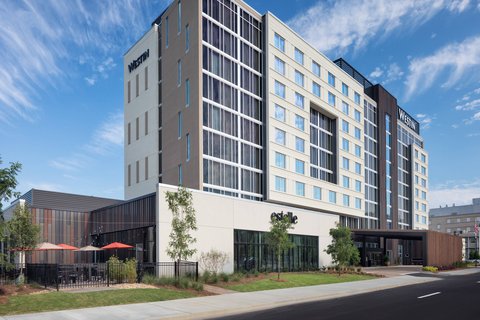
The Westin Jackson is a contemporary hotel in downtown Jackson with ballroom and function space capable of a grand event or a smaller gathering — versatile, as its own description says, which is the accurate word for the type.
Modern hotels are the most reliable venue category and the least self-sufficient photographically, and it is worth being clear about why. Everything works: the lighting is even, the surfaces are clean, the climate is controlled, the circulation is generous and nothing is broken or awkward. But even lighting produces no modelling on a face, and pale surfaces produce no separation between a subject and a background — so a competent photograph here requires the photographer to supply the contrast that the building deliberately removed.
This is a walk through the building, floor by floor, because a contemporary hotel is best understood as a set of rooms with different jobs. We have not photographed a wedding at the Westin; modern hotels behave consistently. Which rooms are included, whether the ballroom lighting is adjustable and what the top-floor or terrace access allows are the questions for their team.
The Westin Jackson at a glance
| Where | Downtown Jackson, Mississippi |
| Character | A contemporary hotel with ballroom and function space at several scales |
| The advantage | Reliability — nothing awkward, nothing broken, weather irrelevant |
| The problem | Even light and pale surfaces give no modelling and no separation |
| Ask first | Rooms included, ballroom lighting control, upper-floor access |
Guest floors: where the daylight is
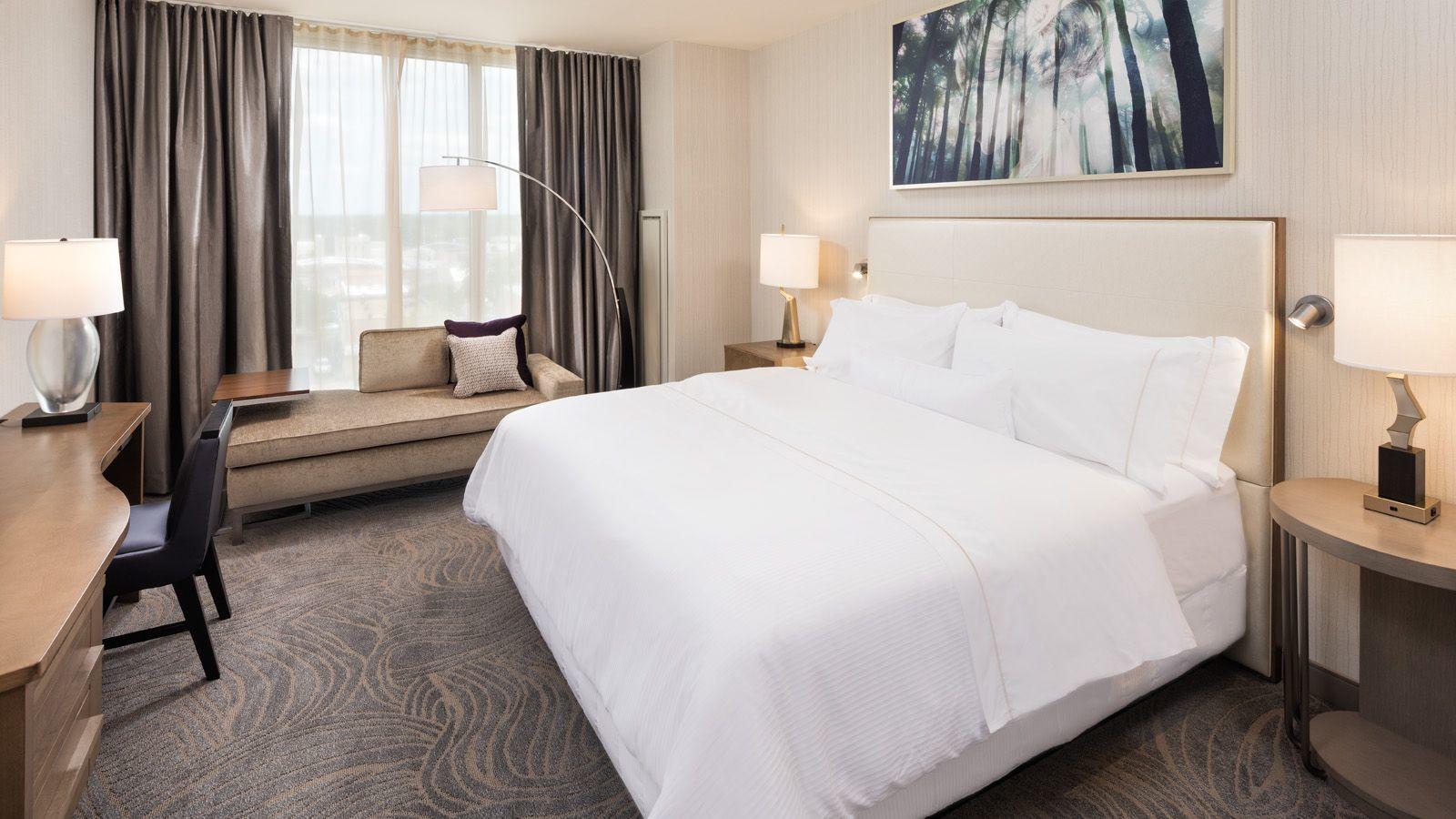
Start at the top of the day rather than the top of the building, because preparation happens in a guest room and the guest room is the best light in a modern hotel. Contemporary rooms have large windows relative to their floor area, pale walls that bounce efficiently, and low enough ceilings that a flash aimed upward actually returns something — a combination that gives soft directional light with usable fill.
It is worth setting up rather than documenting as found, and the three moves are always the same. Ask for the largest window on the shaded side of the building. Switch off every overhead fitting so the room has one colour of light instead of three, since mixed sources are the commonest reason preparation coverage looks worse than the room did. And move the lamps out of frame rather than working around them.
The rooms are also where the low-contrast problem starts and where it is easiest to solve. Pale walls, pale bedding and even light mean a subject in a pale dress against a pale wall has almost nothing separating her from it. The fixes are cheap: place people against the darkest element in the room, work at a wide aperture so the background goes soft, use the window as a directional key so there is a shadow side to the face, and look for a corner or an open doorway that reads darker than the wall beside it.
Upper floors of a downtown hotel are also worth asking about for their outlook. A corridor window or a top-floor room with a view over the city gives a frame that locates the wedding in Jackson rather than in a generic interior, and in daylight that window is four or more stops brighter than the room — so it needs the same deliberate choice as any bright window: blow it, match it with a light, or wait for the dusk crossing.
Public floors: the lobby, the circulation and the ballroom
Contemporary hotel lobbies are usually the most generously glazed spaces in the building, which makes them genuinely good portrait rooms in daylight hours. A glazed wall is a very large soft source close to the subject with natural fall-off into the depth of the space, and a person two metres back from it is better lit than any portable kit would manage at that scale.
The caution is the same as everywhere in a modern building: pale floor, pale walls and even fill mean the background will be the same tone as the subject unless something is done about it. Depth is the tool — a long lens with the couple well forward of anything behind them turns a bland lobby into a soft wash of tone, which is a good background rather than a missing one.
Circulation spaces are underrated in this kind of building because they are the only places with strong geometry. A long corridor, a run of identical doors, a stair with a repeating rail, a bank of lifts: repetition is the one graphic quality a contemporary hotel reliably has, and it works best shot long and straight down its length with the couple placed into the depth.
The ballroom is the evening and it is a known quantity. Expect a large volume, a high ceiling, patterned or plain carpet, decorative fittings, and a house lighting scheme on a dimmer that will be set low for a reception. That gives low ambient, warm colour, sources overhead, no usable bounce and steep fall-off.
The handling is a small number of decisions rather than a lot of equipment: expose for the room so it still reads as a warm dim ballroom, add one warm-gelled source at face height off the camera axis for anything that must be legible, set white balance to the gel and hold it for the whole block, and use the fall-off as free separation. Decorative fittings at a wide aperture become warm points behind a subject, which is the one thing a modern ballroom does beautifully — as long as a bright fitting is not sitting immediately beside a head.
Ask whether the ballroom lighting is adjustable, because it frequently is and the difference is large. A room dimmed with a few pools of light is dramatically better than a room lit evenly, and it costs a request to the banqueting team rather than any equipment of yours.
- Guest room: biggest shaded window, overheads off, lamps out of frame
- Separate by depth and aperture — pale on pale is the default failure
- Use circulation geometry; repetition is the building’s one graphic quality
- Ballroom: expose for the room, one warm-gelled key, hold white balance
- Ask for the ballroom to be dimmed with pools rather than lit evenly
Outside, and a Mississippi summer
Downtown Jackson is the counterweight the building needs, and it supplies exactly what a contemporary interior cannot: texture, age and specificity. Early twentieth-century commercial architecture in brick and stone, on a regular grid, at a largely low-rise scale — which means low evening sun reaches street level and runs the length of a street rather than being cut off by towers.
That gives ninety minutes of raking light down whole blocks at no equipment cost, and brick and stone are forgiving mid-tones that hold detail across a wide exposure range. They only show texture when light runs along them, so the useful move is a short walk to find which side is being raked rather than photographing the first wall you reach.
Alleys and side streets are the most dependable positions in any downtown: walls on both sides give directional light and a contained background with nothing distracting in it, and service elevations hold the most texture because nobody ever tidied them.
The dusk crossing is the one timed frame in a hotel of this kind, and it happens at any large window or, if there is upper-floor access, at a view over the city. For roughly twenty minutes after sunset the outside falls to about the brightness of the interior lighting and one exposure holds the lit room, the couple and the city together. Take the sunset time, add fifteen minutes, be in position with the couple already there — after that the glass becomes a mirror and the frame is gone.
Mississippi summer conditions limit the outdoor half of the day firmly. Heat and humidity make long blocks genuinely difficult in formal clothes, so trips should be short and purposeful, and the building’s own shadow across the street is the reliable midday shade.
Fogging is the climate’s specific equipment risk, and a modern hotel is where it bites hardest because the air conditioning is most effective. A camera chilled indoors fogs comprehensively the moment it reaches warm damp air outside and can take many minutes to clear — long enough to lose an arrival. Warm the kit towards outside temperature twenty minutes before it is needed rather than reacting at the door. And since afternoon thunderstorms are routine rather than exceptional here, the compensation is the hotel itself: the day continues indoors without a decision, and the light once a cell has passed — dark sky, wet streets returning reflections, low sun underneath — is frequently the best of the day and worth stepping back out for.
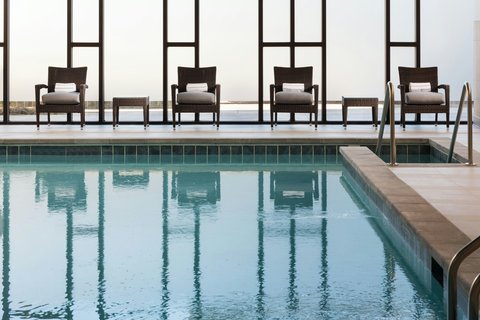
More frames from The Westin Jackson
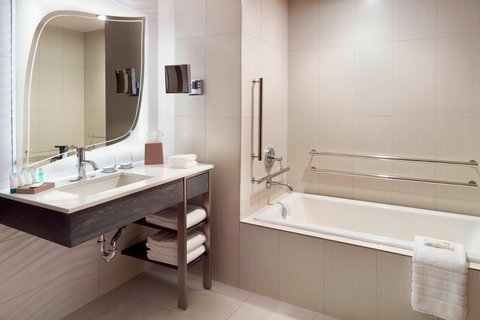
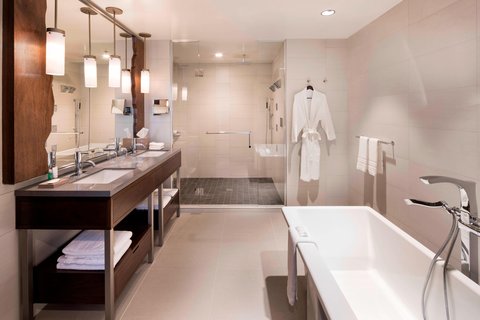
The Westin Jackson wedding photography: common questions
What is the real problem with a modern hotel?
Even light and pale surfaces. Even light gives no modelling on a face and pale surfaces give no separation from the background, so the photographer has to supply the contrast the building deliberately removed.
Where is the best light in the building?
A guest room. Large windows relative to floor area, pale walls that bounce and low ceilings that return flash give soft directional light with usable fill — better than the ballroom or the lobby.
How do you set up a preparation room?
Largest window on the shaded side, every overhead fitting switched off so there is one colour of light, and the lamps moved out of frame. Mixed sources are the commonest reason preparation coverage disappoints.
How do you get separation on pale-on-pale?
Depth and aperture. Place people well forward of the background, work wide open so it goes soft, use the window as a directional key so the face has a shadow side, and look for the darkest element in the room.
What is worth asking about the ballroom?
Whether the lighting is adjustable. A room dimmed to a few pools of light is dramatically better than an evenly lit one, and it costs a request to the banqueting team rather than any equipment.
What is the one timed frame?
Sunset plus about fifteen minutes at a large window or an upper floor, when the city falls to interior brightness and one exposure holds the room, the couple and the skyline. After that the glass becomes a mirror.
More Jackson, MS venue guides
We are writing a photographer’s guide to every venue we would happily shoot in Jackson, MS. Here are three more, plus the full index:
- The Capital Club, Jackson: Photographing a Club Above the City
- The Country Club of Jackson: What It Suits and What It Does Not
- The Eudora Welty House, Jackson: A Walk Through House and Garden
All Jackson, MS Wedding Venues →
Planning a wedding at The Westin Jackson?
A modern hotel needs the contrast brought in and one frame timed. Tell us your date.