 Choctaw Hall: What a Gazebo Ceremony Does to the Photographs
LeFleur’s Bluff State Park, Jackson: One Frame and How It Is Made
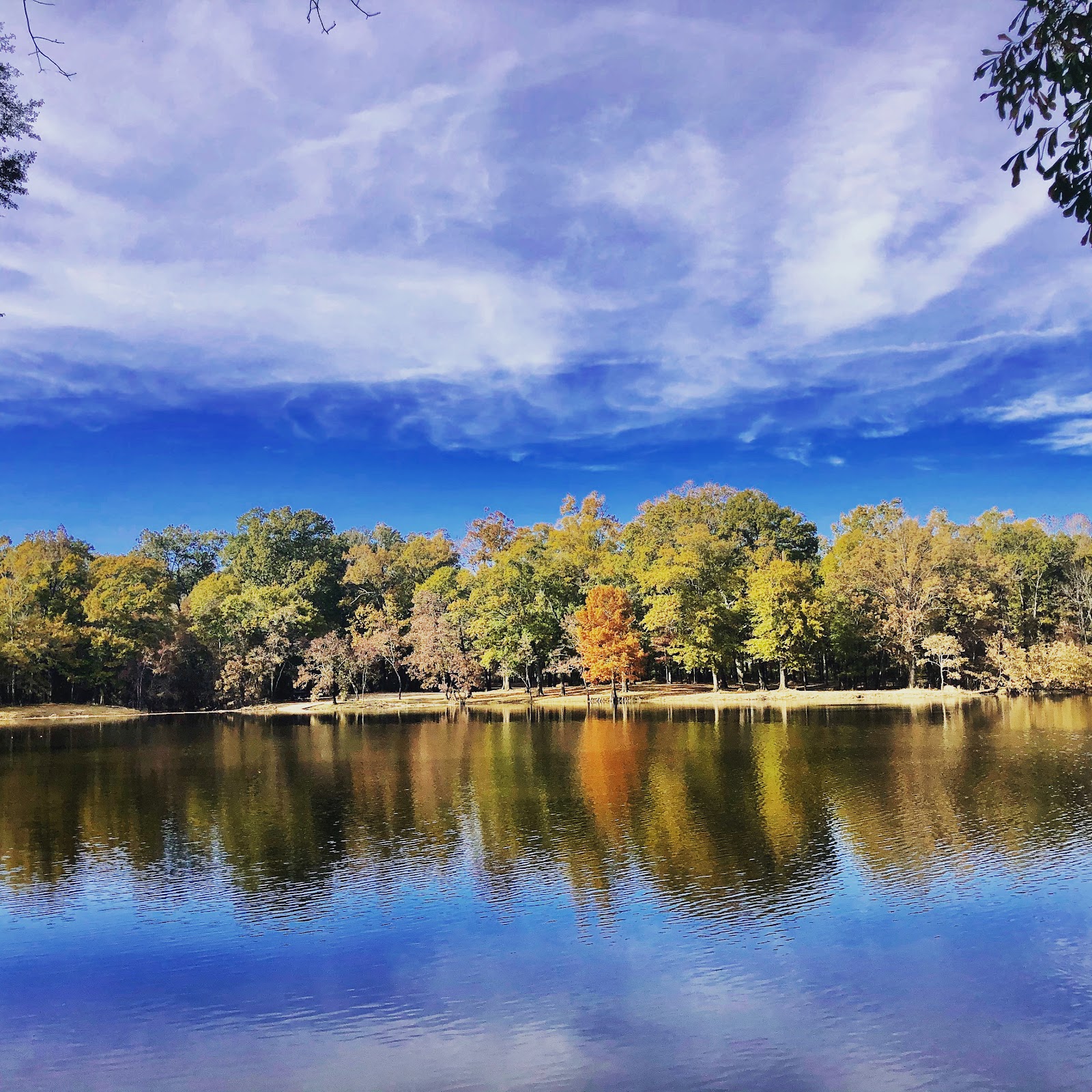
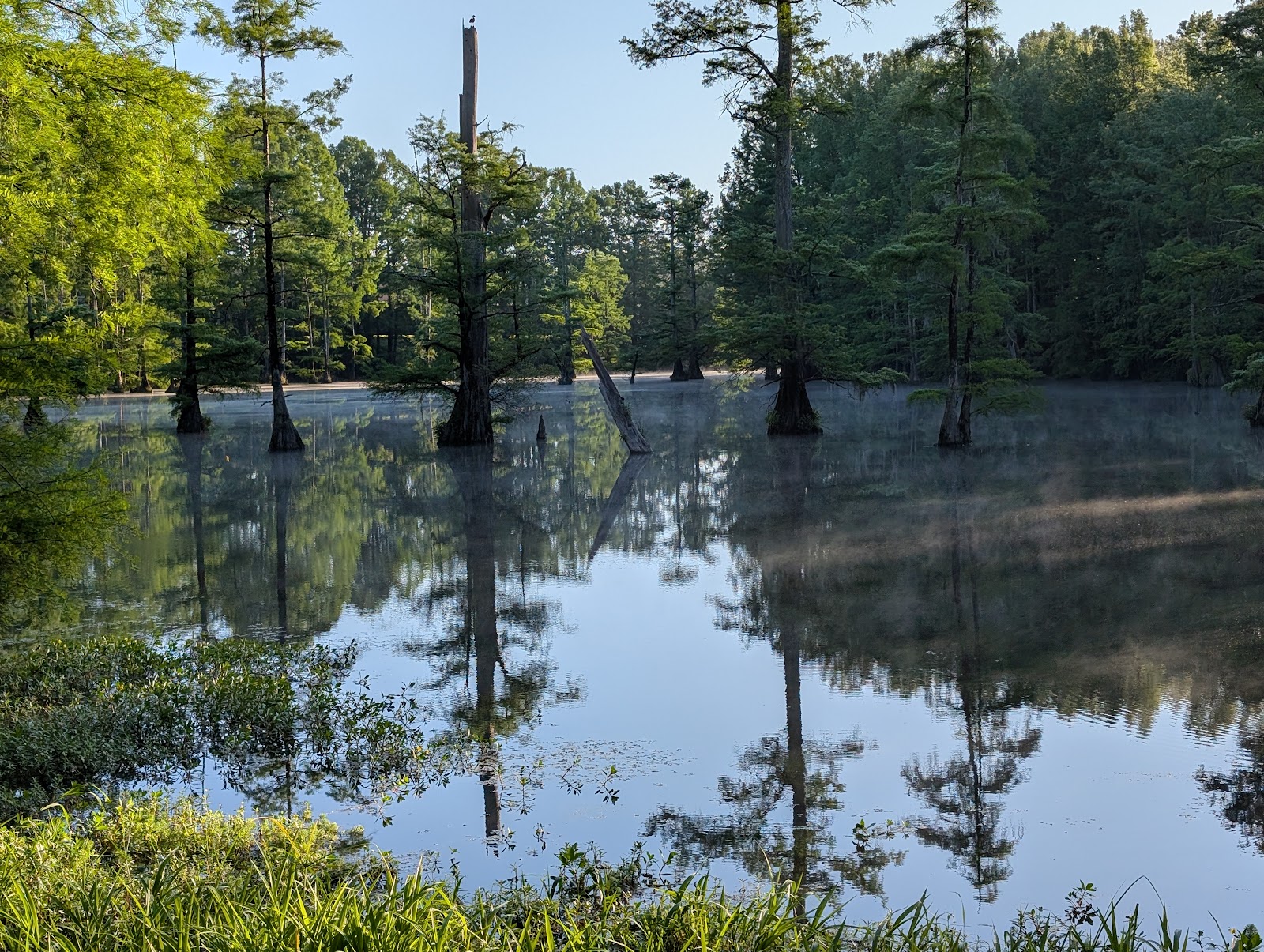
Still water doubles everything above it. That is the frame, and stillness is the condition.
LeFleur’s Bluff State Park sits within Jackson, Mississippi, and Mayes Lake within it is the feature that makes the park a venue rather than simply a place — open water inside a wooded park, a few minutes from the city.
One frame defines it, and it is made across the water: the couple on the near shore or at the water’s edge, the lake between camera and background, and the far bank, the trees and the sky doubled in the surface. A reflection is not a decorative addition to a frame — it doubles the amount of information in it, fills the lower half with tone and colour that would otherwise be dead ground, and gives symmetry that no built structure provides. It is the reason to choose this site.
So this is written as one frame and the three conditions it needs. We have not photographed a wedding at the park; lakes in wooded parks behave the same everywhere. What permits a ceremony needs, which areas can be reserved and what shelter exists are questions for the park’s staff — and the last one matters more here than at a venue with a building.
LeFleur's Bluff State Park at a glance
| Where | Jackson, Mississippi |
| Character | A state park within the city — woodland, open ground and Mayes Lake |
| The frame | Across still water, with the far bank and sky doubled |
| It needs | Stillness, a low camera, and light that is not overhead |
| Ask first | Permits, reservable areas, and what shelter actually exists |
The frame, and the three conditions
The first condition is stillness, and it is the one that cannot be manufactured. A reflection exists only on a smooth surface; the smallest breeze breaks it into texture and the reflection is simply gone, not diminished. In practice that makes the reflection frame a morning or a late-evening proposition, because wind on most days builds through the middle of the day and drops again towards sunset. If the frame matters, it needs to be attempted at both ends of the day rather than once in the afternoon.
The second is a low camera. The amount of reflection visible in a frame is a function of viewing angle — the closer the camera is to the water’s surface, the more of the far bank and sky is doubled, and the further above it, the more the frame fills with water as a flat grey plane instead. Dropping to a foot above the surface can be the difference between a full mirrored reflection and none, and it costs nothing but a willingness to kneel.
The third is light that is not overhead. A high sun on water produces a hard specular path — a bright lane of reflected sun running towards the camera — and that path is unphotographable at the exposure a face needs. Low light does the opposite: it lets the surface hold the colour of the sky rather than the disc of the sun, and it lights faces from the side rather than from above. Late afternoon into the last hour is the window.
Within that, the twenty minutes after sunset is the best version of the frame, because the water then holds the whole sky’s colour and becomes luminous rather than reflective. A couple placed against a luminous lake will read as a silhouette unless a source is put on them, and a single warm-gelled light at face height set about a stop under the sky holds both — the water bright and coloured, the faces still faces.
One more geometrical note that is easy to miss. Which way the lake faces decides everything about the evening: a shore that looks west puts the sunset in the water, and a shore that looks east puts the colour behind the camera and the warm light on the far bank instead. Both are good frames, but they are different frames and only one of them is available from any given position, so the walk that matters is the one that establishes which shore you will be standing on.
The rest of the park, and the ceremony problem
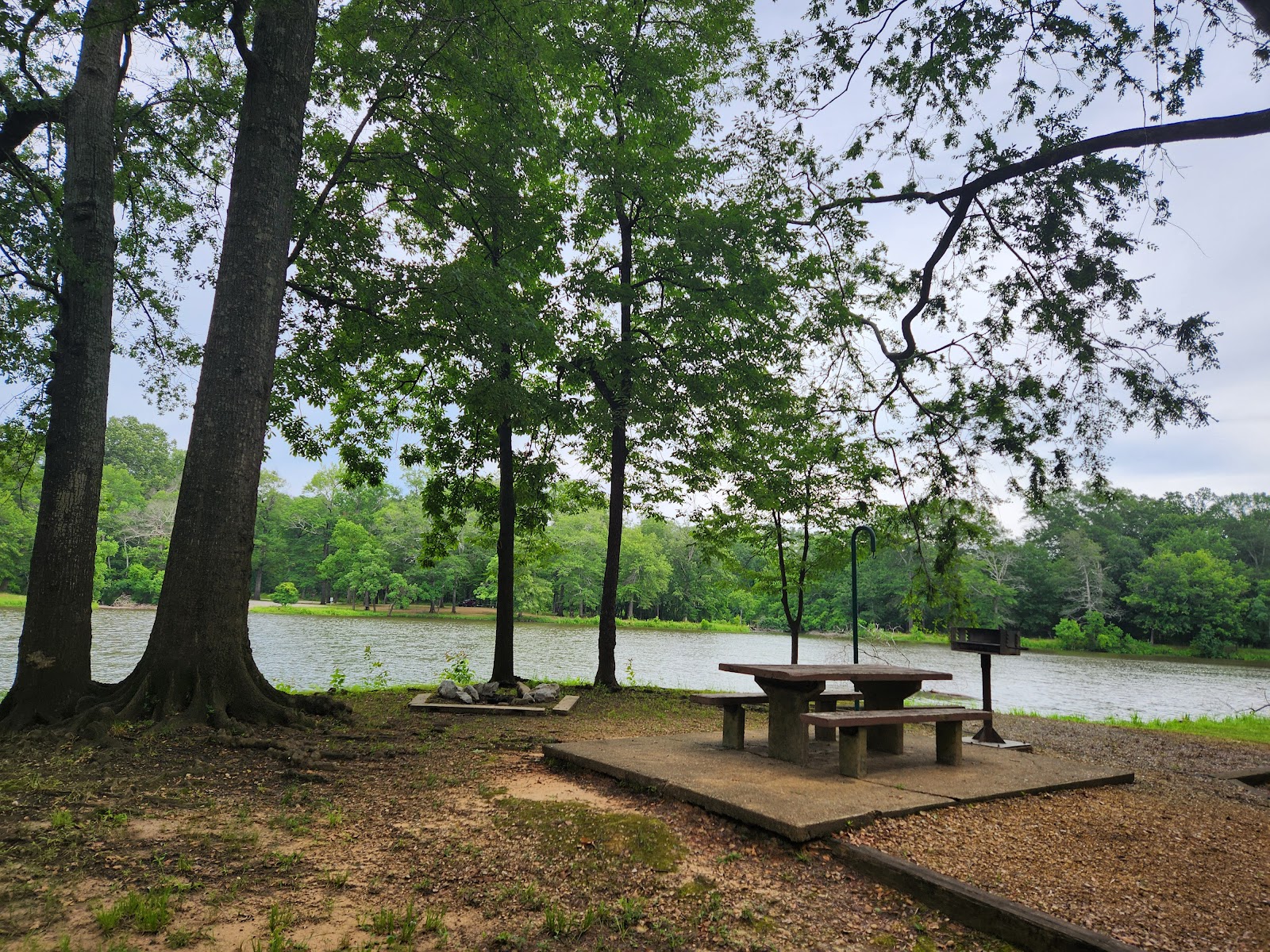
Away from the water, a wooded park in Mississippi has one enormous asset and one persistent hazard, and they are the same trees. Mature canopy gives deep continuous shade, which in a Mississippi summer is not an aesthetic preference but the reason the middle of the day is workable at all — soft, cool, directional towards any opening, and available for hours. Finding the largest area of continuous shade on the first walk is the single most useful piece of preparation.
The hazard is dapple, which is the same canopy when the sun is above it rather than through it. Broken light puts hot spots several stops brighter than the shadow across a face, and the pattern shifts with every breath of wind, so it can neither be corrected nor anticipated. Full shade, open light, or wait for the sun to drop below the canopy — but not a face in dapple.
Dense foliage also bounces green onto nearby skin, which is unflattering in a way that warm bounce from brick is not. Set a custom white balance on a face in the position you are actually using, and if there is a path, gravel or pale bank nearby, use it as a bounce surface to put a neutral tone back into the shadows.
The ceremony problem at a park venue is that there is no building, which has three consequences worth planning for rather than discovering. There is no power, so anything lit runs on batteries and the number of them is a decision. There is no shelter, so a storm is a relocation rather than an inconvenience. And there is no controlled space, so other park users may be present — which for photography means longer lenses and tighter framing than a private venue would require.
Insects are a real factor near water at dusk in a Mississippi summer, and dusk is exactly when the best light arrives. That is worth telling a couple in advance rather than finding out together, because it affects whether they will stand still at the one moment it matters.
- Attempt the reflection at both ends of the day; wind takes it in between
- Get the camera down to a foot above the surface — angle is everything
- Never put the sun’s specular path between camera and couple
- Establish which shore you will use; it decides where the colour lands
- No power, no shelter, no control — plan batteries, a fallback and long lenses
A Mississippi summer, and what the weather gives back
Heat and humidity are the governing outdoor conditions here and they bear harder on a park than on any built venue. Formal clothes in full sun in July is a welfare question before it is a photographic one, which argues for the canopy through the middle of the day and short purposeful trips into open ground rather than long wanders.
Fogging is the specific equipment risk of the climate. A camera chilled in an air-conditioned car on the way to the park will fog comprehensively the moment it is carried out into warm damp air, and can take many minutes to clear — long enough to lose a ceremony start. The handling is to let the kit come up towards outside temperature before it is needed, which at a park means leaving it out of the cold rather than in it.
Afternoon thunderstorms are routine rather than exceptional in a Mississippi summer, and a park with no building is where that matters most. The honest planning is to know what the fallback is — a pavilion, a relocation, a marquee — how many people it takes, and the time by which the decision is made. Improvising that with guests standing on open ground is the failure mode of park weddings everywhere.
What the weather gives back is considerable, though, and worth going out for. A departing storm leaves a dark sky with low sun coming in underneath it, which is the highest-contrast natural light there is; foliage is saturated and dark; paths hold reflections; and the lake, once the wind drops behind a cell, often goes glass-still in a way it has not been all day. That combination — still water, saturated trees, a dark sky and raking light — is the best version of this venue and it only happens after rain.
Mist on water early in the morning is the other weather gift specific to a lake, and in a humid climate it is common rather than rare. It separates the near bank from the far one, softens everything beyond a few metres, and turns a straightforward landscape into depth — which makes an early ceremony or an early portrait block genuinely worth considering here, rather than a compromise.
More frames from LeFleur's Bluff State Park

LeFleur's Bluff State Park wedding photography: common questions
What is the defining frame?
Across the water: the couple at the near shore with the lake between camera and background, and the far bank, trees and sky doubled in the surface. A reflection doubles the information in a frame and fills what would be dead ground.
Why is stillness so critical?
Because a reflection exists only on a smooth surface — the smallest breeze removes it entirely rather than reducing it. Wind usually builds through the middle of the day, so the frame belongs to morning or late evening.
How high should the camera be?
As low as you can get. The amount of reflection visible depends on viewing angle, so a foot above the surface can be the difference between a full mirror and a flat grey plane. It costs nothing but kneeling.
How do you shoot against a luminous lake at sunset?
Put a warm-gelled light on the faces about a stop under the sky, or accept a silhouette. Without a source the couple will go dark against bright water.
What has to be planned because there is no building?
Three things: power, since everything runs on batteries; shelter, since a storm becomes a relocation; and control, since other park users may be present and longer lenses are needed.
Is bad weather worth going out in?
Yes, here more than most places. A departing storm gives a dark sky with raking light underneath, saturated foliage, and a lake that often goes glass-still behind the cell — the best version of this venue.
More Jackson, MS venue guides
We are writing a photographer’s guide to every venue we would happily shoot in Jackson, MS. Here are three more, plus the full index:
- The Manship House, Jackson: Four Ways Out of the Small-House Problem
- The Mississippi Civil Rights Museum, Jackson: The One Decision That Governs Everything
- The Mississippi Governor’s Mansion, Jackson: Photographing State Rooms
All Jackson, MS Wedding Venues →
Planning a wedding at LeFleur's Bluff State Park?
A lake venue is a stillness and shelter plan. Tell us your date and we will make both.