 Tulsa Country Club: Field Notes on a 1908 Club
Oklahoma City Farmers Market: One Frame and How It Is Made
A market hall is a long room. One frame uses that, and everything else is secondary.
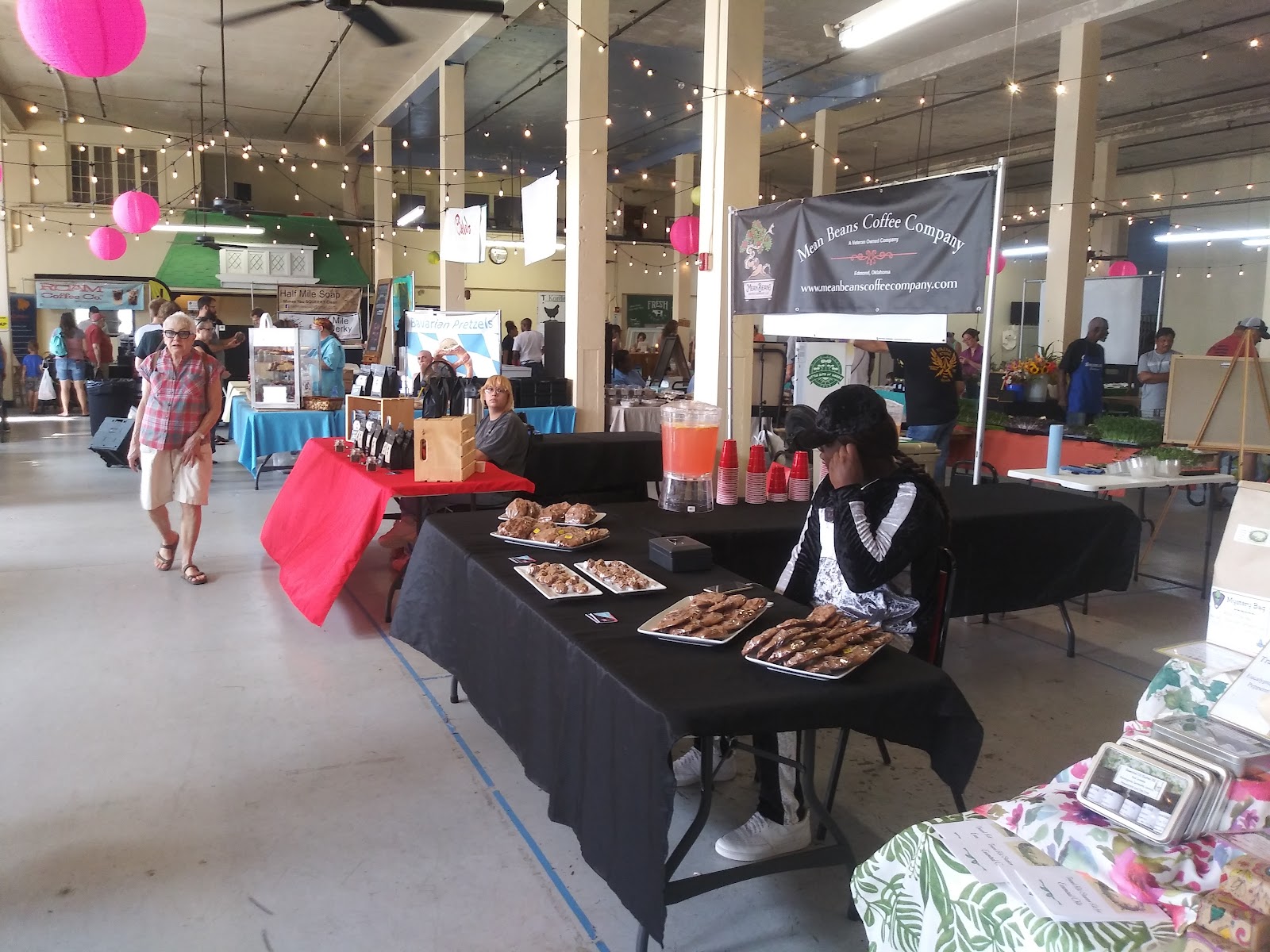
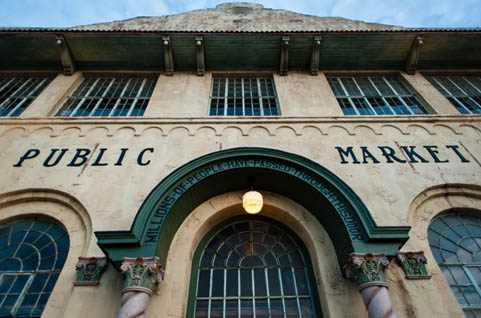
The Oklahoma City Farmers Market is a historic market building with aged timber, vintage fittings and the long open interior a market hall requires — and that length is what makes it a venue rather than a hall with character.
One frame defines the place, and it is the long view down the hall: camera at one end, the room running away to the far wall, the roof structure converging overhead, and the couple placed somewhere in that depth. It is the only frame the building offers that no other venue type can, and it is worth building the coverage around rather than collecting incidentally.
So this is written as one frame and the three things it needs. We have not photographed a wedding at the market; long-span market halls behave the same wherever they stand. What may be fixed to original timber, whether the end doors open and how the hall is lit for events are the three questions for their team — and all three feed directly into this frame.
The Oklahoma City Farmers Market at a glance
| Where | Oklahoma City, Oklahoma |
| Character | A historic market hall — aged timber, vintage fittings, long open volume |
| The frame | The long view down the hall, roof converging overhead |
| It needs | Symmetry, a light at the far end, and a reason for the depth |
| Ask first | Fixings to timber, whether the end doors open, event lighting |
The frame: what it is and why it works
Stand at one end of the hall on the centre line, at chest height or a little below, with a moderately wide lens — wide enough to include both side walls and the roof, not wide enough to bend them. The side walls run away in parallel and converge; the roof trusses repeat overhead and converge with them; and every line in the frame points at the far end. That is a one-point perspective, and it is the most forceful composition available in architecture because the eye has no choice about where to go.
It works in a market hall specifically because the building has nothing in the middle. A market was built as clear span so that stalls and carts could be arranged freely, which means the floor is unobstructed and the view down the hall is genuinely unbroken — something a church with pillars, a barn with posts or a hotel ballroom with chandeliers cannot give.
The couple goes into the depth rather than at the front. Placed two-thirds of the way down, they read as small figures at the vanishing point of everything, which is the emotional content of the frame: two people in a large old room built for something else entirely. Placed close to the camera they block the perspective and the frame becomes an ordinary portrait with a ceiling.
The aged timber is what keeps it from being merely geometric. Old wood holds grain, nail lines, saw marks and decades of wear, and all of that reads only when light runs along the surface rather than at it. Raked light down a timber wall is the difference between a textured room and a brown one, and it is worth walking the hall to find which wall the light is running along before deciding which end to shoot from.
Three things it needs
The first is symmetry, held precisely. A one-point perspective frame is unforgiving: if the camera is off the centre line by half a metre, or tilted by a degree, the convergence goes crooked and the whole effect collapses into something that merely looks like a mistake. This is one of the few frames worth a tripod, a level and two minutes of care — and the two minutes are the entire difference between it working and not.
The second is light at the far end. A long room photographed down its length goes dark at the far wall unless something is lighting it, and a dark far wall kills the depth the frame exists to show. If the end doors open, daylight at the far end is the whole answer: it silhouettes or rim-lights the couple, gives a bright destination for the eye, and makes the hall read as a tunnel towards something. If they do not open, a single bare source on the floor behind the couple, hidden by them, does the same job.
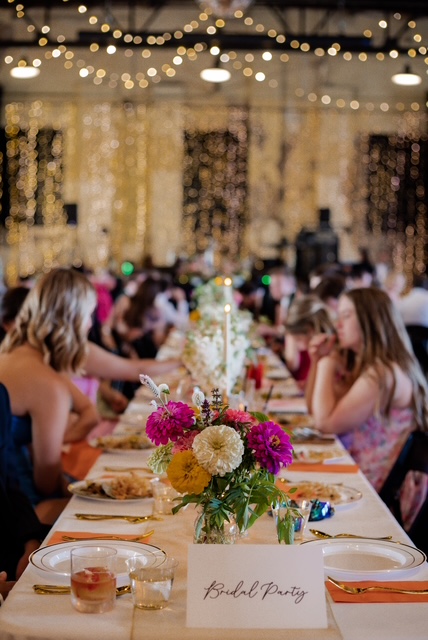
The third is a reason for the depth — something in the middle distance that gives the eye a stop on the way. An empty hall with figures at the end is austere; a hall with a run of vintage fittings, a line of tables, a row of hanging lights or the stalls themselves has rhythm, and the eye travels rather than jumps. This is the frame that most benefits from being taken during the reception setup rather than in an empty room.
Two practical notes. Original timber usually takes no fixings, so assume nothing may be taped, clamped or pinned and plan a free-standing weighted kit. And a large timber volume has a high roof, which means bounce flash does very little — the ceiling is too far away to return usable light, so sources need to be direct and modified, with a pale side wall as the better bounce surface where one exists.
- Centre line, levelled, tripod — half a metre off ruins it
- Open the end doors if they open; daylight at the far end makes the frame
- Otherwise hide a bare source behind the couple to light the far wall
- Shoot it during setup, so the middle distance has rhythm
- Assume no fixings to original timber; bring weighted free-standing stands
The rest of the day, and the weather
Outside the one frame, a market hall is a straightforward warm-toned interior with good bones. Side glazing or clerestory openings, where they exist, give directional light that raked along timber does most of the work unaided; the position to find is where that light runs along a wall rather than across the room, and it is usually two or three metres further from the window than instinct suggests.
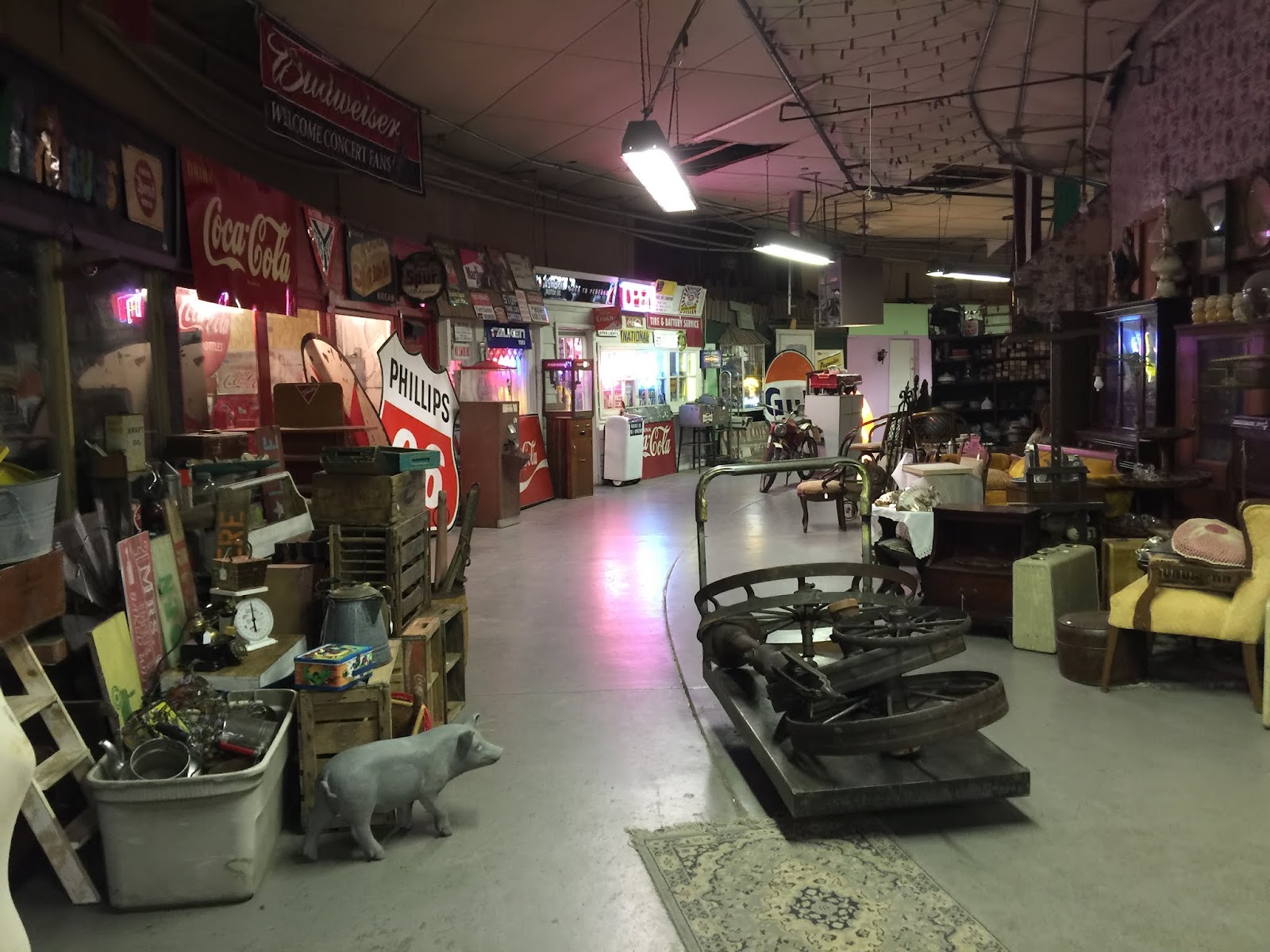
Vintage fittings in shot are composition rather than clutter if they are handled as such. Filament bulbs and old pendants behind a subject at a wide aperture become warm points of light, which is why this sort of room photographs so well on a fast lens — but a bright fitting immediately beside a head pulls the eye off the face every time.
White balance wants setting to the faces and holding, because everything in the room — timber, warm fittings, old paint — bounces strongly warm and auto white balance drifts between frames. A sequence that fails to match itself in a timber building is nearly always auto white balance rather than anything else.
Outside, Oklahoma City’s low-rise districts give brick and metal commercial frontages on a regular grid, so low evening sun reaches street level and runs the length of a street. That is the block that places the market in its city, and alleys nearby are the most dependable positions: walls both sides give directional light, a contained background, and shelter from the wind, which on the southern plains is a constant rather than an event.
Oklahoma conditions govern the schedule. Severe summer heat means a market hall without full air conditioning can be genuinely hot, which is worth asking about directly. And spring and early summer bring fast-building convective storms — where a large enclosed hall is a good fallback, and where rain on a metal or timber roof is an atmosphere worth recording rather than a problem, provided the one frame down the hall has already been taken.
More frames from The Oklahoma City Farmers Market
The Oklahoma City Farmers Market wedding photography: common questions
What is the defining frame here?
The long view down the hall from one end on the centre line — side walls and roof trusses converging, the couple placed in the depth. It is the one frame a clear-span market hall gives that no other venue type can.
Where should the couple stand?
About two-thirds of the way down, so they read as small figures at the vanishing point of everything. Close to the camera they block the perspective and it becomes an ordinary portrait with a ceiling.
Why does the frame need a tripod?
Because one-point perspective is unforgiving. Half a metre off the centre line or a degree of tilt turns the convergence crooked and the effect collapses. Two minutes of care is the whole difference.
How do you stop the far end going dark?
Light it. If the end doors open, daylight there rim-lights the couple and gives the eye a destination. If not, hide a single bare source on the floor behind them to lift the far wall.
When should it be shot?
During reception setup rather than in an empty hall. Something in the middle distance — tables, hanging lights, stalls — gives the eye a stop on the way, so it travels instead of jumping.
Does bounce flash work in a timber hall?
Barely. The roof is too far away to return usable light, so sources need to be direct and modified. A pale side wall, where there is one, is the better bounce surface.
More Oklahoma venue guides
We are writing a photographer’s guide to every venue we would happily shoot in Oklahoma. Here are three more, plus the full index:
- The Oklahoma City Museum of Art: Field Notes on Glass, Twice Over
- The Packard Building: Photographing a Converted Car Showroom
- Paycom Center, Oklahoma City: What an Arena Suits and What It Does Not
Planning a wedding at The Oklahoma City Farmers Market?
One frame is worth building a schedule around. Tell us your date and we will plan the hall.