 Tulsa Country Club: Field Notes on a 1908 Club
The Myriad Botanical Gardens: One Decision About the Conservatory
A cylindrical glasshouse is not a pitched one. The light wraps rather than falling, and the geometry is curved.
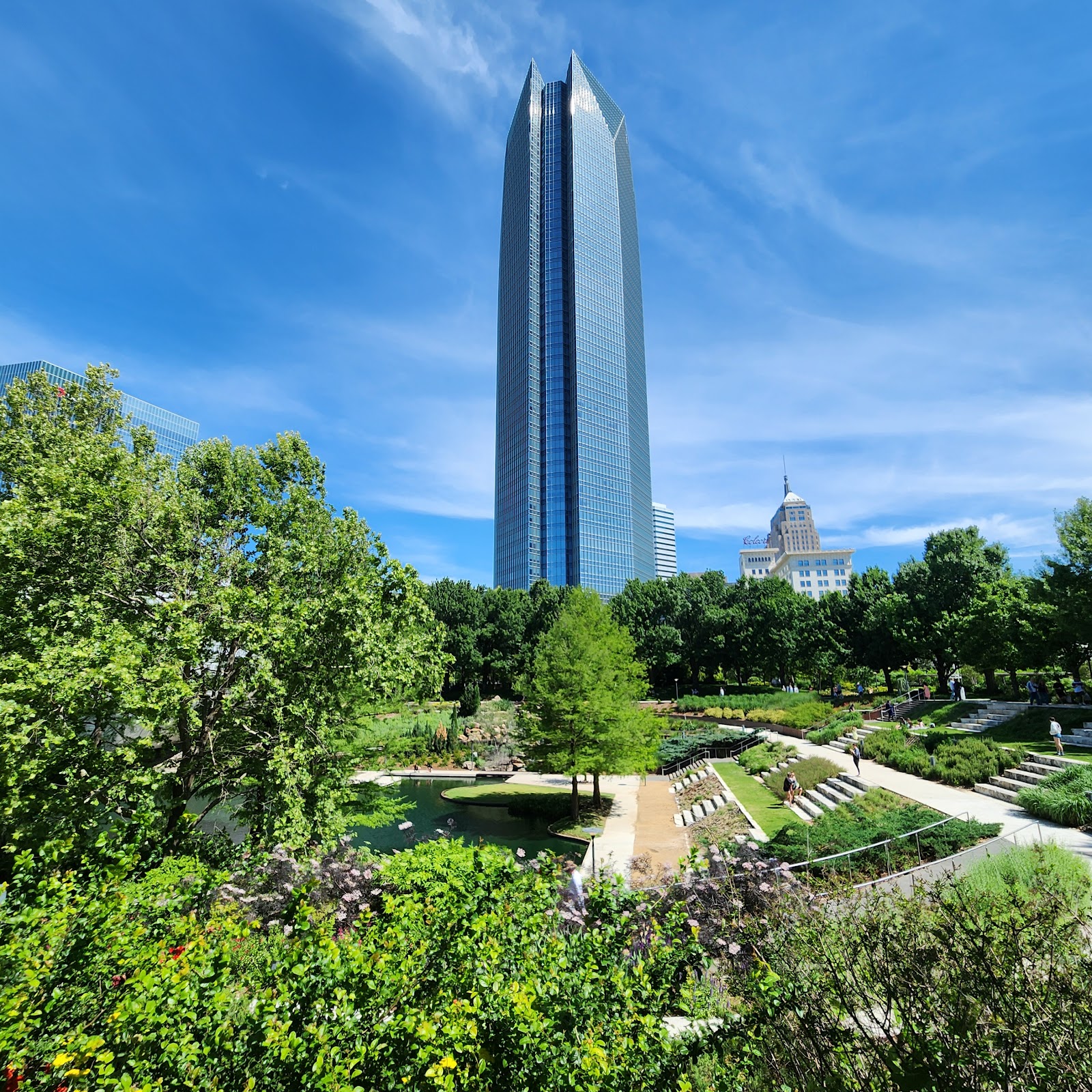
The Myriad Botanical Gardens occupy seventeen acres of downtown Oklahoma City, an urban park with lawns, water and planting, built around a cylindrical glass conservatory with the city skyline rising around the site.
The decision here is whether you are working inside the conservatory or out in the park, and it matters because a tubular glasshouse behaves unlike the pitched-roof conservatories elsewhere in this series. A pitched roof lights from above through parallel glazing; a horizontal cylinder lights from above and from both sides at once, wrapping light around whatever is inside it. That is softer and more enveloping, and it removes the hard parallel stripes a pitched roof throws — replacing them with a curved framework pattern instead.
It is also a curved interior, which breaks the compositional habits that work in rectilinear rooms. This is about that fork. We have not photographed a wedding at the Myriad Gardens; cylindrical conservatories and urban parks behave the same wherever they occur. Which spaces host events and whether the conservatory can be private are questions for their team — and the second matters, because a downtown park is busy.
The Myriad Botanical Gardens at a glance
| Where | Downtown Oklahoma City, Oklahoma |
| Character | A seventeen-acre urban park around a cylindrical glass conservatory |
| The fork | Inside the cylinder, or out in the park with the skyline |
| The cylinder | Light wraps from above and both sides, not just downward |
| Ask first | Whether the conservatory can be private; the park is busy |
Inside the cylinder: light that wraps
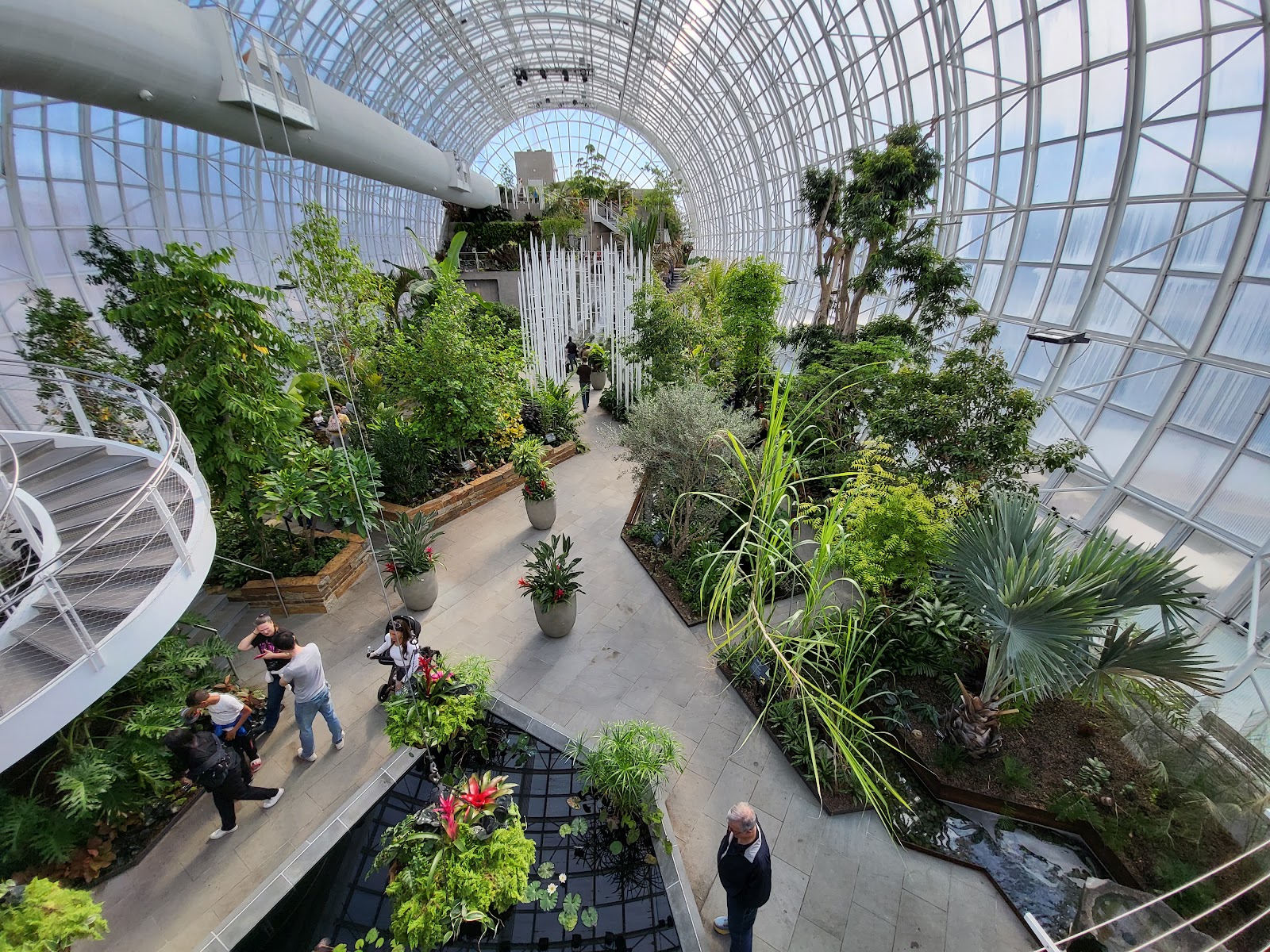
A horizontal glazed cylinder admits light through the top and both flanks simultaneously, which produces a genuinely different quality from a pitched roof. Instead of a large overhead source with vertical walls, you get illumination arriving from above and from either side at once — which wraps around a subject, fills the eye sockets that top light alone would shadow, and gives a softness closer to a studio than to a greenhouse.
That is unusually flattering and it is the conservatory’s real advantage. It also means the characteristic overhead problem is much reduced: where a dome or a pitched house needs a low bounce to fill the sockets, a cylinder does a good deal of that itself. A reflector still helps, but it is an improvement rather than a rescue.
The framework is the trade-off. A cylindrical structure is braced in curved ribs and diagonals rather than parallel bars, so the shadow pattern it throws is a curved web rather than a set of stripes — harder to predict and with less continuous shade to hide in. The remedy is the same as in any glasshouse: find the areas where planting or structure above the subject filters the pattern out, and work there rather than in the brightest patch.
The green cast is unchanged from any planted glasshouse. Dense foliage throws green onto skin, which reads as illness in a way warm or cool casts do not — so position people where the light reaches them without passing through leaves, set a custom white balance inside rather than carrying one in, and add a warm source on faces where it matters.
The curve, and how to compose in it
A cylindrical interior has no flat wall and no single vanishing point, which defeats both habitual moves: there is nothing to square up to, and the structural lines curve rather than converging. Photographers who bring rectilinear habits produce frames that feel wrong without an obvious reason.
Two positions work. Along the axis — standing at one end and shooting down the length of the cylinder — gives a receding tunnel of ribs that is one of the strongest leading lines available anywhere, with the couple placed in it. Or across the section, close to the glazing, where the curve sweeps overhead and the frame reads as enclosure.
What fails is the middle: standing off-centre at mid-length trying to include the whole volume. The curve compresses unevenly, verticals splay and the frame reads as a mistake. Be on the axis or against the glass.
Level with the electronic level rather than by eye, because a curved interior gives no straight horizontal to reference and hides tilt while you shoot. And in a tunnel frame, centring exactly on the axis matters — the ribs are symmetrical about it, so near-centre reads as an error.
One more cylinder-specific point: because the glazing curves down to near ground level at the flanks, the lowest part of the structure is close to a subject standing beside it. That gives a large soft source at very short range on one side — effectively a wall-sized softbox — which is the best single lighting position in the building and costs nothing but standing there.
- A cylinder wraps light, so the overhead problem is much reduced
- Curved ribs throw a web, not stripes — find the filtered areas
- Shoot along the axis or against the glass, never the middle
- Centre exactly in a tunnel frame; the ribs are symmetrical
- Stand beside the low flank glazing — a wall-sized softbox at close range
Outside: an urban park, a skyline and the southern plains
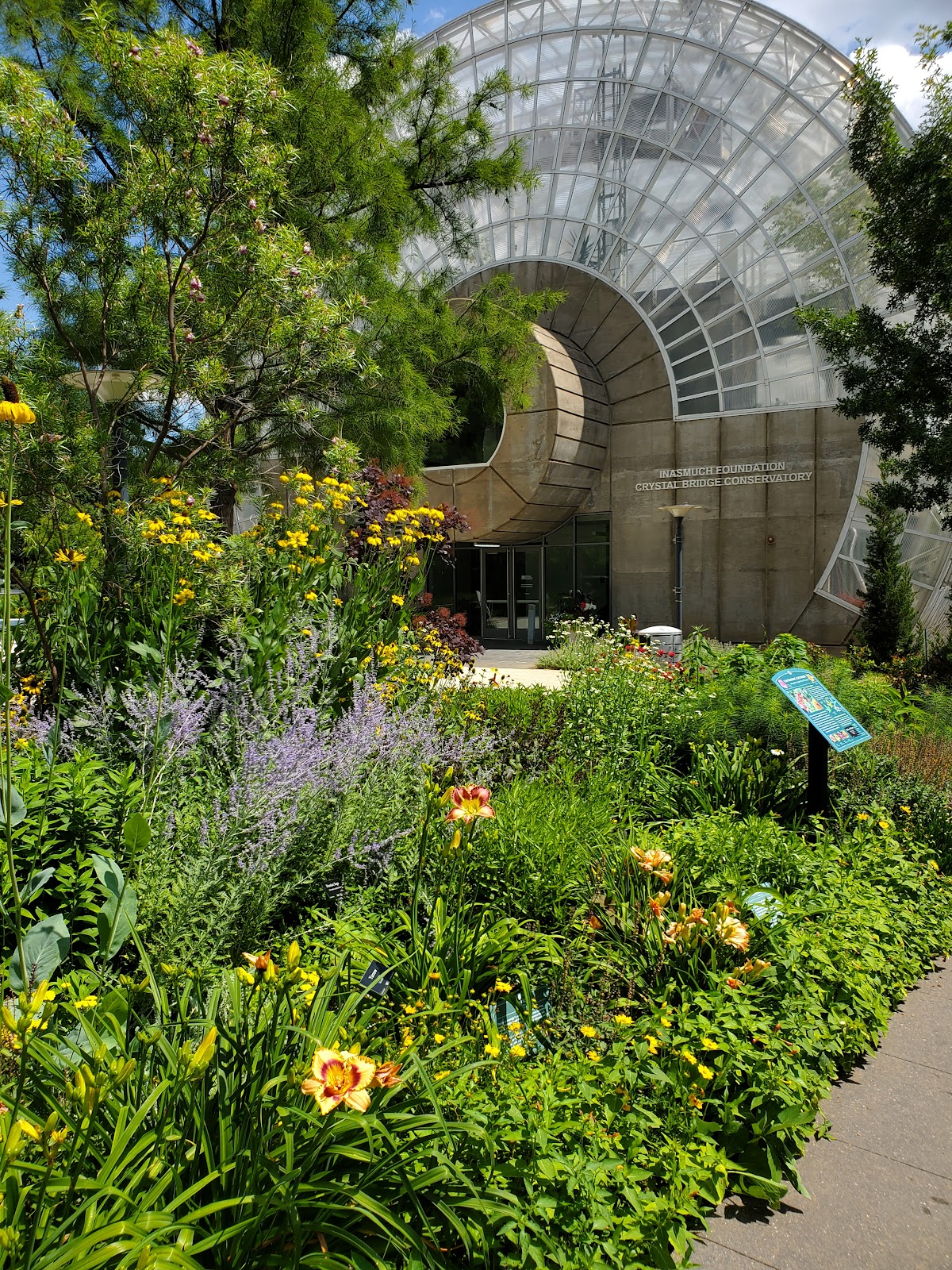
The park is the other half and its distinguishing feature is the city. A seventeen-acre garden inside a downtown means the skyline rises directly around the planting, and that is the frame that locates the gallery — a garden alone could be anywhere, while a garden with recognisable towers behind it is unmistakably Oklahoma City.
That frame wants a long lens, as every skyline frame does. Compression brings the towers close behind the planting where a wide lens reduces them to a distant grey band and loses the point entirely. It is the commonest error in urban park photography and it is worth stating every time.
Within the park the usual conditions apply. Mature planting gives dapple at midday, which is several stops across a face, shifting with any breeze, and correctable only by moving people — so look for continuous shade or use a building’s shadow. Water features bounce light upward into faces, filling the shadows a high sun carves, and still water mirrors the skyline in the first or last hour.
The last ninety minutes are when the park works: low sun rakes across lawns, backlights planting and rims figures, and it lights the towers warm at the same time. On the southern plains that window is long, because nothing intercepts the sun near the horizon.
Oklahoma conditions are the constraint. Summer heat is severe enough to limit how long anyone stands in open sun, so short decisive blocks and the conservatory or building shadows for midday. Wind is a constant, so a veil is a held-or-removed decision and any stand needs weight. And this is squarely in the region where severe convective storms build fast in spring and early summer — which makes the conservatory an unusually good fallback, because it keeps the wedding, the light and the greenery all at once, which a hotel ballroom cannot. Humidity also fogs a lens carried from air conditioning into outdoor air for ten to twenty minutes, so acclimatise before the outdoor block.
More frames from The Myriad Botanical Gardens
The Myriad Botanical Gardens wedding photography: common questions
How is a cylindrical conservatory different?
It admits light from above and both flanks at once, so the light wraps around a subject rather than falling on it. That fills the eye sockets top light alone would shadow, which makes it unusually flattering for a glasshouse.
What is the trade-off?
The framework. A cylinder is braced in curved ribs and diagonals, so its shadow is a web rather than parallel stripes — harder to predict, with less continuous shade. Find the areas where planting above filters the pattern out.
Where is the best lighting position inside?
Beside the low flank glazing, where the curve comes down near ground level. That puts a wall-sized soft source at very short range on one side, and it costs nothing but standing there.
How do you compose in a curved interior?
Along the axis, shooting down the length so the ribs recede as a leading line, or against the glass where the curve sweeps overhead. The off-centre middle distance is what fails, and a tunnel frame needs centring exactly.
What locates the gallery outside?
The skyline behind the planting, with a long lens. Compression brings the towers close; a wide lens reduces them to a distant grey band. A garden alone could be anywhere.
Why is the conservatory a good storm fallback?
Because it keeps the wedding, the light and the greenery all at once, which a ballroom cannot. On the southern plains, where severe storms build fast in spring and early summer, that is worth a great deal.
More Oklahoma venue guides
We are writing a photographer’s guide to every venue we would happily shoot in Oklahoma. Here are three more, plus the full index:
- The National Cowboy Museum: Four Ways Out of the Sculpture-Gallery Problem
- Oklahoma City Farmers Market: One Frame and How It Is Made
- The Oklahoma City Museum of Art: Field Notes on Glass, Twice Over
Planning a wedding at The Myriad Botanical Gardens?
A cylinder wraps the light and curves the geometry. Tell us your date and whether the conservatory can be private.