 Tulsa Country Club: Field Notes on a 1908 Club
The National Museum of the American Indian, Oklahoma City: Four Ways Out of the Gallery Problem
Every gallery is lit for the objects in it. A face is not an object, and that is the problem.
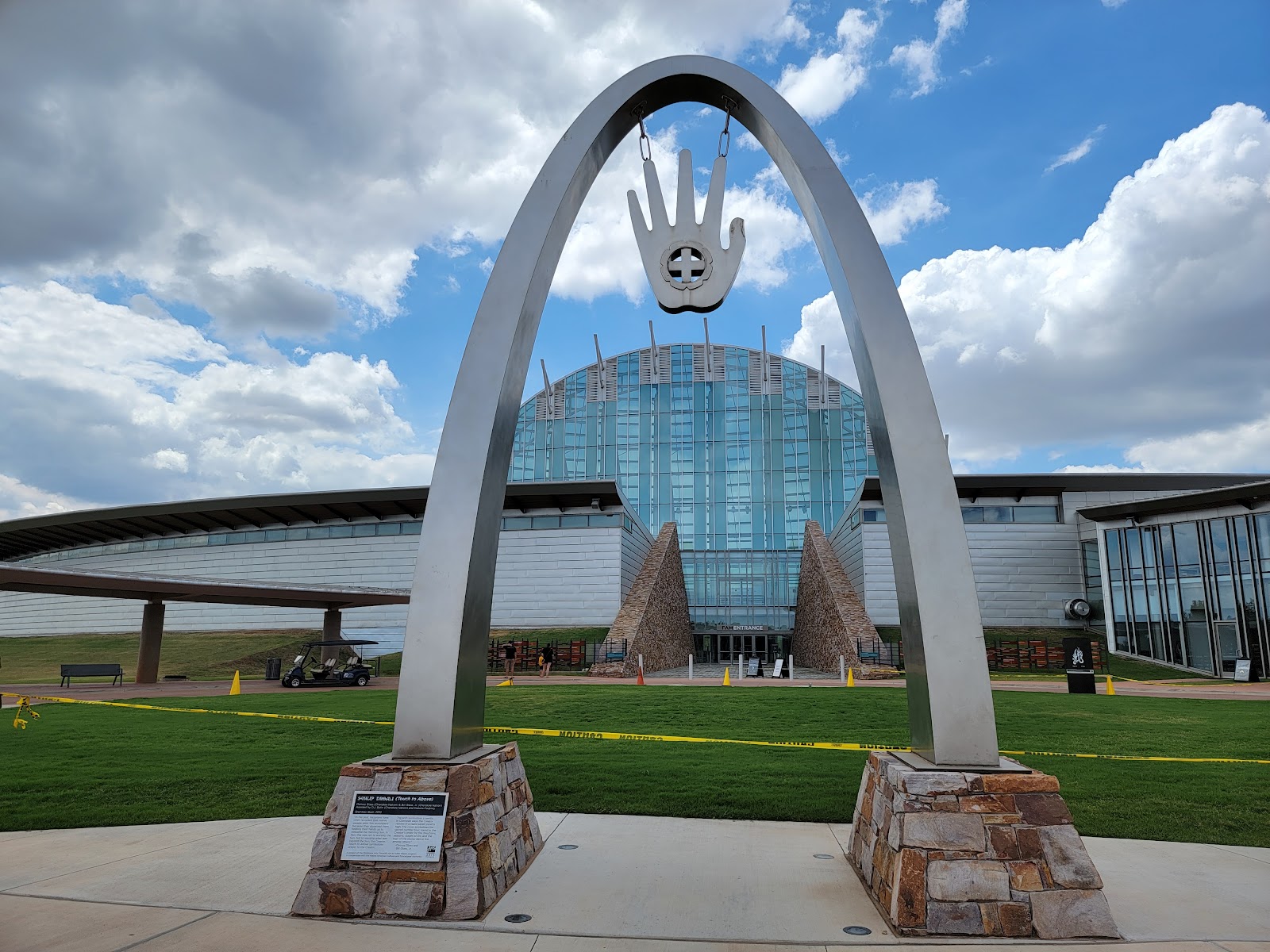
This modern museum in Oklahoma City offers galleries, indoor event space and outdoor grounds, which is the practical draw: guests do not have to travel between ceremony, portraits and reception, and a whole day fits on one site.
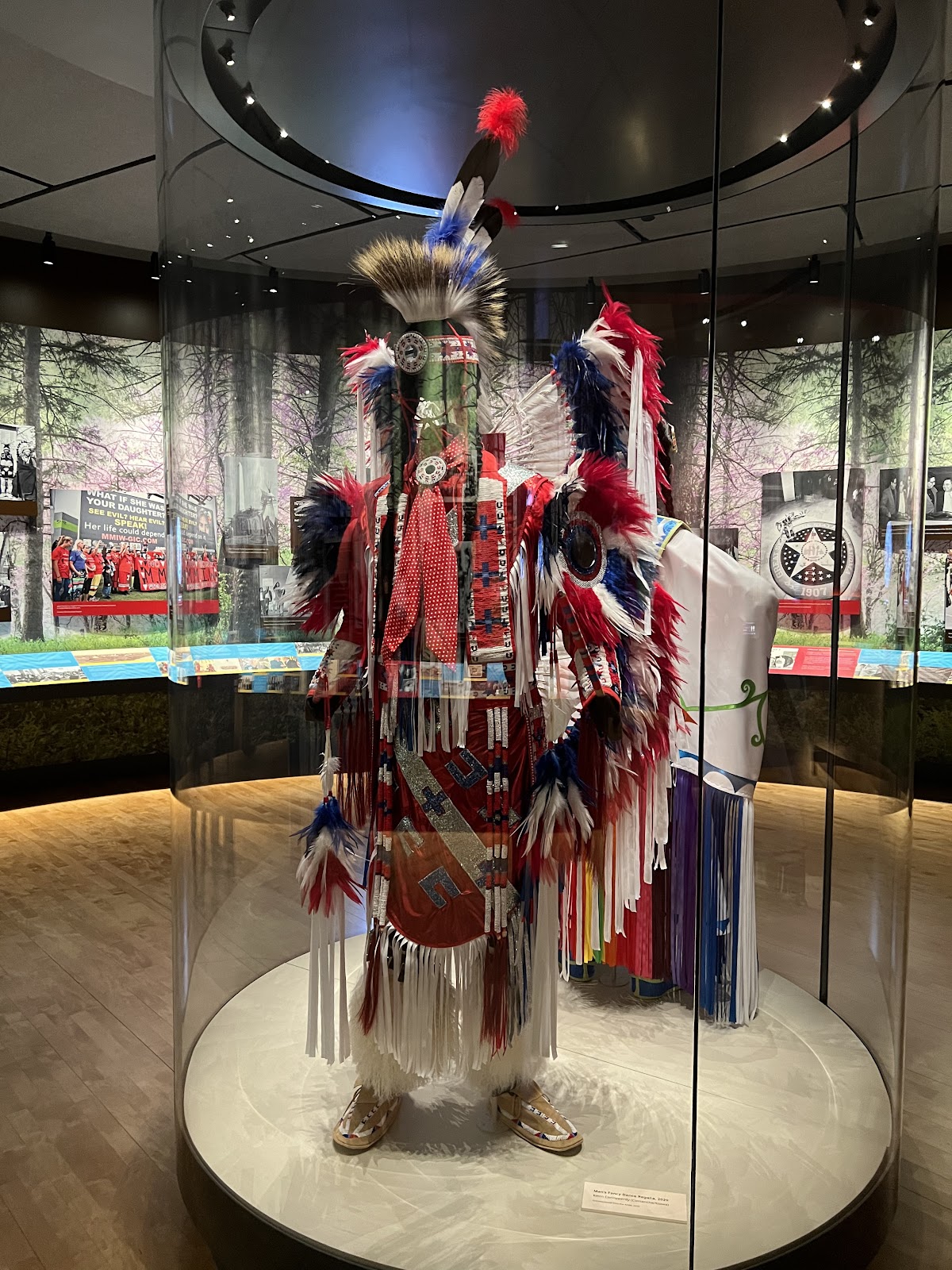
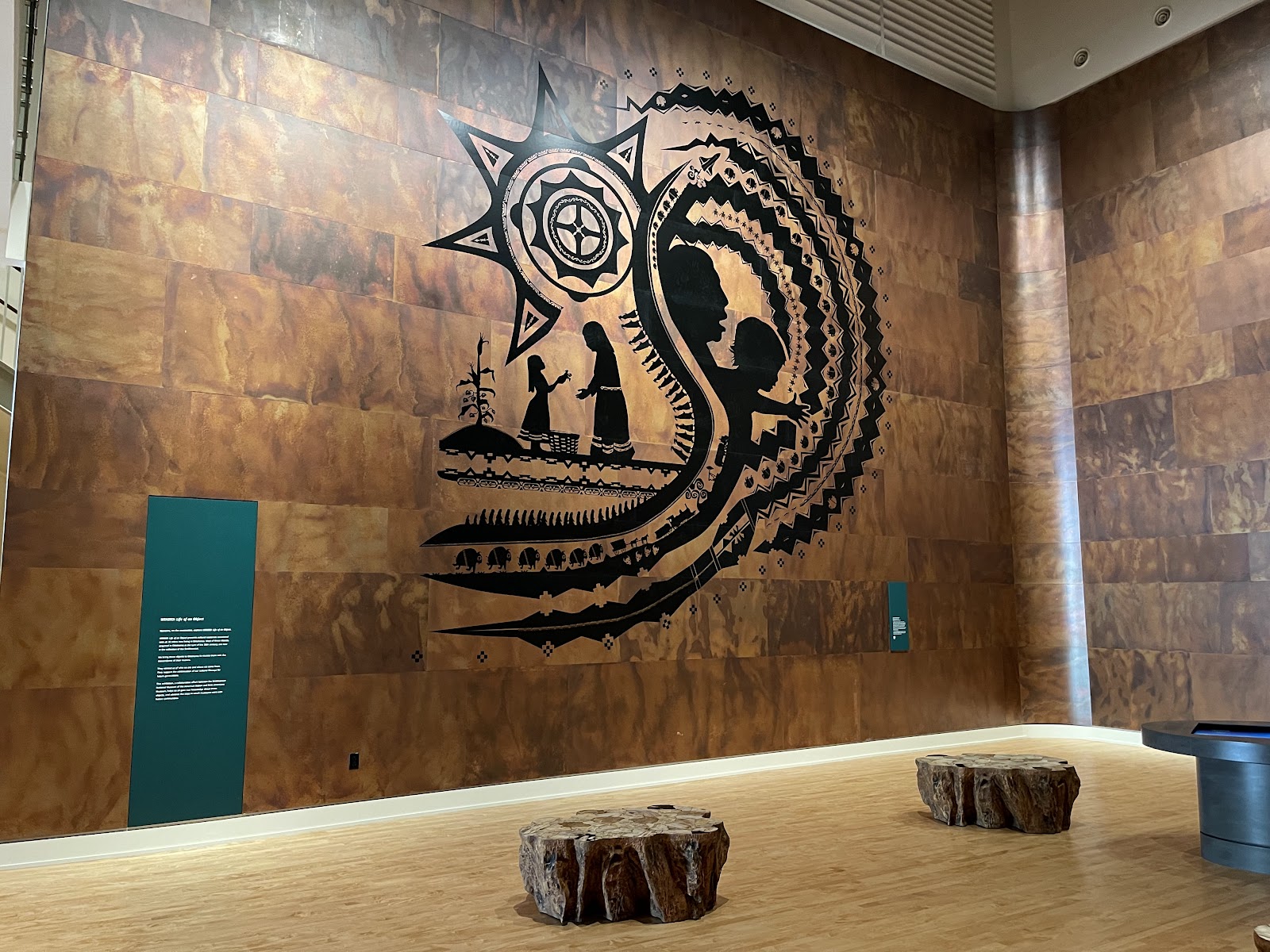
It also presents the problem every museum presents. Gallery lighting is engineered around two constraints that have nothing to do with photographing people — conservation, which caps how much light may fall on sensitive material, and display, which wants that limited light aimed precisely at objects rather than spread across a room. The result is a low overall level with small pools of hard light from directly above, and that combination is close to the worst possible portrait condition: an underexposed room, a dark-eyed subject, and a hard shadow under the nose.
So this is written as the problem and four ways out of it. We have not photographed a wedding here; conservation lighting behaves the same in every museum. Which galleries are usable for a wedding, and whether photography is permitted in them at all, are the first questions to ask — many museums restrict it entirely, and the answer changes the plan rather than complicating it.
The National Museum of the American Indian at a glance
| Where | Oklahoma City, Oklahoma |
| Character | A modern museum with galleries, event space and outdoor grounds |
| The draw | Ceremony, portraits and reception on one site — no guest travel |
| The problem | Conservation lighting: low level, hard pools, from directly above |
| Ask first | Which galleries are usable, and whether photography is permitted |
Why gallery light fails a face
It is worth being specific, because the instinct is to treat gallery light as simply dim and to solve it with ISO. Level is only one of three problems and the least serious.
The second is direction. Display lighting comes from track or recessed fittings in the ceiling, aimed down at objects on walls and in cases. Light from directly above puts the eye sockets in shadow, draws a hard line down from the nose, and leaves the underside of the chin dark — the lighting direction used in horror films, for exactly this reason.
The third is spectrum, and it is the one that survives editing least well. Museum fittings are often narrow-band LED chosen for low ultraviolet output and long life rather than colour rendering. Under a low-CRI source skin can go sallow or plum-toned even at technically correct white balance, because the source is not emitting the wavelengths skin needs to reflect. No slider recovers a wavelength that was never there.
Added to that, gallery walls in a modern museum are often dark, which means no bounce is available: a flash pointed at a ceiling in a gallery with a high dark ceiling does nothing at all. Every source has to be direct and modified, and that is worth knowing before the first frame rather than after it.
Four ways out
The first way out is to bring your own face-height light and treat the gallery as a background. One small source, off-camera, at face height, modified so it does not announce itself, gelled to sit near the gallery colour, at a level about a stop or so under a correct exposure for the room — that gives a face that reads with a gallery that still looks like a gallery. The error to avoid is overpowering the space: a brightly lit couple in front of a black void is a studio portrait with a museum in the caption.
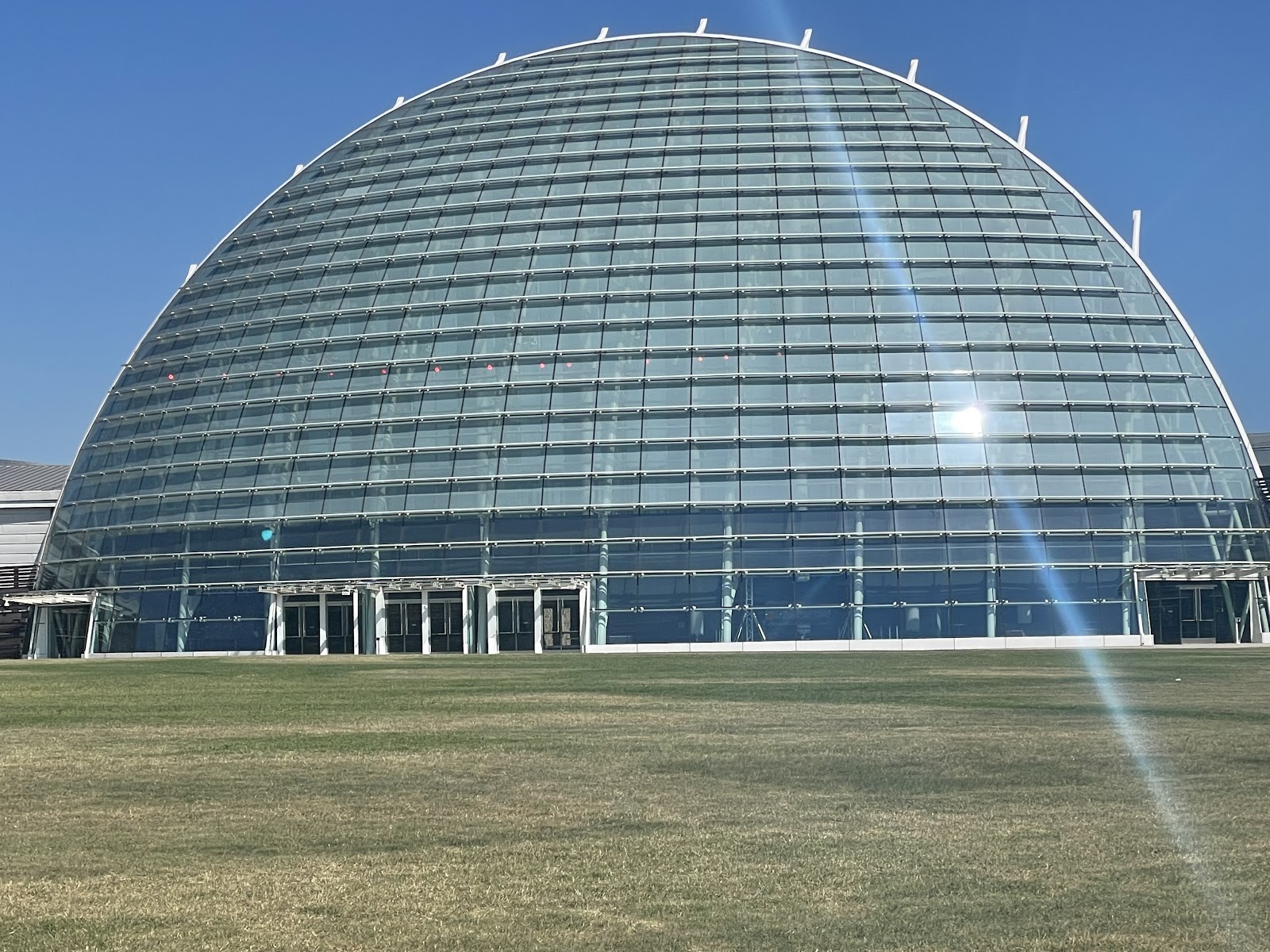
The second is to find where the museum’s own architecture solves it. Modern museums are built with daylit public volumes — atria, entrance halls, circulation spines, glazed corridors — precisely because they need somewhere that is not a gallery. Those spaces have no conservation constraint, so they are usually generously daylit and often the best-lit rooms in the building. Ninety per cent of a museum’s portrait value is usually in its public architecture rather than its collections, and none of it requires permission to bring equipment.
The third is to use the pools deliberately instead of fighting them. A hard narrow beam from above, with the room dark around it, is a dramatic light — and if a subject is placed where a pool falls and the camera is stopped down for the ambient, the result is a figure emerging from darkness. That is a real frame rather than a compromise, and it only works if it is chosen rather than accepted.
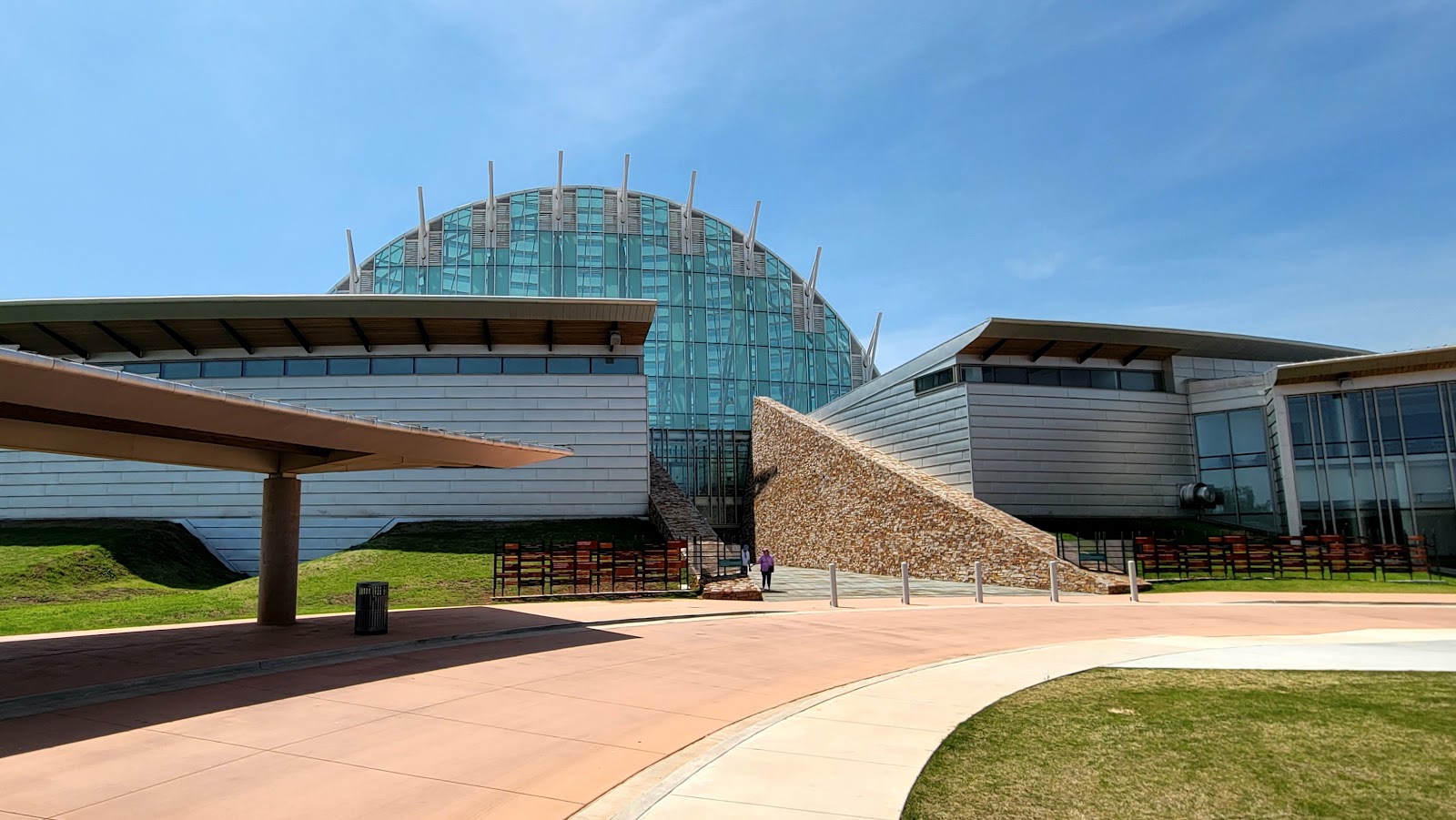
The fourth is the grounds, and at a site with outdoor space it is the strongest answer. Outside there is no conservation constraint, no spectrum problem and no direction problem after the sun drops — and low sun across open Oklahoma ground with a modern building behind is a better portrait condition than any gallery in the state. The last ninety minutes belong outdoors, and everything indoors should be scheduled around protecting that window.
- One face-height source, a stop under the room, gelled near the gallery colour
- Shoot the daylit public architecture, not the galleries
- If you use a display pool, stop down and let the room go dark
- Put the last ninety minutes outside, and schedule everything else around it
- Assume no bounce: dark walls and high ceilings give none
The grounds, the evening, and what to ask
Open ground outside a modern museum is a plains condition and behaves like one. There is little shade, so the middle of the day is unusable in an Oklahoma summer and the building’s own shadow is the reliable midday resource. Wind is close to constant, which means weighted stands and a veil plan. And spring and early summer bring fast-building convective storms, where a large museum is an excellent fallback — the day continues indoors rather than stopping.
Storm light on open ground, after the cell passes, is genuinely worth going out for: a dark sky, raking low sun and a modern building lit against it is a frame that only bad weather produces.
After dark a modern museum’s glazing inverts. The lit interior becomes brighter than outside, so glazed walls reflect the room instead of showing the grounds, and lights must go off the camera axis with frames shot obliquely to the glass. The crossing at dusk — about twenty minutes when the outside falls to interior brightness and one exposure holds both — is the frame to schedule rather than hope for.
The questions worth asking before anything else are about permission rather than light. Whether photography is permitted in galleries at all; whether stands, lights and tripods are allowed in them; whether flash is prohibited near sensitive material, as it often is; and which spaces a wedding booking actually includes. A museum that says no to galleries has not ruined the day — it has told you to spend it in the atrium and on the grounds, which is where you were going to get the better frames anyway.
One more question matters at a museum of this kind: whether there are objects, spaces or ceremonies that should not be photographed, or should be photographed only in particular ways. That is a matter of respect rather than technique, the museum’s staff will have a clear answer, and asking early is the whole of it.
More frames from The National Museum of the American Indian
The National Museum of the American Indian wedding photography: common questions
Why is gallery light so difficult?
Three reasons, and level is the least of them. It comes from directly above, which darkens eyes and draws shadows down the face; and museum fittings are often narrow-spectrum, which renders skin sallow or plum-toned even at correct white balance.
Can white balance fix the colour problem?
No. A low-CRI source is not emitting the wavelengths skin needs to reflect, and no slider recovers a wavelength that was never there. Your own gelled source on the faces is the fix.
Does bounce flash work in a gallery?
Usually not. Modern galleries often have dark walls and high dark ceilings, so a flash pointed upwards does nothing. Every source has to be direct and modified.
Where are the best-lit rooms in a museum?
The public architecture — atria, entrance halls, glazed circulation. Those spaces have no conservation constraint, so they are generously daylit, and most of a museum’s portrait value is there rather than in its collections.
What should the last ninety minutes be used for?
The grounds. Outdoors there is no conservation, spectrum or direction problem, and low sun across open ground with a modern building behind beats any gallery. Schedule the indoor coverage around protecting that window.
What should you ask the museum first?
Permission, not light: whether photography is allowed in galleries, whether stands and flash are permitted, which spaces the booking includes — and whether anything should not be photographed, or only in particular ways.
More Oklahoma venue guides
We are writing a photographer’s guide to every venue we would happily shoot in Oklahoma. Here are three more, plus the full index:
- The Jones Assembly, Oklahoma City: Restaurant, Music Room, Patio
- The Myriad Botanical Gardens: One Decision About the Conservatory
- The National Cowboy Museum: Four Ways Out of the Sculpture-Gallery Problem
Planning a wedding at The National Museum of the American Indian?
Ask about gallery permission early — the answer improves the plan rather than limiting it. Tell us your date.