 Tulsa Country Club: Field Notes on a 1908 Club
Civic Center Music Hall, Oklahoma City: How the Light Moves
An auditorium has no windows. In a theatre, the day is measured in lobbies and switches rather than in sun.
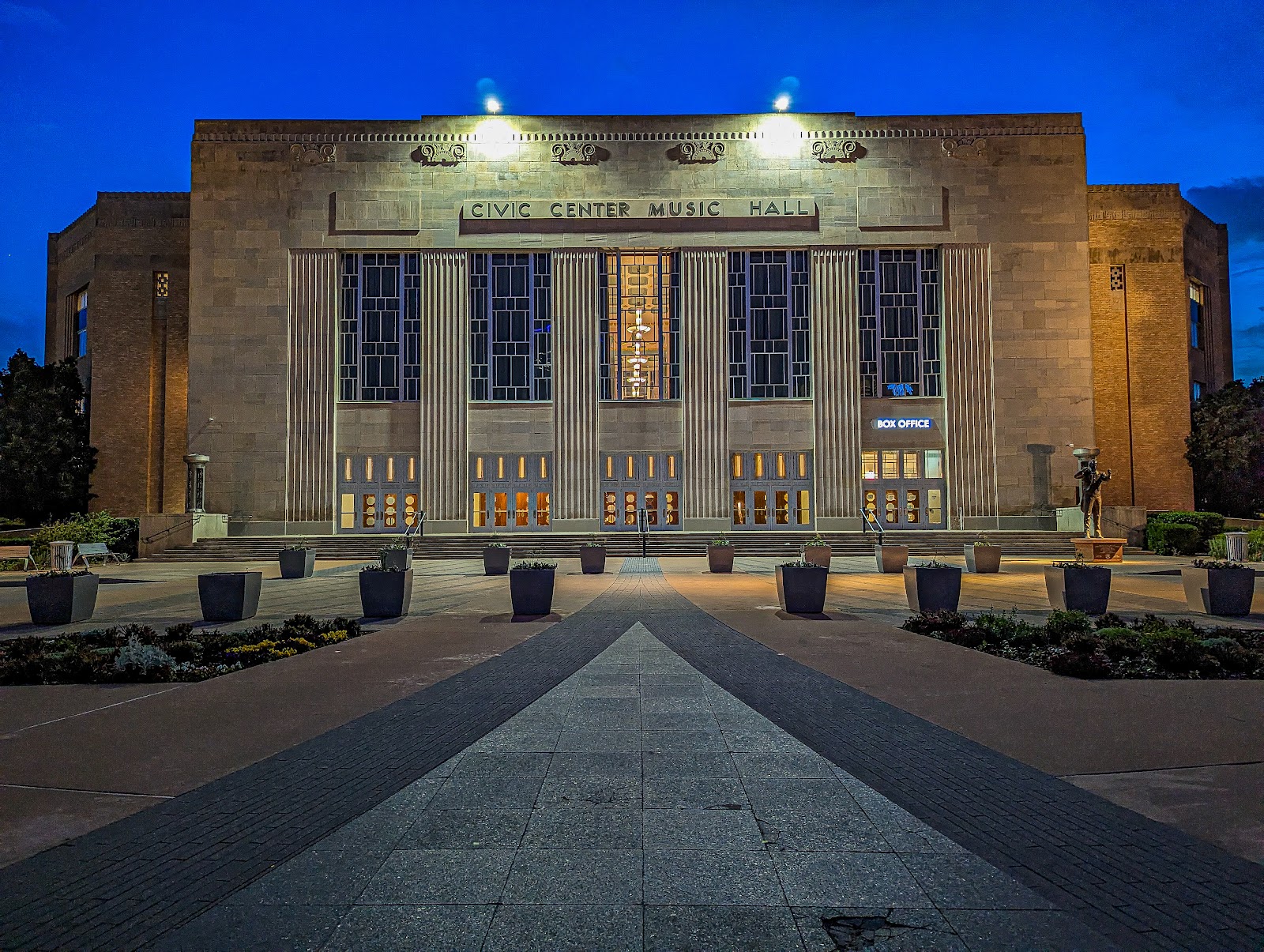
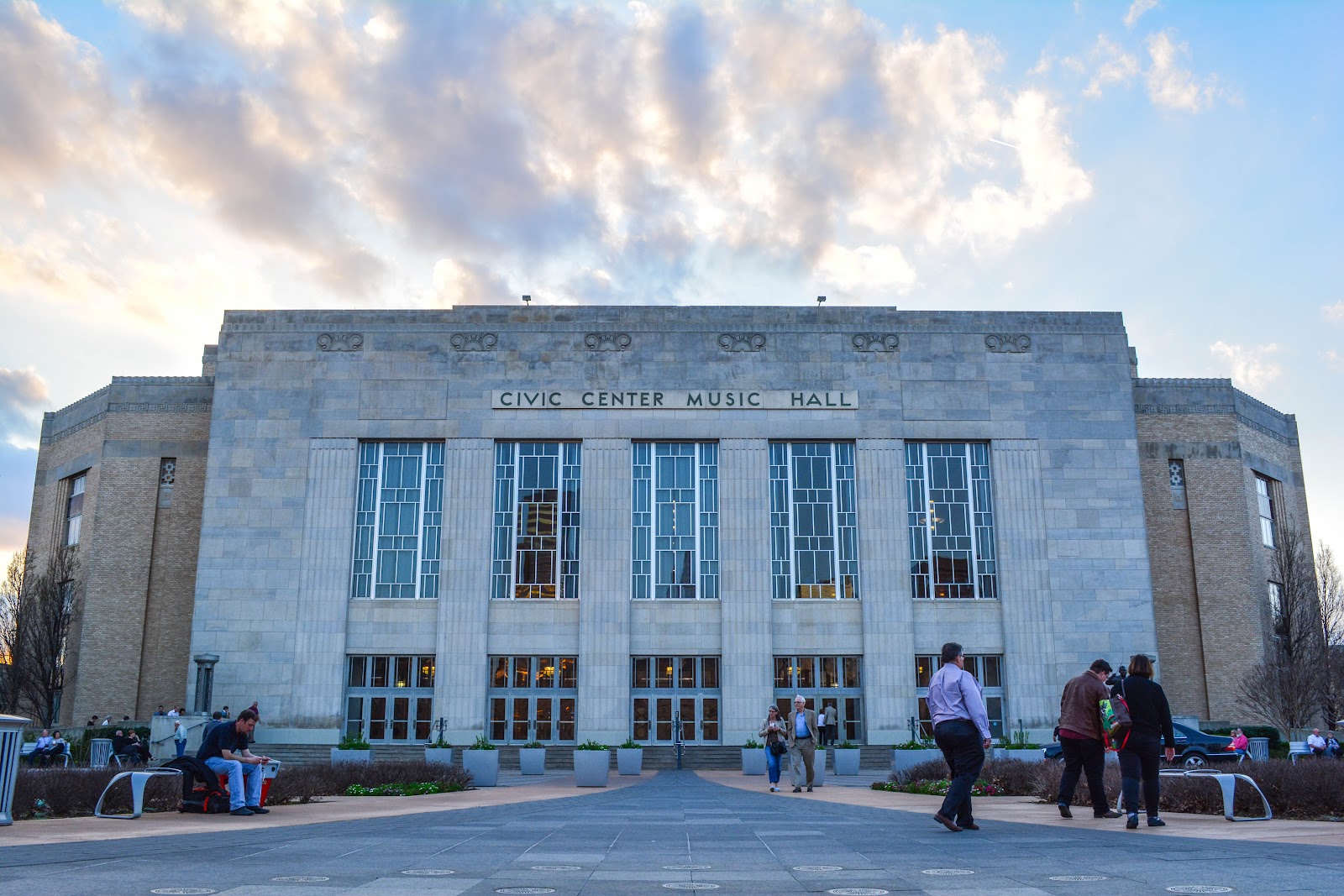
The Civic Center Music Hall is a 1930s performing arts venue in downtown Oklahoma City, with a main auditorium, a stage, and public lobby and foyer spaces around it.
A theatre inverts the usual planning. Everywhere else the day is organised around where the sun is; in a purpose-built auditorium there is no sun at all, because a room designed for performance is deliberately sealed against daylight. What changes through the day instead is which lights are on, which rooms are open, and whether the stage rig is available — and those are decisions made by people rather than by the sky.
This is still written as a day, because the lobbies do have daylight and the sequence still matters. We have not photographed a wedding at the Civic Center; 1930s civic theatres behave consistently. What the house lighting can do, whether stage lighting is included and which foyer spaces are available are the three questions worth asking early — the second one changes the whole approach.
The Civic Center Music Hall at a glance
| Where | Downtown Oklahoma City, Oklahoma |
| Character | A 1930s performing arts hall with auditorium, stage and public lobbies |
| The condition | No daylight in the auditorium; the lobbies are where the sun is |
| Governing question | Whether stage lighting is available to you |
| Ask first | House light control, stage rig access, which foyers you have |
Daytime: the lobbies are the daylight
The public front of a 1930s civic theatre is where any natural light lives — tall foyer glazing to the street, generous stair halls, and often a first-floor lobby with windows above the entrance. Those rooms are the preparation and portrait spaces during daylight hours, and they are usually better than they look: large street-facing glazing is a big soft source, and a foyer is wide enough to work a metre or two back from it where the light is soft rather than pressed against it where it is contrasty.
The direction to check is which way the front elevation faces, because it decides everything about the lobby. A front that takes direct sun gives hard patches and hard-edged window-frame shadows during part of the day, while a shaded front gives even directional light for the whole day. Both are workable; only one of them is workable without thinking.
Lobby interiors of this period carry period detail — terrazzo or patterned floors, plaster mouldings, metalwork, often significant staircases — and all of it needs raking light to read. A stair is the most reliable frame in any theatre: it gives elevation, a curve or a diagonal, a handrail as a leading line, and a natural place for people to arrange themselves without being arranged.
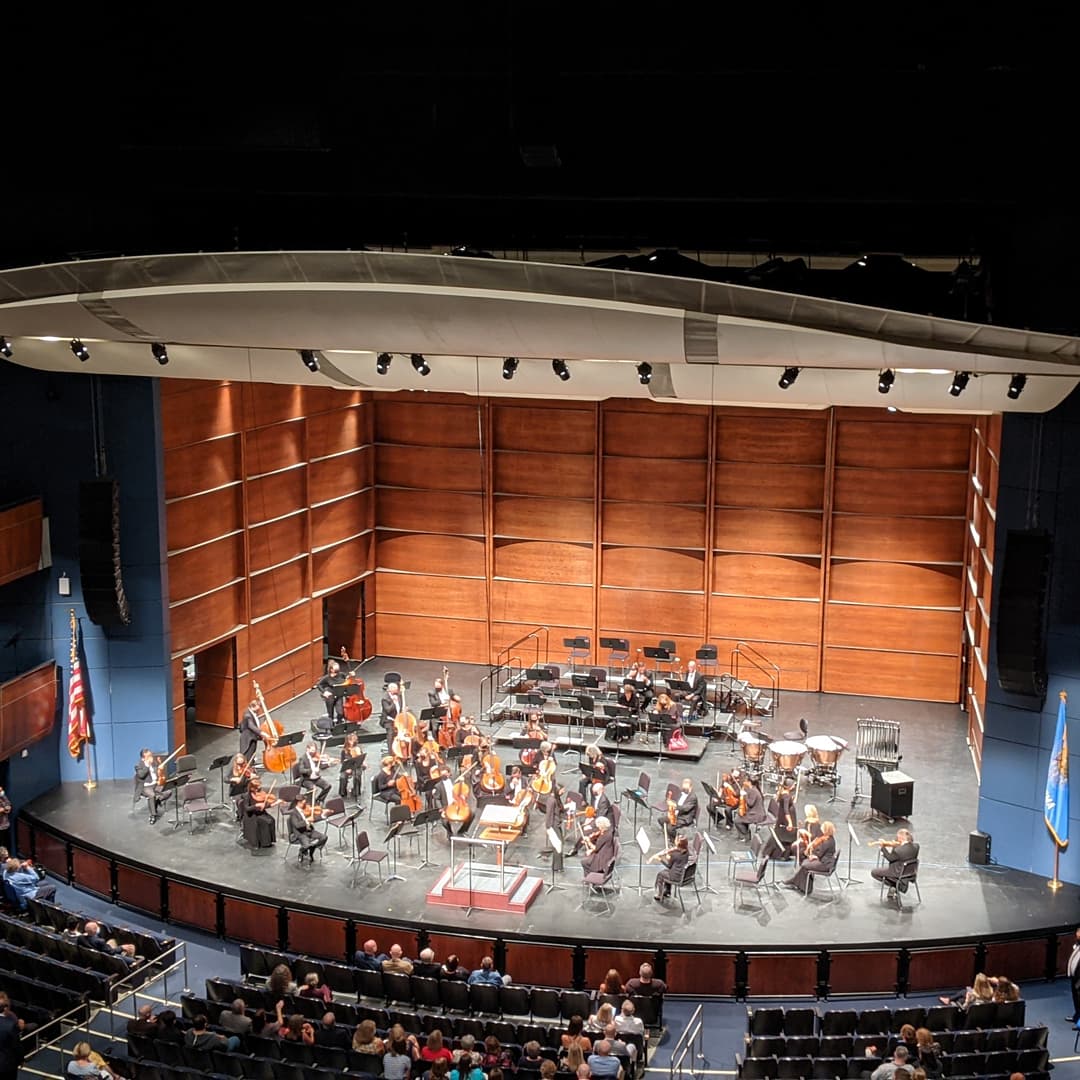
The auditorium in daytime, with only house lights on, is a dim warm room. It photographs as what it is — rows of seating receding into shadow, a proscenium, and a large dark volume — and it needs either a long exposure on a tripod or added light. Walk it early, with a light, to find out which.
The auditorium, and the stage question
House lighting in a theatre is designed to let an audience find a seat, not to light a face. It is typically low-level, warm, from overhead fittings, and frequently on a dimmer that is set well down. That produces exactly the classic problem: a source directly above, so eye sockets go dark and noses cast downward shadows, at a level low enough to force a high ISO on top of it.
So a source at face height is not optional in the auditorium — a single light, gelled warm to match the house tungsten, off the camera axis and modified enough that it does not announce itself, is the whole solution. Set the exposure for the room first so the auditorium still reads as a warm dim theatre, then add just enough to put a catchlight in the eyes. The frequent error is lighting a face correctly and losing the room, which produces a portrait that could have been taken anywhere.
If stage lighting is available to you, the approach changes entirely and for the better. A theatrical rig gives a hard key from a defined angle, a warm wash, and the option of a pool of light on an otherwise dark stage — a couple standing in a single pool in front of an empty house is one of the strongest frames any theatre offers, and it requires no equipment of your own. It does require someone who can operate the board, which is why it is a question for the contract rather than for the night.
Theatrical lighting is also narrow-spectrum and heavily coloured, so treat it as an effect and not as a portrait source. A saturated wash renders skin unrecoverably in whatever colour it is; when it is on, either shoot silhouette and shape deliberately, or put your own neutral source on the faces and let the wash light the set behind.
The view from the stage towards the house is the frame most people miss. Seating rows receding into darkness make a background of pure repetition, and standing on a stage is a place almost nobody is ever photographed.
- House lights come from directly overhead — a face-height source is mandatory
- Expose for the room first, then add enough for a catchlight
- Gel warm to match tungsten and set white balance to the gel
- If a stage rig is available, it beats anything you carry
- Shoot from the stage towards the house — repetition, and a rare position
Evening, outside, and the practicalities
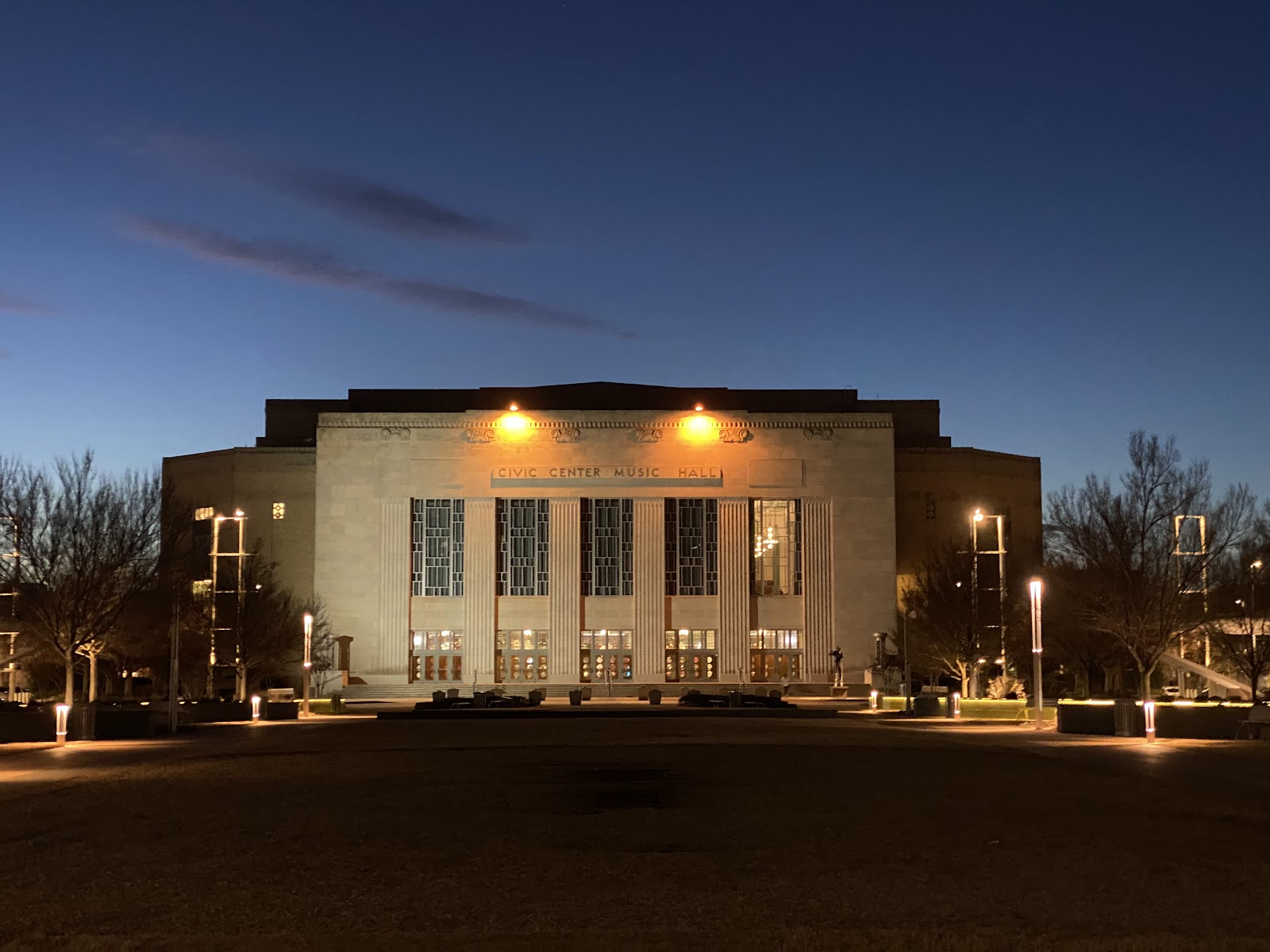
After dark the theatre is at its best because the building is designed for the evening. Lit foyers read as warm and occupied, the entrance glows out to the street, and the contrast between a bright lobby and a dark street is the frame the building was designed to produce.
Foyer glazing after dark becomes a mirror, as all glass does, so lights go off-axis and frames go oblique. The crossing worth catching is at dusk, when the street outside falls to roughly the brightness of the lit lobby and a single exposure holds both — perhaps twenty minutes, and worth an appointment in the plan.
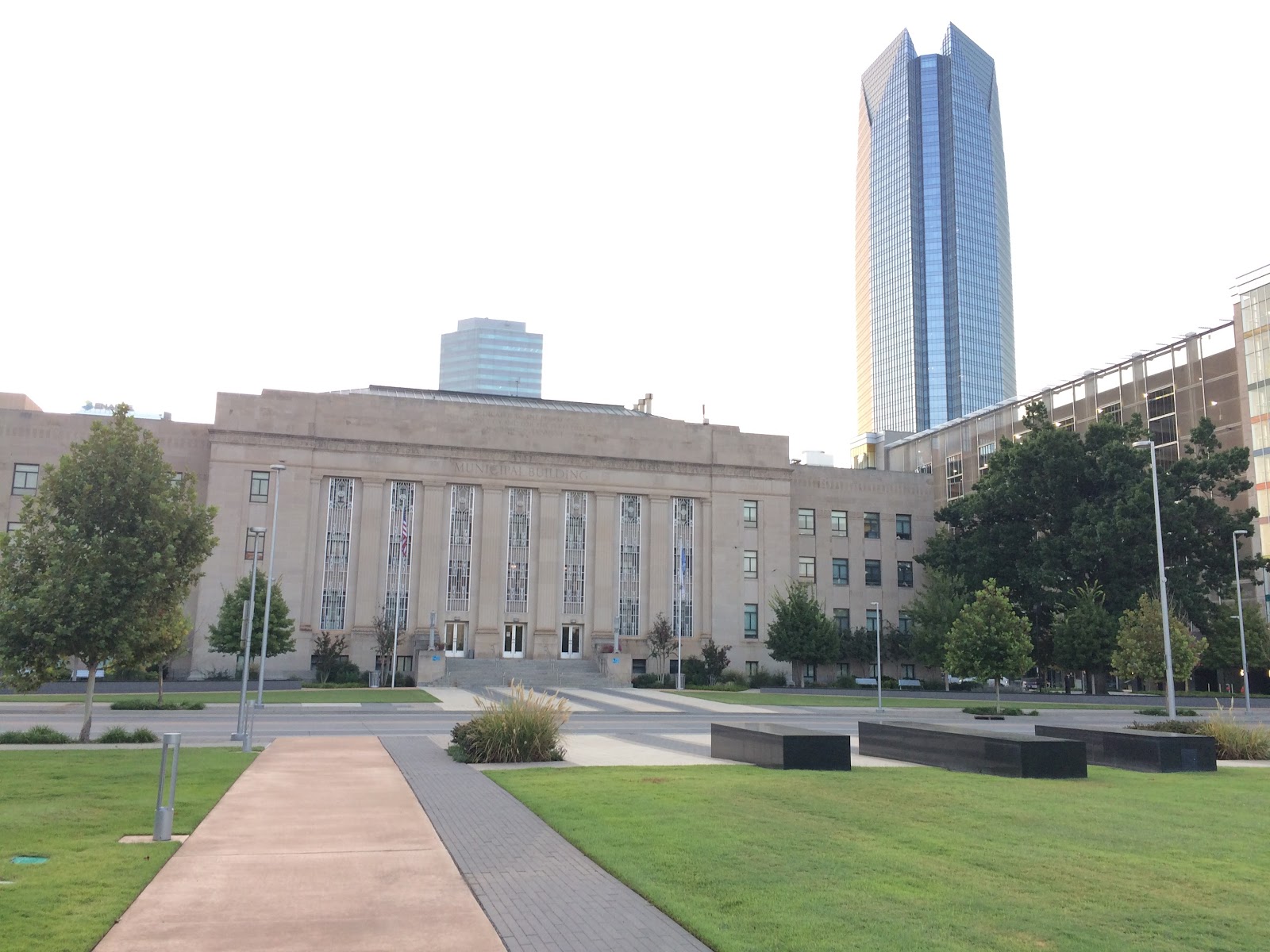
Downtown Oklahoma City outside gives a regular grid of streets with a low-rise core and towers at the centre, which means low evening sun reaches street level and runs the length of a street. That is the block that locates the venue, and it is short walking. Alleys and the shaded sides of buildings are the dependable positions, and they also shelter from wind, which on the plains is a constant rather than an event.
Practical constraints in a working performing arts hall matter more than in most venues. There may be a production in the building, which limits access and timing; tripods and stands in a lobby with public circulation need clearance; and stage access usually requires a house technician. Ask what is happening in the building on your date, not only what your booking includes.
Oklahoma conditions apply to anything outdoors: severe summer heat keeping street blocks short and purposeful, and severe convective storms in spring and early summer. A sealed theatre is, for once, the ideal weather plan — the day is completely unaffected by what the sky does, which is not true of any garden or riverside venue in the state.
More frames from The Civic Center Music Hall
The Civic Center Music Hall wedding photography: common questions
Where is the daylight in a theatre?
Only in the lobbies. The auditorium is deliberately sealed against daylight, so foyer glazing, stair halls and any first-floor lobby windows are the daytime portrait and preparation spaces.
Why do house lights cause problems?
They are designed to help an audience find a seat, not to light faces — low-level, warm and directly overhead. That darkens eye sockets and forces a high ISO at the same time, so a source at face height is mandatory.
How do you keep the room in the frame?
Expose for the auditorium first so it still reads as a warm dim theatre, then add only enough light for a catchlight. Lighting the face correctly and losing the room gives a portrait that could have been taken anywhere.
Is stage lighting worth asking for?
It is the single biggest question. A theatrical rig gives a hard key from a defined angle and a pool of light on a dark stage — the strongest frame a theatre offers, with no equipment of your own. It needs a board operator, so it belongs in the contract.
Can you shoot under a coloured stage wash?
Only as an effect. A saturated wash renders skin unrecoverably in its own colour. Either shoot shape and silhouette deliberately, or put a neutral source on the faces and let the wash light the set behind.
What is the most missed frame?
The view from the stage towards the house. Seating rows receding into darkness are pure repetition, and standing on a stage is a place almost nobody is ever photographed.
More Oklahoma venue guides
We are writing a photographer’s guide to every venue we would happily shoot in Oklahoma. Here are three more, plus the full index:
- The National Museum of the American Indian, Oklahoma City: Four Ways Out of the Gallery Problem
- The Jones Assembly, Oklahoma City: Restaurant, Music Room, Patio
- The Myriad Botanical Gardens: One Decision About the Conservatory
Planning a wedding at The Civic Center Music Hall?
The stage-lighting answer changes the whole plan. Tell us your date and we will ask the house.