 Hotel Saint Louis: A Walk-Through of an 1893 Union Trust Building
The Nelson-Atkins Museum: One Decision About Which Building You Use
A 1933 marble building and a modern translucent wing are opposite architectures, and choosing between them is the decision.
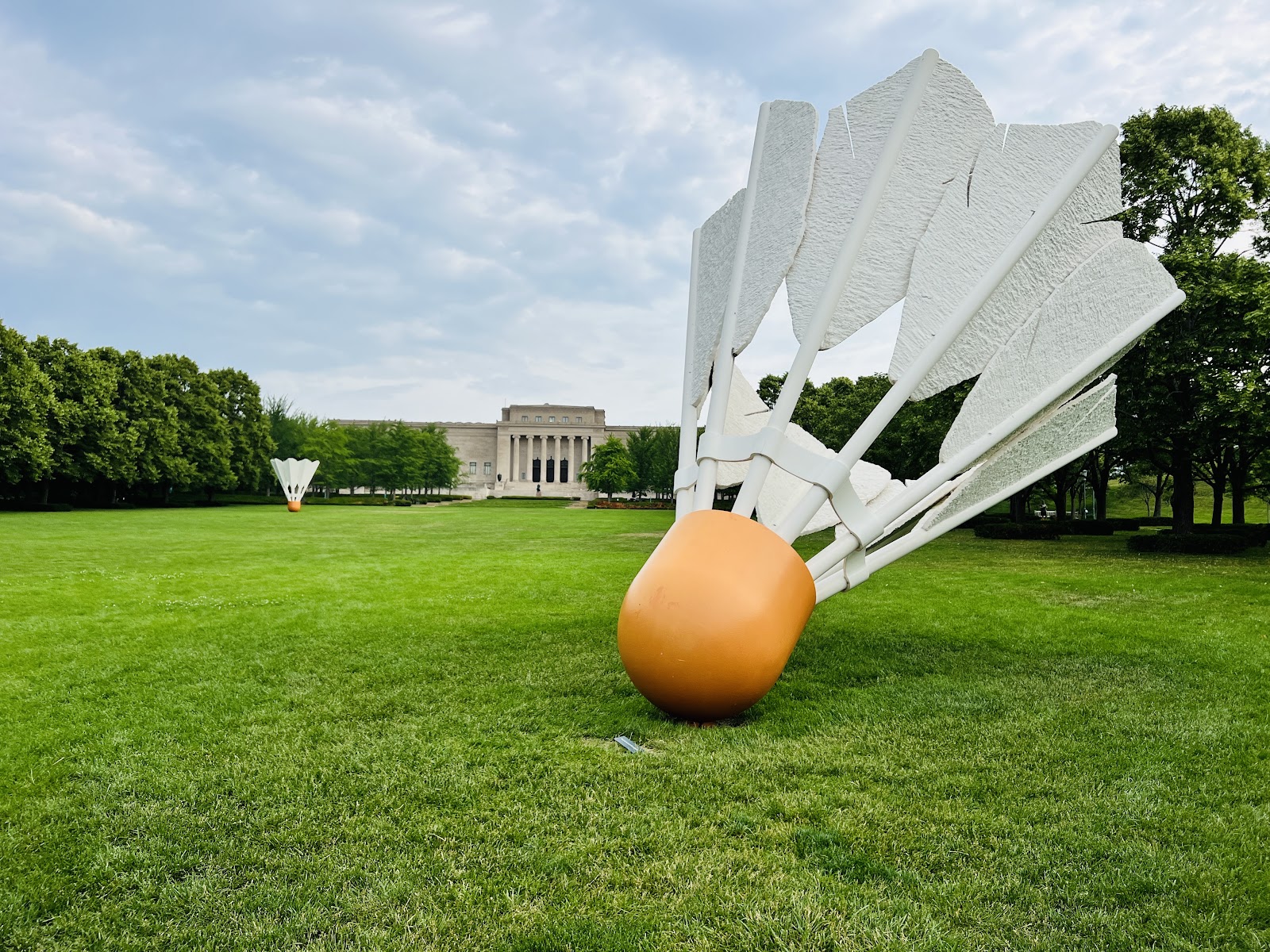
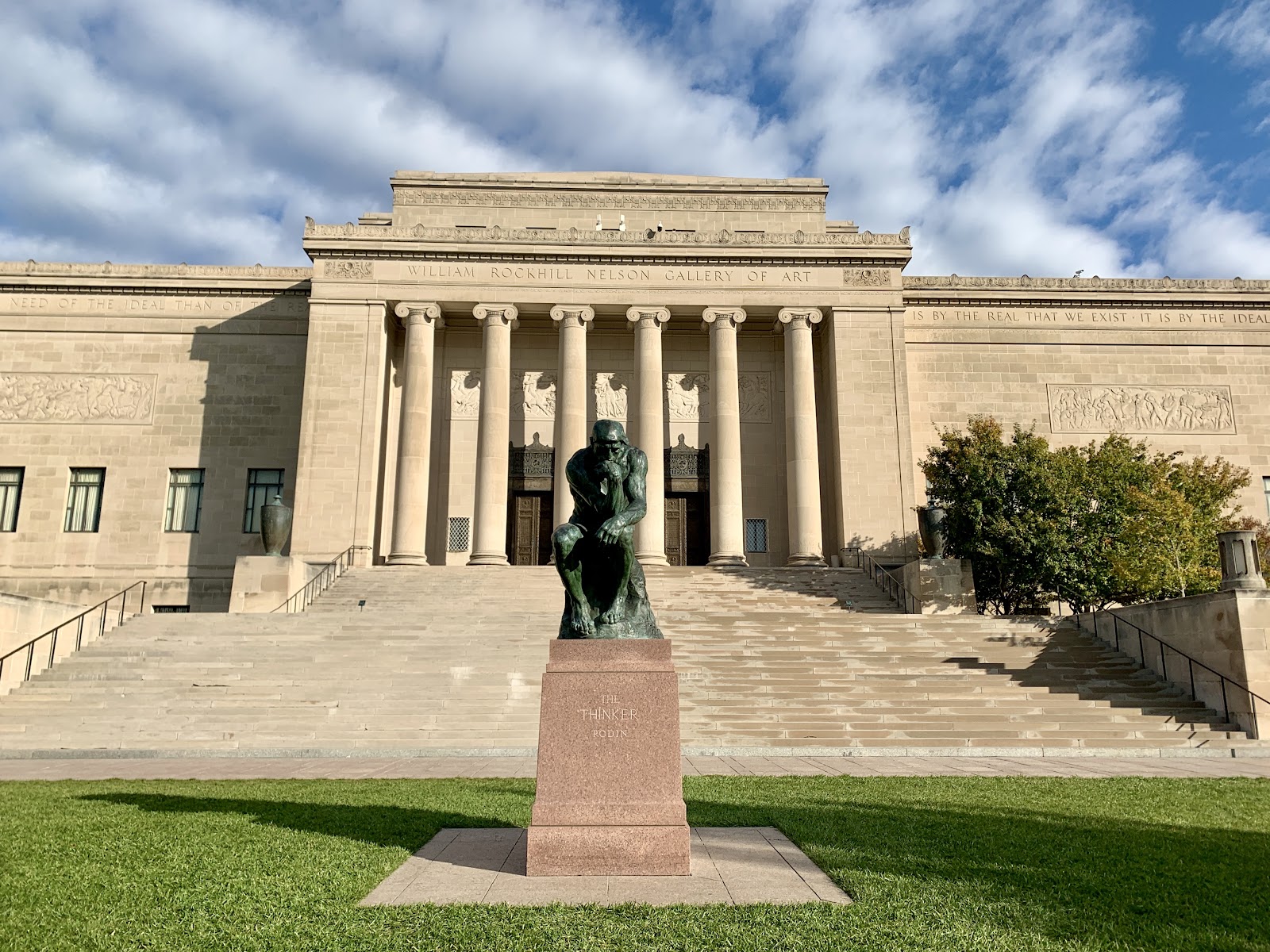
The Nelson-Atkins Museum of Art occupies grounds south of downtown Kansas City, Missouri, combining a neoclassical building of 1933 in pale stone with a later contemporary wing in glass and translucent panels, and a large lawn set with sculpture between and around them.
The decision here is which architecture you are working in, and it matters more than at most multi-phase venues because these two are further apart than usual. The 1933 building is pale marble and limestone with classical proportion, symmetry and high formal halls — warm-toned, textured, high in contrast, and it wants raking light. The modern wing is glass and translucent panel — cool, smooth, low in contrast, and it wants even light, which it largely supplies itself.
Those do not blend in a sequence, and a set that alternates between them frame by frame reads as coverage of two buildings. This is about choosing. We have not photographed a wedding at the Nelson-Atkins; neoclassical marble and translucent modern wings behave the same wherever they meet. Which spaces host events and what the collection photography rules are are questions for their events team — and the collection rules constrain the plan more than the architecture does.
The Nelson-Atkins Museum of Art at a glance
| Where | South of downtown Kansas City, Missouri |
| Character | A 1933 neoclassical stone building, a modern glass wing, a sculpture lawn |
| The fork | Marble halls or translucent wing — opposite architectures |
| Marble | Bounces light everywhere; high ambient, soft, and short on direction |
| Ask first | Collection rules on flash, tripods and publication |
The 1933 building: why marble does most of the lighting
Pale marble and limestone are efficient reflectors, which makes a classical hall behave unlike any other interior. Light entering through relatively modest openings bounces from floor to wall to ceiling and back, filling every shadow and raising the ambient far above what the window area alone would suggest. A marble hall is the closest architecture gets to standing inside a softbox, and it is why museums and courthouses of this period photograph so well with so little equipment.
Two consequences. Groups light evenly with no effort — nobody is in shadow, nobody squints, and there is no need to arrange people relative to a window. And faces are flattered by default, because light arrives from many directions at once and fills the eye sockets a single high source would darken.
The catch is the flip side of the same property: with light arriving from everywhere there is very little direction, and direction is what gives a face shape. A marble hall produces portraits that are perfectly exposed and slightly flat. The fix is cheap — one source from the side at modest power to create a shadow side, or positioning near a doorway or window where the light is more one-directional than in the centre of the room.
Marble is also not colour-neutral: it carries warm or cool veining depending on the stone, and the bounced light takes on that cast. Subtle but real, and enough to warrant a custom white balance rather than an assumption — particularly if the set will be mixed with frames from the glass wing, which is cooler again.
The modern wing: translucent panels as a light source
A wing clad in translucent panels rather than clear glass is an unusual condition and worth understanding. Clear glazing gives a directional beam plus a view; translucent panel gives diffuse light and no view — it is a wall that glows. That makes the interior evenly and softly lit from large areas rather than from punched openings, which is closer to a studio than to a window.
That is excellent for faces and unhelpful for drama. There are no hard shadows anywhere, so groups light evenly and skin is flattered, but nothing models a face and nothing separates a subject from a pale wall. The tools are the ones any low-contrast space needs: a long lens at a wide aperture for sharpness separation, one directional source to manufacture a shadow side, framing against a darker element, and negative fill — putting something dark on the shadow side, which subtracts light where the architecture insists on adding it.
Translucent panel also changes through the day in a way clear glass does not. It is brightest when the sun is on it and the whole wall glows; in shade it becomes a large dim even source. Neither is better, but they are different, and a sequence shot across that transition will not match itself without adjustment.
Precision matters in the modern wing as it does in any spare space. Clean planes and repeated modules mean a crooked horizon or an ambiguous near-symmetry is glaring, because there is nothing else in the frame to distract from it. Level deliberately and either centre on an axis or offset clearly.
- Marble does the lighting; add one side source to restore modelling
- Set white balance per building; marble and translucent panel differ
- In the modern wing, use negative fill and a long lens for separation
- Pick one architecture as the spine and shoot the other at a different hour
- Level precisely in the modern wing; small errors are glaring
The lawn, the sculpture and how to sequence it
The sculpture lawn is the outdoor register and it works on the same rules as any strong background: the works are assertive, so commit to one deliberately or subordinate it with a long lens at a wide aperture. Half-in fails. Large outdoor sculpture has one advantage over gallery pieces, which is that a couple can be placed in genuine relation to it and scale can do the work — a composition an interior rarely allows.
Sculpture also provides the only reliable shade on open lawn. A large work casts a hard-edged dependable shadow, and standing a couple two metres inside that line facing out towards the bright grass gives a large soft key with a dark surround. On a Missouri summer afternoon, with high sun and no canopy, that matters.
The last ninety minutes are when the lawn earns its place: low sun rakes across the grass, backlights any planting and rims every figure, and it simultaneously rakes the 1933 building’s stonework, which is the only time both the lawn and the classical architecture are at their best together. That makes it the natural block for any frame that has to include the building.
The sequencing that follows is clean because the three registers peak at different hours. Marble halls through the middle of the day, when they are unaffected by the sun and the lawn is harsh. The modern wing whenever suits, since translucent panel is forgiving all day. The lawn and the classical elevation in the last ninety minutes. And a short block twenty minutes after sunset on open lawn, because an unobstructed horizon fills the frame with colour.
Collection rules are the real constraint and they should be settled in writing: tripods, flash and sometimes photography are commonly restricted in rooms holding loaned works, varying room to room and changing with exhibitions. Ask separately which works may appear in published photographs, since loans and copyright apply. Missouri summer humidity also fogs a lens carried from air conditioning onto the lawn for ten to twenty minutes, so acclimatise before the outdoor block.
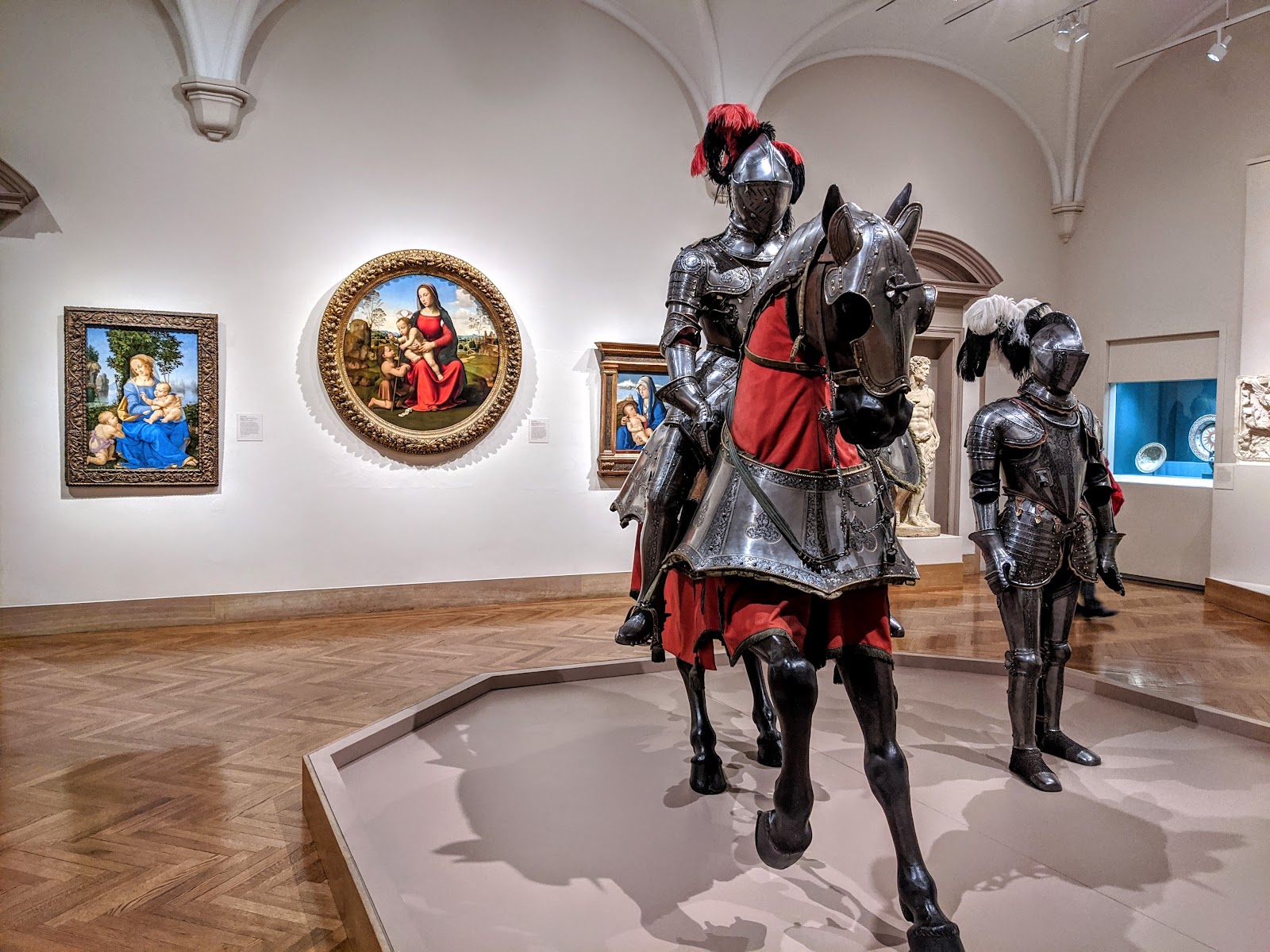
More frames from The Nelson-Atkins Museum of Art
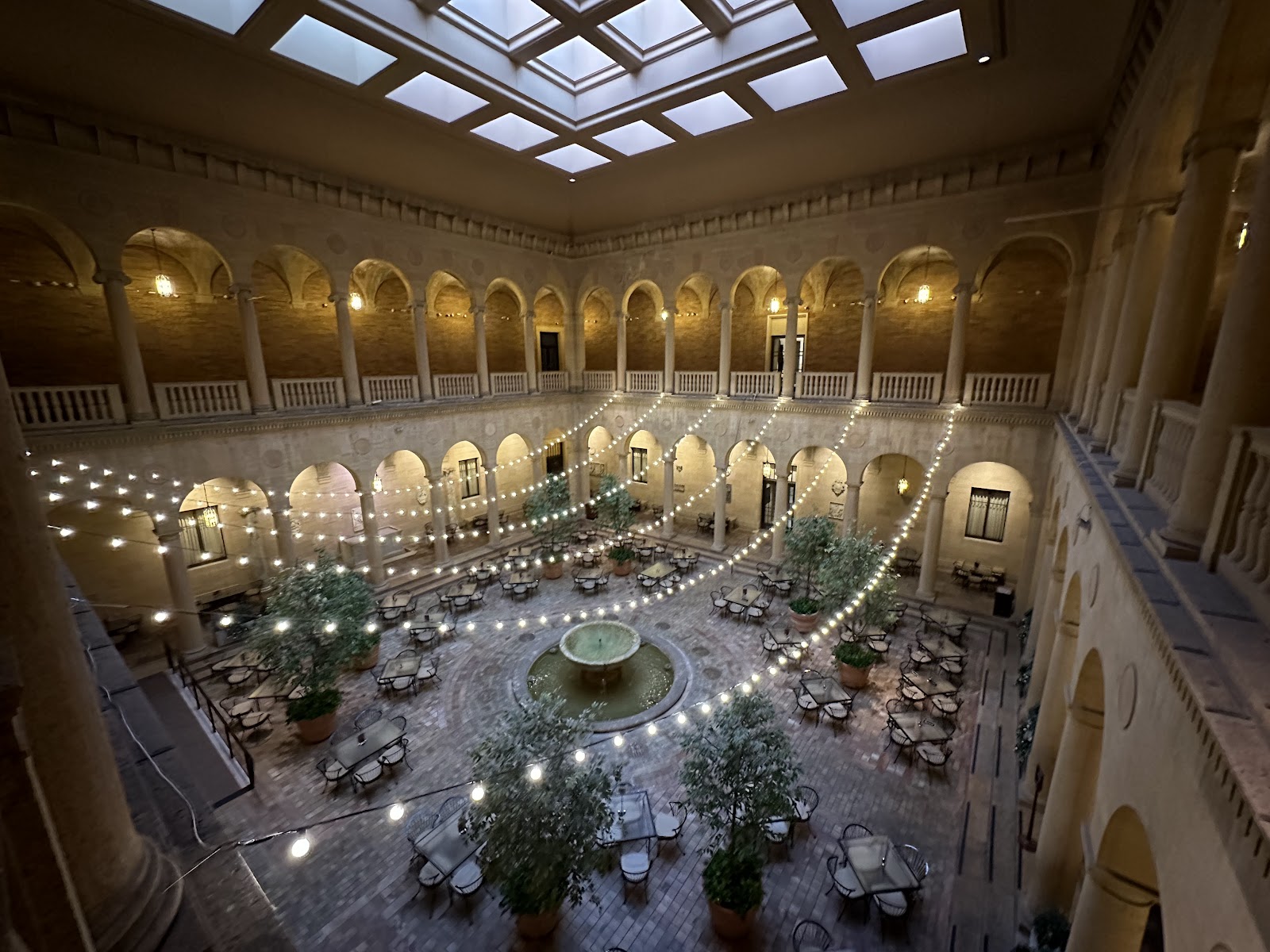
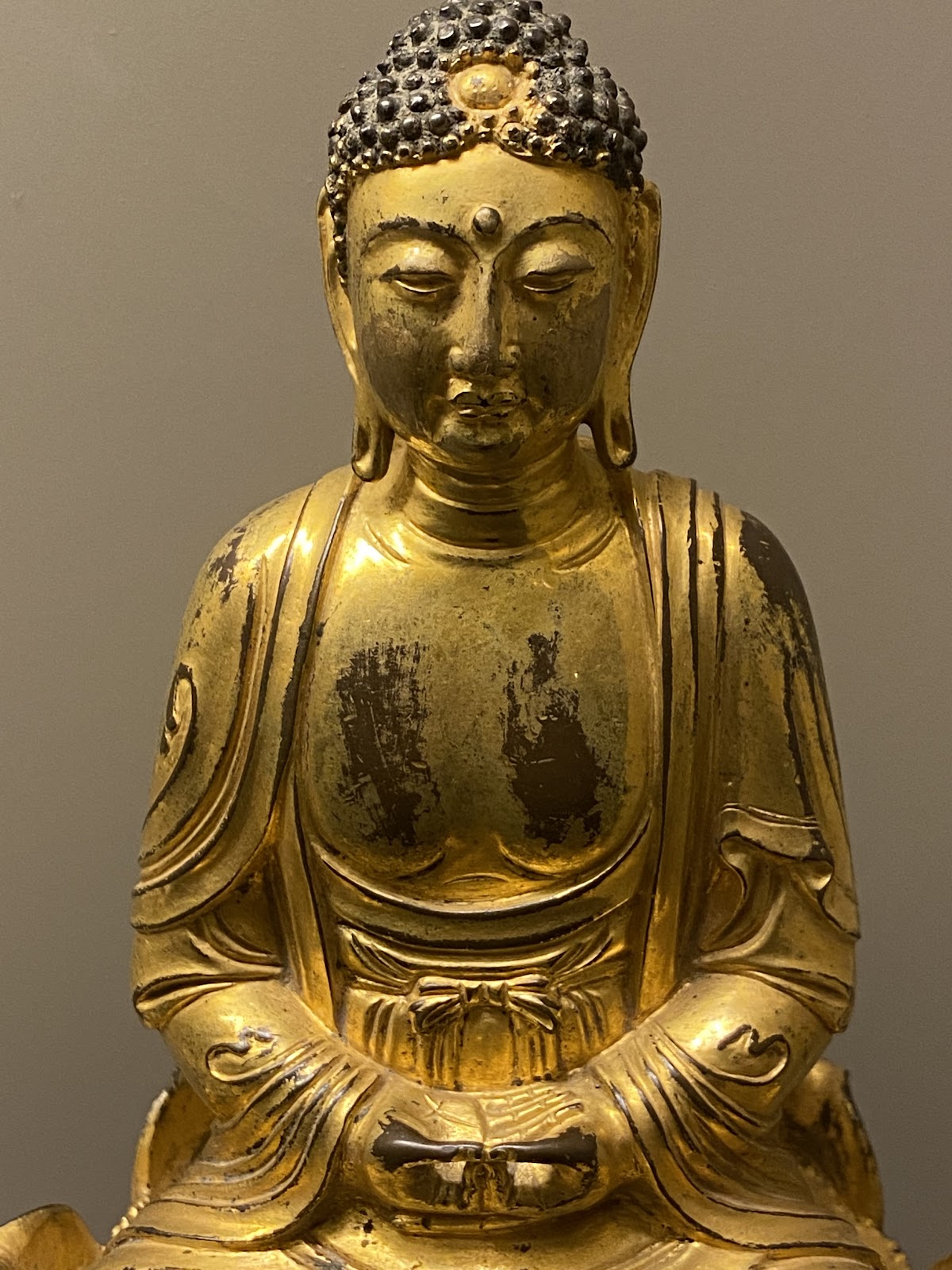
The Nelson-Atkins Museum of Art wedding photography: common questions
Why is a marble hall so easy to photograph in?
Because pale marble is an efficient reflector, so light bounces from floor to wall to ceiling and back. The ambient is far higher than the window area suggests, groups light evenly with no effort, and faces are flattered because light arrives from many directions.
What is the drawback?
Very little direction, and direction is what gives a face shape. A marble hall gives portraits that are perfectly exposed and slightly flat. One modest source from the side, or standing near a doorway, restores the modelling.
How is a translucent wing different from a glass one?
Clear glazing gives a directional beam plus a view; translucent panel gives diffuse light and no view — a wall that glows. That is excellent for faces and unhelpful for drama, since nothing models a face and nothing separates a subject from a pale wall.
What works in the modern wing then?
The low-contrast toolkit: a long lens wide open for sharpness separation, one directional source to create a shadow side, framing against a darker element, and negative fill — something dark on the shadow side to subtract light the architecture insists on adding.
Can the two buildings be mixed?
Not frame by frame. They are further apart than most multi-phase venues — warm textured marble against cool smooth panel — so pick one as the spine and shoot the other at a different time of day, so the contrast lands where the day changes.
When are the lawn and the classical building both at their best?
The last ninety minutes. Low sun rakes the grass, backlights planting and rims figures while simultaneously raking the 1933 stonework — the only hour both are working together, so that is the block for any frame including the building.
More Kansas City, MO venue guides
We are writing a photographer’s guide to every venue we would happily shoot in Kansas City, MO. Here are three more, plus the full index:
- The Raphael Hotel: A Small Hotel and the District Around It
- Union Station Kansas City: Four Ways Out of the Great-Hall Problem
- The Muehlebach Hotel: A Historic Wing Attached to a Modern One
All Kansas City, MO Wedding Venues →
Planning a wedding at The Nelson-Atkins Museum of Art?
Two architectures, one editorial decision, three different hours. Tell us your date and we will sequence it.