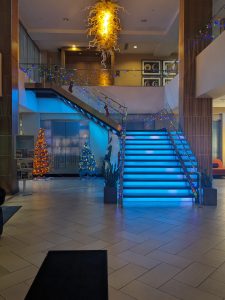
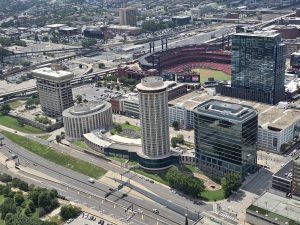
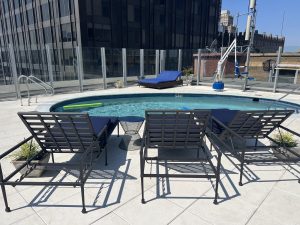
 Hotel Saint Louis: A Walk-Through of an 1893 Union Trust Building
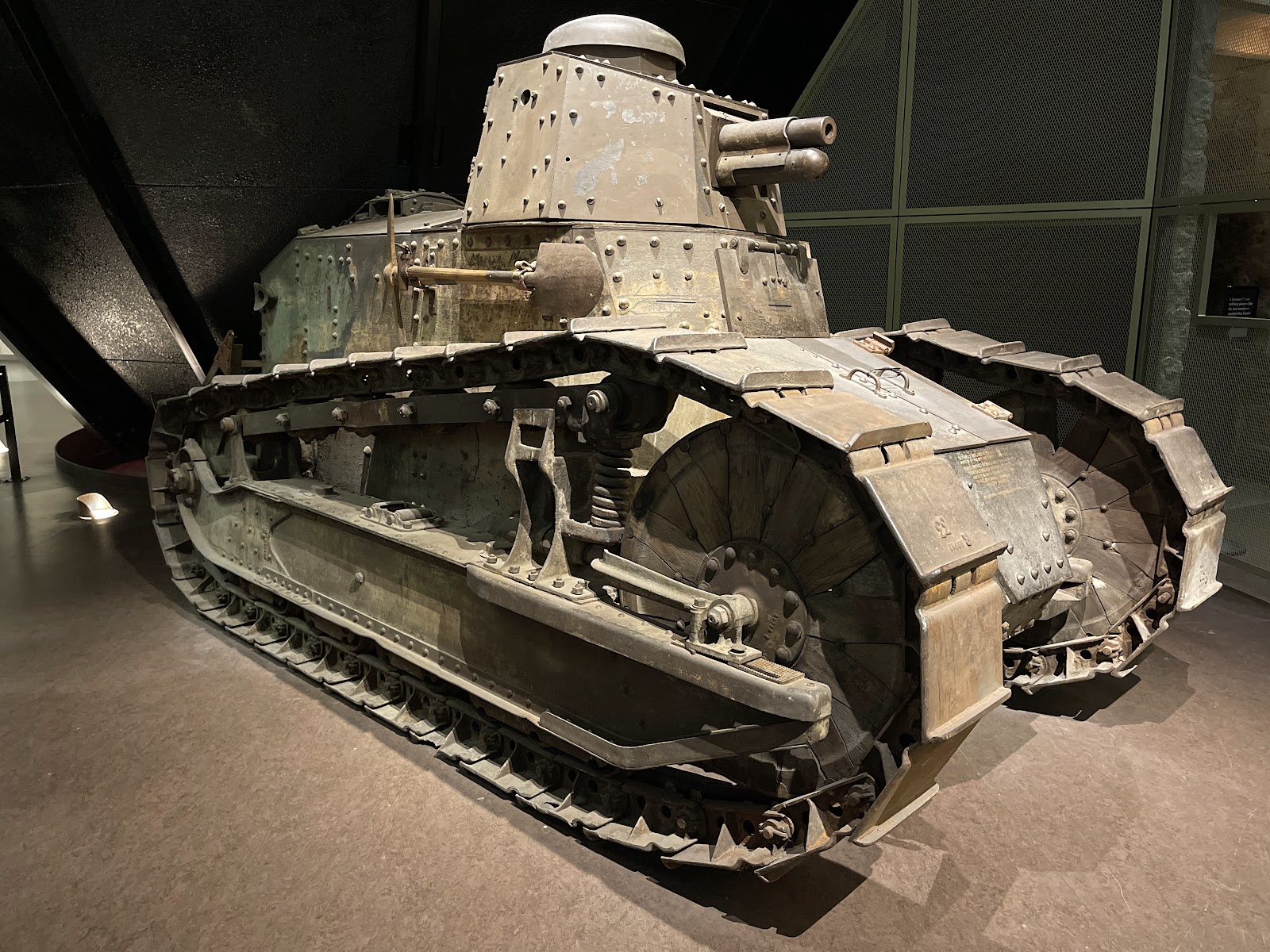
The National WWI Museum: Making the Tower and Skyline Frame
A stone tower on a hill above a skyline gives one frame, and it needs elevation, a long lens and the right half hour.
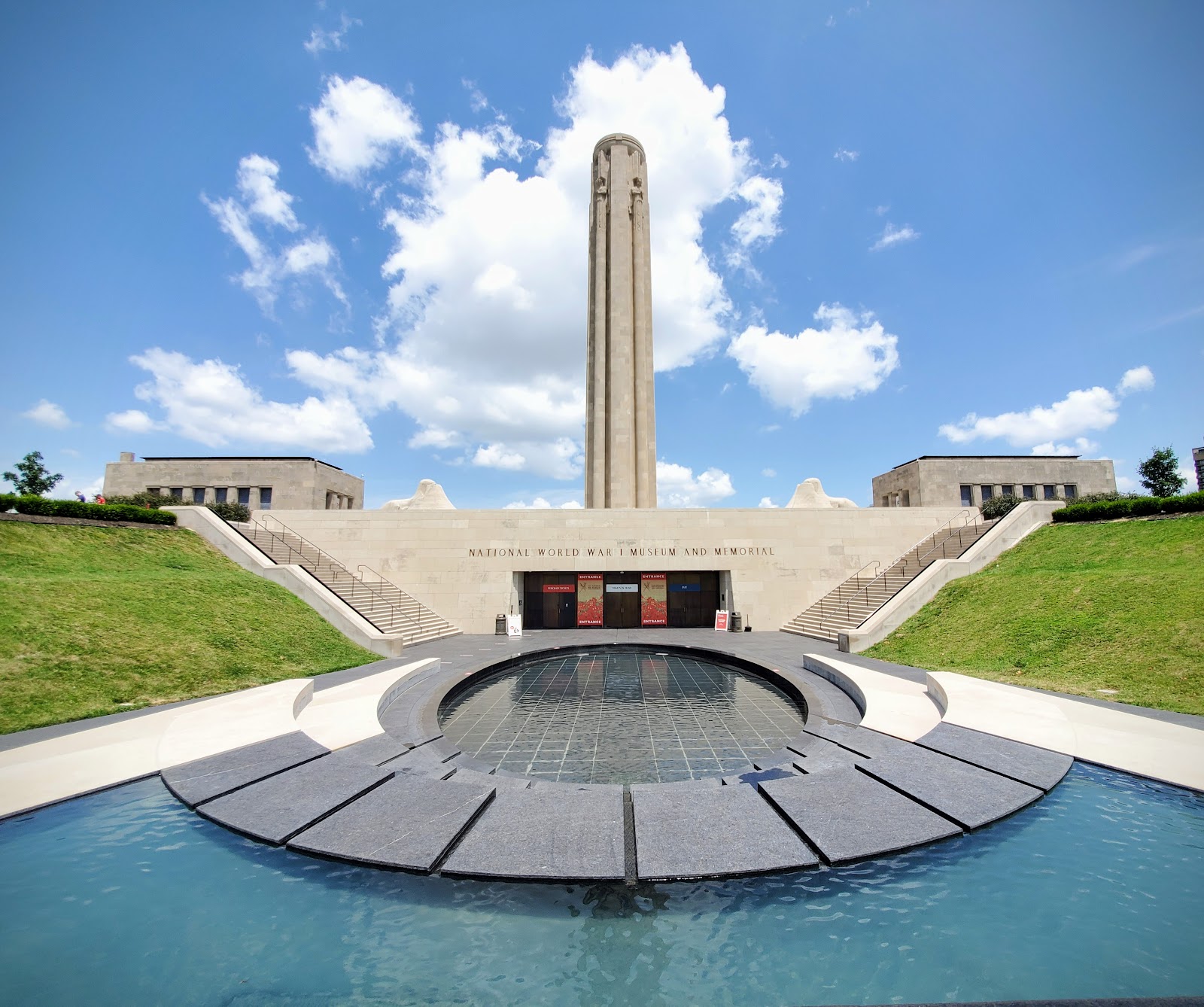
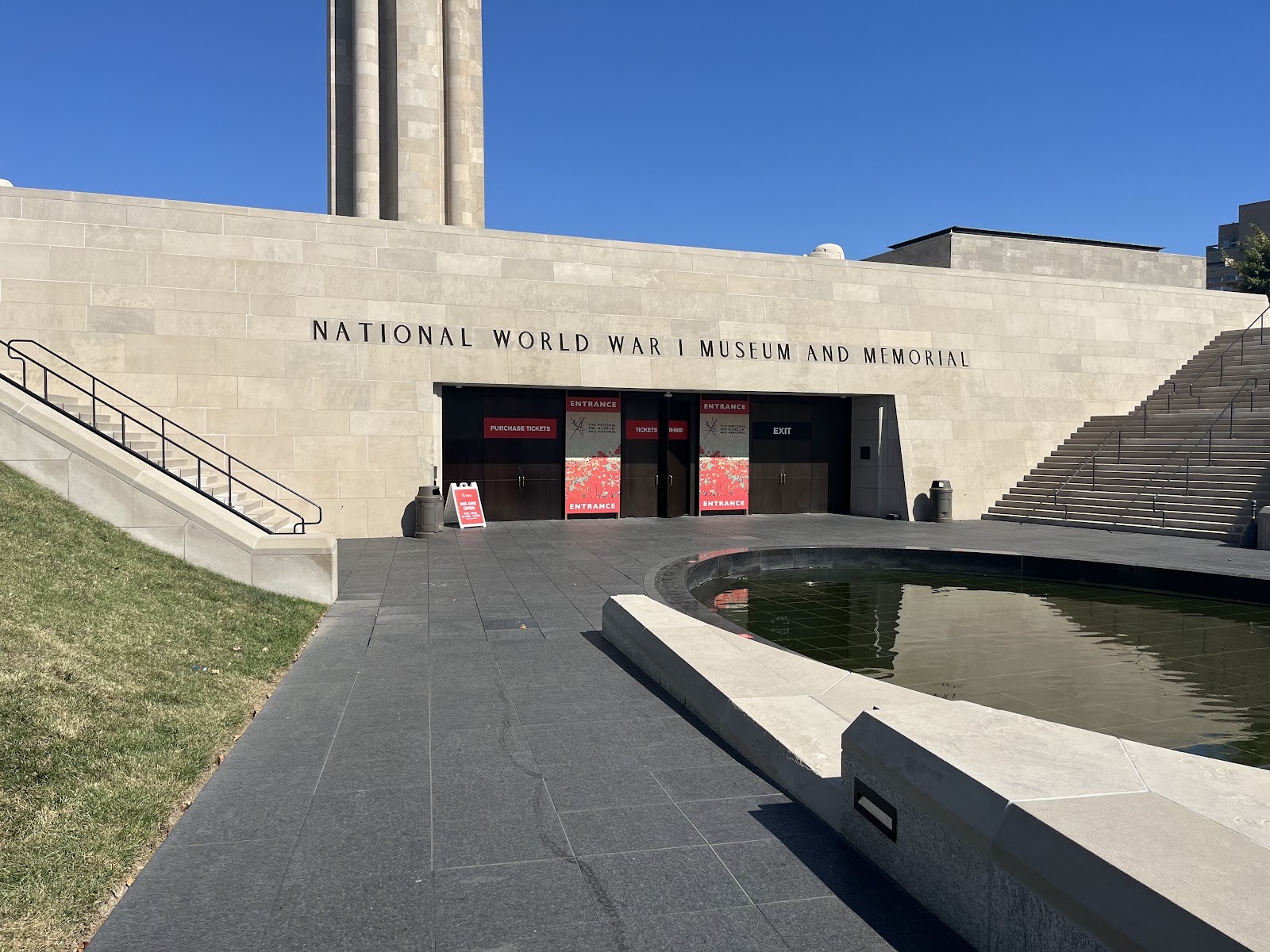
The National WWI Museum and Memorial stands on a hill south of downtown Kansas City, Missouri — a memorial complex of the 1920s with a tall stone tower, a broad ceremonial staircase, and a north-facing aspect looking directly across at the city skyline.
One frame is the reason to be here and it is worth building the day around: the couple with the downtown skyline behind them, taken from the memorial’s elevated ground. Height and distance do the work — the hill removes all the street-level clutter that makes city portraits laborious, and the separation lets the towers read as a coherent band rather than as individual buildings looming overhead.
It is also easy to waste, in three specific ways. This is an account of making it, followed by what the tower and the museum give. We have not photographed a wedding at the WWI Museum; hilltop memorials and skyline sight lines behave the same wherever they occur. Which spaces host events, whether tower access is possible and what the memorial’s own restrictions are are questions for their events team — and a memorial has appropriateness considerations a museum alone does not.
The National WWI Museum at a glance
| Where | On a hill south of downtown Kansas City, Missouri |
| Character | A 1920s memorial complex with a stone tower and ceremonial staircase |
| The frame | Couple with the downtown skyline behind, from elevated ground |
| Three requirements | Height, a long lens, and the half hour after sunset |
| Ask first | Tower access, and what is appropriate on a memorial site |
Step one: the focal length, which decides whether the city exists
This is the error that ruins most skyline photographs and it is worth stating first. A wide lens renders the downtown at its true angular size, which from a hill a mile away is a thin band along the horizon occupying perhaps a tenth of the frame height, with a great deal of empty sky above and empty ground below. The city is technically present and visually absent.
A long lens compresses. At 135mm or beyond, the towers fill a substantial part of the frame, stack into layers, and loom behind the couple as a coherent mass. That is the photograph — and it requires standing much further back from the couple than instinct suggests, because a long lens at close range excludes everything else.
So the arrangement is counterintuitive: place the couple where you want them on the elevated ground, then walk a long way back yourself. The distance between camera and subject is what lets the compression work. On open memorial grounds that is easy, because there is nothing in the way.
At that working distance you cannot direct in a normal voice, so agree the posture and any movement before separating. And expect to work on available light for the daylight version, which at the right hour is warm, low and entirely sufficient.
Step two: the half hour, and lighting the couple
A skyline frame has one window and it is dictated by sunset rather than by the running order. For roughly thirty minutes after the sun goes down, the sky still holds colour and the building lights have come on, and those two exposures converge so a single frame can hold both. Fifteen minutes earlier the windows are dark and the towers are grey shapes; thirty minutes later the sky is black and the city is a scatter of lit boxes floating in nothing.
Take the clock time from sunset on the actual date and treat it as an appointment. A two-minute departure from the reception buys the frame; being ten minutes late means it has gone.
The couple must be lit for that version, because a skyline a mile away puts out almost no usable light on a face. One warm off-camera source, from the side, at a power balanced to the skyline rather than dominating it, is the whole technique — and erring towards too much flash is the commoner mistake, because it turns a city-lights frame into a studio portrait with a dark background.
The daylight version needs no light and a different hour: the last forty minutes before sunset, when low sun rakes across the memorial’s stone and lights faces from the side while the city is still in daylight. Both versions are worth having and they are different photographs, so if the timeline allows, two short visits beat one long one.
- 135mm or longer, from a long way back — a wide lens loses the city
- Agree posture before separating; you cannot direct at that distance
- Take the clock time from sunset and treat it as fixed
- One warm source balanced to the skyline, not overpowering it
- Two short visits — last forty minutes of daylight, and after sunset
Step three: the tower, the staircase and the memorial question
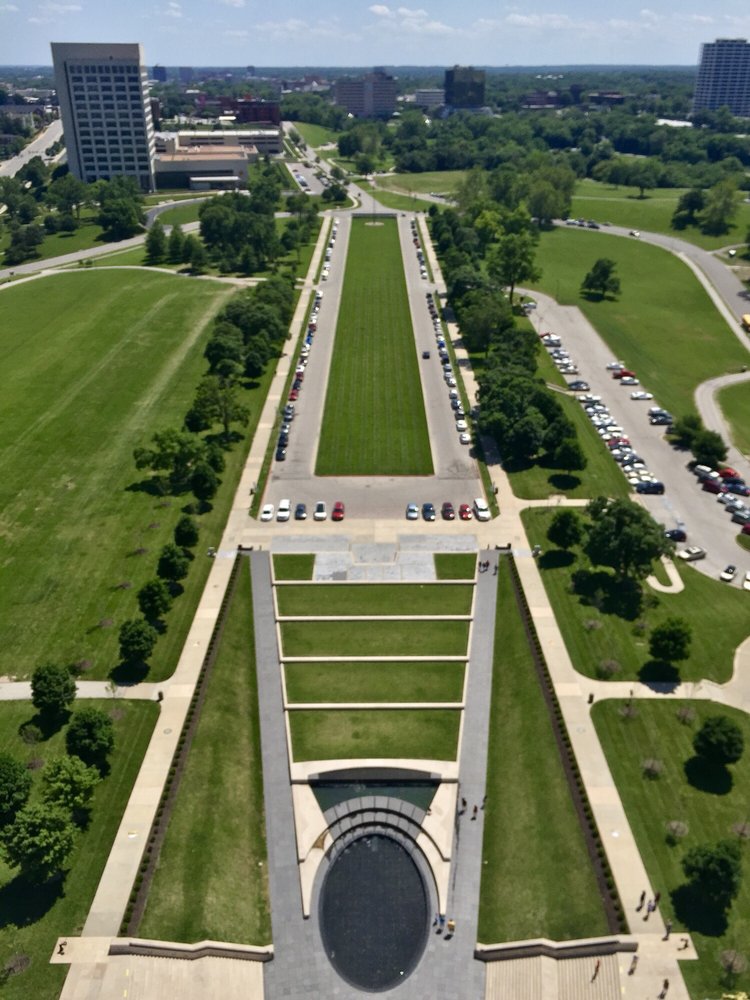
The tower is the memorial’s defining element and, if access is available, it gives a view from height that ground-level positions cannot — looking down on the grounds and across at the skyline from above. That is worth asking about specifically, because it changes the geometry: from a tower the city is nearer eye level rather than below you, which alters how the towers read.
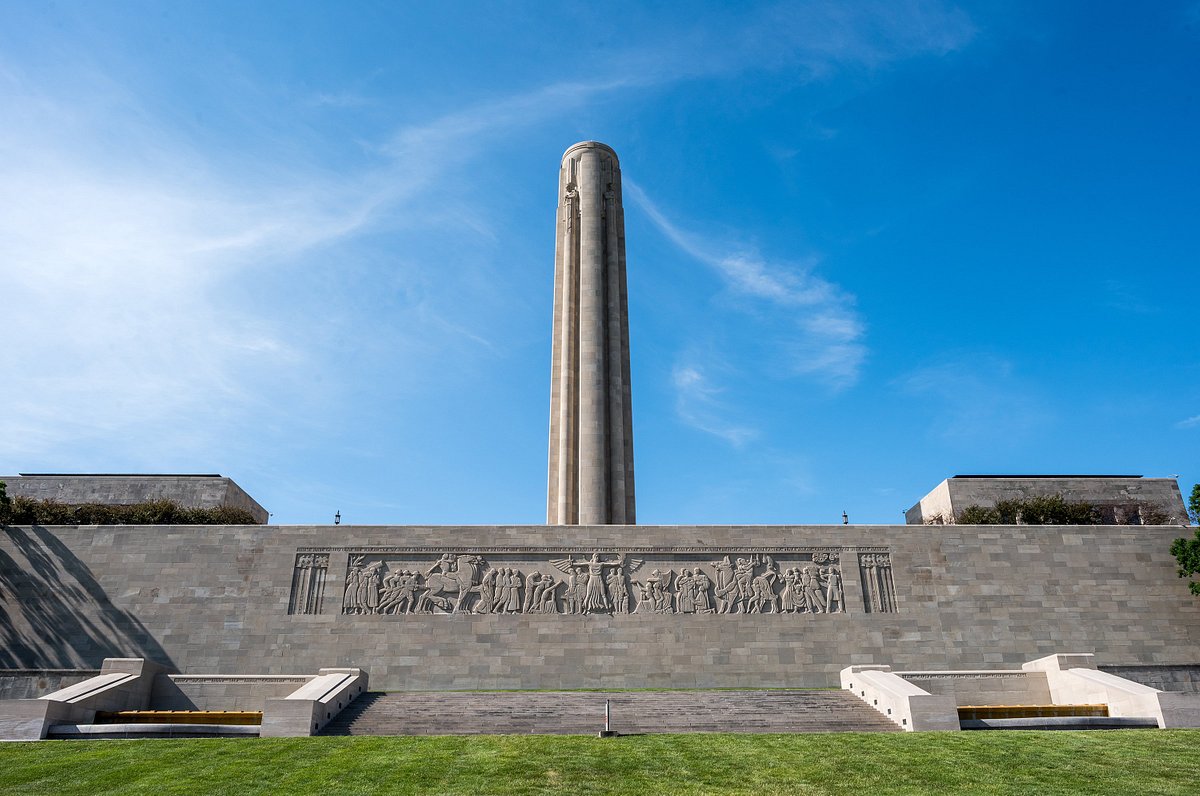
The ceremonial staircase is the reliable set piece for the usual reason: steps arrange people at different heights automatically, which solves the problem that ruins most large group photographs, and a broad ceremonial flight is more generous than most. One step apart for a couple separates them and creates a diagonal.
Stone is the material throughout and it behaves as stone does. It needs raking light to show its texture and tool marks, so the memorial photographs well at the ends of the day and poorly in the middle. And it gives almost no fill — a couple standing beside a stone wall in open sun gets hard light on one side and very little returned on the other, which is a case for a reflector or turning them towards open sky.
The memorial question is one to raise directly rather than assume. This is a site commemorating war dead, and a venue of that kind may have views about what is appropriate on its grounds — where celebration is welcome, which spaces are for quiet reflection, and how the memorial itself should appear in published photographs. Those answers come from them and they take precedence over any frame a photographer wants. Asking early is both the respectful approach and the practical one, because it prevents a plan collapsing on the day.
The museum interiors are below ground in substantial part, which makes them the weather and midday answer and entirely time-independent. Exhibit lighting is directional and mixed and aimed at objects, so bring a source and let it own the faces, and collection rules on flash and tripods should be settled in writing beforehand. Missouri summer humidity also fogs a lens carried from air conditioning onto the hill for ten to twenty minutes, so acclimatise before the outdoor block rather than during it.
More frames from The National WWI Museum
The National WWI Museum wedding photography: common questions
Why do my skyline photographs look unimpressive?
Almost certainly a wide lens. It renders the downtown at true angular size — a thin band on the horizon with empty sky and ground around it. A long lens compresses the towers into a substantial mass behind the couple. That is the whole difference.
How does that change where you stand?
You place the couple on the elevated ground and then walk a long way back yourself. The distance is what makes the compression work. Agree posture before separating, because you cannot direct in a normal voice at that range.
When is the skyline frame available?
The thirty minutes after sunset, when the sky still holds colour and the building lights are on. Earlier the windows are dark; later the sky is black and the towers are lit boxes floating in nothing. Take the clock time from sunset.
Do you need flash for it?
Yes. A skyline a mile away puts out almost no light on a face, so a couple lit only by it is a silhouette. One warm source from the side, balanced to the city rather than dominating it — too much flash is the commoner error.
What should be asked about the memorial?
What is appropriate on the grounds. This is a site commemorating war dead, so the venue may have views about where celebration is welcome, which spaces are for reflection, and how the memorial should appear in published images. Those answers take precedence.
Does the stone help with fill?
No. Stone reflects very little, so a couple beside a wall in open sun gets hard light on one side and almost nothing back on the other. Use a reflector, add fill, or turn them towards open sky instead of the wall.
More Kansas City, MO venue guides
We are writing a photographer’s guide to every venue we would happily shoot in Kansas City, MO. Here are three more, plus the full index:
- The Nelson-Atkins Museum: One Decision About Which Building You Use
- The Raphael Hotel: A Small Hotel and the District Around It
- Union Station Kansas City: Four Ways Out of the Great-Hall Problem
All Kansas City, MO Wedding Venues →
Planning a wedding at The National WWI Museum?
One frame, one lens choice and one half hour. Tell us your date and we will set the clock time and ask about the tower.