 The Audubon Aquarium: Field Notes on Photographing Through Glass
The Audubon Tea Room, New Orleans: Photographing a Park Pavilion
A pavilion in a live oak park is not a building with trees near it. The trees are the venue.
The Audubon Tea Room sits within Audubon Park in New Orleans and combines, as its own description puts it, the charm of historic New Orleans with a serene park setting.
The logic of a venue like this is that the building is the shelter and the park is the photography. A purpose-built event pavilion is a competent, flexible, climate-controlled room — and in New Orleans that is worth a great deal, because the weather here removes options more often than anywhere else in this series. But it is not where the pictures come from. What makes this site is what is outside it: mature live oaks, which are among the most photographically useful trees that exist.
So this follows the venue’s own logic, trees first. We have not photographed a wedding at the Tea Room; park pavilions among live oaks behave consistently. Which parts of the park a wedding may use, whether permits are needed for anything beyond the pavilion, and what the wet-weather version of the day looks like are the questions for their team.
The Audubon Tea Room at a glance
| Where | Audubon Park, New Orleans, Louisiana |
| Character | An event pavilion set among mature live oaks in a city park |
| The logic | The building is shelter; the park is where the photographs are |
| The asset | Live oaks — huge canopy, low limbs, continuous shade |
| Ask first | Park access and permits, and the wet-weather version of the day |
Live oaks: why they are the best trees to photograph under
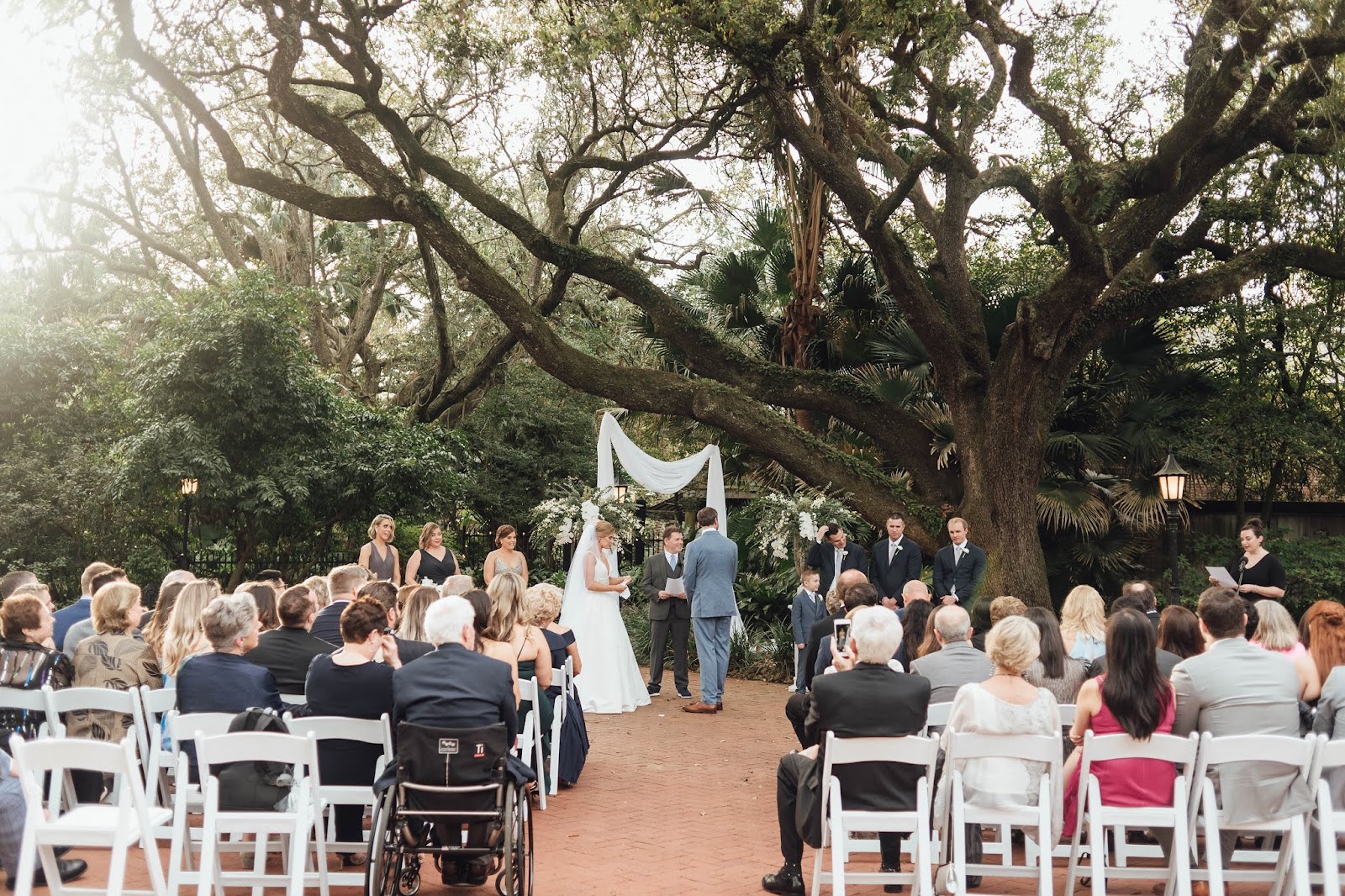
A mature live oak has a shape unlike other large trees, and the shape is what makes it useful. The canopy is very broad relative to its height, and the major limbs run outward and often dip close to the ground before rising again — which means a single tree produces an enormous area of continuous shade, a ceiling low enough to be in frame, and natural arching lines at head height that no other species offers.
Continuous shade is the first thing that matters, and in New Orleans it is not an aesthetic preference. Heat and humidity here are severe for much of the year, and unbroken deep shade under a live oak is the only condition in which formal clothes and a long outdoor block are compatible. Locating the largest area of continuous shade should be the first thing done on arrival; it becomes the default portrait position and it will be needed.
That shade is also good light rather than merely cool light. Under a dense canopy the sky is blocked overhead, so light arrives horizontally from whichever direction the canopy opens — which is directional, soft, and consistent for hours. It behaves like a very large softbox placed at head height, and it needs nothing carried.
The low limbs are the compositional gift. A branch running across the upper part of a frame gives a natural border, scale and depth all at once, and because live oak limbs dip low, they can be included from a normal standing position rather than requiring a wide lens pointed upward. Framing a couple under an arching limb is the frame this species exists to give.
Dapple is the standing hazard and it is the same canopy in its bad mood. When the sun is above the tree rather than beside it, broken light through the leaves puts hot spots several stops brighter than the surrounding shadow across a face, shifting with every breath of wind — impossible to correct and impossible to predict. Full shade, open light, or wait for the sun to drop below the canopy, but never a face in dapple.
Spanish moss, where it hangs, needs a deliberate exposure decision. It is pale and backlights easily, so it goes to white against a bright sky and to grey against foliage — which means it reads beautifully in the last ninety minutes with low sun behind it and disappears at noon.
The park, the pavilion and the hour
Green bounce is the cost of working under a dense canopy and it is worth handling deliberately. Dense foliage reflects green onto nearby skin, and because the cast is localised rather than global, auto white balance cannot correct it. Set a custom white balance on a face in the position you are actually using, and look for any pale path, gravel or paving nearby to bounce a neutral tone back into the shadows.
Open lawn in a park is the counterweight to all that shade and it has its own rules. It is a predictable mid-tone that meters well, it shows mowing pattern only in raking light, and it gives an unobstructed foreground that rewards a low camera — dropping close to the grass pushes the horizon down and lets the oaks occupy the upper frame, which is a far stronger composition than standing at eye level on flat ground.
Group photographs need a decided position rather than an improvised one, because a grove is an awkward place to arrange people: limbs interrupt rows, ground is uneven, and light is patchy. Find the one position that will take the largest group — usually the pavilion steps, a path, or the edge of open lawn in shade — and use it early while the light is still even.
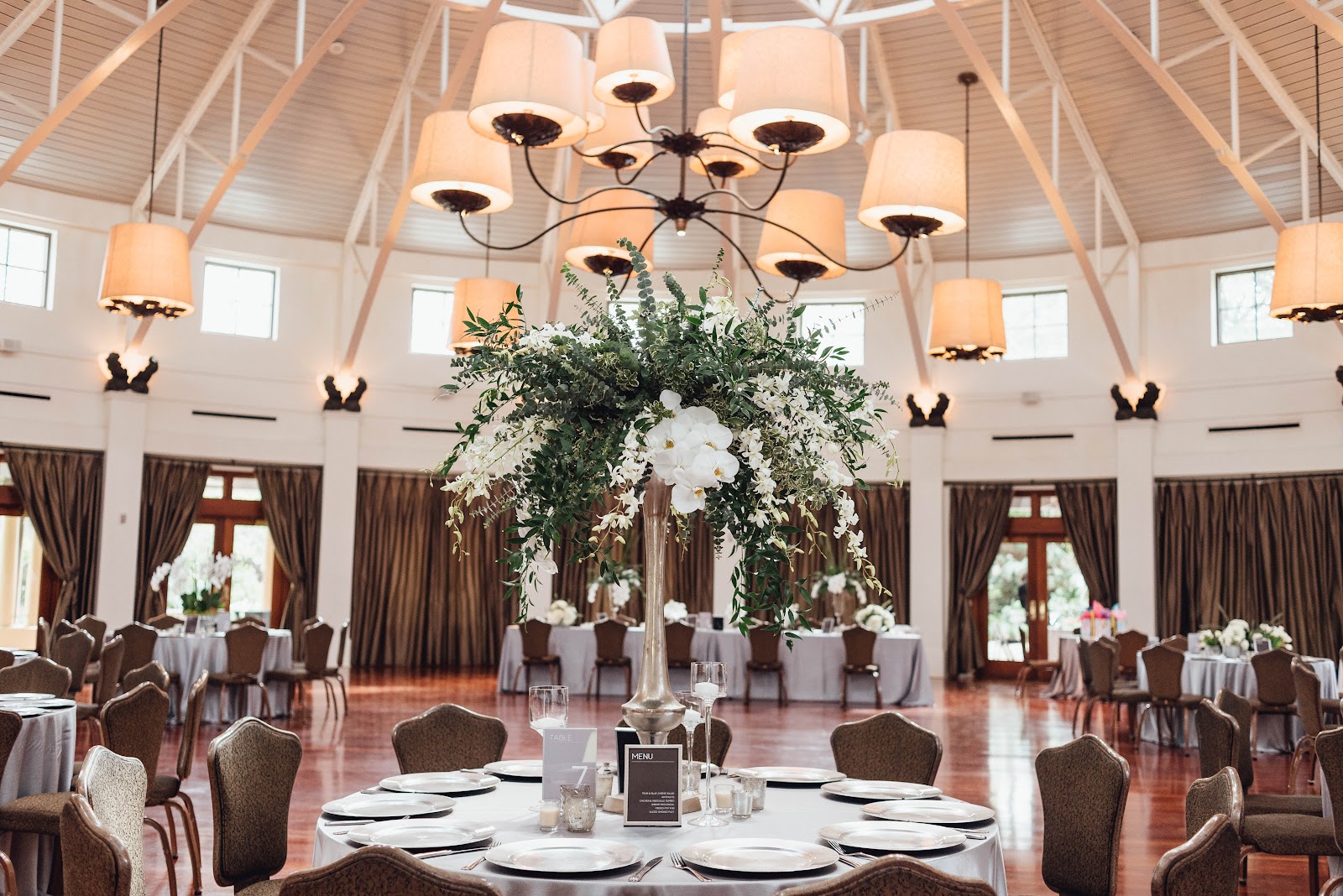
The pavilion itself needs assessing on arrival for two things. First, whether it has a covered edge or veranda, because a roof overhead with an open side is an architectural softbox and the best light the building offers. Second, ceiling height, because a purpose-built event room may or may not return a bounced flash — one test frame settles it, and it determines the whole indoor approach.
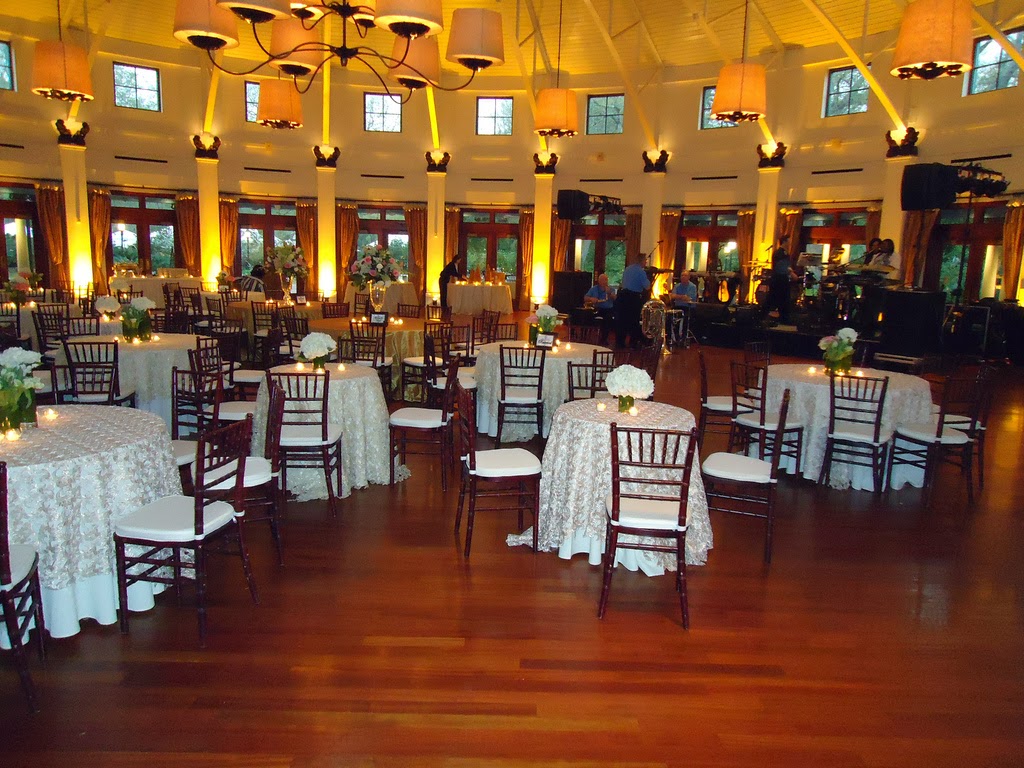
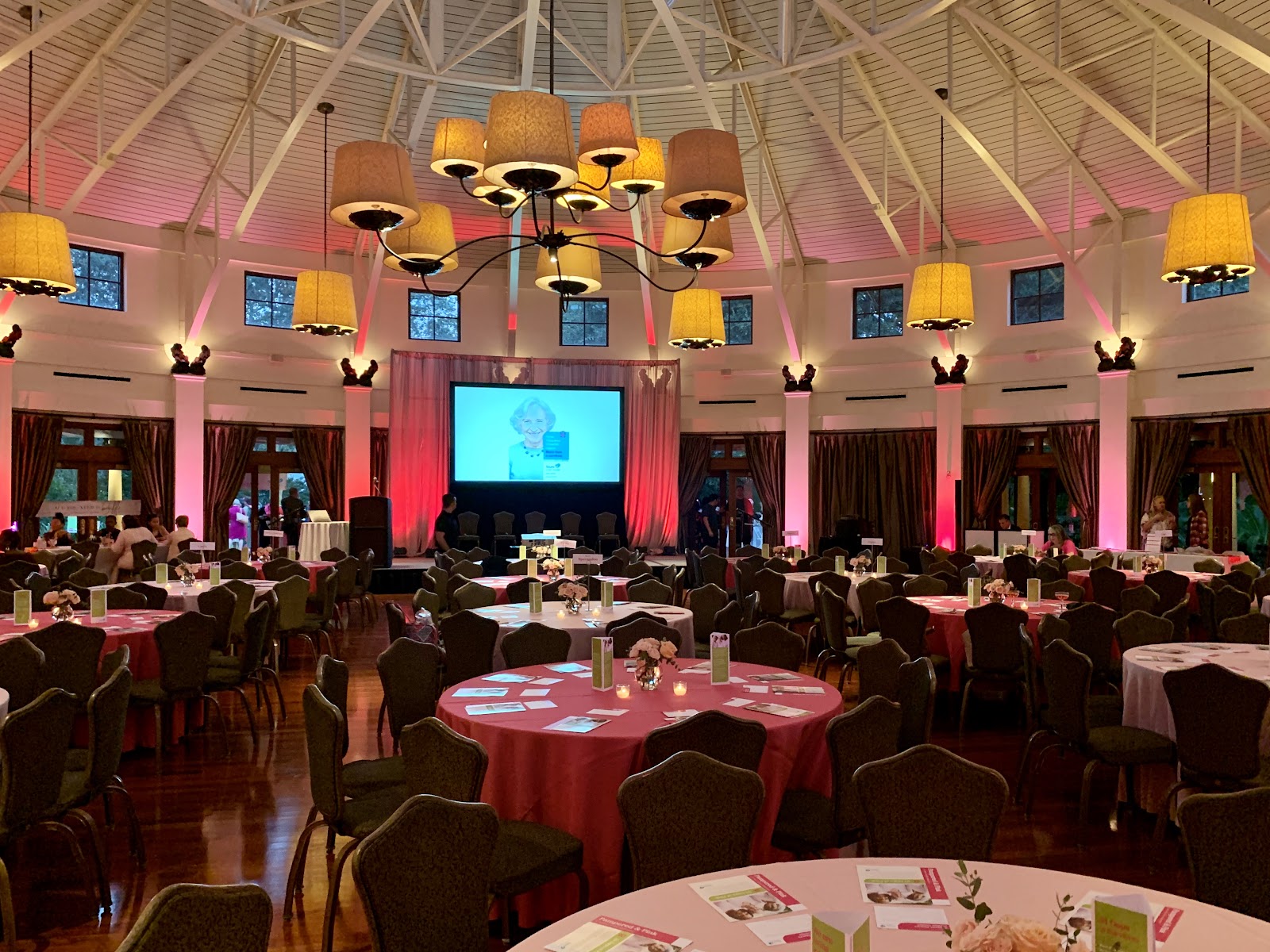
Inside, expect the standard function-room conditions: even or overhead lighting, warm colour, mid-level ambient, and pale or neutral surfaces that give little separation. The tools are depth, a long lens at a wide aperture, one directional source to create a shadow side, and placement against the darkest element available.
The last ninety minutes are when the park becomes itself and the whole schedule should protect them. Low sun comes in under the oaks rather than through them, backlighting foliage and moss so both glow, raking across lawn, and lighting faces from the side. Because the canopy blocks the sky overhead, that light arrives as shafts and pools rather than as a flood — which is the most attractive condition a park ever offers and the first thing lost if the schedule slips.
- Find the largest continuous shade first; it is the default position
- Never a face in dapple — full shade, open light, or wait
- Set white balance on a face among foliage; green bounce is local
- Include a low limb as a border; live oaks let you do it from standing
- Drop the camera low on open lawn so the oaks fill the upper frame
New Orleans weather, and what it takes and gives
New Orleans weather governs a park venue more than it governs anything else in this series, and being straightforward about it is more useful than optimism. Summer heat and humidity together make an extended outdoor block in formal clothes genuinely difficult, which is why the canopy matters and why outdoor trips should be short and purposeful rather than exploratory.
Afternoon thunderstorms are close to a daily feature of a Gulf Coast summer rather than an occasional event, and they build and clear quickly. At a venue whose photography is entirely outdoors, that means the wet-weather version of the day is not a contingency — it is a second plan that needs to exist, with a stated capacity and an agreed time by which the call is made. The pavilion is the answer, which is precisely why it is worth having.
There is also a safety dimension worth naming: standing under large trees in a thunderstorm is not where anyone should be, so the decision time is a welfare matter and not only a logistical one.
Humidity produces the region’s specific equipment problem, and here it is more severe than anywhere else in this series. A camera and lens chilled by a strongly air-conditioned interior will fog comprehensively and immediately on reaching the outside air, and in New Orleans that can take a long time to clear — long enough to lose a ceremony start entirely. The handling is to let the kit warm towards outside temperature well before it is needed, which means twenty or thirty minutes ahead rather than at the door, and to accept that carrying equipment in and out repeatedly will cost frames.
Insects arrive at dusk in a subtropical park, which is exactly when the best light does. That is worth telling a couple in advance rather than discovering together, because it affects whether they will stand still at the one moment it matters.
What the weather gives back is real and specific. A park after rain is transformed: live oak bark goes dark and deeply textured, foliage and moss are saturated, paths hold reflections, and low sun coming in under a departing cloud bank throws visible shafts through damp air in a way dry air never shows. That is the best version of this venue, it only exists after rain, and in this city the chance of getting it is unusually high.
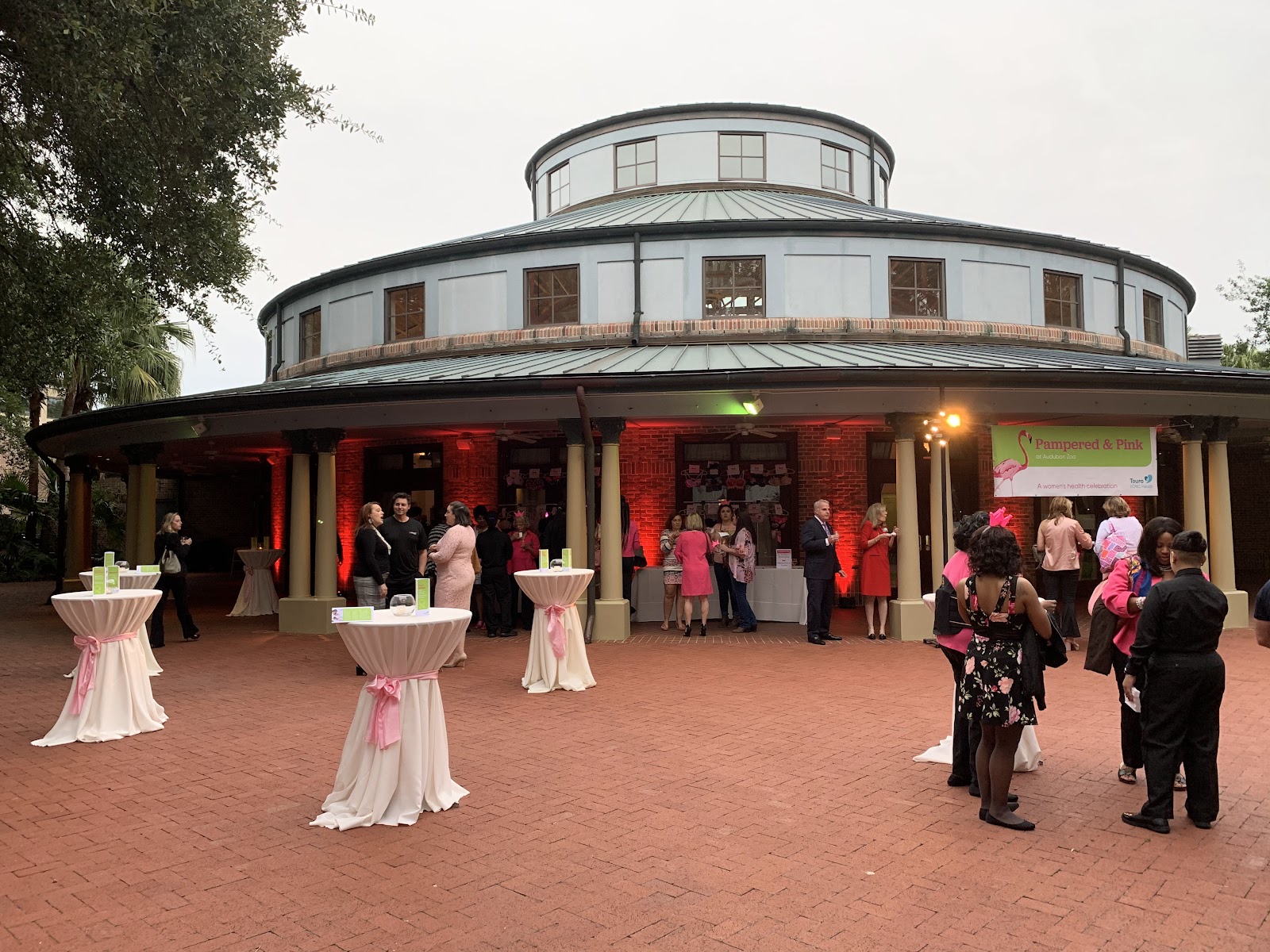
More frames from The Audubon Tea Room
The Audubon Tea Room wedding photography: common questions
Why are live oaks so good to photograph under?
Because the canopy is very broad and the major limbs dip low. That gives an enormous area of continuous shade, a ceiling that can be in frame, and natural arching lines at head height that no other species offers.
Is the shade good light or just cool?
Good light. A dense canopy blocks the sky overhead so light arrives horizontally from wherever the canopy opens — directional, soft and consistent for hours, like a very large softbox at head height.
Why avoid dappled light?
Because it puts hot spots several stops above the surrounding shadow across a face and shifts with every breath of wind, so it can neither be corrected nor predicted. Full shade, open light, or wait for the sun to drop.
How do you handle green bounce?
Set a custom white balance on a face in the position you are using, and bounce a neutral tone back off any pale path or paving. The cast is localised, so auto white balance cannot fix it.
What should the pavilion be checked for?
A covered edge, which is the best light the building offers; and ceiling height, since a purpose-built room may or may not return a bounced flash. One test frame settles the second.
How serious is the fogging problem here?
More serious than anywhere else in this series. Kit chilled by air conditioning fogs immediately and comprehensively outside and can take a long time to clear. Warm it twenty or thirty minutes ahead, not at the door.
More Louisiana venue guides
We are writing a photographer’s guide to every venue we would happily shoot in Louisiana. Here are three more, plus the full index:
- The Beauregard-Keyes House, New Orleans: A Walk Through the Site
- The Bourbon Orleans Hotel, New Orleans: One Frame and How It Is Made
- The Four Seasons New Orleans: What It Suits and What It Does Not
Planning a wedding at The Audubon Tea Room?
A park venue needs its shade found and its second plan written. Tell us your date.