 The Iowa Events Center: Four Ways Out of the Blank-Hall Problem
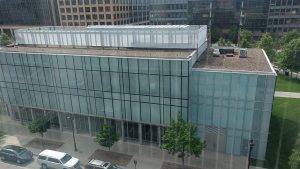
The Surety Hotel: Photographing a Converted Office Building
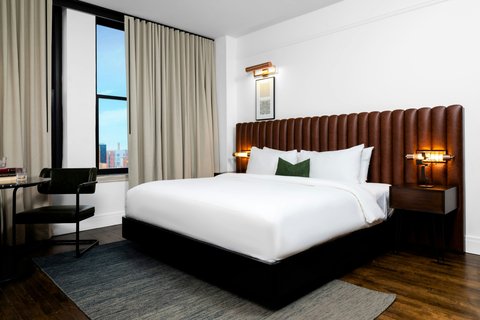
Office buildings of this era were built around daylight, which is why a converted one photographs better than a purpose-built hotel.
The Surety Hotel occupies a 1913 office building in downtown Des Moines, Iowa, converted to a hotel while keeping the fabric and proportions of its original use.
Converted office buildings are a good venue type for a reason that is structural rather than decorative, and it is worth understanding. An office building of 1913 was built before electric lighting was adequate for sustained work, which meant every desk had to be within reach of a window. That forced narrow floor plates, generous window openings and high ceilings — the exact opposite of a modern deep-plan building where the interior is artificially lit throughout.
The consequence for a photographer is that a converted building of this generation has daylight almost everywhere, and daylight of a good kind: large windows, high heads, and rooms shallow enough that light reaches the back wall. That is better than most purpose-built hotels manage, and it shapes where the day should happen. This follows that logic. We have not photographed a wedding at the Surety; converted early-century office buildings behave the same wherever they survive. Which rooms are allocated and which way they face are questions for their events team.
The Surety Hotel at a glance
| Where | Downtown Des Moines, Iowa |
| Character | A 1913 office building converted to a hotel, fabric retained |
| Why it works | Built before adequate electric light, so every room has a window |
| The consequence | Good daylight almost everywhere, unlike a deep-plan modern hotel |
| Ask first | Which rooms face away from the sun on your date |
The windows: why 1913 plans light so well
Three features of a pre-electric office building matter. The windows are tall, because head height determines how far light penetrates a room. The floor plate is narrow, because every workspace had to be near a window — so rooms are shallow and the light reaches the back. And the ceilings are high, which lifts the window head and pushes the light further in again.
Together those mean a converted guest room or event space has a large soft source at close range with light that actually crosses the room rather than dying a metre in. A subject a metre or two back from the glass, turned into it, gets a broad soft key with a genuine fall-off, and there is enough level that the room behind still reads rather than going black.
One window gives three setups for a change of stance — facing it for a broad key with catchlights, side-on for modelling with a shadow side, back to it for a rim and a silhouette. That is more variety than most lighting kits provide and it requires nothing carried, which makes preparation coverage in a building like this straightforward.
The request worth making is for the largest window on the shaded side of the building for the preparation block. Then switch off the overhead lighting and move the lamps out: mixed tungsten and daylight in one room is the commonest cause of inconsistent skin tone across a morning, and it takes thirty seconds to eliminate.
The period fabric, and what a conversion leaves behind
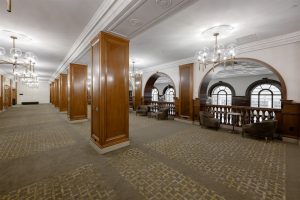
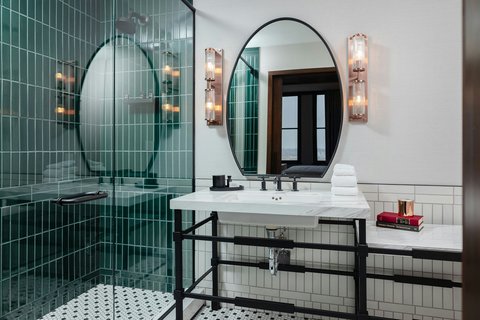
Commercial buildings of 1913 were built with materials that have aged well and photograph well: stone or terrazzo floors, metalwork, plaster mouldings, heavy joinery, and sometimes a banking or lobby space with real height. Those surfaces give a frame character with no styling at all, which is the opposite of a modern function room where the photographer supplies every scrap of interest.
Texture in those materials needs raking light, exactly as stone and carved wood do. Light running along a plaster moulding or a stone surround lifts it; light pointed at it flattens it into a plain surface. So when period detail is the subject, the source belongs off to one side rather than near the camera axis.
A conversion always mixes registers, and here the split is between the surviving 1913 fabric and the contemporary hotel fit-out laid over it. Those clash in colour and contrast — period fabric is warm and textured, modern fit-out is cooler and flatter — and a set that alternates between them frame by frame looks uncertain. Pick the period fabric as the spine, because it is what the building is and what nowhere else has, and use the contemporary rooms for the things they do better: the dress, the details, anything wanting a clean uncluttered background.
Shooting the two registers at different times rather than interleaved gives the sequence structure. Preparation in a contemporary room in the morning, then everything else in the period spaces, so the contrast lands where the day naturally changes.
- Ask for the largest window on the shaded side for preparation
- Overheads off and lamps out; mixed sources wreck skin tone consistency
- Light period detail from the side, not from the camera axis
- Make the 1913 fabric the spine; use contemporary rooms for details
- Shoot the two registers at different times, never interleaved
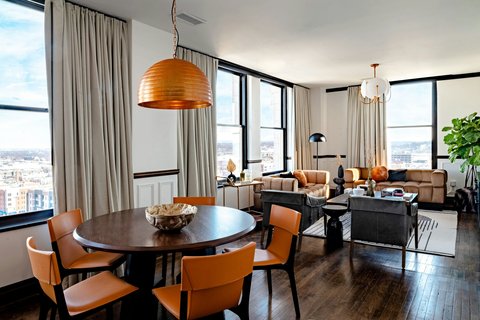
Event space, the evening and downtown outside
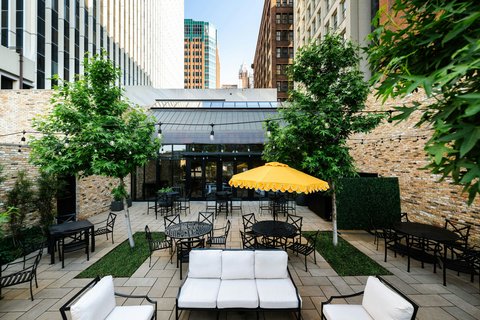
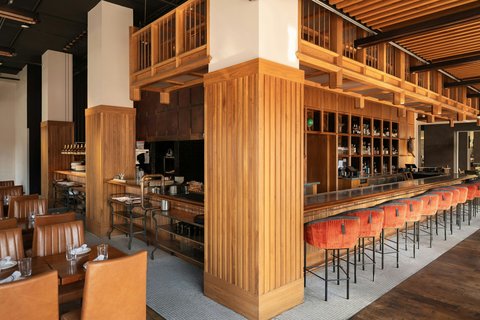
Event rooms in a converted commercial building are usually former offices or a lobby space, which means they retain the high ceilings and the windows — and that makes them unusual among hotel function rooms, because most have no daylight at all. A reception room with real windows has a twenty-minute moment at dusk that a sealed ballroom does not: as the sky outside falls to the brightness of the interior lighting, one exposure holds the lit room, the couple and the city beyond with colour still in the sky. Take the clock time from sunset and treat it as an appointment, because it is gone ten minutes later.
Before then, the same windows are a straightforward asset. After then they become mirrors showing the lit room and your lights, so reposition so the reflected cone misses the lens, or place a source behind the plane of the subject. Used deliberately, a couple doubled in dark glass with city lights beyond is one of the better frames available.
High ceilings mean bounce is less effective than in a low room, because the ceiling is further away — so where light is added, a pale wall is usually the better surface, or a modifier rather than bounce. Worth checking rather than assuming, because photographers arriving from small venues default to ceiling bounce and find it underpowered.
One vertical note: a converted office building stacks its rooms, so movement between floors is a lift journey rather than a walk. Group everything that happens on a floor into one pass, carry what you need for it at the start, and ask whether a service lift is available — the highest-return question at any vertical venue and one almost nobody asks.
Outside, downtown Des Moines is low-rise in parts, which means low evening sun reaches street level and runs the length of a street rather than being cut off by towers. That is the daylight block worth scheduling, and finding which streets run roughly east-west is a ten-minute site visit. Iowa winters are cold with short days, but the sun stays low all day — which suits period stonework better than summer’s high sun, provided the outdoor block is planned early rather than assumed at the end.
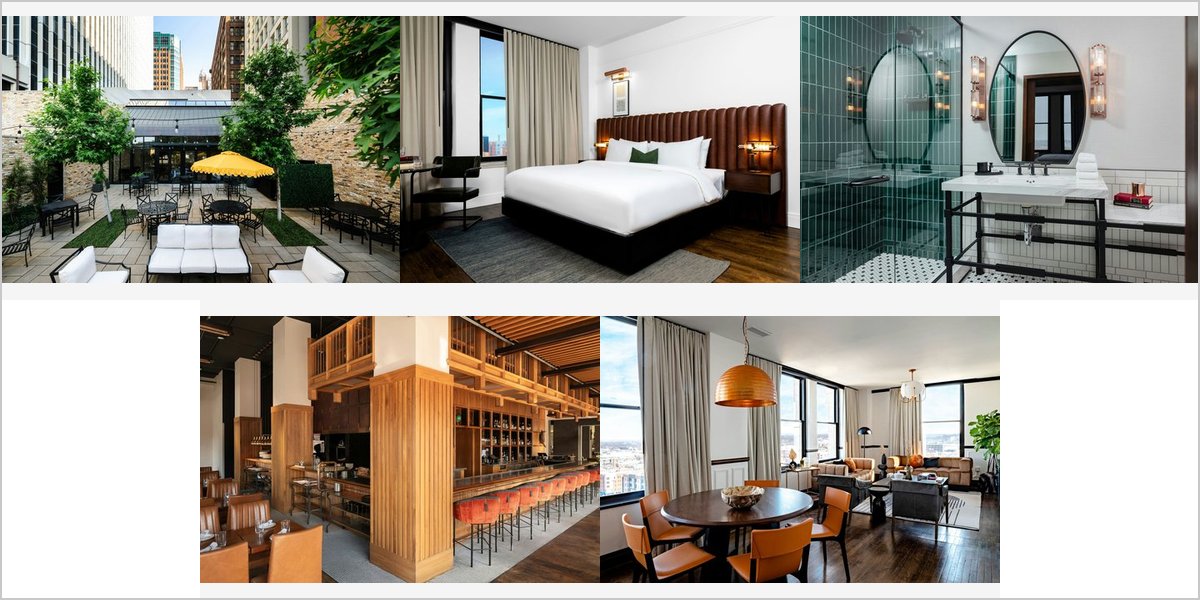
More frames from The Surety Hotel
The Surety Hotel wedding photography: common questions
Why do converted office buildings photograph well?
Because a building of 1913 predates adequate electric light, so every desk had to be near a window. That forced tall windows, narrow floor plates and high ceilings — which means daylight reaches the back of the room, unlike a modern deep-plan hotel.
What should be requested for preparation?
The largest window on the shaded side of the building. Then switch off the overheads and move the lamps out — mixed tungsten and daylight in one room is the commonest cause of inconsistent skin tone across a morning, and it takes thirty seconds to fix.
How should period detail be lit?
From the side. Plaster mouldings, stone surrounds and metalwork read by casting small shadows, so light running along the surface lifts it while light from the camera axis flattens it into a plain field.
How do you handle the mix of old and new?
Pick the 1913 fabric as the spine, because it is what the building is and what nowhere else has, and use the contemporary rooms for the dress and details. Shoot the two at different times rather than interleaved, so the contrast lands where the day changes.
Is there a frame a sealed ballroom cannot give?
Yes — the dusk crossing. Because the event rooms have real windows, there is a twenty-minute period when the sky outside matches the interior lighting and one exposure holds the room, the couple and the city. Take the time from sunset and treat it as fixed.
Does ceiling bounce work here?
Less well than in a small room, because the high ceilings put the surface further away. A pale wall is usually the better bounce surface, or use a modifier — photographers arriving from small venues default to ceiling bounce and find it underpowered.
More Des Moines, IA venue guides
We are writing a photographer’s guide to every venue we would happily shoot in Des Moines, IA. Here are three more, plus the full index:
- The Temple for Performing Arts: Photographing a Former Masonic Temple
- Terrace Hill: Reading a Victorian House on High Ground
- The Des Moines Art Center: A Building by Three Architects
All Des Moines, IA Wedding Venues →
Planning a wedding at The Surety Hotel?
A 1913 plan gives you daylight almost everywhere. Tell us your date and which rooms face away from the sun.