 The Iowa Events Center: Four Ways Out of the Blank-Hall Problem
The Science Center of Iowa: Glass, Steel and the Screen Problem
A glazed atrium and screen-lit exhibit halls are opposite conditions, and the building has both.
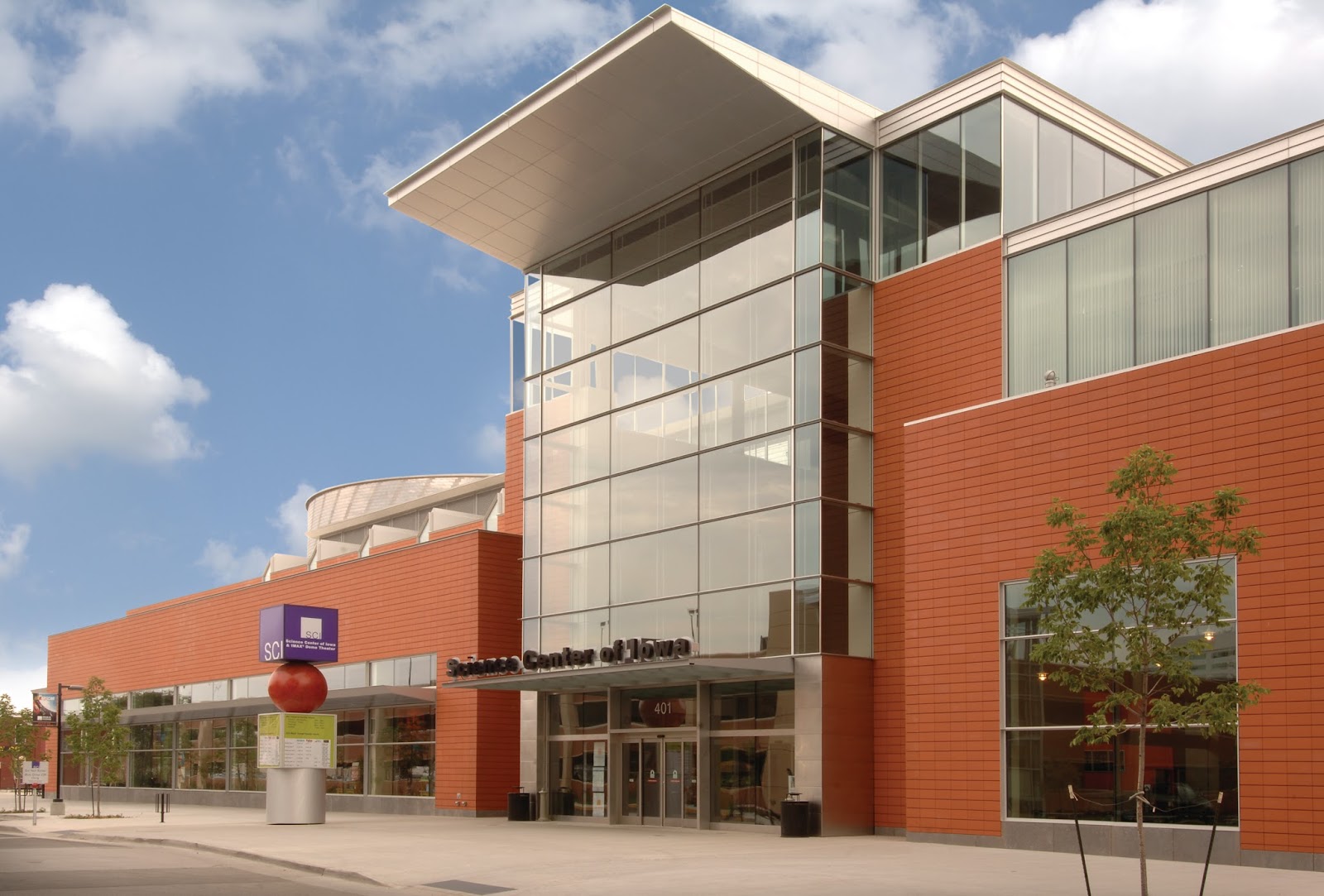
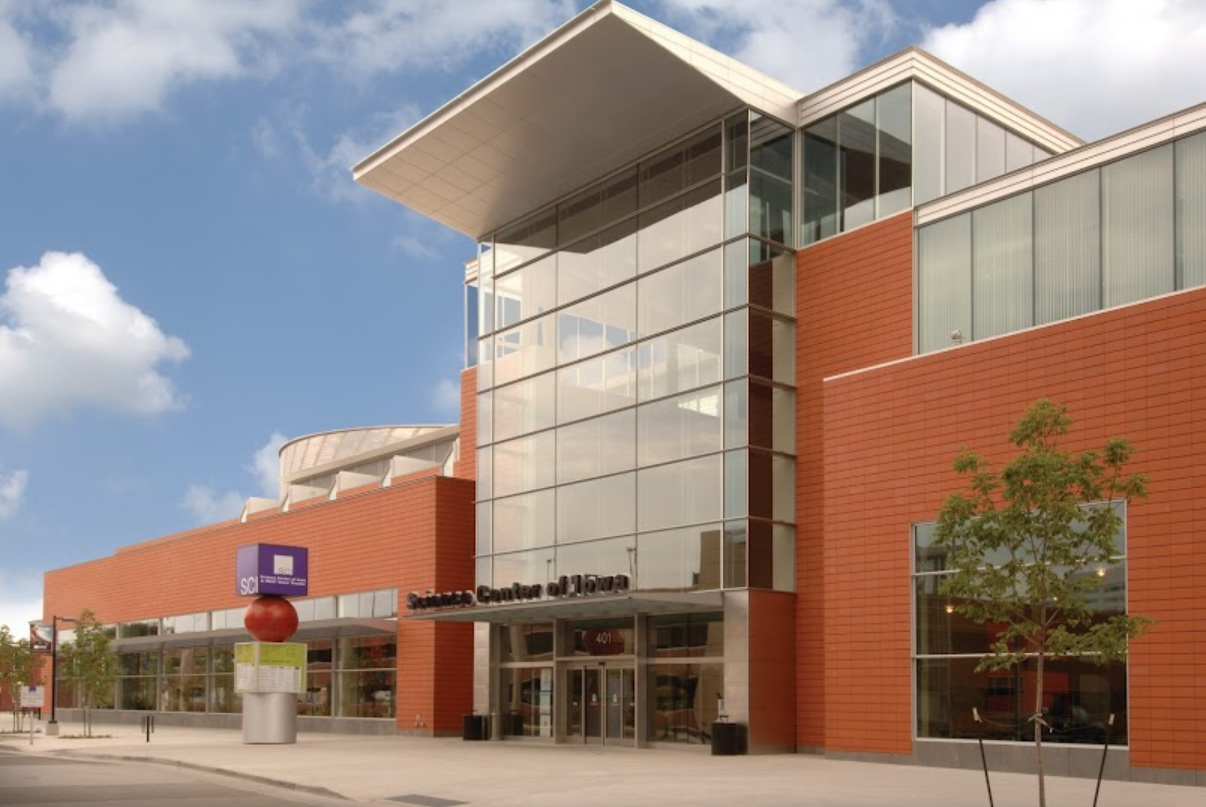
The Science Center of Iowa occupies a contemporary building in downtown Des Moines, combining a glazed atrium, exhibit halls and a domed theatre space, in glass and steel.
Two conditions coexist here and they pull in opposite directions. The atrium is generously glazed, which on a downtown site with open ground nearby gives large, clean, directional daylight — the best light in the building and among the best in the city. The exhibit halls are lit substantially by screens and backlit panels, which are emissive, narrow-spectrum and constantly changing, and which render skin badly at any white balance.
So the building is excellent for some briefs and difficult for others, and the difference is mostly about which spaces the wedding actually uses. This is an honest account of that. We have not photographed a wedding at the Science Center; glazed atria and screen-lit halls behave the same wherever they occur. Which spaces host events, and whether display content can be paused, are questions for their events team — and that second question is more valuable than it sounds.
Science Center of Iowa at a glance
| Where | Downtown Des Moines, Iowa |
| Character | Contemporary glass-and-steel science centre with a glazed atrium |
| The good half | A glazed atrium giving large clean directional daylight |
| The hard half | Exhibit halls lit by screens, which render skin badly |
| Ask first | Whether display content can be paused on a static image |
The atrium: the best light in the building
A large glazed atrium collects a very large area of sky, and with nothing tall immediately opposite there is no shadowing and no colour bouncing in. The light that arrives is clean, strong and directional, with a natural fall-off into the space behind — which makes it better than almost anything a photographer could carry and better than most hotel windows in the city.
The working method is simply to use it. A couple placed a metre or two back from the glass, turned into it, has a broad soft key with real separation from the background. Because the level is high, a large group can be lit evenly by a single façade, which is rarely true indoors and makes formal groups genuinely easy here.
Two cautions. On the sunlit side the same glazing gives a hard bright patch, extreme contrast and hard shadow bars from the structural members, which cannot be corrected — so move to the other side, wait, or work in the shadow between frames. And a glazed atrium is bright overall, so a meter will want to darken the frame: add a stop or more and check the highlights.
Steel is the other material and it behaves specifically: polished or painted steel reflects specularly, so it throws hard bright highlights and mirrors whatever is in front of it. Light the reflection rather than the object — a broad bounced source gives a soft gradient down a steel member where a bare flash gives a hot spot — and shoot obliquely where steel is in frame so your own reflection goes off to the side.
Who this venue suits
The building serves a clear set of briefs, and mostly they are the ones that live in the atrium:
- Daytime and early-evening weddings, which get the atrium at its considerable best
- Couples wanting a bright, clean, contemporary gallery rather than a period one
- Larger groups, since one glazed façade lights a big group evenly
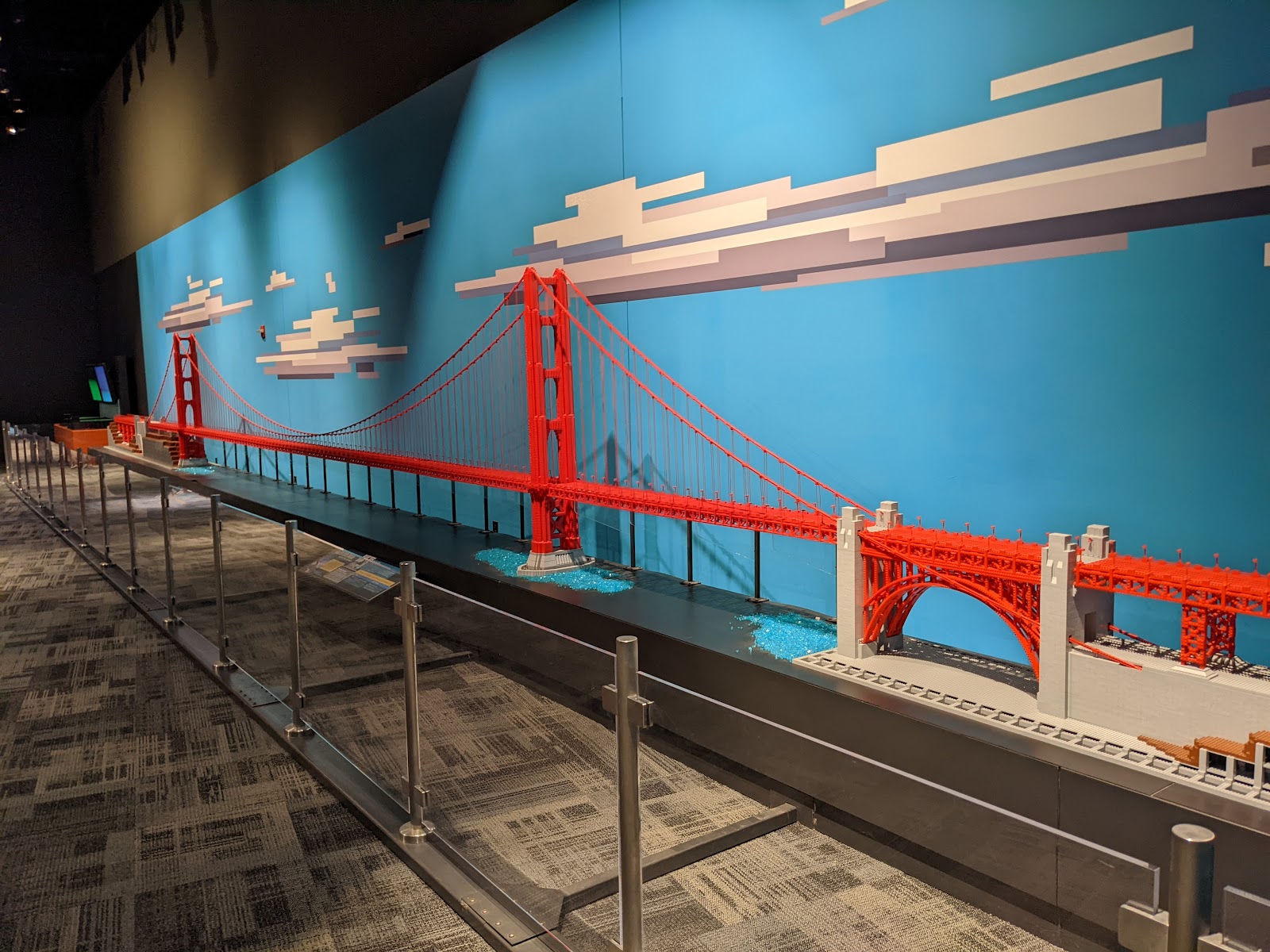
- Anyone who wants the exhibits in the pictures rather than merely nearby
- Briefs needing complete weather independence in a downtown location
Who should look elsewhere
And several reasonable intentions run into the harder half:
- Couples drawn to period texture, patina or architectural warmth, none of which is here
- Anyone wanting deep shadow and moody contrast; the atrium is emphatically high-key
- Briefs where skin tone must be flawless in the exhibit halls without added light
- Late receptions in the atrium, when the glazing becomes a wall of mirrors
- Anyone unwilling to bring light, because the halls will not render faces on their own
The exhibit halls, the dome and the evening
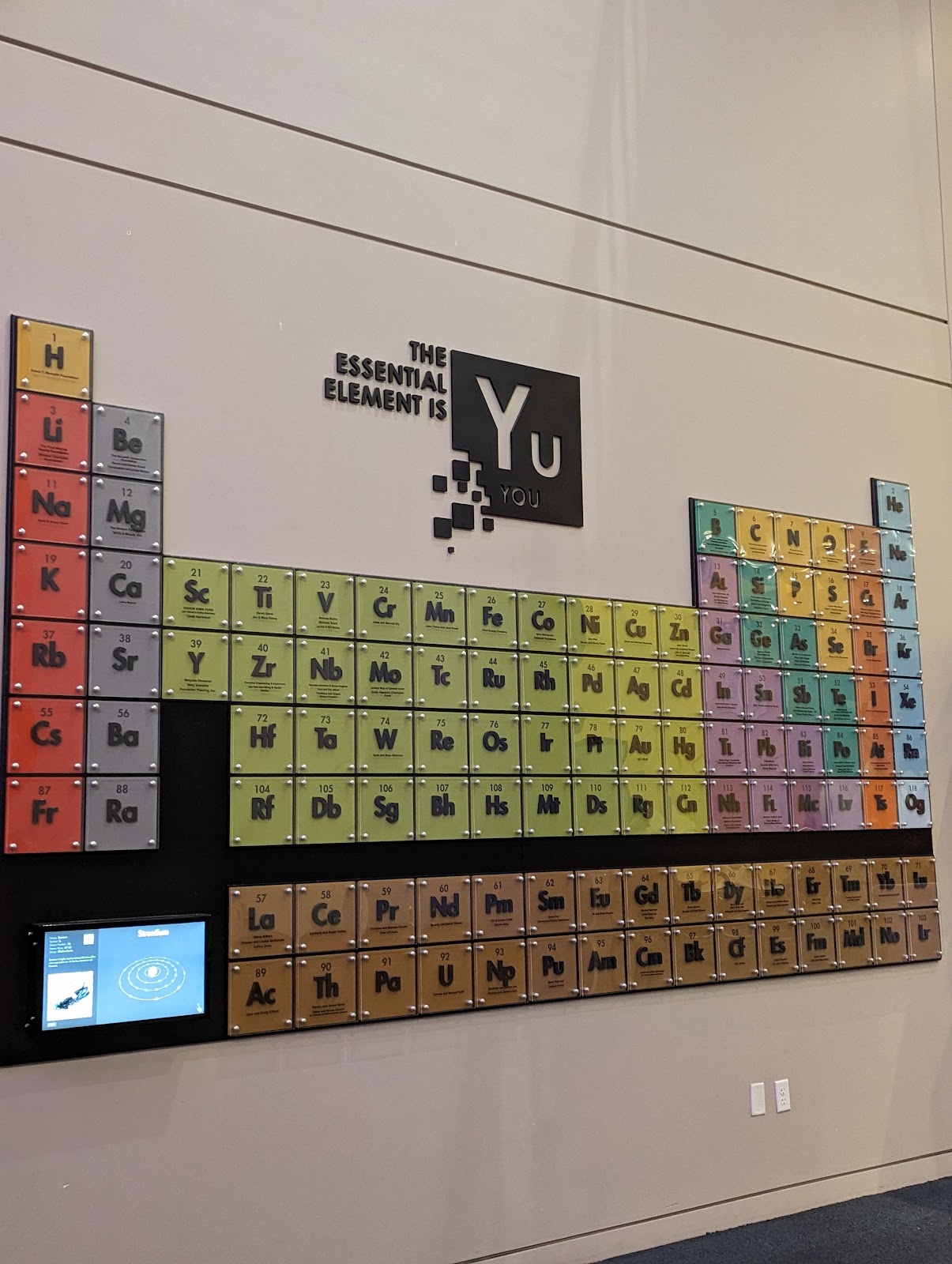
Screens are the difficult condition and the reason is technical rather than aesthetic. A screen produces colour from three narrow primaries, so its spectrum has spikes and gaps, and skin lit by it renders oddly even when white balance is technically correct — the wavelengths that make skin look like skin are partly missing. Screens are also bright relative to a dim hall, which is a dynamic range problem, and they change as content plays, so consecutive frames do not match.
The reliable answer is to make your own light the only thing illuminating skin: a gently warm-gelled source at face height, bright enough locally to dominate the nearest screen, with white balance set to it. Then skin is consistent regardless of what the displays are doing and the screens become coloured background rather than a light source.
The request worth making is whether display content can be paused on a static image. Many installations can, and a fixed screen is a completely different proposition — the colour stops moving, the exposure stops shifting, and a sequence can match itself. It costs a conversation and it removes the hardest part of the problem.
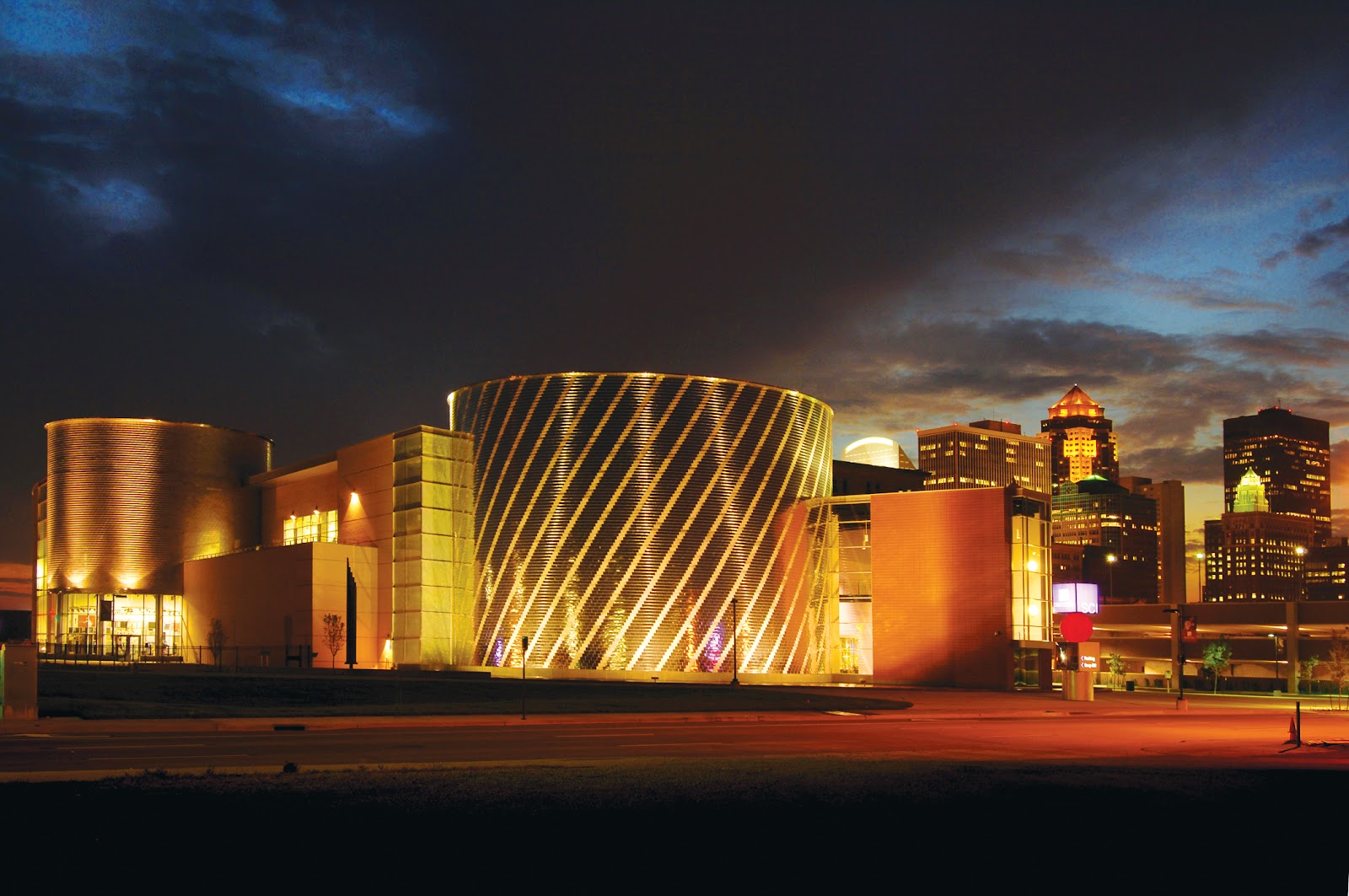
A domed theatre space, if available, is the opposite extreme: very dark, with a projected surface overhead. The rule there is the atmospheric-ceiling rule — nothing aimed upward, because light on a projection dome lifts it to grey and destroys the effect. One gridded source on the couple at low power, expose for them, and let the dome stay dark.
After dark the atrium inverts and becomes a wall of mirrors showing the lit interior, so the view and the sky disappear. There is one window worth catching before that: for roughly twenty minutes around dusk the sky outside falls to the brightness of the interior lighting, and a single exposure holds the atrium, the couple and the city. Take the clock time from sunset and treat it as an appointment.
Outside, downtown Des Moines is low-rise in parts, so low evening sun reaches street level and runs the length of a street — the daylight block worth scheduling, since the halls inside are entirely time-independent.
More frames from Science Center of Iowa
Science Center of Iowa wedding photography: common questions
Why is the atrium such good light?
Because a large glazed area collects a very large area of sky with nothing tall opposite to shadow it or bounce colour in. It is clean, strong and directional, with a natural fall-off — and bright enough that one façade lights a large group evenly.
Why does skin look wrong in the exhibit halls?
Because screens make colour from three narrow primaries, so the spectrum has spikes and gaps and the wavelengths that make skin look like skin are partly missing. No white balance corrects it; the information is not in the light.
What is the fix for screen-lit halls?
A gently warm-gelled source at face height, bright enough to dominate the nearest screen, with white balance set to it. Skin then stays consistent whatever the displays are playing, and the screens become coloured background.
Is there a request worth making?
Yes, and almost nobody makes it: ask whether display content can be paused on a static image. A fixed screen stops the colour and exposure moving, so a sequence can match itself. It removes the hardest part of the problem for the price of a conversation.
How do you photograph polished steel?
Light the reflection, not the object. A broad bounced source gives a soft gradient down a steel member, where a bare flash gives a hard hot spot — and shoot obliquely where steel is in frame so your own reflection goes off to the side.
What happens in the atrium after dark?
It becomes a wall of mirrors showing the lit interior, so the view disappears. Catch the dusk crossing first — about twenty minutes when the sky falls to the brightness of the interior and one exposure holds the atrium, the couple and the city.
More Des Moines, IA venue guides
We are writing a photographer’s guide to every venue we would happily shoot in Des Moines, IA. Here are three more, plus the full index:
- The Surety Hotel: Photographing a Converted Office Building
- The Temple for Performing Arts: Photographing a Former Masonic Temple
- Terrace Hill: Reading a Victorian House on High Ground
All Des Moines, IA Wedding Venues →
Planning a wedding at Science Center of Iowa?
One half of this building is the easiest light in the city and the other is the hardest. Tell us which spaces you have.