 The Somerset Club on Beacon Street: Is It Right for You?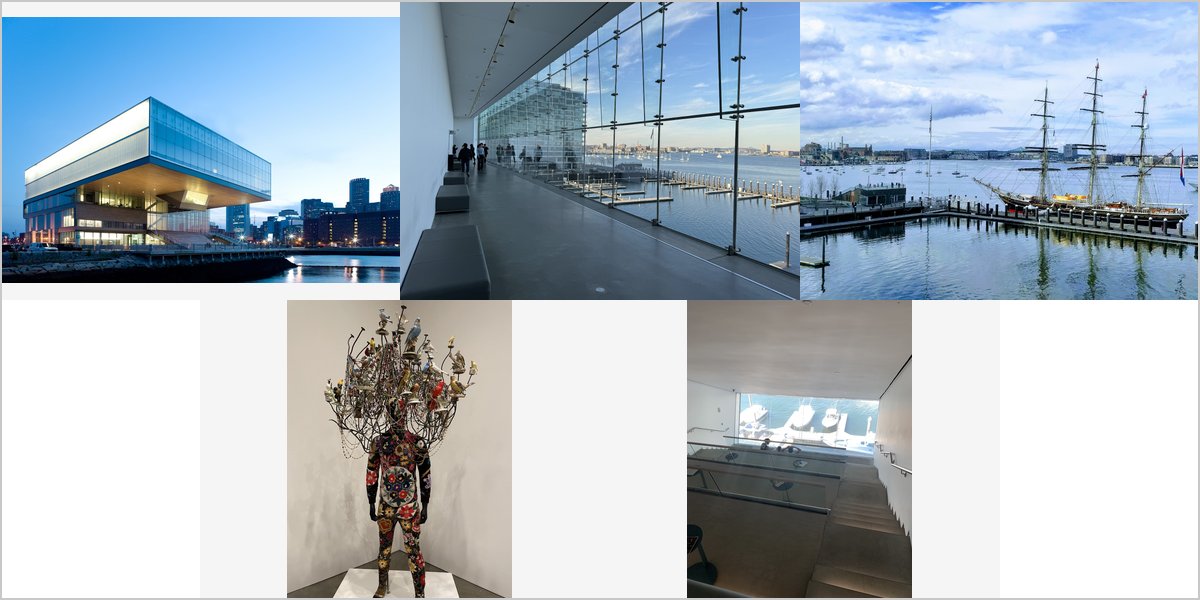
June 2, 2026
The ICA Boston: Harbour Light and How to Time It
This building faces east over water. That one fact inverts the usual advice: the best light here is early, and sunset happens behind you.
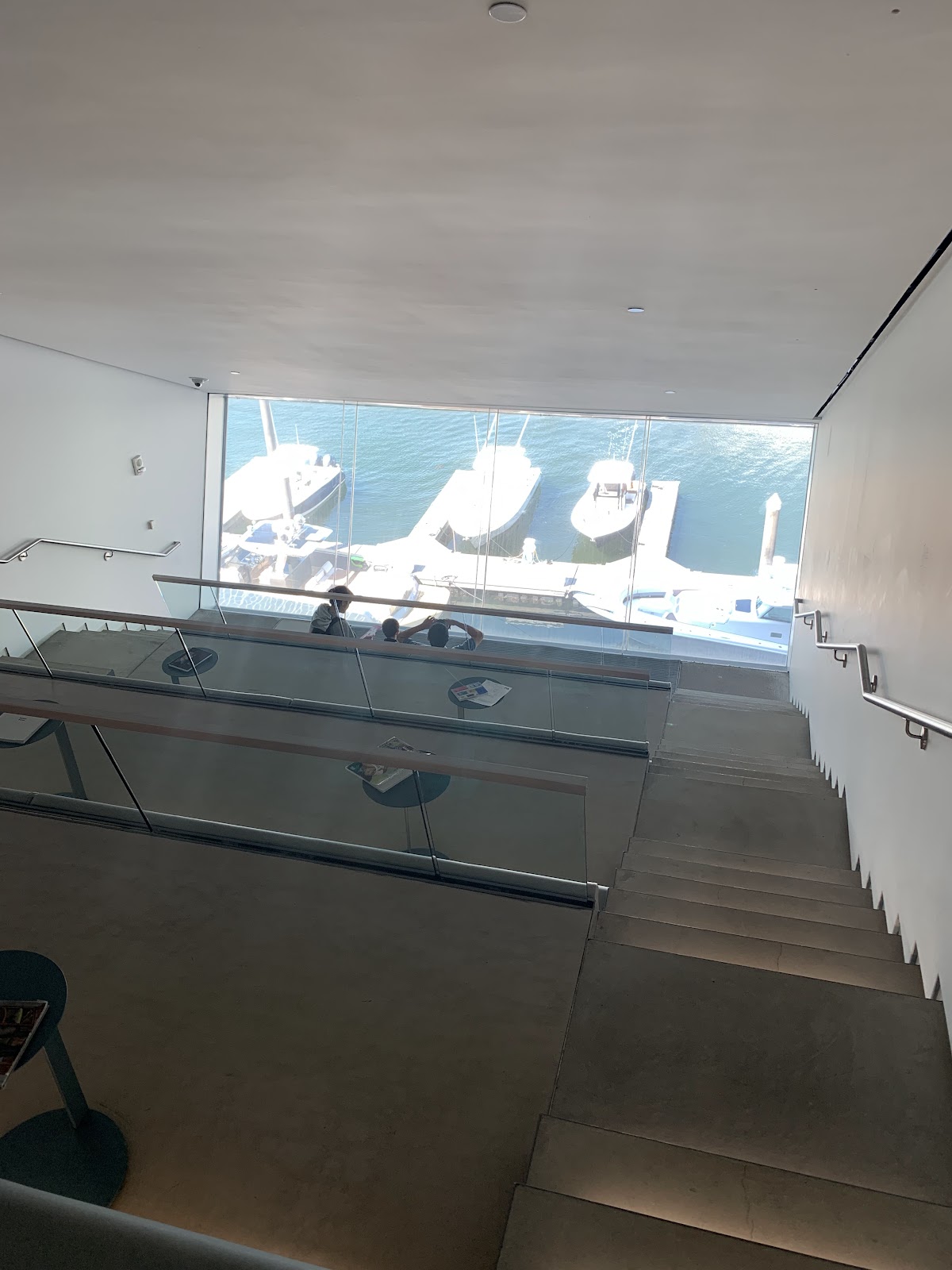
The Institute of Contemporary Art opened its waterfront building in 2006, designed by Diller Scofidio + Renfro, on Boston’s Seaport District harbourfront. Its defining gesture is a gallery volume cantilevered out over the water, with full-height glazing, plus an outdoor grandstand stepping down toward the harbour.
Photographically it is the opposite of every historic venue in this city. Instead of dark stone and warm tungsten, you get glass, concrete, white walls and enormous quantities of daylight reflected off water. That is a genuinely different assignment, and mostly an easier one — but it has one significant catch that couples consistently get wrong.
The catch is orientation. The building faces roughly east and north-east over the harbour, which means the sun rises over the water and sets behind the building. Almost all standard wedding-timeline advice assumes you want to be facing the sunset. Here you do not, and planning as though you do wastes the best light of the day. We have not photographed a wedding at the ICA; the orientation and the optics of water light are simply facts about the site.
Institute of Contemporary Art Boston at a glance
| Where | Seaport District waterfront, Boston, Massachusetts |
| Opened | 2006, designed by Diller Scofidio + Renfro |
| Character | Glass, concrete and white walls, cantilevered over the harbour, with an outdoor grandstand |
| Orientation | Faces roughly east and north-east over the water — sun rises over the harbour, sets behind |
| Light | Abundant, cool, and doubled by reflection off the water |
Why east-facing water changes the timeline
When a venue faces west, the classic plan works: portraits in the last hour of daylight, sun low behind the couple, warm rim light, glowing sky. When a venue faces east, the sun in that final hour is behind the building, the water goes flat and grey, and the facade falls into its own shadow. The famous view stops working exactly when you were planning to use it.
What east-facing water gives you instead is morning. Early light comes in low across the harbour, directly toward the building, and it is spectacular — warm, raking, with the water lit rather than dull. For a wedding that means a morning ceremony or an early first look is not a compromise here, it is the best decision available.
If the schedule is fixed for a late afternoon, the answer is to use the building rather than the horizon. The interiors will be beautifully filled with soft reflected light all afternoon, the white walls will be glowing, and the cantilevered glass gallery looks out onto water that is evenly lit rather than contre-jour. You lose the sunset frame; you keep everything else.
Water light, and why it is so flattering indoors
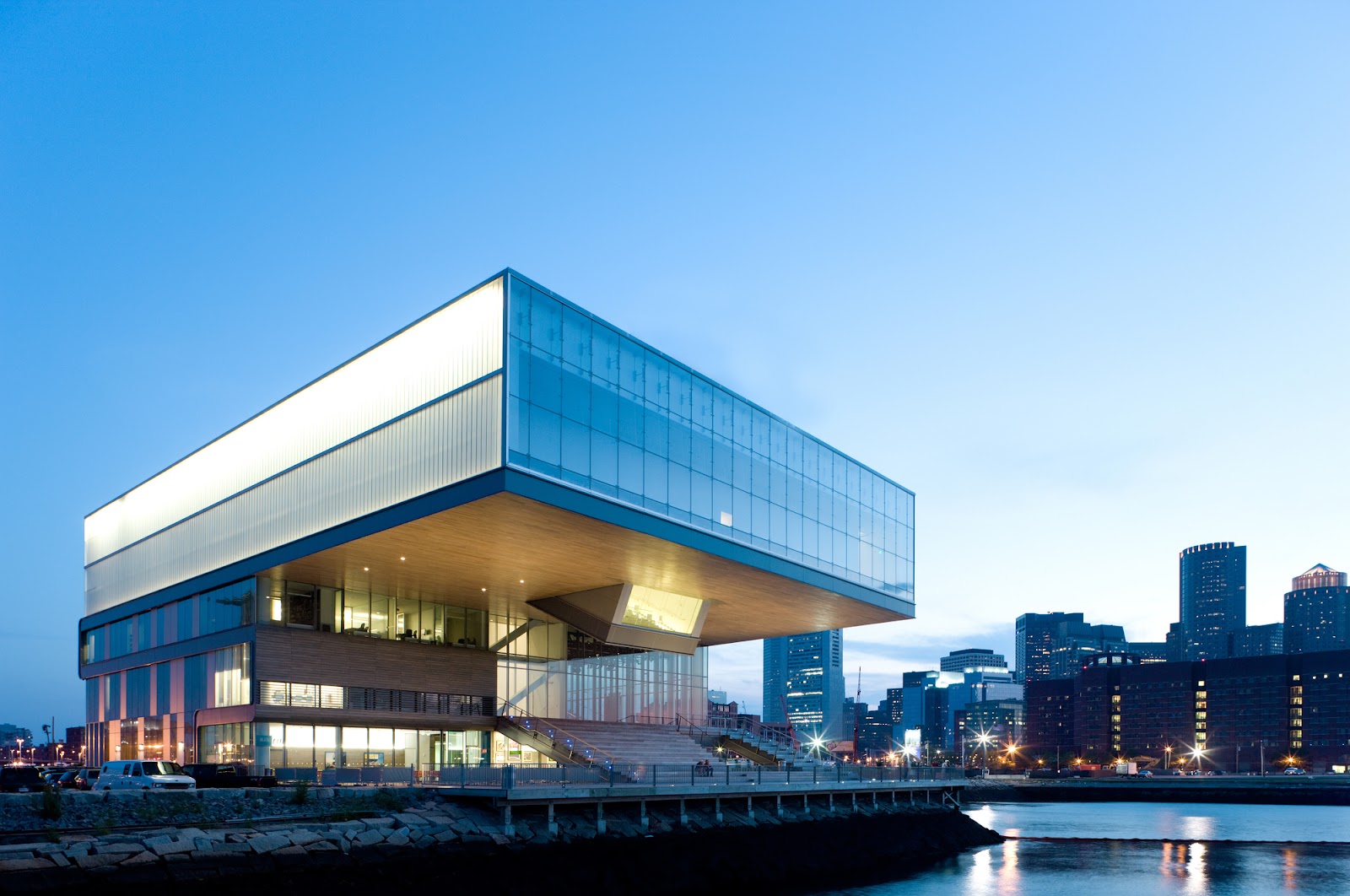
Light reflected off a large body of water and then through full-height glass is among the best natural light any venue can offer. It arrives from a low angle — bouncing up off the harbour surface — which is the opposite of the top-down problem that afflicts atriums and galleries. Low, broad, diffused light fills eye sockets instead of shadowing them, and it wraps around faces.
It is also cool in colour, which is worth knowing. Water and sky light reads blue, and against white concrete walls there is nothing warm anywhere in the frame. Skin can end up looking slightly cold and flat. A small warm-gelled fill, or simply positioning people where some warmer surface bounces into them, restores the balance. Alternatively lean into it: a cool, clean, architectural palette is entirely coherent at a contemporary art museum and suits the building.
The practical caution is contrast at the glass. Full-height glazing onto a bright harbour is a very wide range. Stand someone against it and you choose between silhouette and a blown background. Turn them parallel to the glass instead and it becomes an enormous side light, which is the best frame in the building.
The grandstand and the outdoor spaces
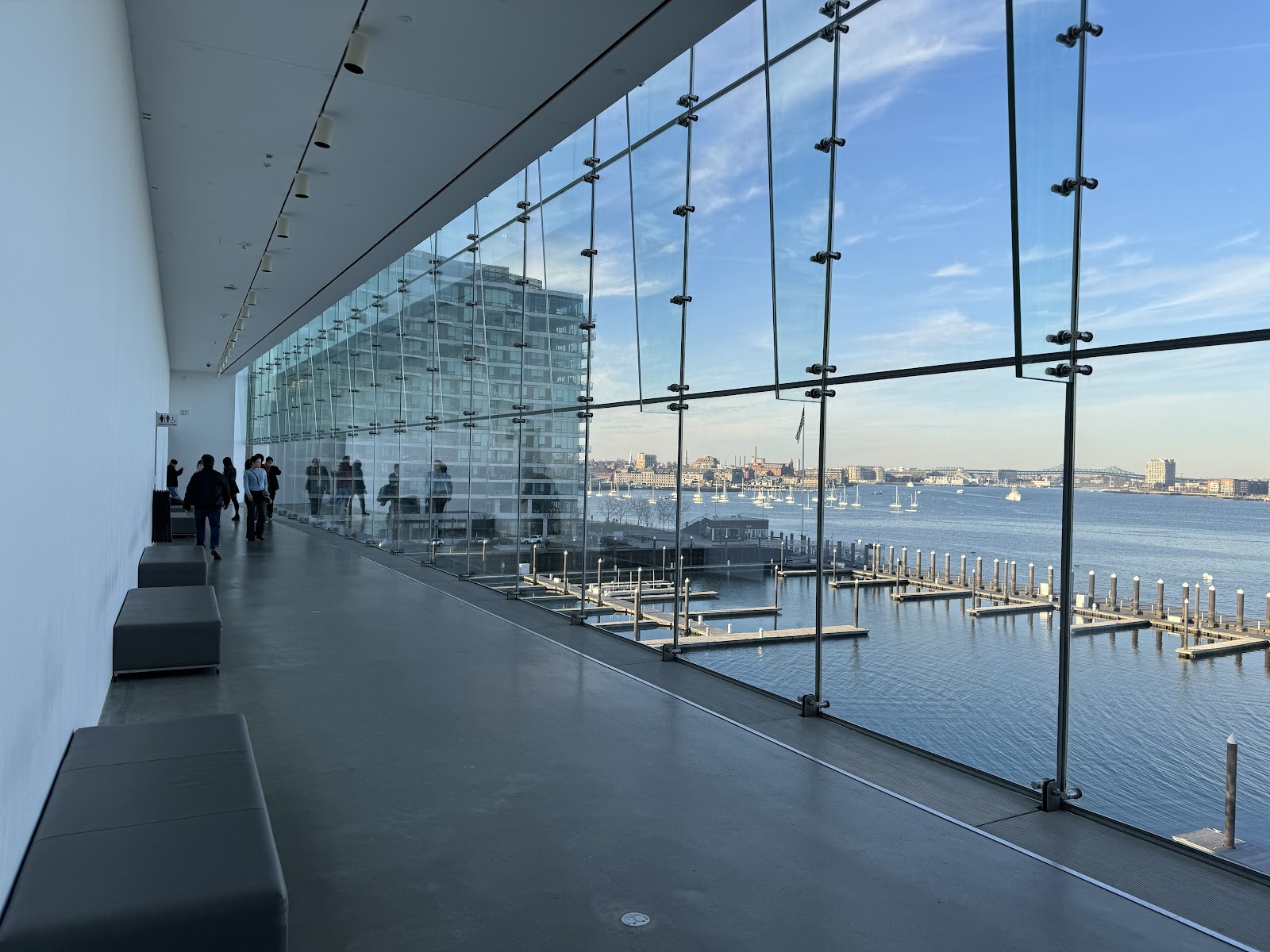
Stepped outdoor seating facing water is an unusual asset. It gives you levels, which solves the biggest problem in group photography — arranging twenty people so everyone is visible and the composition is not a flat line. Tiered steps do that automatically.
It is also fully exposed. A harbourfront in Boston is windy in every season and genuinely cold from October through April, with nothing between the site and the water. That affects wardrobe, hair, guest comfort and the viability of any outdoor ceremony, and it rules out large light modifiers, which become sails.
In summer, the grandstand at the top of the morning or in the hour before the sun drops behind the building is excellent. In winter, treat outdoor time as a brief, planned excursion rather than a part of the day.
The timeline, built for this orientation
Stated plainly, because it differs from the standard advice.
- Earlier is better. Morning light across the harbour toward the building is the best light the site offers. A first look or portraits before midday beats an evening slot.
- Afternoon interiors are reliable. Reflected water light through the glazing fills the galleries softly all afternoon — no scheduling precision needed.
- Do not plan a sunset portrait facing the water. The sun sets behind the building. If you want a sunset frame, it will be looking back at the city skyline, not out to sea.
- Use the grandstand for groups, where the tiers arrange people for you — weather permitting.
- Budget for wind. No large modifiers, and plan hair and wardrobe for an exposed harbourfront.
What works in your favour
- Low reflected water light through full-height glass is exceptionally flattering — the opposite of top-down
- Abundant daylight all afternoon with no scheduling precision required
- A significant piece of contemporary architecture that photographs as a subject
- Tiered outdoor grandstand arranges large groups automatically
- Clean modern palette that suits contemporary styling
What to plan around
- Faces east: the sun sets behind the building, so the classic sunset-over-water frame does not exist
- Cool colour palette with nothing warm in frame; skin can read cold without added fill
- Full-height glazing onto bright water is an extreme contrast range
- Exposed harbourfront — persistently windy, cold for half the year, and hostile to light modifiers
- Museum rules on gallery access and flash apply; confirm before planning

More frames from Institute of Contemporary Art Boston
Institute of Contemporary Art Boston wedding photography: common questions
Can you get a sunset photo over the water at the ICA?
No — and this is the most common misunderstanding about the venue. The building faces roughly east and north-east, so the sun rises over the harbour and sets behind the building. In the final hour of daylight the water goes flat and the facade is in its own shadow. A sunset frame here looks back toward the city, not out to sea.
When is the best light?
Morning. Low light coming in across the harbour toward the building is the best the site offers, so an early ceremony or a pre-noon first look is genuinely the strongest choice rather than a compromise. Afternoons are reliable indoors, with soft reflected light filling the galleries.
Why is the indoor light so good?
Because it bounces up off the water and in through full-height glass, arriving low and broad instead of from overhead. That fills eye sockets rather than shadowing them, which is the opposite of the problem atriums and galleries create. It is among the most flattering natural light any venue offers.
Do we need to worry about the colour of the light?
Somewhat. Water and sky light is cool, and against white concrete there is nothing warm in the frame, so skin can look cold and flat. Either add a small warm-gelled fill, or commit to the cool architectural palette — which is perfectly coherent at a contemporary art museum.
How bad is the wind?
Significant, year-round, with nothing between the site and the harbour. It affects hair, wardrobe and guest comfort, makes outdoor ceremonies a real gamble from October to April, and rules out large light modifiers, which behave like sails. Plan outdoor time as short and deliberate.
More Boston venue guides
We are writing a photographer’s guide to every venue we would happily shoot in Boston. Here are three more, plus the full index:
- The Castle at Park Plaza: Lighting a Brick Armory
- Fairmont Copley Plaza: The Technical Side of a Grand Ballroom
- The Harvard Club of Boston: A Season-by-Season Guide
Planning a wedding at Institute of Contemporary Art Boston?
The ICA is the one Boston venue where we would argue for an earlier ceremony, because the harbour light runs the wrong way for a sunset plan. Tell us your date and we will show you exactly when the good light lands.