 Roxy’s Downtown: Photographing a Small Stage Room
Reflection Ridge Golf Club: Reading Water on a Course Through the Day
Water on a course is the best thing there and the first thing Kansas wind takes away.
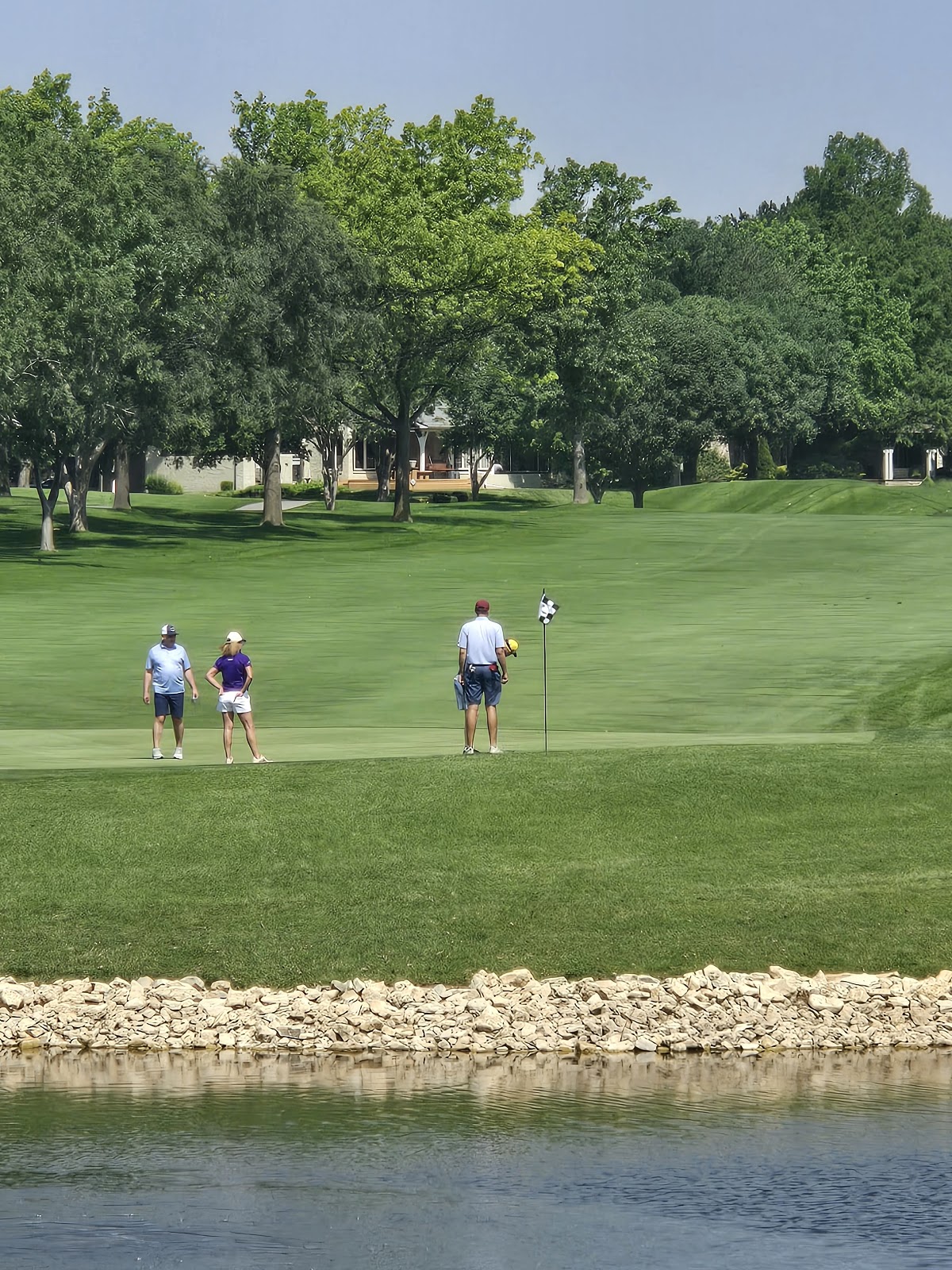
Reflection Ridge Golf Club occupies ground in Wichita, Kansas, a course with water features distributed through it, a clubhouse with event space, and the long open sight lines that plains golf has.
Water is the venue’s distinguishing feature and it is worth being precise about what it actually does, because it does three separate things and they are available at different times. It mirrors, which doubles the sky, the trees and the couple and gives symmetry for free. It bounces light upward into faces, filling the shadows that a high sun carves. And it provides a foreground element that separates a subject from a distant background, which on a flat course is otherwise difficult.
All three depend on conditions that change through the day, and one of them — wind — is a Kansas constant rather than a variable. So this walks the day through in order. We have not photographed a wedding at Reflection Ridge; water on open ground behaves the same wherever it sits. Course access, cart availability and which holes may be used are questions for their events team, and access decides whether the water frames are reachable at all.
Reflection Ridge Golf Club at a glance
| Where | Wichita, Kansas |
| Character | Golf course with water features, clubhouse event space, open sight lines |
| Water does three things | Mirrors, bounces fill upward, and gives a foreground |
| The limiter | Kansas wind, which removes the mirror entirely |
| Best window | Early morning for reflections; last ninety minutes for everything else |
Early morning: the only time the water mirrors
A reflection needs a flat surface, and a surface is flat only when the air is still. On open plains ground that means early: the air is calmest before the ground heats and thermals develop, and it builds through the day to a maximum in the afternoon. So the mirror frame lives in the first couple of hours and effectively nowhere else.
Any breeze at all is enough to remove it. This is not a matter of degree — even light ripple scatters a reflection into unusable texture, and no technique recovers it. A long exposure on a tripod smooths ripple into a soft gradient, which is a different and sometimes attractive image, but it will not hold a sharp double of anything.
High sun is the other spoiler. With the sun overhead a water surface returns specular glare rather than an image: bright clipping highlights scattered across the surface instead of a reflection of the sky. A mirror needs a low light source, which is the same condition as the calm air.
Where the conditions do hold, shoot low. Dropping the camera close to the surface enlarges the reflection, pushes the horizon down the frame and strengthens the symmetry. And decide whether the couple should be in the reflection: right at the edge the mirror holds both them and the sky, while a few metres back it holds only the background — which is often cleaner, because a doubled couple can read as visual clutter.
Midday: fill from below, and no shade anywhere
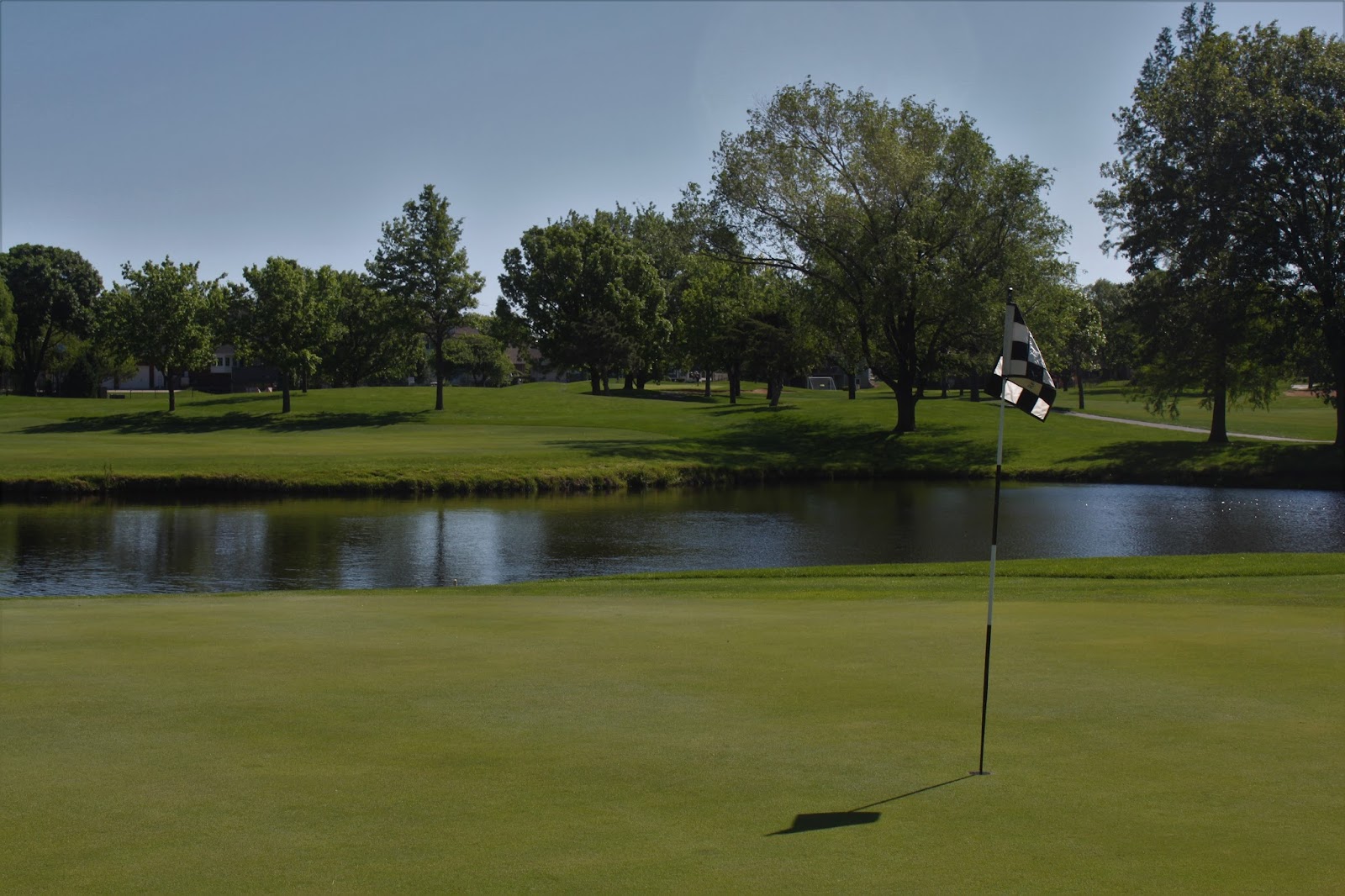
Through the middle of the day the water stops mirroring and starts doing something else that is genuinely useful: it bounces light upward. Every other source in a photographer’s day comes from above — sky, ceiling fixtures, a softbox on a stand — and all of them shadow the eye sockets and mark the line under the nose and chin. Light arriving from below fills exactly those shadows, which is what a reflector held low is for.
So a couple standing beside water at midday is better lit than the same couple standing on a fairway twenty metres away, and it costs nothing but position. It does not solve the whole problem — the sun is still high and hard — but it is a real improvement and it is the reason to work near water at the worst hour.
What the course does not have is shade. Plains courses are open by design, and the trees along a fairway are usually scattered rather than closed, which gives dapple — several stops across a face, shifting with any breeze, and correctable only by moving. The clubhouse’s own shadow is the reliable midday shade, and the clubhouse interior is the better answer.
Wind is at its strongest in the afternoon, which compounds everything: veils unmanageable, unweighted stands hazardous, tall arrangements moving, and the water at its least reflective. That combination is why the middle of the day belongs indoors at a venue like this, and why saying so early lets the timeline be built the right way round.
- Reflections are an early-morning proposition; wind removes them by afternoon
- Shoot low at the water to enlarge the reflection and drop the horizon
- Work beside water at midday for the upward fill, not for the mirror
- The clubhouse shadow is the only dependable shade on a plains course
- Weight every stand; afternoon wind is the strongest of the day
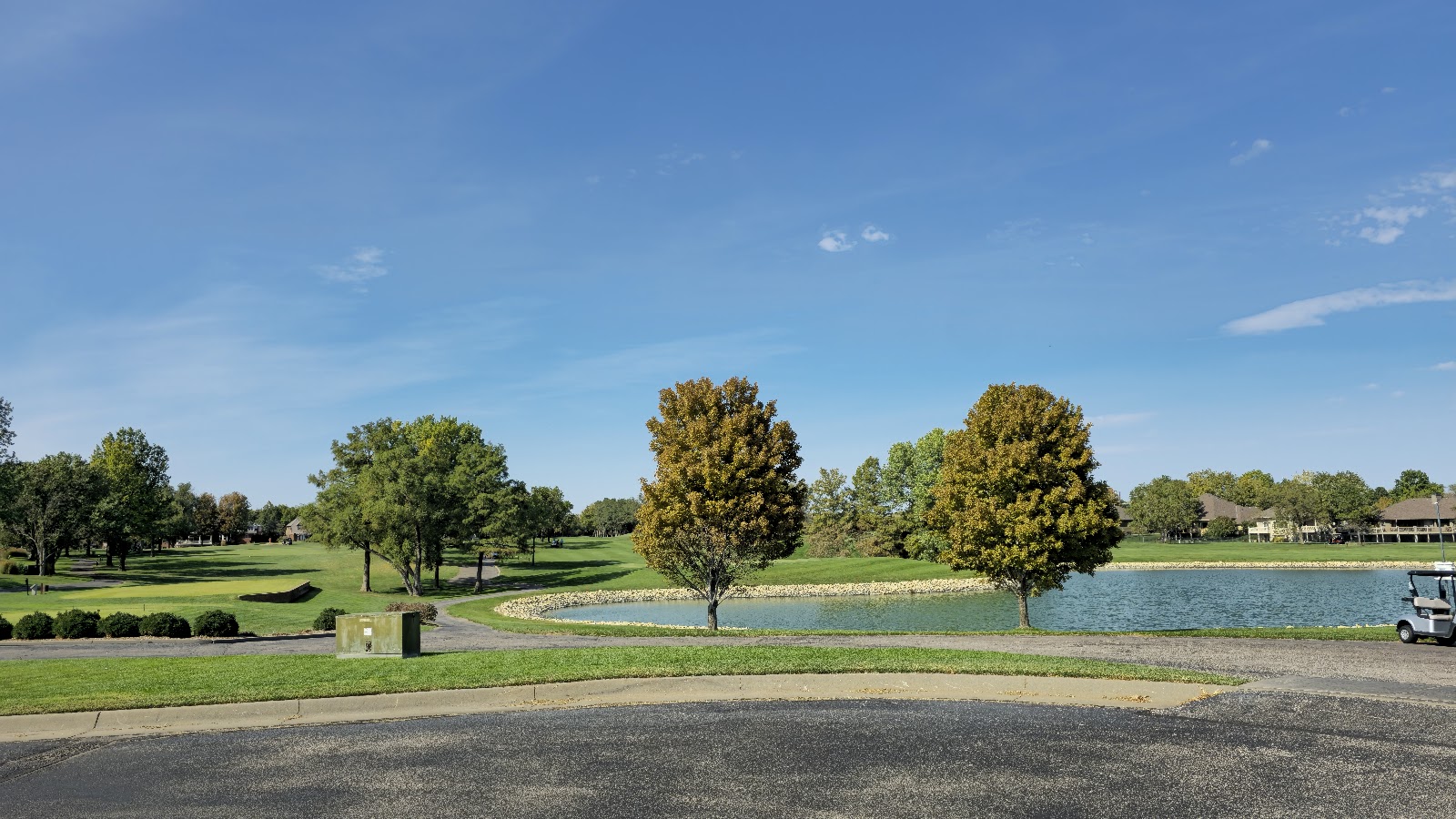
The last ninety minutes: everything at once
The end of the day is when a course with water is at its best, because three things happen together. The air usually drops as the ground cools, so the water may mirror again. The sun is low, so mown stripes read, undulations show as form, fairway trees are backlit and every figure gets a rim. And the sky over open plains fills a large share of any wide frame with colour.
On plains ground that window is longer than in country with hills, because the sun stays visible almost all the way to the horizon rather than disappearing behind something. That means the block does not have to be rushed, which matters on a course where walking between positions takes real minutes.
The frame worth planning is water in the foreground with a low sun behind or across it. Backlit water at a low angle is full of specular highlights that read as texture rather than as glare, and a couple placed beside it gets warm rim light with the reflected colour of the sky beneath them. That is the image this venue can make and a course without water cannot.
Use a long lens for the wide landscape frames, for the same reason any course needs one: compression stacks the trees and brings the horizon closer, where a wide lens renders everything at true size and leaves a couple small in a lot of empty green. Stand a long way back, agree the posture before separating, and work on available light, which at that hour is ample.
Two practical matters. Course access is a club decision, not a photographer’s — how far onto the course a wedding party may go, at what time, and whether a cart is available, which is the difference between a fifteen-minute block and a forty-minute one in formal clothes. And Kansas storms in spring and early summer build fast on open ground with no shelter, so a decision point and a route back to the clubhouse matter more than optimism.
More frames from Reflection Ridge Golf Club
Reflection Ridge Golf Club wedding photography: common questions
When does the water actually reflect?
Early morning, before the ground heats and the air builds. Any real breeze scatters a reflection into unusable texture with no way to recover it, and by afternoon the wind is at its strongest — so the mirror frame is a first-couple-of-hours proposition or nothing.
Is there a way to shoot rippled water?
A long exposure on a tripod smooths ripple into a soft gradient, which is a different and sometimes attractive image. But it will not hold a sharp double of anything, so it is not a substitute for a mirror.
Why work near water at midday if it is not mirroring?
Because it bounces light upward, and upward fill is the one direction nothing else provides. It fills the eye sockets and the shadow under the chin that a high sun carves, so a couple beside water is better lit than the same couple on a fairway twenty metres away.
Where is the shade on a plains course?
The clubhouse shadow, and otherwise nowhere. Fairway trees are scattered rather than closed, so they give dapple — several stops across a face, moving with the breeze, correctable only by moving people. The clubhouse interior is the better midday answer.
What is the best frame here?
Water in the foreground with low sun behind or across it, in the last ninety minutes. Backlit water at a low angle is full of specular highlights that read as texture, and a couple beside it gets warm rim light with reflected sky beneath them.
Do you need a long lens?
Yes, for any wide landscape frame. Compression stacks the fairway trees and brings the horizon closer; a wide lens renders everything at true size and leaves the couple small in a lot of empty green. Stand well back and agree the posture first.
More Kansas venue guides
We are writing a photographer’s guide to every venue we would happily shoot in Kansas. Here are three more, plus the full index:
- Roxy’s Downtown: Photographing a Small Stage Room
- Sedgwick County Zoo: What a Plains Zoo Suits and What It Does Not
- The Wichita Art Museum: Field Notes on Glass Under a Big Sky
Planning a wedding at Reflection Ridge Golf Club?
The mirror is early and everything else is late. Tell us your date and we will plan both ends of the day.