 Roxy’s Downtown: Photographing a Small Stage Room
Exploration Place: Photographing Curved Architecture on a River
Curved architecture has no flat elevation and no vanishing point, which breaks the two moves photographers rely on.
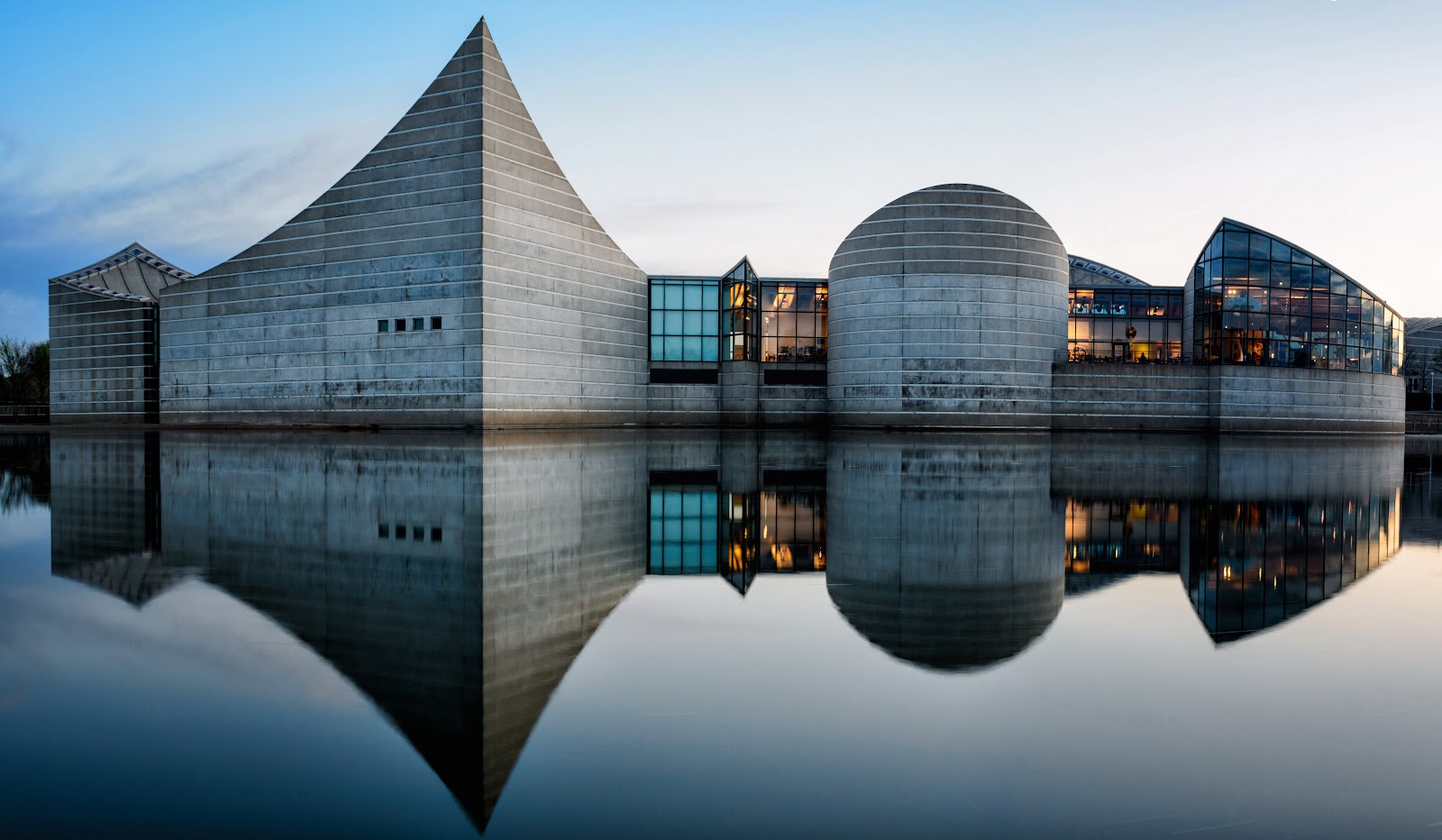
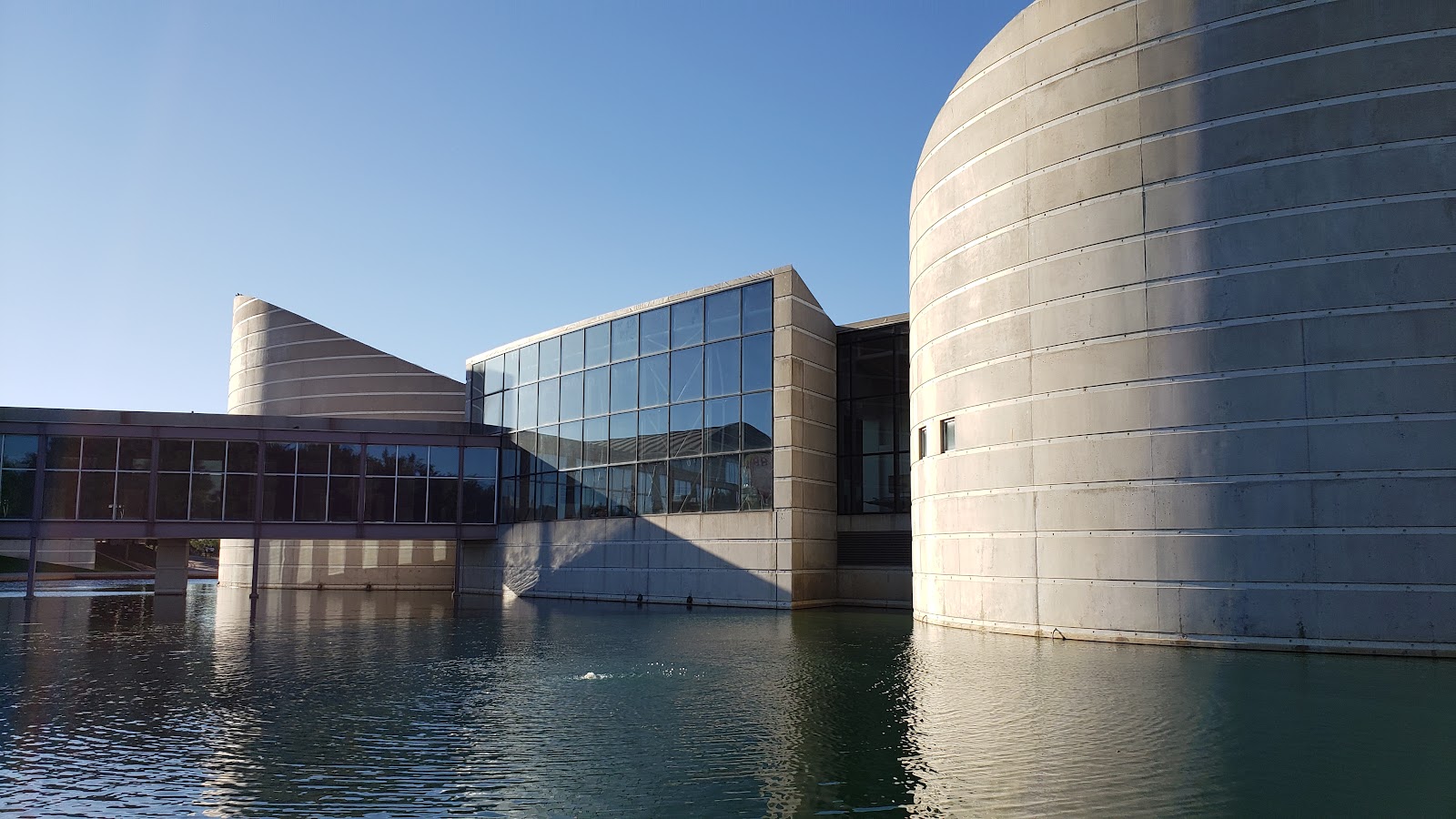
Exploration Place occupies a site on the Arkansas River in Wichita, Kansas, a science centre whose building is sculptural rather than rectilinear — curved forms, sweeping walls and a riverside position with water on one side and the city beyond.
Curved architecture is worth thinking about in advance because it defeats the two compositional moves that work everywhere else. On a rectangular building you either shoot square on to a flat elevation for symmetry, or shoot at an angle so parallel lines converge to a vanishing point and give depth. A curve offers neither cleanly: there is no flat face to square up to, and the lines bend rather than converge. Photographers who bring those habits produce frames that feel slightly wrong without an obvious reason.
What a curve gives instead is worth learning. This is a walk through the building and its grounds. We have not photographed a wedding at Exploration Place; curved elevations, exhibit halls and riverside grounds behave the same wherever they occur. Which spaces host events and whether exhibit areas can be closed off are questions for their events team.
Exploration Place at a glance
| Where | On the Arkansas River, Wichita, Kansas |
| Character | Sculptural curved science centre with exhibit halls and riverside grounds |
| The geometry | No flat elevation and no single vanishing point |
| Two positions | At the centre of the curve, or hard against the wall |
| The river | Water on one side, with the usual wind caveat about reflections |
The exterior: two positions and nothing in between
A curved wall gives a continuously changing relationship between camera and surface, and there are two positions that exploit it. Stand at the centre of the curve’s radius and the building wraps around the frame symmetrically, which reads as enclosure and is a composition a straight building cannot produce. Or stand hard against the wall and shoot along it, so the surface sweeps away from the lens and the curve itself becomes the leading line — bending rather than converging.
What fails is the middle distance, off centre, trying to include the whole form. The curve compresses unevenly, verticals splay, and the frame reads as a mistake. The rule is to be either at the centre or right up against the surface, and to avoid the ambiguous middle — which is the same rule that governs symmetry everywhere, simply harder to satisfy when there is no flat face to reference.
Level the camera with the electronic level rather than by eye. Curved walls give no straight horizontal to check against, so a tilt that would be obvious on a rectilinear building goes unnoticed while shooting and is glaring afterwards.
Light reveals a curve differently too. A flat wall lit from the side has one tone; a curved wall has a continuous gradient from lit to shadowed across its surface, and that gradient is what communicates the form. Flat frontal light erases it and the building reads as a shape rather than a volume. So the exterior wants raking light, which means the first or last ninety minutes — and on open plains ground the sun stays visible almost to the horizon, so that window is genuinely long here.
Inside: exhibit halls and screens
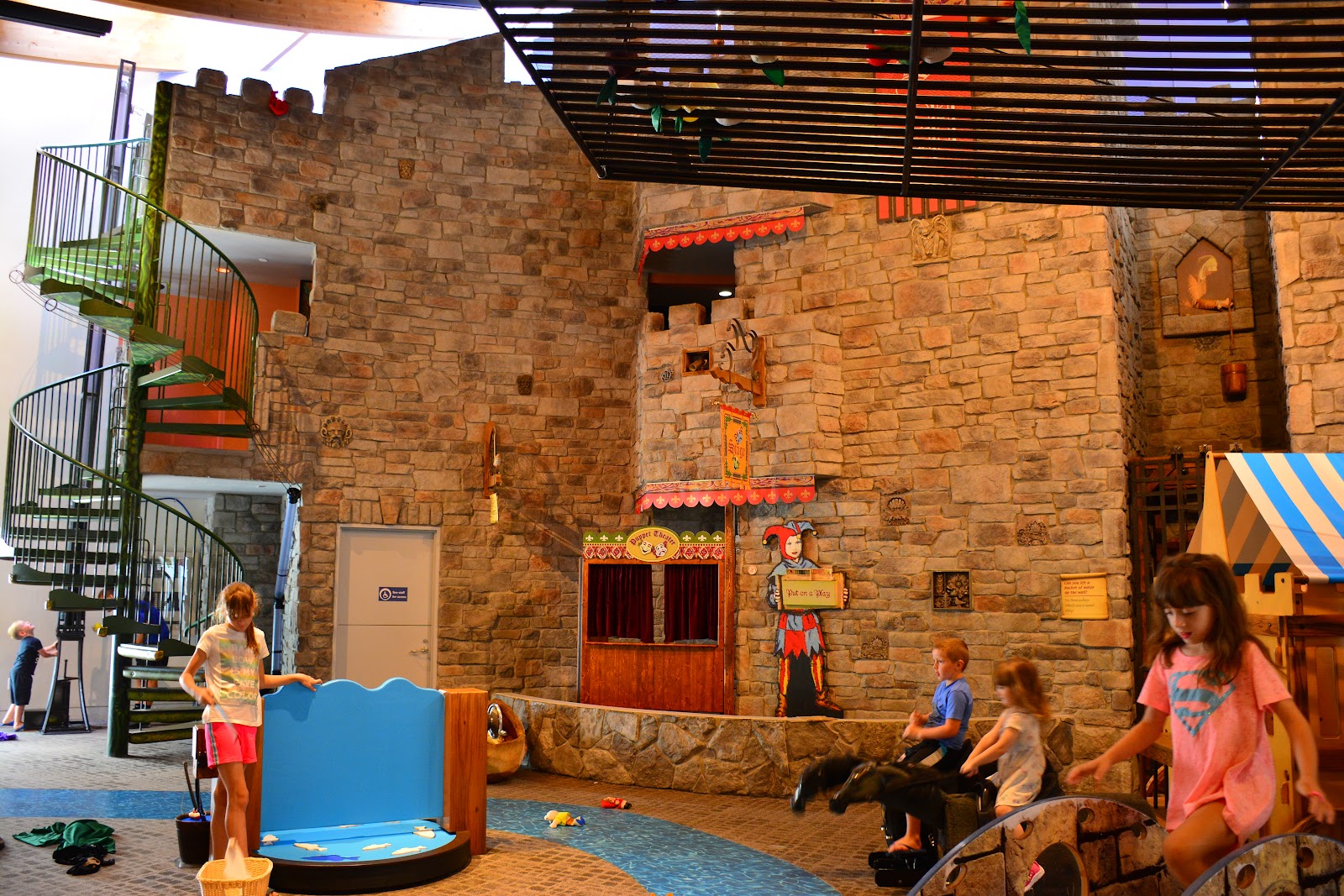
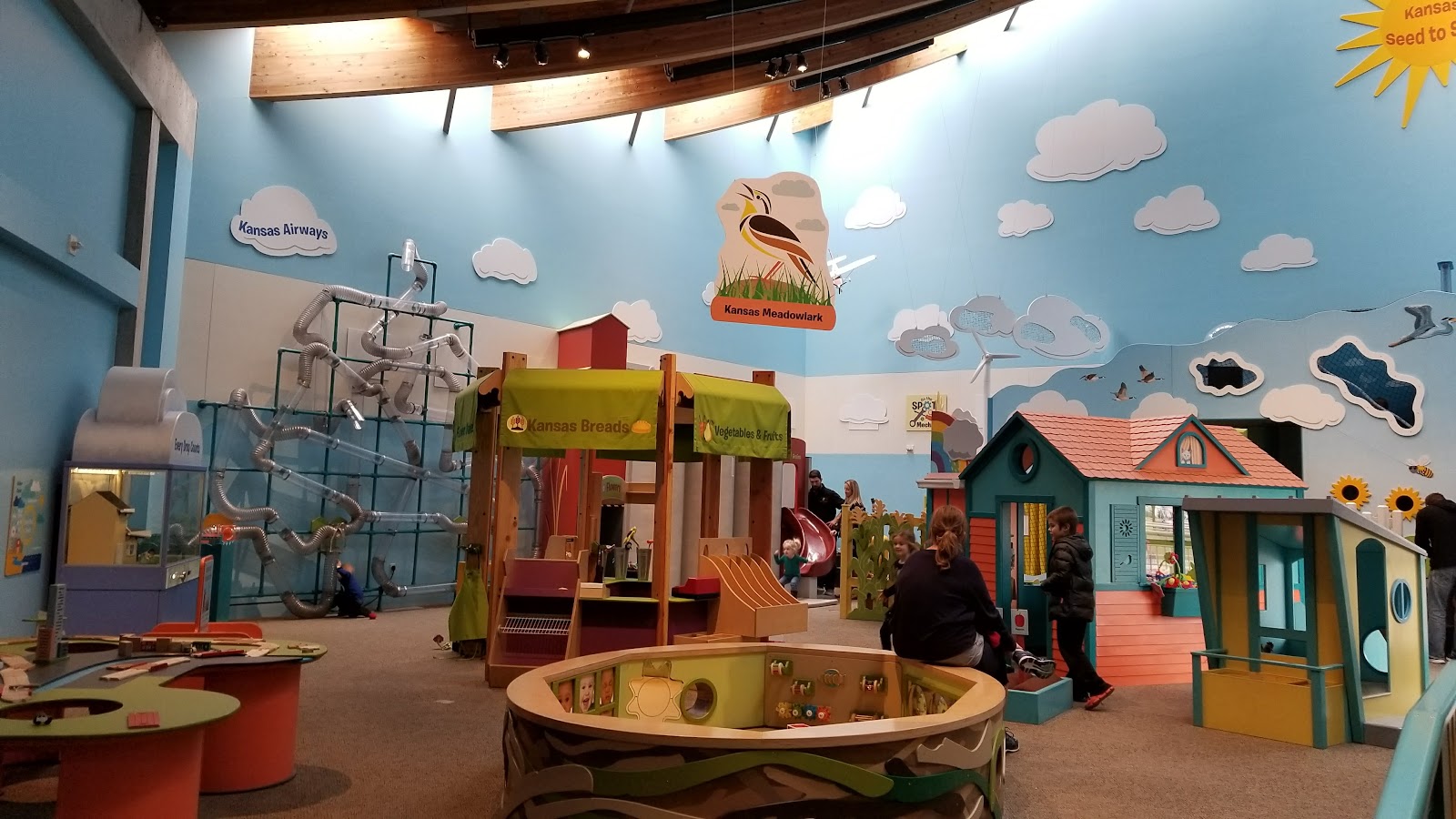
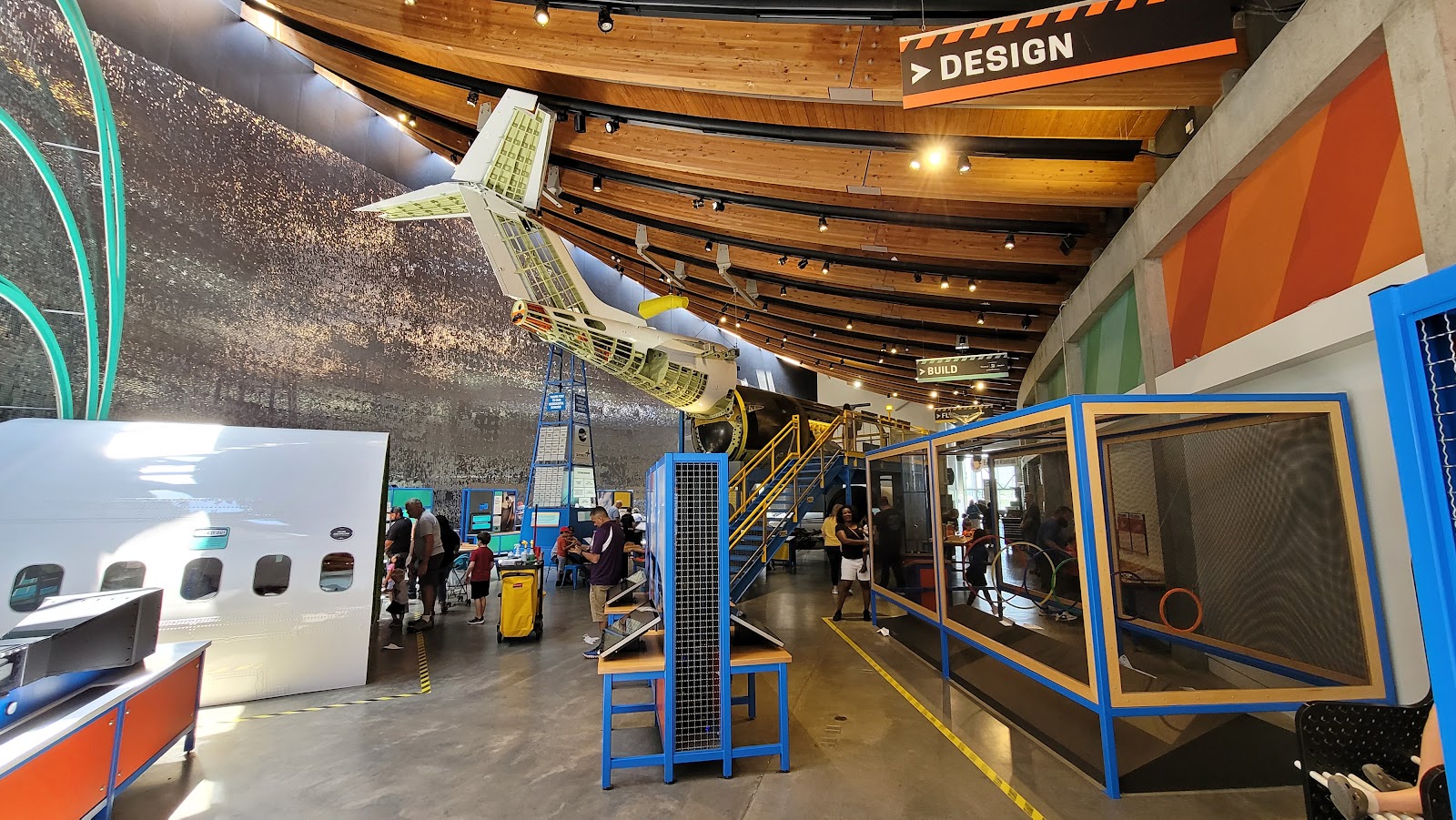
A science centre interior is the modern museum problem: large open volumes, interactive exhibits, and substantial light coming from screens and backlit panels. Screens are emissive and narrow-spectrum, which means skin lit by them renders oddly even at technically correct white balance, and because content plays, the colour and brightness change between consecutive frames.
The reliable answer is the one every screen-lit venue needs: bring a source, gel it gently warm, let it own every face, and set white balance to it. Skin then stays consistent whatever the displays are doing, and the screens become coloured background rather than a light source. It is worth asking whether display content can be paused on a static image — many installations can, and it removes the hardest part of the problem outright.
The volumes are the other issue. Large open halls mean nothing close enough to bounce off, so bounce flash returns little and the room cannot be lit — only the people in it. Expose for the couple with a controlled source and let the hall fall away, or go the other way and expose for the hall with the couple small, using scale as the subject.
Exhibits are assertive backgrounds with content, so the standard decision applies per frame: subordinate with a long lens at a wide aperture, or commit and place the couple deliberately within the composition. Half-in is the failure. And glazing on exhibit cases reflects, predictably, so shoot obliquely.
- Exterior: centre of the radius, or hard against the wall — never the middle
- Use the electronic level; a curve hides tilt while you shoot
- Shoot the exterior in raking light so the gradient shows the volume
- Gel a key warm and let it own faces; screens render skin badly
- Ask whether display content can be paused on a static image
The river, the grounds and the Kansas conditions
A riverside position gives water, an open aspect and a sight line towards the city, and all three are worth using. Water reflects light upward into faces, filling the shadows a high sun carves, and a still surface doubles the sky and the building — which on a curved elevation is a particularly good frame, because the reflection repeats the curve.
The caveat is the Kansas one. Wind is a constant rather than an occasional event in this state, and any real breeze scatters a reflection into unusable texture with no way to recover it. So the mirror frame is an early-morning proposition, before the ground heats and thermals develop, or it is not available at all. Wind also makes a veil a held-or-removed decision and an unweighted light stand a hazard.
Shoot along the river rather than across it. A river is a corridor, so a long lens down its length stacks bridges and banks into layers and gives real depth, whereas across it you have a strip of water with a bank behind.
The open grounds give a long low golden hour and no shade at midday. Plains planting is scattered rather than closed, so the trees give dapple — several stops across a face, moving with the breeze, correctable only by moving — which makes the building’s own shadow the reliable midday answer. And the sky dominates: a couple small against large cloud with a low horizon is the composition this landscape offers and a wooded venue cannot.
The sequencing is clean. Interiors through the middle of the day, when they are unaffected by sun and outside is harsh. The curved exterior and the river in the last ninety minutes, when raking light shows the form and the water is at its lowest and calmest. And a short block twenty minutes after sunset, because an open horizon fills the whole frame with colour rather than showing it in gaps.
More frames from Exploration Place
Exploration Place wedding photography: common questions
Why do curved buildings photograph awkwardly?
Because they offer neither of the two moves that work elsewhere — no flat elevation to square up to, and no single vanishing point, since the lines bend rather than converge. Habitual framing produces images that feel wrong without an obvious reason.
Where should the camera go?
Either at the centre of the curve’s radius, so the building wraps symmetrically around the frame, or hard against the wall shooting along it so the surface sweeps away as a bending leading line. The ambiguous middle distance is what fails.
What light suits a curved building?
Raking light. A curved wall lit from the side has a continuous gradient from lit to shadowed, and that gradient is what communicates volume. Flat frontal light erases it and the building reads as a shape rather than a form.
How do you handle screen-lit exhibit halls?
Bring a gently warm-gelled key, let it own every face, and set white balance to it — then skin stays consistent whatever the displays are playing. And ask whether content can be paused on a static image; many installations can.
Can you get a reflection in the river?
Only in calm air, which in Kansas means early morning before the ground heats. Any real breeze scatters the reflection into unusable texture with no way to recover it, and wind here is a constant rather than an occasional event.
How should the river be framed?
Along its length, not across. A river is a corridor, so a long lens down it stacks bridges and banks into layers and gives depth. Across it you have a strip of water with a bank behind — much less interesting.
More Kansas venue guides
We are writing a photographer’s guide to every venue we would happily shoot in Kansas. Here are three more, plus the full index:
- The Orpheum Theatre, Wichita: Photographing an Atmospheric Interior
- The Petroleum Club: Dark Panelling and a High Window
- Reflection Ridge Golf Club: Reading Water on a Course Through the Day
Planning a wedding at Exploration Place?
A curve needs two positions and raking light. Tell us your date and we will plan both.