 The Laniakea YWCA: A Building Organised Around Its Courtyard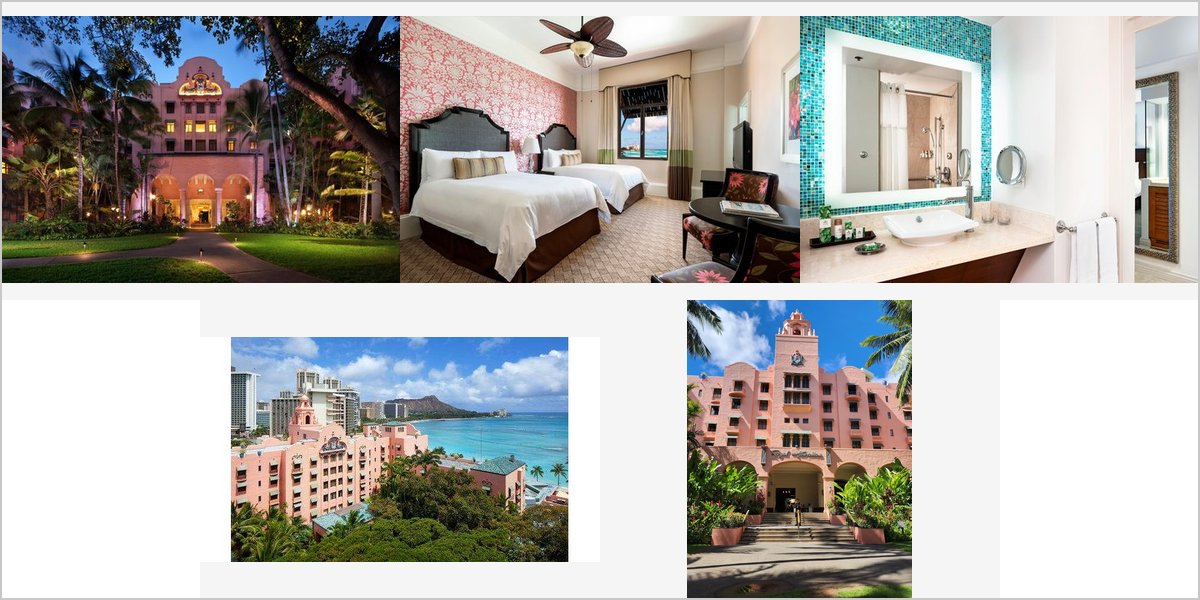
The Royal Hawaiian: Field Notes on a Pink Building by the Sea
A building painted pink is a giant pink reflector, and that is not a small detail. It is the first thing to plan for.
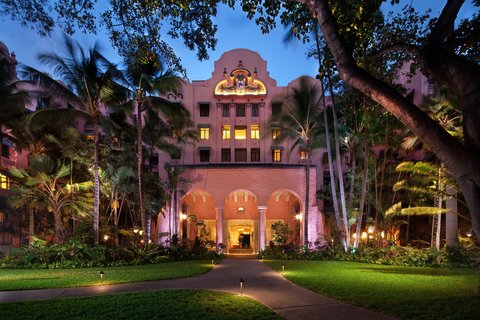
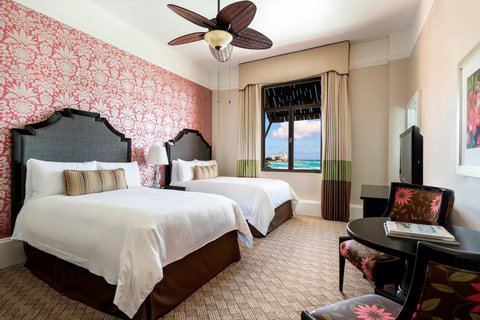
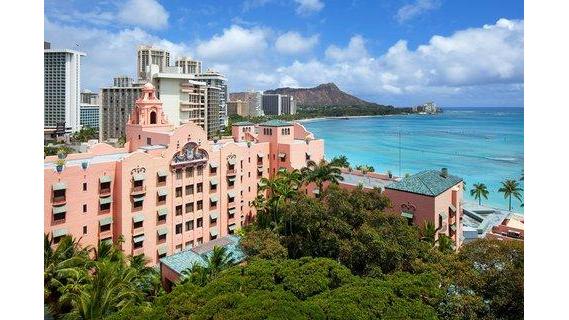
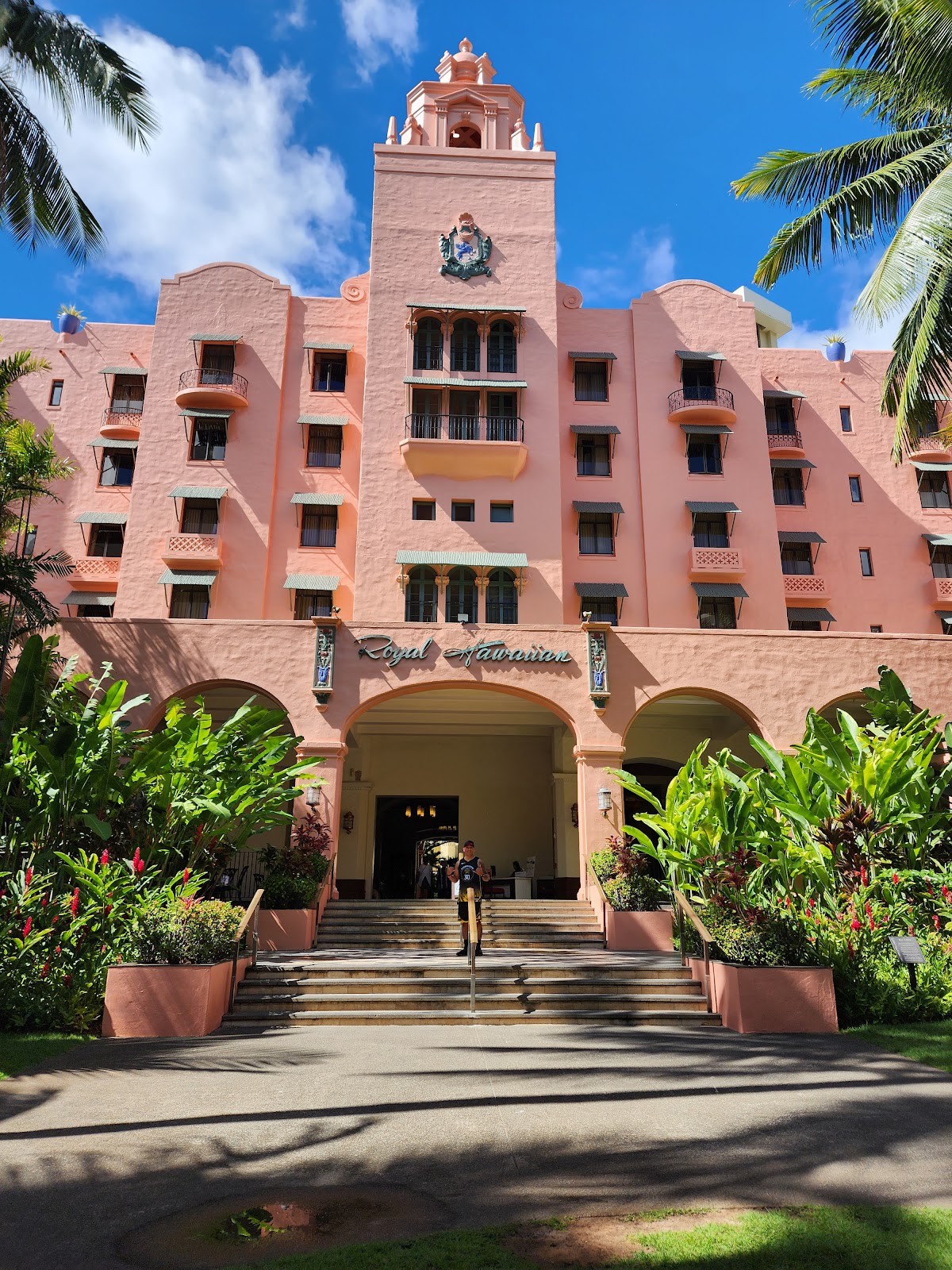
The Royal Hawaiian opened in 1927 on Waikiki Beach in Honolulu, a Spanish-Moorish building painted pink throughout, with ocean frontage, courtyards and Diamond Head visible along the coast to the east.
Almost every guide to this hotel mentions the colour as charm. For a photographer it is a technical condition, and the most important one on site. A large surface painted a saturated colour does not simply look pink — it reflects pink, and light bouncing off a pink wall arrives on skin carrying that cast. In a courtyard enclosed by pink walls, the fill comes from several directions at once and every face in the frame is being lit by it.
That is manageable and it can be an asset, but only if it is anticipated. These are field notes on three problems here — the colour, the beach light, and the crowd — and what to do about each. We have not photographed a wedding at the Royal Hawaiian; strongly coloured walls and tropical beach light behave the same wherever they occur. Which courtyards, lawns and rooms a wedding may use are questions for their events team.
The Royal Hawaiian at a glance
| Where | Waikiki Beach, Honolulu, Hawaii |
| Character | 1927 Spanish-Moorish hotel painted pink, with ocean frontage |
| Problem one | Pink walls throw a pink cast onto every nearby face |
| Problem two | Tropical beach light is harder and more reflective than it looks |
| Problem three | Waikiki is one of the busiest beaches in the world |
Problem one: the building is a coloured reflector
Saturated paint behaves like a gel on a very large light source. Sun striking a pink wall bounces back tinted, and the effect is strongest in exactly the places a wedding photographer wants to work: courtyards, loggias, shaded walkways, anywhere the wall is close and the sky is partly blocked. Skin in that fill reads warm-magenta, which is not unflattering but is definitely not neutral.
The wrong response is to correct it out. Neutralising a pink cast drags the whole frame towards green, so the building itself turns a dirty grey-beige and the thing everybody recognises about the hotel disappears. A gallery of this venue in which the walls are not pink is a gallery that failed at its one distinguishing feature.
The right response is to control where the cast lands. Put your own light on the faces — a modest source at face height, gelled warm rather than neutral so it belongs in the scene — and balance the camera to it. Skin then has a dependable base while the walls stay vividly pink in the background, which is the combination that looks intentional.
Where no added light is possible, position does the work. Move people out of the enclosed pink bounce and into open sky — a lawn, the beach edge, anywhere the dominant fill is the sky rather than the wall — and the cast drops away. The difference between a courtyard and a lawn two metres apart is substantial, and it is free.
Problem two: tropical beach light is harder than it looks
Waikiki sits at about twenty-one degrees north, which means the midday sun is far closer to directly overhead than most photographers are used to. Overhead light is the least flattering direction there is: it shadows the eye sockets, marks heavily under the nose and chin, and turns a hat brim into a black mask. In Hawaii that condition lasts longer either side of noon than it does at temperate latitudes.
It is compounded by reflectance. Pale sand and a bright sea throw a great deal of light back upward, so the overall level is very high and the contrast between a lit shoulder and a shaded face is extreme. The upward bounce does help fill the shadows the overhead sun creates — the two effects partly cancel — but the result is still a high-key, high-contrast condition that clips easily.
Three practical answers. Schedule the outdoor work into the first and last ninety minutes, when the sun is low enough to light faces from the side rather than the top. Use the building’s shade deliberately — a deep loggia or covered walkway with a bright beach in front of it is the best light on the property, giving a large soft key and a dark surround. Or bring real fill: competing with tropical sun needs strobe power rather than a speedlight, plus high-speed sync or a neutral density filter.
Two environmental cautions specific to a beach. Salt spray and fine sand are hard on equipment, and changing lenses on an open beach in any breeze is how sand gets inside a body — change under cover, and wipe down afterwards. And trade winds are usual rather than occasional, so a veil is a held-or-removed decision and an unweighted light stand is a liability.
- Let a warm-gelled key own the faces; let the walls stay pink
- Move to open sky to escape the courtyard’s colour cast
- Work the first and last ninety minutes for side-lit faces
- Use a deep loggia with the bright beach as the source in front
- Change lenses under cover; sand and salt spray are constant
Problem three: Waikiki is public, and Diamond Head is east
Waikiki is among the busiest beaches in the world, and the sand in front of the hotel is public. Every exterior frame taken there in daylight will contain other people, and no amount of waiting changes that in the middle of the day. The methods that work are the ones for any crowded public space: a long lens to compress strangers into unreadable background, tight framing, and the hours when the beach genuinely thins — which here means early morning above all.
Early morning has a second advantage that is specific to this coast and worth building a timeline around. Waikiki faces roughly south-west, and Diamond Head lies to the east along the shore. In the morning the crater is front-lit and the light comes across the beach at a low raking angle; by evening it is backlit and the sun is setting out over the water rather than behind the headland. Both are usable, but they are different photographs and knowing which you are getting matters.
The evening frame is the one most couples picture: sun going down over the Pacific, warm sky, silhouettes or lit couple against colour. It works, and it needs a light for the same reason every sunset frame does — expose for the sky and the couple are a silhouette, which is sometimes the better image and sometimes not. Decide which version you are making before the light arrives, because that window is short.
For the building itself, low raking light is what reveals the Spanish-Moorish detail: arches, plasterwork and the relief on the elevations all need directional light to read, and flat midday sun erases them into a plain pink field. So the hotel and the faces want the same hours, which simplifies the plan considerably.
One last note on interiors. A 1927 hotel of this class has period public rooms with warm fixtures, which makes the evening a straightforward mixed-source problem: bring a key, gel it warm, let it own the faces, and let the house lighting be atmosphere. And because the interiors are unaffected by weather and time, they are the right thing to move when the running order slips — everything outside here is tied to the sun.
What works in your favour
- A genuinely distinctive building that no other venue resembles
- Deep loggias giving soft shade against a very bright beach
- Waikiki sunsets over open water, with a clear western horizon
- Diamond Head front-lit in the morning along the shore
- Period interiors that are entirely weather and time independent
What to plan around
- Pink walls throw a strong colour cast on every nearby face
- Correcting that cast turns the building grey and loses the point
- Near-overhead midday sun for long stretches at this latitude
- Sand and sea reflect strongly, pushing contrast and clipping
- One of the busiest public beaches in the world, in every frame
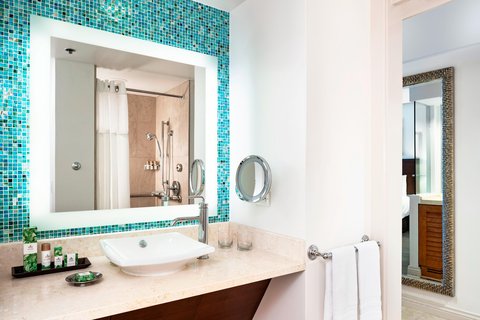
More frames from The Royal Hawaiian
The Royal Hawaiian wedding photography: common questions
Does the pink building really affect the photographs?
Yes, materially. Saturated paint acts like a gel on a very large source, so light bouncing off a pink wall arrives on skin tinted warm-magenta. In an enclosed courtyard it comes from several directions at once and lands on every face in the frame.
Should the pink cast be corrected?
Not out of the whole frame. Neutralising it drags everything towards green and the building turns grey-beige, losing the one thing everybody recognises. Instead put a warm-gelled key on the faces and balance to that, so skin is right and the walls stay vivid.
Why is midday harder in Hawaii?
Because at about twenty-one degrees north the sun is far closer to directly overhead, and it stays that way for longer either side of noon than at temperate latitudes. Overhead light shadows eye sockets and turns a hat brim into a black mask.
Where is the best light on the property?
A deep loggia or covered walkway with the bright beach in front of it. That gives a large soft key from the open sand and sea with a dark surround behind — available through the middle of the day when nothing outside is workable.
When should the beach be photographed?
Early morning, for two reasons. It is the only time the sand genuinely thins, and Diamond Head to the east is front-lit then. By evening the crater is backlit and the sun sets out over the water instead — a different photograph.
What does the equipment need?
Protection. Salt spray and fine sand are constant, so change lenses under cover rather than on open sand, and wipe everything down afterwards. Trade winds are usual too, so weight any stand and treat the veil as a held-or-removed decision.
More Honolulu, HI venue guides
We are writing a photographer’s guide to every venue we would happily shoot in Honolulu, HI. Here are three more, plus the full index:
- The Bishop Museum: Photographing Basalt, Koa and a Great Hall
- Foster Botanical Garden: Four Ways Out of the Tall-Canopy Problem
- The Halekulani: Photographing a Deliberately White Hotel
All Honolulu, HI Wedding Venues →
Planning a wedding at The Royal Hawaiian?
A pink building decides your white balance before you arrive. Tell us your date and we will plan the hours and the gels.