 The Laniakea YWCA: A Building Organised Around Its Courtyard
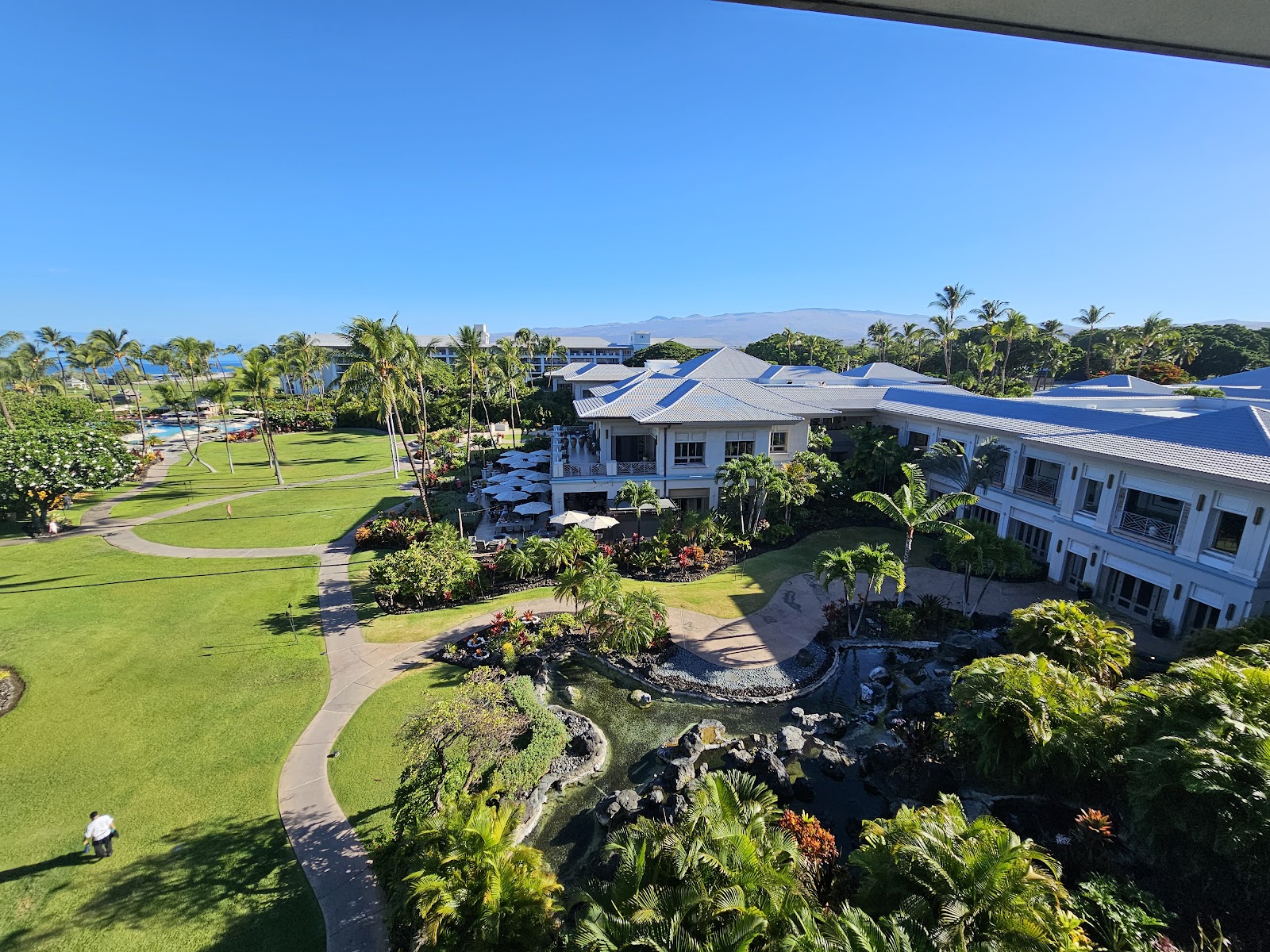
The Fairmont Orchid, Kohala Coast: Field Notes, Problem and Solution
The driest coast here, on the youngest rock. Both facts have consequences.
These are field notes rather than a description, organised as problems and what solves them, because the Kohala Coast is a specific set of conditions rather than a general kind of place.
The setting first. This is the leeward north-west shore of Hawai’i Island, in the rain shadow of two mountains that rise above thirteen thousand feet. The rain shadow is extreme rather than moderate: parts of this coast receive less annual rainfall than many deserts, while the windward side of the same island receives among the most in the United States.
The ground is young black basalt — this is the newest land in the archipelago — with pockets of white coral sand between the flows and sparse dry vegetation behind. And because a young island has had no time to build a broad shelf, deep water starts very close to shore.
That produces four problems worth naming, and each has an answer.
The tonal range is the first. Black lava absorbs almost everything striking it and returns nothing; white coral sand returns a great deal; deep blue water sits between them. Those three in one frame present a range no single exposure holds comfortably, and a subject standing on lava gets no fill from below at all — the reverse of a beach.
The sun is the second. At about twenty degrees north the June noon sun reaches nearly eighty-nine degrees and passes exactly through the zenith twice a year, in late May and mid-July, when a vertical object casts essentially no shadow. On a dry coast with few clouds it arrives undiffused.
The vog is the third and it is specific to this island. Volcanic emissions from the island’s active vents are carried by the trades around to the leeward side, where they accumulate as a sulphate haze — which softens distance, warms and reddens the light, and is a genuine air-quality consideration as well as a photographic one.
And the rock is the fourth: rough clinker lava is abrasive enough to cut, which makes much of the shoreline a place nobody in wedding clothes should walk.
Days run only from about eleven hours to thirteen and a quarter, and civil twilight is around twenty-one minutes — the shortest in this guide.
We have not photographed a wedding at this resort. Which spaces and grounds are included, what shoreline and cove access allows, what covered alternatives exist and what the permitted hours are, are questions for their team.
The Fairmont Orchid at a glance
| Where | A resort on the dry leeward Kohala Coast of Hawai’i Island |
| The rain shadow | Extreme: parts of this coast are drier than many deserts |
| The problems | An unholdable tonal range, an undiffused vertical sun, vog, and abrasive rock |
| The asset | A sheltered cove, black lava as a background, and a reliable leeward sunset |
| Ask first | Included spaces, shoreline and cove access, covered alternatives, hours |
Four problems and what solves them
Problem one: the tonal range. Black lava, white sand and deep blue water in one frame is beyond a single exposure, and metering on the lava is the specific error — it renders the rock as mid-grey and blows everything else.
The solution is compositional rather than technical: compose with two tones and a subject rather than four. Black rock and blue water is a clean high-contrast frame. White sand and blue water is a bright one. Black rock and white sand is graphic. All three plus a sky and a subject is a frame in which nothing is right.
And expose for the brighter element, letting the lava go fully black — which is correct, because black lava reading as black is what it looks like. The instinct to open up and recover shadow detail in volcanic rock produces a grey, flat, wrong-looking surface.
The lava’s other property is the one worth exploiting. A large field of near-black rock behind a subject is the best dark background available on any Hawaiian shore: genuinely near-black, textured, entirely unsaturated, and a white dress against it separates completely with nothing added. On a coast where everything else is bright, that is disproportionately valuable.
The cost is that lava returns no fill, which means a subject standing on rock under a high sun has shadowed eyes with nothing to lift them. That is the one place a source is genuinely necessary rather than merely useful.
Problem two: the undiffused vertical sun. At nearly eighty-nine degrees at the solstice, and exactly overhead twice a year, the midday sun here is the hardest in these guides — and a dry coast has few clouds to soften it.
The answers are architectural and botanical and there is no third. Depth back from any covered edge — a lanai, a colonnade, a porte-cochère, a doorway — is the whole lighting control: at the edge flat and frontal, two or three metres back dramatic with the sunlit ground beyond four or five stops down. That is the best unassisted portrait on the property at any hour.
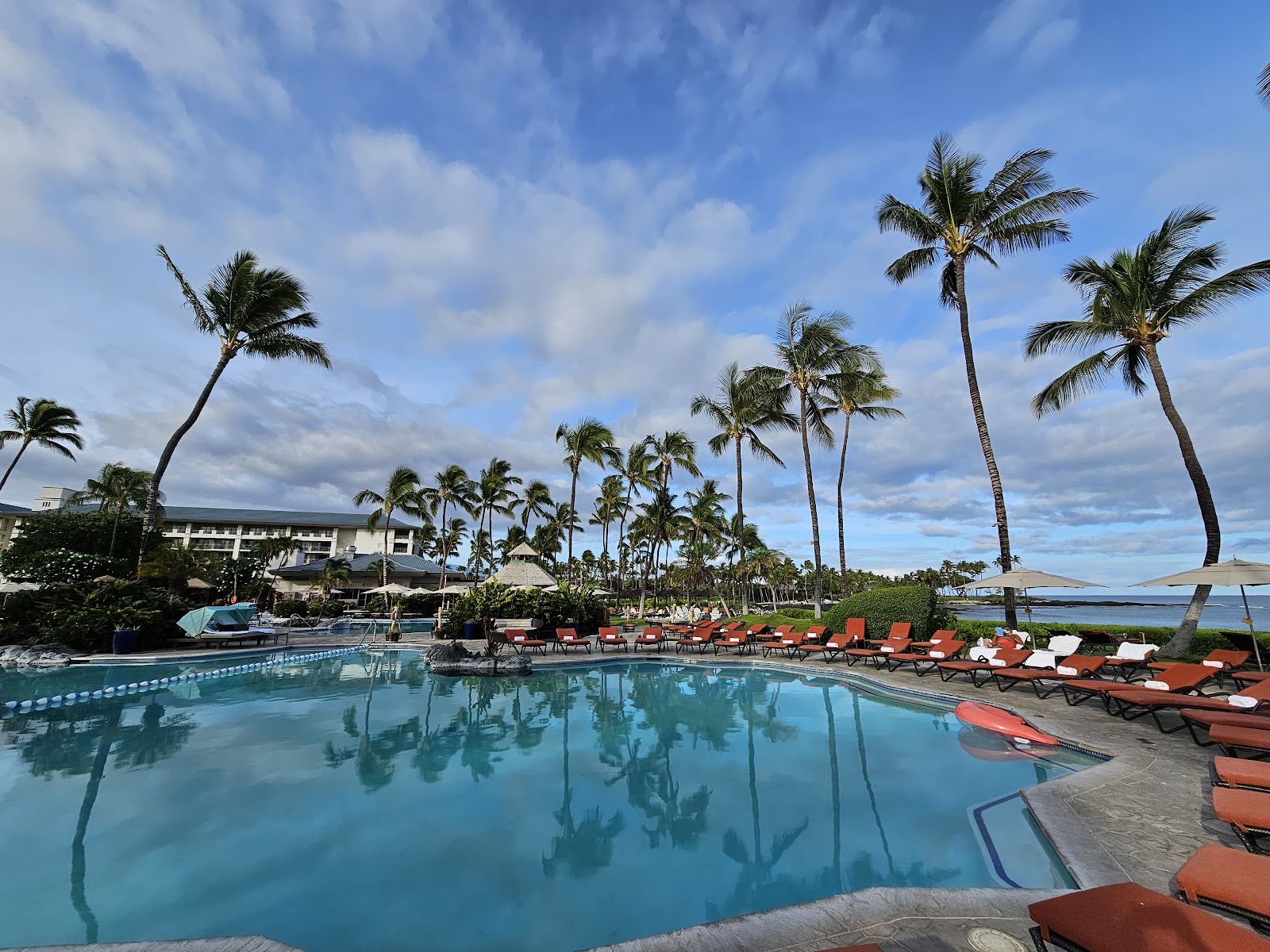
The botany is limited on a dry coast and the species distinction matters more for that reason. Broadleaf canopy — monkeypod where it is planted and irrigated, plus the resort’s own mature plantings — blocks almost all light and gives soft reliable cover. Palms do the opposite: a frond is a row of stiff parallel blades and with the sun near vertical its shadow falls straight down a face as hard stripes.
Kiawe is the native dry-country tree here and it comes with a warning: it gives thin mottled shade rather than proper cover, and it drops long sharp thorns into the ground litter — a genuine hazard to feet and to fabric, and a reason to keep a party on cleared ground.
Problem three: the vog. There is no fix, only a redistribution, and knowing which frames it removes is the useful part.
Vog softens distance, which means the long views along the coast and out toward the other islands lose definition — and on a clear day those are among the coast’s best wide frames. It warms and reddens the light, particularly at sunset, which makes an already warm low sun warmer still: that is an asset if it was expected and a colour problem if it was not, and a custom white balance on a face is the answer rather than a preset.
And it produces a haze that no contrast adjustment restores. The response is to weight a voggy day toward the close frames, the lava at short range, the cove and the interiors — all of which are unaffected.
Problem four: the rock. Rough clinker lava is abrasive enough to cut skin and tear fabric, and even smooth flows have sharp edges and unexpected voids. Nobody in formal shoes and long fabric goes onto the rough rock.
The solution is to establish the accessible ground in advance: the built surfaces, the smooth flows, the sand pockets and the cove. And the photographer can go where the party cannot, which means a long lens from the rough rock with the subjects on safe ground gives most of the effect with none of the risk.
Further notes from the field
On the cove, which is this coast’s particular asset and worth naming as the reason to choose it over an open lava shore.
A sheltered cove between lava headlands is calm when the open coast is not, which means two things: reflections are possible on the water, which on an exposed Hawaiian shore they generally are not; and it is safe to stand at the water’s edge, which on a lava coast is otherwise questionable.
The reflection rule applies: compose so the reflection is of the dark lava headland rather than of the bright sky, and the two sit within a stop of each other and need nothing at all. A cove reflecting black rock is a frame this coast offers and an open shore does not.
On the anchialine pools, if the property has them, and many Kohala Coast resorts do. These are brackish pools in lava depressions, fed by groundwater mixing with seawater, and they are still, reflective and dark — which makes them the best small water features on any Hawaiian coast for a portrait. They are also ecologically sensitive, which means access is a question for the resort rather than a judgement.
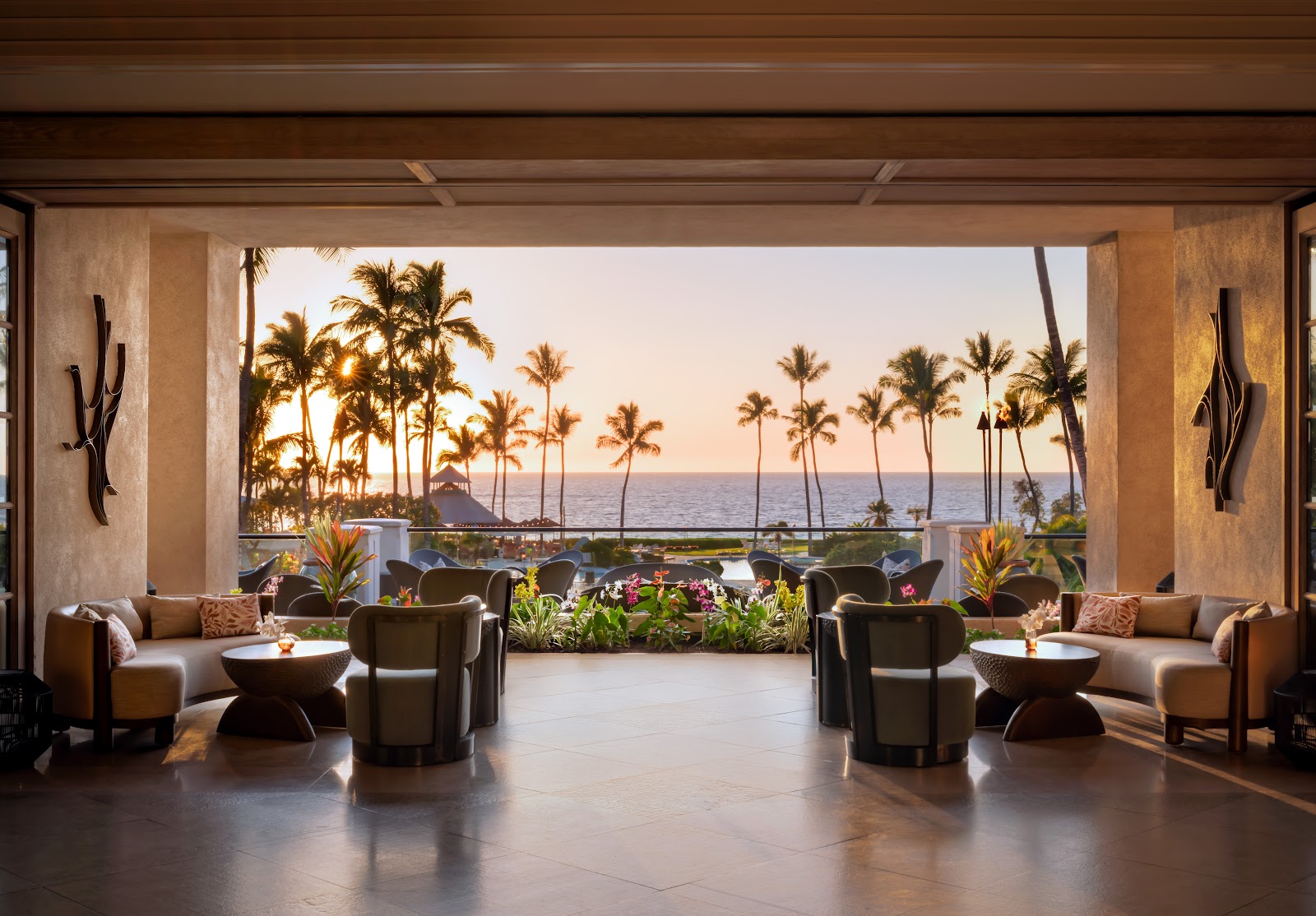
On the leeward sunset, which is the coast’s most reliable frame. A west-facing shore in a deep rain shadow gets the sun going down into the ocean on most evenings — and the three backlight answers apply: a close warm-gelled source at a stop over the ambient with the exposure set for the sky and water; a silhouette exposed for the sky alone, which works unusually well because black lava gives a hard base and a clean graphic shape; or turning around and using the low sun frontally with the lava behind, which is the frame that cannot fail and is stronger here than on a sand coast.
The gel is not optional, and on a voggy evening it matters twice: the sun is extremely warm and the vog makes it warmer, so a daylight-balanced flash puts distinctly cool faces into a red landscape.
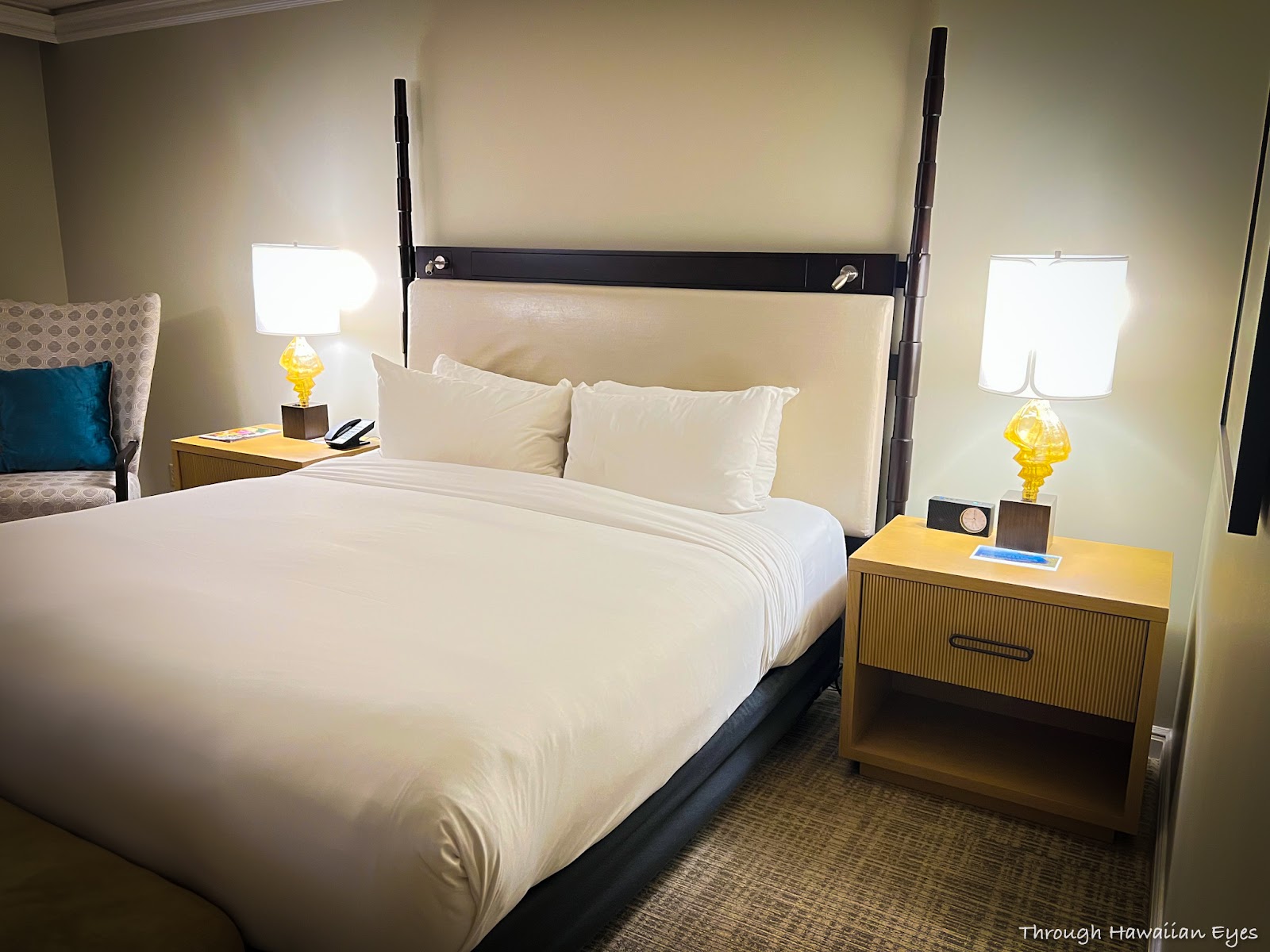
On the interiors. A large modern resort means pale surfaces, high ceilings and generous glazing, which means separation rather than light is the problem: find something dark, use the glazing at forty-five degrees so the opposite side of the face falls off, or add a source a stop over ambient.
The glazing here is unusually good because the light coming through it has bounced off pale coral sand and bright water rather than off vegetation — brighter, cleaner and more neutral than any inland window, and noticeably cool, so the white balance goes on a face.
On the mountains, which are the coast’s under-used background. Two peaks above thirteen thousand feet stand behind this shore, and on a clear day they are visible from it — snow-capped in winter. A telephoto frame with a subject on black lava and a snow-capped volcano behind is one of the more improbable photographs available anywhere, and it depends entirely on the vog not being present.
On the petroglyph fields, which occur along this coast. They are carvings in smooth lava, ancient and protected, and they are a significant cultural site rather than a backdrop — which makes access and conduct a question for the resort and for cultural guidance rather than a photographic decision.
And two practical matters. Salt aerosol on an exposed lava coast settles on front elements within minutes rather than hours. And the trades arrive here around the island’s flanks rather than head-on, which makes the wind moderate by Hawaiian standards but persistent — a lightstand is still a liability.
- Two tones and a subject, not four — and let the lava go fully black
- Lava is the best dark background here and it returns no fill from below
- Depth back from any covered edge is the whole midday answer
- Vog removes the long views and reddens the sunset; weight the day to close frames
- Nobody in wedding clothes walks on rough lava
The Kohala year
Hawai’i has two seasons rather than four and on the driest coast in these guides the difference is small — which is the whole appeal.
This is one of the most weather-reliable venues in these guides. The rain shadow is deep enough that a plan made for this coast usually happens, in any month, which on the windward side of the same island it would not.
The drier season runs roughly May to September. The trades are steadiest, the rain shadow is at its most effective, and the sunset over water is available on most evenings.
The costs are the sun and the vog, and both peak here. The near-vertical noon sun is at its worst, and the two dates when it passes exactly overhead fall in late May and mid-July — with no cloud to diffuse it, which makes the middle of those days the hardest light of the year anywhere in these guides.
And vog is more persistent in the drier months, because steady trades carry emissions consistently around to this side. In a voggy summer the long coastal views and the mountain frames are simply not available, and the sunsets are red rather than gold.
The wetter season runs roughly November to March and on this coast it is not very wet. What changes is that the trades are interrupted more often by Kona weather — a reversal from the south-west, which is the one condition that brings real rain here — and that cloud is generally more frequent.
For photographs the wetter season is better in four substantial ways. The December noon sun at about forty-eight degrees is the lowest of the year, which means the middle of the day is workable rather than hostile. Cloud is more frequent, which softens the extreme contrast that black lava and white sand produce. Vog is less persistent, which means the mountain frames and the long views are clear more often.
And it is whale season: humpbacks are in Hawaiian waters from roughly December to April and this coast is one of the places they are visible from shore — which means a frame looking out over deep water in those months can contain something no other venue in these guides offers, and the water here is deep enough close in that they come near.
Winter also brings snow to the island’s high summits, which from this coast is directly visible on a clear day — and a snow-capped volcano above a black lava shore is the coast’s most improbable frame and its most distinctive.
There is no autumn colour here and no dormant season: the native vegetation is dry-country scrub and the resort’s planting is irrigated tropical, both of which hold their leaves year-round. Nothing in an image made here says what month it is except the angle of the light, the clarity of the air, and whether there is snow above or whales below.
What does change is flowering, and at a heavily irrigated resort on a dry coast that is entirely a question of what has been planted rather than of season — worth asking the grounds staff rather than assuming.
Central Pacific hurricane season runs from June to the end of November, though direct strikes on the islands are rare. And a closing note specific to this island: volcanic activity changes the vog. When the vents are quiet the air is exceptionally clear and this coast has the best long views in the islands; when they are active it can be hazy for weeks. That is worth checking close to a date rather than assuming either way.
More frames from The Fairmont Orchid
The Fairmont Orchid wedding photography: common questions
What is the hardest technical problem here?
The tonal range. Black lava, white sand and deep blue water in one frame is beyond a single exposure, and metering on the lava is the specific error.
So how do I expose it?
Compose with two tones and a subject rather than four, and expose for the brighter element — black lava reading as black is correct.
What is vog and what does it do?
Volcanic haze carried around to the leeward side. It softens distance, removes the long views and the mountain frames, and reddens the sunset.
Where is the shade?
Depth back from any covered edge, and under irrigated broadleaf planting. Palms are background only, and kiawe gives thin shade and drops sharp thorns.
What does the cove give me?
Calm water, which means reflections are possible and the water’s edge is safe — neither of which is true on an open lava shore.
When is the coast at its best?
The winter months: a lower sun, more cloud to soften the contrast, less vog so the mountains read, whales in the water, and snow on the summits.
More Hawaii venue guides
We are writing a photographer’s guide to every venue we would happily shoot in Hawaii. Here are three more, plus the full index:
- Four Seasons Resort Hualalai, Kailua-Kona: What It Suits and What It Does Not
- Grand Hyatt Kaua’i, Koloa: What It Suits and What It Does Not
- Grand Wailea, Wailea: How the Light Moves on a Leeward Resort
Planning a wedding at The Fairmont Orchid?
Black rock, white sand and clear winter air. Tell us your date.