 The Hoxton Chicago: Photographing a Wedding in Fulton Market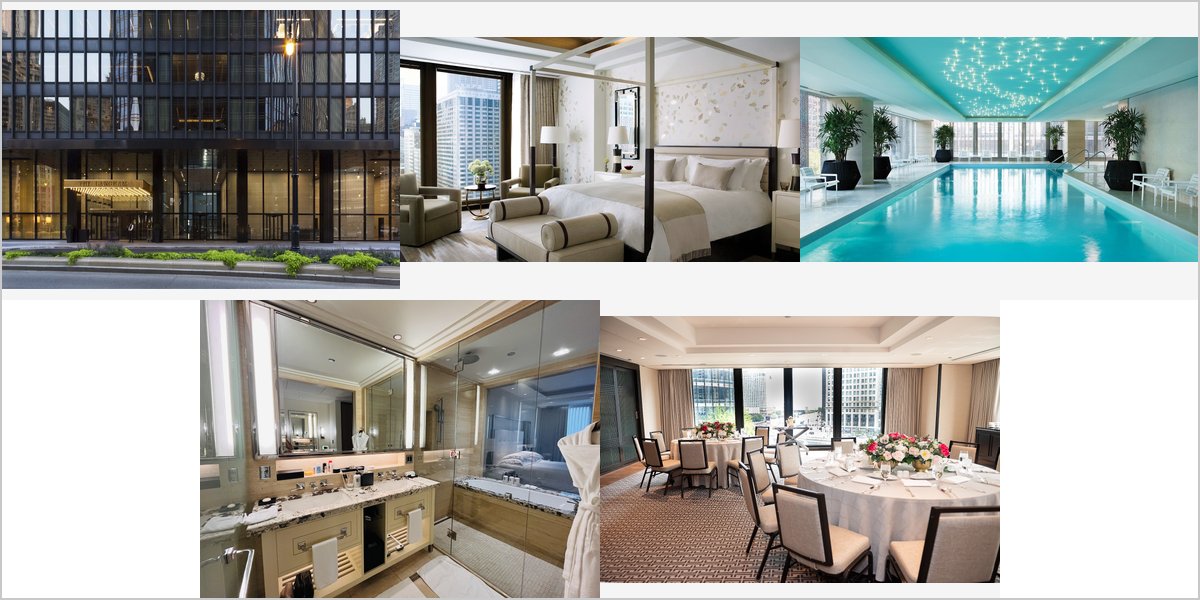
August 29, 2026
The Langham Chicago: Photographing Inside a Modernist Building
A modernist building gives you lines and light and no ornament. That single fact decides how every frame gets made.
The Langham Chicago occupies the lower floors of a Mies van der Rohe tower on the north bank of the Chicago River, a black steel-and-glass building of the early 1970s, with interiors in a restrained modern register and a riverside terrace.
There is one decision that governs photography in a building like this, and it is not about light: it is whether you work with the architecture’s logic or against it. Modernist buildings are built on repetition, proportion and line, with ornament deliberately absent. A period hotel gives you plasterwork, pattern and gilding that make a frame interesting on their own. A modernist building gives you none of that and offers geometry instead — and geometry only works if the camera respects it.
Photographers who bring period-hotel habits here produce flat, empty frames and conclude the venue is cold. Photographers who compose to the grid produce some of the strongest architectural wedding images available in the city. This piece is about that difference. We have not photographed a wedding at the Langham; steel-and-glass modernism and riverfront light behave the same anywhere. Which rooms are allocated, and what the terrace and river access allow, are questions for their events team.
The Langham Chicago at a glance
| Where | North bank of the Chicago River, Chicago, Illinois |
| Character | A Mies van der Rohe steel-and-glass tower with restrained interiors |
| The decision | Compose to the building’s grid, or fight it and get empty frames |
| The light | Large glazing means bright, directional, and a hard midday problem |
| Ask first | Terrace and riverside access, and which way the rooms face |
Why modernist interiors punish period habits
In a Victorian or Beaux-Arts hotel, almost any reasonably composed frame contains something interesting — a moulding, a pattern, a piece of gilding. The building supplies visual incident for free, which is why period venues are forgiving. A modernist interior removes all of it deliberately, so a frame composed the same way contains two people and a large area of plain surface. That reads as empty, and photographers blame the venue rather than the framing.
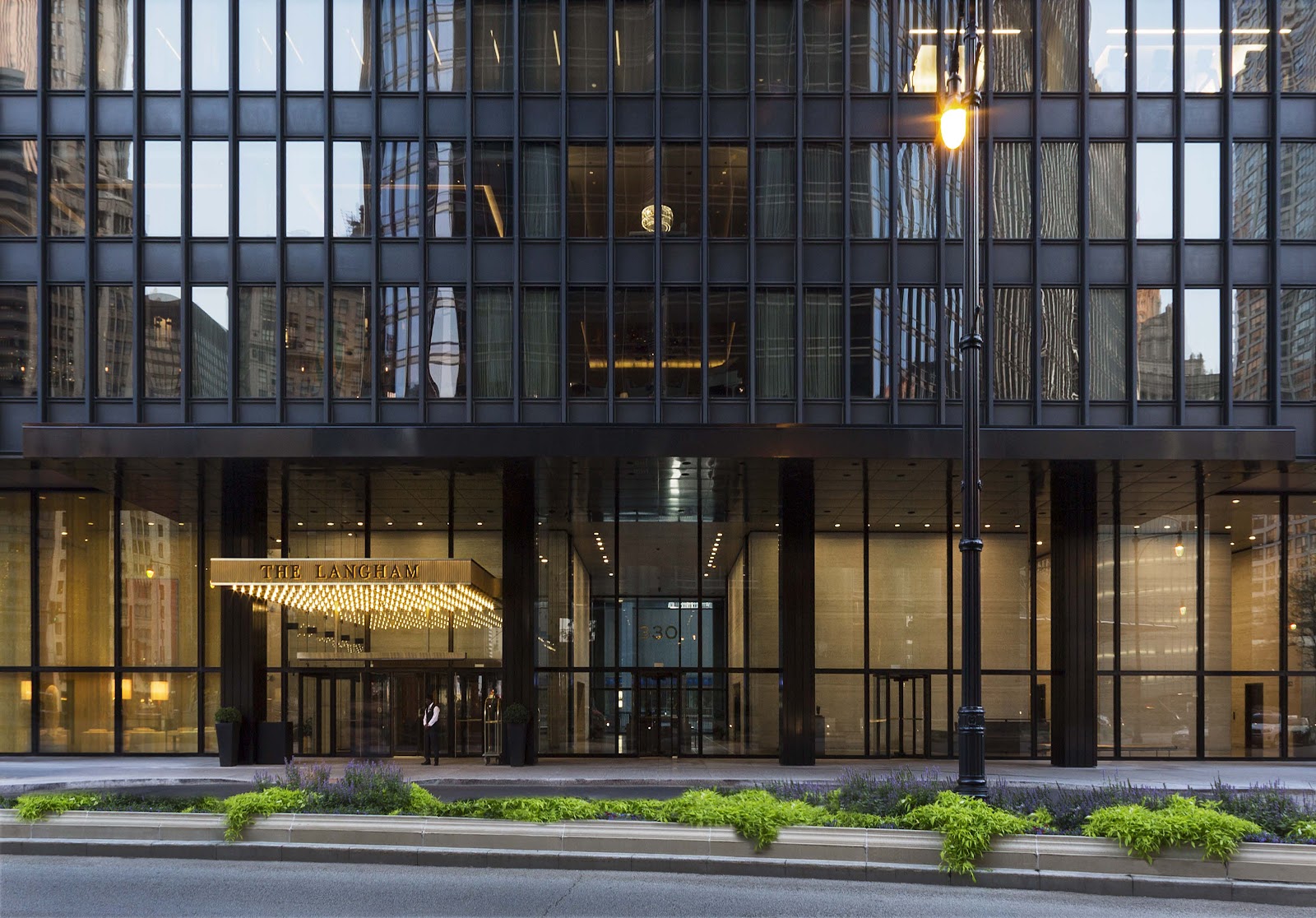
What the building supplies instead is structure: vertical mullions at regular intervals, horizontal floor and ceiling lines, repeated bays, and rectangles inside rectangles. Those are compositional tools, but only when used precisely. A frame where a mullion sits just off vertical, or where a strong horizontal cuts through someone’s head, looks like a mistake in a way it never would in a cluttered period room, because there is nothing else in the frame to distract from the error.
So the rule is: be exact. Level the camera properly, place people deliberately in relation to a line rather than near one, and either centre the frame on an axis or offset it clearly — the ambiguous near-symmetry that passes unnoticed in a busy room is glaring here.
The reward is that when it is right, it is very right. A couple placed precisely within a bay of a Mies façade, with the grid receding behind them, is a frame with an architectural authority that no amount of plasterwork can produce. It also dates well, because geometry does not go in and out of fashion the way styling does.
Large glazing: the best light and the worst light
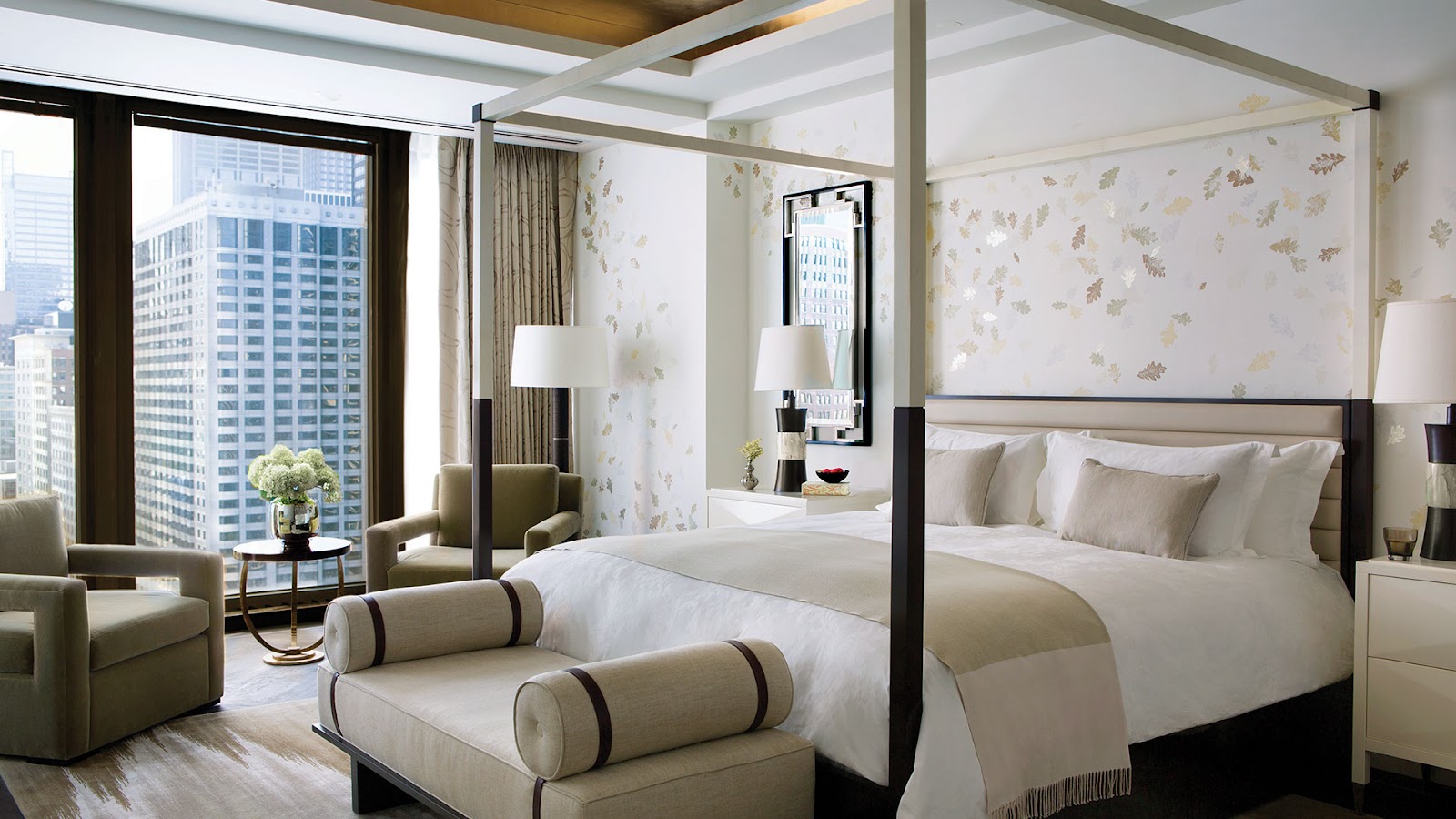
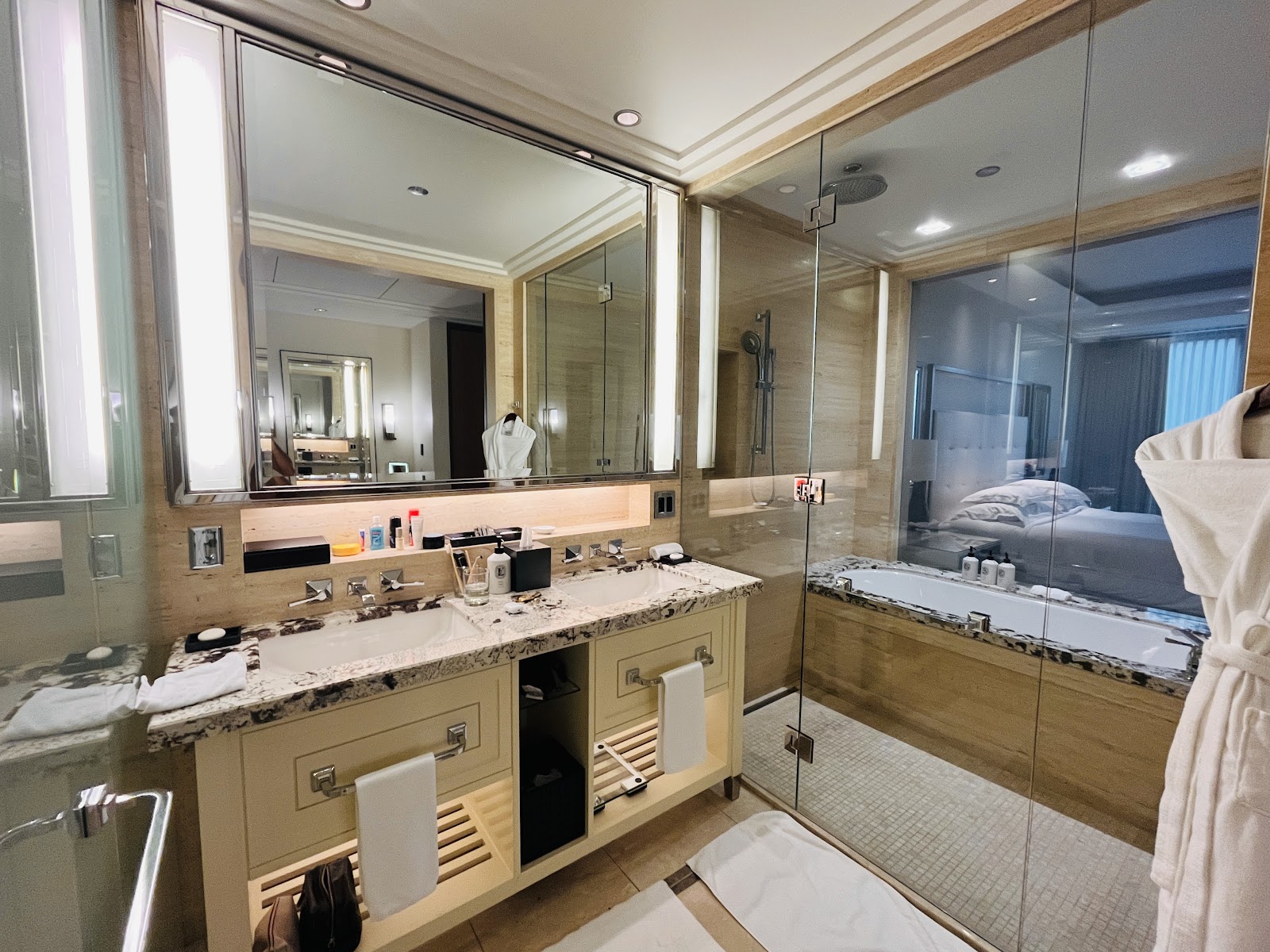
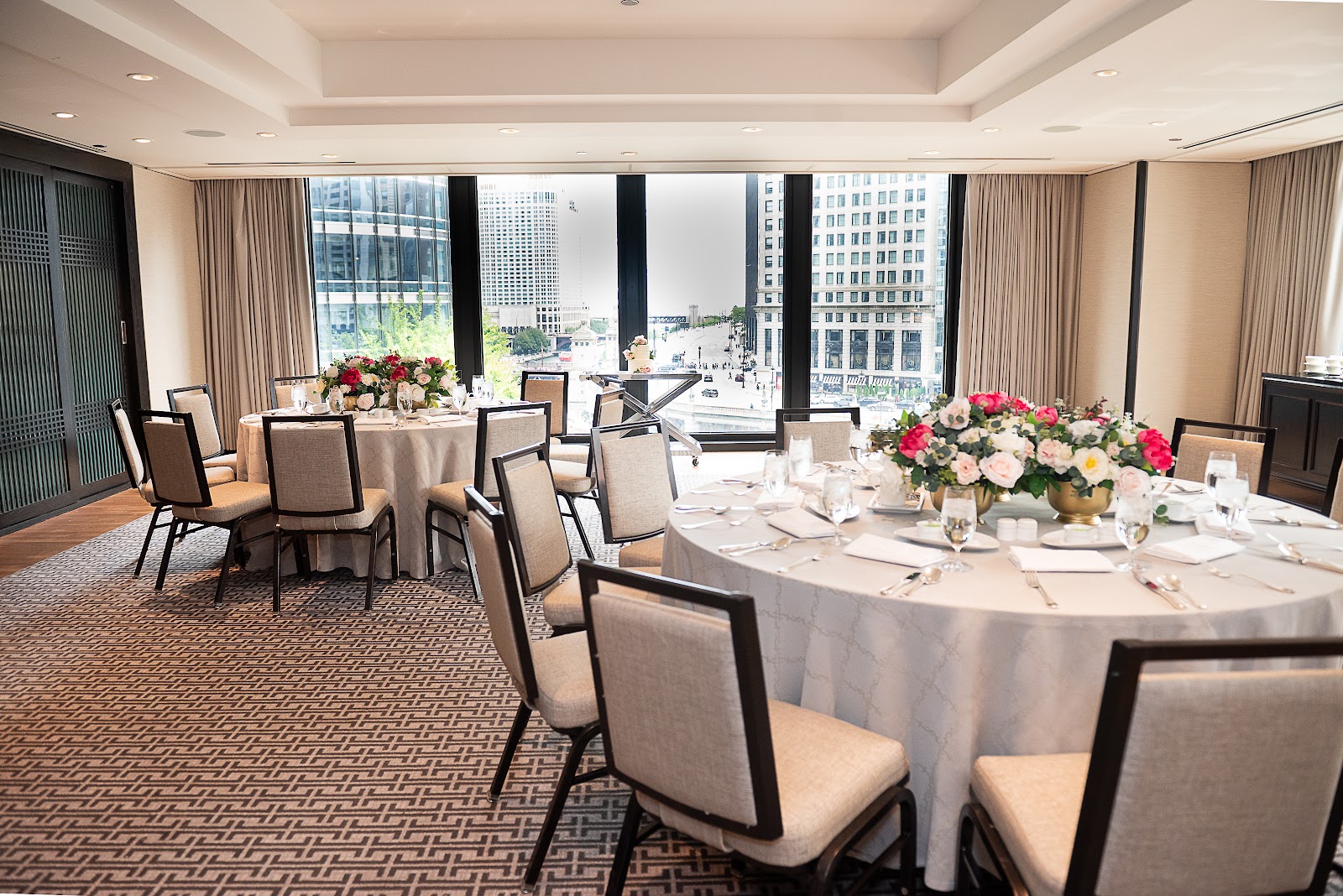
Steel-and-glass buildings have far more window area than period ones, and that cuts both ways. On an overcast day or on the shaded side, a floor-to-ceiling window is an enormous soft source — the single best portrait light in the building, and better than most studio setups. Place a couple a metre back from the glass, turn them into it, and you have a huge, soft, directional key with a natural fall-off. Nothing needs to be brought.
On the sunlit side at midday, the same glazing is the problem. Direct sun through a large window produces a hard bright patch and extreme contrast, plus mullion shadows striping across faces and fabric. Striping is the specific hazard of a gridded façade and it cannot be fixed afterwards. The answers are to move to the other side of the building, to wait for the sun to pass, or to work in the shadow between bays rather than in the lit ones.
The reflective half matters too. Large glass after dark becomes a mirror, showing your lights, your crew and the room behind you. In a building with this much glazing there is more mirror than usual, so an evening check on reflections is not optional. Used deliberately — a couple and their reflection in a dark window with the river beyond — it is one of the venue’s better frames.
And because the building sits on the river with a low floor plate, the water does real work: it bounces light upward into the rooms on that side in a way an inland building never gets, which softens faces from below and is most noticeable in the middle of a bright day.
What works in your favour
- Floor-to-ceiling glazing gives the best soft portrait light in the building
- A Mies grid provides architectural authority when composed precisely
- The river bounces light upward into the riverside rooms
- Restrained interiors mean nothing competes with the subject
- Geometry dates better than styling, so the frames age well
What to plan around
- Plain surfaces read as empty if the framing is not exact
- Mullion shadows stripe faces and fabric on the sunlit side at midday
- Small compositional errors are glaring with nothing to hide behind
- Extensive glazing becomes extensive mirror after dark
- Nothing in the decor supplies character; the photographer must
The river, the terrace and the shape of the day
The riverside position is the venue’s other asset, and it works differently from a lakefront one. A river in a city is an enclosed corridor with buildings on both banks and bridges crossing at intervals, which means it is a leading line rather than an open horizon. Shot along its length with a long lens, the bridges stack and the towers funnel the eye — a composition that assembles itself. Shot across it, it is a strip of water with a wall of buildings behind, which is far less interesting.
The terrace gives that view at ground level, which is a genuinely different look from a rooftop: you are among the buildings rather than above them, the bridges read at their own scale, and the water is close enough to reflect properly. It also means street-level constraints apply — the riverwalk is public, busy in warm weather, and traffic noise is constant.
For timing, the river frames follow the usual city rule with one addition. The best light along a river corridor is when the sun is low enough to run down the channel rather than across it, which happens at a specific time depending on the river’s orientation and is worth establishing on a site visit. Outside that window the corridor is in shadow from one bank or the other, which is still usable but far less dramatic.
After sunset the river becomes the best version of itself: lit buildings reflecting in moving water give you colour, repetition and motion all at once, and a slow shutter turns the reflections into vertical smears of light. That frame needs a tripod and about twenty minutes, and it is the one a river venue can offer that a lakefront cannot.
The practical shape of a day here, then: interiors and window-light portraits through the middle hours on the shaded side; the terrace and river corridor in the last hour of daylight; and a short deliberate return after dark for the reflection frames. None of it needs much equipment. It needs the schedule to acknowledge that three different things are good at three different times.
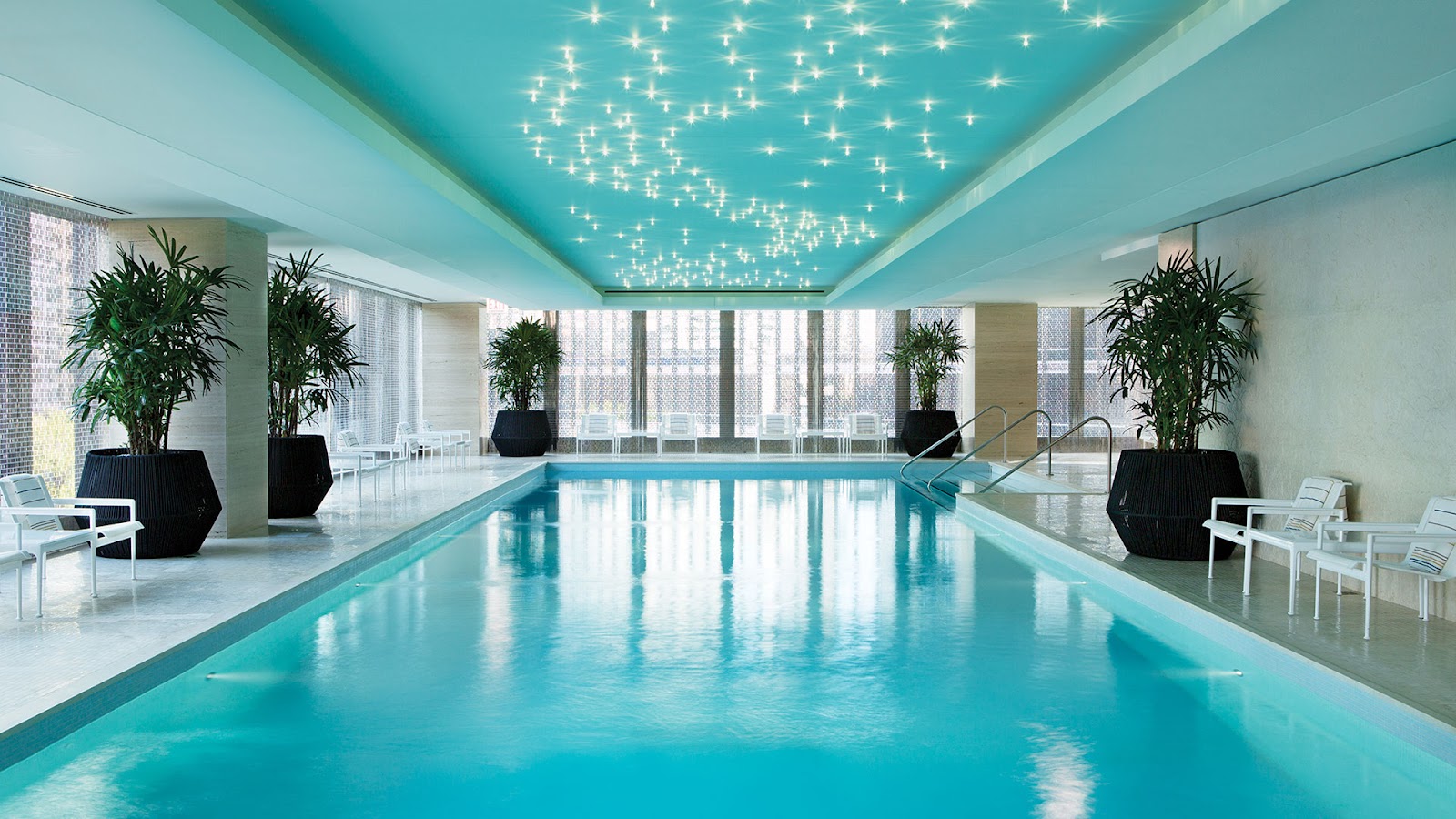
More frames from The Langham Chicago
The Langham Chicago wedding photography: common questions
Why do my photos in modern interiors look empty?
Because a modernist building deliberately removes the ornament that makes period frames interesting on their own. Compose to the building’s structure instead — mullions, floor lines, repeated bays — and be exact about it. Near-enough framing that passes in a busy room is glaring here.
What is the best light in the building?
A floor-to-ceiling window on the shaded side, or any of them on an overcast day. Place the couple a metre back from the glass and turn them into it: an enormous soft directional key with natural fall-off, better than most studio setups and nothing to carry.
What goes wrong at midday?
Direct sun through a gridded façade throws mullion shadows in hard stripes across faces and fabric, and that cannot be corrected afterwards. Move to the other side of the building, wait for the sun to pass, or work in the shadow between bays rather than in a lit one.
How should the river be photographed?
Along its length, not across it. A city river is an enclosed corridor, so a long lens stacks the bridges and lets the towers funnel the eye — a composition that assembles itself. Shot across, it is just a strip of water with buildings behind.
When is the river at its best?
Twice. In the last hour of daylight, when the sun is low enough to run down the channel rather than across it — worth establishing on a site visit, since it depends on the river’s orientation. And after dark, when lit buildings smear in moving water on a slow shutter.
Is all that glass a problem at night?
It becomes a mirror showing your lights, your crew and the room behind you, and there is more glass here than in a period hotel. Check reflections deliberately. Used knowingly — a couple doubled in a dark window with the river beyond — it is one of the better frames.
More Chicago, IL venue guides
We are writing a photographer’s guide to every venue we would happily shoot in Chicago, IL. Here are three more, plus the full index:
- The Peninsula Chicago: Photographing Pale, Tonal Luxury
- The Robey: How Light Moves Through a Narrow Tower
- Virgin Hotels Chicago: A Venue of Small Rooms Rather Than Large Ones
All Chicago, IL Wedding Venues →
Planning a wedding at The Langham Chicago?
Modernism rewards precision and punishes habit. Tell us your date and we will plan the interiors, the corridor and the twenty minutes after dark.