 The Hoxton Chicago: Photographing a Wedding in Fulton Market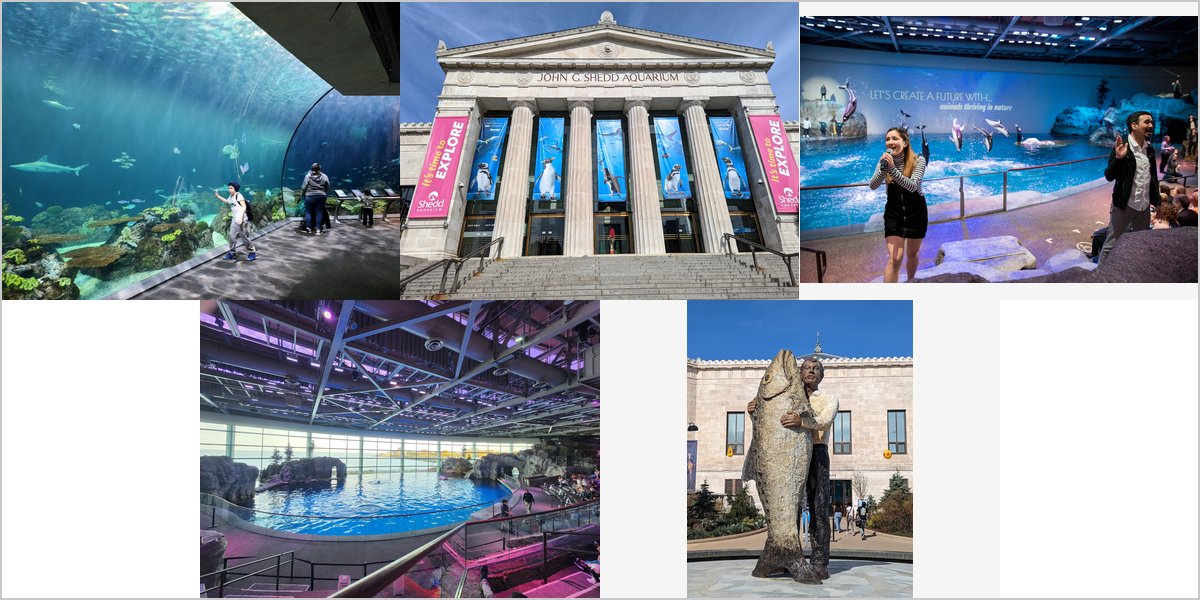
August 14, 2026
The Shedd Aquarium: Four Ways Out of the Bright-Aquarium Problem
Most aquariums are uniformly dark. This one has a wall of daylight in it, which is a harder problem than darkness.
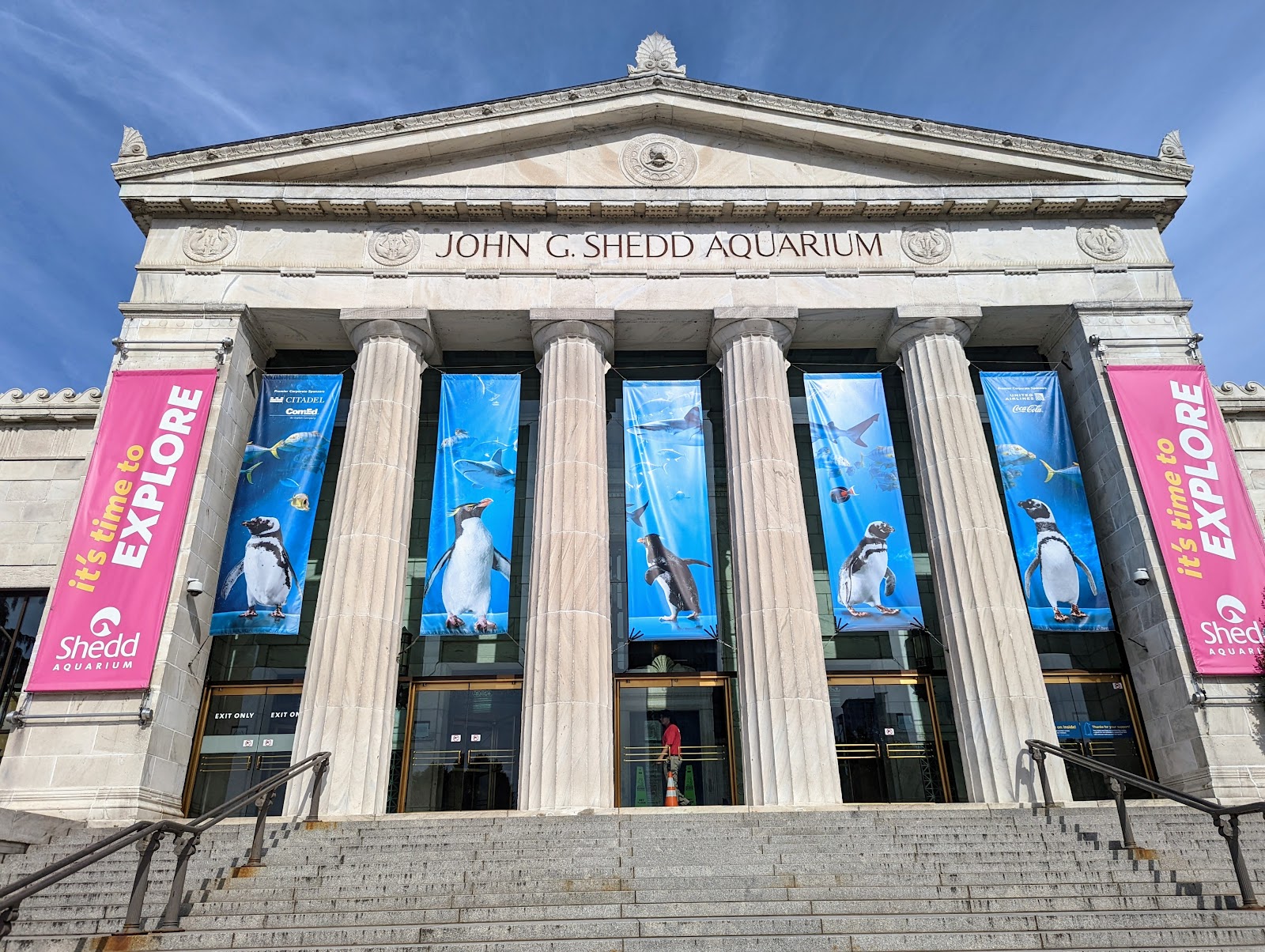
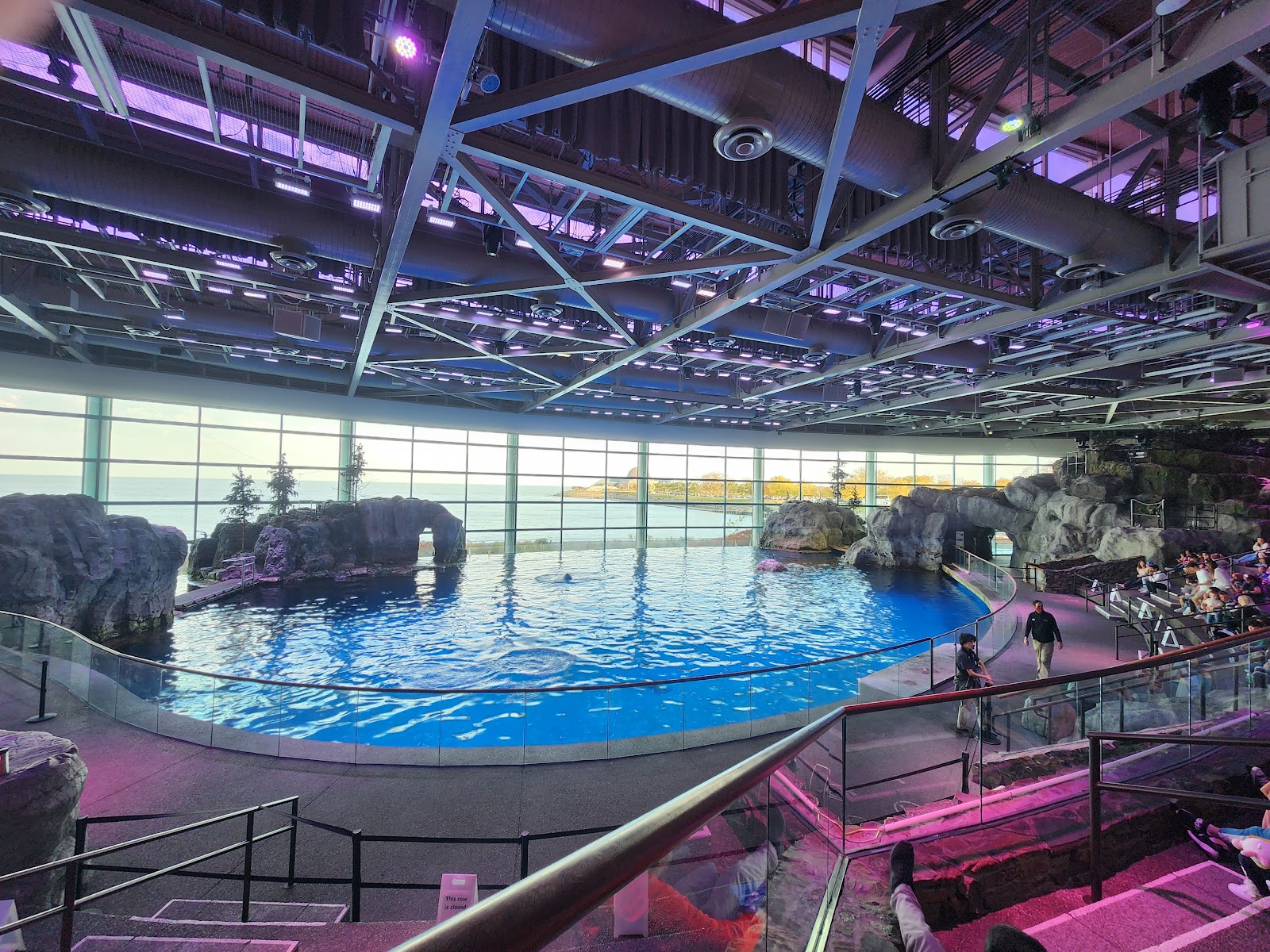
The Shedd Aquarium sits on Chicago’s Museum Campus between the Field Museum and the lake, a 1929 classical building housing galleries of tanks, with a later Oceanarium wing whose glazed wall looks out across Lake Michigan towards the skyline.
Aquariums are normally a known quantity for a photographer: very dark, strongly blue, and the whole job is adding light. This one is not that, and the difference is the Oceanarium. A room that contains both a wall of daylight onto a lake and pools lit by aquarium lighting holds two completely different light sources of different colour and very different intensity, in the same frame. That is harder than uniform darkness, because darkness is at least consistent.
There are four coherent ways to handle it, and the choice shapes everything else. We have not photographed a wedding at the Shedd; daylight mixed with tank lighting behaves identically anywhere the two meet. Which galleries and which part of the Oceanarium are available, and whether access is after hours, are questions for their events team — and the after-hours answer changes the problem substantially.
The Shedd Aquarium at a glance
| Where | Museum Campus, Chicago lakefront, Illinois |
| Character | 1929 classical aquarium with a lake-facing Oceanarium wing |
| The problem | Daylight and blue tank light in one room, at different intensities |
| Elsewhere | Classic dark aquarium galleries — blue, dim, reflective acrylic |
| Ask first | After-hours access, which removes the mixed-light problem entirely |
Why mixed light is worse than no light
Water absorbs the warm end of the spectrum, so light that has travelled through a large tank arrives strongly blue-cyan. Daylight through a window onto a lake arrives neutral to slightly cool. Those are different enough that no single white balance serves both: set for the daylight and the tanks go electric blue; set for the tanks and the window turns orange and the whole room looks like a mistake.
Intensity compounds it. A glazed wall onto a bright lake in the afternoon is many stops above aquarium lighting, so a frame containing both cannot hold both — either the window is a white void or the tank side is black. And because a person moving through the room passes from one source to the other, skin tone shifts between consecutive frames of the same sequence, which is what makes a set look uncontrolled rather than merely difficult.
In a uniformly dark aquarium none of this happens. It is dim, it is blue, and it is consistent, so a single decision covers the whole space. The Shedd’s Oceanarium removes that consistency, which is why it needs a deliberate approach rather than the standard aquarium technique.
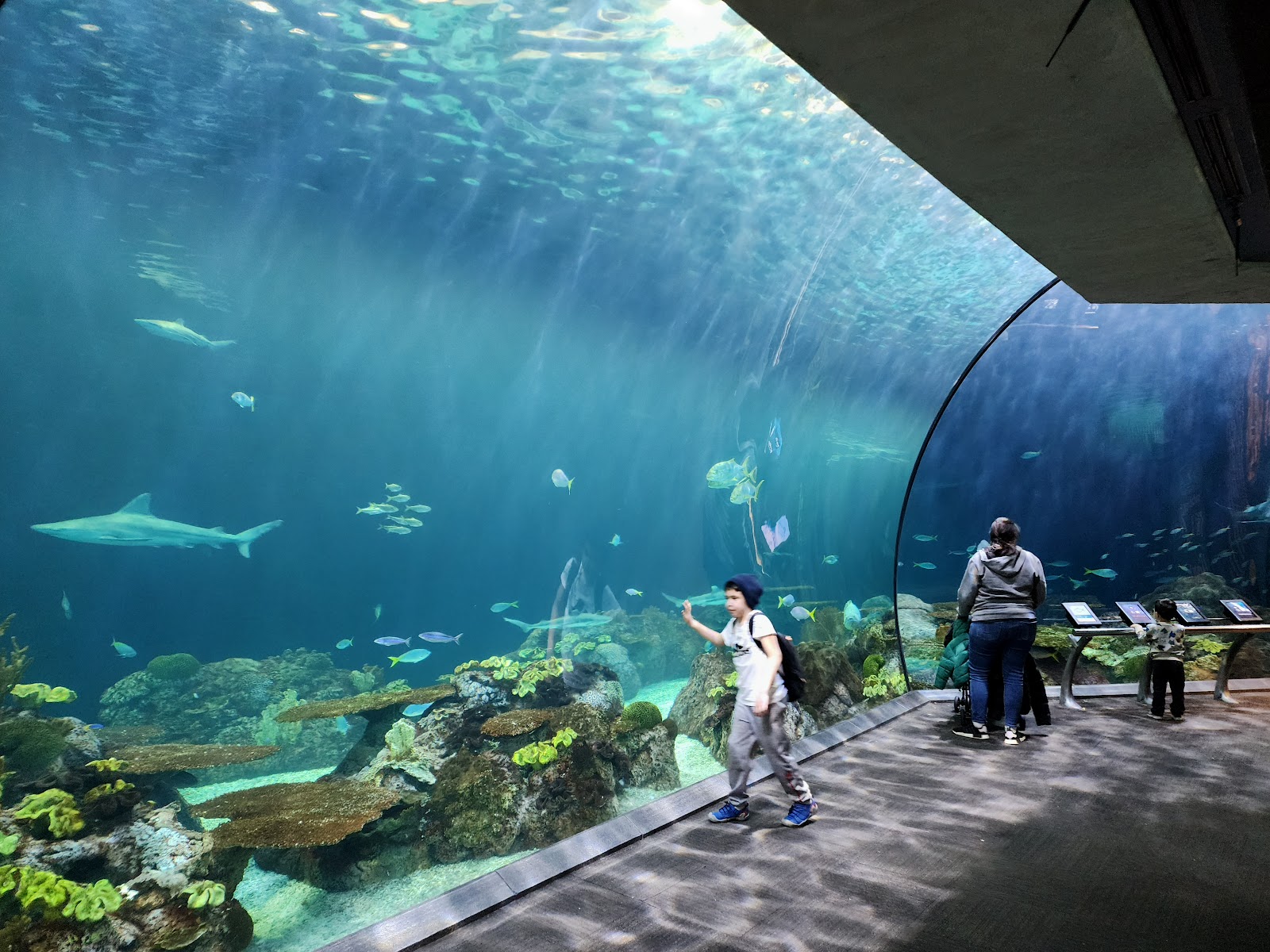
Way one: let your own light own every face
The most reliable answer is to stop negotiating with the room’s light. Put a warm-gelled source on the couple strong enough to dominate whatever ambient is falling on them, balance the camera for that source, and let daylight and tank light both become background. Skin is then consistent frame to frame regardless of where in the room people stand, which is the actual goal.
The gel matters. An ungelled flash in a blue room reads as a cold hole punched in a warm-toned photograph; a warm gel makes your light sit plausibly in the scene while still reading as neutral on skin once white balance is set to it. This is the single most useful accessory in a venue like this and it costs almost nothing.
Keep the source off the camera axis and, where there is acrylic anywhere in the frame, behind the plane of the subject. Tank panels are thick and highly reflective, and a flash near the camera axis produces a hard bright rectangle straight back at the lens — the commonest technical failure in any aquarium.
Ways two and three: pick a side, or use the balance point
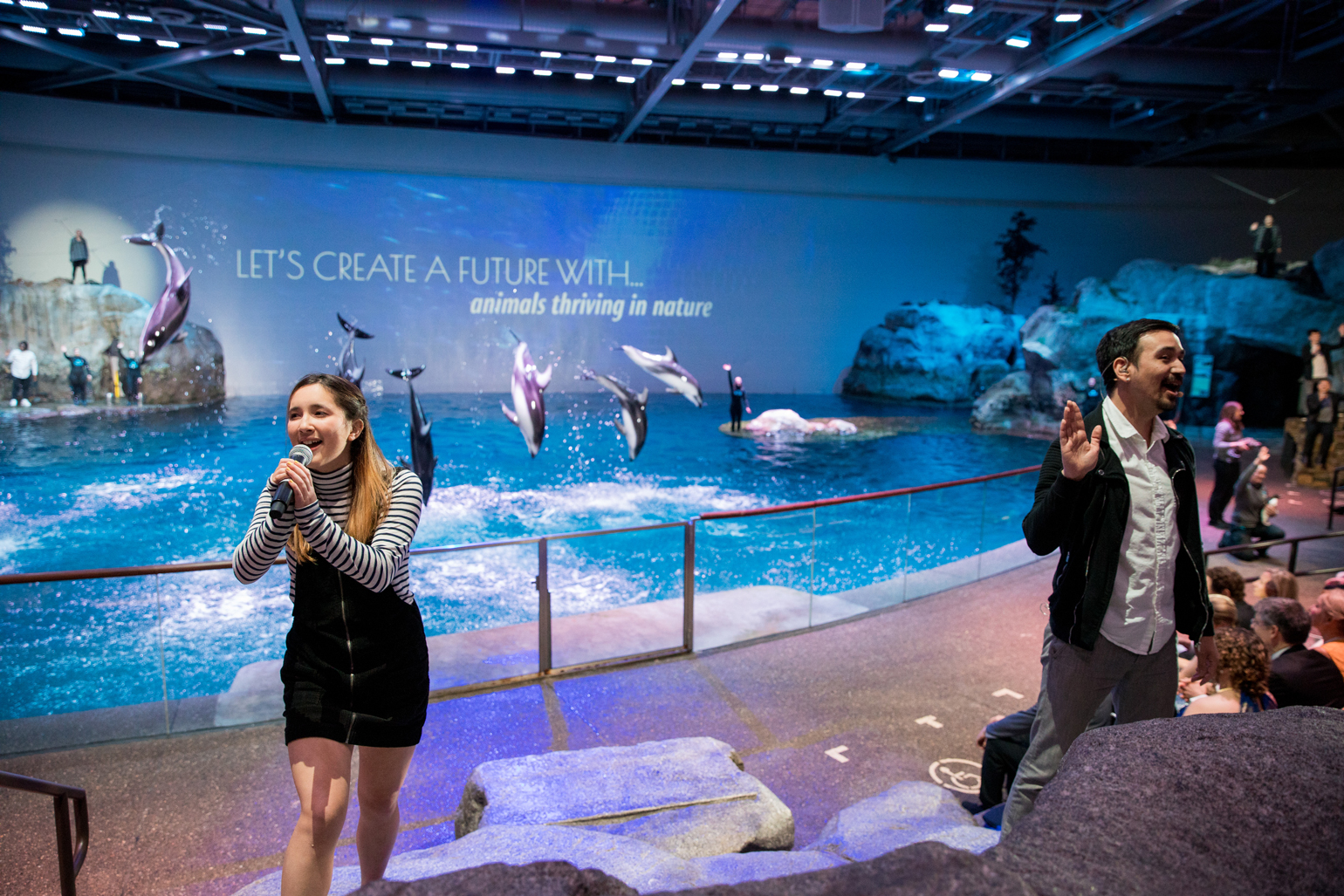
The second way is to stop trying to include both and commit to one per frame. Work the Oceanarium’s glazed wall as a daylight venue — backlit couple against a bright lake, natural colour, the skyline in the distance, no aquarium character at all — and work the dark galleries separately as a blue-lit space. Two coherent sets beat one mixed set, and nobody looking at the gallery afterwards wishes the two had been combined.
The third is to wait for the moment when the problem solves itself. As the afternoon goes, the daylight through the glazed wall falls, and at some point it drops to roughly the level of the aquarium lighting. For a stretch of maybe half an hour the two sources are comparable in intensity, and a frame can genuinely hold a lit pool, a couple and a dusk lake through the window at once. That is the frame this building can produce and no other aquarium can, and like every dusk balance it is dictated by sunset rather than by the running order.
The colour difference remains at that point, but it becomes an asset rather than a fault: a warm dusk sky through the glass against blue pool light is a deliberate two-tone frame, which reads as intentional in a way that a blown white window never does.
The fourth way is to remove the problem: after-hours access. With no daylight, the building reverts to being a conventional dark aquarium — one consistent condition, blue, dim, and entirely controllable with your own lighting. If the events team can offer an evening slot, it is worth weighing seriously, because it trades the venue’s hardest characteristic for its easiest.
- Gel your key warm and let it own every face, in both halves of the building
- Keep light off-axis and behind the subject plane wherever acrylic is in frame
- Treat the glazed wall and the dark galleries as two separate sets
- Schedule one block for the dusk balance point, taken from sunset
- Ask about an after-hours slot; it converts the hard problem into an easy one
The dark galleries, and the Museum Campus outside
Away from the Oceanarium the building behaves like a classic aquarium, and the standard discipline applies. Light levels are very low because tanks are lit for the animals; expect the fastest lenses you own at high ISO. Everything is blue. Acrylic reflects everything behind you. And fish move, so at the shutter speeds this light forces they will smear — which is usually fine, reading as life rather than error, provided the couple are sharp.
One genuine advantage of a very dark space is leverage: because the ambient is so low, a small amount of added light has enormous relative effect. You do not need much power to place a couple three stops above an aquarium corridor, so a modest kit goes a long way here in a way it would not in a bright hotel.
The 1929 building itself is worth using. A classical rotunda with stone, symmetry and a dome is a completely different register from the tanks, and it provides the architectural frames that balance a set otherwise made entirely of blue light and glass.
Outside, the Museum Campus gives you the lakefront path, the skyline across the water and an open horizon, all within a couple of minutes — neutral daylight, warm tones, and the exact opposite of everything inside. The practical notes are the campus ones: long load-in distances, persistent lakefront wind, and heavy public footfall in every season. And moving from a heavily conditioned interior into humid summer air will fog a lens for a quarter of an hour, so acclimatise before the outdoor block rather than during it.
What works in your favour
- A lake-facing glazed wall no other aquarium can offer
- A dusk balance point where pool light and sky hold in one frame
- Very dark galleries mean a small light has large relative effect
- A 1929 classical rotunda for architectural contrast with the tanks
- Lakefront, skyline and open horizon two minutes outside
What to plan around
- Daylight and tank light in one room defeat a single white balance
- A bright glazed wall runs many stops above aquarium lighting
- Skin tone shifts between frames as people move between sources
- Thick acrylic throws flash straight back at the lens
- Long campus load-in, persistent wind, and lens fogging in summer
More frames from The Shedd Aquarium

The Shedd Aquarium wedding photography: common questions
Why is a bright aquarium harder than a dark one?
Because darkness is at least consistent — one decision covers the whole space. Daylight and blue tank light together defeat any single white balance and differ by many stops, so skin tone shifts between consecutive frames as people move from one source to the other.
What is the most reliable fix?
Let your own light own every face. A warm-gelled source strong enough to dominate the local ambient, with the camera balanced to it, makes skin consistent everywhere in the building and turns both daylight and tank light into background.
Why a warm gel specifically?
An ungelled flash in a blue room reads as a cold hole punched in the frame. A warm gel lets your light sit plausibly in the scene while still rendering skin correctly once white balance is set to it. It is the cheapest useful accessory for this venue.
Is there a moment when it all works together?
Yes — about half an hour around dusk, when daylight through the glazed wall falls to roughly the level of the aquarium lighting. Then one frame can hold a lit pool, the couple and a dusk lake. Warm sky against blue water reads as a deliberate two-tone image.
Would after-hours access be better?
It would make the building much easier. With no daylight it reverts to a conventional dark aquarium: one consistent blue condition, fully controllable with your own lights. That trades the venue’s hardest characteristic for its easiest, so it is worth asking about early.
How do you avoid flash reflecting in the tanks?
Keep the light well off the camera axis and, wherever acrylic is in the frame, behind the plane of the subject. Shoot panels obliquely rather than square-on. A flash near the lens axis produces a hard bright rectangle straight back — the commonest aquarium failure.
More Chicago, IL venue guides
We are writing a photographer’s guide to every venue we would happily shoot in Chicago, IL. Here are three more, plus the full index:
- The Blackstone: Working a Building With Two Vocabularies
- The Drake Hotel: A Grand Ballroom and a Lake Michigan Window
- The Godfrey Chicago: What a Retractable Roof Actually Changes
All Chicago, IL Wedding Venues →
Planning a wedding at The Shedd Aquarium?
Mixed light needs a decision made before you arrive. Tell us your date and whether an evening slot is possible, and we will pick the approach.