 The Hoxton Chicago: Photographing a Wedding in Fulton Market
August 17, 2026
The LondonHouse Rooftop: One Decision Governs the Whole Evening
A rooftop is the best twenty minutes of a Chicago wedding and a difficult place to hold four hours of one.
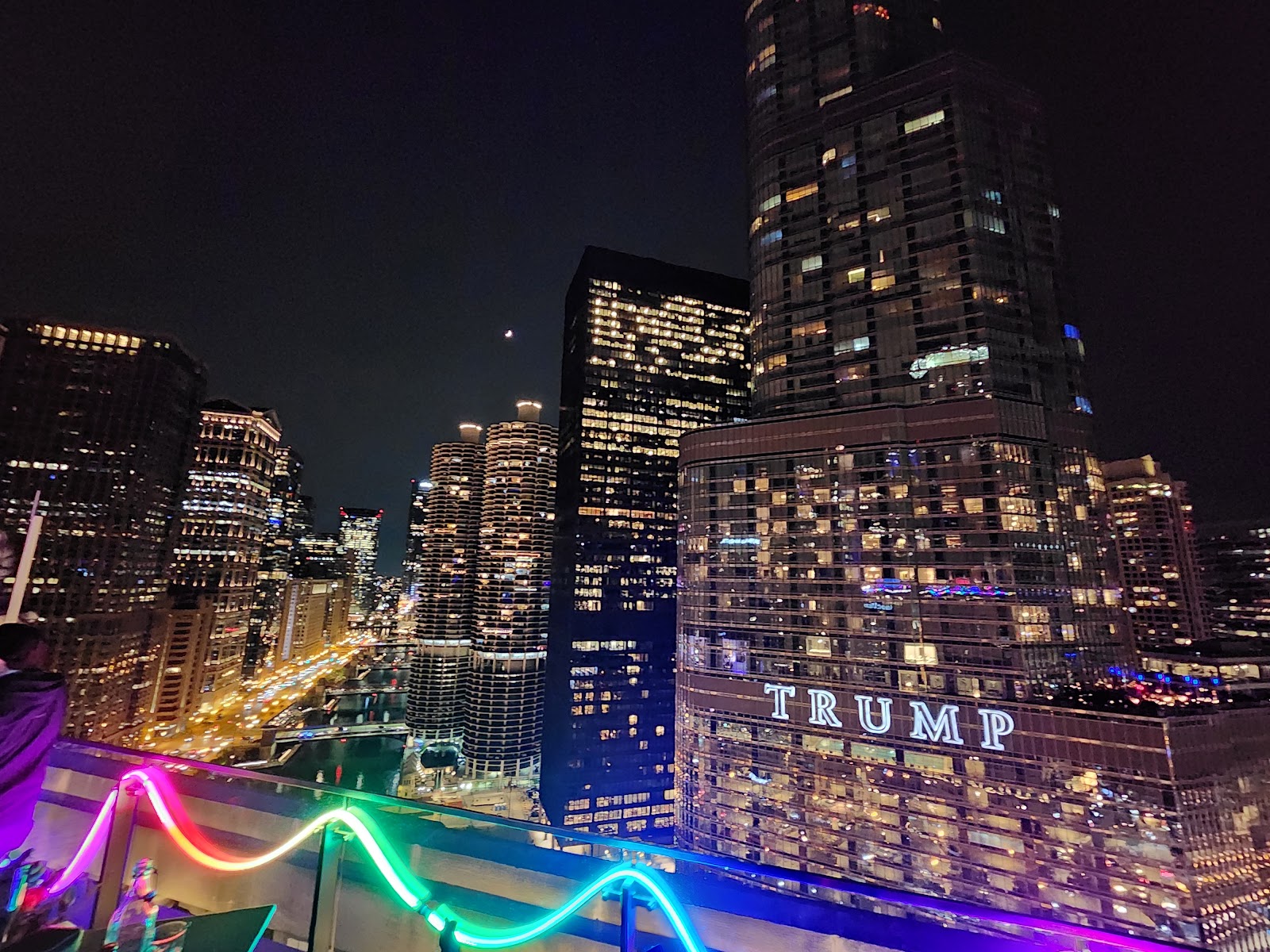
The LondonHouse occupies a 1923 building at the corner of Michigan Avenue and the Chicago River, with a rooftop terrace and cupola looking west along the river and out across the Loop skyline — one of the more comprehensively photographed views in the city.
There is a single decision at a venue like this and everything else follows from it: is the roof the venue, or is the roof a set piece you visit? Those are different weddings. A rooftop as the venue means an event held in full exposure to wind, sun and weather for several hours, with the light changing continuously and no fallback that keeps the view. A rooftop as a set piece means the substantial part of the day happens in sheltered rooms and the roof gets a decisive twenty minutes at exactly the right moment.
Most of the good outcomes come from the second reading, and this piece explains why. We have not photographed a wedding at the LondonHouse; elevated terraces and river-and-skyline views behave the same anywhere. Which indoor spaces accompany the roof, what the wind policy is and how late roof access runs are questions for their events team.
The LondonHouse Rooftop at a glance
| Where | Michigan Avenue at the Chicago River, Chicago, Illinois |
| Character | 1923 building with a rooftop terrace and cupola over the river |
| The fork | Roof as the venue, or roof as a twenty-minute set piece |
| The view | West along the river into the Loop — and into the sunset |
| Ask first | How late roof access runs, and what wind cancels it |
What an elevated terrace actually gives you
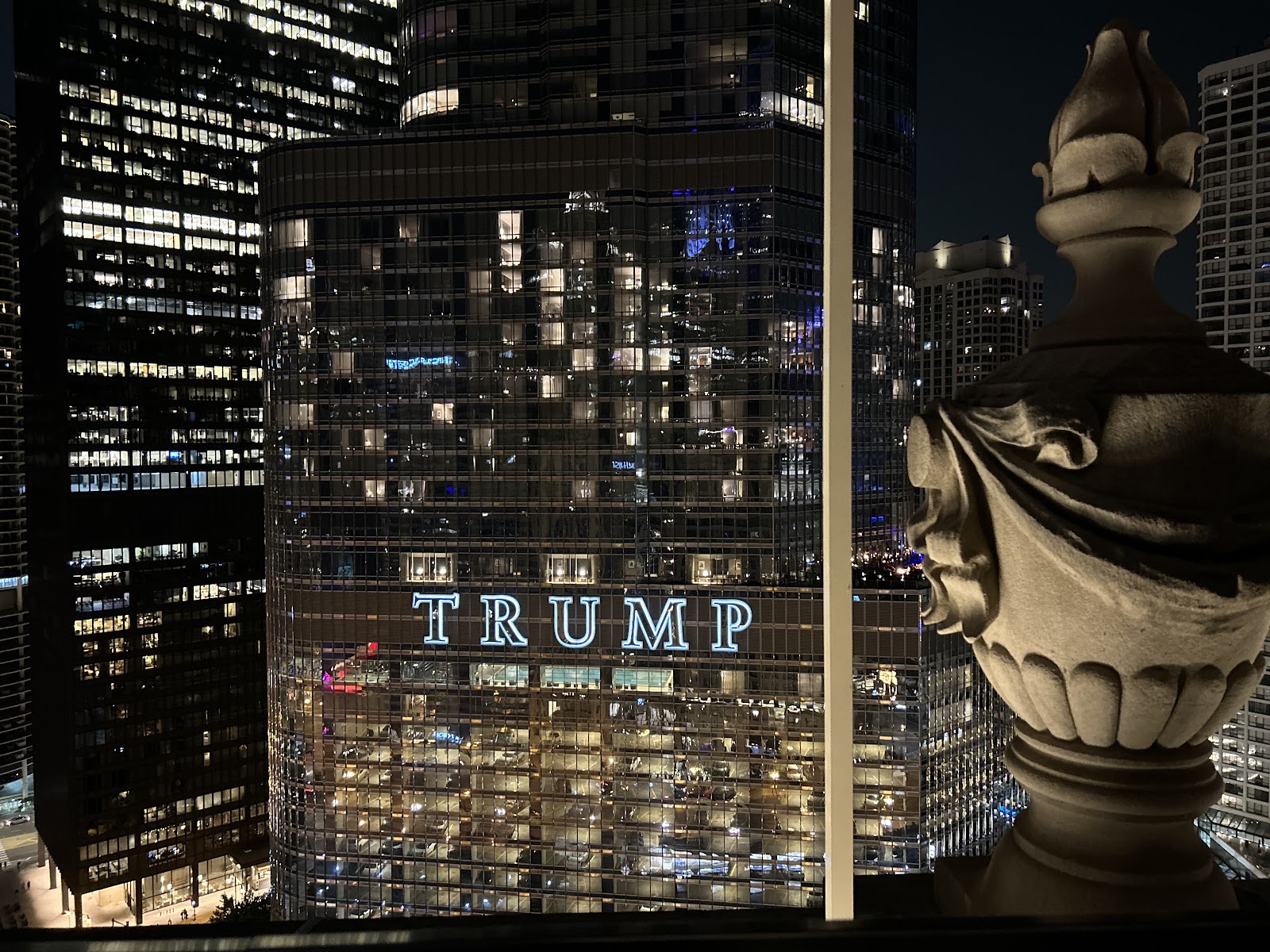
Height changes photographs in three specific ways, and they are all worth having. It removes the ground, so there are no cars, bins, signs or passers-by anywhere in the frame — the thing that makes street-level city portraits so laborious simply disappears. It puts the horizon low, so you get far more sky than any ground-level position allows, and sky is where the colour is. And it lets you look along a street or a river rather than across it, which is what produces depth in a city frame.
The river direction is the specific asset here. A river running west into the Loop is a natural leading line pointing at the sunset, with bridges crossing it at intervals to give rhythm and buildings rising on both banks to funnel the eye. That is a composition that builds itself, and it is available with a long lens from a fixed position, which matters on a terrace where you cannot move far.
It also means the venue has a golden hour in the literal sense: looking west from a height, into a low sun, along water. Backlight, flare, a rim on everyone’s hair and a sky doing something. The frames are easy in that window in a way they are easy almost nowhere else.
Why holding the whole event up there is harder
Wind is the first reason, and at height it is stronger and less predictable than at street level — accelerated around building corners, gusting rather than steady. Veils are unmanageable, unweighted light stands are a serious hazard from a roof, table settings move, and hair does not stay. A terrace that is pleasant at six can be genuinely difficult at eight.
Sun is the second. A rooftop has no shade whatsoever until the buildings around it start casting, and a ceremony up there in mid-afternoon puts everyone in full unfiltered sun with a bright sky behind them — the hardest combination there is for exposure and the least comfortable for guests. The building’s own shadow is the only shade available and it arrives on its own schedule, which is worth establishing on a site visit at the ceremony hour rather than guessing.
Third is that a rooftop has no weather fallback that keeps the view. Every other venue’s rain plan is a room; a rooftop’s rain plan is a room without the reason you booked it. That is not an argument against the venue, but it is an argument for the roof being one movement in the day rather than the whole score.
And fourth, quietly: at height the ambient light after dark is almost nil. There are no walls bouncing anything, no ceiling, no windows spilling. Once the sun is gone every frame on that terrace is entirely a lit frame, and whatever you brought up is the only light there is. That is very controllable if planned and impossible if not.
What works in your favour
- Height removes all street clutter from every frame automatically
- A river running west into the Loop is a leading line at the sunset
- Far more sky than any ground-level position, which is where colour is
- Bridges and banks give rhythm and depth with a long lens
- Sheltered indoor spaces in the same building as a real fallback
What to plan around
- Wind at height is stronger, gustier and less predictable than at street level
- No shade at all until the surrounding buildings begin to cast
- The rain plan keeps you dry but takes the view away entirely
- Almost no ambient light after dark; everything must be brought
- Terrace space limits camera position and rules out long lens moves
The set-piece version, and how to time it
Treated as a set piece, the roof becomes straightforward and extremely productive. The structure is: everything substantial happens in the building’s interior rooms, and the couple go up twice. Once in the last forty minutes of daylight, for backlit river-and-skyline frames in warm low sun. Once about twenty minutes after sunset, for the blue-hour balance when the city lights come on and the sky still holds colour.
Those two visits produce almost all the images anyone books this venue for, and together they take less than half an hour of the day. The rest of the time the wedding is warm, sheltered, well lit and running on schedule, which is what everybody actually wants.
The blue-hour visit needs a light, for the same reason every city-lights frame does: a skyline is dim and a couple lit only by it is a silhouette. One warm off-camera source, balanced to the city rather than overpowering it, is the whole technique — and on a roof it needs weighting, or an assistant holding it, without exception.
The daylight visit needs nothing but timing and a lens choice. Long rather than wide: compression stacks the bridges and makes the skyline loom behind the couple, where a wide lens turns the view into a thin distant strip and the frame becomes a photograph of a terrace. If there is one recurring error in rooftop photography, it is using a wide lens because the space feels expansive.
One last note about the cupola and the architecture itself. A 1923 building has detail — stonework, arches, ironwork — and shooting the couple against the building rather than against the view gives the set a second register, one that is anchored, sheltered and legible at any hour. A gallery made only of skyline frames looks like a postcard set; the architectural frames are what make it a wedding.
More frames from The LondonHouse Rooftop
The LondonHouse Rooftop wedding photography: common questions
Should the ceremony be on the roof?
Usually not in the afternoon. There is no shade until the surrounding buildings start casting, so a mid-afternoon rooftop ceremony puts everyone in full sun with a bright sky behind — the hardest exposure and the least comfortable for guests. Hold it inside and use the roof as a set piece.
When should the couple go up?
Twice. Once in the last forty minutes of daylight for backlit river and skyline frames, and once about twenty minutes after sunset for the blue-hour balance when the city lights are on and the sky still holds colour. Together that is under half an hour.
Wide or long lens on a rooftop?
Long, almost always. Compression stacks the bridges and makes the skyline loom behind the couple. A wide lens turns the view into a thin distant strip and the image becomes a photograph of a terrace. Using wide because the space feels expansive is the classic rooftop error.
Do you need flash up there?
For the blue-hour frames, yes. A skyline is dim and a couple lit only by city lights is a silhouette. One warm off-camera source balanced to the city, not overpowering it. On a roof it must be weighted or hand-held — no exceptions.
What is the wind like at that height?
Stronger and gustier than at street level, accelerated around building corners. Veils become unmanageable, table settings move, and an unweighted stand is a serious hazard from a roof. A terrace that is fine at six can be difficult at eight.
What happens if it rains?
You keep the wedding and lose the view, which is the one fallback problem a rooftop cannot solve. Every other venue’s rain plan is a room; a rooftop’s rain plan is a room without the reason you chose it. That is the strongest argument for the set-piece approach.
More Chicago, IL venue guides
We are writing a photographer’s guide to every venue we would happily shoot in Chicago, IL. Here are three more, plus the full index:
- The Museum of Science and Industry: When the Exhibits Are in the Photograph
- Navy Pier: Photographing a Wedding Out Over the Lake
- The Palmer House: How the Frescoed Ceiling Frame Is Actually Made
All Chicago, IL Wedding Venues →
Planning a wedding at The LondonHouse Rooftop?
The roof is twenty extraordinary minutes, twice. Tell us your date and we will give you both clock times and plan the rest indoors.