 The Whitby, New York: A Walk Through a Midtown Hotel
The Central Park Zoo: Four Ways Out of the Small Zoo Problem
A small zoo concentrates the fencing problem. What saves it is what is on the other side of the gate.
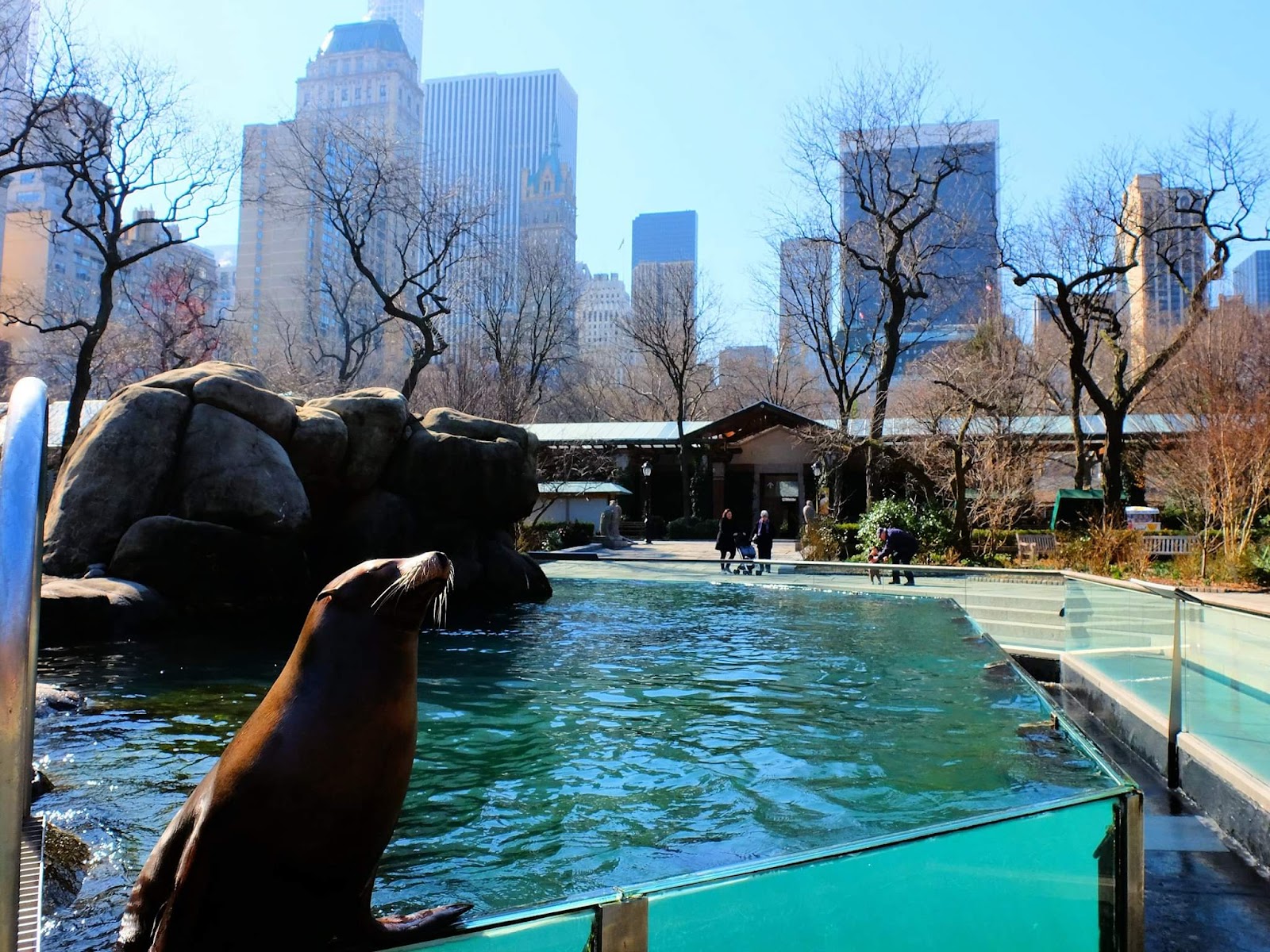
The sea lion pool, with its playful residents, could offer a charming backdrop and an entertaining spectacle during cocktail hour, as the venue’s own description has it.
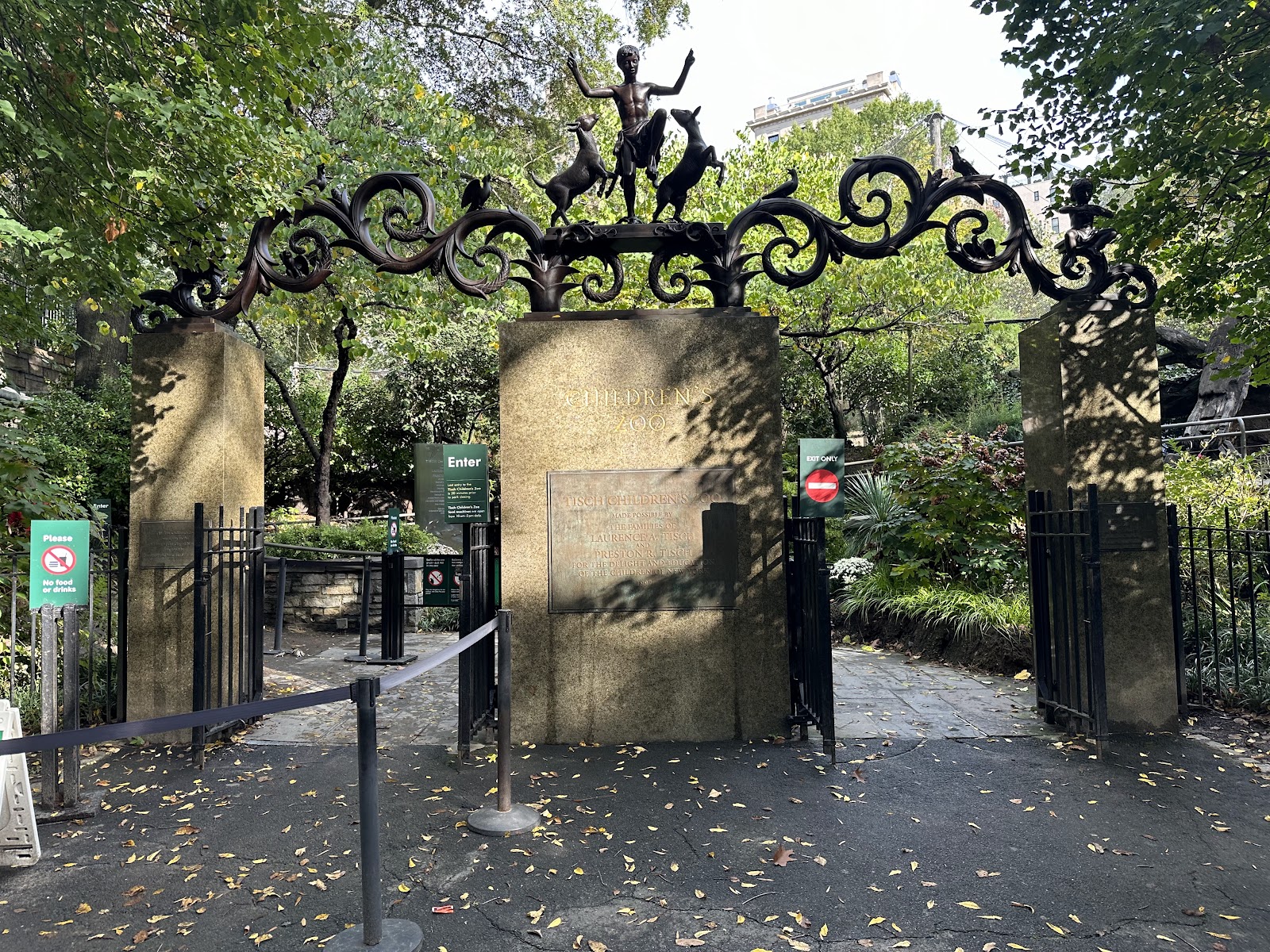
A compact zoo is a specific and slightly harder proposition than a large one, and it is worth being clear about why. The standing zoo problem — mesh, bars, railings and barriers in every direction — is the same, but a small site concentrates it: there are fewer positions, less distance between a camera and a barrier, and nowhere to retreat to when a frame will not work. At a large zoo a photographer walks somewhere else; at a small one there is nowhere else.
What rescues it, entirely, is the location. A zoo inside Central Park sits next to the best photographic asset in New York City: mature canopy, designed landscape, rock outcrops, water and long sight lines, all of it a minute’s walk away and none of it fenced. The honest plan is that the zoo supplies two or three distinctive frames and the park supplies the gallery.
This is written as the problem and four ways out of it. We have not photographed a wedding at the Central Park Zoo; compact zoos and large urban parks both behave consistently. What the zoo booking includes, whether the grounds can be private, what permits are needed to photograph in the park, and where a group may be assembled are the questions to settle — the third one is a city matter rather than a venue one.
The Central Park Zoo at a glance
| Where | Central Park, New York |
| Character | A compact zoo with a sea lion pool, inside the city’s largest park |
| The problem | A small site concentrates the fencing and offers nowhere to retreat |
| What rescues it | The park, a minute away and not fenced |
| Ask first | Zoo booking, privacy, park permits, and where a group may assemble |
Why a small zoo is harder
Distance is the thing a small site takes away, and distance is the main tool for fencing. The technique that solves mesh — a long lens at a wide aperture with the couple several metres in front of any barrier — depends on being able to put several metres between the subject and the fence, and then several more between the camera and the subject. A compact site frequently does not allow either.
So the first consequence is that the positions have to be found rather than improvised, and there will be few of them. Walking the site in advance and noting the two or three places where a long lens has clean depth in front of a soft barrier is not a refinement here but the whole of the preparation.
The second consequence is that incidental objects are closer. Signage, bins, service doors, feeding equipment and safety rails sit nearer to any frame at a small zoo, and they do more damage than the mesh itself — so exclusion becomes a per-frame decision rather than an occasional one.
Visitors are the third and at a zoo inside a major park they are constant unless the grounds can be private. Waiting for a gap does not work; long lenses and tight framing do.
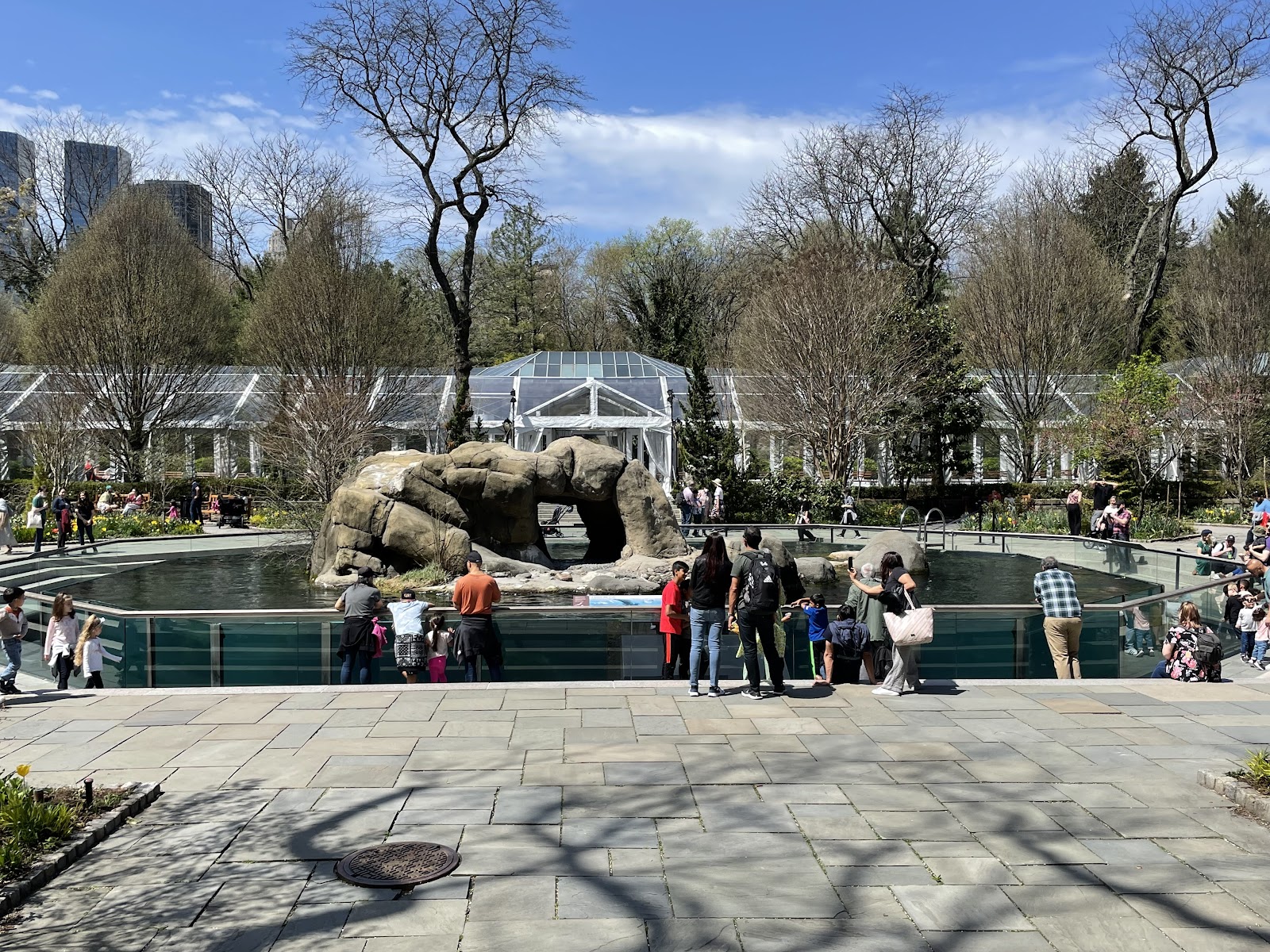
A central water feature — a pool with animals in it — is the venue’s own nomination and it is a genuinely good asset, with three conditions. Still water mirrors, which doubles whatever is above it, and a pool with moving animals is rarely still, so a reflection frame is opportunistic rather than planned. Water raises ambient from below, which fills the shadow that open sky creates and is useful at low sun. And a pool is usually surrounded by railings, which means the long-lens rule applies more strictly there than anywhere else on the site.
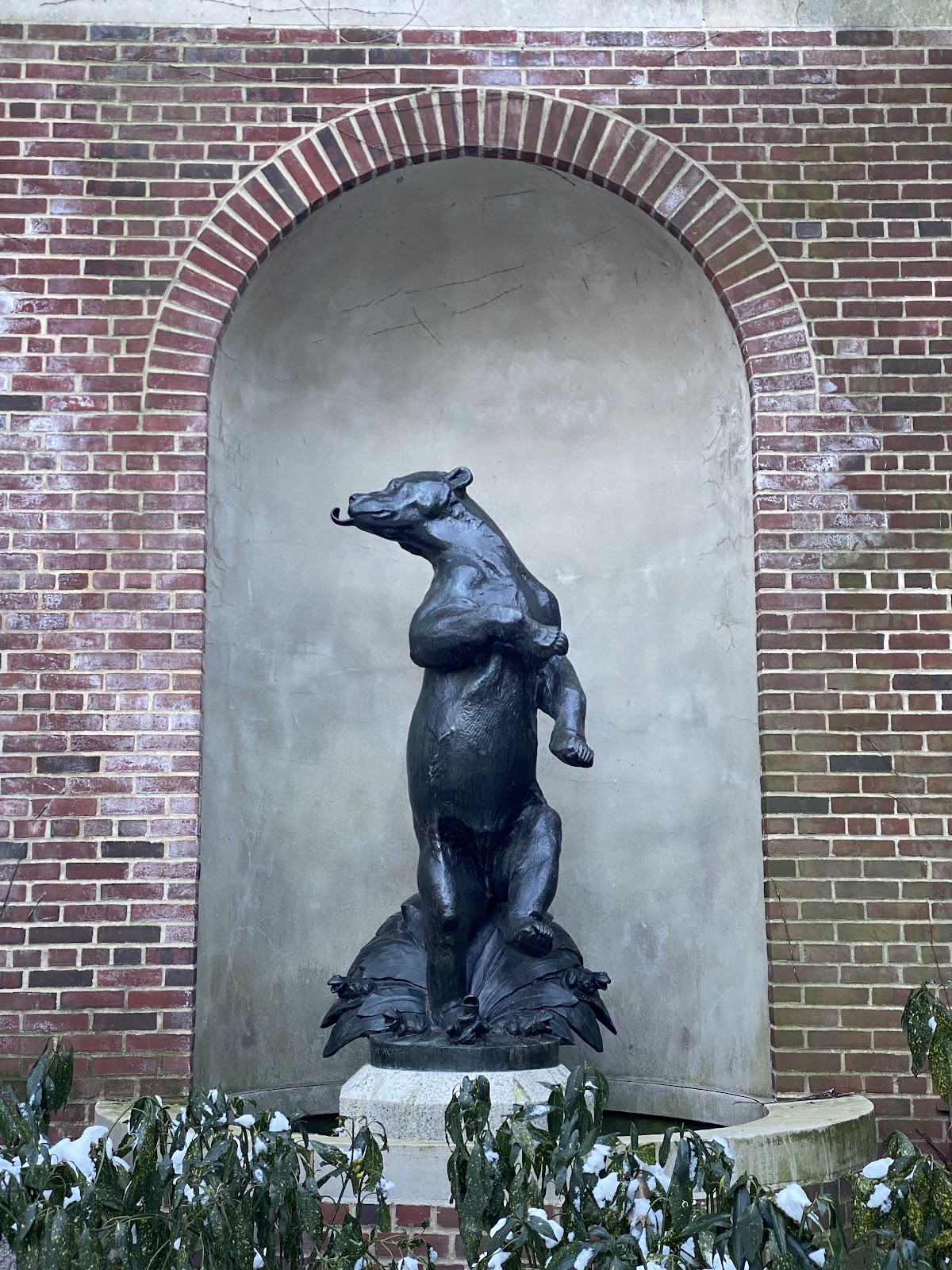
Animals behave as content rather than background, because human vision prioritises movement and faces — and at a small zoo they are close, which makes them harder to exclude and easier to commit to. Commit: place the couple to one side, let the animal be a co-subject, and make a photograph about both. Half-in fails.
Four ways out
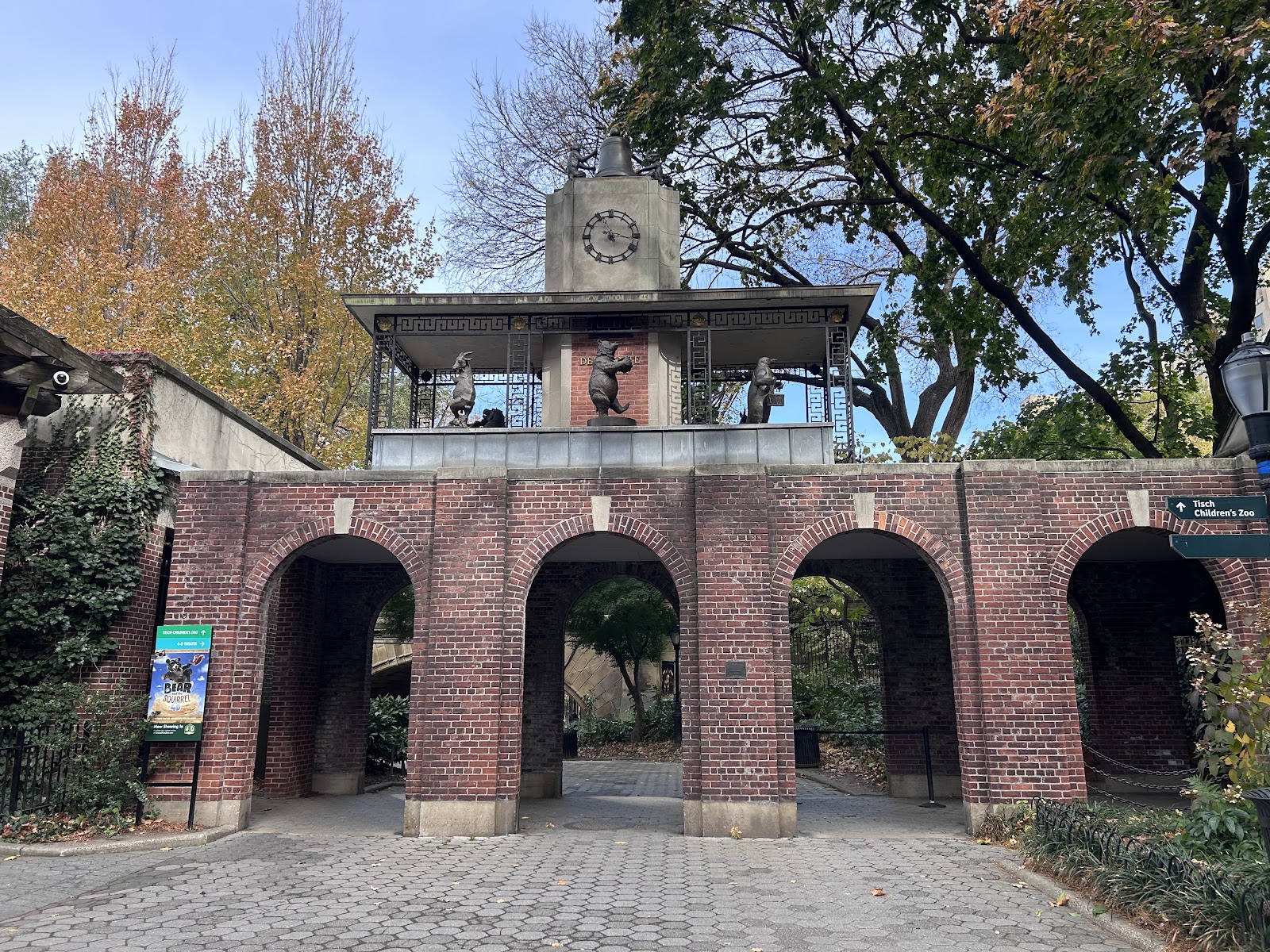
The first way out is the park, and at this location it is the strongest answer rather than an alternative. Central Park is a designed landscape rather than woodland: mature specimen trees with space around them, rock outcrops, water, bridges, and long composed sight lines. Those give exactly what a small zoo cannot — depth, clean backgrounds, and nothing fenced.
It also gives continuous deep canopy, which in a humid New York July is the only condition in which formal clothes and a long outdoor block are compatible. Dapple is the standing hazard — hot spots several stops above the surrounding shadow, shifting with every breeze — so full shade, open light, or wait for the sun to drop below the canopy.
Rock outcrops are the park’s particular and underused asset. Exposed stone gives elevation without architecture, a hard neutral background that is neither green nor sky, and texture that reads in raking light — and standing a couple on or beside an outcrop separates them from a park that is otherwise entirely foliage.
The second way out is the long lens, used more strictly than at a larger zoo: at 135mm or 200mm wide open, with as much depth as the site allows in front of any barrier, mesh becomes an unreadable soft band. Where there is not enough depth, the frame needs a different position rather than a compromise.
The third way out is to work close. A compact site that refuses wide frames is good at tight ones: details, hands, reactions, an animal’s eye, the texture of a railing used deliberately as a foreground. A small-zoo gallery is mostly close work and it is better for it — and close work is where the venue’s actual character lives, because the reason anyone chooses a zoo is proximity to animals rather than scenery.
The fourth way out is the timing. The last ninety minutes do two things at once: low raking light lights the couple while putting mesh and railings into shadow, which physically reduces how much the fencing matters; and it backlights foliage so both the zoo and the park read as planted rather than merely green. At a small site where positions are scarce, that hour is worth more than at a large one, because it makes marginal positions workable.
And green bounce is the accompanying condition in both zoo and park: dense foliage throws green onto nearby skin, localised and therefore uncorrectable globally. Set a custom white balance on a face in the position being used, and use any pale path or stone as a neutral bounce.
- Walk the site and find the two or three positions with usable depth
- Exclude the incidentals per frame; at a small zoo they are closer than the mesh
- Use the park for depth, rock outcrops and unfenced backgrounds
- Work close; a small-zoo gallery is mostly detail and reaction
- Protect the last ninety minutes; it makes marginal positions workable
The park, the permits, and New York's year
Permits are the practical matter specific to photographing in a major city park, and they are real rather than nominal. What a wedding party may do, where, with how many people, and whether any equipment may be set up are questions with definite answers that vary by area — and they belong in writing rather than in an assumption, because a group assembled in the wrong place is a problem in front of guests rather than a private one.
Other park users are constant at every hour a wedding happens. The tools are long lenses, which compress and blur a busy background into unreadable tone, and tight framing — and early is quieter than late, which has to be weighed against the fact that the best light is at the other end of the day.
Group photographs need a decided position rather than an improvised one, and in a park that usually means a set of steps, a terrace, a bridge or a broad path rather than open lawn, because steps make rows and lawn does not.
New York’s seasons change a park venue more than they change any building. Spring gives flowering and fresh foliage, which is short and the most photogenic phase of the planting. Summer gives full canopy, maximum continuous shade and long days — sunset falls late enough in June that the best light arrives well after a reception has started, which needs agreeing in advance as a short deliberate excursion.
Autumn is the best season: the clearest air of the year, genuine colour in late October, and low sun coming in under the canopy for longer than in summer. It is a short window and worth building a date around.
Winter strips the canopy, which turns the park from a shaded enclosure into an open landscape with graphic bare structure — a different photograph rather than a loss, and one where the rock outcrops and the water read more strongly than under leaf. Days are short, with sunset in the middle of the afternoon in December, which compresses the outdoor window into a couple of hours.
Snow is the compensation and it does two things at a zoo: it is the best natural fill there is, lifting exactly the shadows a low sun carves while fooling a meter by about two stops, and it covers paths and railings, which genuinely reduces the fencing problem while it lasts. Snow in Central Park with bare branch structure is one of the best frames the city offers.
Rain is the question a site with no building has to answer, and a compact zoo may have very little cover: what the fallback is, how many it holds, and by what time the call is made all need agreeing. A glazed or indoor animal house, where there is one, is a partial answer with the usual conditions — warm, humid, dim and glazed, which means one gelled source at face height and frames shot obliquely to any glass.
More frames from The Central Park Zoo
The Central Park Zoo wedding photography: common questions
Why is a small zoo harder than a large one?
Because distance is the main tool for fencing, and a compact site does not allow it. There are fewer positions, less depth in front of barriers, and nowhere to retreat to.
What rescues it here?
The park. Central Park is a designed landscape with mature specimen trees, rock outcrops, water and long sight lines — depth and clean unfenced backgrounds, a minute away.
What is the park's underused asset?
Rock outcrops. They give elevation without architecture, a hard neutral background that is neither green nor sky, and texture that reads in raking light.
How should the zoo itself be photographed?
Close. A compact site that refuses wide frames is good at tight ones — details, reactions, proximity to animals — which is where the venue’s actual character lives.
What has to be settled about the park?
Permits: what a wedding party may do, where, with how many people, and whether equipment may be set up. The answers vary by area and belong in writing.
Does snow help at a zoo?
Yes, twice. It is the best natural fill there is, and it covers paths and railings — which genuinely reduces the fencing problem for as long as it lasts.
More New York venue guides
We are writing a photographer’s guide to every venue we would happily shoot in New York. Here are three more, plus the full index:
- The Crosby Street Hotel, New York: A Walk Through a SoHo Hotel
- The Four Seasons New York: What It Suits, and What It Does Not
- The Greenwich Hotel, New York: How the Light Moves
Planning a wedding at The Central Park Zoo?
The park does most of the work. Tell us your date and we will settle the permits.