 The Hoxton Chicago: Photographing a Wedding in Fulton Market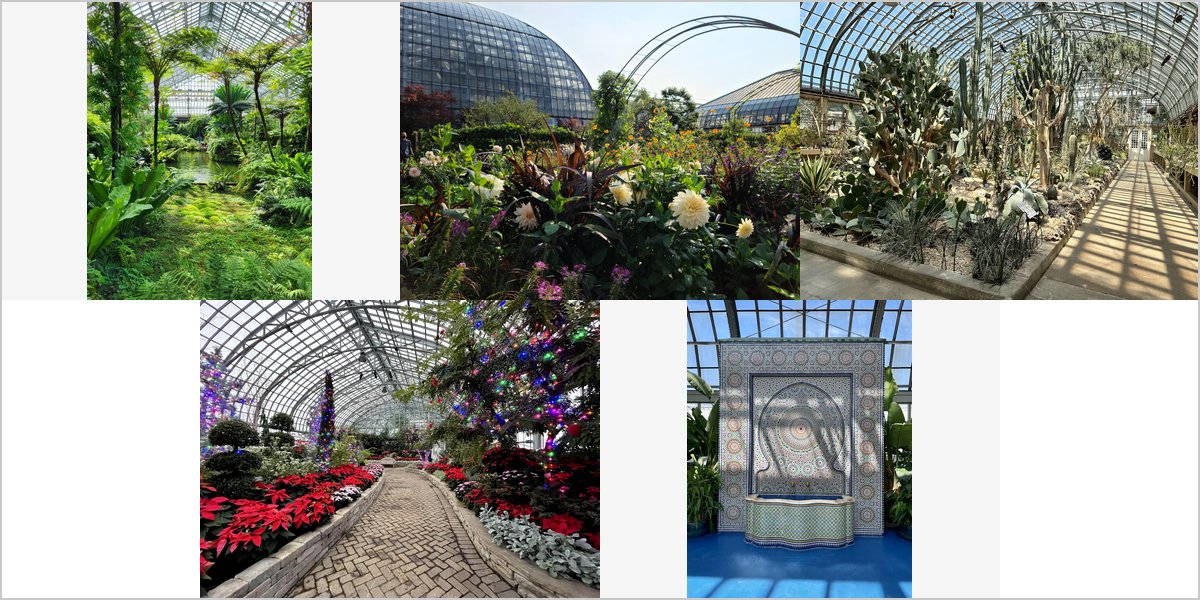
August 2, 2026
Garfield Park Conservatory: Field Notes on Photographing Under Glass
A glasshouse is the best natural light a city venue can offer, and it comes with three specific problems.
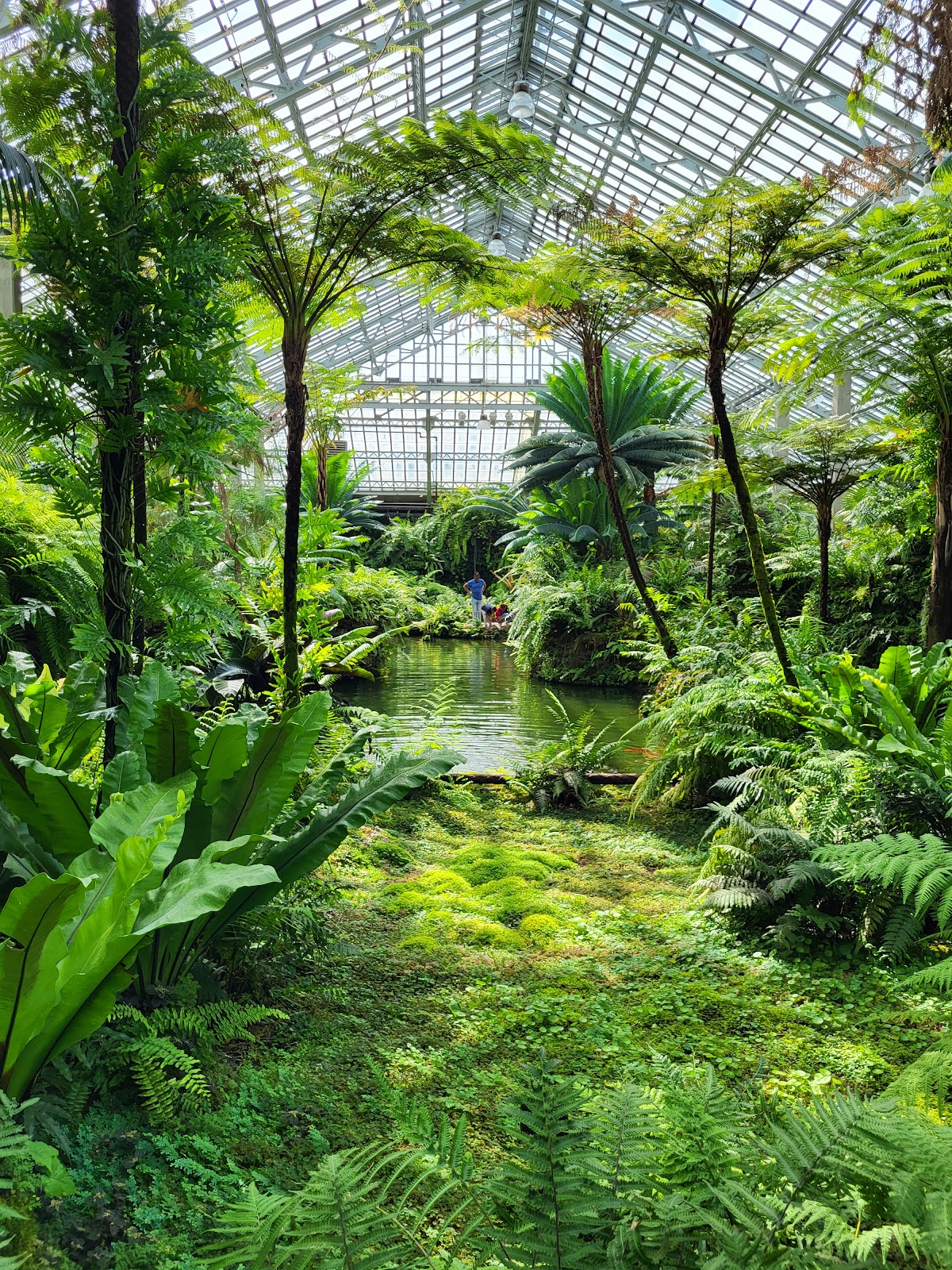
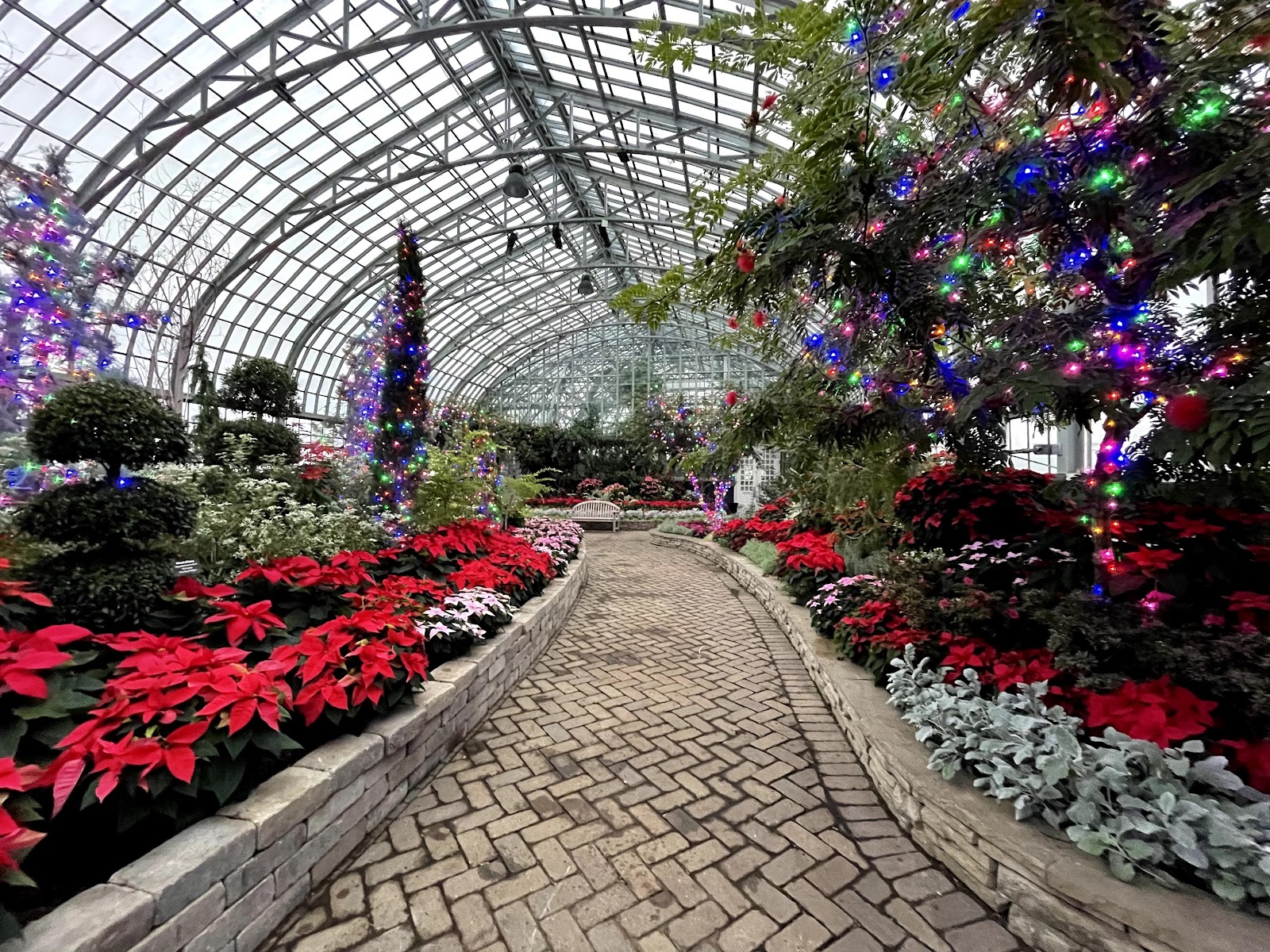
Garfield Park Conservatory occupies a group of connected glasshouses on Chicago’s West Side, built at the turn of the last century in the shape of a haystack — a series of large planted rooms under expanses of glass, of which the Horticulture Hall with its broad glass roof is the largest.
For a photographer a conservatory is close to the ideal city venue, and it is worth being precise about why. Glass diffuses. A hard sun striking a pitched glass roof arrives inside as an enormous soft directionless source, which is the same physics as a softbox at the scale of a building. There are no hard shadows, groups light evenly, faces have no dark eye sockets, and it holds regardless of where in the room you stand. You get studio light for free, all day, in a space full of foliage.
It also creates three problems that are specific to glass and planting, and knowing them in advance is most of the job. These are field notes on each. We have not photographed a wedding at Garfield Park Conservatory; glasshouse light and dense planting behave the same in any conservatory. Which houses are available for events and what the plant-protection rules are are questions for their team, and the second one shapes the day more than people expect.
Garfield Park Conservatory at a glance
| Where | Garfield Park, Chicago’s West Side, Illinois |
| Character | Connected turn-of-the-century glasshouses with large planted rooms |
| The gift | A glass roof turns hard sun into a building-sized softbox |
| Problem one | Everything under a leaf canopy goes green, including faces |
| Ask first | Where you may and may not stand — planting beds are the venue |
Problem one: green, on everything
A conservatory is full of leaves, and leaves reflect green. Light that arrives soft and neutral through the glass bounces off a thousand square metres of foliage before it reaches a face, and it picks up a colour cast on the way. Skin under dense planting reads sallow and slightly sick, and green is the hardest cast to correct convincingly because the eye is more sensitive to error in green than in any other channel.
The correction is positional before it is technical. Find the places where the light reaches a subject without passing through or bouncing off planting — paths, open floor, the space directly under a clear span of roof — and work there. A metre of position is worth more than any amount of correction afterwards, because once green is in the shadows on a face it cannot be removed without pulling the green out of the plants too, and then you have grey foliage.
Where you do work among planting, set a custom white balance in that spot rather than trusting auto, and set it again in the next room. Conservatories are made of connected houses with different plantings and different glass, and a white balance that is right in a palm house is wrong in a fern room fifteen metres away.
Problem two: the glass is only a softbox when the sun is out
The whole benefit described above depends on there being sun above the glass. On a bright day the roof diffuses a strong source into a beautiful one. On a flat grey Chicago day the roof diffuses a weak source into a weaker one, and the interior becomes surprisingly dim — dimmer than it looks, because the eye adapts to a green-lit space far better than a sensor does.
So a conservatory is not a consistent venue, it is an amplifier of whatever the sky is doing. That has a practical consequence for planning: it is an excellent rain plan in the sense that you stay dry, but it is not a light-neutral rain plan, and a photographer who arrives expecting the bright version and finds the grey version needs fast lenses and a willingness to work at high ISO.
The reverse case matters too. In high summer with the sun directly overhead, the glazing bars of the roof throw hard linear shadows across everything beneath them — a striped pattern on faces and dresses that is very difficult to use and impossible to remove. Under a clear midday sun the best positions are the ones in continuous shade from a structural element or under denser glazing, not the brightest spots.
The seasonal note worth giving couples: a glasshouse in a Chicago January is one of the few venues in the city that is warm, green and full of light in the middle of winter, and a winter wedding here photographs completely unlike a winter wedding anywhere else in town. Low winter sun through glass is also more raking and directional than high summer sun, which is often more flattering.
What works in your favour
- A glass roof converts hard sun into a building-sized softbox
- Dense planting gives lush foreground and depth in every frame
- Genuinely weatherproof, and green in the middle of a Chicago winter
- Low winter sun through glass is raking and directional — often better
- Connected houses give several distinct looks in a short walk
What to plan around
- Foliage casts green on skin, the hardest colour error to correct
- On a grey day the interior is much dimmer than it appears
- Midday glazing bars throw hard stripes across faces and dresses
- Narrow paths and protected beds severely limit camera position
- Humidity fogs lenses moving in from cold Chicago air
Problem three: you cannot stand where you want to
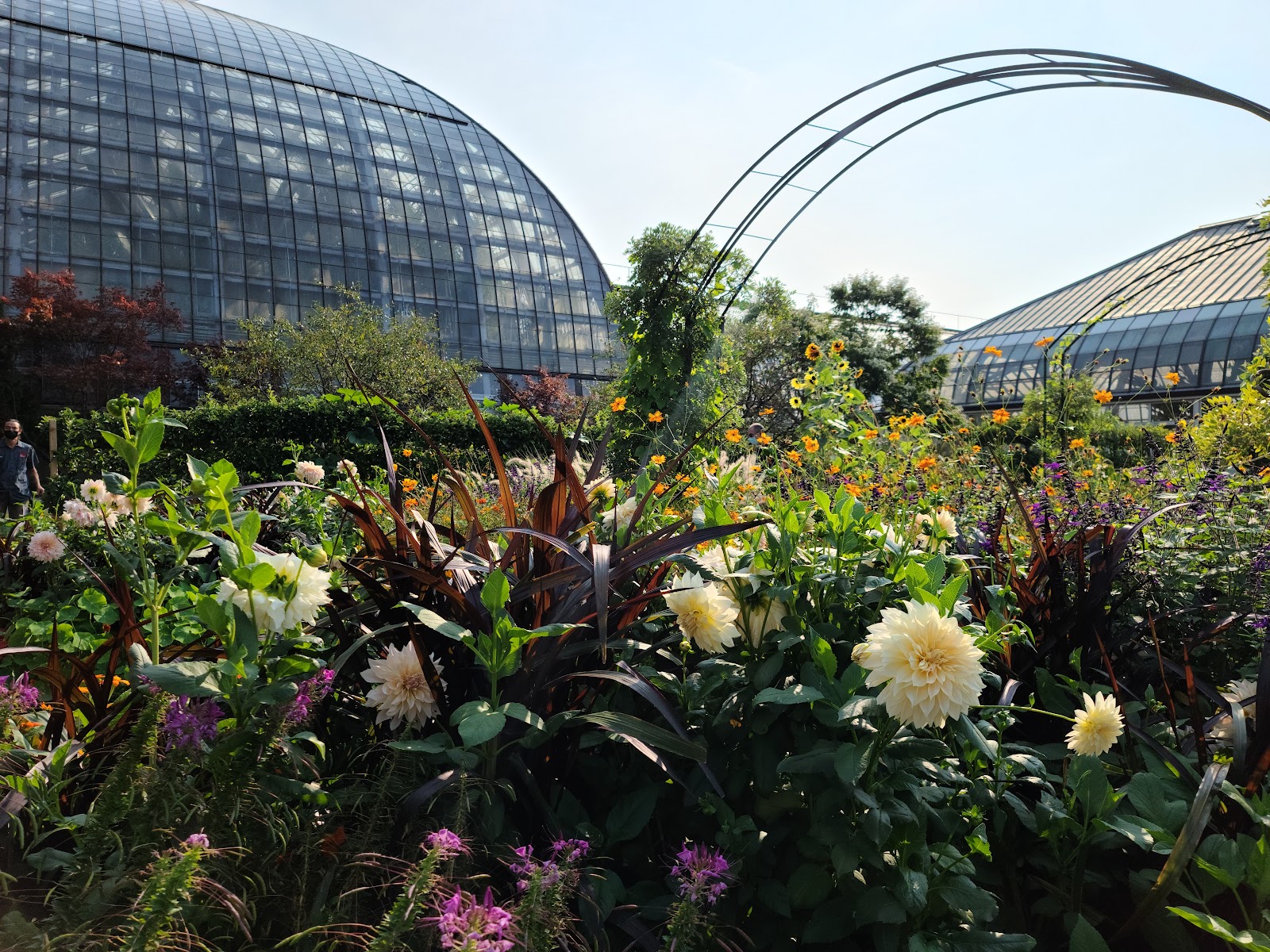
This is the constraint that surprises people, and it is the one that actually shapes the day. A conservatory is a collection of planting beds with narrow paths between them, and the beds are the venue’s living collection — you cannot step into them, and neither can a wedding party. So camera position is restricted to the paths, which means the angle on any given subject is largely decided for you before you arrive.
Practically that means working with what the paths give: frames along a path’s length rather than across it, a long lens used from further back down the walkway to compress foliage into a dense green wall, and foreground leaves close to the lens deliberately, because a leaf half a metre from the front element is the one compositional tool always available. What does not work is the plan that requires standing in the middle of a bed.
It also caps group size in a way that matters. Formal groups need floor, and a glasshouse has paths. Large groups belong outside in the park or in whatever open hall exists; trying to line up thirty people on a path produces a queue rather than a photograph. Establish where groups can happen before the day rather than during it.
Two last practical notes. Humidity is high by design, so a lens brought in from a Chicago winter fogs completely for ten to fifteen minutes — acclimatise before you need the camera, or keep one body inside from the start. And tripod legs on a narrow path block the only route through a room, which matters when guests are moving; if you need long exposures, do them before people arrive.
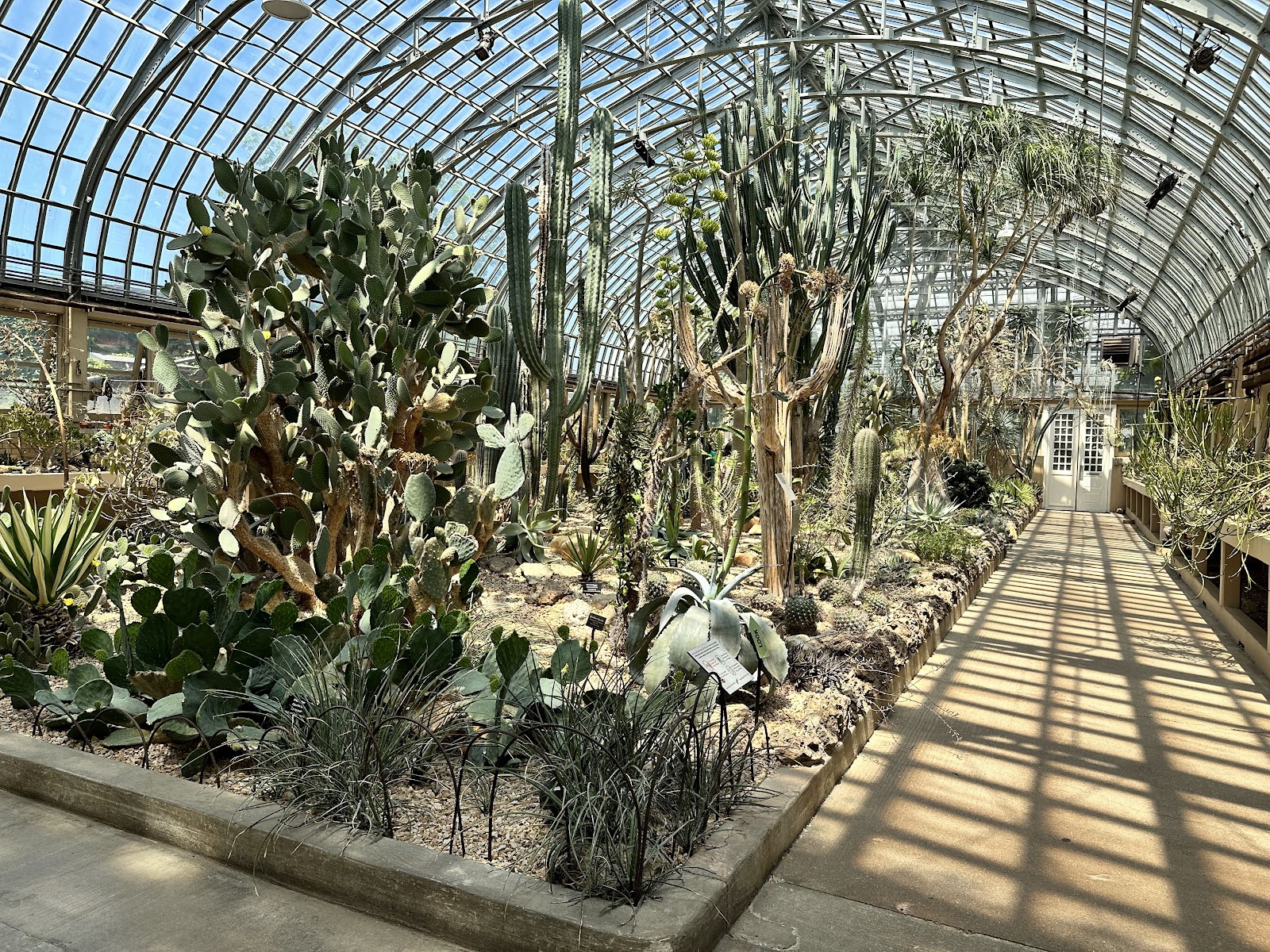
More frames from Garfield Park Conservatory
Garfield Park Conservatory wedding photography: common questions
Why do faces look green in a conservatory?
Because soft neutral light from the glass bounces off a great deal of foliage before it reaches a face, and leaves reflect green. Skin reads sallow, and green is the hardest cast to correct because removing it from shadows also drains the plants. Fix it by position: work where light reaches the subject without passing through planting.
Is a conservatory a good rain plan?
A good dry plan rather than a good light plan. Glass amplifies whatever the sky is doing, so on a grey day the interior is much dimmer than it looks — the eye adapts to green light far better than a sensor. Bring fast lenses and expect to work at higher ISO than the space suggests.
What is the problem at midday in summer?
The roof’s glazing bars throw hard linear shadows across faces and dresses, and striping like that cannot be removed. Under a high sun the best positions are the ones in continuous shade from a structural element, not the brightest spots in the room.
Can we do large group photographs inside?
Rarely well. A glasshouse is planting beds with narrow paths between them, and groups need floor. Thirty people on a path is a queue, not a photograph. Plan formal groups for the park outside or an open hall, and establish where before the day.
How do you compose in such a tight space?
Along the paths rather than across them. Use a long lens from further back down a walkway to compress the foliage into a dense green wall, and put a leaf close to the front element — a deliberate foreground is the one tool always available in a conservatory.
Is winter a bad time?
One of the best, actually. A glasshouse in a Chicago January is warm, green and full of light when nothing else in the city is, and low winter sun through glass is more raking and directional than a high summer sun — often more flattering. Just expect lenses to fog on the way in.
More Chicago, IL venue guides
We are writing a photographer’s guide to every venue we would happily shoot in Chicago, IL. Here are three more, plus the full index:
- Lincoln Park Zoo: Reading a City Park Hour by Hour
- The LondonHouse Rooftop: One Decision Governs the Whole Evening
- The Museum of Science and Industry: When the Exhibits Are in the Photograph
All Chicago, IL Wedding Venues →
Planning a wedding at Garfield Park Conservatory?
A glasshouse gives you studio light and takes away your camera positions. Tell us your date and we will plan the day around the paths and the sky.