 The Bierstube: What Changes When the Reception Is in a Bar
Yellowstone Valley Lodge, Gardiner: Field Notes, Problem and Solution
The driest, most open country here — which makes the air the asset.
These are field notes rather than a description, organised as problems and what solves them, because the country around Gardiner is unlike anywhere else in this guide and the differences are practical.
The setting first. Gardiner sits at the northern gate of Yellowstone, at around five thousand two hundred feet, in the rain shadow of the ranges to the west — which makes it the driest part of this whole region. The vegetation is sagebrush steppe and bunchgrass rather than forest: open, pale, low and treeless except along the river.
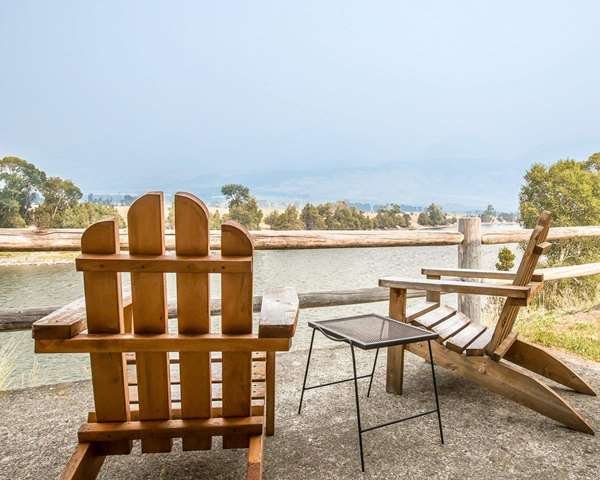
The Yellowstone River runs through it in a canyon-edged valley, and this is a big river by the standards of this guide — a major mountain river running fast and clear over cobble, cold year-round, taking a blue-green colour from the sky rather than brown from sediment.
Three things follow from the dryness and the openness, and they are the reason to understand this venue rather than treat it as another mountain lodge.
The air is exceptionally clear. At five thousand feet in a rain shadow there is roughly a sixth less atmosphere overhead than at sea level and very little moisture in what remains, which means distant ranges hold detail on a long lens in a way they do not in wetter country, the sky is a deeply saturated blue, and shadows are notably deeper than the temperature suggests.
There is almost no shade. Sagebrush steppe grows nothing tall, which means the only cover on this landscape is the riparian strip along the river and whatever the buildings provide.
And the ground is pale. Dry soil, bunchgrass and silver-grey sage over light-coloured rock make a high-albedo surface, which fills faces from below and fools a meter by a stop or more.
Gardiner sits at about forty-five degrees north. The June noon sun reaches around sixty-eight and a half degrees, the December noon sun about twenty-one and a half, days run from about eight hours thirty-five to fifteen hours forty-five, and civil twilight is around thirty-seven minutes.
We have not photographed a wedding at this lodge. Which spaces and grounds are included, what access there is to the river, and what the permitted hours are, are questions for their team.
Yellowstone Valley Lodge at a glance
| Where | A lodge on the Yellowstone River at Gardiner, the park’s northern gate |
| The country | Sagebrush steppe in a rain shadow — the driest and most open in this guide |
| The asset | Exceptional air clarity: distant ranges hold detail on a long lens |
| The problems | Almost no shade, a high-albedo pale ground, and summer smoke |
| Ask first | Included grounds, river access, permitted hours |
Four problems and what solves them
Problem one: no shade. Sagebrush steppe has nothing taller than a metre across most of its extent, which means that between roughly ten and four in the summer months a face on open ground has deeply shadowed eyes and a bright forehead, and the contrast at this altitude is greater than the same sun angle gives lower down.
The solutions are the river corridor and the buildings, and there is no third. The riparian strip along the Yellowstone grows cottonwood, willow and alder where the water table is high, and that band is the only natural cover on the landscape — which makes it the midday location by default. Knowing where it widens into a stand rather than a fringe is the most useful five minutes spent on arrival.
Within it, the species distinction matters. Cottonwood has a high open canopy of large glossy leaves on flexible stalks, which moves constantly and throws a shifting dapple — usable under overcast, unreliable in direct sun. Willow and alder are lower and denser and give better cover at close range.
Any conifer on the higher slopes — Douglas fir and Rocky Mountain juniper grow in this dry country — blocks almost all direct light, which makes their margin the best free separation on the property: a metre inside gives soft directional light in front and three or four stops of dark behind. Juniper in particular is worth looking for here because it grows on dry ground where nothing else does.
The buildings supply the rest. Any covered outdoor space works as a directional soft source with a hard mask, and depth back from its open edge is the whole control: two or three metres in gives a dramatic ratio with the sunlit ground beyond four or five stops down. A doorway is the purest version and it is the best free setup anywhere.
Problem two: the pale ground. Dry soil, bunchgrass and sage over light rock return a great deal of light, which has two consequences pointing in opposite directions.
It fills faces from below, which is precisely where a high sun leaves them dark — so a subject on open ground here is filled more generously than one standing on grass, and a midday portrait is more salvageable than it would be at a green venue.
And it fools the meter: a frame containing much pale ground and a bright sky underexposes by a stop or more unless the compensation is deliberate and checked on skin, and it has to be re-checked whenever the proportion of ground in the frame changes.
Sage itself is a genuinely useful surface: silver-grey, mid-toned and low in saturation, which makes it kinder to skin and to white fabric than a green meadow, and textured at a scale that reads as fine detail at distance and as structure close up.
Problem three: the river’s brightness and its shutter. Clear water over pale cobble under a deeply saturated high-altitude sky is bright, and it needs the same positive compensation as the ground.
The shutter is a decision rather than a setting: fast freezes moving water into individual highlights and spray, which reads as energy; slow smooths it into a continuous surface, which reads as calm. Neither is correct, both are available, and choosing deliberately is the point. In shade a slow shutter is easy; in sun it needs a small aperture or a filter.
The river also returns cool blue-green light upward onto faces, because it is reflected high-altitude sky filtered through water. Against warm direct sun that produces a split, which needs a warm gel on any added source rather than a global correction.
Problem four: smoke, and in this valley it is the one genuinely unanswerable condition. The northern Rockies’ fire season runs from roughly July into September, and this valley funnels smoke from fires anywhere in the region — turning the sun orange, flattening contrast, removing the ranges entirely, and shifting everything warm in a way no white balance resolves.
The redistribution is the only response: smoke removes every wide frame, which at a venue whose principal asset is air clarity is a substantial loss, and leaves the river at close range, the riparian cover and the interiors intact. Weighting a late-summer day toward those is the honest plan.
Further notes from the field
On the clarity, which is the reason to be here. In dry rain-shadow air at five thousand feet, a long lens will resolve detail on a range twenty or thirty miles away that would be a soft blue suggestion in humid country. That makes the compressed mountain frame the signature photograph of this valley.
The lens decision is the one people get wrong. A wide lens renders distant mountains at their true angular size, which is modest, so a wide frame makes them look like hills. A moderate telephoto brings a range forward so it reads at something closer to the scale the eye perceives — and that requires the camera a long way back from the subjects with clean ground between, which in open steppe is easy to arrange.
The exposure follows: expose for the mountains, and lift the subjects with a close warm-gelled source at about a stop over the ambient. Metering on faces gives a white sky and a washed-out range and removes the reason for the frame.
On the gradient. A river canyon means banks, terraces and benches, and even a small change of level is a disproportionate resource: from below the subjects they stand against open sky with no horizon behind them — the cleanest background in any conditions — and from above them the valley and the ranges fill the space behind.
On the sky. Open steppe means a low horizon and an enormous sky, which means what the sky is doing matters more here than at a forested venue. A clear high-altitude sky is deeply saturated and even; a convective sky with towering cloud over the ranges is the best background this landscape ever has. And a low camera with sage across the base puts the subjects entirely against it.
On groups. Open ground is level, clean and generous, which suits a group — but the requirement is everyone in the same light, which on a treeless landscape at midday means full overcast or full sun with the sun behind the camera, because there is no shade large enough to hold a group. That makes group timing a scheduling decision rather than a location one.
On the low light. Open dry country at the ends of the day is transformed: a low sun rakes across sage and bunchgrass rather than falling onto it, throwing countless small shadows that give a wide frame real depth and turning silver-grey to gold. Civil twilight at around thirty-seven minutes is generous, and in an open valley the whole of it is usable.
This is also genuinely dark-sky country, which means an evening running past twilight has a real night sky available and no ambient light to work by once the sky has gone.
On the wildlife. This is the park’s northern gateway and elk, bison and pronghorn use this open country regularly rather than occasionally — bison in particular winter on the low ground here. That is a photographic opportunity and a real practical constraint: an animal in a frame becomes its subject, and distance is a matter for the park’s guidance rather than for judgement.
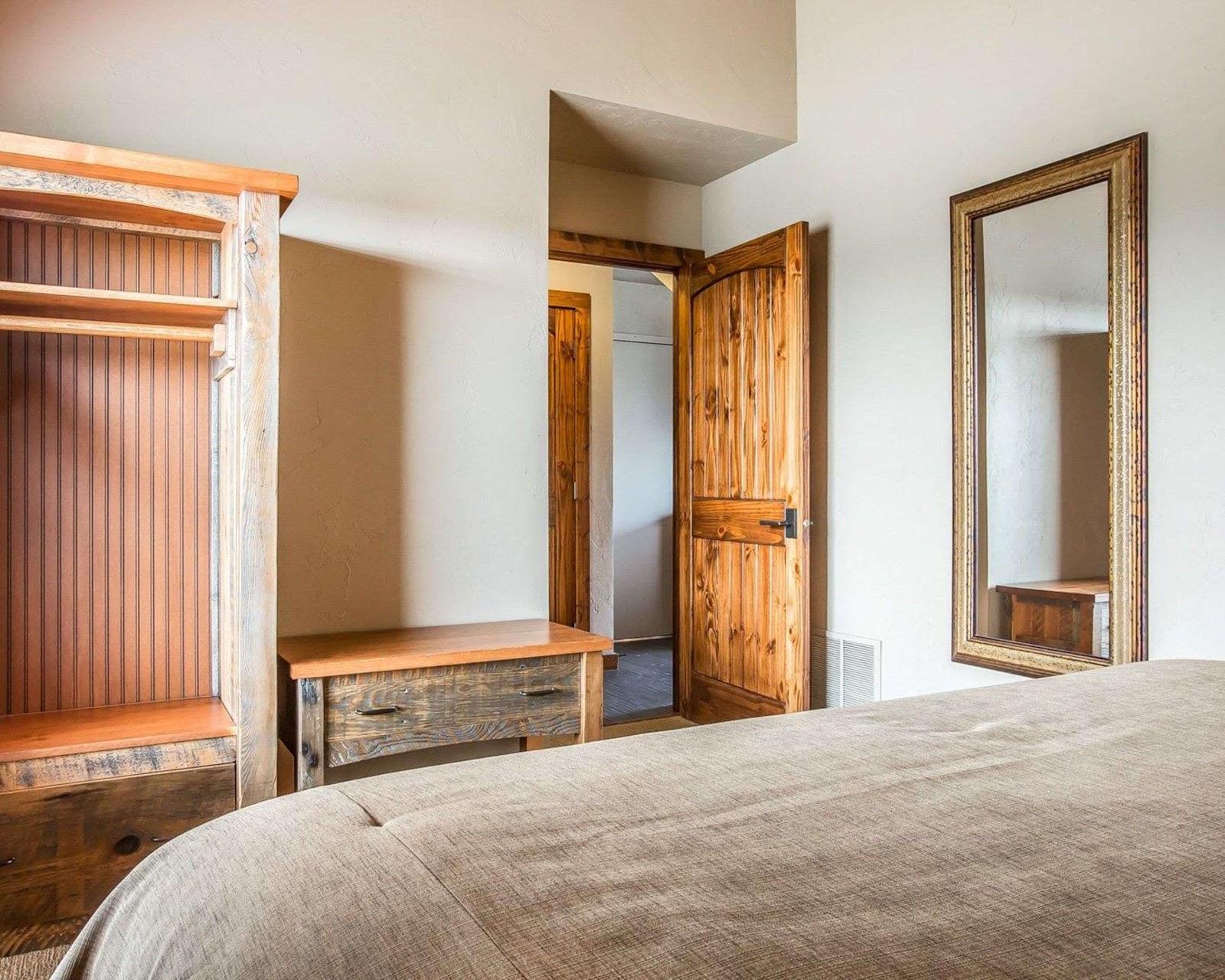
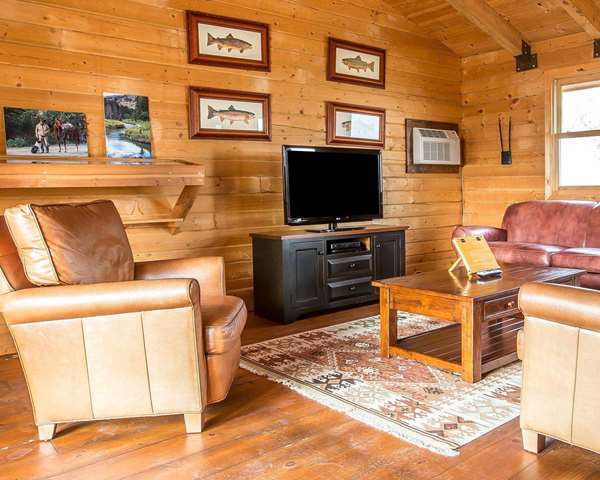
On indoors. A Montana lodge is likely to mix timber and stone with generous glazing, which means separation rather than light is the problem: find something dark, use the glazing at forty-five degrees, or add a source a stop over ambient. Timber and stone are both high-frequency textures that come alive under raking light and read as flat fields under flat light.
And two practical matters. Gardiner is known for wind — a valley in a rain shadow with steep ground above it channels and accelerates air, and downslope winds here can be strong and persistent, which makes a lightstand a liability and every source handheld. And the diurnal swing in dry air at this altitude is large: a warm afternoon becomes a cold evening quickly.
- The river corridor and the buildings are the only shade — there is no third
- Pale dry ground fills from below and fools a meter by a stop or more
- Compress the ranges with a telephoto; the clear air is the whole point
- A low camera with sage across the base puts subjects wholly against sky
- Groups need overcast or sun-behind-camera: no shade here is big enough
The northern gateway year
Four sharply separated seasons in the driest part of this region, and this is the one corner of Yellowstone’s edge that is accessible all year — which matters, because the park’s northern road stays open.
Winter is long, cold and clear, and photographically it is the easiest light of the year. The December noon sun at around twenty-one and a half degrees means the whole short eight-and-a-half-hour day rakes rather than floods, which is exactly what sage, stone, timber and snow want, and the clear cold air means the ranges hold detail all day.
Snow is the best natural fill available: it lifts shadows to within a stop and fools a meter by about two stops, so open up deliberately, and against near-black conifer and juniper it gives the widest brightness range in this guide.
Winter’s specific feature here is the wildlife. Because this is the lowest and driest ground at the park’s edge, elk and bison winter on it in numbers, which makes a winter frame in this valley likely to contain animals whether or not that was intended.
The river is the other winter subject: a fast mountain river does not freeze over, so it runs open and dark between ice shelves at the margins, with steam rising off it on very cold mornings because the water is warmer than the air. Open dark water between white banks under a low sun is the most distinctive winter frame here.
The costs are cold, a short day, batteries draining fast, glass that fogs coming indoors, and wind that in this valley can be severe.
Spring is late and it is the weak window. Snow rots through April, the sage is dun, the bunchgrass is brown before it is green, and the river runs high and turbid with snowmelt — which takes the edge off the clarity that is its defining quality.
What spring gives is the ranges at their whitest above a bare valley, which is a strong contrast, and wildlife at its most visible. Late May and June bring green to the low ground and wildflowers to the sage while the peaks stay white.
Summer is the season and the days are long: over fifteen and three-quarter hours at the solstice with about thirty-seven minutes of civil twilight, which means the low light arrives after nine and lasts. The river drops and clears through July, the air is dry, and the light at both ends of the day is excellent.
The costs are the middle of the day on a treeless landscape, afternoon convection over the ranges, crowds at the park gate, and the smoke described above — which at a venue whose principal asset is clarity is the most damaging condition of the year.
Late September into early October is the best window. The cottonwoods along the Yellowstone turn a clean bright gold, which against silver sage and a blue-green river below fresh-snowed peaks is the strongest photograph this valley produces. Aspen on the slopes turn too, and because a grove is clonal, genetically one organism, a whole stand goes gold at once.
The smoke risk has usually passed, the river is at its clearest and lowest, the elk are in rut and highly visible, the crowds thin, and the air is at its clearest of the year — which is exactly when the compressed range frames need it. That two-week window is the reason to choose this valley over a greener one.
More frames from Yellowstone Valley Lodge
Yellowstone Valley Lodge wedding photography: common questions
What makes this country different?
It sits in a rain shadow at about five thousand feet, which makes it the driest and most open in this guide — and gives exceptional air clarity at distance.
Where is the shade?
The riparian strip along the Yellowstone, and the buildings. Sagebrush steppe grows nothing tall, so there is no third option.
Why is my exposure wrong?
Pale dry soil, bunchgrass and sage return a great deal of light. Compensate deliberately and re-check whenever the proportion of ground in the frame changes.
What is the signature frame?
A compressed mountain range behind the subjects, taken with a moderate telephoto from a long way back. The clarity here is the whole reason for it.
Where do I photograph a group at midday?
Nowhere in shade — there is none big enough. It becomes a scheduling decision: full overcast, or full sun with the sun behind the camera.
When is the valley at its best?
Late September into early October: gold cottonwood against silver sage and a clear river below fresh-snowed peaks, in the clearest air of the year.
More Montana venue guides
We are writing a photographer’s guide to every venue we would happily shoot in Montana. Here are three more, plus the full index:
- The Lodge at Big Mountain, Whitefish: A Walk Through the Property
- The Farmhouse Inn: Four Ways Out of the Open-Ground Problem
- The Firebrand Hotel: Photographing a Mountain Town from Inside It
Planning a wedding at Yellowstone Valley Lodge?
Clear air and a big river. Tell us your date and we will use the distance.