 The Van Dusen Mansion, Minneapolis: A Walk Through House and Grounds
Summit Manor: Photographing a Summit Avenue Mansion and Its Grounds
The house is good and the street outside it is better, because Summit Avenue is a photographic asset in its own right.
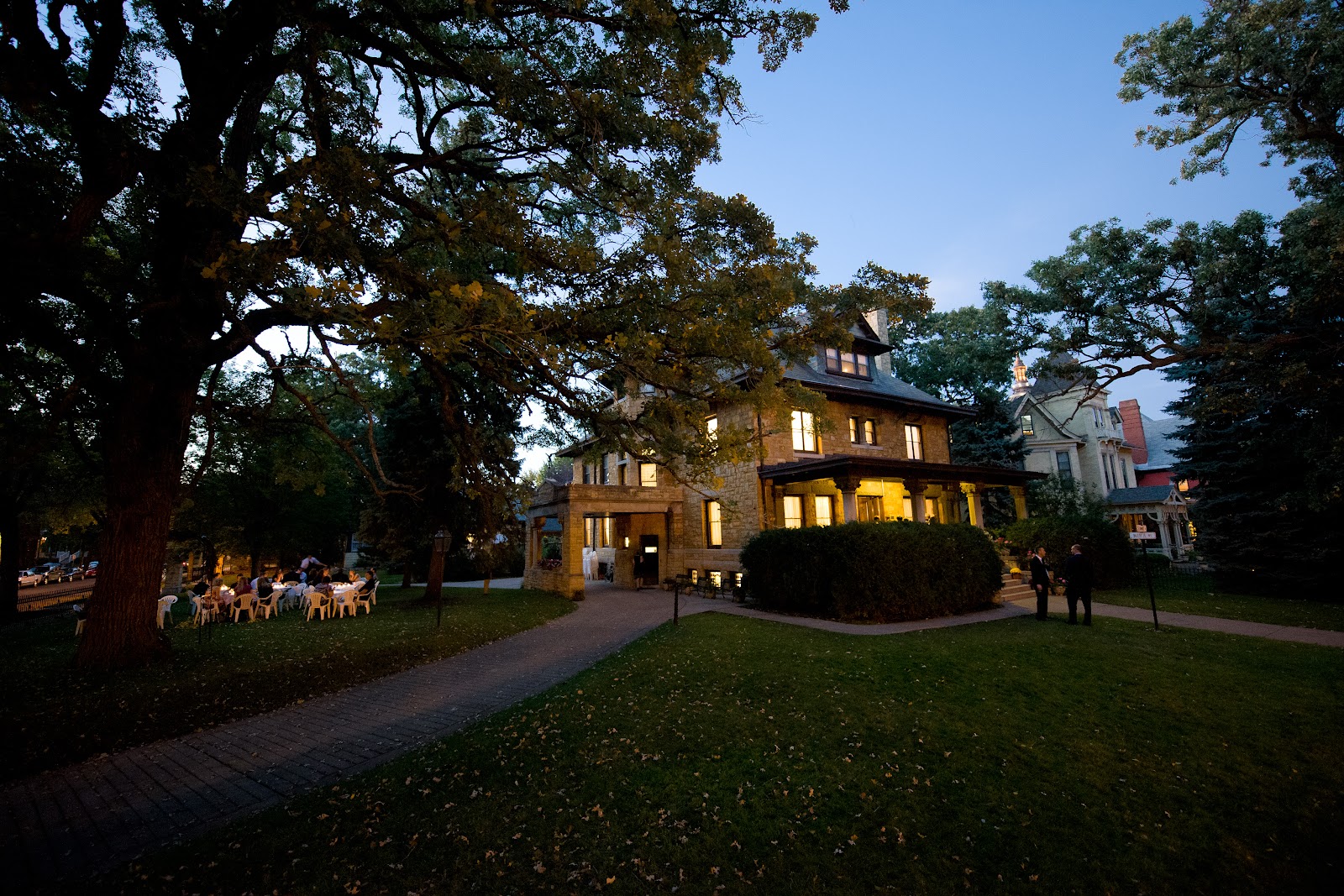
Summit Manor stands on Summit Avenue in St Paul, Minnesota, a Victorian mansion with period interiors, ballroom space and grounds, on a street lined with substantial houses of the same era.
Most venue guides stop at the property line. Here that would miss the point, because Summit Avenue is one of the longest continuous stretches of Victorian residential architecture in the country, and for a photographer a street of substantial period houses at consistent scale is a genuinely useful thing — it behaves like a very long outdoor room with matched walls on both sides.
So this is a walk through the house and then out onto the street. We have not photographed a wedding at Summit Manor; Victorian interiors and low-rise residential streets behave the same wherever they occur. Which rooms may be used and what the grounds allow are questions for their events team.
Summit Manor at a glance
| Where | Summit Avenue, St Paul, Minnesota |
| Character | A Victorian mansion with period interiors, ballroom and grounds |
| The overlooked asset | Summit Avenue itself — matched period houses at consistent scale |
| Inside | Tall windows, steep fall-off, ornate plaster overhead |
| Winter | Low sun all day and snow as the best available fill |
The interiors: tall windows and the ceiling trap
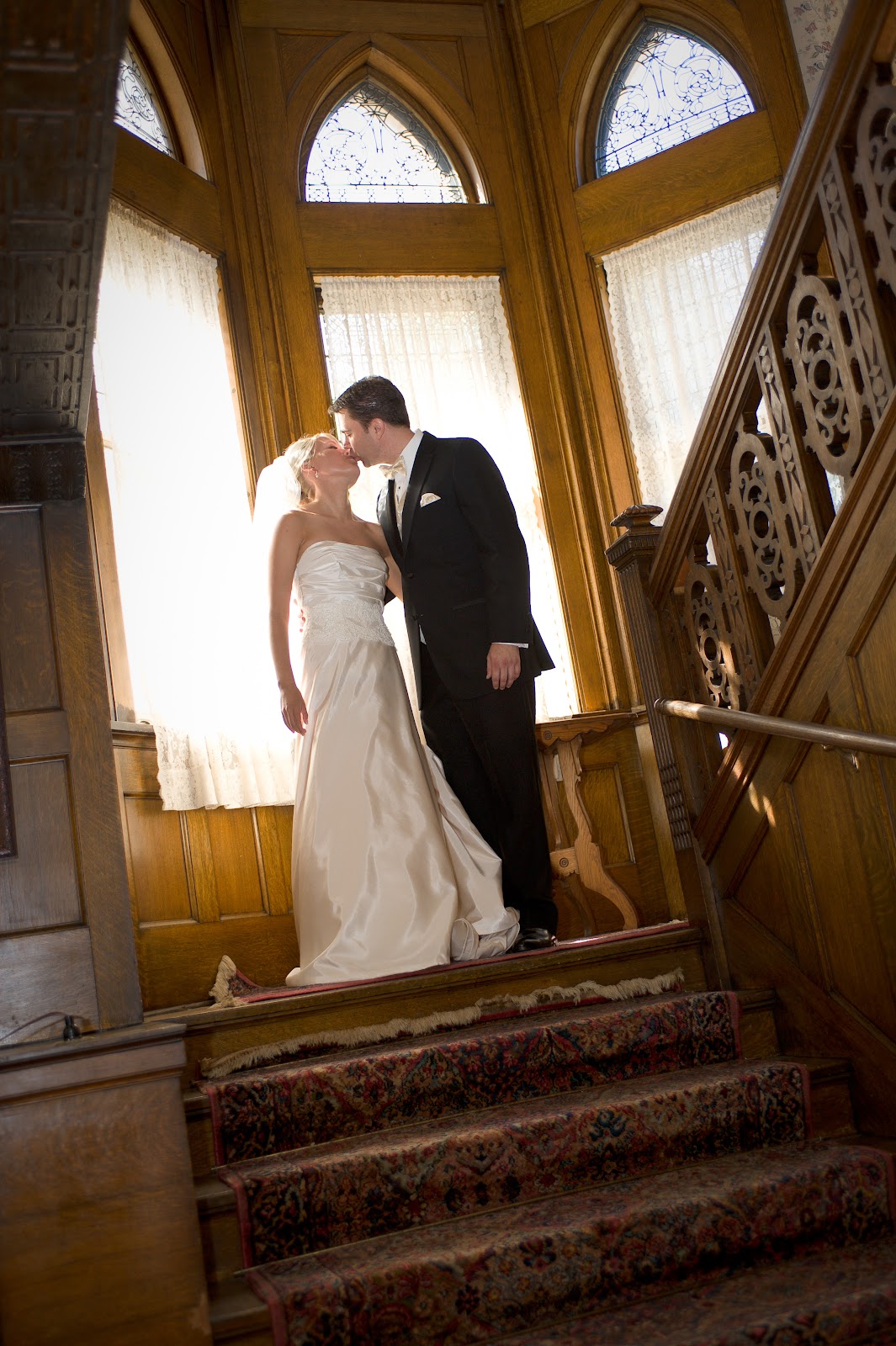
Victorian houses of this class were built with tall windows because artificial light was unreliable, and those windows are the best natural light in the building — a very large source at a short distance, which makes it soft, bright and steeply falling. The fall-off is the useful part: a subject a metre from the glass is well lit while the room three metres behind is markedly darker, which separates them from the background at no cost.
One window gives three setups for the price of a change in stance. Facing it: a broad soft key with catchlights. Side-on: strong modelling with a genuine shadow side. Back to it: a rim and a silhouette. That is more variety than most lighting kits provide and it needs nothing carried.
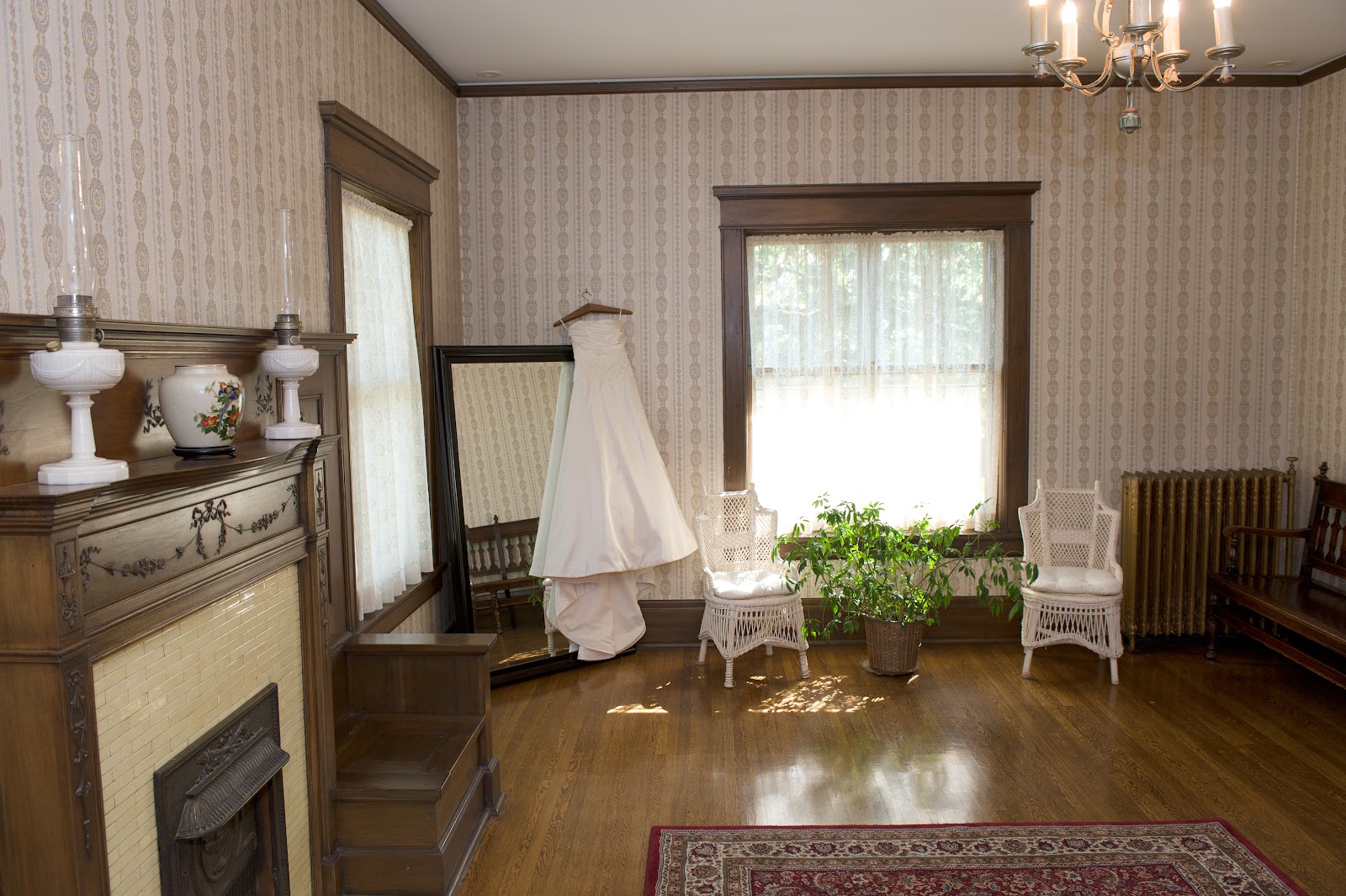
The period cautions apply. Direct sun through a window is a small hard source rather than a soft one, and a sheer curtain drawn across converts it instantly — the most useful object in any Victorian room. Shutters and blinds in direct sun print hard slatted stripes across a face that cannot be corrected, so open them fully or close them enough to diffuse.
Ornate plaster is the recurring trap. Cornices and ceiling roses are pale and often uplit, so they sit two to four stops above the people beneath them — meter for the couple and the plaster washes to featureless white, losing exactly the relief that makes the room worth photographing. Raise the couple towards the ceiling with a warm-gelled source rather than exposing down to them, then expose for the plaster, and bring them within two or three stops rather than level.
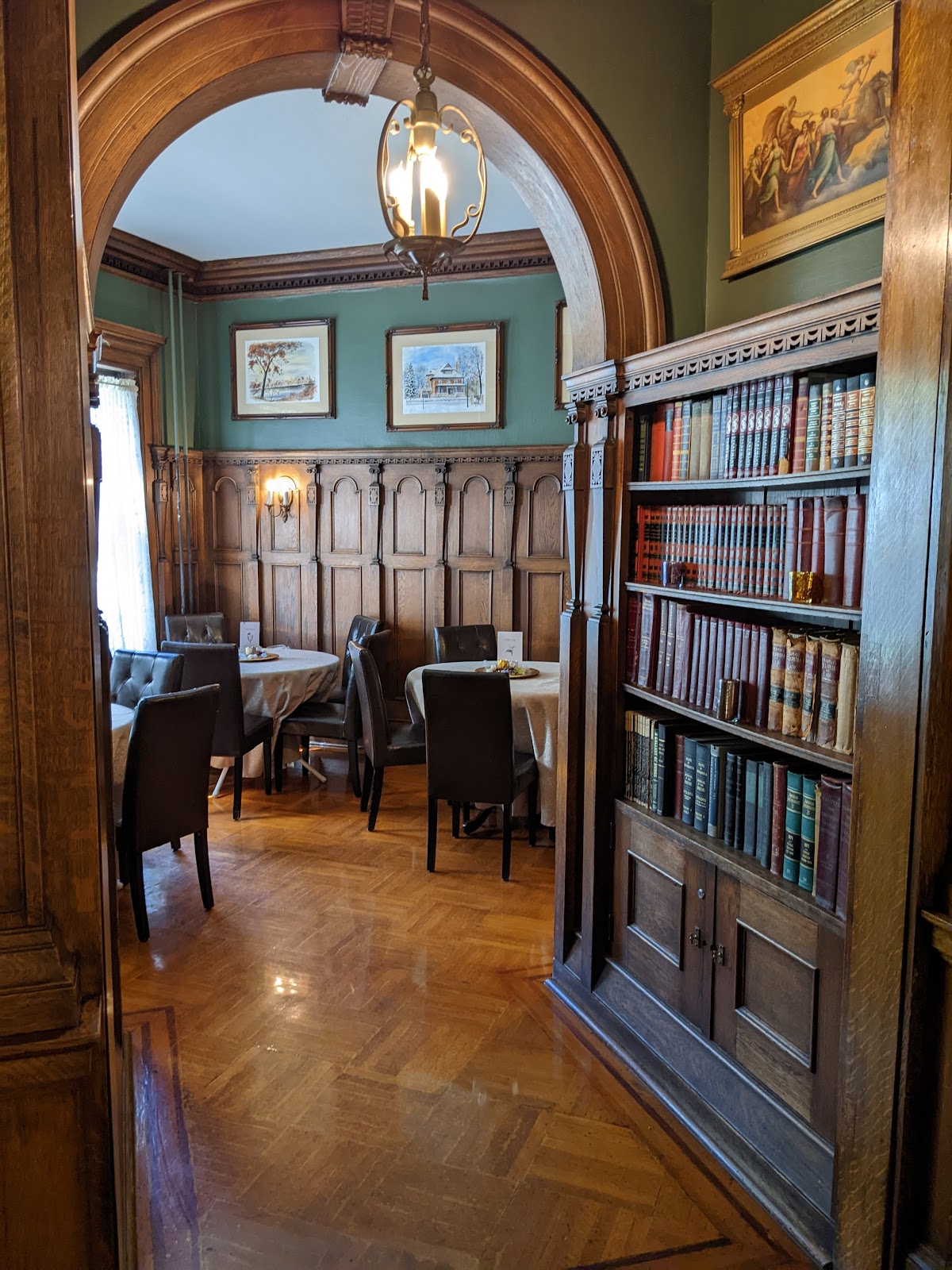
Where the house has dark panelling or heavy joinery, the usual rule applies: it absorbs, so bounce returns little, and carved detail reads only when light rakes across it rather than arriving from the camera axis.
The grounds and the ballroom
House grounds on a city street are modest rather than expansive, which means they work better as foreground than as backdrop. Planting half a metre from the lens with the couple two metres beyond gives depth and softness with no equipment, and a walled or hedged garden contains the background so there is no blown sky to manage.
Mature planting means dapple at midday — several stops across a face, moving with any breeze, and correctable only by moving people. The house’s own shadow is the reliable midday shade, and on a street of substantial houses that shadow is long and clean. The last ninety minutes are when the planting comes alive, because low sun arrives under the canopy horizontally rather than down through it.
Formal groups need deciding in advance. Victorian rooms are generous by domestic standards but small by function-room standards, so past about twenty people groups belong outside — and the front steps are the best option available, because steps arrange people at different heights automatically and a period doorway frames them.
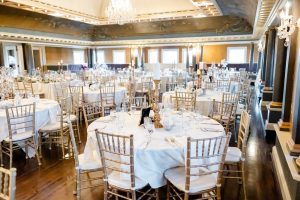
A ballroom in a house of this scale is a converted or purpose-built room with little daylight, which makes it the block that absorbs any delay: one fixed lighting condition, no window to balance, and no penalty for a late running order. House lighting will be warm, dim and overhead, so one warm-gelled source at face height at about forty-five degrees fixes the top-light problem and a second behind as a rim finishes the dance floor for the night.
- Draw a sheer curtain to convert hard window sun into a soft source
- Raise the couple towards ornate plaster rather than exposing down
- Use garden planting as foreground, not as backdrop
- Groups past about twenty go to the front steps
- The ballroom has no clock; move that block when the day slips
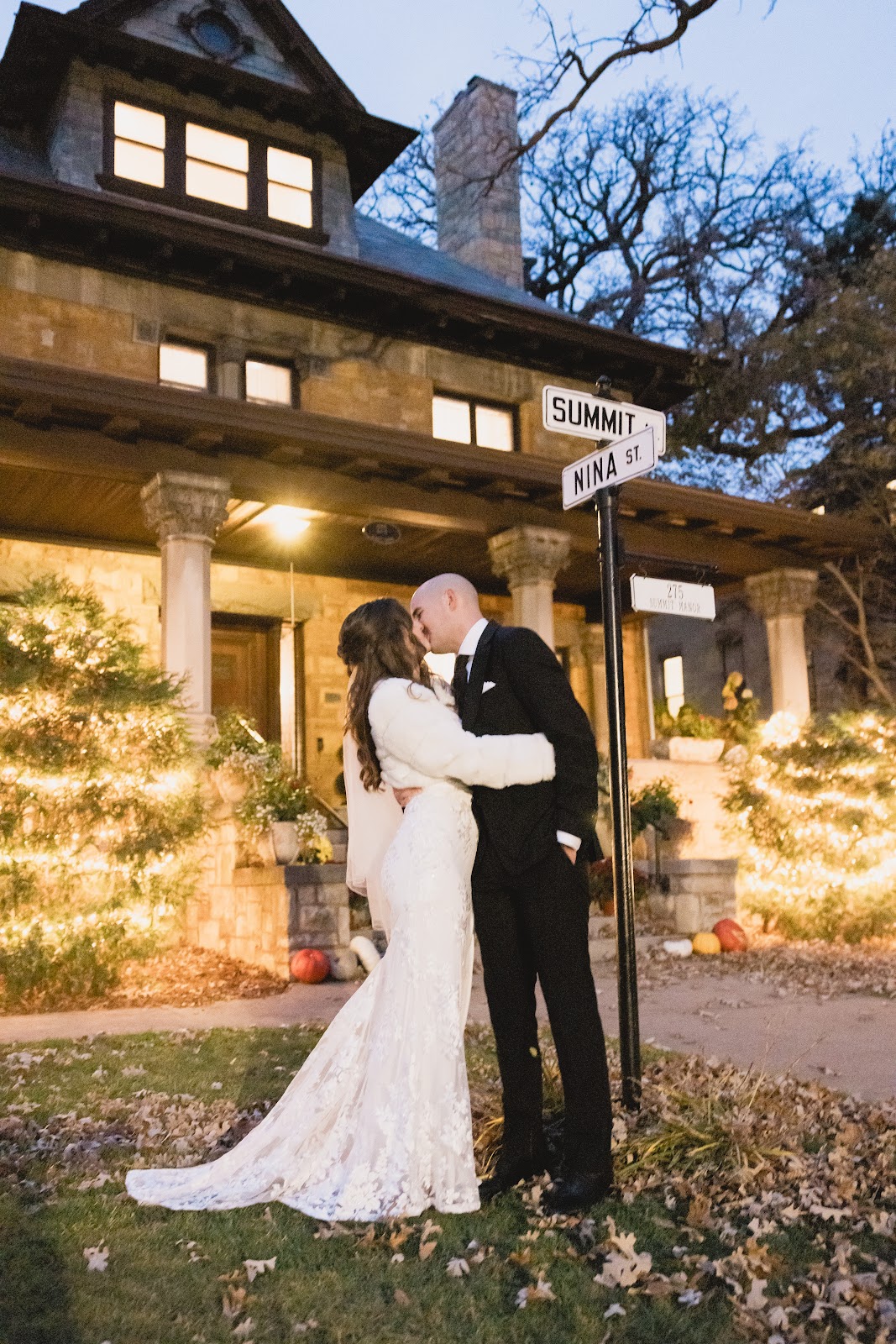
Out to Summit Avenue, and a Minnesota winter
Summit Avenue is the reason to work outside the property line. A long residential street of substantial period houses at consistent scale behaves like an outdoor room with matched walls: the buildings on both sides bounce light between them, which softens it, and they replace a blown sky in the background with mid-toned architecture. That is the same benefit a narrow historic street gives, at a grander scale.
Because it is residential and low-rise, low sun reaches street level and runs the full length of the street rather than being cut off by towers — lighting one side and shading the other. Finding which stretch runs roughly east-west is a ten-minute site visit and the most useful preparation available here, because that is the frame the street produces and nothing else does.
Mature street trees line much of it, which means the same dapple problem at midday and the same transformation in the last ninety minutes, when low sun comes in under the canopy and backlights the leaves. Autumn is particularly strong: Minnesota colour is intense and short, and a late-September or early-October date on a tree-lined avenue is arguably the best outdoor combination the city offers.
The etiquette matters because these are people’s homes. Working briefly and quietly on the pavement is the right approach rather than setting up an installation, and a long lens is both more discreet and better for compressing the street into layers.
Winter is the other strong season and it cuts favourably. The sun stays low all day, so period stone and brick are raked throughout a short afternoon rather than for ninety minutes at each end. Snow is the best natural fill available, filling exactly the shadows that dark Victorian materials refuse to fill — and it will fool a meter by two stops, so overexpose deliberately and check it holds texture. Plan the outdoor block early because the days are short, keep it brief because of the cold, and acclimatise a camera rather than cycling it between subzero air and a heated house.
More frames from Summit Manor
Summit Manor wedding photography: common questions
What is the overlooked asset here?
Summit Avenue itself. A long street of substantial period houses at consistent scale behaves like an outdoor room with matched walls — the buildings bounce light between them and replace a blown sky with mid-toned architecture.
Does street-level golden hour happen?
Yes, because the street is residential and low-rise, so low sun reaches the ground and runs the full length of it. Finding which stretch runs roughly east-west is the most useful ten minutes of preparation available.
How many setups does one tall window give?
Three, by changing stance alone — facing it for a broad key with catchlights, side-on for modelling with a shadow side, back to it for a rim and a silhouette. More variety than most lighting kits, with nothing carried.
How do you keep ornate plaster from blowing out?
Raise the couple towards it with a warm-gelled source rather than exposing down to them, then expose for the plaster. Within two or three stops, not level, because matching flattens the sense that the room rises above them.
Where do larger groups go?
Outside, past about twenty people. The front steps are the best option — steps arrange people at different heights automatically and a period doorway frames them, which solves the two hardest things at once.
Which season photographs best?
Two. Late September to early October, when Minnesota colour is intense and short and the tree-lined avenue is at its strongest. And deep winter, when low sun rakes period stone all day and snow supplies the fill dark materials refuse.
More Minnesota venue guides
We are writing a photographer’s guide to every venue we would happily shoot in Minnesota. Here are three more, plus the full index:
- The University Club of St. Paul: A Panelled Club With a River View
- Como Park Conservatory: One Decision the Minnesota Calendar Makes for You
- The F. Scott Fitzgerald House: Photographing a Narrow Row House
Planning a wedding at Summit Manor?
The house is good and the street is better. Tell us your date and we will map which stretch runs east-west.