 The Bierstube: What Changes When the Reception Is in a Bar
The Resort at Paws Up, Greenough: A Walk Through the Site
Big enough that moving between its environments is a drive, not a walk.
The useful way to describe this property is to walk it, with one qualification: it is large enough that walking it is a figure of speech. Moving between its environments takes vehicles and time, and budgeting that honestly is the first practical decision of the day.
The property is a working ranch of substantial acreage on the Blackfoot River in western Montana, north-east of Missoula, in the broad valley between the Garnet Range and the Bob Marshall country. Scale is its defining characteristic and it is worth treating as a fact to plan around rather than an advantage to enjoy.
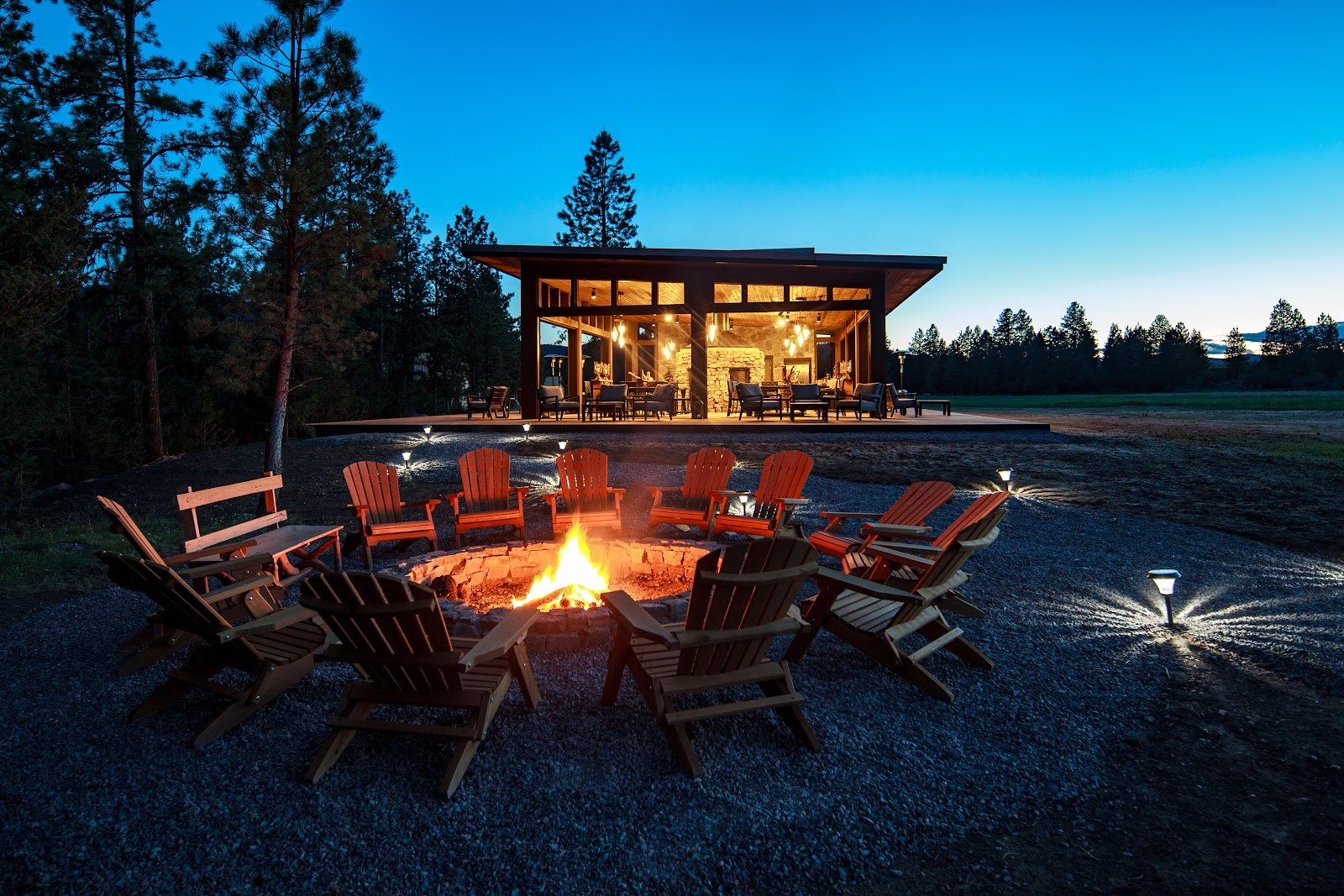
There are four environments and they are genuinely different from each other: open meadow and grassland, the river corridor, timber buildings and barns, and rock bluffs above the water. Each does something the others cannot, and a set of photographs that uses all four looks like it was made in several places — which is what a set needs and what most venues cannot give.
The order that works is meadow, buildings, river, bluffs: from the most open to the most enclosed to the most dramatic. And the timing has to be planned around the transit, because two of those are a considerable distance apart.
The altitude runs through everything. The valley floor here sits at around three and a half to four thousand feet — lower than most Montana venues in this guide, which softens the altitude effects but does not remove them: roughly an eighth less atmosphere overhead than at sea level, harder direct sun, deeper shadows, cool open shade under a deep blue sky, and clear air.
Greenough sits at about forty-seven degrees north. The June noon sun reaches around sixty-six degrees, the December noon sun about nineteen, days run from about eight hours fifteen to sixteen hours ten, and civil twilight is around forty-one minutes — among the longest in this guide.
We have not photographed a wedding at this resort. Which spaces and grounds are included, what access there is to the river and the bluffs, what transport is available between locations and what the permitted hours are, are questions for their team — and the transport question is the one that determines what a day can cover.
The Resort at Paws Up at a glance
| Where | A very large working ranch on the Blackfoot River, western Montana |
| The first fact | Scale: moving between environments takes vehicles and time. Budget it |
| Four environments | Open meadow, the river corridor, timber buildings, rock bluffs |
| The latitude | 47°N: a sixteen-hour midsummer day and a forty-one-minute twilight |
| Ask first | Included areas, river and bluff access, transport between them, hours |
The meadows and the buildings
Start in the open, because the meadows are where the ceremony will probably be and because they are the simplest environment on the property.
Open grassland behaves as open ground does everywhere: excellent when the sun is low or the sky is overcast, difficult when the sun is high. At sixty-six degrees of June elevation the sun puts eyes in shadow and foreheads in light, and meadow has no cover — though sixty-six degrees is lower than at any venue further south in this guide, which makes the midday here slightly less punishing than in Wyoming or Colorado.
What the meadows give is scale and sky. A low horizon means a great deal of sky in every wide frame, and a low camera with grass across the bottom of the frame puts the subjects entirely against it — which removes every building, vehicle and guest in one move and is the cleanest background available in any conditions.
What the sky is doing then decides the frame. A clear high-altitude sky is deeply saturated and even; a convective sky with towering cloud over the ranges is the best background this landscape ever has, and on a western Montana summer afternoon it is frequently available.
The meadow grass itself is a useful surface in low light. A sun close to the horizon rakes across it rather than falling onto it, which throws countless small shadows that give a wide frame real depth and turns green or straw grass to gold. That transformation is the reason to be in the open at the end of the day rather than anywhere else.
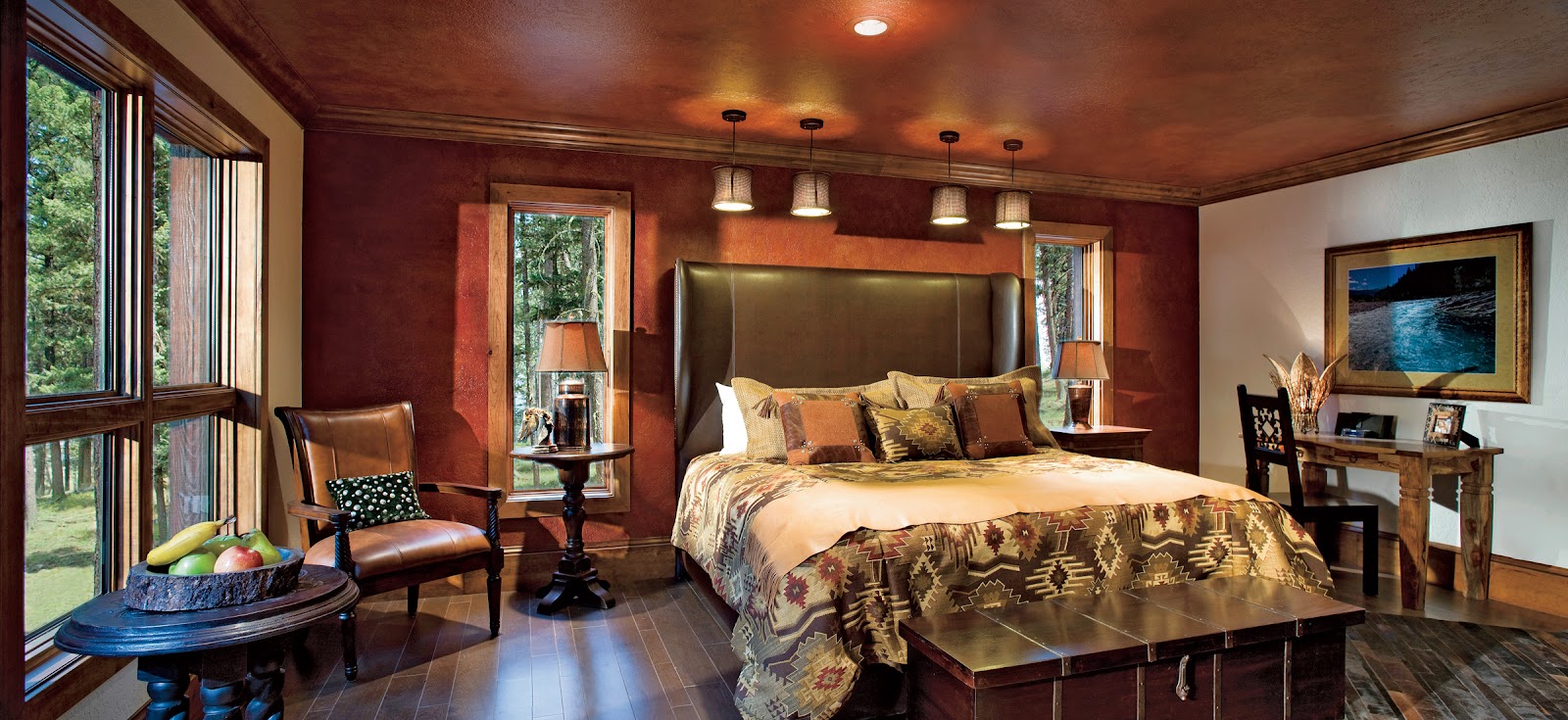
The buildings are the second environment and they are the best light on the property. Aged timber absorbs rather than reflects, which means the ambient inside sits a stop or two below what the eye reports and the fall-off from any opening is steep — four stops or more from a face at a door to a surface three metres behind it.
In a barn the effect is extreme, and depth back from a large open door is the whole lighting control: at the threshold the light is flat and frontal; three metres in the ratio is dramatic and the interior behind has fallen to near-black. Deciding that depth deliberately is the single most useful thing anyone does inside a ranch building.
Opposing doors are the barn’s specific gift — a subject lit from the near one and backed by the blown rectangle of the far one gives key light and rim light in one frame. Board gaps produce hard parallel stripes when there is direct sun outside: structure behind a subject, unusable across a face.
Meter on skin, never on the scene, and set a custom white balance on a face in the position being used, because aged timber biases warm and warms further with depth.
Outside, weathered timber is the best exterior background on the property: dark, textured, low in saturation, and far kinder to a white dress than any pale wall. It is also a high-frequency texture that comes alive under raking light and reads as a flat brown field under frontal light — which makes each wall a first-or-last-hour subject, and means checking the orientations on arrival is worth five minutes.
The river and the bluffs
The Blackfoot is the third environment and it is the property’s best natural feature.
A western Montana river runs clear and cold over cobble and gravel, which means it reads blue-green from the sky rather than brown from sediment, and it is fast rather than slow. That produces a subject with real colour and real movement, available at any hour of any day.
The river corridor is also the only place on open ranch ground with side light. A watercourse is a linear gap in the tree cover along it, which means a subject standing beside it — facing along it or out over it — is lit from one side rather than from above, and that is the difference between a modelled face and a flat one under canopy.
The riparian strip is cottonwood, willow and alder where the water table is high, and the species distinction matters. Cottonwood has a high open canopy of large glossy leaves on flexible stalks, which moves constantly and dapples — usable under overcast, unreliable in sun. Willow and alder are lower and denser and give better cover at close range. Any Douglas fir on the slopes above blocks almost all direct light, which makes its margin the best free separation on the property.
Ponderosa pine grows in this valley and it is the one to avoid: tall with a sparse high crown, and a hard shifting dapple with a four or five stop range across a face. It is background material only — though as background it is excellent, because a stand of ponderosa has orange-brown plated bark on straight trunks, which is one of the most distinctive tree textures in the northern Rockies.
The river’s technical notes: it is bright, so a frame containing much of it underexposes by a stop or more unless the compensation is deliberate; it returns cool blue-green light upward onto faces, which needs a warm gel on any added source rather than a global correction; and the shutter is a decision rather than a setting, with fast freezing water into highlights and spray and slow smoothing it into a surface.
The bluffs are the fourth environment and they are what distinguishes this property from other ranches. Rock faces above a river give what open ranch ground cannot: enclosure, verticality and a dark textured background at scale.
Rock is a high-frequency texture that is spectacular under light raking across it and reads as a flat field under frontal light — which makes the bluffs, like the timber walls, a first-or-last-hour subject whose usable window depends entirely on which way each face is oriented.
They also give the property its only genuinely dramatic wide frame: a subject small at the base of a rock face, with a vertical composition rather than a horizontal one, states the scale of the place in a way a meadow panorama cannot. The frames that work there are tall, and the subjects are smaller than instinct wants.
The practical caution is footing. Rock above a river is uneven and often loose, and the ground near the water is wet and slippery — which means a party in formal shoes stays on level ground and the photographer goes lower with a longer lens. That compromise gives most of the effect with none of the risk and it is the version worth planning.
And two practical matters that apply across the whole property. A broad valley channels wind along its axis, which makes a lightstand a liability and means every source is handheld or weighted. And bears are genuinely present in western Montana river country, which is a matter for the property’s guidance rather than for improvisation.
- Budget the transit: this property is a drive, not a walk
- Depth back from a barn door is the whole lighting control
- The river corridor is the only side light on open ranch ground
- Fir blocks; willow covers; cottonwood shifts; ponderosa dapples but photographs well
- At the bluffs go vertical, and put the photographer lower than the party
The Blackfoot valley year
Four sharply separated seasons in western Montana, and one tree that makes autumn here unlike anywhere else in this guide.
That tree is western larch. It is a conifer that is deciduous — it holds needles through the growing season and drops them in autumn, turning a clear intense gold first — and it grows in this part of Montana and almost nowhere else in these guides.
In mid to late October a mixed forest on the slopes above this valley has larch turning brilliant gold among fir and spruce that stay near-black, which gives warm colour standing inside a dark evergreen wood rather than against a background. On a ranch that means hillsides patterned in gold and near-black above open meadow, which is the strongest wide frame the property produces.
The cottonwoods along the Blackfoot turn earlier and they are the river’s autumn: a clean bright gold along the water, doubled in it where the surface is calm, with the blue-green of the river beneath. Aspen turn in late September, and because a grove is clonal — genetically one organism — a whole stand goes gold at once rather than tree by tree.
Between the aspen in late September, the cottonwood at the start of October and the larch in the middle of it, western Montana has a longer and more varied autumn than most of the Rockies — which makes a three-week window rather than a two-week one.
Autumn also brings the clearest air of the year, the end of the smoke risk, cold mornings that put mist on the river, and thinning crowds.
Winter is long and snowy, and photographically it is the easiest light of the year. The December noon sun at around nineteen degrees means the whole short eight-hour-fifteen day rakes rather than floods — which is exactly what weathered timber, rock and snow want, and which means there is no bad hour at all.
Snow is the best natural fill available: it lifts shadows to within a stop and fools a meter by about two stops, so open up deliberately, and against near-black conifer it gives the widest brightness range in this guide. A snow-covered meadow below dark forested slopes, with weathered timber buildings on it, is austere and superb — and snow simplifies a large working property by burying tracks, vehicles and clutter.
The river is the other winter subject: a fast river does not freeze over, so it runs open and dark between ice shelves at the margins, with steam rising off it on very cold mornings because the water is warmer than the air. Open dark water between white banks below a snowy bluff, under a nineteen-degree sun, is the most distinctive winter frame here.
The costs are cold, a short day, batteries draining quickly, glass that fogs coming indoors, and transit across a large property that depends on conditions.
Spring is late and it is the weak window. Snow lies into May at this elevation, the ground is saturated with meltwater, the meadow is brown before it is green, and the river runs high and turbid with snowmelt — which takes the edge off the clarity that is its defining quality.
Larch is worth naming again: it flushes new needles in a startlingly bright pale green in May, which against dark fir is nearly as striking as its autumn gold and which almost nobody plans for.
Summer is the season and the days are long: over sixteen hours at the solstice with about forty-one minutes of civil twilight, which means the low light arrives after nine and lasts, and the working day is among the longest in these guides. The meadow is green, the river drops and clears through July, and the light at both ends of the day is excellent.
The costs are the middle of the day, mosquitoes in wet meadow ground in early summer, afternoon convection over the ranges, and the smoke. The northern Rockies’ fire season runs from roughly July into September, and smoke can fill this valley for days — removing the ranges and the wide frames entirely while leaving the barns, the river at close range and the bluffs intact.
More frames from The Resort at Paws Up
The Resort at Paws Up wedding photography: common questions
What is the first thing to plan?
The transit. This property is large enough that moving between its four environments takes vehicles and time, and the schedule has to allow for it.
What are the four environments?
Open meadow for scale and sky, the river corridor for movement and side light, timber buildings for controlled dark light, and rock bluffs for enclosure and verticality.
Where is the best light?
Three metres inside a large barn door: four or five stops of fall-off, with no equipment, in any weather.
Which trees can I use?
Douglas fir blocks; willow and alder cover at close range; cottonwood moves and dapples; ponderosa dapples unusably but photographs beautifully as background.
How should the bluffs be photographed?
Vertically, with the subjects smaller than instinct wants — and with the photographer lower than the party, using a longer lens, because the footing is poor.
When is the valley at its best?
Late September through mid-October: aspen, then cottonwood along the river, then western larch gold among near-black fir. A three-week window.
More Montana venue guides
We are writing a photographer’s guide to every venue we would happily shoot in Montana. Here are three more, plus the full index:
- Sage Lodge, Pray: How the Light Moves in Paradise Valley
- Triple Creek Ranch, Darby: What It Suits and What It Does Not
- Yellowstone Valley Lodge, Gardiner: Field Notes, Problem and Solution
Planning a wedding at The Resort at Paws Up?
Four environments and a drive between them. Tell us your date and we will plan the route.