 The Bierstube: What Changes When the Reception Is in a Bar
Sage Lodge, Pray: How the Light Moves in Paradise Valley
A valley wide enough that the ranges do not take the day’s ends.
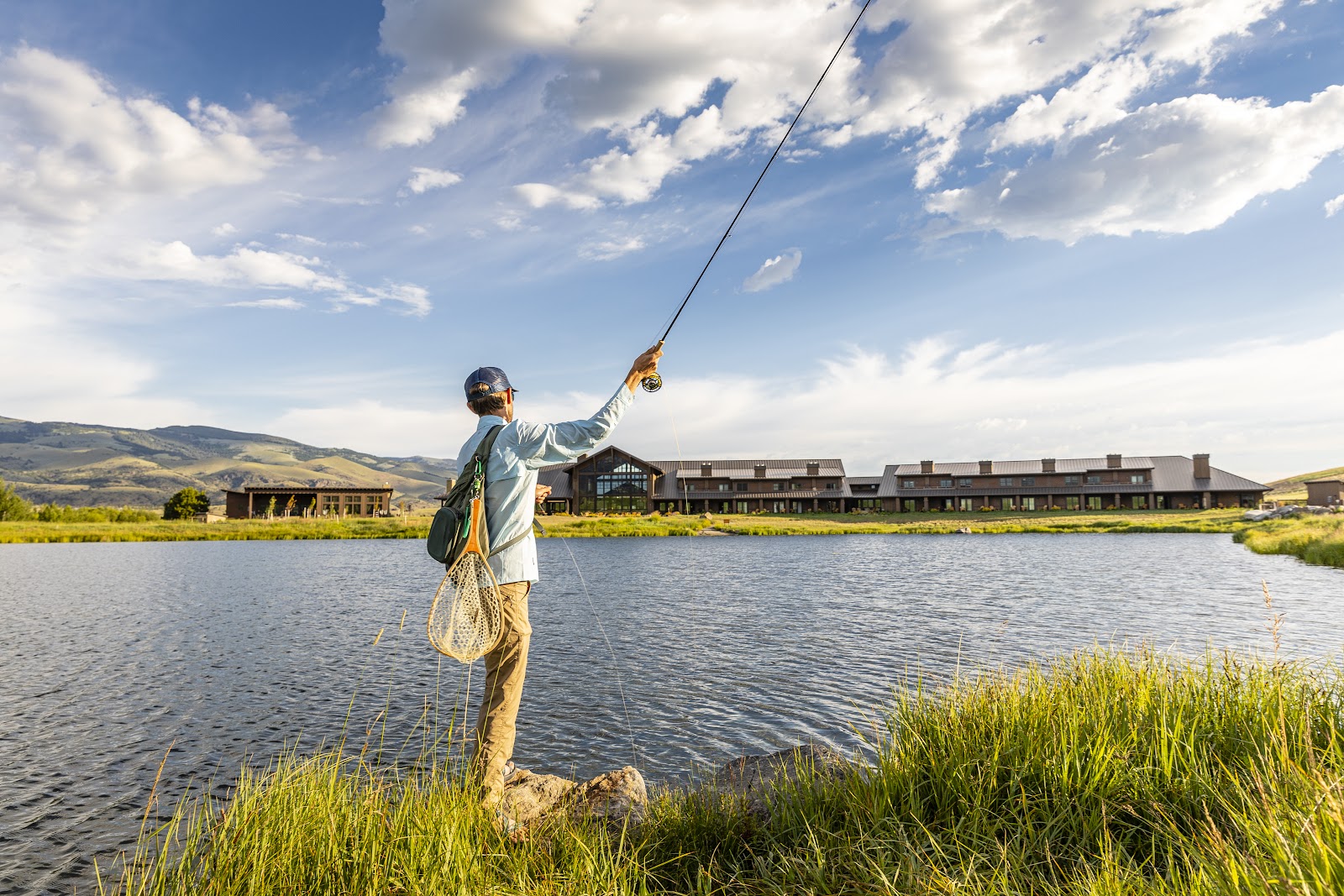
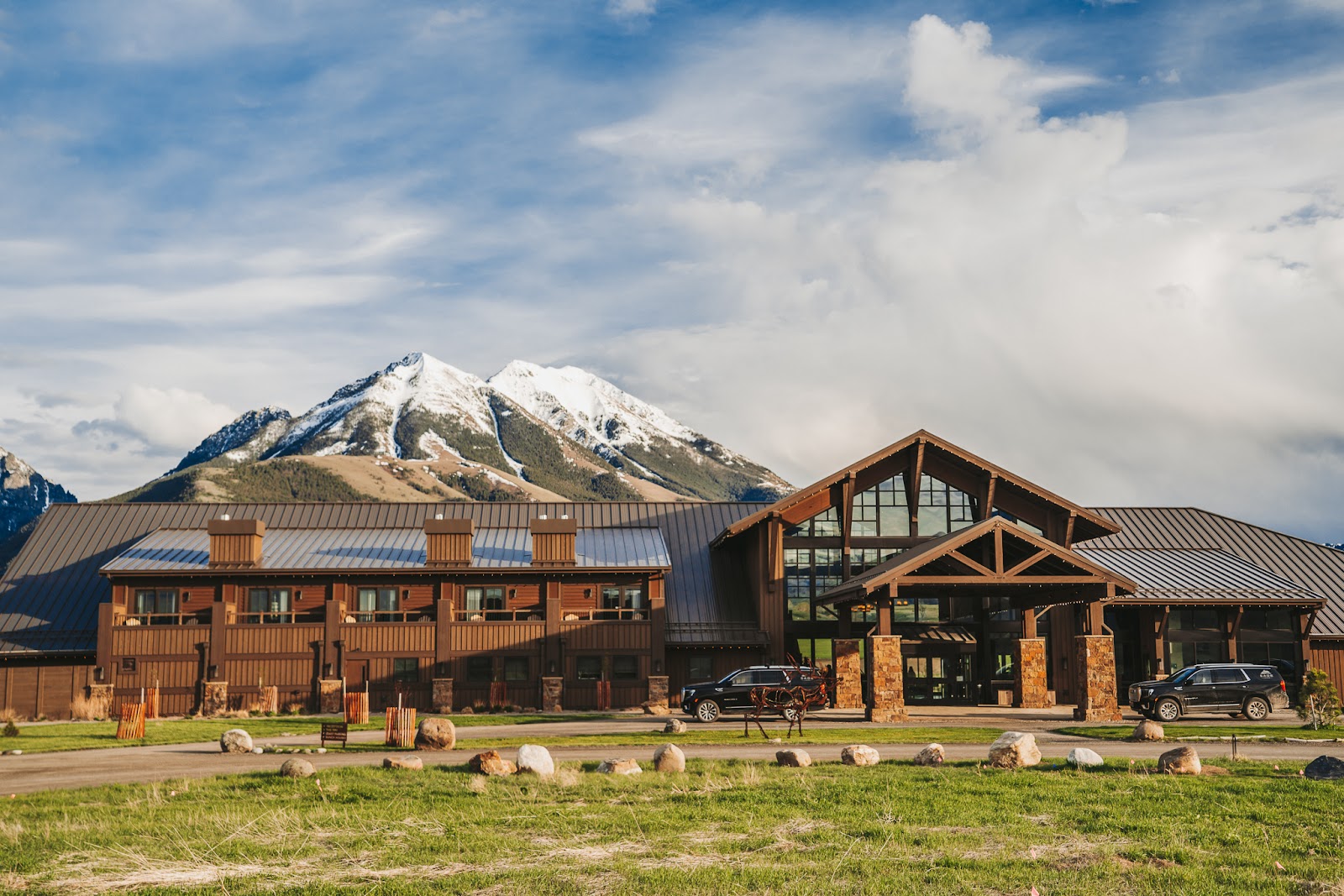
Paradise Valley is the reason to understand this venue, and one thing about its shape decides the whole photographic day: it is wide.
The valley runs roughly north to south along the Yellowstone River, with the Gallatin Range on one side and the Absaroka on the other, and it is broad enough that the ranges stand well back from the floor rather than crowding it. That is unusual in the northern Rockies and it has a specific consequence.
At a narrow mountain venue — a notch, a glacial trough, a hollow — the walls take the first and last hours of direct sun, and the low light that most outdoor photography is built around never reaches the floor. Here they do not. A broad north-south valley with high ground east and west but set well back keeps most of its sunrise and most of its sunset, which means the golden hours are genuinely available on the valley floor.
The second consequence is that both ranges are visible at once, at a distance that makes them a background rather than a wall — and because they are on opposite sides, one of them is always lit while the other is in shadow. That gives a lit mountain backdrop behind a subject in even light at both ends of the day, in mirror image.
The third is the altitude. The valley floor here sits at around five thousand feet, which means roughly a sixth less atmosphere overhead than at sea level: harder direct sun, deeper shadows, markedly cool open shade under a deep blue sky, high ultraviolet, and exceptionally clear air — which is why both ranges hold detail on a long lens.
And the fourth is the ground cover, which is in the name. This is sagebrush country rather than forest: silver-grey shrub over pale dry soil, with cottonwood along the river and conifer on the slopes. Sage is a genuinely useful photographic surface and it is dealt with below.
Pray sits at about forty-five and a third degrees north. The June noon sun reaches around sixty-eight degrees, the December noon sun about twenty-one, days run from about eight hours forty to fifteen hours fifty, and civil twilight is around thirty-seven minutes.
We have not photographed a wedding at this lodge. Which spaces and grounds are included, what access there is to the river and the wider land, and what the permitted hours are, are questions for their team.
Sage Lodge at a glance
| Where | A modern lodge in Paradise Valley on the Yellowstone River, Montana |
| The shape | A broad north-south valley — the ranges stand back and do not take the day’s ends |
| The gift | Two ranges on opposite sides, so one is always lit while the other is shaded |
| The ground | Sagebrush: silver-grey shrub over pale soil, with cottonwood on the river |
| Ask first | Included grounds, river and land access, permitted hours |
Dawn to midday
First light in a broad valley arrives on the western range before it reaches the floor, and that is the morning’s best frame: the Absaroka side lit warm and pink while the valley itself is still in blue shade.
A subject standing in that shade with a lit range behind them has the separation of a studio setup with a mountain as the backdrop, and it costs nothing. The exposure rule is to expose for the mountains — that is what the frame is about — and to lift the subjects with a close source at about a stop over the ambient on them. Metering on faces gives a white sky and a washed-out range and removes the reason for the frame.
The gel decision is important at dawn and it is the opposite of the evening one. Before the sun reaches the floor, the ambient is cold blue — high-altitude sky light — while the lit range is strongly warm. An ungelled daylight source puts neutral faces into a frame that is warm above and cold below; a warm gel puts them into the warm half, which reads better.
Valley mist is a regular dawn event here rather than a lucky one, because cold air drains off both ranges overnight and pools on the floor while the river adds moisture. Mist along a river with cottonwoods standing in it and a lit range above is the most atmospheric frame Paradise Valley produces, and it is commonest on clear calm mornings in late summer and autumn.
Mid-morning is the best portrait window before the evening. With the sun between twenty and forty degrees the sage is lit from the side rather than from above, which brings out its texture and its silver colour, faces have modelling, and a group with the sun behind the camera needs nothing added.
The sage itself deserves a note because it is the dominant surface and it is better than it looks. Sagebrush is silver-grey — a genuinely low-saturation, mid-toned ground cover — which makes it one of the kindest backgrounds in this guide for skin and for white fabric. A green meadow puts a green cast on everything and competes with skin; sage does neither.
It is also textured at a useful scale: a sea of small silver shrubs reads as fine texture at distance and as structure at close range, and under low raking light it throws countless small shadows that give a wide frame depth. A low camera with sage across the bottom of the frame puts the subjects against sky and the sage against them, which is one of the best compositions available here.
Midday is the hardest light of the day and at this altitude it is harder than the same hour lower down. At sixty-eight degrees with a sixth less atmosphere, the sun puts eyes in deep shadow and foreheads in bright light, and open sage country has no cover at all.
The answers are the building, the cottonwood along the river, and the conifer on the lower slopes. The species distinction matters: cottonwood has a high open canopy with large glossy leaves on flexible stalks, which means it moves constantly and throws a shifting dapple — better than nothing and not reliable. Douglas fir on the slopes blocks almost all direct light, which makes its margin the best free separation available: a metre inside gives soft directional light in front and three or four stops of dark behind.
And lodgepole pine, which grows at higher elevations here, is the one to avoid: sparse high crowns and a hard shifting dapple that is the worst light a face can meet outdoors.
Afternoon to dark, and inside
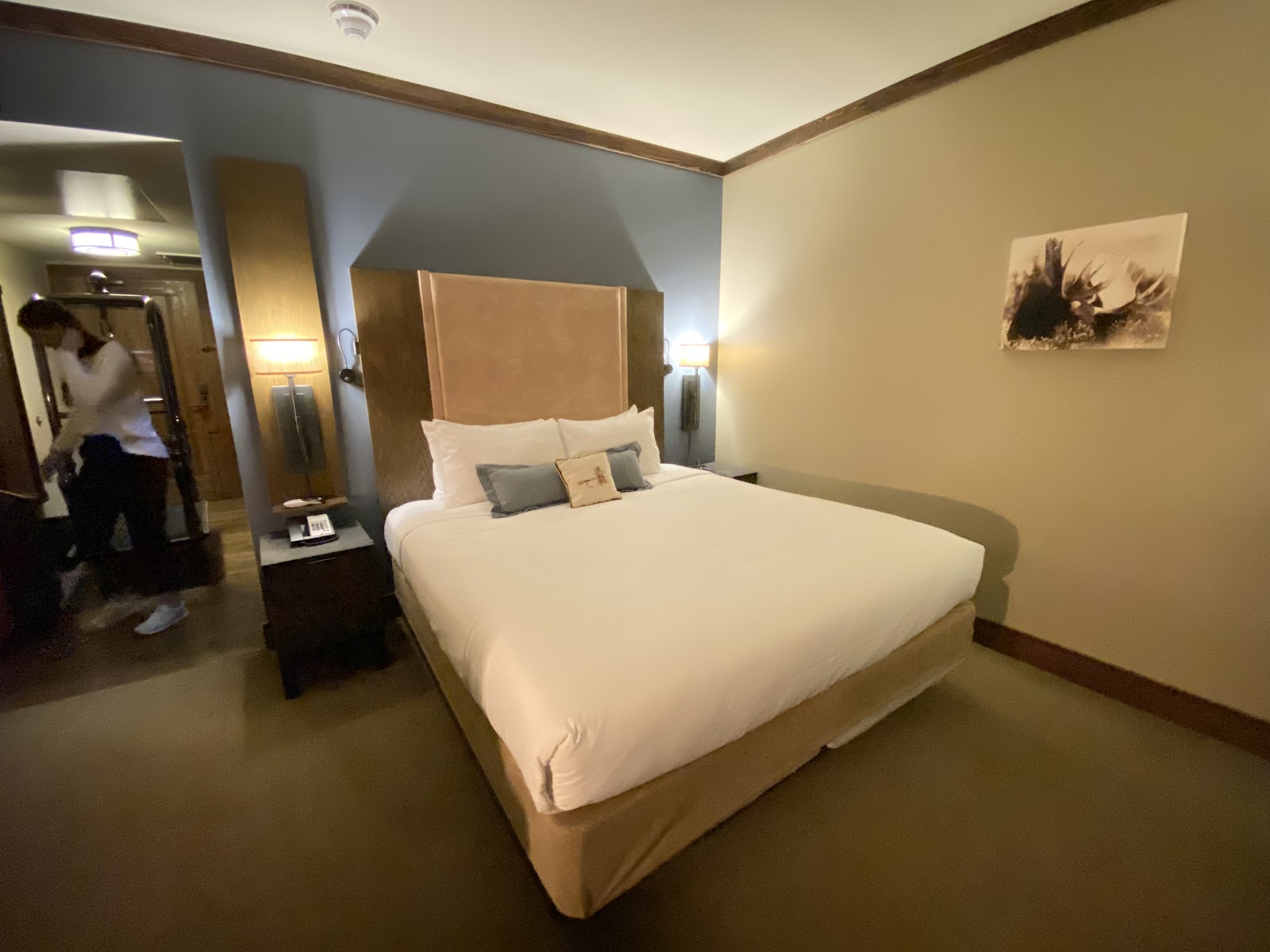
Early afternoon is the weakest window and the right time for the interiors, and a modern lodge presents a separation problem rather than a light problem.
Contemporary mountain architecture means large glazing, pale surfaces, high ceilings and a great deal of daylight — which means light is never scarce and a subject has nothing to sit against. The answers are to find something dark, to use the glazing at forty-five degrees so the opposite side of the face falls off, or to add a source a stop over ambient so the subject has a shadow side at all.
The glazing is the best of the three and in a valley lodge it is exceptional. A large window facing a mountain range receives light that has come off a deep blue sky and a pale sage landscape — bright, clean and cool — and a subject at forty-five degrees to it is lit as well as by any window in this guide. The caution is colour: that light is noticeably cool at altitude, so the white balance goes on a face.
Where the building uses timber and stone, as contemporary mountain lodges usually do, those are the dark elements the pale surfaces lack. A subject placed against a stone wall or a timber column has separation supplied by the material rather than by a light, and both are high-frequency textures that come alive under raking light.
Mid-afternoon the sun crosses onto the Gallatin side and the gift reverses: the eastern range goes into shadow while the western one is lit, and the same lit-range-behind-shaded-subject frame is available in mirror image. Knowing that it happens twice means the schedule can put a mountain frame at either end of the day rather than gambling on one.
The last ninety minutes are the valley’s best and — because it is broad — most of them are available on the floor rather than being cut off by a ridge. Low sun across sage country is transformative: it rakes the shrub, throws long shadows that give the ground real depth, and turns the silver-grey to gold.
The frames for that window: the couple with the sun behind them, exposed for the sky and lifted by a close warm-gelled source; the couple with the sun behind the camera and a lit range behind them, which needs nothing; a low-camera frame with sage across the base against the deepening sky; and a silhouette against a range line.
The gel is not optional and it is the reverse of the dawn case. Low sun at altitude is strongly warm and the open shade is lit by a deep blue sky, so an ungelled flash puts cold faces into a gold landscape — the most recognisable error in outdoor work.
Then dusk, and at this latitude and altitude it is excellent: around thirty-seven minutes of civil twilight, with the thin clear air giving a more saturated and longer-lasting afterglow than a low-elevation venue gets. In a broad valley the whole of it is usable, and the ranges read as dark layered bands against a coloured sky.
This is also genuinely dark-sky country, which means an evening running past twilight has a real night sky available — and no ambient light at all to work by once the sky has gone.
Two practical matters. A valley like this channels wind along its axis, which makes a lightstand a liability on open ground. And the diurnal swing at five thousand feet in a dry climate is large: an afternoon that is warm becomes a cold evening quickly, which matters more for a wedding party than for a camera.
- One range is always lit while the other is shaded — twice a day
- Sage is low-saturation and mid-toned: one of the kindest backgrounds here
- A low camera with sage across the base is the best composition available
- Gel warm in the evening and warm at dawn — for opposite reasons
- Fir blocks; cottonwood shifts; lodgepole dapples unusably
The Paradise Valley year
Four sharply separated seasons at five thousand feet in a dry continental climate, where the difference between months is large.
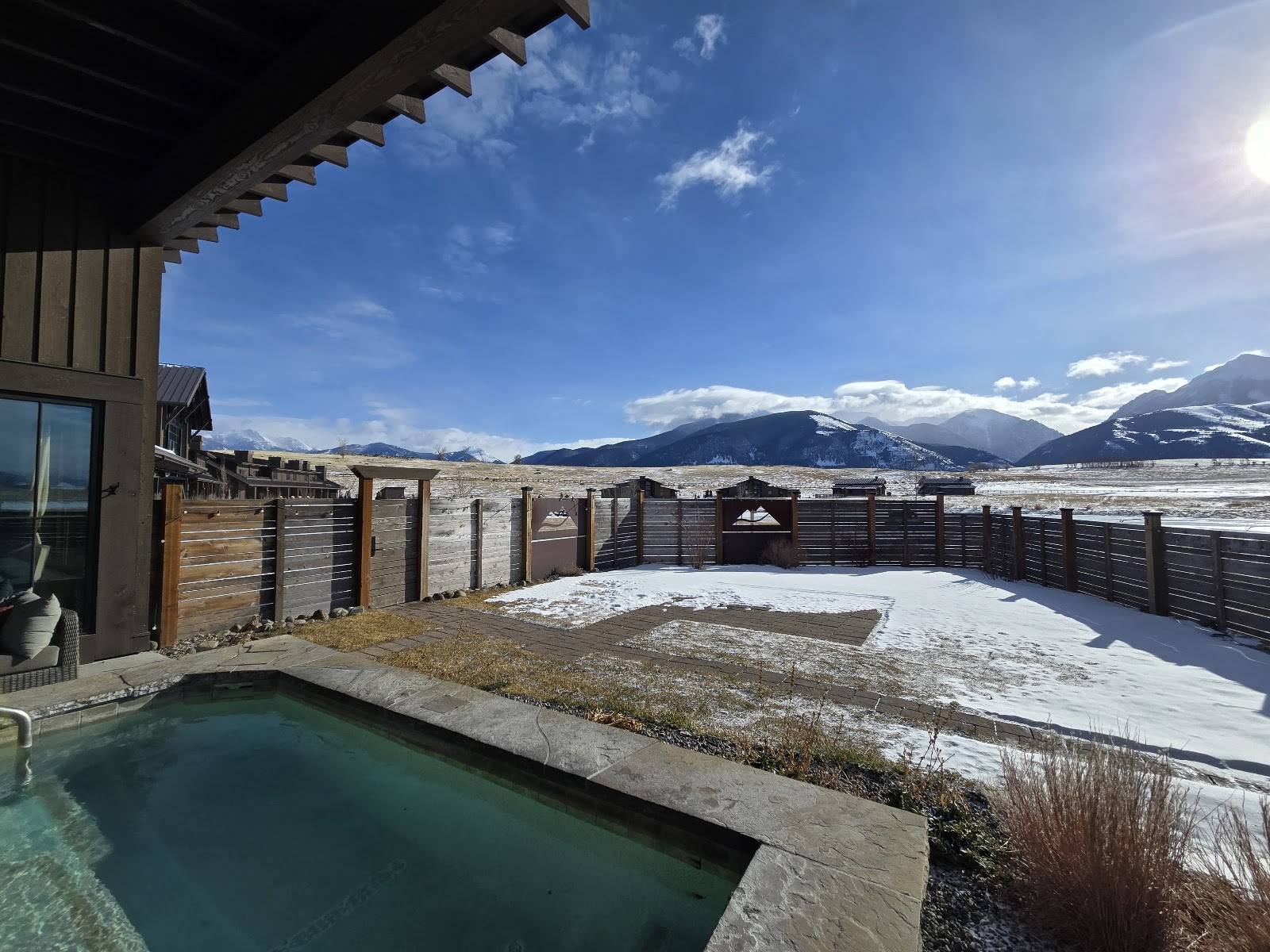
Winter is long, cold and clear, and photographically it is the easiest light of the year. The December noon sun at around twenty-one degrees means the whole short day rakes rather than floods, which is exactly what sage, stone, timber and snow want — there is no bad hour at all.
Snow is the best natural fill available: it lifts shadows to within a stop and fools a meter by about two stops, so open up deliberately, and against near-black conifer it gives the widest brightness range in this guide. A snow-covered valley floor below two white ranges, in raking light, is austere and superb.
Paradise Valley’s specific winter feature is wind. This valley is known for it: downslope and channelled winds can be strong and persistent, and they strip snow off exposed ground and pile it elsewhere — which means the valley floor in winter is often a patchwork of bare sage and drift rather than a uniform white plane. That is more interesting photographically than an even cover.
The costs are cold, an eight-hour-forty day, batteries draining quickly, glass that fogs coming indoors, and wind that makes any exposed setup difficult.
Spring is late at this altitude and it is the weak window. Snow rots through April, the ground is saturated, the sage is dun, and the grass is brown before it is green. What spring does give is the ranges at their whitest above a bare valley, which is a strong contrast, and very high water in the river.
Late May and June bring green to the valley floor and wildflowers to the sage, while the peaks stay white — which stacks white summit, dark conifer and green floor into one frame for a few weeks and is a genuinely fine and much less visited window than autumn.
Summer is the season and the days are long: over fifteen and three-quarter hours at the solstice with about thirty-seven minutes of civil twilight, which means the low light arrives after nine and lasts. The valley is dry and warm, the river is clear, and the light at both ends of the day is excellent.
The costs are the middle of the day, afternoon convection over the ranges, and the honest late-summer note: wildfire smoke. The northern Rockies’ fire season runs from roughly July into September, and smoke from fires anywhere in the region can fill this valley for days — turning the sun orange, flattening contrast, removing both ranges entirely and shifting everything warm in a way no white balance resolves.
For a venue whose whole proposition is two mountain ranges, smoke removes the wide frames completely while leaving the interiors, the sage at close range and the river intact. It cannot be planned for, only acknowledged.
Late September into early October is the best window of the year. The cottonwoods along the Yellowstone turn a clean bright gold — and a river lined with gold cottonwood below dark conifer and fresh-snowed peaks, over silver sage, is the strongest photograph this valley produces. The aspen on the slopes turn too, and because a grove is clonal a whole stand goes gold at once.
The smoke risk has usually passed by then, the crowds thin, the mornings are cold enough for river mist, and the air is at its clearest of the year — which is precisely when a long-lens range frame needs it. The window is about two weeks.
By late October the valley is turning toward winter and the wind is picking up.
More frames from Sage Lodge
Sage Lodge wedding photography: common questions
What does the valley's width change?
The ranges stand back rather than crowding the floor, so unlike a notch or a trough this valley keeps most of its sunrise and sunset at ground level.
What is the twice-daily gift?
Two ranges on opposite sides means one is always lit while the other is shaded — a lit mountain backdrop behind a subject in even light, morning and evening.
Why is sagebrush a good background?
It is silver-grey, mid-toned and genuinely low in saturation, which makes it kinder to skin and to white fabric than a green meadow.
Which trees can I use for shade?
Douglas fir on the slopes blocks almost everything. Cottonwood on the river moves and dapples. Lodgepole dapples unusably and is background only.
Which way do I gel at each end of the day?
Warm both times, for opposite reasons: at dawn to match a warm lit range against cold shade, and in the evening to match a strongly warm low sun.
When is the valley at its best?
Late September into early October: gold cottonwood along the river below fresh-snowed peaks over silver sage, in the clearest air of the year.
More Montana venue guides
We are writing a photographer’s guide to every venue we would happily shoot in Montana. Here are three more, plus the full index:
- Triple Creek Ranch, Darby: What It Suits and What It Does Not
- Yellowstone Valley Lodge, Gardiner: Field Notes, Problem and Solution
- The Lodge at Big Mountain, Whitefish: A Walk Through the Property
Planning a wedding at Sage Lodge?
Two ranges and a wide valley. Tell us your date and we will use both ends of the day.