 The Venetian, Garfield: The Building’s Own Logic
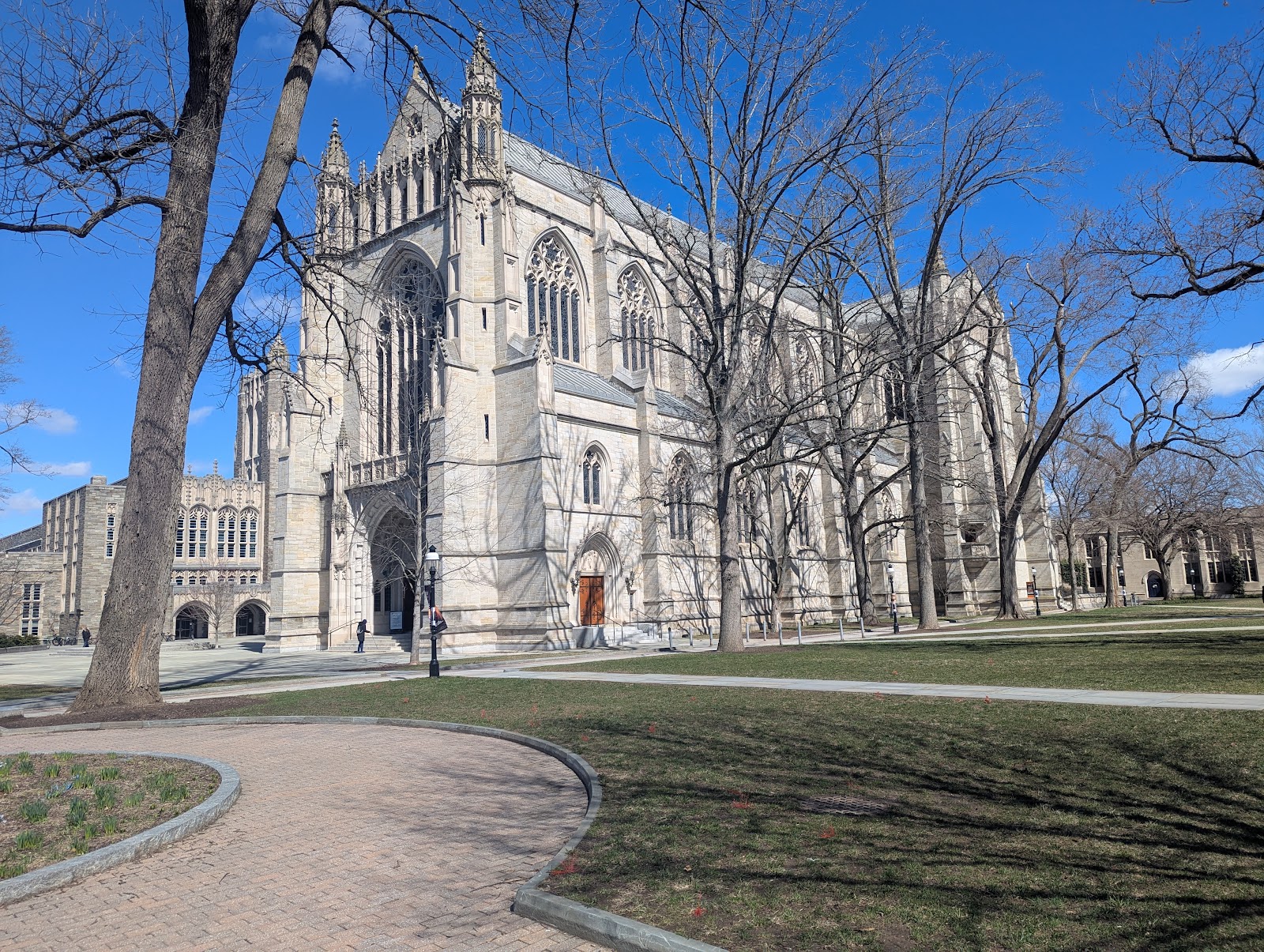
Princeton University Chapel: One Frame, and How It Is Made
A great nave is designed to make a person small. The frame that admits it is the strongest one.
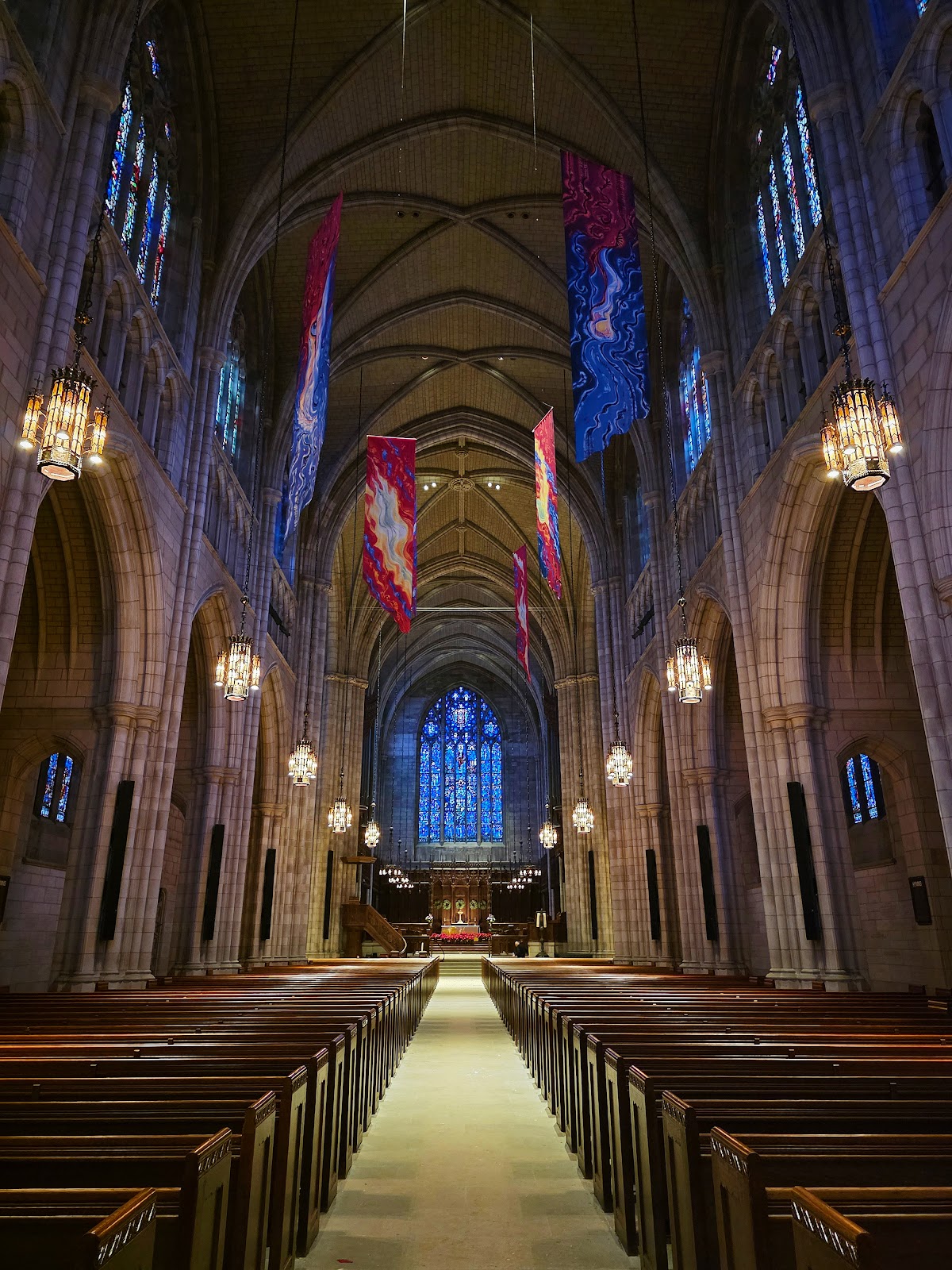
There is one frame a large Gothic Revival chapel gives better than any other space in this guide, and it is worth building properly because the instinct is to make a different and weaker picture.
The frame is two people small in an enormous volume. Shot from the centre of the nave, low or level, with the arcade receding on both sides, the vault rising out of the top of the picture and the couple a small figure-pair against the distant east end — that is the building doing exactly what it was designed to do, which is to make a person feel the scale of the space.
The instinct is the opposite: to move closer so the couple are large and recognisable, which produces a portrait in front of some stonework. That is a fine picture and it could be made in any large room. The wide frame could only be made here.
It works for architectural reasons. Gothic Revival design pulls the eye upward and forward — the arcade repeats, the piers rise, the ribs converge, and everything points at the far end. A camera on the centre line inherits all of that: the perspective is built into the building and the photographer only has to stand in the right place.
The technical difficulty is light. A stone chapel of this kind is a dark volume lit almost entirely by stained glass high in the walls, which means very little light reaches the floor, what does arrive is coloured, and the difference between a window and the stone beside it is enormous.
We have not photographed a wedding at the Princeton University Chapel; large Gothic Revival chapels behave consistently. Eligibility and booking requirements, whether photography is permitted during the ceremony and from where, whether flash is allowed, what the lighting can be set to, and what access there is before and after are questions for the chapel’s office — and the photography rules in particular decide what is possible more than anything below.
Princeton University Chapel at a glance
| Where | A large Gothic Revival chapel at Princeton, central New Jersey |
| The frame | Two people small in the nave, on the centre line, vault out of frame |
| The light | Stained glass high in the walls; very little reaches the floor |
| The stone | Absorbs, so it gives free separation and low ambient |
| Ask first | Photography rules and positions, flash, lighting settings, access times |
How the frame is made
The position is the first decision and it is the centre line, exactly. A symmetrical building shot from off-centre reads as a mistake: the arcade on one side is longer than the other, the far window is off to one side, and the whole frame leans without anything being obviously wrong. A metre off the axis destroys it.
The camera height is the second. Low puts the floor across the bottom of the frame and exaggerates the height of the piers; level with the subject is more neutral and shows the arcade as it is seen. Both work. What does not work is tilting up from a low position, because that converges the verticals and makes the building appear to fall backwards — the frame wants the camera level and the vault allowed to leave the top of the picture rather than be squeezed into it.
The lens is the third and it is a genuine decision. A wide lens takes in the volume and shows the couple very small, which is the maximum-scale version. A moderate lens from further back keeps the couple slightly larger while still showing the arcade, which is the more usable version. What fails is a wide lens close to the couple, which distorts them and flattens the arcade.
The exposure is the fourth and it is where the frame is made or lost. A stone chapel presents a range of many stops: bright stained glass high in the walls, deep shadow in the arcades, and a floor that receives almost nothing.
The rule is to expose for the faces and let the windows go bright. A frame in which the stained glass holds its colour but the couple are black silhouettes is not the picture; a frame in which the couple are readable and the windows are blown is. Stained glass in a great chapel is several stops above anything at floor level and there is no exposure that holds both — so the choice has to be made, and it should be made in favour of the people.
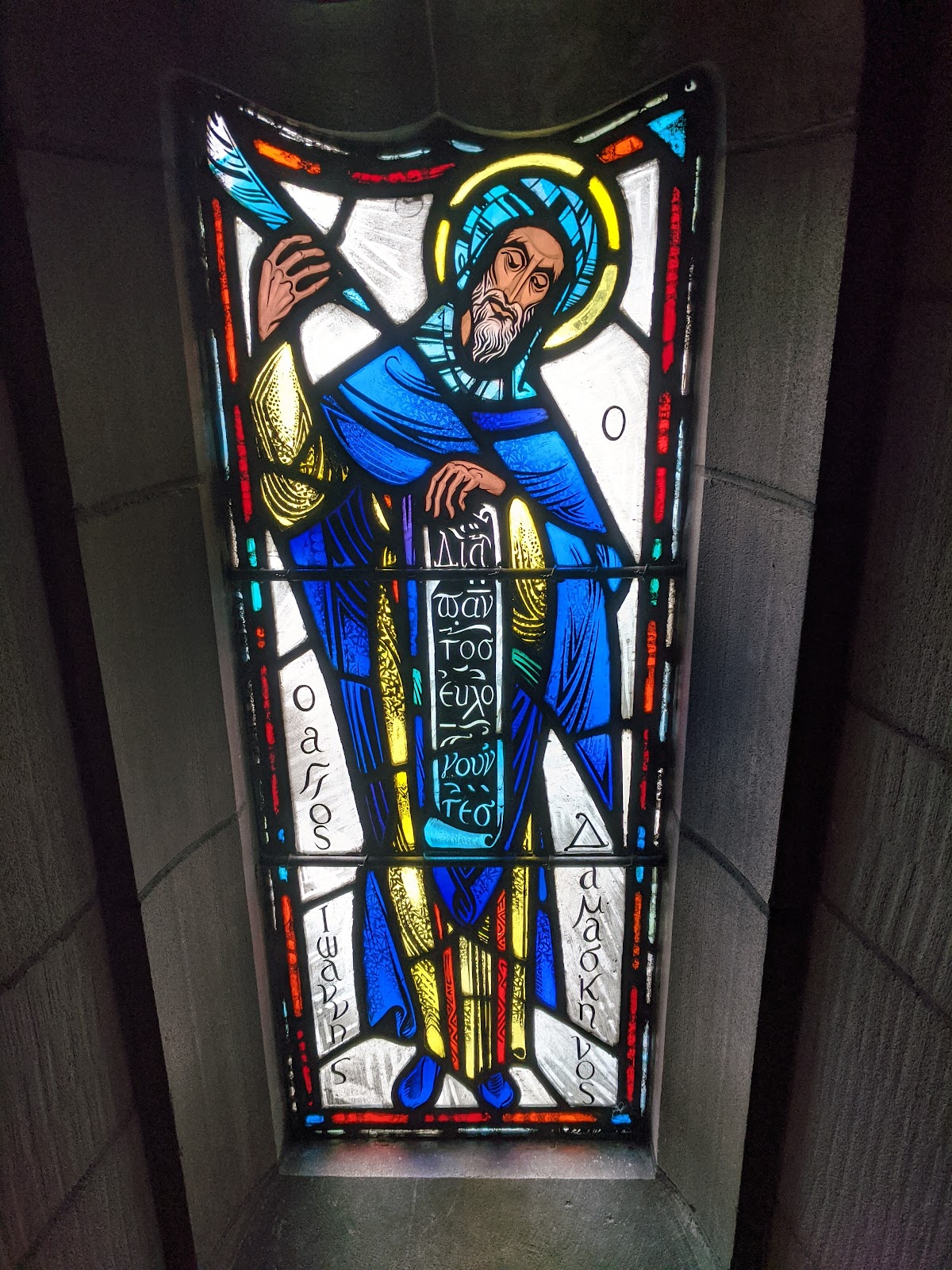
The exception is a frame made deliberately about the glass: standing so a window fills the picture, exposed for it, with a figure small and dark below. That is a strong picture and it is the other one this building gives.
The metering has to be manual and it has to be on skin, because a meter looking at a dark stone interior with bright windows in it produces something wrong in every automatic mode. Metering off a hand in the same light as the faces is the fastest reliable method.
The stone is the fifth element and its property is that it absorbs. Limestone or sandstone in a dim interior returns very little, which means two things: the ambient is a stop or two lower than the eye estimates, so measuring rather than guessing matters; and the background behind a subject drops away steeply, which gives separation for nothing.
The colour is the sixth and it is the thing most often got wrong. Light in such a chapel is a mixture: cool north light through clear glazing, strongly coloured light through stained glass, and warm tungsten or LED from whatever fittings the building uses. No single white balance is correct for all of them.
The rule is to set the balance for whatever is landing on the faces — which in the nave is usually the artificial lighting or the general ambient — and to let the coloured patches be coloured. Correct skin with a coloured surround is a picture. Skin rendered green or magenta by a stained-glass wash is not, and it is not recoverable.
And if there is a coloured patch falling across the aisle, that is a resource rather than a problem: a couple walking through a pool of red or blue light on stone is one of the most distinctive frames a chapel gives, and it exists only when the sun is at the right angle, which is worth checking beforehand.
What breaks it, and the rest of the building
Restrictions break the frame more often than technique does, and they are the first thing to establish. Many chapels of this kind limit where a photographer may stand during a ceremony, prohibit movement in the aisle, and prohibit flash entirely — and the centre-line wide frame described above requires standing in the aisle.
Where that is not permitted during the ceremony, the frame has to be made before or after it, with the couple placed deliberately. That is entirely workable and it is much better arranged in advance than discovered on the day.
No flash is the other common rule and it changes the approach rather than preventing it. Without added light, the frame depends on the building’s own lighting — so the question becomes what the house lighting can be set to, and whether it can be raised for the ceremony. A chapel whose lights can come up is a considerably easier building than one where they cannot.
Where flash is permitted, the constraint is distance. A great nave is large, and nothing in it bounces — dark stone returns almost nothing, and the vault is far too high to be a bounce surface. That means the light reaching a face is only the light aimed at it, falling off with the square of distance, so a source must be close to the subject rather than near the camera. At ten metres a portable source achieves nothing.
The practical version is to place the source close to the couple and off the camera axis, gelled warm to match the chapel’s own lighting, at about a stop above what the ambient gives their faces.
Movement is the other thing that breaks the frame, and in low light it is a real constraint. A dark interior forces slow shutter speeds, and a processional is moving — which means the choice is a faster shutter with more noise, or a slower one with the risk of blur. The honest answer in a very dark chapel without flash is to accept noise, because a noisy sharp frame is usable and a blurred one is not.
The rest of the building gives three more frames worth planning for.
The aisle, looking back down it from the front, is the reverse of the main frame — and it is where the procession is photographed rather than the couple at rest. The same centre-line rule applies.
The side aisles and ambulatory are where the intimate frames are. An arcade bay is effectively a small stone room with light from one side, which means a subject standing in it is lit directionally with near-black stone behind — the same physics as a window in a dark room, and the best portrait position in the building. Two or three metres in from the opening is the working distance.
And the porch or west door is the transitional position and the best-lit one. A great doorway in a thick stone wall restricts daylight to a horizontal band that models a face properly, gives a dark surround, and cannot dapple — which makes it the one position that works at any hour in any weather, and the obvious place for a portrait immediately after the ceremony.
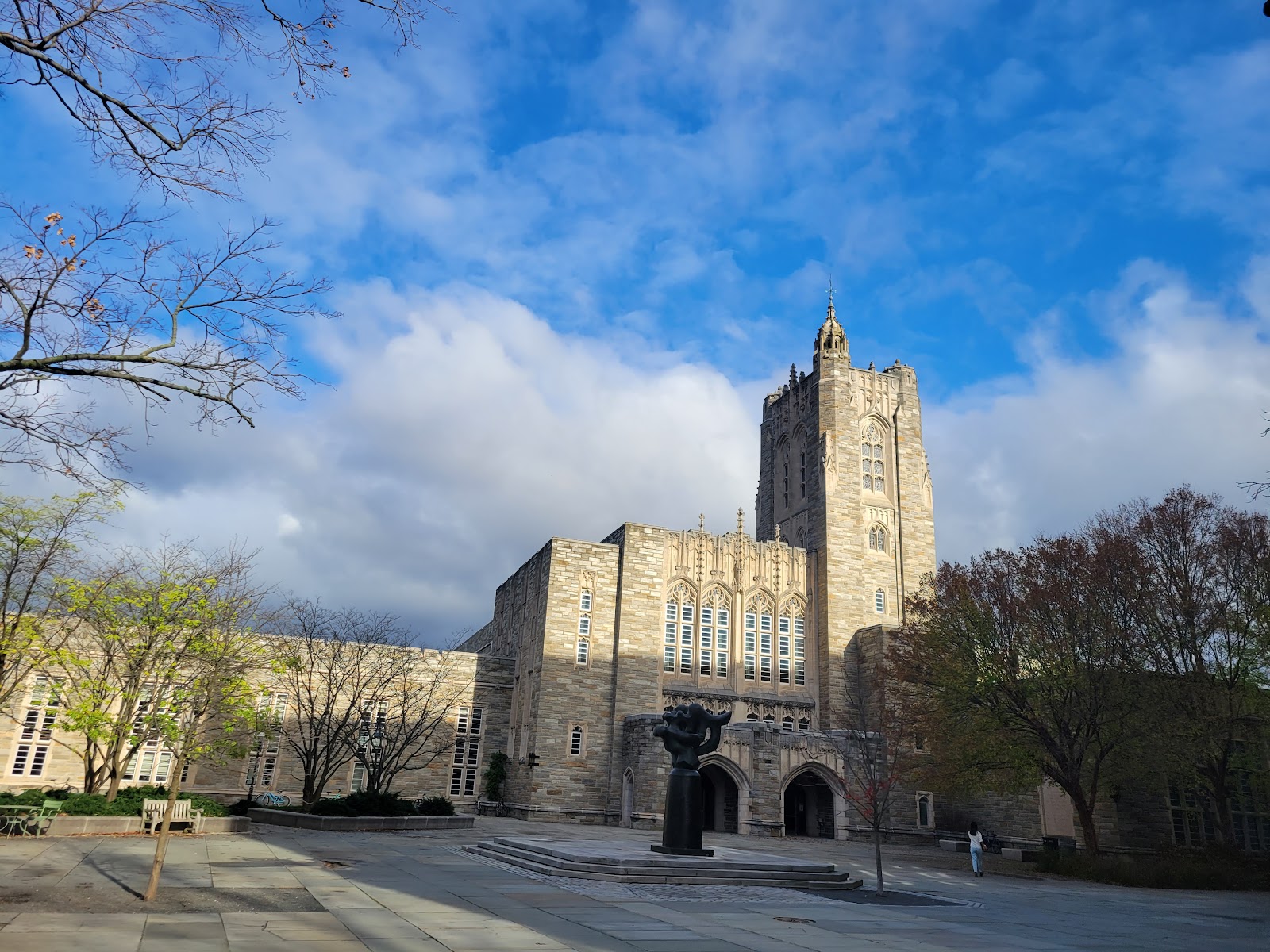
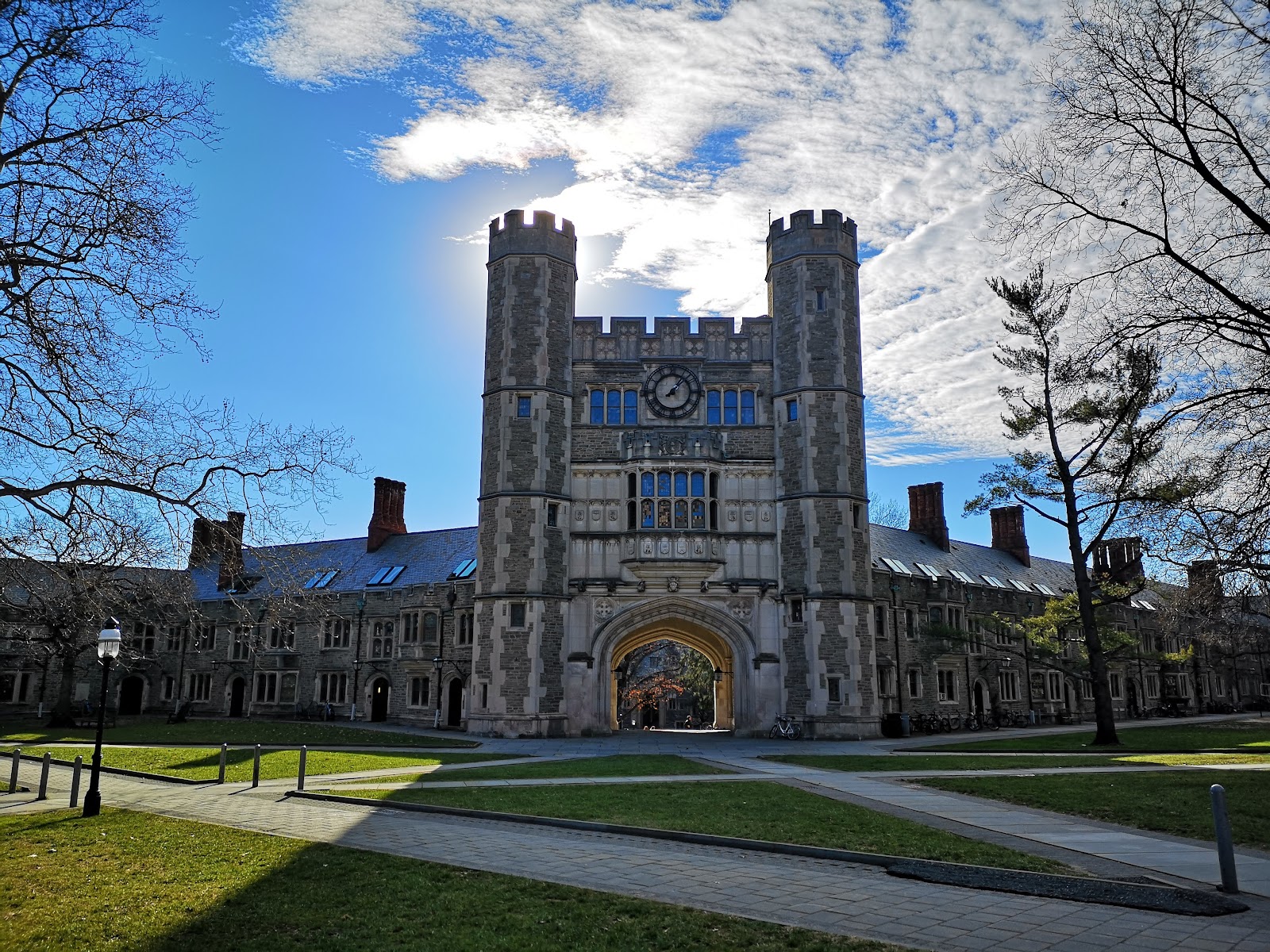
Outside, a university campus of this kind is stone and mature planting: the stone is a mid to dark tone that gives good backgrounds, and the trees are the northeast mix, which filter and therefore dapple. Look at the face rather than the ground. And a cloister or arcaded walk, where there is one, is the outdoor equivalent of the side aisle — directional light, dark surround, no dappling.
- Centre line exactly, camera level, and let the vault leave the frame
- Expose for the faces and let the stained glass blow — or make it the subject
- Set white balance for what lands on the skin; leave coloured washes coloured
- If flash is allowed, put it close to the couple — nothing in a nave bounces
- Ask about positions, flash and house lighting before anything else
The chapel year
A stone chapel is the most weather-independent venue in this guide, which means the season affects the light inside it in a subtler way than at any outdoor site — but it does affect it, and more than people expect.
Winter is the best season inside, and the reason is the sun’s angle. The December sun at this latitude reaches only about twenty-six degrees above the horizon, which means light entering high windows travels much further down into the building and further across the floor than a high summer sun does — so the nave is better lit in January than in July, and the coloured light from stained glass reaches the aisle rather than staying on the upper walls.
That is the single most useful seasonal fact about a tall stone interior and it is the opposite of the intuition. A winter wedding in a great chapel is a brighter and more colourful event than a midsummer one.
Snow adds to it. A snow-covered exterior reflects light up into every window, which measurably increases what arrives inside — a stone chapel after snowfall is noticeably brighter than the same chapel on a dull dry day. And snow against dark stone outside is the widest brightness range on the site: expose for the snow and let the stone go dark, with deliberate overexposure relative to the meter, which snow fools by about two stops.
The costs are cold, a short day, and the practical one for a stone building: it is cold inside as well as out, and whether the chapel is heated adequately for a winter ceremony is a question with a definite answer.
Spring is the season for the campus rather than the chapel. Late April brings flowering trees, which on a mature university campus are usually planted deliberately and in quantity — and blossom against dark stone is the strongest exterior pairing the site produces, lasting a week or two.
Late spring greens the campus and the light lengthens, which extends the usable window for outdoor portraits after a ceremony. Transmitted green light under new canopy needs a custom white balance.
Summer is hot and humid in central New Jersey, commonly upper eighties Fahrenheit with high humidity, and inside a stone chapel that has two effects. The building stays cooler than the outside, which is a genuine comfort advantage. And a high sun means the light through the upper windows lands on the upper walls rather than reaching the floor, so the nave is at its darkest of the year in June and July.
Afternoon thunderstorms are a real feature from June into August, which for a stone chapel is irrelevant to the ceremony and relevant to the outdoor portraits — and the covered west door is the position that solves it.
Autumn is the best season overall because it gives both halves. The humidity breaks in September, the air clears, and foliage on a mature campus peaks from the middle of October into early November — with oak russet, maple scarlet and sweetgum and tulip poplar yellow arriving over two or three weeks.
Against dark stone that colour is exceptional, for the same reason it works against barn timber and granite: the background is dark and neutral enough to hold it without competing. A stone chapel with a mature specimen in full colour beside it is the strongest exterior frame here.
And the sun is already low enough by late October that the interior light has begun to improve, which means an autumn date gets a brighter nave than a summer one as well as the colour outside.
More frames from Princeton University Chapel
Princeton University Chapel wedding photography: common questions
What is the frame?
Two people small in the nave, shot from the centre line with the camera level and the vault leaving the top of the picture. It is the building doing what it was designed to do.
How is it exposed?
For the faces, letting the stained glass go bright. There is no exposure that holds both, and the choice should favour the people.
How do I handle the mixed colour?
Set the white balance for whatever is landing on the skin and let the coloured washes stay coloured. Skin rendered green by stained glass is not recoverable.
Does flash work in a large chapel?
Only close to the subject. Dark stone returns nothing and the vault is far too high to bounce from, so a source near the camera achieves nothing at ten metres.
What should we ask about first?
Photography positions, whether flash is permitted, and what the house lighting can be set to. Those three decide what is possible.
Is the chapel darker in summer?
Yes. A high sun puts the light from upper windows onto the upper walls; a low winter sun carries it down to the floor. January is brighter than July.
More New Jersey venue guides
We are writing a photographer’s guide to every venue we would happily shoot in New Jersey. Here are three more, plus the full index:
- Renaissance Woodbridge: The One Decision That Governs Everything
- The Rockleigh, Rockleigh: Field Notes
- Royal Manor, Garfield: The One Decision That Governs Everything
Planning a wedding at Princeton University Chapel?
A building built to be large. Tell us your date and we will use the scale.