 The Venetian, Garfield: The Building’s Own Logic
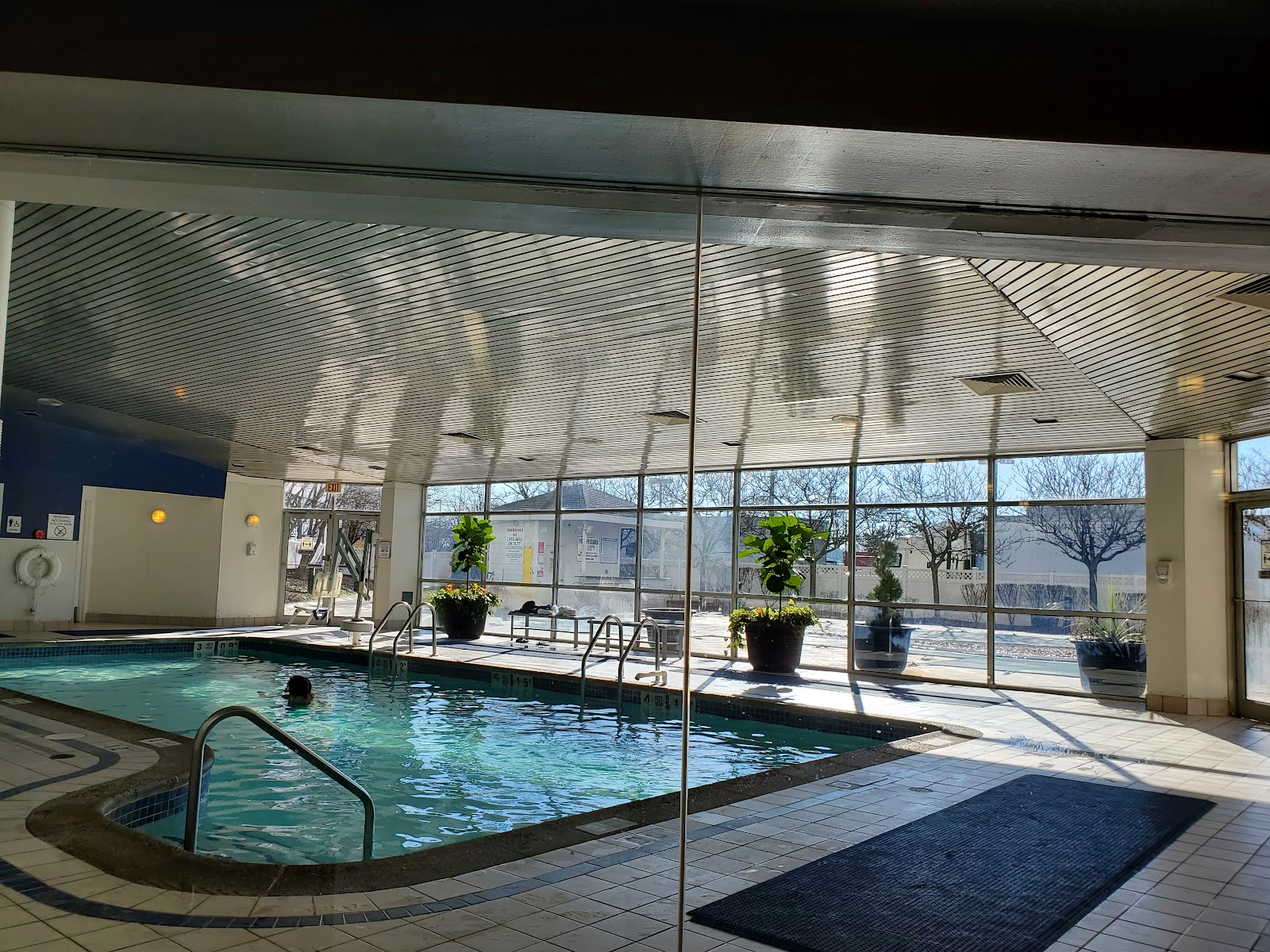
Renaissance Woodbridge: The One Decision That Governs Everything
Daylight upstairs or your own light downstairs. The schedule follows whichever you choose.
At a full-service hotel there is one decision that governs the photographic day, and it is not about which room to use.
It is whether the portraits are built around the daylight that exists upstairs, or around the light you bring downstairs.
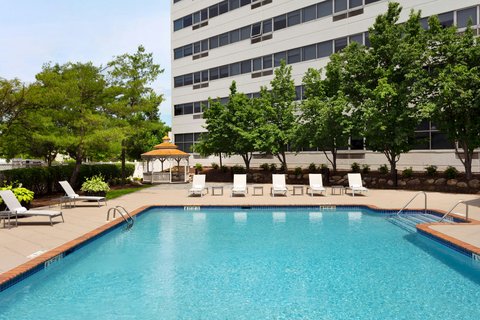
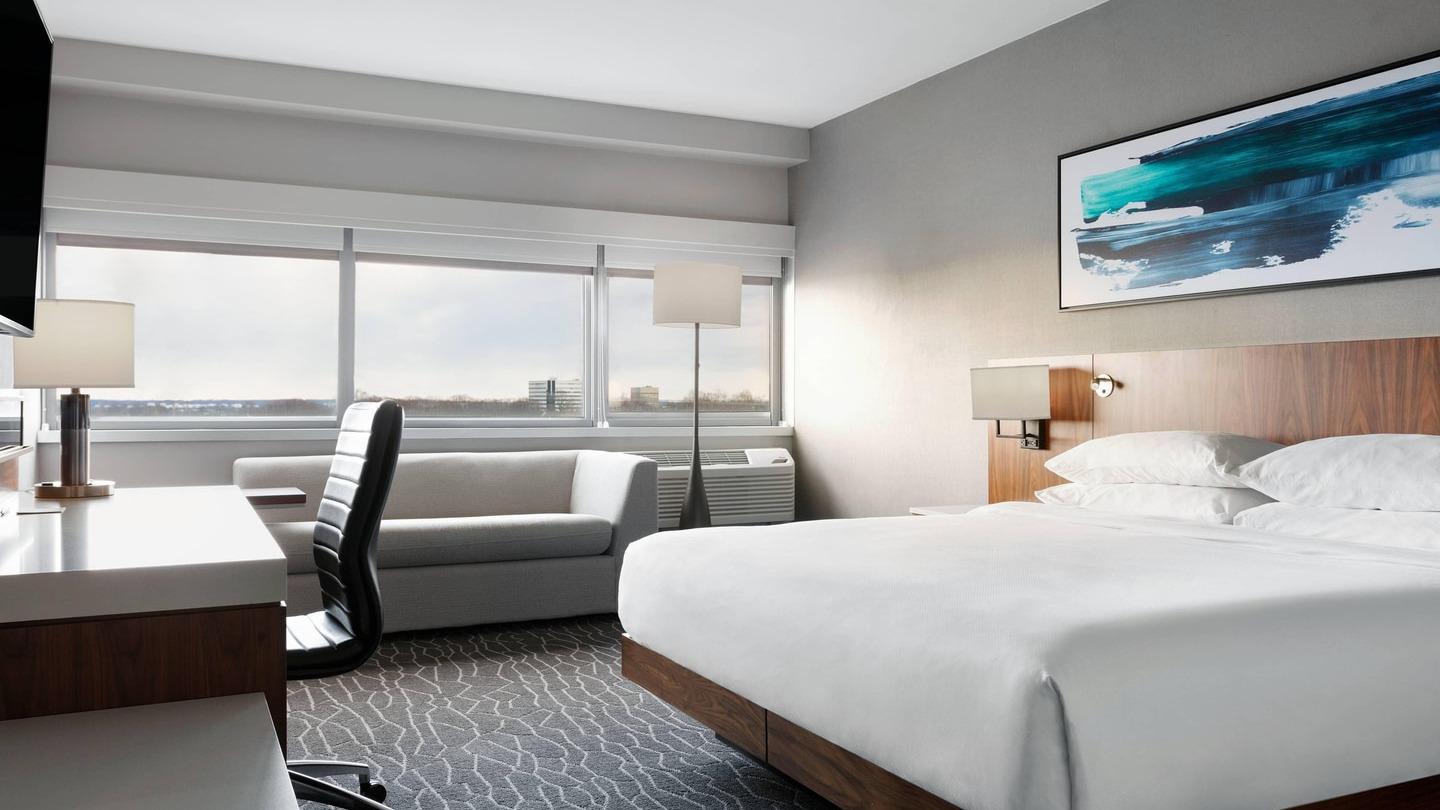
The daylight in a hotel like this is concentrated in a small number of places and the best of it is in the guest rooms. Modern hotel rooms have generously glazed windows in rooms of modest depth, which means abundant soft light that is still directional — a subject a metre from the glass, turned about forty-five degrees to it, gets real modelling with no equipment at all.
The function spaces downstairs have almost none. A ballroom, a pre-function space and a corridor are lit artificially and evenly, with limited or no external glazing, because they are designed to work at any hour and to be independent of the weather.
So the decision is a scheduling one. Building the day around daylight means the portraits happen upstairs, in the afternoon, before the reception and while the sun is still on that side of the building — which has to be in the running order rather than fitted in. Building it around brought light means the portraits can happen anywhere at any time, which is more flexible and requires the light to be made rather than found.
Both work and a good day usually contains some of each. What fails is assuming daylight will be available downstairs, discovering it is not, and improvising with a flash on the camera — which produces the characteristic flat hotel photograph.
We have not photographed a wedding at the Renaissance Woodbridge; full-service hotels behave consistently. Which rooms are included, what the guest room outlook and floor are, whether the ballroom lighting can be dimmed, what the actual timings are, and whether a short trip outside during the evening is possible are questions for their team.
Renaissance Woodbridge at a glance
| Where | A full-service hotel at Woodbridge, central New Jersey |
| The decision | Portraits built around guest room daylight, or around brought light |
| Upstairs | The best light in the building, and it constrains the schedule |
| Downstairs | No daylight, total flexibility, and the light has to be made |
| Ask first | Rooms included, guest room floor and outlook, lighting control, timings |
If it is built around daylight
Building the day around the daylight means the guest rooms are the studio, and it is worth doing properly because the light there is better than anything that can be brought.
The technique is the classic window one. A metre from the glass, turned about forty-five degrees to it, gives a lit side, a shadowed side and a gradient between — real modelling — with a background across the room sitting a stop or two down. The catchlight confirms it: broad and low on the window side of each eye.
Two free rules. Turn the room lights off, because warm bulbs against cool daylight put two colours on one face and no white balance renders both. And set a custom white balance on a face in position, because window light is the colour of whatever is outside it.
Three things about the room are worth asking in advance, because they decide how good this is. The floor: a high floor looks over rooftops and tree canopy rather than at a car park or the building opposite, which changes the background as well as the light. The aspect: a room that does not get direct sun gives soft even light all day, which for a long preparation session is better than one that takes a hard shaft through it at eleven. And the depth: a shallow room with a wide window is brighter throughout than a deep one.
The limitation of a pale hotel room is separation rather than light. Pale walls bounce the window light back, filling the shadow side and lifting the background — so the modelling is softer than the same position in a dark room, and a subject against a pale wall has little tonal difference from it.
Three fixes and all are free. Turn the subject further from the window so the fall-off across the face is steeper. Put something dark behind them — an open doorway to a bathroom or corridor, a dark headboard, drapery pulled across part of the wall. Or draw one curtain partly across the window, which narrows the source and sharpens the fall-off considerably. That last one is the most effective and the least used.
Direct sun through the glass is the one thing that breaks the position, because it lands as a hard-edged patch and a bright band across an eye is not correctable. A sheer curtain turns the window into a diffuser; where there is none, a room on the shaded side is the answer.
The scheduling consequence is the real one and it is the whole point of this approach. Daylight in a hotel room is a resource with a timetable: it is at its best when the sun is on that side of the building and gone when it is not, and in winter it is gone by four in the afternoon. So if the portraits are to be daylight portraits, they belong at a specific hour and the running order has to put them there.
That means saying so in planning rather than hoping for a gap. A couple who want window-light portraits and a five o’clock ceremony in December need the portraits before the ceremony, and that is a decision rather than a discovery.
The other daylight positions are worth locating on the same walk: a corridor with a window at the end, which gives a source and a perspective line in one; an entrance lobby, where a lobby’s usable daylight is almost always within a few metres of the door; and any glazed link or atrium. Each behaves like a window in a dark room.
If it is built around brought light
Building the day around light you bring means the portraits are independent of the schedule and the weather, and it requires committing to one good setup rather than improvising several.
The setup that works is a single source through a modifier, placed to one side and slightly above the subject’s eye level, with the room’s own light exposed a stop or so under. That produces window-like light — directional, soft, with a shadow side — anywhere in the building, at any hour, in any room.
The reason to make one setup and reuse it rather than varying it is consistency. A set of portraits made with the same light quality reads as a coherent body of work; one made with whatever was to hand in each room reads as inconsistent, and at a venue with no daylight that is the commonest failure.
Three things make it look like light rather than like flash. Distance: close to the subject, because nothing in a carpeted function space bounces usefully and a source at two metres needs roughly a quarter of the output of the same source at four — and close is softer relative to the subject. Direction: off the camera axis, because a source on the lens axis gives flat frontal light with no modelling. And colour: gelled to match whatever the room’s dominant light is, with the white balance set to the gel, because an ungelled source in a warm hotel interior produces faces that read cooler than everything around them.
The background still has to be found, and in a pale evenly lit hotel that is a deliberate search. Anything two or more stops below the subject qualifies: a doorway to an unlit space, a corridor receding away, drapery, a dark panel, a stairwell. Walking the building once and listing three or four is ten minutes and it is what makes a varied set rather than a uniform one.
Where nothing dark exists, the added source creates the contrast itself: set a stop or more above the ambient, it renders the face while letting the room fall away relatively, which is adding light in order to add contrast rather than illumination.
The advantage of this approach is that it removes every dependency. Rain does not matter, the hour does not matter, the guest room’s aspect does not matter, and the portraits can happen in the twenty minutes that the schedule actually allows rather than the hour the light would prefer. At a venue with fixed timings that is worth a great deal.
The ballroom follows the same logic scaled up. Expose the ambient about a stop or a stop and a half under what skin needs, so the fittings hold their structure and the room keeps depth, then add one source for the faces gelled warm to match, just above what the ambient gives the skin, diffused so it does not read as flash. The white balance goes to the gel.
A modern hotel ballroom’s ceiling is usually low enough to bounce from, which is its real advantage over a tall historic room — a flash into a ceiling under about four metres returns soft overhead-forward light across the space. The caution is colour, because a warm-painted ceiling colours the bounce.
Whether the lighting can be dimmed is the most valuable question to ask in advance, because a room whose house lights come down for the first dance and up for the speeches is substantially easier than one that cannot change.
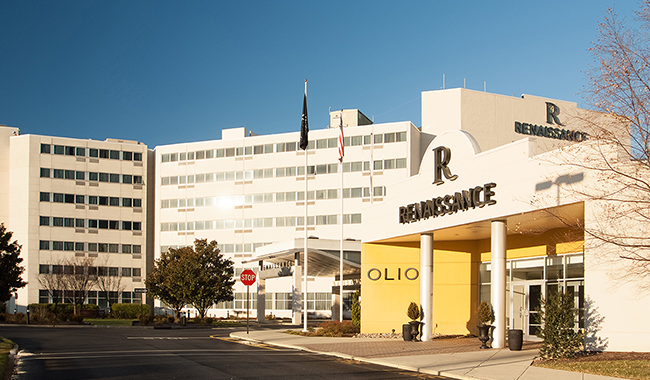
And the outdoor option exists on either approach. Central New Jersey gives mature oak-dominated canopy with maple, beech and tulip poplar, and a specimen’s canopy edge is the most reliable outdoor position anywhere: soft directional light in front, darkness behind. A hotel’s own porte-cochère is the reliable midday position — a solid roof restricting light to a horizontal band, with a dark surround and no possibility of dappling.
Whether a short trip outside later in the evening is possible is worth asking in advance rather than on the night, because in summer the best light of the day arrives after eight and at a venue running to a clock that request is much easier agreed beforehand.
- Decide early: daylight upstairs constrains the schedule, brought light does not
- A metre from the glass at forty-five degrees, lights off, curtain half across
- Make one good setup and reuse it — consistency beats variety
- Close, off-axis and gelled, or it reads as flash rather than light
- Find three or four dark backgrounds before the day, on either approach
The central New Jersey year
A full-service hotel is weather-independent, which means the season decides the quality of the daylight approach and the outdoor half of the day rather than whether anything works.
Winter is cold with snow in most years, and for the building it barely matters — the honest argument for a February date.
Where winter matters most is the daylight approach, and it matters positively in one respect and negatively in another. The December sun at this latitude reaches only about twenty-six degrees above the horizon, which means it enters a hotel window almost horizontally and travels much further into a room than a high summer sun does — so the light is better and the usable band beside the glass is much wider.
But the day is short: the light is gone by about half past four, which means daylight portraits in December belong in the early afternoon and there is no possibility of making them later. A couple choosing the daylight approach for a winter date needs the running order to reflect that, and it is the single most important scheduling fact of the season.
Snow is the outdoor asset: the best natural fill available, lifting every shadow and throwing light upward into faces, and it also reflects light up into the hotel windows, which measurably brightens the rooms. Snow against dark bare trees or a dark façade gives the widest brightness range available — expose for the snow and let the rest go dark, overexposing deliberately relative to the meter, which snow fools by about two stops.
Winter also puts any after-dark exterior frame inside a normal running order rather than after eight.
The costs are a short day, cold hands, batteries draining faster, and a cold camera fogging when carried from a winter forecourt into a heated hotel. Spares in an inside pocket and bodies bagged until they warm.
Early spring is the weakest outdoor part of the year: bare trees, brown ground and wet footing. Indoors it makes no difference, and the brought-light approach is entirely unaffected — which is a legitimate reason to choose it on an April date.
Late spring is when the light is long and the daylight approach is at its most flexible: the sun is on one side of the building or the other for most of the day, and the good low light lasts until well after eight. That flexibility is the strongest argument for the daylight approach in late spring and early summer.
Summer is hot and humid — commonly upper eighties Fahrenheit and above with high humidity — with afternoon thunderstorms a real feature from June into August. Indoors none of that matters.
The summer complication for the daylight approach is that a high sun barely enters a window at all, which means the usable band beside the glass is at its narrowest in June and the light is coming from above rather than from the side. A metre becomes half a metre, and a curtain drawn partly across the window matters more.
Autumn is the best season on both approaches. The humidity breaks in September, the air reaches its clearest of the year, the sun is low enough by mid-October that the window light improves markedly, and foliage in central New Jersey peaks from the middle of October into early November — over two or three weeks because the species turn at different rates.
The scheduling advantage is that the days are short enough for the good outdoor light to fall inside a normal afternoon slot rather than hours after it, and long enough that daylight portraits are not forced into the early afternoon. October is the month in which both approaches are easiest at once.
More frames from Renaissance Woodbridge
Renaissance Woodbridge wedding photography: common questions
What is the governing decision?
Whether the portraits are built around the daylight upstairs, which constrains the schedule, or around light you bring, which does not.
Where is the daylight?
The guest rooms above all, plus a corridor with a window at the end and the first few metres inside the entrance. The function spaces have almost none.
What should I ask about the guest room?
Its floor, its aspect and its depth. A high floor on the shaded side of a shallow room is the best combination.
How do I get separation in a pale hotel room?
Draw one curtain partly across the window to narrow the source, put something dark behind the subject, or turn them further from the glass.
What makes brought light look like light?
Close to the subject, off the camera axis, through a modifier, and gelled to the room’s dominant colour with the white balance set to the gel.
Which month suits both approaches?
October. A low enough sun for good window light, and short enough days that the outdoor light falls inside a normal afternoon slot.
More New Jersey venue guides
We are writing a photographer’s guide to every venue we would happily shoot in New Jersey. Here are three more, plus the full index:
- The Rockleigh, Rockleigh: Field Notes
- Royal Manor, Garfield: The One Decision That Governs Everything
- Skylands Manor, Ringwood: The Light Through the Day
Planning a wedding at Renaissance Woodbridge?
Daylight or your own light — decide early. Tell us your date and the timings.