 The Venetian, Garfield: The Building’s Own Logic
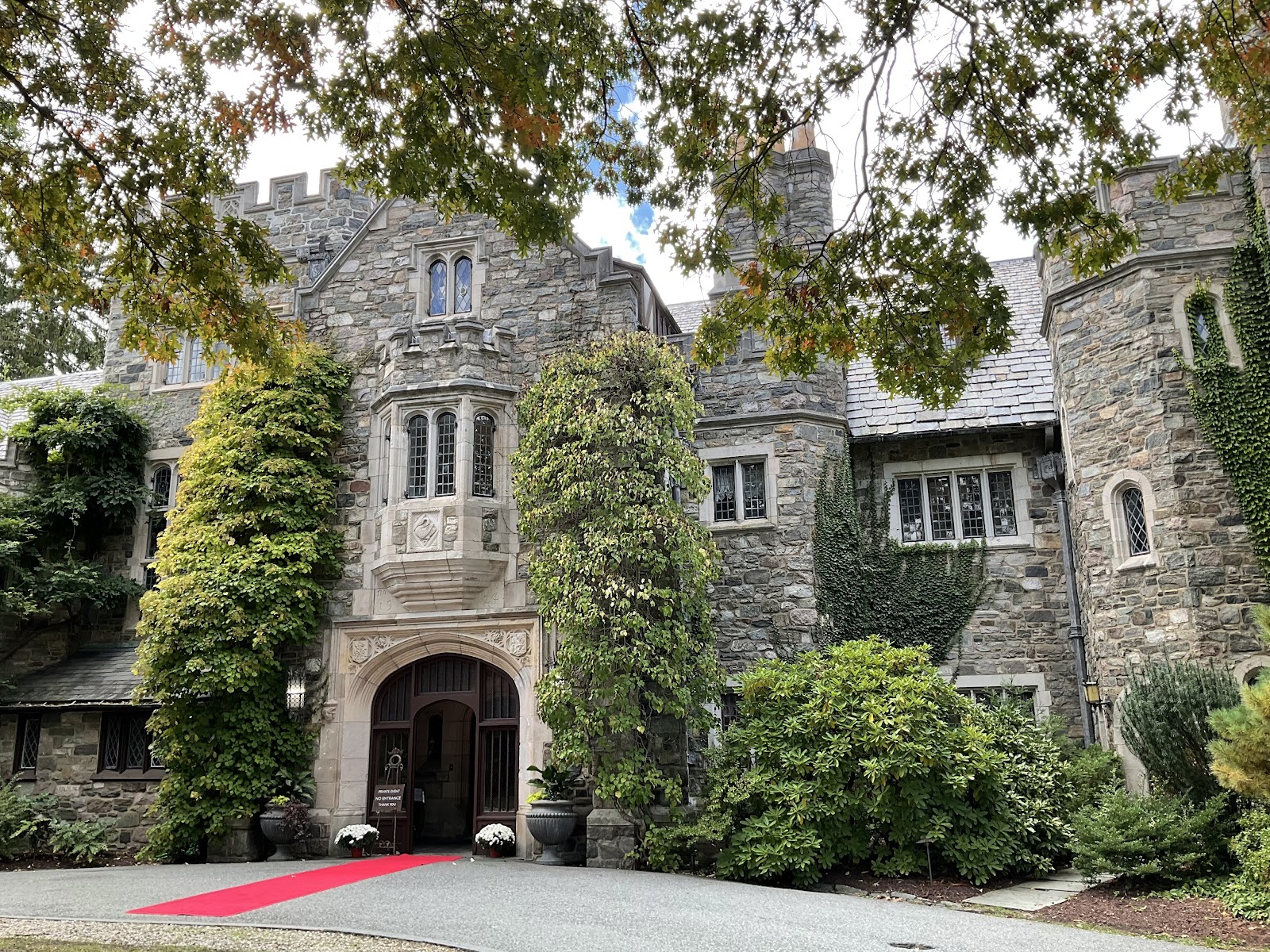
Skylands Manor, Ringwood: The Light Through the Day
Stone wants raking light and a garden wants soft light. They are rarely available at once.
A Tudor Revival stone manor set in a botanical garden has two subjects that want opposite conditions, and reading the day is a matter of knowing which one is available when.
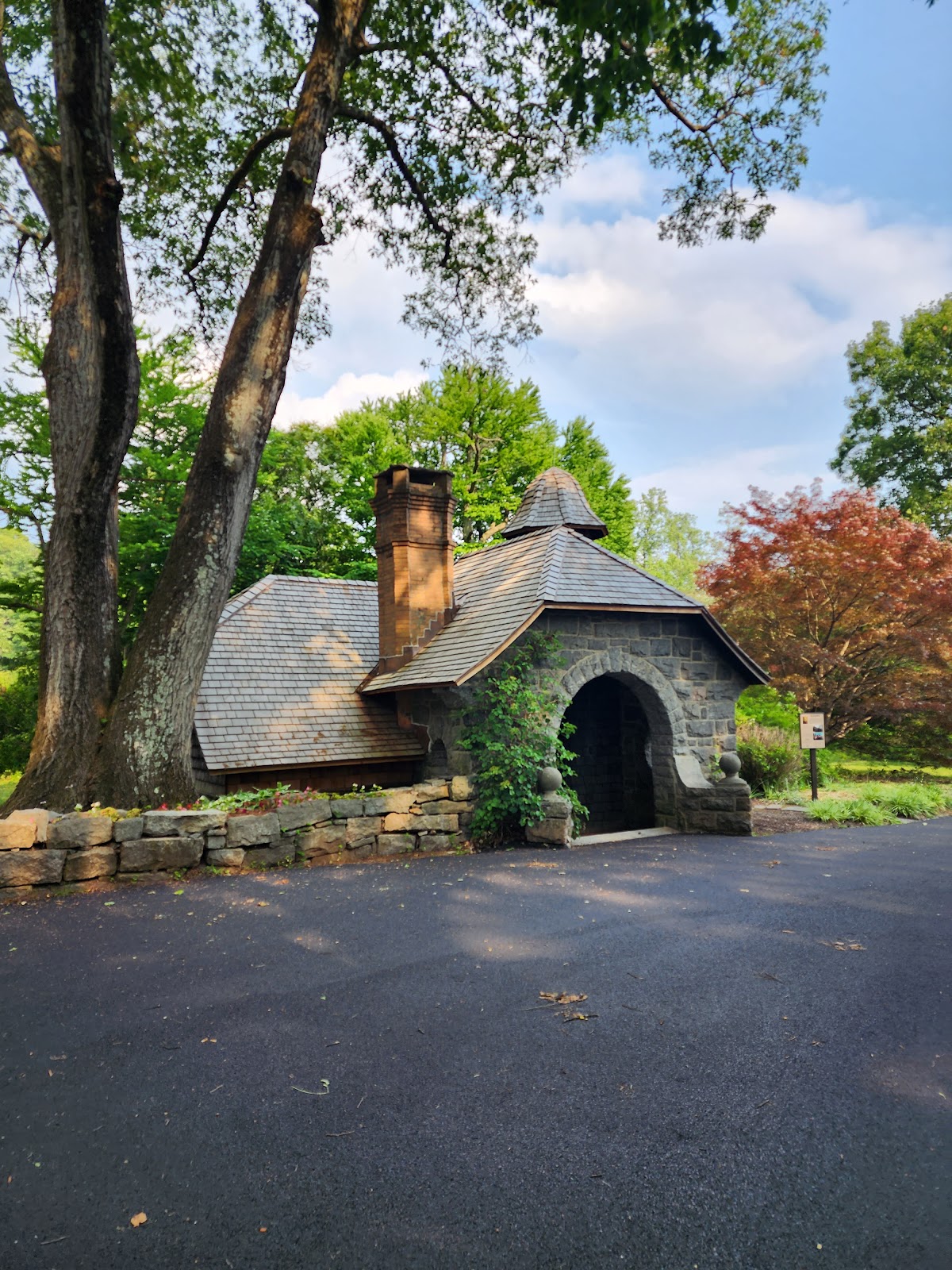
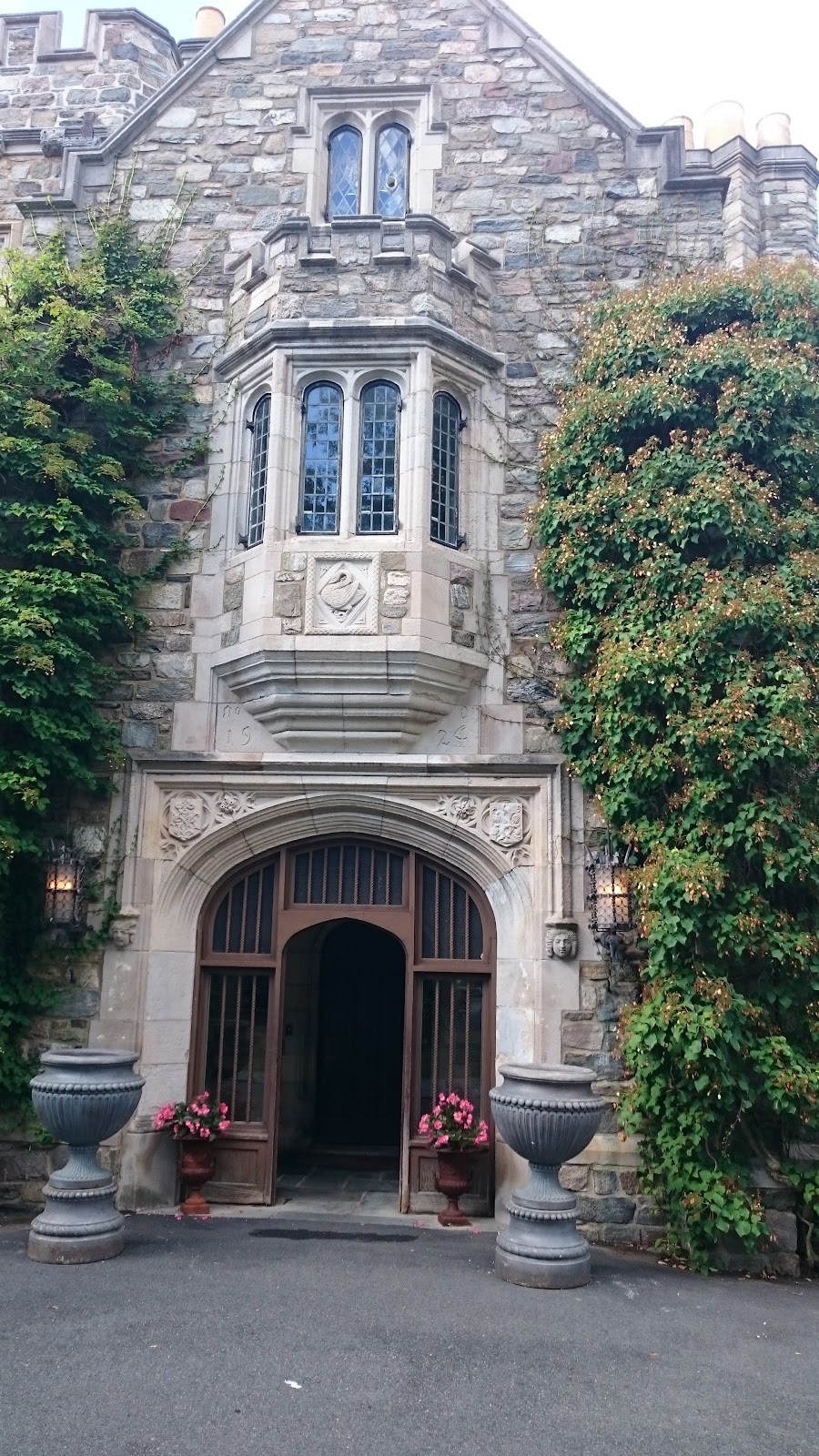
Stone wants raking light. A manor built in rough-faced or dressed stone with mullioned windows, gables and chimneys has all of its interest in texture and relief — and texture only shows when light crosses a surface rather than falling onto it. In flat light a stone building reads as a grey mass; in low raking light every course, every reveal and every shadow line comes forward.
A garden wants soft light. Planting in hard sun has clipped highlights, hard shadows and dappling on faces; in even light the greens saturate, the flower colours hold, and the whole space becomes usable at any hour. A botanical garden on an overcast morning is at its best, and the same garden at noon on a clear day is at its worst.
Those two conditions rarely coincide, which is the day’s structure: the garden belongs to the soft hours and the flat days, and the building belongs to the raking ones.
The third element is the setting. The New Jersey Highlands is the state’s highest and most wooded country — a landscape of low forested ridges, oak and maple with hemlock in the hollows — which means the site is enclosed, shaded, several degrees cooler than the lowlands, and it loses the sun early behind a ridge.
We have not photographed a wedding at Skylands Manor; stone manors with botanical gardens behave consistently. Which rooms and garden areas are available, what permits and guest limits apply, whether interiors may be used and under what conditions, the covered alternative, and whether the garden is open to visitors on the date are questions for the site’s administrators.
Skylands Manor at a glance
| Where | A Tudor Revival stone manor and botanical garden in the NJ Highlands |
| Morning | Soft light, and the garden at its best |
| Midday | Garden rooms, hedges and the building’s shaded walls |
| Evening | Raking light on stone, and a ridge that ends the day early |
| Ask first | Rooms and areas available, permits, guest limits, public access |
Morning to midday: the garden, and the rooms
The morning belongs to the garden and it is the part of the day most people underuse.
In the Highlands the mornings are frequently soft: cool air in an enclosed wooded valley produces mist and low cloud more often than in the lowlands, and even on a clear morning the ridges delay the direct sun. That gives an hour or two of even light in which every part of the garden works — no dappling, no squinting, no clipped whites, and greens and flower colours at full saturation.
Two handling notes in that light. Set a custom white balance on a face in position rather than a daylight preset, because soft light in an enclosed garden picks up green from every surface around it. And build the contrast the light will not supply: a dark hedge, a shaded stone wall or a doorway behind a subject does more for a frame in flat light than any amount of added light.
A botanical garden is organised into rooms, which is its most useful property. Hedged and walled enclosures, each with its own planting, mean that dozens of positions exist within a short walk — and each of them has a dark boundary, which is the separation a photographer usually has to build.
Dense clipped evergreen hedge is the single best background in any garden: a dark, even, textureless mass two or three stops below a subject with nothing in it to distract. The metering correction is the standard one and it matters: a meter looking at a hedge overexposes the face by a couple of stops, so metering on skin and working in manual is the rule — and a bright open bed a few paces away fools the same meter the other way.
Flower colour needs its own exposure discipline. A saturated red is the first thing in a frame to lose detail, clipping in one channel while the rest of the picture still looks correct — so exposing for the reds is the rule, and skin can be lifted afterwards. And petals are thin enough to transmit light, which means a bed lit from behind glows rather than being lit from outside: the strongest close garden frames have the light behind the planting.
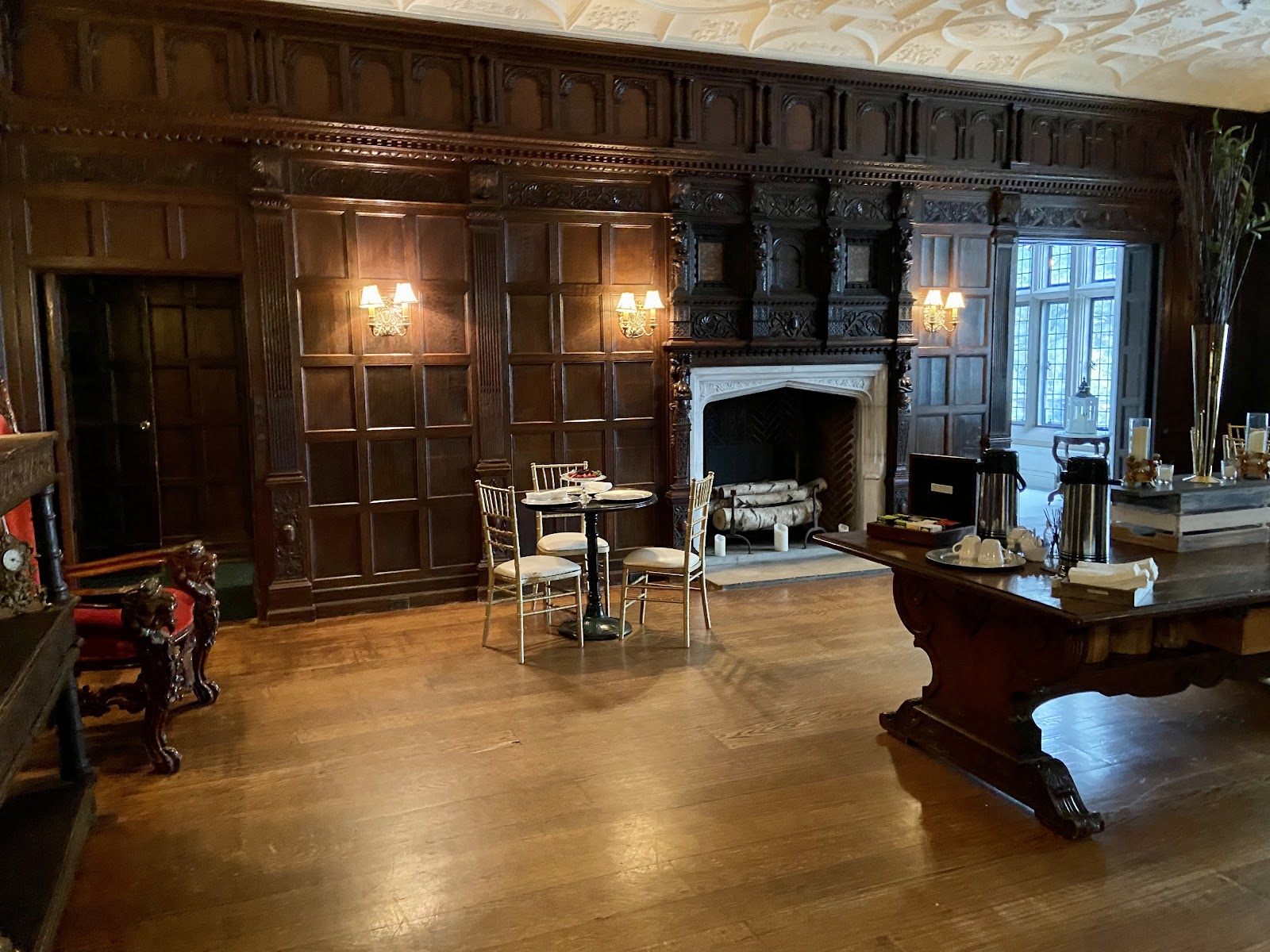
Indoors in the morning, a Tudor Revival manor gives the best portrait light any historic building offers, and it has one specific feature to work with. Tall mullioned windows in deep stone reveals put light in horizontally at head height and let it fall off steeply into a dark panelled or stone-lined room — so a subject a metre from the glass, turned about forty-five degrees to it, has real modelling and a background two or three stops down for nothing.
The deep reveal is a bonus: the thickness of the wall restricts the light, which gives a sharper fall-off across a face than a thin-walled building does. A subject standing within the reveal itself is lit more directionally than one beside it.
The mullions are the caution. In direct sun they cut the light into hard-edged vertical bands, which are handsome on a wall and unusable on a face — a bright band across one eye is not correctable. A sheer curtain turns the window into a diffuser; a shaded or north-facing window avoids it. And half a metre either way is frequently the whole fix.
Two free rules: turn the room lights off, because warm bulbs against cool daylight put two colours on one face; and set a custom white balance on a face, because a window looking onto dense planting delivers green light and one looking at pale gravel delivers warm.
The metering indoors runs the dark-room way and it is pronounced in a stone manor: a meter looking at the interior overexposes the face by a couple of stops, so skin metering in manual with the room allowed to stay dark. That near-black is the picture.
Afternoon to evening: the stone, and the ridge
The afternoon and evening belong to the building, and the reason is that stone needs light across it rather than onto it.
The frame is the façade in low raking light, which brings out the relief: the rough face of the stone, the shadow under every string course and label mould, the recession of the window reveals, and the modelling on gables and chimneys. The same façade at midday is flat grey and at noon on an overcast day is flatter still.
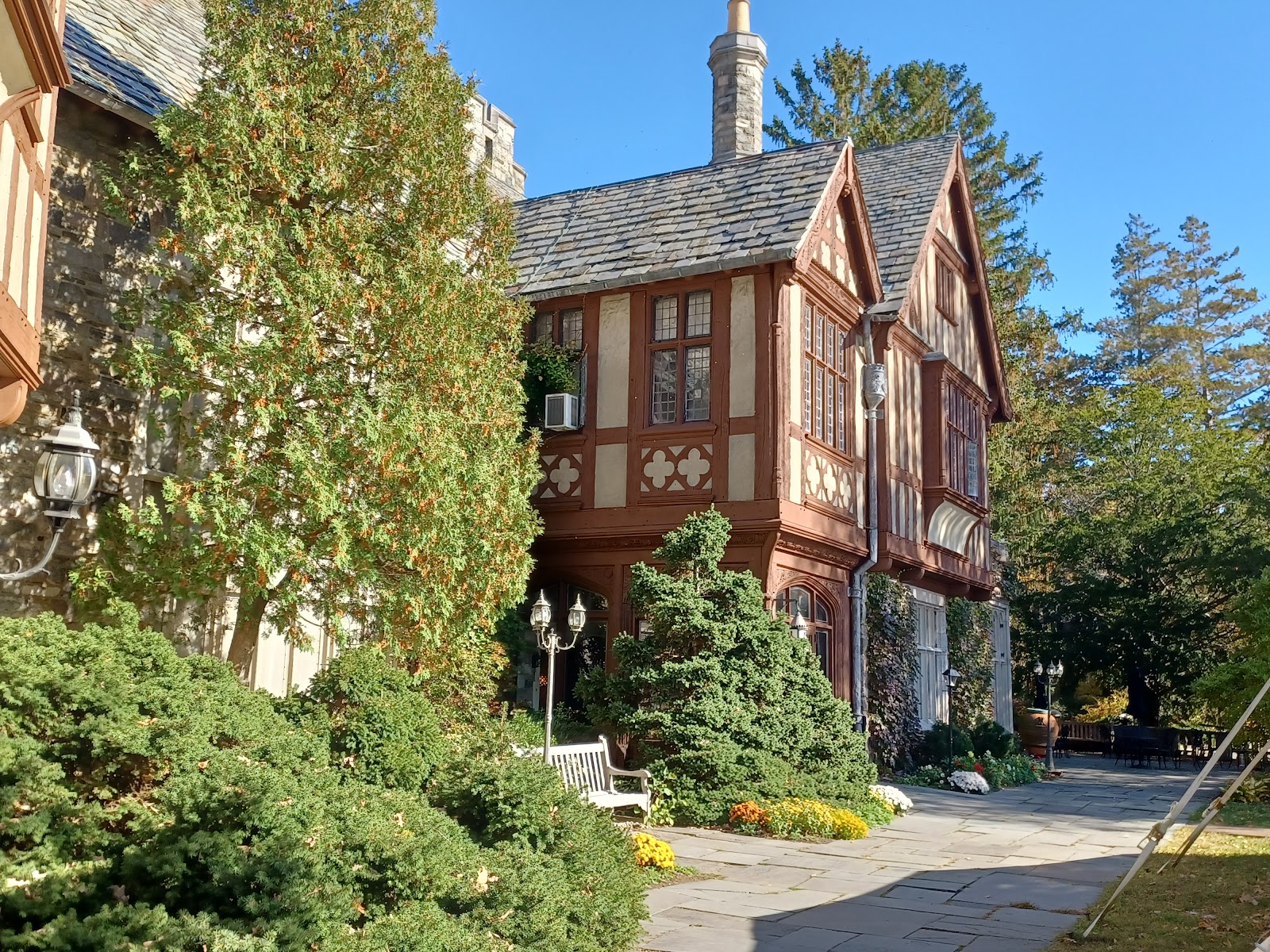
That means the architectural frames belong in the last two hours, and it is worth knowing which elevation catches them. A Tudor Revival house is asymmetrical by design, which means the elevations differ and only some of them face the evening sun — so establishing that on a walk beforehand is ten minutes that decides where the building portraits happen.
Asymmetry also changes the compositional rule from the one that applies at a classical house. A symmetrical building has one correct camera position on the axis; an asymmetrical one does not, which frees the camera to move — and the frames that work are the ones that use the irregular silhouette, the stepped gables and the massing rather than trying to square it up.
What still matters is the verticals. Stone buildings have strong plumb lines in their quoins, mullions and chimneys, so a converging vertical reads as a lens error — which argues for standing further back with a longer lens rather than tilting up from close in.
The ridge is the fact that ends the day and it ends it early. Highlands terrain means wooded ridges on more than one side, and a ridge on the western flank takes the sun well before a sunset table says — frequently by half an hour or more in summer. So the raking light on the façade arrives and departs faster than expected, and the window is narrower than at an open site.
The interval that follows is the site’s signature evening condition: the grounds in soft even shade with the ridge above and the upper parts of the building still lit, for twenty or thirty minutes. That is made by exposing for the lit stone and lifting the faces with a close warm-gelled source, not by underexposing the building to match them.
Close matters because nothing here bounces much: a source at two metres needs roughly a quarter of the output it needs at four. And the gel is what stops the faces reading as pasted in against light that is very warm at that hour.
The woodland is the other afternoon and evening resource and it gives what the garden and the building do not: a background three or four stops below the subject, for nothing. The canopy edge is the position — a metre or two inside at the margin of an opening, giving soft directional light in front and darkness behind.
The Highlands species mix is oak-dominated with red and sugar maple, beech and birch, and hemlock in the damp hollows. Broad-leaved canopy filters as much as it blocks, so it dapples: look at the face rather than the ground, and a bright patch on skin means move a metre. Hemlock gives the real full shade and the darkest background on the site.
Indoors in the evening, a historic manor’s function rooms follow the standard approach with one complication: high ceilings mean the ceiling is not a usable bounce surface, and dark panelling absorbs. Expose the ambient about a stop under what faces need so the room keeps its depth, then add one warm-gelled source just above skin level, bounced off a pale wall where one exists or fired through a modifier where none does, with the white balance set to the gel.
And the transitions are sharp here: a dark panelled interior, a bright garden bed and deep hemlock shade can be within thirty seconds of each other, spanning four or five stops and three colours. Resetting exposure and white balance at each one, rather than once at the start, is the discipline of the whole day.
- Garden in the soft hours and on grey days; building in the raking ones
- Hedge backgrounds are free separation — meter on skin, not the hedge
- Expose for the reds in any flower bed; they clip before anything else
- A metre from a mullioned window, and half a metre either way for the bars
- The western ridge ends the day early — plan the interval frame
The Highlands year
The New Jersey Highlands is the coolest and most wooded part of the state, which means the seasons here run slightly later and harder than in the lowlands an hour south.
Winter is cold with reliable snow, and a stone manor in snow is one of the best combinations in this guide. Snow against dark rough-faced stone gives the widest brightness range on the property — expose for the snow and let the stone go dark — and it fools a meter by about two stops toward underexposure, so deliberate overexposure relative to the camera is the rule.
Snow also reflects light up into every window, which measurably increases what arrives inside: a stone interior after snowfall is noticeably brighter than the same interior on a dull dry day.
The December sun at this latitude reaches only about twenty-six degrees above the horizon, which is decisive for a stone building. The whole short day rakes rather than floods, which means the façade is modelled from morning to evening rather than for one hour — and indoors the same low sun enters tall mullioned windows almost horizontally and travels three or four metres into a deep room rather than one.
So for a stone manor, winter light is the best of the year on both sides of the walls. The garden is bare, which is the trade — though a botanical garden of any ambition has evergreen structure, winter stems and bark deliberately planted for exactly this season, and the hedged rooms are unchanged.
The costs are cold, a short day made shorter by the ridge, batteries draining faster, and a cold camera fogging when carried into a heated building. A stone house is cold inside as well, and whether it is heated adequately is a question with a definite answer.
Early spring is the weakest part of the year: bare trees, brown ground and wet footing in wooded country that drains slowly. Late April changes it decisively, because a botanical garden’s spring is deliberate — flowering trees, magnolias and bulbs planted in quantity, and against dark stone that is the strongest short-lived pairing the site produces.
Late spring is when the garden rooms close up and the light under new canopy is at its most flattering. Transmitted green light needs a custom white balance.
Summer is warm and humid but noticeably cooler than the lowlands — the elevation and the forest keep it several degrees down, which is a genuine argument for the site in July. Afternoon thunderstorms are a real feature from June into August, building fast over the ridges, and for a garden site a named covered alternative is a requirement.
The summer trade is light. A high sun makes the garden’s open beds hard, the canopy’s dappling worst, and the stone flattest — which pushes the whole day to the ends of it. And the humidity reduces the definition on every stone surface, which is the opposite of what the architecture wants.
Autumn is the best season and by a wide margin. The humidity breaks in September, the air reaches its clearest of the year — which restores the definition on stone — and foliage peaks in the Highlands from the middle of October, slightly earlier than the lowlands because of the elevation.
Oak russet, maple scarlet, beech bronze and birch yellow arrive over two or three weeks because the species turn at different rates, and against dark stone that colour is exceptional: the background is dark and neutral enough to hold it without competing. A stone gable with a scarlet maple beside it in late October is the best frame on the property.
A botanical garden’s autumn is also deliberate rather than incidental, which means there will be planting chosen for October colour as well as the wild woodland around it.
More frames from Skylands Manor
Skylands Manor wedding photography: common questions
Why do the building and the garden want different hours?
Stone shows its texture only in raking light; planting looks best in soft even light. Those conditions rarely coincide, so the day splits between them.
When is the garden at its best?
Soft mornings and overcast days — no dappling, no clipped whites, and greens and flower colours at full saturation.
What is the best free background?
Dense clipped evergreen hedge: a dark even mass two or three stops under the subject. Meter on skin, not on the hedge.
What about the mullioned windows?
They give excellent horizontal light in a deep reveal — but in direct sun they cut hard bands across a face. A curtain or a shaded window fixes it.
Does the ridge affect the timing?
Yes. A wooded ridge on the western flank takes the sun half an hour or more before a sunset table says, so the raking window is narrow.
Which season is best?
Late October, for colour against dark stone in the clearest air of the year — and December, when a low sun rakes the façade all day and reaches deep inside.
More New Jersey venue guides
We are writing a photographer’s guide to every venue we would happily shoot in New Jersey. Here are three more, plus the full index:
- The Terrace, Paramus: Field Notes
- The Venetian, Garfield: The Building’s Own Logic
- The Brownstone, Paterson: The One Decision That Governs Everything
Planning a wedding at Skylands Manor?
Stone and garden, in the right order. Tell us your date and we will split the day.