 The Venue, Asheville: A Season-by-Season Guide
The North Carolina Museum of Art: One Decision About Inside or Out
A top-lit gallery and an open park are opposite conditions, and each peaks when the other is useless.
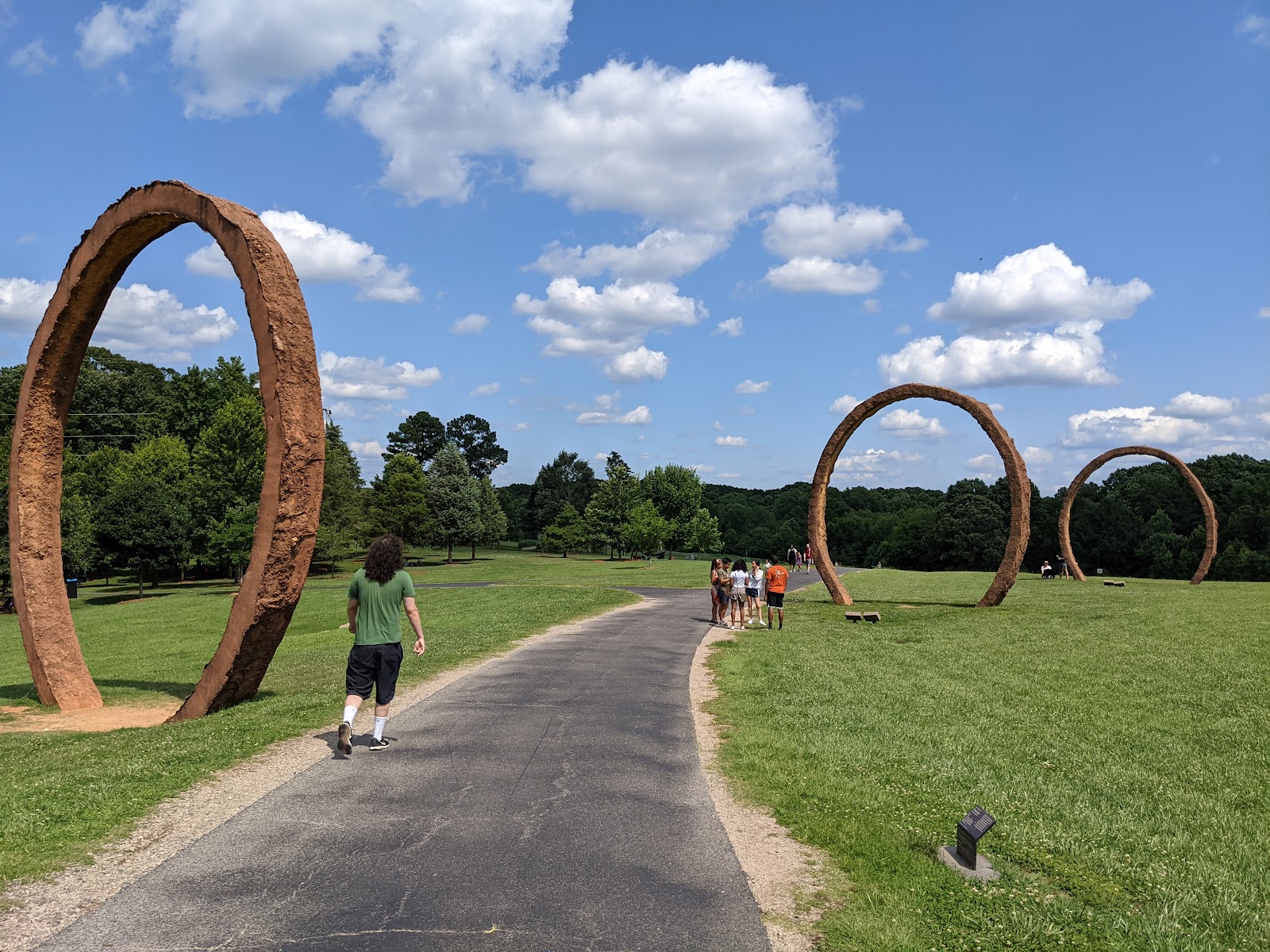
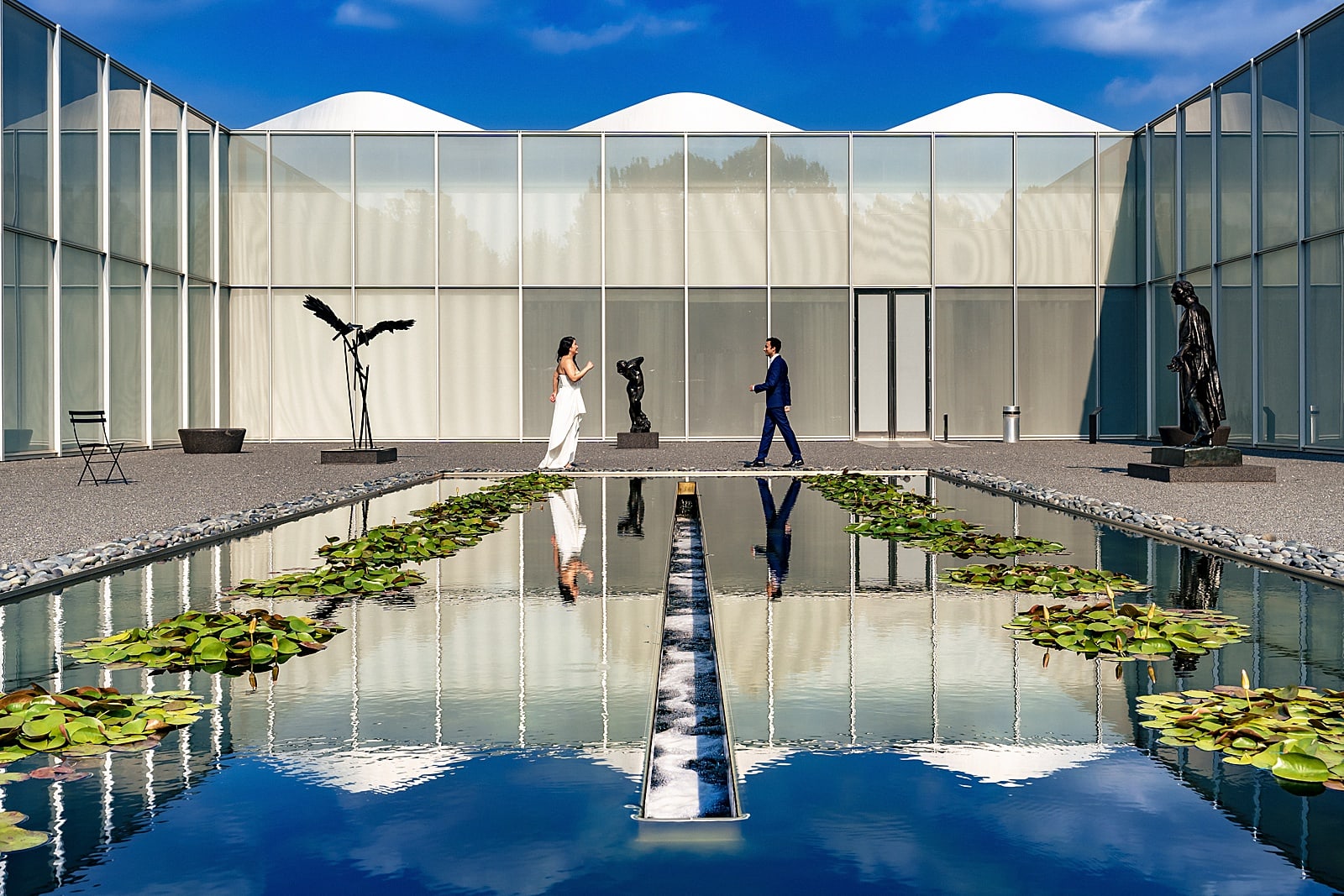
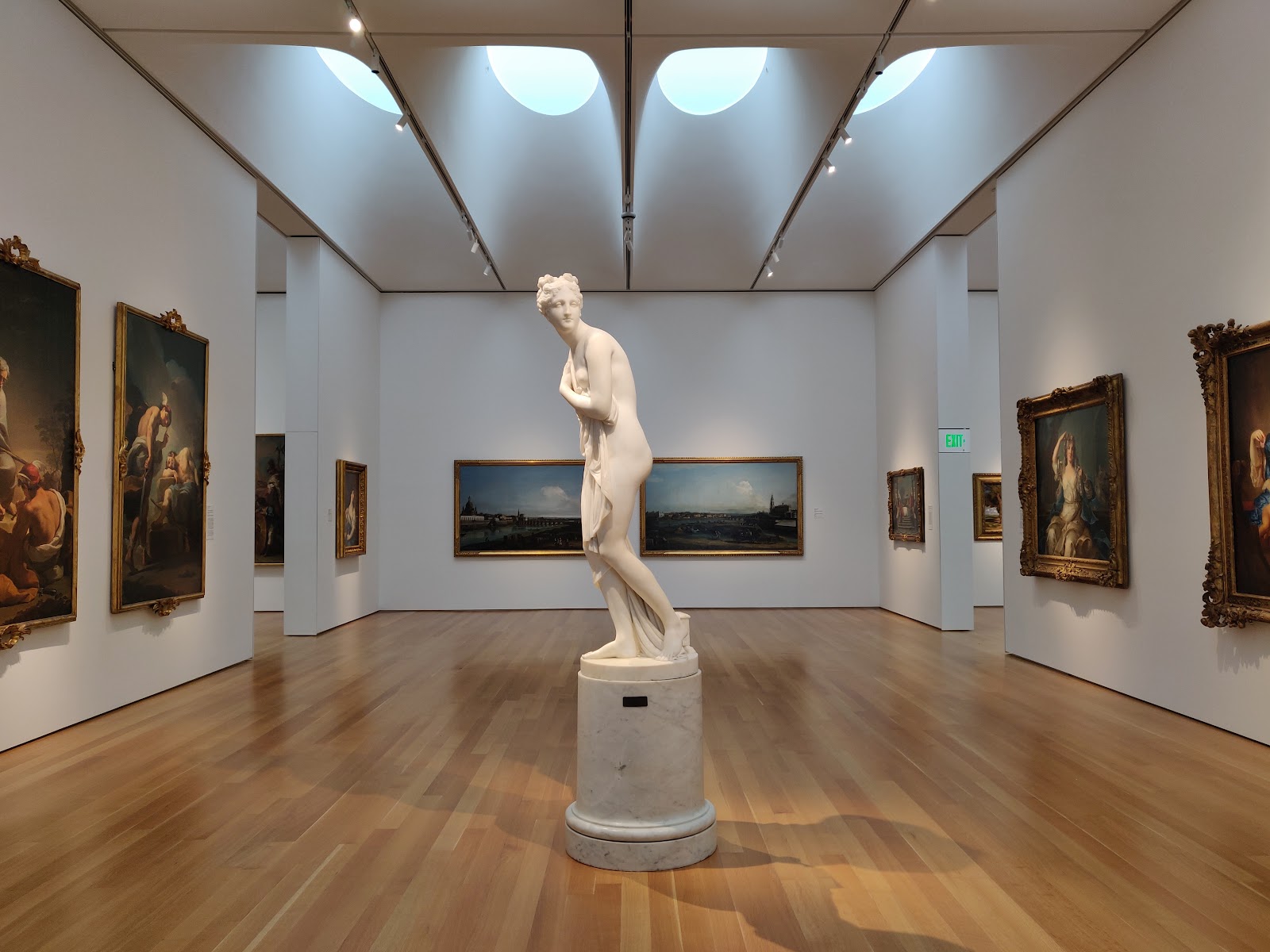
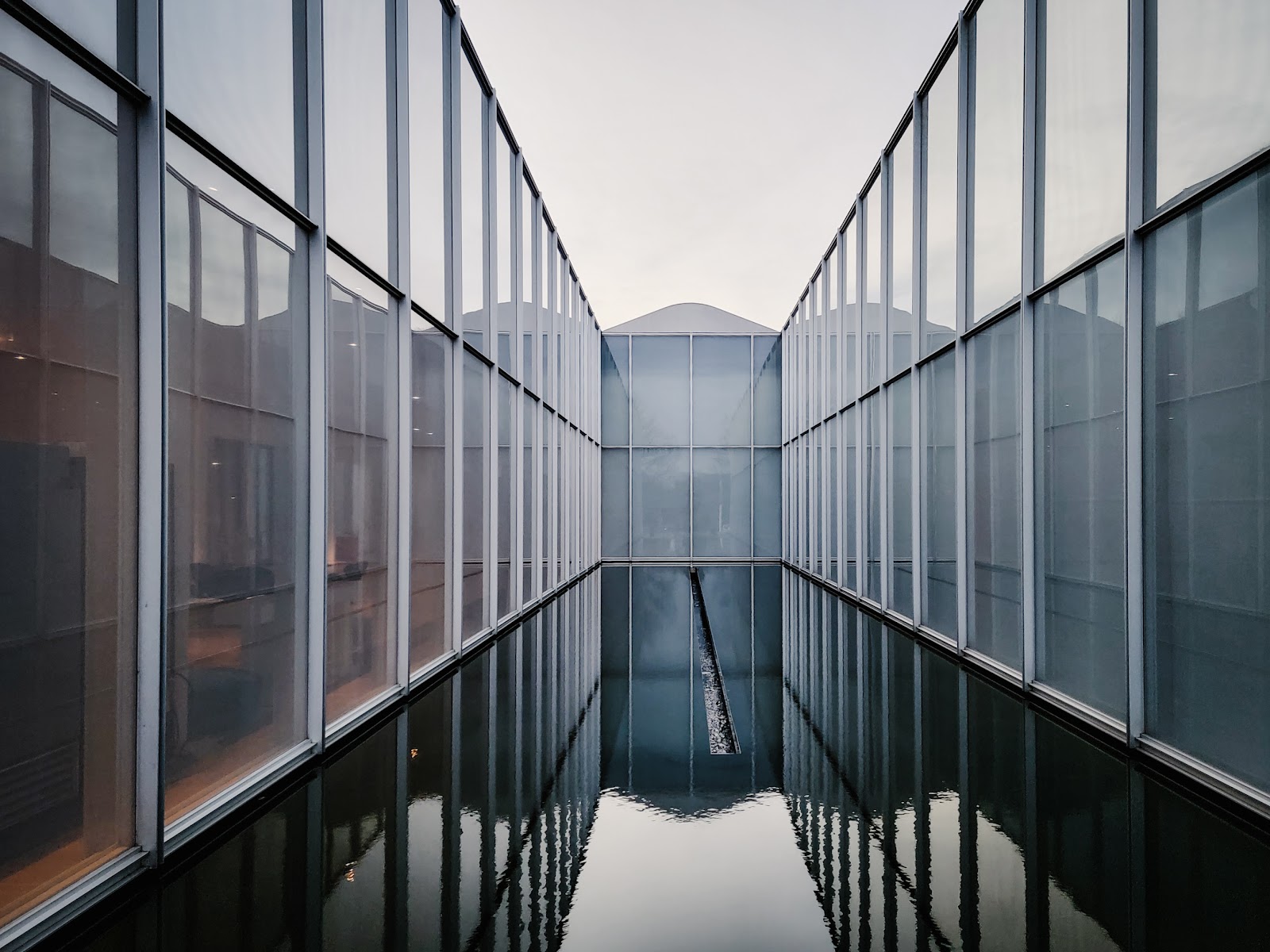
The North Carolina Museum of Art occupies a campus on the western side of Raleigh, combining gallery buildings — including spaces lit substantially from above through the roof — with a large outdoor park of lawns, woodland edges and installed sculpture.
The decision here is simply which of those two venues you are working, and it matters because they are opposites in every respect that affects a photographer. A top-lit gallery is at its best when the sun is high, because a diffusing roof converts a hard overhead source into an enormous soft one. An open park is at its worst at exactly that hour and at its best in the last ninety minutes, when low sun rakes across grass and backlights everything.
That means the campus effectively schedules the day for you if you know it, and produces the worst of both if you do not. We have not photographed a wedding at the NCMA; top-lit galleries and open sculpture parks behave the same wherever they occur. Which galleries and park areas host events, and what the photography rules are around the collection, are questions for their events team — and the collection rules are the ones that constrain the plan.
The North Carolina Museum of Art at a glance
| Where | Western Raleigh, North Carolina |
| Character | Top-lit gallery buildings plus a large park with installed sculpture |
| The fork | Gallery or park — opposites, peaking at opposite hours |
| Gallery best | Midday, when a diffusing roof makes a room-sized soft source |
| Park best | The last ninety minutes, when low sun rakes the grass |
The galleries: why top light is the best light in a museum
A gallery lit from above through a diffusing roof is one of the most useful interiors a wedding photographer can work in, and the reason is physics rather than taste. A hard overhead sun striking a diffusing surface arrives as a very large, very even source — the same effect a softbox produces, at the scale of a room. There are no hard shadows, groups light evenly front to back, and the light is consistent wherever people stand, so composition rather than position decides where they go.
It is also the light that shows a dress properly. Fine fabric, lace and beadwork need a large soft source to read as texture rather than as a white shape, and a diffused roof at midday is the best natural version of that available anywhere.
Two cautions. Top light is overhead light, so it shadows the eye sockets and marks under the nose and chin — a low bounce, a lifted chin or a small source at face height fixes it and takes seconds. And galleries with pale walls and floors are bright overall, so a meter will want to darken the frame: add a stop or more, as you would for snow, and check that the highlights still hold detail.
Collection rules are the real constraint and they should be settled in writing. Tripods, flash and sometimes photography altogether are commonly restricted in rooms holding loaned works, and those restrictions vary room to room and change with exhibitions. A plan built around a gallery that turns out to be unavailable collapses at the worst moment.
Where art is in frame, it is an assertive background and needs the usual decision: subordinate it with a long lens at a wide aperture, or commit and place the couple deliberately within the composition. Half-in fails. And it is worth asking which works may appear in published photographs, since loans and copyright can apply.
The park: open ground, sculpture and the shade problem
The park is the opposite condition: open, bright, exposed, and short of continuous shade. In North Carolina summer that makes the middle of the day genuinely difficult — high sun, squinting, shadowed eyes, and a bright sky that clips if you expose for skin. There is no positional fix on open lawn, which is why the galleries exist in the plan.
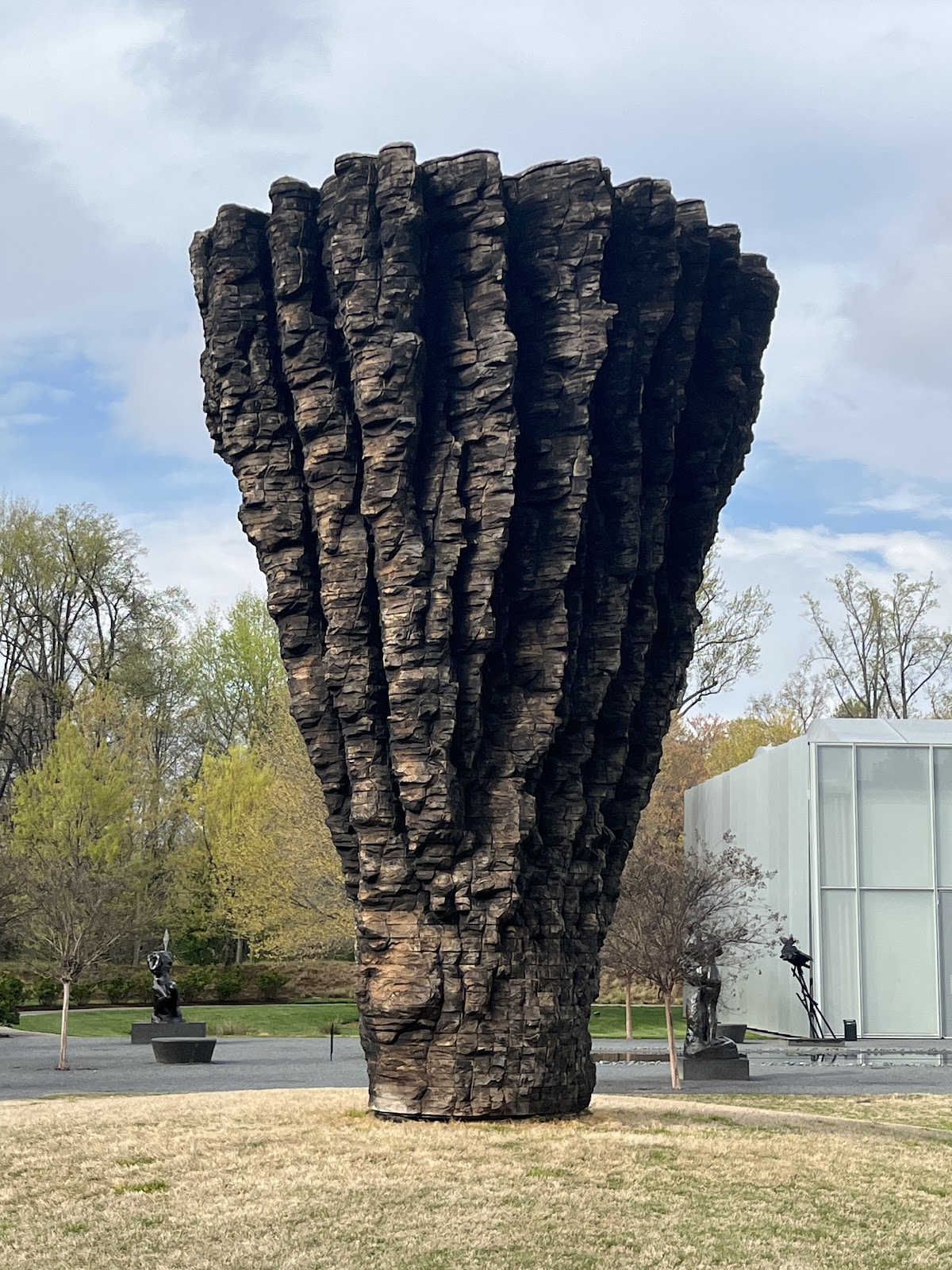
The shade that does exist comes from two sources and both are worth locating on a site visit. Large sculptures cast hard-edged, dependable shadows, and standing a couple two metres inside that line facing out towards the bright lawn gives a large soft key with a dark surround. And woodland edges give the best outdoor light on the campus: at the margin of a tree stand, light arrives sideways from the open sky rather than filtering down through leaves, so it is directional, bright and far less green than light under canopy.
Installed sculpture is a strong background and it competes, exactly as gallery art does. The same rule applies — long and shallow to subordinate, or wide and deliberate to commit. Large outdoor works also have the advantage that you can place a couple in genuine relation to them, using scale, which is a composition an indoor gallery rarely allows.
The last ninety minutes are when the park earns its place. Low sun across open grass backlights every blade, rims figures, and turns the whole lawn into a field of highlights. That is the most reliable beautiful frame on the campus and it requires only that the sun be behind the subject. It is also the block worth protecting in the running order above everything else, because the galleries can absorb any delay and this cannot.
What works in your favour
- Top-lit galleries turn midday sun into a room-sized soft source
- The best natural light anywhere for dress and detail texture
- Open park with backlit grass in the last ninety minutes
- Large sculptures casting dependable hard-edged midday shade
- Woodland edges giving directional light with little green cast
What to plan around
- Collection rules commonly restrict flash, tripods and sometimes photography
- Artworks and sculpture compete unless deliberately subordinated
- Bright pale galleries fool a meter by a stop or more
- No continuous shade on open lawn in the middle of the day
- Top light shadows the eye sockets without a low bounce
Sequencing it, and the campus practicalities
The plan writes itself once the two conditions are understood. Galleries through the middle of the day, where the light is at its best and the weather is irrelevant. Sculpture shade or woodland edge for any outdoor work that has to happen at midday. And the open park in the last ninety minutes, with a short block twenty minutes after sunset if the sky is doing anything, because open ground with no canopy means post-sunset colour is actually visible.
That sequence runs against the habit most photographers bring, which is portraits in the afternoon and interiors in the evening. Here that ordering gives you a harsh lawn and a gallery whose roof light has already gone, which is the worst version of both.
Campus distances are the practical constraint. A museum with a large park has long walks between locations, and every change of lighting position costs real minutes. Decide two or three positions in advance rather than planning a tour, and carry what each needs in one trip. A plan with four setups across a campus is a plan with twenty minutes of walking hidden in it.
The park is public, and unless an area is closed there will be visitors in exterior frames — the usual answers apply: long lens to compress people into unreadable background, tight framing, and the hours immediately after opening or before closing.
Two North Carolina conditions worth planning for. Summer humidity is high enough that a lens carried from an air-conditioned gallery into outdoor air will fog for ten to twenty minutes, so acclimatise the body you intend to use outside before you need it. And afternoon thunderstorms are common in summer, which means outdoor plans need a genuine fallback — although at this venue the fallback is a set of galleries that are better than the outdoors anyway, which is an unusually comfortable position to be in.
More frames from The North Carolina Museum of Art
The North Carolina Museum of Art wedding photography: common questions
Why are top-lit galleries such good light?
Because a hard overhead sun striking a diffusing roof arrives as a very large even source — a softbox at room scale. No hard shadows, groups light evenly front to back, and it is consistent wherever people stand, so composition decides position rather than light.
When should the galleries be used?
The middle of the day, when the sun is high enough to flood the roof. That is also when the park is unworkable, so the two halves of the campus divide the day between them without any negotiation.
What is the catch with top light?
It comes from above, so it shadows the eye sockets and marks under the nose and chin. A low bounce, a lifted chin or a small source at face height fixes it in seconds. And bright pale galleries fool a meter, so add a stop and check the highlights.
What are the restrictions like?
Real, and worth settling in writing. Tripods, flash and sometimes photography are commonly restricted in rooms with loaned works, varying room to room and changing with exhibitions. It is also worth asking which works may appear in published images.
Where is the shade in the park?
Two places. Large sculptures cast hard-edged dependable shadows — stand two metres inside the line facing the bright lawn. And woodland edges are better still, because light arrives sideways from open sky rather than filtering through leaves, so it is directional and far less green.
What order should the day run in?
Galleries midday, sculpture shade or woodland edge for any midday outdoor work, and the open park in the last ninety minutes. The usual habit — portraits in the afternoon, interiors in the evening — gives you a harsh lawn and a gallery whose roof light has gone.
More North Carolina venue guides
We are writing a photographer’s guide to every venue we would happily shoot in North Carolina. Here are three more, plus the full index:
- The North Carolina Museum of History: Field Notes on Exhibit Lighting
- The Raleigh Convention Center: Photographing a Very Large Neutral Room
- The Stockroom at 230: Photographing a Downtown Loft and Its Roof
Planning a wedding at The North Carolina Museum of Art?
Two venues, opposite hours, one campus. Tell us your date and we will order the day so each gets its best light.