 The Henry Clay: Lighting a 1920s Lodge Building
The Maker’s Mark Distillery, Loretto: The One Decision That Governs Everything
Black buildings give you nothing back. Plan for that.
One fact governs every photograph made at this distillery, and it is not the architecture or the setting or the season. It is the paint.
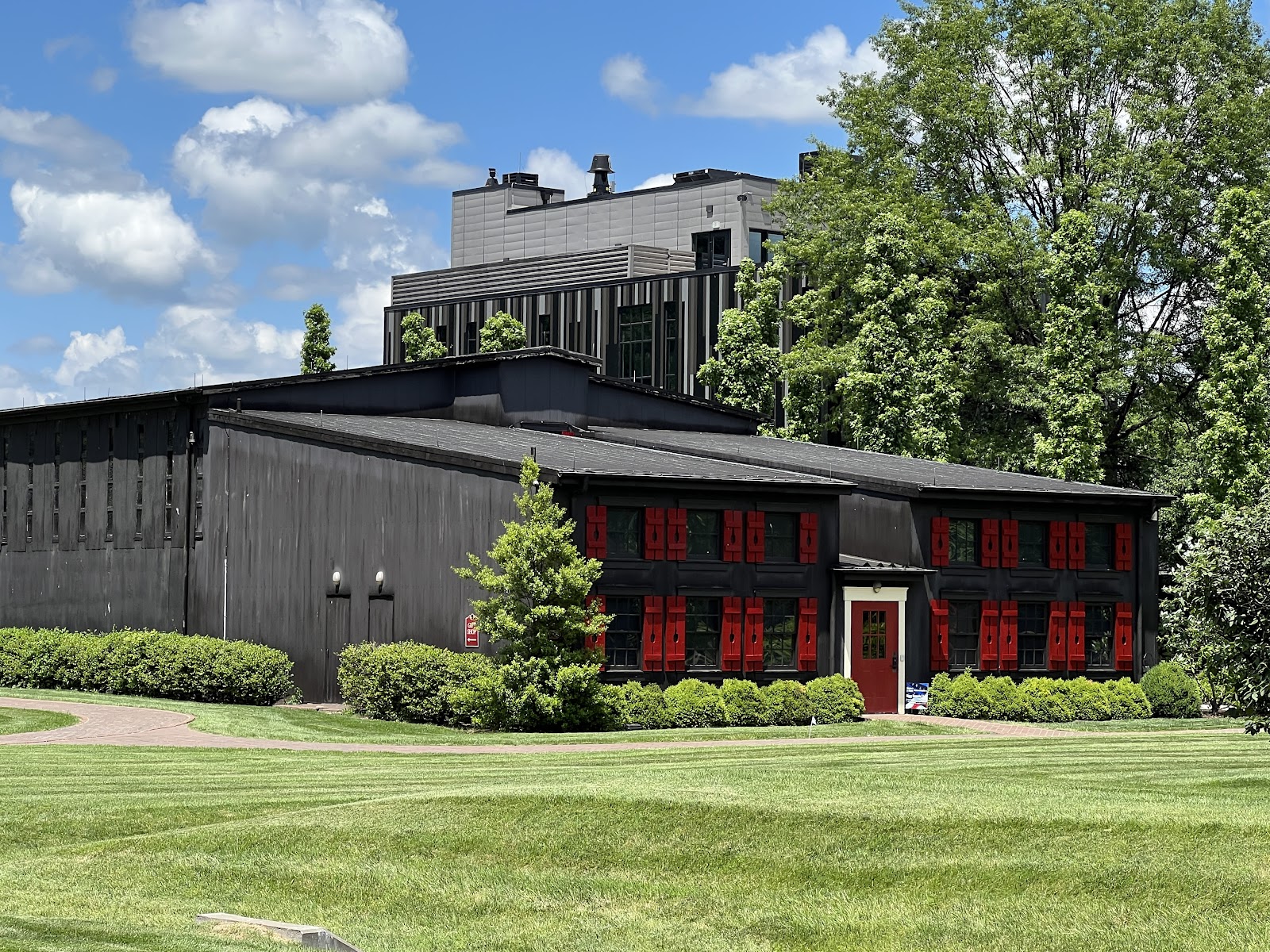
The Maker’s Mark buildings are black, with red trim, across the whole campus, and they have been for long enough that it is the site’s identity rather than a decorating choice. The distillery sits in a wooded hollow near Loretto, along a creek, and it is a National Historic Landmark.
A black building is a genuinely unusual photographic environment, and the reason is simple physics. A white or pale wall reflects something like eighty per cent of the light that falls on it; black paint reflects perhaps five. So a pale building standing near your subject is a large soft reflector working for free, and a black building standing in the same place is a hole.
That single difference cascades into everything.
There is no bounce. A subject standing in open shade in front of a white clapboard wall is lit from above by the sky and from the front by the wall, which is why that position flatters people. The same subject in front of a black wall is lit from above only. Top light, dark eye sockets, shadow under the nose and the jaw. It looks like a mistake and it is simply the absence of fill.
Everything you want in the way of fill you either bring or find, and finding it means looking for gravel, a road, a pale vehicle, a creek, a light-coloured path — anything on the site that is not painted black. Those surfaces become disproportionately valuable here.
Against that, black gives you something almost nothing else does: absolute separation. A subject lit from the side against a black wall stands completely clear of their background with no depth of field required and no lens longer than fifty millimetres. Every frame has a clean subject. That is a real gift and it is why the site rewards a photographer who has thought about it.
And the red trim is the whole colour palette. In an environment that is otherwise black timber, green woods and grey sky, one saturated red line becomes the entire compositional accent — and an accent that strong has to be placed deliberately rather than allowed to wander into a corner of the frame.
So the one decision is this: is a given frame about the buildings, in which case you expose for the people and let the black go to true black and treat the architecture as shape; or is it about the people, in which case you bring your own fill and the buildings become a background that will take any exposure you give it. Both are good. Trying to have both in one frame is what produces grey walls and flat faces.
What follows is how each hour and each weather plays out once that decision is made, what the rest of the site gives you, and what this part of Kentucky does to the year.
The Maker's Mark Distillery at a glance
| Where | A distillery in a wooded hollow near Loretto, KY, in the Knobs country |
| The one fact | The buildings are painted black with red trim |
| What follows | No bounce anywhere; every fill is brought or found |
| The gift | Total subject separation, and one red accent as the whole palette |
| Best weather | Bright overcast, fog or snow — all three are better than sun |
Why black governs, and what each hour and weather gives
Take the weather first, because at this site it matters more than the hour does, and the ranking is not the one photographers expect.
Bright overcast is the best condition here, and it is not a consolation. A high even sky against black timber produces a two-tone image — luminous sky, dense building — with the red trim as the only colour in it. That is a strong, deliberate, graphic photograph, and the overcast also solves the fill problem, because a bright sky is a very large soft source that reaches into eye sockets from a high angle rather than straight down.
Fog is better still and it is worth chasing. Black shapes emerging from white air is the single most striking condition this site offers: the buildings separate into layers by distance, the woods behind go to a grey wash, and the red trim reads at full saturation because there is nothing else competing. Fog forms in a creek hollow on a still morning after a clear night, most reliably in autumn. If a couple is getting ready on site in October, look outside at six.
Snow is the third of the three and the reason is the same: maximum tonal separation. Black buildings on white ground with red trim is essentially a three-colour image and it needs no help from anybody.
Direct sun is the hardest condition, which is the opposite of most venues. A black wall in full sun is still dark, but the sky above it is very bright, so a wide frame carries a tonal range that no single exposure holds — and a subject standing in that sun has hard light on them and nothing filling the shadow side, because the wall behind gives nothing back. Midday sun in June is the worst hour of the worst condition.
The answer in sun is to stop using the buildings as backgrounds and start using them as shapes. Get lower, put sky behind the roofline, expose for the subject, and let the black building read as a silhouette edge rather than as a surface. A black gable against a blue sky is a clean, strong, deliberate frame; a person standing in front of a black wall in midday sun is not.
Now the hours. Early morning in a hollow is late, because the hills hold the sun off the low ground — expect the first direct light appreciably after the almanac’s sunrise. That is useful rather than annoying: it extends the soft period at the start of the day, and the soft period is what this site wants.
The middle of the day in summer is the block to spend indoors or under the trees. The site has woods on the slopes and a creek in the bottom, and either is a better place to be at one in the afternoon than anywhere among the buildings.
The last hour is when the black campus is at its best in clear weather. Low warm light raking along black timber picks out every board, batten and nail, so a wall that was a featureless hole at noon becomes a surface with grain in it. That is the frame to have planned for, and it lasts fifteen or twenty minutes on the buildings that face the right way.
Then dusk, and here black works entirely in your favour. Once the ambient drops, a black building disappears into the sky and the only things visible are the lit windows and whatever architectural lighting the site uses. A distillery at dusk reduced to a pattern of warm lit openings in a dark mass is a considerably better photograph than the same building at noon, and it needs almost nothing from you beyond a tripod.
The hollow shortens the evening, though. Hills to the west take the sun early — commonly fifteen to twenty-five minutes before the printed time on the low ground — so the whole schedule needs shifting earlier than the almanac suggests. Look at the western skyline from the position you intend to use, judge the hill’s height above the horizon, and subtract.
The one instruction that covers the whole day: decide before each frame whether the buildings are the subject or the background, and commit. Grey walls and flat faces are what indecision looks like here.
What follows from it: the rest of the site
Once the black is understood, the site’s other elements sort themselves into two groups: the ones that give light and the ones that take it.
The surfaces that give are the ones to locate on arrival. Gravel and light-coloured roads are the main ones, and they are a genuine bounce source — a subject standing on pale gravel in open shade picks up fill from below that lifts eye sockets and softens the jaw, exactly the opposite of what the buildings do. That is worth walking the site to find.
The creek is the other. Shallow water running over pale rock in a hollow throws a broken specular pattern upward, and a subject standing at the water’s edge with a low sun behind the creek gets an uplift under the chin that nothing else on the property provides. This is karst country — water comes out of the rock as springs and runs clear — so creeks here are shallow, bright and stony rather than muddy.
The woods are the summer answer. The hollow has wooded slopes, and mature hardwood canopy is the only shade on site that does not come with a black wall attached. Two cautions apply to any canopy: light that has passed through leaves is green, so find a position lit by open sky from the side rather than filtered from above, and avoid dappled shade entirely, because hard bright patches several stops above skin cannot be recovered. Full shade or full sun, never the edge.
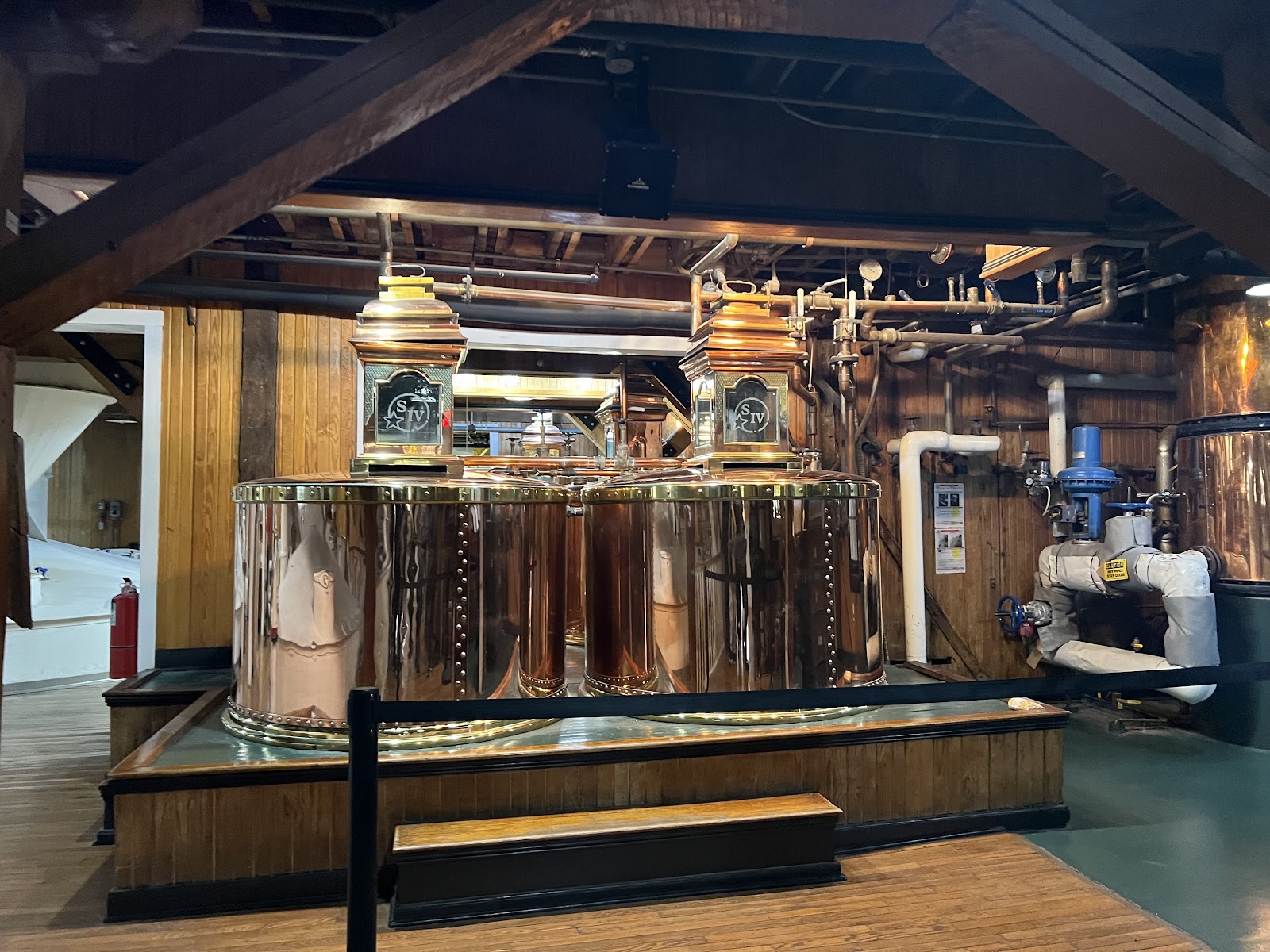
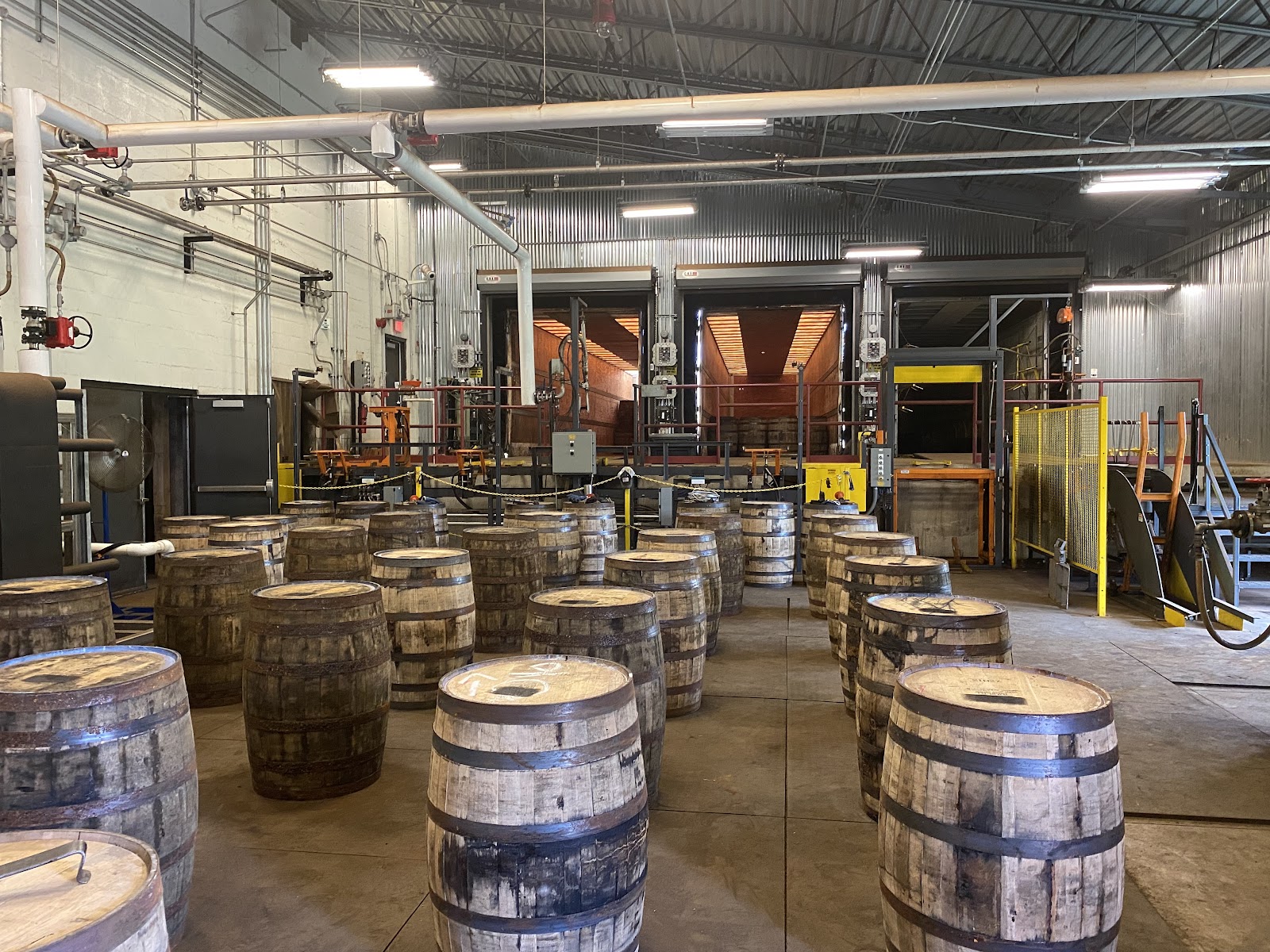
The interiors are the part to ask about specifically. Distillery interiors vary from process rooms to warehouses to visitor spaces, and at least one thing needs establishing before the day: what the policy is on flash and electrical equipment. A working distillery has areas where alcohol vapour makes the atmosphere a classified environment, and the restrictions there are a safety matter rather than a preference. Ask in writing which rooms permit what.
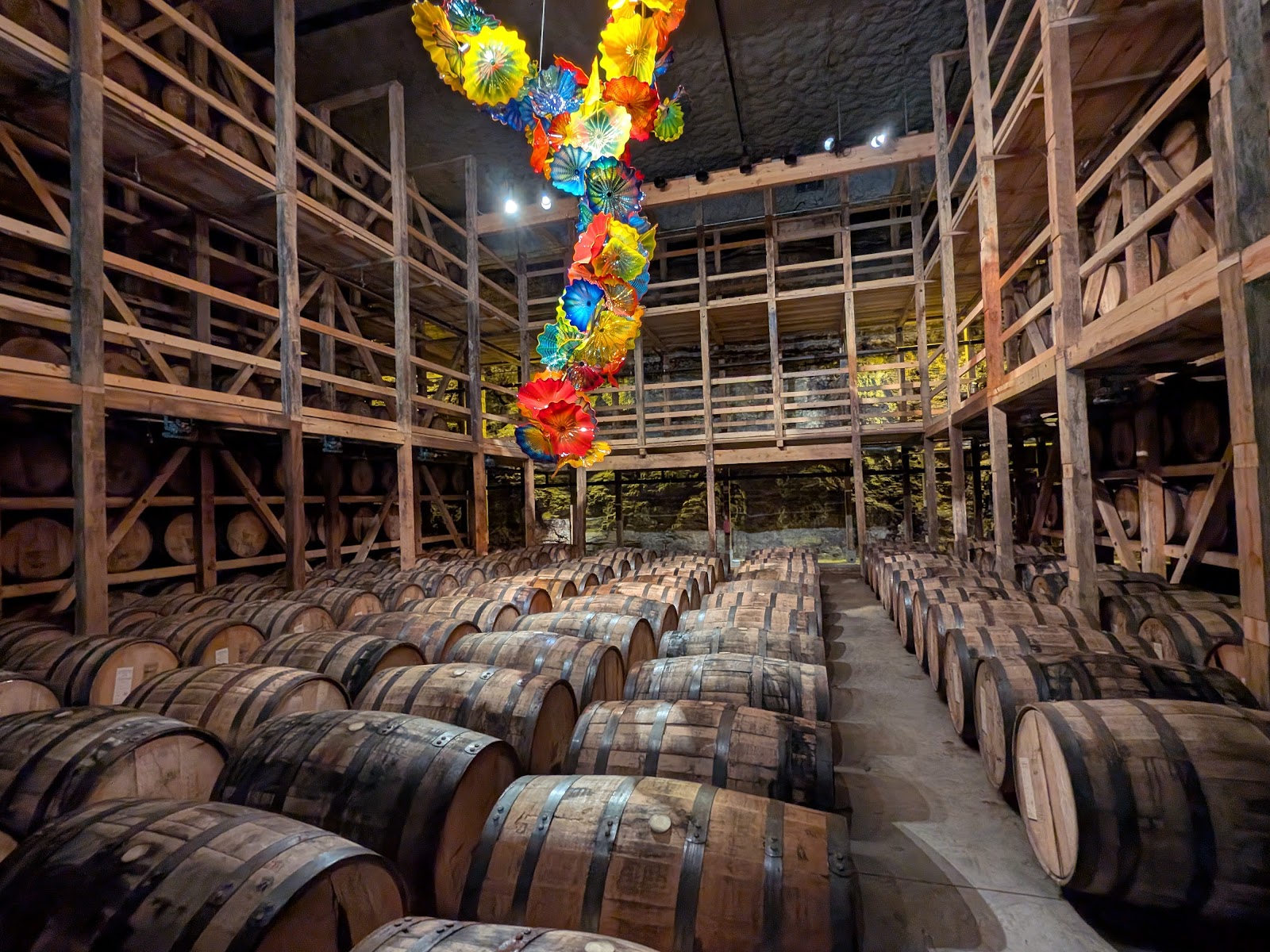
Barrel warehouses, if accessible, are the strongest interior frame anywhere on a site like this. A long lens down an aisle compresses hundreds of barrel heads into one continuous texture running to a vanishing point, with a small figure inside it. Light falls off fast from the openings, which is useful: two metres inside an opening a subject sits about four stops above the aisle behind and separates with no lighting at all. They are also hot in summer by design, so keep those visits short.
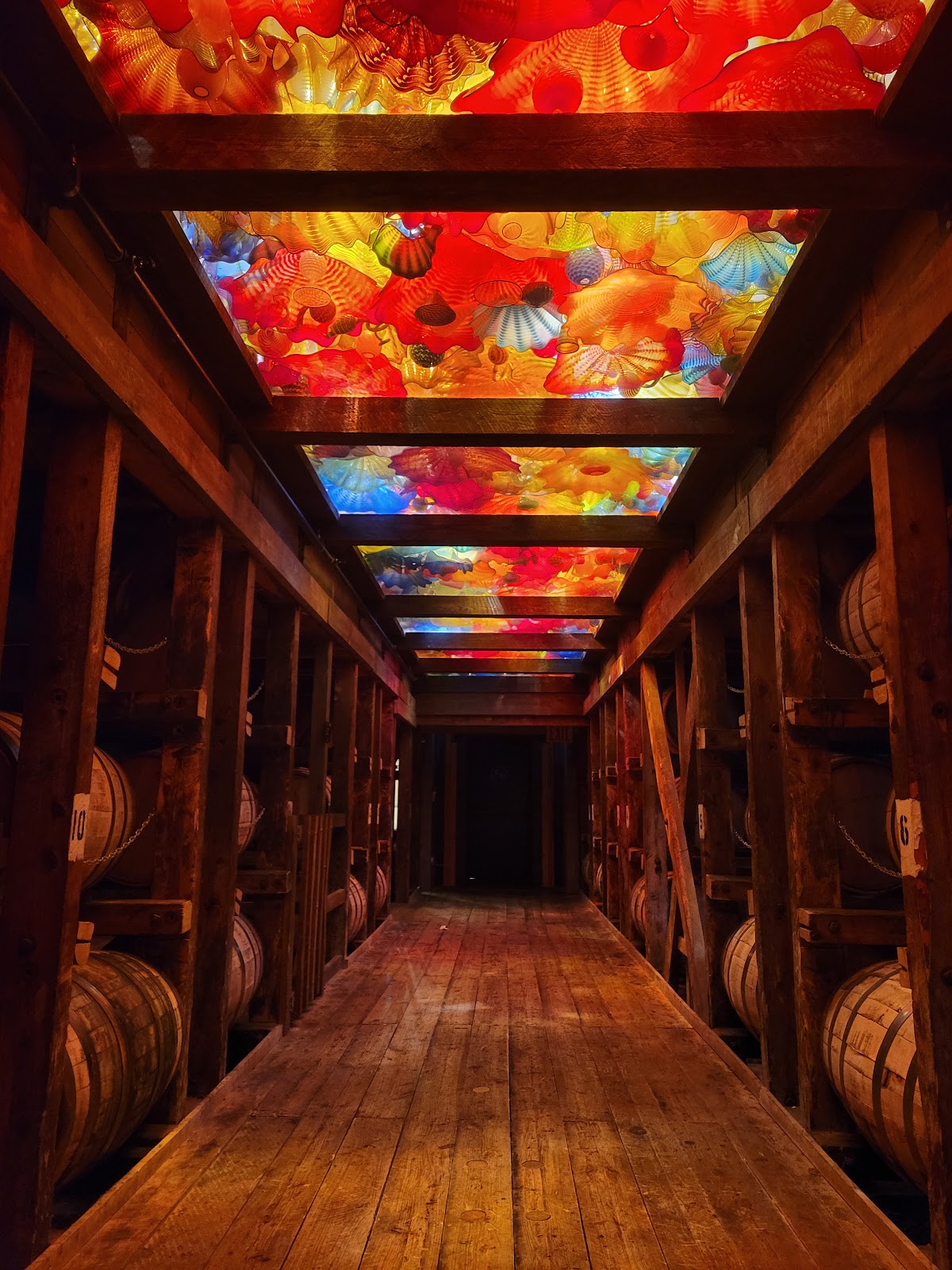
If the site has a designed interior installation — and distilleries of this profile often commission one — treat it as a coloured-light problem rather than as an object. Glass and coloured light take a face completely, and a subject half in a coloured patch and half in neutral light reads as an error. Either place them deliberately inside the colour and let the cast be the point, or keep faces entirely clear and photograph the installation as its own subject. There is no workable middle.
The red trim deserves one practical paragraph. A saturated red line in an otherwise monochrome frame is a very strong element, and strong elements need placing. Put it on a third, or run it out of the frame edge deliberately, or use it as the one bright note behind a subject — but do not let it sit unnoticed in a corner, where it pulls the eye straight out of the picture. This is a compositional discipline rather than a technical one and it is the thing that separates a considered set here from a generic one.
Also note that a red painted surface in direct sun bounces red, and it bounces it strongly. Stand someone half a metre from sunlit red trim and they have a colour on their skin that reads as sunburn and cannot be corrected out. Two metres is the working minimum.
Finally, what the site does not give: pale interiors, period plasterwork, or a large room. This is a working industrial campus in a rural hollow, and if a couple’s references are all ballrooms and chandeliers, this will disappoint them in a way no technique repairs. Say so at the enquiry stage and it becomes a choice rather than a surprise.
Loretto, the knobs, and the year
This part of Kentucky is not the Bluegrass, and the difference is visible in every wide frame.
North and east of here is the Inner Bluegrass — open pasture, limestone, horse farms, plank fences. Loretto sits south-west of that, in the Knobs: a belt of steep isolated conical hills left behind as an escarpment eroded back, with narrow valleys between them and a great deal more woodland than pasture.
So the landscape here is enclosed rather than open. The horizon is broken by hills in most directions, the views are short, and the dominant background is trees. That is why the fog works so well and it is why the sunsets are early on the valley floor. It is also why there are no long vistas: a photographer expecting Bluegrass pasture and plank fences will not find them here, and should plan for a wooded hollow instead.
The underlying rock is still limestone and it is still karst, which means springs, clear stony creeks and sinkholes, and it means the water chemistry that put the industry here in the first place — calcium in, iron out, because iron ruins whiskey.
The latitude is about thirty-seven and a half degrees north. Civil twilight runs about twenty-eight to twenty-nine minutes in midsummer, which is a useful few minutes more than western Tennessee, and the midsummer noon sun reaches about seventy-six degrees. The midwinter noon sun sits near twenty-nine degrees, low enough to rake black timber all afternoon, which is exactly the light the buildings want.
Humidity is Ohio Valley humidity — July dewpoints around seventy — filling shadows by roughly a stop and a half to two stops against a dry climate. On this site that is unusually welcome, because it is the only free fill the place offers: a humid overcast day genuinely lights a black campus better than a dry clear one does. The costs are hazed distance, which matters less here because the views are short anyway, and a lens that fogs coming out of a cool building into July air.
Black buildings also absorb heat, which is worth saying plainly. A black wall in July sun is hot to stand against, radiates, and produces visible shimmer on a long lens close to the surface. Keep people a couple of metres off the walls in summer for reasons of comfort as much as optics.
Late September into October is the best window of the year here and the reasons are specific to this site: hardwood colour on the wooded slopes gives the black buildings something to sit against, the air dries out, temperatures make a warehouse comfortable, and the still clear nights that follow mild days are when fog forms in the hollow at dawn. A photographer willing to be outside at six on an October morning gets the best frame this venue will ever offer.
Late April into May is the other good window: everything greening, long evenings, saturated woodland. It is also the wetter and more storm-prone half of the year, with organised fast-moving systems rather than passing showers. A site with warehouses and interiors is more resilient to that than a field with a marquee, which is worth pointing out to a couple weighing the two.
Summer is workable at the two ends of the day and difficult in the middle, for the reasons above. The gift is a sunset after nine in late June — minus the hollow’s fifteen or twenty minutes — and the half hour after an afternoon thunderstorm clears, which is the best light of the year here for a very specific reason: wet black timber is glossy, and a glossy black surface picks up a specular sheen from the sky that a dry matte one never does. A black building after rain has highlights in it and stops being a hole. Do not pack when a cell goes through.
Winter is short, quiet and excellent for this site in particular. Sunset near half past five, minus the hills, ends the outdoor day in the middle of the afternoon, so plan accordingly. In exchange: the clearest air of the year, a low sun raking black boards all afternoon, bare slopes that reveal the shape of the hollow, visible steam from a working distillery in cold air, and the possibility of snow — which is the single best condition the place can be in. Against it: rural roads, freeze-thaw, and occasional Kentucky ice, which is a travel problem for guests and suppliers rather than a photographic one, and worth a contingency on a January date.
One last question to ask, in the same email as the flash policy: whether production is actually running on the date. A working distillery is warm, loud and steaming; a shut one is a very handsome set of black buildings with nothing happening in them. Both photograph. They photograph differently.
More frames from The Maker's Mark Distillery
The Maker's Mark Distillery wedding photography: common questions
Why do black buildings change anything?
Because a pale wall reflects around eighty per cent of the light falling on it and black paint reflects about five. A pale building near your subject is a free soft reflector; a black one is a hole. So the fill that makes a portrait in front of white clapboard flattering is simply absent here, and a subject in open shade against black timber is lit from above only — top light, dark eye sockets, shadow under the jaw.
So what do you do about it?
Bring fill, or find it. The surfaces on site that are not painted black become disproportionately valuable: pale gravel and roads bounce genuinely useful light up into a face, and the creek — shallow water over pale rock — gives an uplift under the chin that nothing else on the property provides. Walk the site on arrival specifically looking for those.
What is the best weather here?
Bright overcast, fog, or snow, in roughly that order — and all three beat direct sun, which is the opposite of most venues. A high even sky against black timber makes a two-tone image with the red trim as the only colour, and a bright sky also solves the fill problem. Fog is the site’s most striking condition, with black shapes separating into layers out of white air; it forms in the hollow on still mornings after clear nights, most reliably in autumn.
What about in direct sun?
Stop using the buildings as backgrounds and use them as shapes. Get lower, put sky behind the roofline, expose for the subject and let the building read as a silhouette edge rather than a surface. A black gable against a blue sky is strong; a person standing against a black wall in midday June sun is not, because the light is hard and nothing fills the shadow side.
How should the red trim be used?
Deliberately. In an environment of black timber, green woods and grey sky, one saturated red line is the entire palette, and an element that strong has to be placed — on a third, running out of the frame edge, or as the single bright note behind a subject — rather than left sitting in a corner where it pulls the eye out of the picture. Also keep people two metres clear of sunlit red trim, because it bounces a colour onto skin that reads as sunburn and cannot be corrected.
Does the sunset come early?
Yes. The distillery is in a hollow with hills to the west, so the sun goes behind high ground commonly fifteen to twenty-five minutes before the printed sunset time on the low ground. Shift the whole evening earlier. On the other hand black works entirely in your favour at dusk: once the ambient drops the buildings vanish into the sky and all that is left is a pattern of warm lit openings in a dark mass, which needs little more than a tripod.
More Kentucky venue guides
We are writing a photographer’s guide to every venue we would happily shoot in Kentucky. Here are three more, plus the full index:
- The Newport Aquarium, Newport: Field Notes, Problem and Solution
- The Shaker Village, Harrodsburg: Suits and Does Not Suit
- The Woodford Reserve Distillery: The Venue’s Own Logic
Planning a wedding at The Maker's Mark Distillery?
Buildings as shape, or people with fill. Decide per frame. Tell us your date.