 The Henry Clay: Lighting a 1920s Lodge Building
The Newport Aquarium, Newport: Field Notes, Problem and Solution
Water absorbs red. Everything else follows from that.
These are field notes, because an aquarium is a sequence of specific technical problems and it is more useful listed than argued.
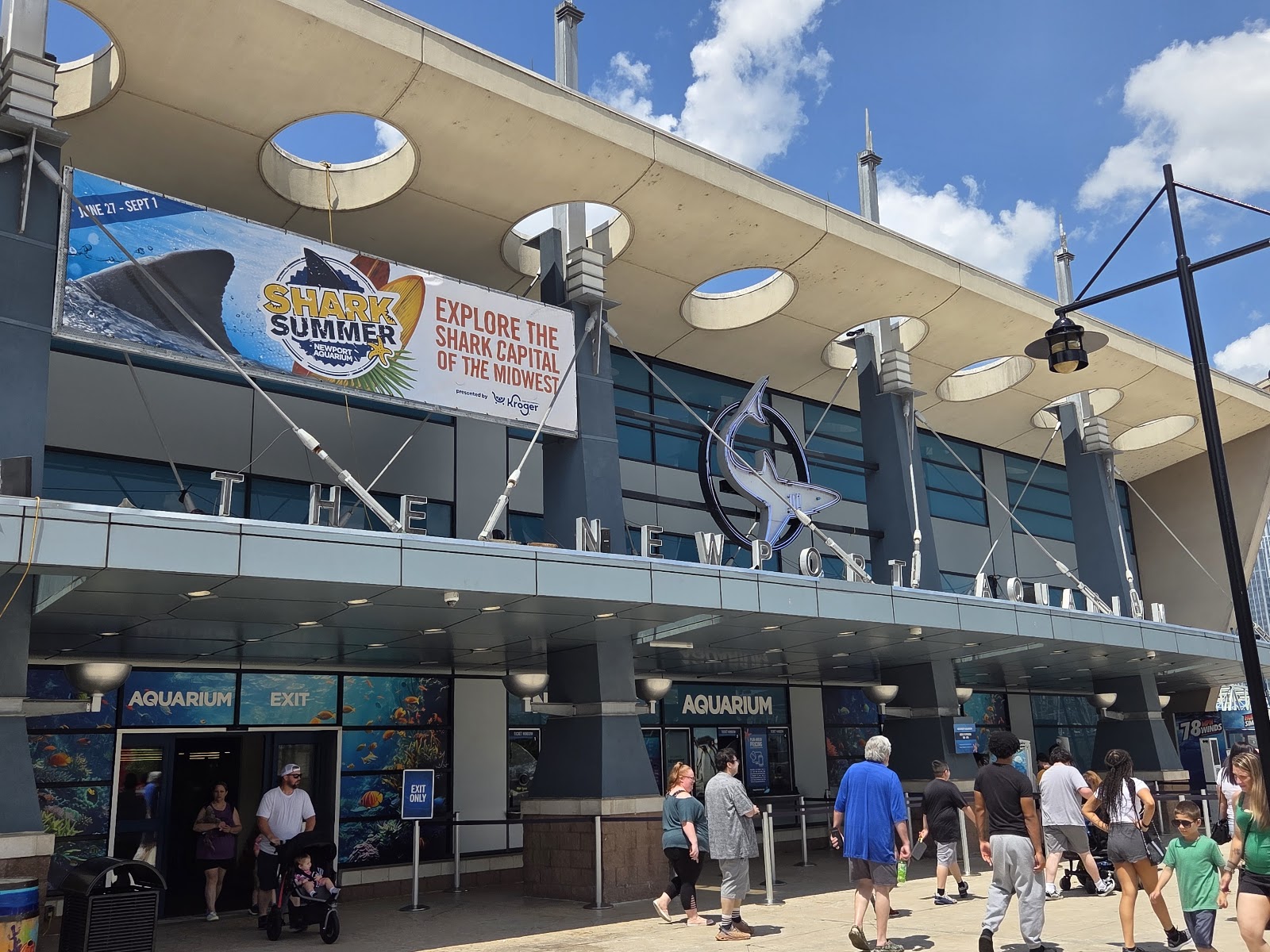
The Newport Aquarium sits on the Kentucky bank of the Ohio River at Newport, directly opposite downtown Cincinnati. That position is worth as much as the building — the skyline is a few hundred metres away across open water, with bridges either side of it, and it is lit at night.
So there are two venues here. Inside, a dark building lit almost entirely by illuminated tanks. Outside, a riverfront with a city across it. They are photographically opposite and the day should use both.
Start with the physics inside, because one fact explains most of what happens.
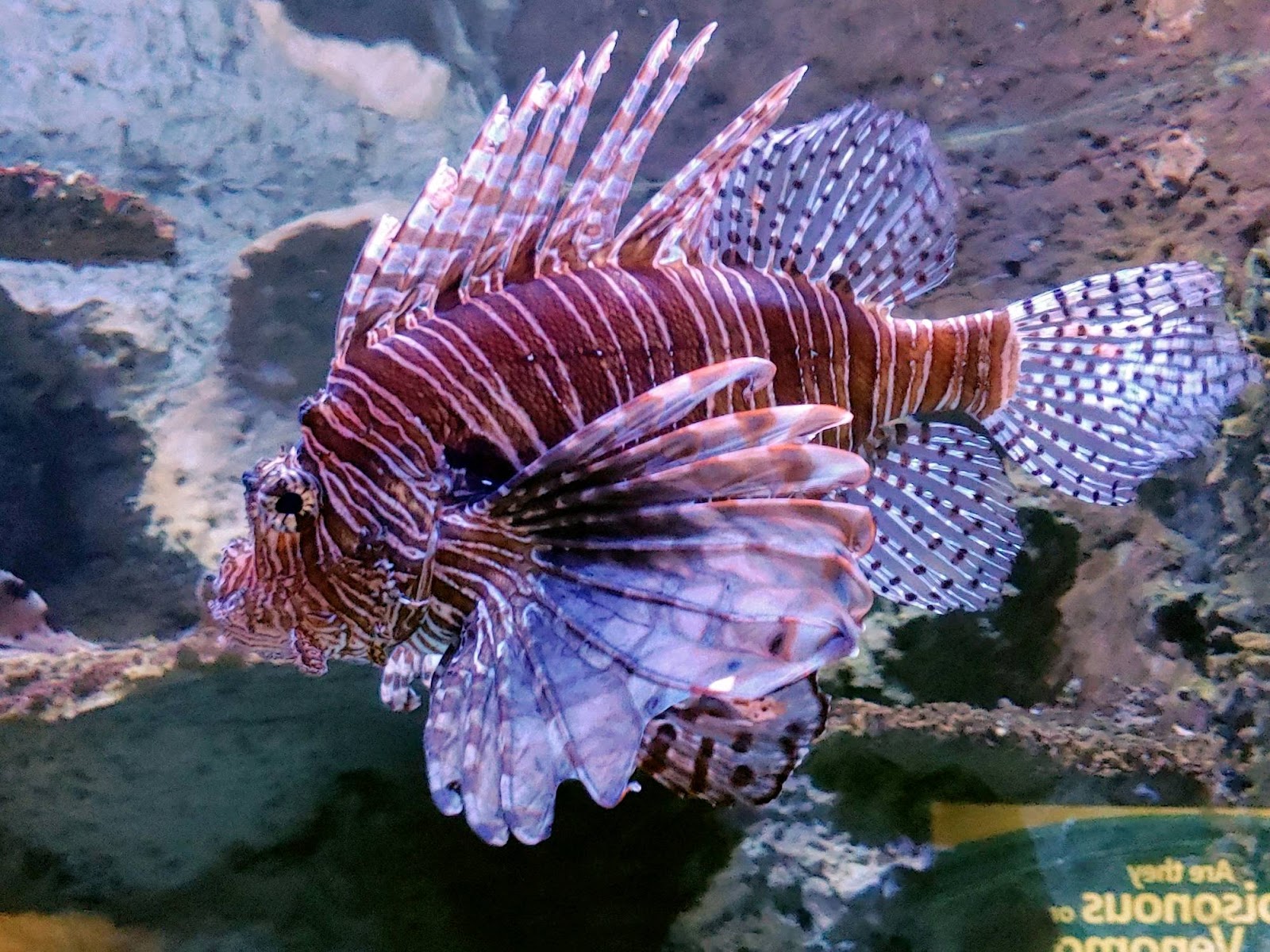
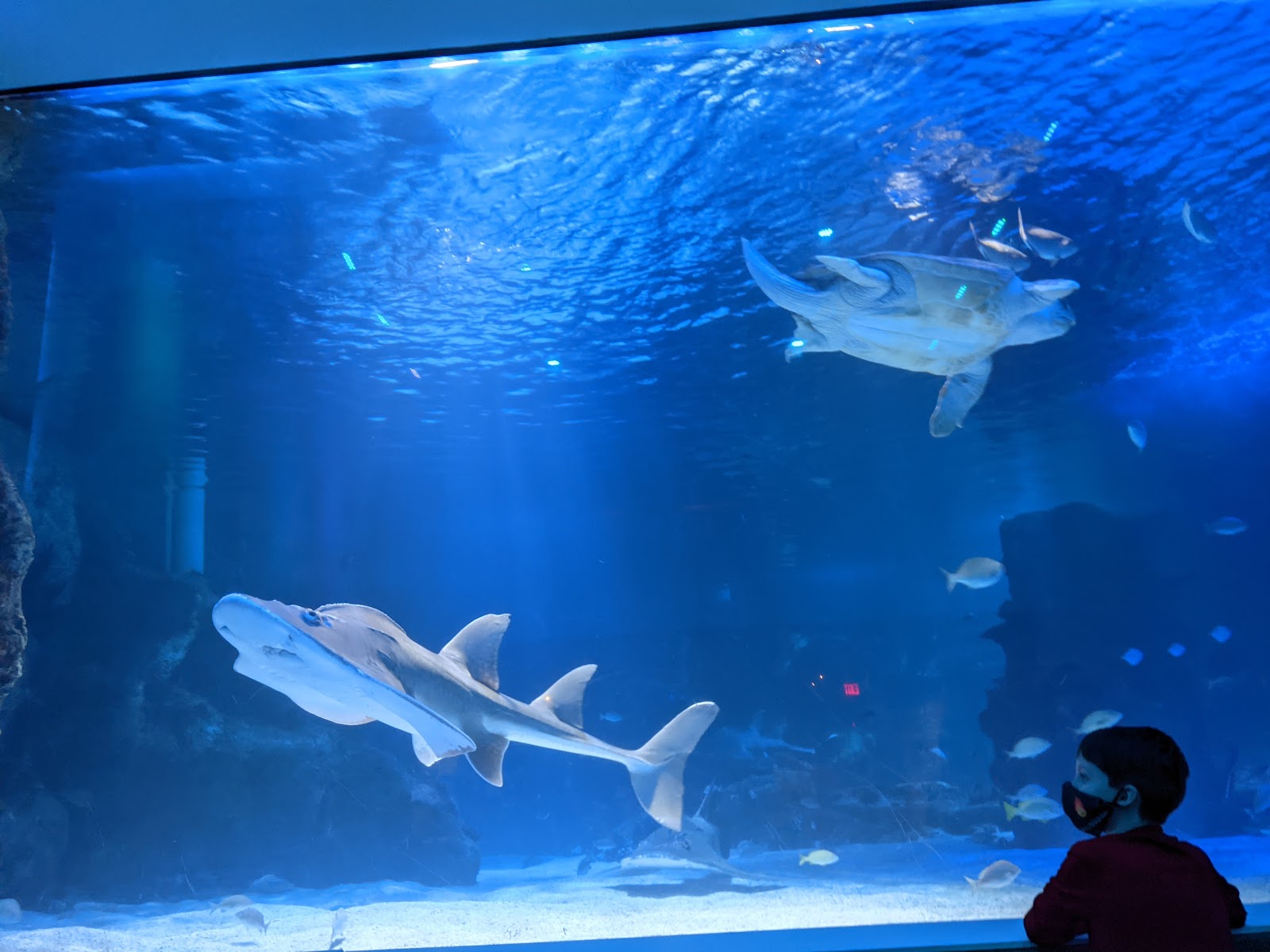
Water absorbs light unevenly, and it absorbs red first. Within a few metres of depth the red end of the spectrum is substantially gone, which is why the sea looks blue and why underwater photographs go cyan. Aquarium tanks reproduce this — partly because there is real water in them and partly because the lighting is chosen to look natural — so the light coming out of a tank is strongly weighted toward blue and green with very little red in it.
That means a face lit by a tank has almost no red in the light falling on it. Skin without red in it reads as ill, and no white balance recovers it, because the wavelengths are not there to be amplified — pushing the slider toward warm just adds noise to a channel with no signal.
So the single governing rule inside is that tank light is background light, never key light. It is superb for what it is: a large, soft, coloured, luminous panel. It is not something to put a face in.
The second fact is the acrylic. Viewing panels are thick, sometimes curved, and highly reflective, and they are between you and everything interesting. Reflections, not darkness, are the main technical problem in an aquarium.
The third is that flash is generally not permitted, and where it is not, that is usually about the animals rather than about the photographs. Assume no flash toward any tank and plan accordingly. Ask about flash elsewhere in the building, which is a different question with a different answer.
Notes follow, grouped by where you are standing, then the river, then the year.
The Newport Aquarium at a glance
| Where | An aquarium on the Ohio River at Newport, KY, opposite downtown Cincinnati |
| The physics | Water absorbs red first, so tank light has no red in it |
| The rule | Tank light is background light. Never key light. Bring your own. |
| The main problem | Reflections in thick acrylic, not darkness |
| The other venue | A riverfront with a lit skyline a few hundred metres across the water |
What you meet, and what each one needs
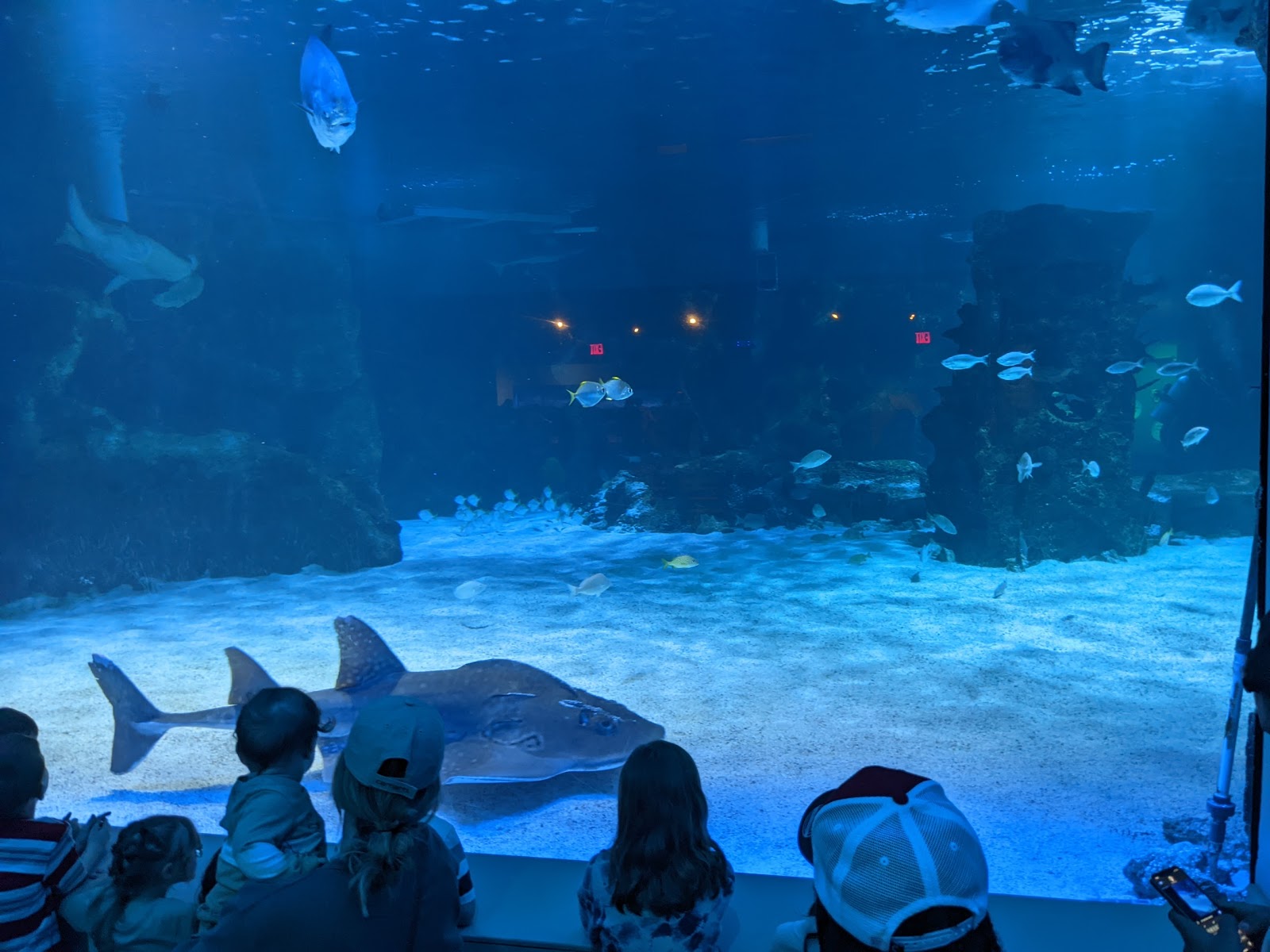
A large viewing window with a subject in front of it. Problem: the tank is the brightest thing in the room and it is behind them, so any exposure that renders the tank correctly leaves the subject a silhouette, and any exposure that renders the subject leaves the tank blown to white. Solution: expose for the tank and add your own light to the subject. That is the whole answer and it works everywhere in the building. A small warmed source at low power, close, off to one side — enough to put them about half a stop under the tank rather than matching it, because a face slightly darker than a luminous background looks correct and a face brighter than it looks pasted on.
The same window, second note. Problem: the light you add reflects off the acrylic straight back into the lens. Solution: get the light off the lens axis and shallow. A source placed at forty-five degrees or more to the panel, and low or high rather than level with the camera, sends its reflection away from you. Test with one frame before placing people; the reflection is obvious and it is easy to move.
The same window, third note. Problem: you are reflected in the acrylic, and so is everyone behind you. Solution: wear dark clothing, which is worth doing for a whole aquarium day, and check the frame edges for a pale shape that turns out to be a guest. Pressing the lens close to the panel removes your own reflection entirely and is the cleanest fix when the composition allows it.
Curved acrylic. Problem: a curved panel is a lens, and it distorts whatever is behind it in a way that varies across the frame, so straight lines bow and a fish near the edge stretches. Solution: shoot through the centre of a curve rather than near its edge, and keep the camera perpendicular to the surface. Oblique angles through thick acrylic also produce visible chromatic fringing, which is genuine refraction rather than a lens fault and cannot be corrected out.
A tunnel, if there is one. Problem: acrylic overhead and on both sides means light from every direction and reflections from every direction, and it is usually the darkest space in the building. Solution: this is the one place to stop adding light and use what is there. A subject in a tunnel lit only by the surrounding tanks is entirely blue, and rather than fighting that, commit to it — make it a deliberately cyan frame, treat the colour as the subject, and let the skin go cold. That reads as a decision. A half-corrected version reads as a mistake.
Circulation spaces and corridors. Problem: dark, often with coloured architectural lighting and signage, and low ceilings. Solution: these are the places to work, because you can control them. One bounced light off a ceiling, if it is pale, or one small modifier if it is not, and a subject placed with a tank glowing somewhere in the background out of focus. That frame — subject properly lit, coloured luminance behind them at f/2 — is the strongest interior photograph an aquarium gives you, and it does not require being in front of any particular exhibit.
Fish in frame. Problem: they move, they are behind refracting acrylic, and they are lit by light with no red in it. Solution: manage the expectation before the day. A specific animal in a specific frame with a couple cannot be promised, and the honest version is that some frames will have something behind the glass and some will not. Autofocus through thick acrylic is also unreliable, so focus on the subject and let the tank be a wash.
Function and event spaces. Problem: unknown until you ask, and at an aquarium they vary enormously — some are conventional rooms with normal lighting, some are galleries with tanks in them, some have no natural light at all. Solution: ask which space you have, whether it has any exterior glazing, and what the flash policy is in that specific room as distinct from the exhibit areas. Those three answers determine the whole plan.
Temperature and humidity. Problem: an aquarium is warm and damp by necessity, and a camera coming in from cold outside air fogs immediately. Solution: bring the camera in early and let it equalise, which takes several minutes. In winter this is a real issue rather than a theoretical one.
The public. Problem: unless the booking is after hours, there will be visitors, and an aquarium’s visitors are largely families, at eye level, in bright clothing, standing exactly where the good frames are. Solution: either buy an after-hours window — which at an aquarium is a genuine product and transforms the venue — or work tight and long so the background compresses into coloured light rather than into people.
The overall shape of an aquarium day: bring light, use tanks as backgrounds, work at f/2 with a fast normal lens, wear dark clothes, and get outside for the parts of the day that need a horizon.
Outside: the river, the city and the bridges
The riverfront is the other half of this venue and it is the half that gives the photographs a place.
Newport sits on the Kentucky bank of the Ohio, and downtown Cincinnati stands directly across the water a few hundred metres away. That distance is close to ideal. Much closer and a skyline becomes a wall; much further and it becomes a texture. At this range it reads as a skyline — a group of buildings with depth and separation between them — and it is tall enough to fill the upper half of a frame from the Kentucky bank.
The direction matters and it works in your favour. From Newport the city is to the north, which means in the last hour of the day the setting sun comes from your left along the river and lights the faces of the buildings warm, with the deepening eastern sky behind them. You are not shooting into the sun to get the city, which is the common frustration at riverfront venues. Sunset itself is up or down the river rather than behind the skyline, so those are two separate frames and you can have both in sequence: the lit city first while the sun is still up, then the sun going down the river valley.
After sunset, turn back to the city. The building lights come up, the sky holds a graduated blue for ten or twelve minutes, and the river carries all of it as a soft luminous sheen — moving water scatters rather than mirrors, so it is a glow rather than a reflection, and it stays brighter than the banks for a good while. That is the best exterior frame here and it lasts about as long as it takes to make.
Light the couple for it. At any exposure that holds the skyline, ambient will not expose a face — the city looks bright and it is not. One small warmed source on a stand, close, at low power. Two minutes of setup before the window, not during it.
The bridges are the third element and they are genuinely photogenic: the Ohio here is crossed by several, including a nineteenth-century suspension bridge that was among the longest in the world when it was built and which is a handsome piece of ironwork lit at night. A bridge gives you a diagonal, a repeating structure, and a light source all at once, and a low camera on the bank with a bridge running out of the frame corner is a strong composition.
Get low at the water. A camera near the surface compresses ripples into a specular path running the depth of the frame, and it puts the city above the waterline rather than beside it.
Two practical notes about the riverfront. It is a public walkway, so expect other people, and expect a commercial photography permit to be a question worth asking about — riverfront land may be city property with its own rules rather than the aquarium’s. And the Ohio is a working river with barge traffic; a tow passing during your twelve-minute window is either a gift or an obstruction depending on where it is, and it cannot be scheduled.
The walk is short, which is the best thing about this venue’s geography. Getting a wedding party from inside the building to the riverfront is a few minutes rather than a vehicle movement, which means the dusk frame is genuinely achievable rather than aspirational. That is unusual and it should be used.
The Ohio Valley, and the year
The river is the reason for everything here, including the weather.
The Ohio at this point runs in a broad valley it has cut through limestone and shale, with the ground rising on both sides — Cincinnati is famously built on hills, and the Kentucky side rises too. A river in a valley with high ground on both banks has two photographic consequences: the effective sunset and sunrise are a little earlier and later than the almanac, and cold air drains down the slopes on still nights and pools over the water, which produces river mist at dawn.
River mist with a city rising out of it is the best photograph this setting can produce, and it happens most often in autumn — a still clear night after a mild day, when the water is still warm and the air has cooled. It requires being on the bank very early. In October it is worth it.
The latitude is about thirty-nine degrees north, which is the furthest north of any venue in this Kentucky group, and it gives the longest twilight: about thirty minutes of civil twilight in midsummer. That is six minutes more than western Tennessee, and it makes the balance-point window — where the sky and the city lights match — comfortably the longest available in the state. For a venue whose best exterior frame depends on exactly that window, it is a real advantage.
The midsummer noon sun reaches about seventy-four degrees and the midwinter noon sun about twenty-seven. Neither matters much inside an aquarium, but the winter figure is low enough to put warm raking light along a riverfront all afternoon, which is the best exterior condition here.
Humidity is Ohio Valley humidity and it is the reason the region has its reputation for haze: July dewpoints around seventy, with a valley that traps air under summer high pressure. Shadows fill by a stop and a half to two stops, which is helpful, but the distance hazes noticeably — and at this venue the distance is the skyline, which is the point of being here. A skyline photographed from the Kentucky bank in August is veiled and slightly grey; the same frame in October is sharp. That is the single strongest argument for an autumn date.
It also means the camera fogs coming from a cool exterior into a warm humid aquarium and again coming back out in summer. On a day that moves between the two repeatedly, plan for it rather than being surprised.
Late September into October is the best window and the reasons are all about the exterior: dry clear air so the city resolves, comfortable temperatures, sunset around seven so the balance point falls at a civil hour, autumn colour on the valley sides, and the mornings when mist forms on the river.
April into May is the second window. The air is soft, the hillsides green up, and the evenings lengthen. It is also the wetter and more storm-prone part of the year, and the Ohio Valley gets organised fast-moving systems in spring. A venue whose main space is indoors is unusually resilient to that — an aquarium simply does not care whether it is raining — which is a genuine selling point for a spring date. What rain takes away is the riverfront and the dusk frame, so the indoor plan needs to be able to carry the whole evening if it must.
Summer works, with the caveat that the exterior is hazy and hot and the riverfront has little shade. The gift is a sunset after nine in late June, so the dusk window falls late enough that a reception is well under way and the couple can be borrowed for twelve minutes. The half hour after a thunderstorm passes is the best exterior light of the year: washed air so the skyline finally resolves, wet paving reflecting the sky, and a low sun under a broken ceiling.
Winter is short and it is genuinely good here, more than at most venues, because the main space is indoors and unaffected. Sunset near half past five means the dusk frame falls during cocktails rather than after dinner — plan for that rather than discovering it. In exchange: the clearest air of the year, so the skyline is at its sharpest; a low sun raking the riverfront all afternoon; bare trees revealing the shape of the valley; and, on a cold still morning, steam rising off the water. The risks are Ohio Valley ice, which is a travel problem for guests and suppliers rather than a photographic one, and the condensation issue on every entry to the building.
One closing instruction. Buy or ask about an after-hours window inside if it exists, and put twelve minutes on the timeline for the riverfront at dusk. Those two decisions, made months early, account for most of the difference between a good set from this venue and an ordinary one.
More frames from The Newport Aquarium
The Newport Aquarium wedding photography: common questions
Why do faces look wrong in aquarium light?
Because water absorbs red first, so within a few metres of depth the red end of the spectrum is largely gone — which is why the sea looks blue and why tank light is strongly blue and green. Skin lit by light with no red in it reads as ill, and white balance cannot recover it, because the wavelengths are not there to amplify. The rule is that tank light is background light, never key light.
So how do you photograph someone in front of a tank?
Expose for the tank and add your own light to the subject, aiming to put them about half a stop under the tank rather than matching it — a face slightly darker than a luminous background looks right, and a face brighter than it looks pasted on. Keep the light at forty-five degrees or more to the acrylic, and low or high rather than level with the camera, so its reflection goes away from you rather than into the lens.
What is the biggest technical problem inside?
Reflections, not darkness. The acrylic panels are thick and highly reflective and they sit between you and everything interesting, so you, your lights and the visitors behind you all appear in frame. Wear dark clothing for the whole day, check the frame edges for a pale shape that turns out to be a guest, and press the lens close to the panel when the composition allows — that removes your own reflection completely.
Can you use flash?
Assume no flash toward any tank, and assume the reason is the animals rather than the photographs. Whether flash is permitted elsewhere in the building is a separate question with a separate answer, and it is worth asking about the specific event room rather than the building in general, along with whether that room has any exterior glazing.
What is the best frame at this venue?
Outside, at dusk. Downtown Cincinnati stands a few hundred metres across the Ohio, which is close to the ideal distance for a skyline to read with depth, and from the Kentucky bank the city is lit from the side by the setting sun rather than backlit. Ten to twelve minutes after sunset the building lights and the sky are within a stop of each other and the river carries a soft luminous sheen. Light the couple — at any exposure that holds the skyline, ambient will not expose a face.
When is the best time of year?
Late September into October, and the reason is entirely about the exterior. The summer haze in the Ohio Valley genuinely veils the skyline, which is the point of being here, and October air resolves it. Autumn also brings the still clear nights that produce river mist at dawn, with the city rising out of it — the best photograph the setting can give. Winter is a close second for clarity, but sunset near half past five puts the dusk frame during cocktails.
More Kentucky venue guides
We are writing a photographer’s guide to every venue we would happily shoot in Kentucky. Here are three more, plus the full index:
- The Shaker Village, Harrodsburg: Suits and Does Not Suit
- The Woodford Reserve Distillery: The Venue’s Own Logic
- The Brennan House: Who This Small Venue Suits
Planning a wedding at The Newport Aquarium?
Bring light, wear black, and book twelve minutes on the riverbank. Tell us your date.