 The Rio, Las Vegas: A Walk Through an Off-Strip Resort
The Lake Tahoe Wedding Chapel, Stateline: The Problem, and Four Ways Out of It
The room is small. The lake is minutes away. Plan accordingly.
The problem with a dedicated wedding chapel is that it is built to hold a ceremony and nothing else, and a ceremony takes twenty minutes.
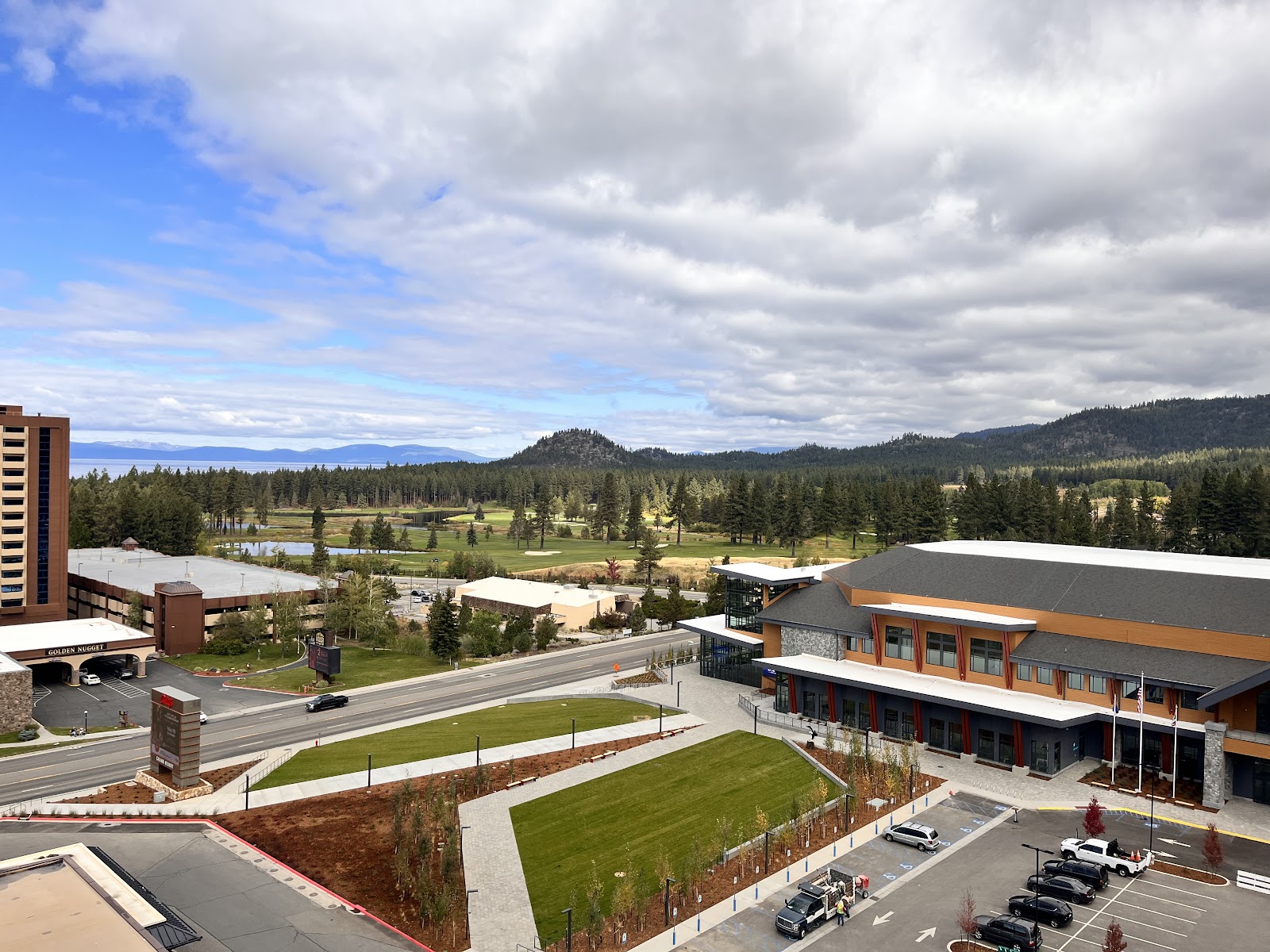
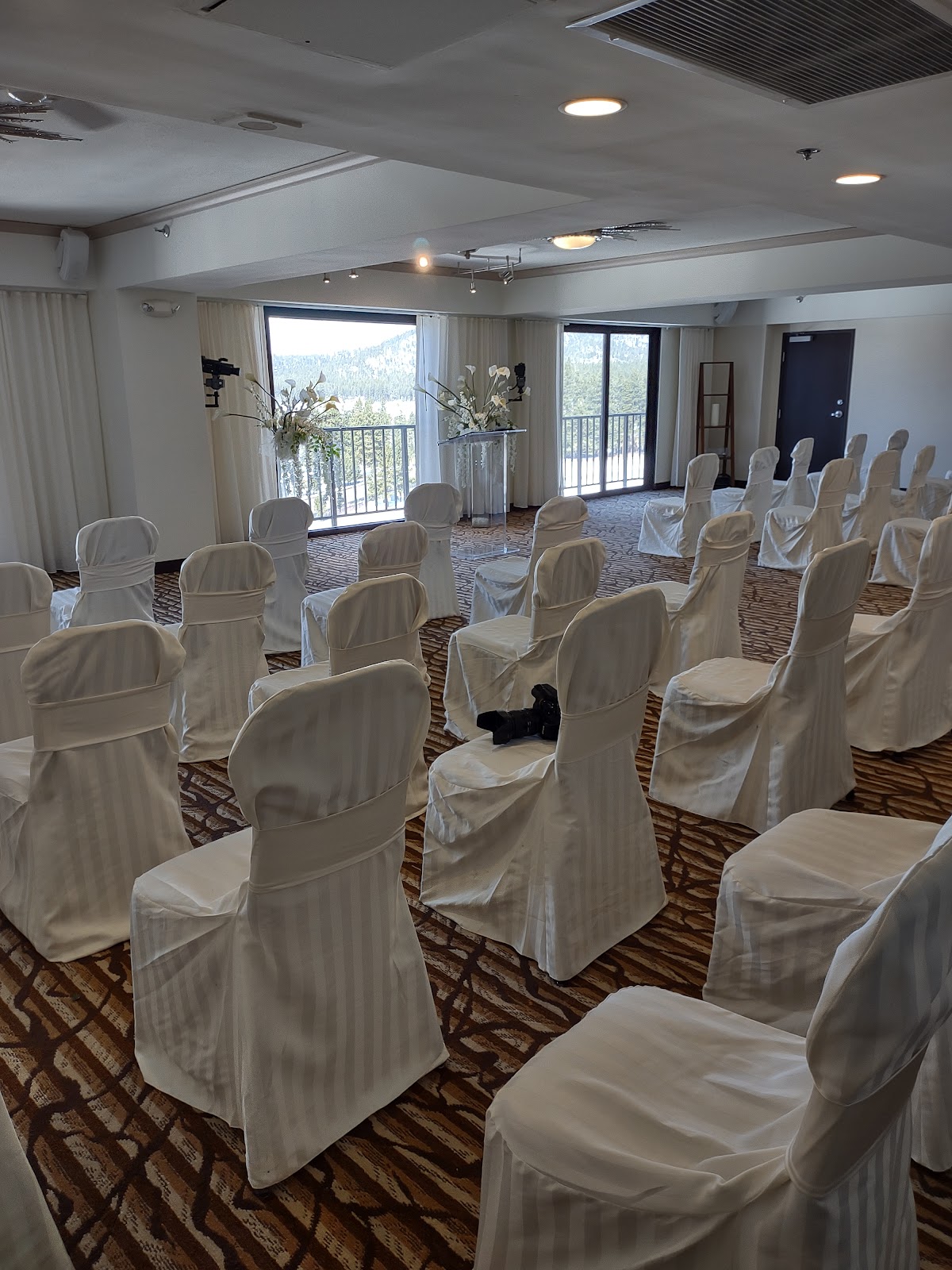
The Lake Tahoe Wedding Chapel is at Stateline, on the south shore of the lake at the Nevada line, at a little over nineteen hundred metres above sea level. It is a purpose-built chapel rather than a converted church or a hotel, which means it does the thing it exists for efficiently and offers very little beyond it.
That produces four constraints, and they are the same at every chapel of this kind.
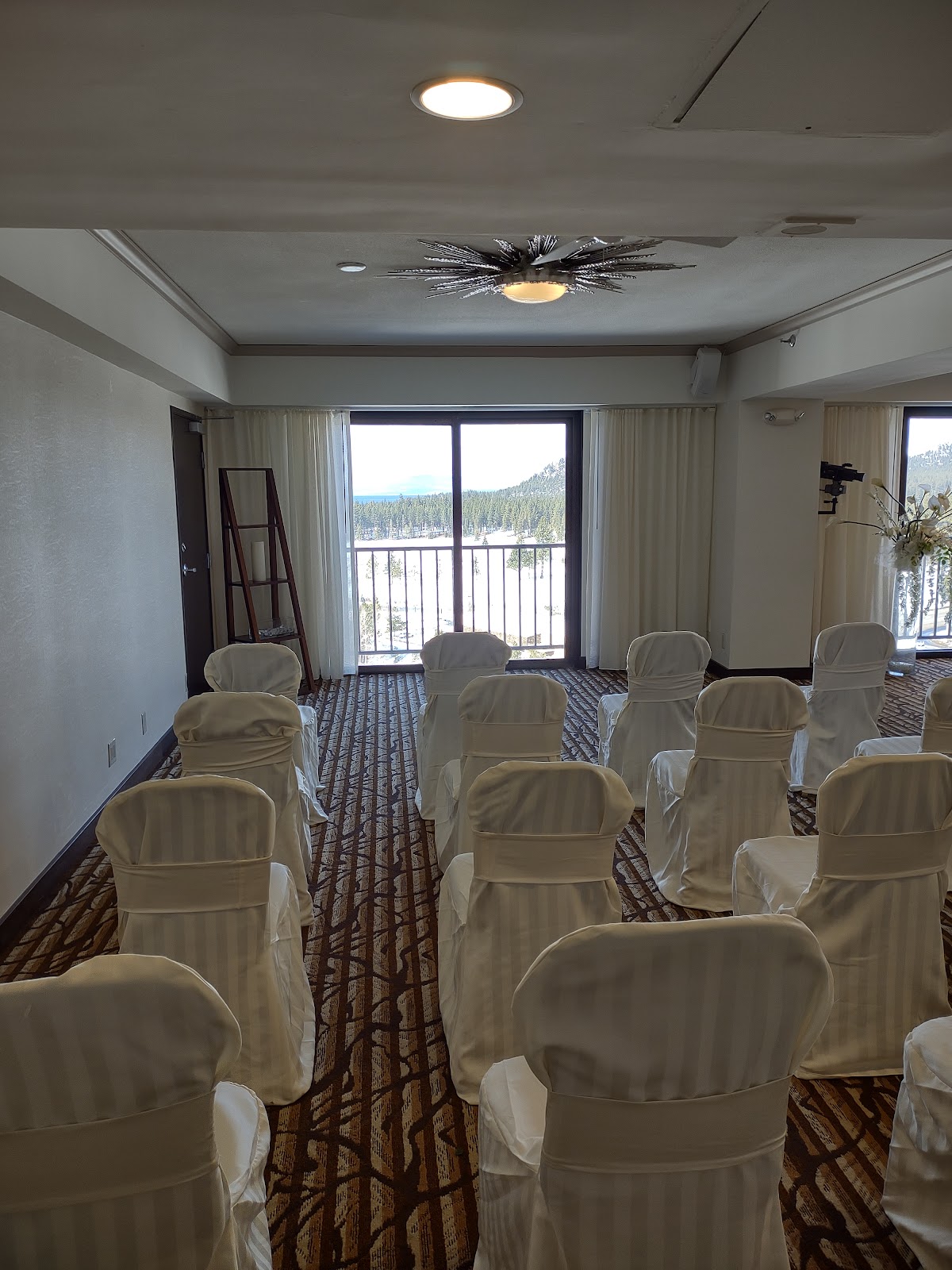
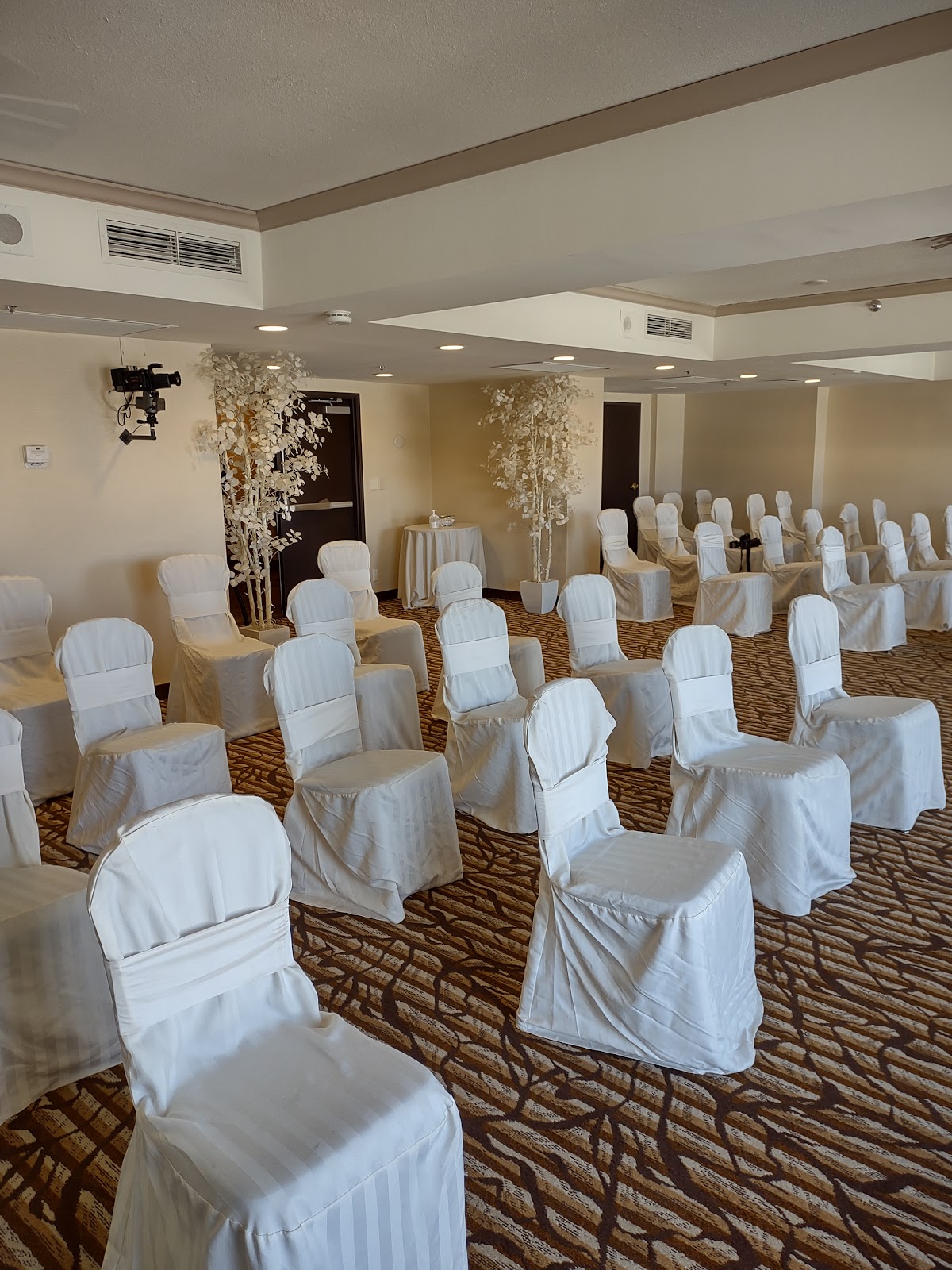
The first is size. A small room means there is nowhere to stand with a camera that is not in somebody’s sightline, and no distance from which to make a wide frame of the ceremony that does not include the back wall. Two photographers in a chapel of this scale is one too many.
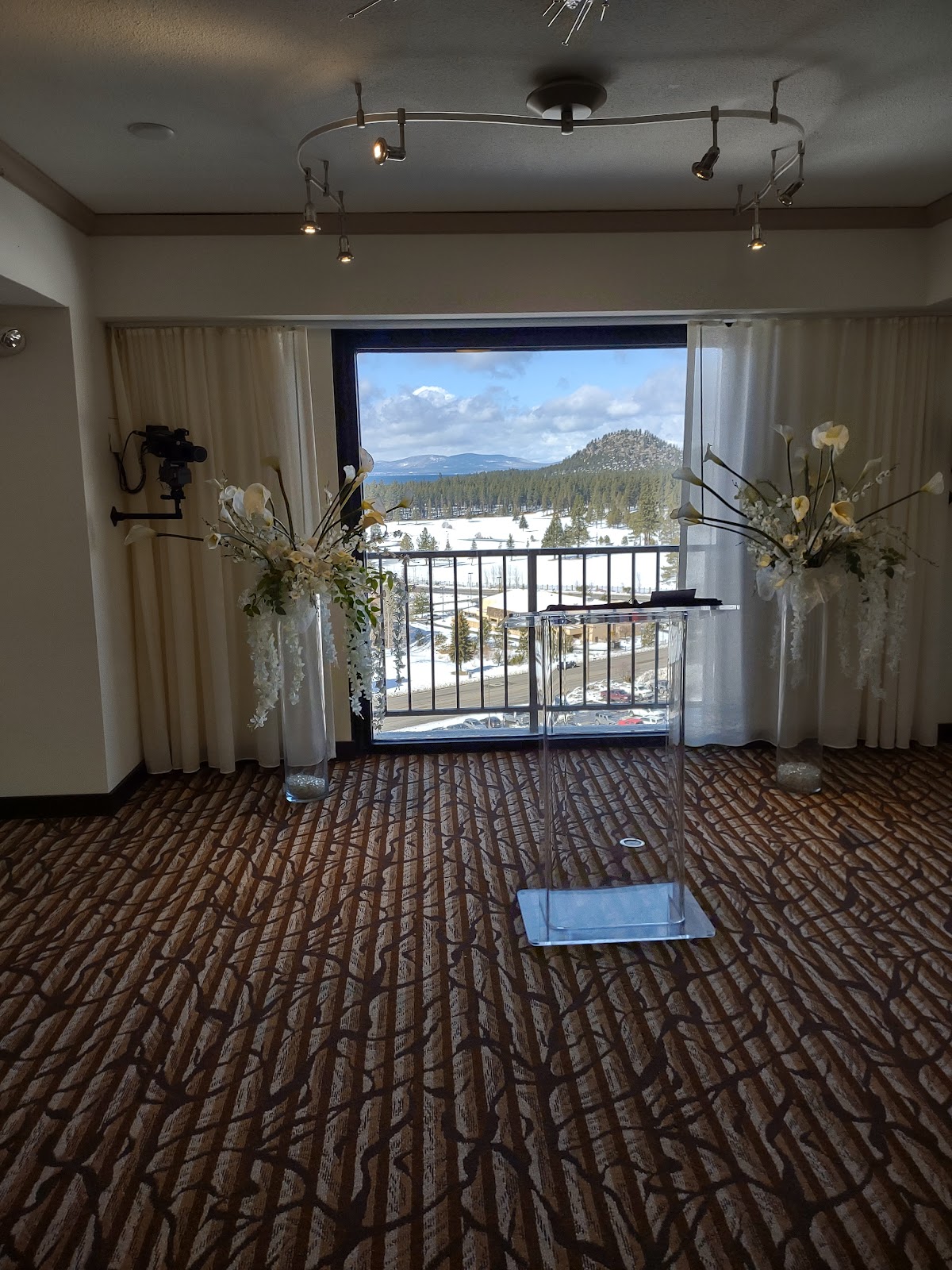
The second is the light. A purpose-built chapel usually has modest window openings and an artificial scheme designed to make the room feel warm rather than to light faces, which means low levels, warm colour and light coming from above. Ceiling downlights put shadow in every eye socket.
The third is the absence of grounds. A chapel occupies a building footprint, not an estate. There is no garden, no terrace and no lawn, which means the getting-ready, the group photographs, the drinks and the portraits all have to happen somewhere that is not here.
And the fourth is time. A chapel runs bookings in sequence, often several in a day, which means you have the room for a defined slot and the party after yours is waiting. There is no lingering for a second attempt.
None of that makes this a bad choice. A chapel wedding at Tahoe is a specific and sensible thing to want — small, quick, unfussy and in a beautiful part of the world — and the photographs from it can be excellent. But they come from four specific manoeuvres rather than from working the venue as though it had more to offer than it does.
The first is to accept the room and photograph the ceremony properly, from one position, with the right lens.
The second is to use the one good light the building has, which is whatever daylight comes through its openings.
The third is to leave for the lake, which is minutes away and is the actual reason to be married in this part of the world.
And the fourth is to use Stateline itself after dark, which is a very particular kind of place and photographs unlike anywhere else in this collection.
Each of those in detail, then the year.
The Lake Tahoe Wedding Chapel at a glance
| Where | A purpose-built wedding chapel at Stateline, Tahoe’s south shore, Nevada, ~1,900 m |
| The problem | A small room, low warm top light, no grounds, and a booking slot |
| Four ways out | Shoot the ceremony from one position, use the daylight, go to the lake, use Stateline at night |
| The real venue | The lake shore, a few minutes away |
| Ask first | The exact slot length, whether flash is permitted, and shore access and permits |
Ways one and two: the ceremony, and the daylight
Take the ceremony first, because it is the one thing that only happens here and cannot be repeated.
In a small room, choose a position before anybody arrives and commit to it. The temptation is to move around during the ceremony to get variety, and in a chapel of this scale moving means walking through the guests’ sightlines and appearing in your own wide frames. Pick one position slightly off the centre aisle, low, from which you can see both faces, and stay there.
The lens does the work instead of your feet. A short zoom — something in the twenty-four to seventy range — lets you go from a wide frame including the room to a tight frame of a face without taking a step. That is the single most useful piece of equipment at a venue like this, and a prime-only approach genuinely struggles here.
Be low. A camera at chest height in a small room looks like a guest’s snapshot; a camera near waist height gives the room ceiling height it does not have and makes the couple read as taller and more prominent. It also keeps you out of sightlines.
Ask about flash before the day and in writing. Some chapels permit it and some do not, and the answer changes everything about how you expose. If it is not permitted, you are on available light at a wide aperture and a high sensitivity in a warm dim room, which is entirely workable with a fast lens and a willingness to accept noise — a slightly noisy frame that exists beats a clean one that does not.
If flash is permitted, keep it off the ceremony itself and use it for the arrival, the exit and anything staged afterwards. Flash during vows is intrusive in a room this small in a way it is not in a church.
Colour is the other ceremony issue. A warm artificial scheme with a little daylight leaking in is two sources at different temperatures, and no single white balance reconciles them. Choose the dominant one — usually the artificial — balance for it, and let the window go cool and blue. A frame with warm faces and a cool window reads as a room; the same frame corrected to neutral throughout reads as nothing.
Now the second way out, which is the daylight.
Every chapel has one opening that is better than the others, and finding it takes five minutes on arrival. Look for the largest opening, facing away from direct sun for the hour you need it, with something pale opposite to bounce. That is where the rings, the dress details, the parents, the quiet frames before the ceremony and any portrait that needs to look considered should be made.
Use it repeatedly rather than hunting for variety. One good window used eight times produces a better set than eight mediocre positions used once each, and in a building this size the eight positions do not exist.
Stand the subject side-on to the opening at a metre or so and watch the falloff, which in a small room with a modest window is fast. Bring something pale to hold opposite — a white card, a reflector, anything — because a small warm-walled room returns much less fill than the window size suggests.
At this altitude, a note that applies to every frame near a window: the light outside is very bright and very contrasty, because thin air scatters little. A window in a dim chapel at nineteen hundred metres has a larger interior-to-exterior range than the same window at sea level. Expect to lose the view through the glass entirely, and compose so that does not matter.
Two practical points about the slot. Establish exactly how long you have in the building, including before and after, because that number determines whether the detail frames happen here or somewhere else. And establish whether there is any space at all for getting ready — usually there is not, which means hair, makeup and dressing happen at a hotel and the day’s first hour belongs somewhere else entirely. Plan that properly rather than assuming.
Ways three and four: the lake, and Stateline after dark
The third way out is the important one, and it is that the lake is the venue and the chapel is the paperwork.
Tahoe’s south shore is a few minutes away and it gives everything the building cannot: pale Sierra granite, sand, water among the clearest of any large lake in the world, tall widely spaced pines, and the mountain crest across the water. That is a four or five element palette with nothing muddy in it, at an altitude where very little haze softens any of it.
So the plan is: ceremony at the chapel, then the shore for as long as the couple will give you, ideally in the last two hours of light.
Two constraints on that. Most of Tahoe’s accessible shoreline is public land — state park, national forest or municipal beach — and much of it requires a permit for a wedding group or for commercial photography. That requirement is not waived because the ceremony happened elsewhere, and parking at popular access points fills early in summer. Establish which specific stretch you are using and what its rules are, months ahead and in writing, with whichever body manages it.
And there is a daily wind cycle that decides what the water looks like: calm at dawn, building through the late morning, a real breeze across the lake by early afternoon, often easing near sunset. Whether you can see into the water — which is Tahoe’s signature and the reason the lake is famous — depends entirely on that. Clear submerged granite is a morning phenomenon. By two in the afternoon the surface is usually ruffled and the turquoise is an opaque blue sheet.
If the clarity frame matters to the couple, it needs a separate morning session, and telling them so at the enquiry stage prevents a specific disappointment. A polariser is the accessory that makes it possible when the water is calm — it cuts the reflected skylight off the surface, and rotating it while watching the water is genuinely dramatic.
At the shore, get low. A camera close to the surface sees through the water rather than at it, and it puts the crest above the waterline rather than beside it.
Use the granite as frames, not just backgrounds — shoot between two boulders, or with one filling a corner — because an open beach otherwise gives you no foreground. Pale granite in raking light shows its coarse grain and reads as material; in flat midday light it goes featureless grey.
And protect the last twenty minutes for the alpenglow. After the sun has left the shore, the peaks keep catching light for several minutes and go pink and then deep rose while the water and the beach are already in shadow. Expose for the lit peaks, light the couple with one small warmed source, and if the wind has dropped and the water has flattened, get the reflection. That is the best frame available to any venue on this lake.
Now the fourth way out, and it is the one nobody expects.
Stateline exists because the state line runs through it, and what stands on the Nevada side is a cluster of casino hotels — large buildings with a great deal of illuminated signage, immediately against a national forest and a mountain lake. That juxtaposition is genuinely strange and genuinely photogenic, and it is entirely specific to this place.
After dark it becomes a resource. A field of saturated artificial light at the foot of a dark forested mountain, with snow on the ground in half the year, is a frame that exists nowhere else in this collection. Light your couple with a small warmed source so their skin is correct, let the signage be as lurid as it actually is, and do not attempt to white-balance it — the sources are mixed technologies with different and sometimes spiky spectra, and correcting toward them turns everything else a complementary colour.
Wet ground doubles it. Snowmelt, rain or a hosed pavement gives reflections that turn a strip of signage into a much richer frame, and at a low camera angle those reflections run the depth of the picture.
That frame will not suit every couple, and it should be offered rather than imposed. But for a couple married at a chapel at Stateline, a photograph that says plainly where they were is worth having, and it is the one thing this location offers that the lake does not.
The south shore, and the year
Altitude governs this venue as it governs everything in the basin, and it affects people before it affects photographs.
At a little over nineteen hundred metres, guests from sea level will feel it: breathlessness on a slope, faster dehydration in very dry air, and alcohol hitting markedly harder than expected. That last point matters at a chapel wedding in particular, because the format tends to compress a day into a few hours with a celebratory drink early in it. Ultraviolet is much stronger too, and snow or pale sand reflects it upward, so sunburn happens faster than anybody plans for.
For the camera, thin air means very little scattering. Distance resolves with extraordinary clarity and a long lens across the lake is genuinely usable. But shadows are hard and four or five stops down, the sky is deeply saturated, and the range between a sunlit granite boulder and its own shadow is closer to a desert’s than a coast’s. Whatever fill you want, you bring.
The diurnal range is large, which is the same dry-air signature. A July day in the mid-twenties can be near ten degrees by ten in the evening, and the temperature drops fast once the sun is off the lake. A couple planning anything outdoors after dark needs a wrap, and a photographer planning an alpenglow frame should expect it to be cold by the time it happens.
Snow sets the calendar and it sets it later than people expect. The Tahoe basin receives very large snowfalls and in a heavy winter snow lingers at lake level well into spring, with some shoreline access opening late. A date in late May or early June should be checked against the actual snowpack for that year rather than an average.
July through September is the reliable season: warm dry days, cold clear nights, calm mornings, dependable sun. It is also the busiest, with shoreline parking filling early, which is another argument for a morning session.
Two honest cautions about late summer. Afternoon thunderstorms build over the Sierra through July and August — localised, quick, and carrying genuine lightning risk on an open beach, which is a safety matter rather than an inconvenience. And wildfire smoke has become a serious recurring feature of August and September in this region: smoke from Sierra and regional fires can fill the basin for days, turning the light orange, flattening contrast entirely and producing air quality that makes an outdoor session inadvisable. It cannot be forecast far ahead. A late-summer plan needs an air-quality contingency as well as a weather one.
A chapel wedding is unusually resilient to both, and that is worth saying as a genuine advantage. The ceremony is indoors, short and unaffected by weather or smoke, so what a bad day costs is the shore session rather than the wedding. At an outdoor venue on this lake, a smoky August afternoon costs the whole event.
Late September into October is the best-looking window of the year. Crowds thin, the air is at its clearest, mornings are calm and cold, and the basin’s aspens turn gold — which against grey granite and dark conifer is the best colour combination this region produces. Sunset lands around six thirty, so the shore session and the alpenglow both fall at a civil hour.
Winter is a real option at a chapel in a way it is not at an outdoor venue, and it is the season most people dismiss too quickly. The lake does not freeze, so the turquoise water remains; snow on pale granite above it gives maximum tonal separation; the air is the clearest of the year; a midwinter noon sun near twenty-eight degrees rakes everything all day; and the Stateline signage reads at its best against snow and early darkness. Against that: sunset before half past four, genuine cold on an exposed shore, and mountain roads that close in storms — so a winter date needs a travel contingency for guests and suppliers and a short, planned outdoor session rather than an extended one.
Civil twilight at this latitude runs about twenty-eight to twenty-nine minutes in midsummer, and at altitude the afterglow runs slightly longer and considerably more colourful than that suggests, because you are seeing light scattered from air well above you. Budget twenty minutes at the end of the day rather than twelve — the first half on the peaks, the second on Stateline.
The instruction that covers the whole day: photograph the ceremony from one position with one zoom, find the one good window and use it eight times, then leave for the shore with permits already in hand, and finish with whichever of the peaks or the signage the couple actually wants.
More frames from The Lake Tahoe Wedding Chapel
The Lake Tahoe Wedding Chapel wedding photography: common questions
What is the main constraint at a wedding chapel?
That it is built to hold a ceremony and nothing else. The room is small, so there is nowhere to stand that is not in somebody’s sightline and no distance from which to make a wide frame that excludes the back wall. The light is low, warm and from above, so eye sockets go dark. There are no grounds — no garden, terrace or lawn — so getting ready, groups, drinks and portraits all happen elsewhere. And bookings run in sequence, so you have a defined slot with the next party waiting.
How should the ceremony itself be shot?
From one position, chosen before anybody arrives, slightly off the centre aisle and low. Moving around in a room this size means walking through sightlines and appearing in your own wide frames. Let the lens do the work instead of your feet — a short zoom in the twenty-four to seventy range covers a wide room frame to a tight face without a step, and it is the single most useful piece of equipment here. A prime-only approach genuinely struggles.
Can you use flash?
Ask in writing, because chapels differ and the answer changes how you expose everything. If it is not permitted, a fast lens wide open at a high sensitivity is entirely workable in a warm dim room — a slightly noisy frame that exists beats a clean one that does not. If it is permitted, keep it off the vows and use it for the arrival, the exit and anything staged afterwards, because flash during a ceremony in a room this small is intrusive in a way it is not in a church.
Where do the real photographs happen?
At the lake, a few minutes away, and ideally in the last two hours of light. The shore gives everything the building cannot — pale granite, sand, exceptionally clear water, tall pines and the crest across the water. Two constraints: most accessible shoreline here is public land requiring a permit for a wedding group or commercial photography, which is not waived because the ceremony happened elsewhere; and parking at popular access points fills early in summer. Settle both months ahead.
When is the water clear enough to see into?
In the morning only. Tahoe runs a daily wind cycle — calm at dawn, building through the late morning, a real breeze by early afternoon — and once the surface is ruffled the turquoise becomes an opaque blue sheet. Clear submerged granite is a morning phenomenon, so if that frame matters it needs a separate early session. A circular polariser makes it possible when the water is calm, by cutting the reflected skylight off the surface.
Is a winter chapel wedding here a bad idea?
Less than people assume, and it is the season most often dismissed too quickly. A chapel ceremony is indoors, short and unaffected by weather or wildfire smoke, so a bad day costs the shore session rather than the wedding — which is a real advantage over an outdoor venue on this lake. The lake does not freeze, snow on pale granite gives maximum tonal separation, the air is the clearest of the year, and the Stateline signage reads at its best against snow and early darkness. The costs are sunset before half past four, genuine cold, and mountain roads that close in storms.
More Nevada venue guides
We are writing a photographer’s guide to every venue we would happily shoot in Nevada. Here are three more, plus the full index:
- The Sand Harbor Beach, Incline Village: One Frame, and How It Is Made
- The Valley of Fire State Park, Overton: The One Decision That Governs Everything
- The Hyatt Regency Lake Tahoe, Incline Village: Suits and Does Not Suit
Planning a wedding at The Lake Tahoe Wedding Chapel?
One position, one window, then the lake. Tell us your date.