 The Rio, Las Vegas: A Walk Through an Off-Strip Resort
The Hyatt Regency Lake Tahoe, Incline Village: Suits and Does Not Suit
A resort with a beach at nineteen hundred metres. That decides most of it.
This venue divides couples on two things, and neither is budget. One is whether they want a resort or a landscape. The other is whether their guest list can handle altitude.
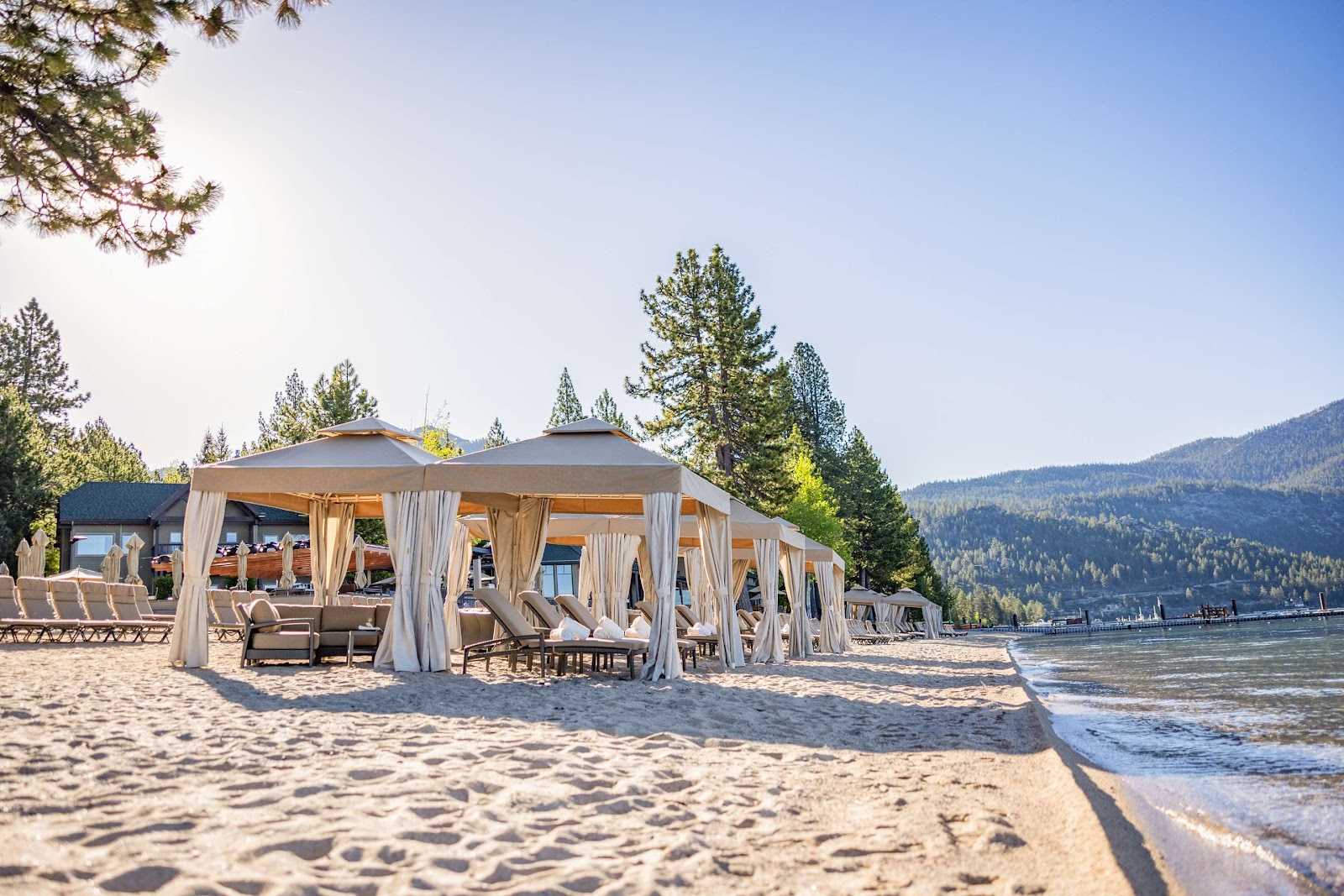
The Hyatt Regency Lake Tahoe sits at Incline Village on the north-east shore of the lake, inside Nevada, at a little under nineteen hundred metres above sea level. It is a full resort — rooms, restaurants, function space, a spa — with a private beach on the lake and the Sierra crest across the water.
For a photographer that produces a very specific profile, and it is worth stating before the lists.
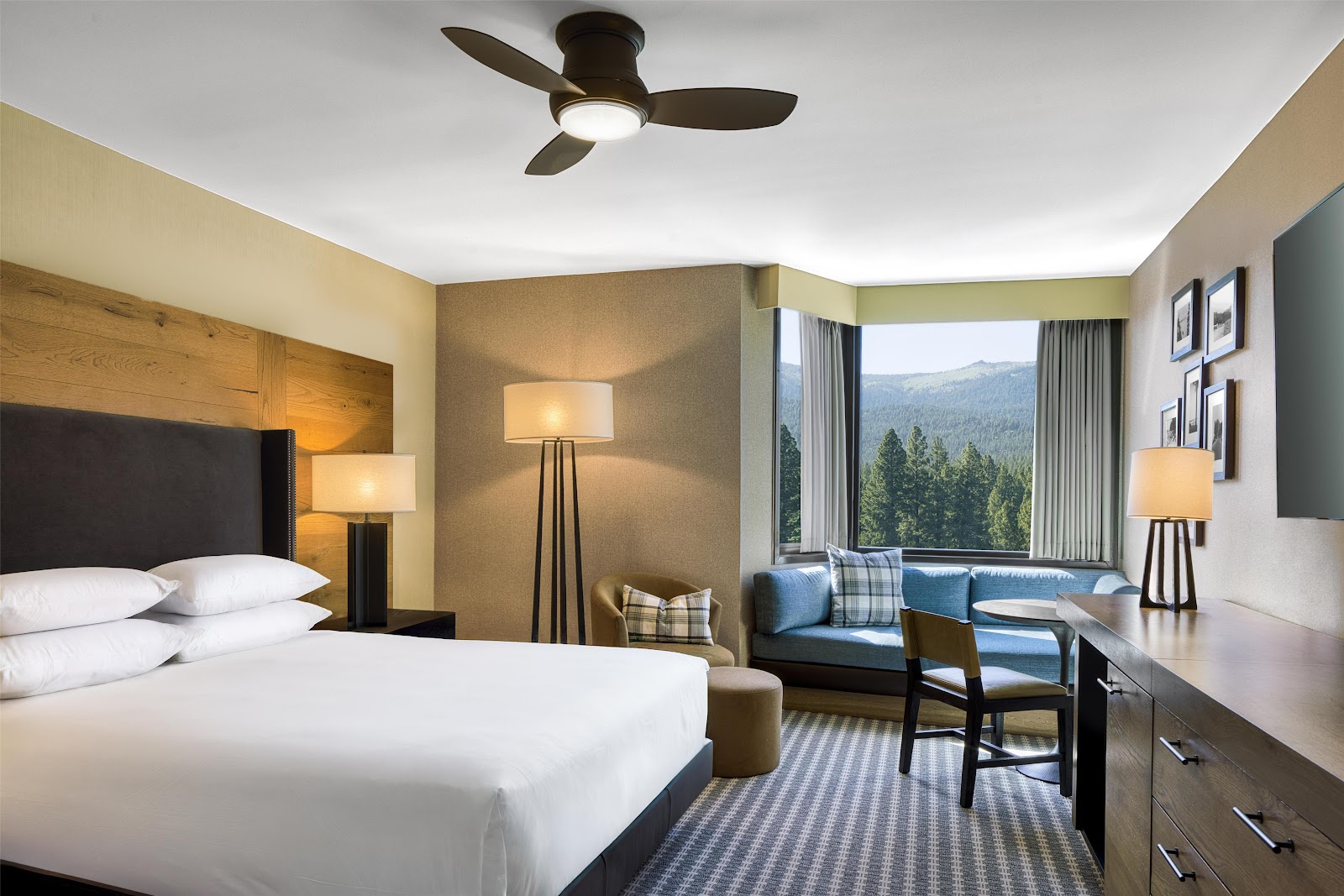
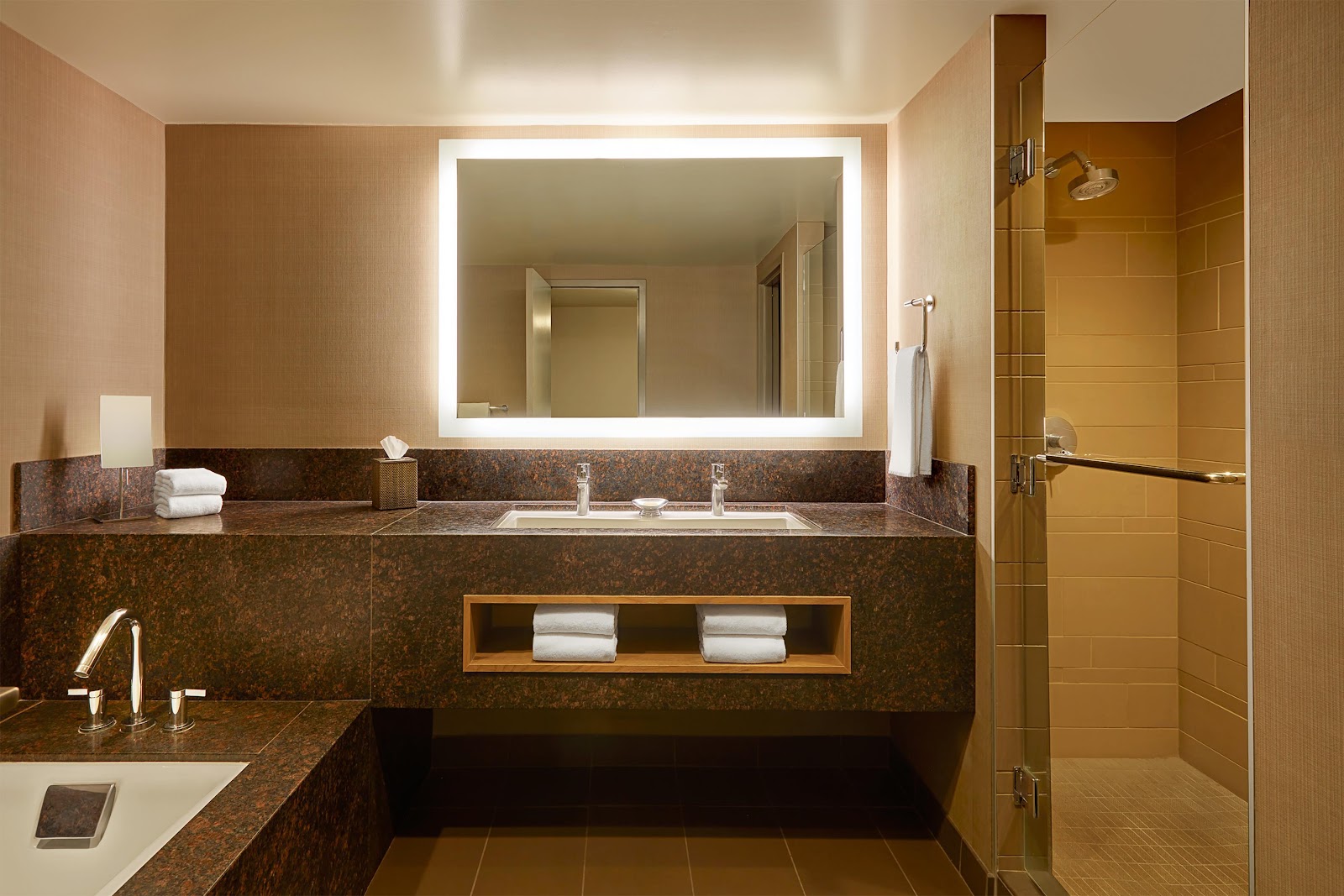
The interiors are a resort’s interiors: capable, comfortable, professionally lit, and photographically neutral. They will take whatever you bring and contribute little of their own. That is neither a criticism nor a compliment; it is the nature of the type, and it means every good interior frame here is made rather than found.
The exteriors are the opposite, and they are the reason to be here. A private beach on Tahoe gives you pale Sierra granite, white sand, water that is among the clearest of any large lake in the world, tall widely spaced pines, and a mountain crest across the lake — a four or five element palette with nothing muddy in it, at an altitude where there is perhaps twenty per cent less atmosphere and therefore very little haze to soften any of it.
So the building is the logistics and the beach is the photograph. A schedule that treats it the other way round wastes the venue.
The altitude is the fact that recurs in both lists below, so it is worth establishing once. At nineteen hundred metres, guests arriving from sea level will notice it — breathlessness on any slope, faster dehydration in very dry air, and alcohol having a markedly stronger effect than expected. Ultraviolet intensity is substantially higher too, and the pale sand and water reflect more of it upward, so sunburn happens faster than anybody plans for.
For the camera it means hard, deep shadows with almost no fill in the air, a deeply saturated sky, extraordinary clarity over distance, and a dynamic range between sunlit granite and its own shadow that is closer to a desert’s than a coast’s.
And there is a daily wind cycle that governs the water: calm at dawn, building through the late morning, a real breeze across the lake by early afternoon, often easing again near sunset. Whether the lake is a mirror or a chopped blue sheet is decided by the clock, not by luck.
So: what it suits, what it does not, and then how to use the shore and the year.
The Hyatt Regency Lake Tahoe at a glance
| Where | A lakeside resort at Incline Village, Tahoe’s north-east shore, Nevada, ~1,900 m |
| Suits | Guests who want everything in one place; a beach ceremony; summer and early autumn |
| Does not suit | Anyone wanting a characterful building, a long season, or a sea-level guest list |
| The exteriors | Granite, white sand, exceptionally clear water, pines and the Sierra crest |
| Ask first | Beach access and permits, the indoor fallback capacity, and altitude advice for guests |
What it suits
It suits a wedding where everybody needs to be in one place, and at a mountain lake that is worth more than it sounds.
Tahoe’s venues are spread around a large lake on mountain roads, and a wedding split between a ceremony at one shore, a reception at another and accommodation somewhere else becomes a logistics exercise with a driving component in the dark. A resort with rooms, function space and a beach on site removes all of that. Guests do not drive; the wedding party does not travel; and the photographer does not lose forty minutes of the best light to a vehicle transfer.
That last point is the photographic argument and it is the strongest one. At this venue the ceremony, the reception and the best exterior frames are within a few minutes’ walk of each other, which means the last hour of light is available in full rather than partly spent moving. At a lake this size that is unusual.
It suits a beach ceremony. A private stretch of shoreline with granite and clear water, backed by pines, looking across at the crest, is a genuinely beautiful place to stand — and because it is the resort’s own beach rather than a public park, the permitting and crowd problems that attach to Tahoe’s state-park beaches largely go away. Ask, because shoreline in this basin is regulated and access arrangements vary, but a resort beach is a far simpler proposition than a state park.
It suits a summer or early autumn date, which is when this region works at all. July through September is the reliable season: warm dry days, cold clear nights, calm mornings and dependable sun. Late September into October is the underrated window, with thinner crowds, the clearest air of the year, and the basin’s aspens turning gold against grey granite and dark conifer — which is the best colour combination this region produces.
It suits a couple who want a morning on the water. The calm before the wind is the only time Tahoe’s clarity is photographable, and being resident on site means a first-light session is a matter of getting up rather than of driving in the dark. A frame made at seven from a low camera across water clear enough to show the granite beneath it is the single best photograph available here, and only guests can easily get it.
It suits a large guest count. A resort has purpose-built function rooms with real ceiling heights, level floors, dimmable lighting and service access, so a hundred and eighty people is a routine number. That is the opposite of the small historic and park venues elsewhere in this collection, where interiors are the constraint.
It suits a photographer willing to bring light. Pale walls and normal ceiling heights make bounce efficient indoors, and the exteriors need fill because the air provides none. A photographer who arrives with two lights and a white card will get a full set here comfortably; one relying on found light will struggle in the middle of the day.
And it suits a wedding that wants a genuine alpine frame without a hike. The alpenglow — the pink and then deep rose light that stays on the peaks for several minutes after the sun has left the shore — is visible from the beach here, which means one of the most striking mountain photographs available anywhere is reachable in formal shoes.
One practical advantage worth naming. A resort of this kind is operationally reliable: the schedule holds, the rooms are ready, the timings are kept. At altitude, in a short season, with weather that can change quickly, that reliability is worth more than it would be in a city, and it is the actual reason many couples choose this kind of venue.
What it does not suit
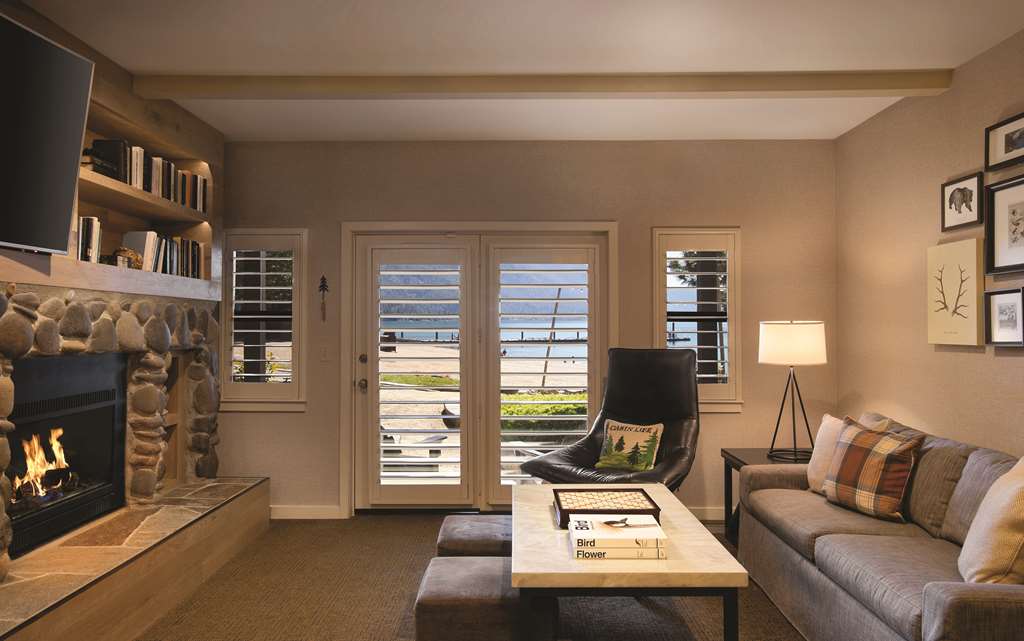
It does not suit a couple who want the building to be part of the photographs. A resort interior is competent and anonymous: no period detail, no patina, no material with age in it, and no room that is interesting in itself. If the moodboard is full of timber-framed lodges, stone fireplaces and characterful rooms, this is the wrong building and no technique produces character that is not there. The mountain lodge aesthetic exists in this region — it is simply not what a full-service resort is.
It does not suit a long season. This is the constraint that catches couples out most often. Tahoe receives very large snowfalls, and in a heavy winter snow lingers at lake level well into spring, with some access opening late. A date in late May or early June needs checking against the actual snowpack for that year rather than an average, because a light winter and a heavy one produce completely different ground conditions. And by late October the weather is unreliable again. The dependable window is about three and a half months.
It does not suit a guest list with people who will struggle at altitude. This is worth raising honestly rather than treating as trivia. Nineteen hundred metres affects older guests, anyone with a cardiac or respiratory condition, and anyone arriving the same day from sea level — and the combination of altitude, dry air and a champagne reception produces more unwell guests than couples expect. The standard advice is to arrive a day early, drink water constantly and go easy on alcohol, and a couple can put that in their invitation. A venue cannot.
It does not suit an afternoon plan that depends on the water being clear. The daily wind makes the lake choppy from around midday, and once the surface is ruffled you cannot see into it at all — the turquoise becomes an opaque blue sheet. The clarity that makes Tahoe famous is a morning phenomenon. If a couple’s reference images all show visible submerged rock, that needs an early session rather than an afternoon one, and saying so at the enquiry stage prevents a specific disappointment.
It does not suit a photographer expecting soft forgiving light. At this altitude there is very little atmospheric scattering, which means shadows are hard and four or five stops down, midday sun is punishing on pale sand and granite, and the range in a single frame can exceed what a sensor holds. Fill has to be brought. This is desert-style light on a beach and instincts from a humid coast will not serve.
It does not suit a late-summer plan without an air-quality contingency. Wildfire smoke has become a serious recurring feature of August and September in this region — smoke from Sierra and regional fires can fill the basin for days, turning the light orange, flattening all contrast and producing air quality that makes an outdoor event genuinely inadvisable. It cannot be forecast far ahead. Any late-summer outdoor plan here needs a plan for smoke as well as for rain, and that is a newer consideration than most guidance acknowledges.
It does not suit an outdoor plan without a real indoor fallback, for a different reason: afternoon thunderstorms build over the Sierra through July and August, localised and quick but carrying genuine lightning risk on an open beach. That is a safety matter. Ask what the indoor ceremony fallback is and get its capacity as a number.
And it does not suit anyone who wanted a warm evening. The desert-like diurnal range at altitude means the temperature drops fast once the sun is off the lake — a July day in the mid-twenties can be near ten degrees by ten in the evening. An outdoor reception needs heating or a wrap, and a bride in a summer dress on a beach at nine o’clock in August will be cold.
The honest summary: if the priority is everybody in one place, a beach ceremony, a summer or early-autumn date and an early morning on the water, this is an excellent and very convenient venue. If the priority is a characterful building, a flexible calendar, or a guest list that will not notice the altitude, it will be a polite disappointment in the album and an awkward one on the day.
The shore, and the Tahoe year
The beach is where the photographs are, and it has four elements worth using deliberately.
The granite first. Sierra granite weathers into rounded masses at a scale that makes a person small, and it is pale — which makes it a large reflector rather than an absorber, the opposite of dark rock. In raking light its coarse grain throws small hard shadows and it reads as material; in flat midday light it goes featureless grey. Early or late, and across the light rather than into it.
Use a boulder as a frame rather than only as a background — shoot between two of them, or with one filling a corner — because an open beach otherwise gives you no foreground at all.
The water second, and this is the venue’s signature. Tahoe is very deep, very cold and very pure, and on a calm morning the submerged granite is visible in detail several metres down. The frame is a low camera close to the surface, looking across shallow turquoise water with rock visible beneath it. A circular polariser is the accessory that makes it possible, because it cuts the reflected skylight off the surface; rotate it while watching the water and the bottom appears. It works best shooting at roughly ninety degrees to the sun.
Protect the water’s colour in the exposure. Turquoise clips easily in the blue and green channels and once clipped goes a flat unrecoverable cyan, so check the histogram on the water rather than on the rock.
The trees third. The basin is Jeffrey and ponderosa pine with fir and incense cedar — tall, straight, widely spaced, with reddish plated bark and high crowns. They cast narrow shade rather than broad canopy, so they are not a midday answer the way a broad deciduous tree would be. What they are is excellent verticals: a run of straight trunks behind a subject at a moderate focal length is a strong graphic background, and the plated bark takes raking light beautifully.
The crest fourth, across the water. At this altitude and in this air the far shore and the mountains behind it resolve with extraordinary clarity, which makes a long lens across the lake genuinely usable — a compressed frame of a couple with the crest stacked behind them is available here and would be a hazy mess at sea level.
And the alpenglow, which is the frame to protect at the end of the day. After the sun has left the shore, the peaks keep catching light for several minutes, and because that light has travelled a long way through the lower atmosphere it arrives pink and then deep rose. Expose for the lit peaks, put the couple in silhouette or light them yourself with one small warmed source, and if the water has calmed, get the reflection in — a rose peak mirrored in a still lake is as good as this region offers. More often the water is still moving by then, in which case make it a peak-and-sky composition instead.
Civil twilight at this latitude runs about twenty-eight to twenty-nine minutes in midsummer, and at altitude the afterglow runs a little longer and considerably more colourful than that number suggests, because you are seeing light scattered from air well above you. Budget twenty minutes at the end of the day rather than twelve, and spend the first half of it on the peaks.
Now the year, briefly, since much of it is above. July through September is the reliable season, with the honest cautions about thunderstorms and smoke. Late September into October is the best-looking window: clearest air of the year, thin crowds, calm cold mornings, and aspen gold against granite and conifer. Sunset around six thirty puts the dusk sequence at a civil hour.
Late spring is a snowpack question rather than a date question, and the answer differs every year. Ask.
Winter is a genuinely different venue and worth mentioning rather than dismissing. The lake does not freeze, so the turquoise water remains, and snow on pale granite above it is a superb subject with maximum tonal separation. Against that: a midwinter noon sun near twenty-eight degrees, sunset before half past four, temperatures well below freezing on an exposed shore, and mountain roads that close in storms. A winter frame here is for a small party, briefly, with a plan and a vehicle.
The compensation in any season is the half hour after a storm clears, which at altitude is exceptional: the air washes to absolute clarity, wet granite goes several tones darker and far more saturated, the wind usually drops so the lake flattens, and a low sun comes under a broken ceiling onto peaks that are still wet. If a cell goes through at six, wait rather than pack. It is the best light the basin gives.
More frames from The Hyatt Regency Lake Tahoe
The Hyatt Regency Lake Tahoe wedding photography: common questions
Who is this venue right for?
Couples who want everybody in one place. Tahoe’s venues are spread around a large lake on mountain roads, and a wedding split across shores becomes a driving exercise; here the ceremony, reception, rooms and the best exterior frames are within a few minutes’ walk, which means the last hour of light is available in full rather than partly spent in a vehicle. It also suits a beach ceremony, a large guest count, and a summer or early-autumn date.
Who should look elsewhere?
Anyone who wants the building in the photographs — a full-service resort interior is competent and anonymous, with no period detail or patina, and the timber-and-stone lodge aesthetic that exists in this region is a different kind of venue. Also anyone needing a flexible calendar, since the dependable season is only about three and a half months, and anyone with a guest list that will struggle at nineteen hundred metres.
Is the altitude really a factor?
Yes, and it is worth raising honestly. Nineteen hundred metres affects older guests, anyone with a cardiac or respiratory condition, and anyone arriving the same day from sea level — and altitude plus very dry air plus a champagne reception produces more unwell guests than couples expect. Arriving a day early, drinking water constantly and going easy on alcohol is the standard advice, and a couple can put that in their invitation. Sunburn is also much faster here, with pale sand and water reflecting ultraviolet upward.
When can we get the famous clear water?
In the morning. Tahoe runs a daily wind cycle — calm at dawn, building through the late morning, a real breeze by early afternoon — and once the surface is ruffled you cannot see into it at all. The clarity that makes this lake famous is a morning phenomenon, so if a couple’s reference images show visible submerged rock, that needs an early session. Being resident on site makes a first-light frame a matter of getting up rather than driving in the dark, which is one of the real advantages here.
What is the light like?
Closer to a desert’s than a coast’s. At this altitude there is perhaps twenty per cent less atmosphere and very little scattering, so distance resolves with extraordinary clarity and the sky is deeply saturated — but shadows are hard and four or five stops down, midday sun on pale sand and granite is punishing, and the range in a single frame can exceed what a sensor holds. Fill has to be brought. Bring two lights and a white card.
When is the best time of year?
July through September is the reliable season; late September into October is the best-looking, with the clearest air of the year, thin crowds, calm cold mornings and aspen gold against grey granite and dark conifer. Two honest cautions for late summer: afternoon Sierra thunderstorms carry real lightning risk on an open beach, and wildfire smoke has become a recurring August and September feature that can fill the basin for days. Both need contingencies. Late spring is a snowpack question that differs every year — ask.
More Nevada venue guides
We are writing a photographer’s guide to every venue we would happily shoot in Nevada. Here are three more, plus the full index:
- The Lake Tahoe Wedding Chapel, Stateline: The Problem, and Four Ways Out of It
- The Sand Harbor Beach, Incline Village: One Frame, and How It Is Made
- The Valley of Fire State Park, Overton: The One Decision That Governs Everything
Planning a wedding at The Hyatt Regency Lake Tahoe?
One place, one early morning, and twenty minutes at the end. Tell us your date.