 The Portland Regency: A Season-by-Season Guide
Hidden Pond, Kennebunkport: What It Suits and What It Does Not
A coastal property that has turned its back on the coast. That is the point.
This is a coastal venue that is not about the coast, and the honest way to describe it is by what a closed woodland setting suits and does not suit.
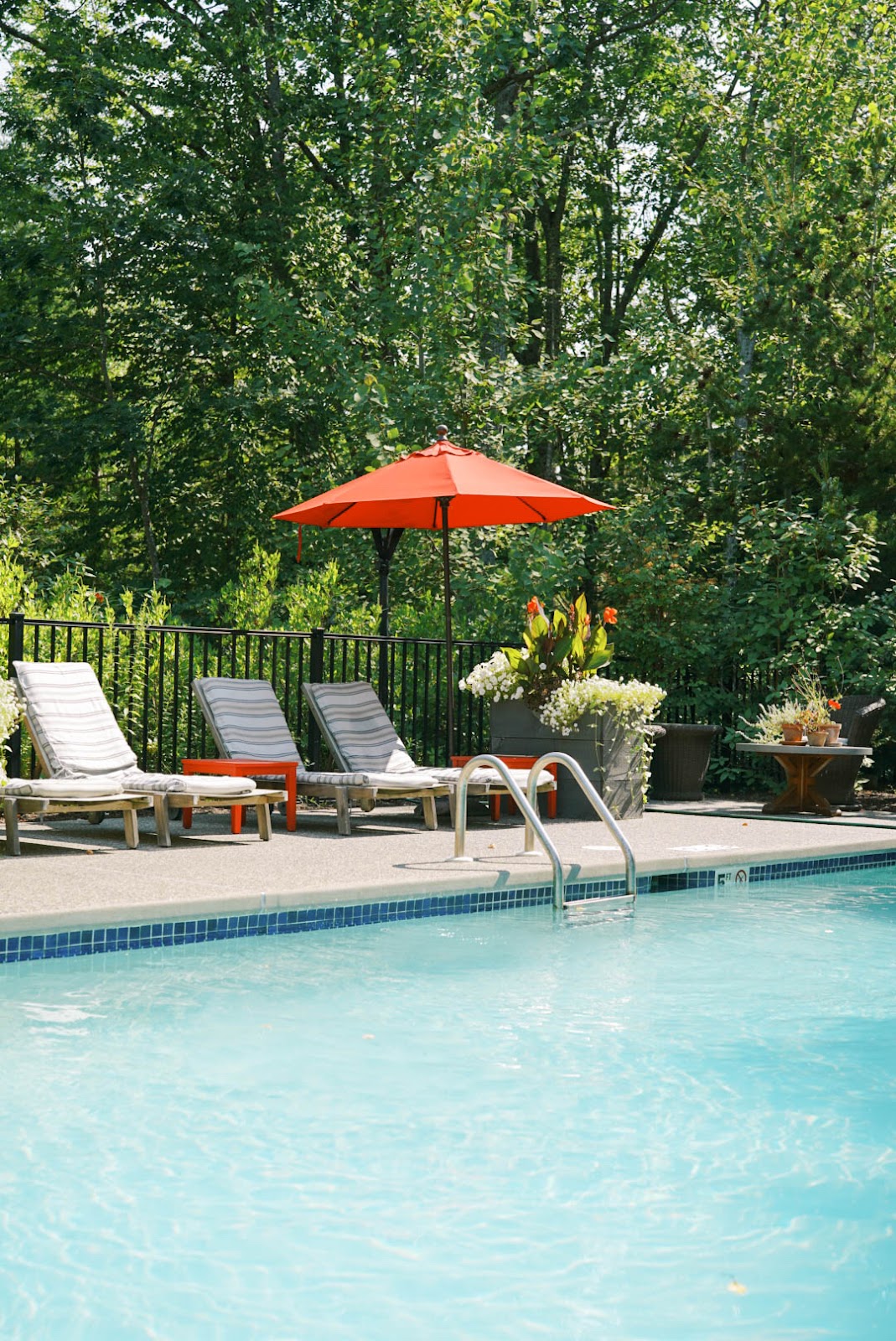
The proposition is a resort set back from the southern Maine shore in mixed woodland — birch, pine and spruce — arranged around a pond, with accommodation distributed among the trees rather than gathered into a single building. The sea is a short distance away and deliberately not visible.
That is an unusual choice on a coast where every other venue in this guide points at the water, and it produces a completely different photographic environment: enclosed rather than open, soft rather than dramatic, green rather than grey-blue, and entirely unaffected by the wind and fog that dominate the shoreline.
The trade is worth stating clearly. A woodland resort gives soft, consistent, weather-independent light and a sense of seclusion that no clifftop can. It does not give a horizon, a sunset over water, a landmark, or any of the drama that the Maine coast is chosen for.
For some couples that is exactly right, and for others it is the reason to choose somewhere else — and knowing which before the day is worth more than any amount of technique.
The specific technical character comes from the species. Maine’s coastal woodland mixes spruce and fir, which block almost all light and give near-darkness, with white paper birch, which has the most reflective bark of any tree in the northeast, and white pine, whose canopy is high and relatively open.
That mixture produces a wood with very high internal contrast: dark conifer masses, luminous white trunks, and patches of higher and lower canopy — which is considerably more interesting than a uniform hardwood canopy and considerably harder to expose.
Kennebunkport sits at about forty-three and a third degrees north. The June noon sun reaches around seventy degrees, the December noon sun about twenty-three, days run from about nine hours to fifteen hours twenty, and civil twilight is around thirty-four minutes.
We have not photographed a wedding at this resort. Which spaces and grounds are included, what access there is to the pond and the woodland, and what the permitted hours are, are questions for their team.
Hidden Pond at a glance
| Where | A woodland resort set back from the southern Maine coast at Kennebunkport |
| The choice | Enclosed woodland rather than open shore — the sea is deliberately out of sight |
| Suits | Soft consistent light, seclusion, weather independence, white birch backgrounds |
| Does not suit | A horizon, a sunset over water, a landmark, or drama |
| Ask first | Included grounds, pond and woodland access, permitted hours |
What it suits
It suits the white birch, and that deserves to come first because it is the best background material on the property and it is specific to this kind of northern wood.
Paper birch bark is white, papery and highly reflective, which makes a stand of mature birch the highest-contrast natural background in New England: a field of luminous pale verticals against whatever is behind them. When what is behind them is dark spruce, the contrast is extreme and needs nothing added at all.
The practical value is that birch works where most woodland backgrounds fail. A green canopy behind a subject is soft and undifferentiated; a birch stand is graphic, structured and light-toned, which means a subject in front of it has something to sit against rather than dissolving into it.
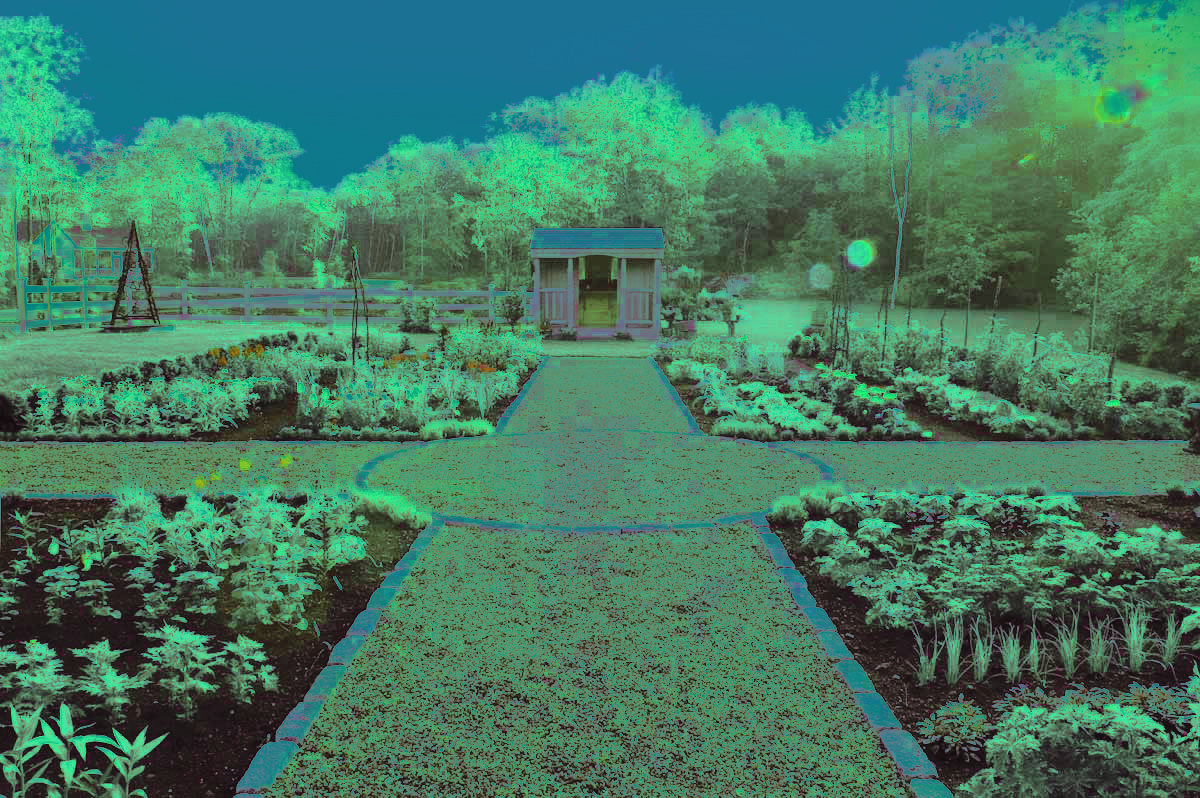
It suits the spruce and fir margins, which are the other half of the same virtue. Red spruce, white spruce and balsam fir hold dense evergreen canopies that block almost all light, which makes their edge the best free separation available anywhere: a subject a metre inside a spruce margin has soft directional light in front and three or four stops of near-blackness behind.
That is a studio portrait with a black backdrop, supplied by the wood, at any hour of any day — including the middle of a bright July afternoon when a clifftop is unusable.
It suits consistency, and on the Maine coast that is a substantial practical asset. A woodland interior is far less affected by the weather than a shoreline: fog thins among trees rather than erasing everything, wind is broken up by the canopy, and a grey overcast day under a mixed wood is soft and pleasant rather than flat and grey. That means the photographic plan barely changes with the forecast.
It suits the pond. A small sheltered body of water in woodland is calm far more often than an open lake, because the surrounding trees block the wind that breaks a lake surface by mid-morning — which means reflections are available at almost any hour here, not just at dawn.
The reflection rule applies: a reflection is about a stop darker than what it reflects, so compose so the reflection is of the dark far bank rather than of open sky, and the two sit within a stop and need nothing. A pond ringed by spruce and birch gives exactly that: a dark mass with luminous verticals in it, doubled.
The pond is also the wood’s one opening, which makes it the only place with side light. A watercourse or a pond is a gap in the canopy, so a subject standing at its edge facing out over it is lit from the side rather than from above — and overhead light is the woodland problem, described below.
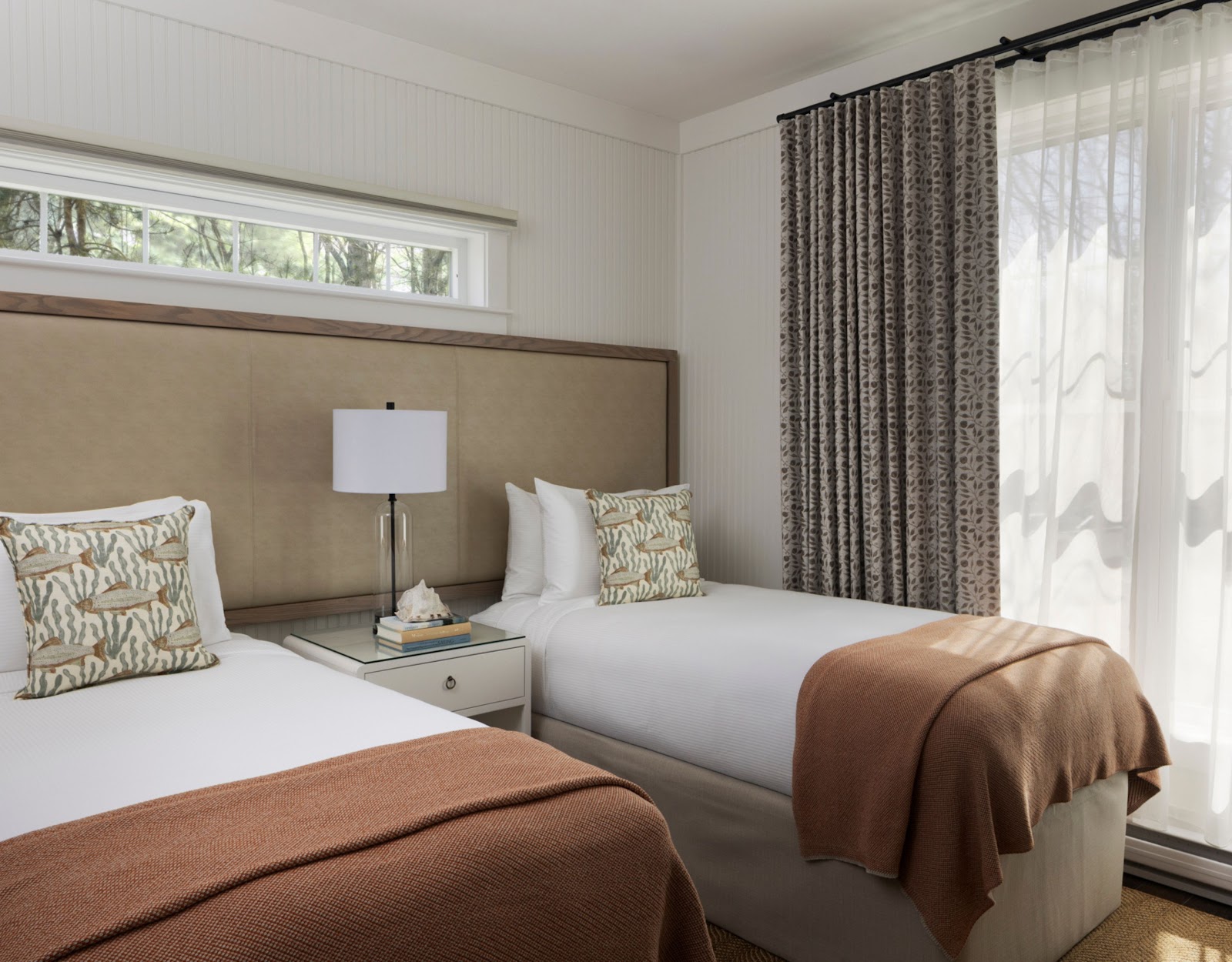
It suits seclusion. Accommodation distributed among trees means small buildings with their own approaches, porches and thresholds, and every threshold is a lighting setup: a subject a metre inside an open door is lit by the whole sky in front and backed by the dark interior, which is a giant softbox and a four or five stop black backdrop.
A dozen small buildings means a dozen of those positions, which is more usable light than one large building provides.
What it does not suit
It does not suit anyone who chose the Maine coast for the coast. There is no horizon, no sea in the frame, no sunset over water and no landmark. Every photograph is enclosed, and no amount of skill changes the character of the place.
That is worth saying to a couple early, because the answer may be to spend part of the day at the shore — which is a short distance away and offers granite, sand, a tidal river and a working harbour — rather than to expect the resort to provide something it deliberately does not.
It does not suit overhead light, which is the fundamental problem of any closed canopy. Light arriving through a canopy comes from the whole hemisphere above, filtered, which means it is soft and has no direction at all. Soft is good; directionless is not, because a face lit from everywhere at once has no modelling: the nose casts no shadow and the cheekbone does not read.
There are three answers. The canopy edge — two metres inside it, facing out toward brighter ground, which puts the sky in front rather than above. The pond’s edge, for the same reason. And a source of your own, which in a wood needs little output because the ambient is two to four stops down: one light at forty-five degrees and slightly above eye level restores the direction the canopy removed.
It does not suit an uncorrected green cast. Light transmitted through and reflected off leaves is noticeably green, and skin under a closed hardwood canopy reads sallow. A global white balance correction turns the whole wood grey and is the wrong move; the fix is positional, or a warm-gelled source at a stop over ambient, which overrides the green on skin while leaving the foliage as it is.
The mitigating factor here is the species mix: spruce and pine transmit far less green than broad leaves do, and white birch bark reflects neutrally — which means a Maine coastal wood has a less severe green problem than an oak-hickory one.
It does not suit dapple, and this is the condition to avoid outright. Where a broken canopy lets hard sunlight through, the ground is patched with a four or five stop range between patch and shade, and a face half in one is unrecoverable. White pine in particular has a high open canopy that dapples badly in direct sun.
The rule is full open shade at a margin, full overcast, or full sun in a clearing with the sun behind the camera — and never the scattered middle.
It does not suit large groups easily. Woodland paths are narrow, the ground is uneven and rooty, and a camera cannot back up far among trees — which means the usable group positions are the clearings, the pond edge, the lawns and the built terraces, and there are fewer of them than the acreage suggests. Walking them in advance is worth the time.
It does not suit a frame taken without checking the top of it. A mixed canopy of birch, pine and spruce is visually busy overhead, and a wide frame includes a great deal of it. A lower camera angle or a tighter crop handles it, and the decision is whether the canopy belongs in the picture.
Two practical notes. Mosquitoes and blackflies are a real consideration in Maine woodland: blackflies from mid-May into June and mosquitoes from June into September, and a sheltered wood with standing water is where they live. Unlike an exposed clifftop, there is no breeze here to keep them off, and this is the one respect in which the coast has the advantage.
And ticks are a genuine consideration in southern Maine from spring through autumn, which belongs in the planning conversation rather than in the surprises.
- White birch against dark spruce is the best background here
- Spruce margins give three or four stops of free separation at any hour
- The pond is the wood’s only side light — and calm far more often than a lake
- Two metres inside the canopy edge, facing out, not four
- Avoid dapple entirely; white pine is the worst offender
The coastal woodland year
Four sharply separated seasons, and a wood whose canopy state changes it more than the weather does.
Winter is the most transformed and it is better than people expect. With the birch and hardwood bare, light reaches the ground everywhere, the green cast disappears completely, the level rises by two or three stops, and the light acquires direction because it arrives through bare branches rather than through leaves.
The spruce stays dark, which in a bare wood makes it the one solid black mass rather than one dark thing among many — and white birch against black spruce over snow is the cleanest, highest-contrast composition available in the northeast. That frame is specific to a northern winter wood and it is the best thing this property produces.
Snow is the best natural fill available, lifting shadows to within a stop and fooling a meter by about two, so open up deliberately. The December noon sun at around twenty-three degrees means the whole short day rakes rather than floods, and in a wood that low angle means light comes in sideways through the trunks rather than down through the canopy — which is exactly the direction the wood lacks in summer.
The costs are cold, a nine-hour day, and glass that fogs coming indoors.
Spring is late on this coast because the cold sea holds the air temperature down, and it is the weak window: April is bare and raw, the ground is wet, and leaf-out runs into May. The two weeks before the canopy closes are good — the understory is lit directly rather than filtered — but southern Maine’s flowering understory is thinner than further south.
Blackflies from mid-May into June are a real constraint in a sheltered wood, and this is the season the coast’s breeze is most missed.
Summer is the season and the days are very long: over fifteen hours at the solstice with about thirty-four minutes of civil twilight. The wood is at its deepest green, the pond is warm, and the property is entirely unaffected by the fog that dominates the shoreline in June and July — which is a genuine and underrated advantage.
The costs are the closed canopy conditions described above, mosquitoes, and a middle of the day that needs the margins.
Autumn is the other strong season. The colour arrives on the southern Maine coast in the second and third weeks of October, two to three weeks behind inland Maine because the sea delays it — and a birch-and-spruce wood gives a specific palette: birch clear yellow, red maple scarlet, oak russet, all of it against near-black conifer.
Birch is the one to time. Its leaves turn a clean uniform yellow and, because the bark is white, a birch in autumn is a white trunk under a gold canopy — which against dark spruce is the most distinctive frame this wood produces. As the leaves thin, the light level rises and direction returns, so the last week of the colour is better lit than the first.
November strips it back to white trunks, black spruce, brown litter and a very low sun all day — austere, excellent, and the beginning of the wood’s best season rather than the end of it.
More frames from Hidden Pond
Hidden Pond wedding photography: common questions
What does this venue suit?
Soft consistent light, seclusion, and weather independence — plus white birch and dark spruce, which are the best natural backgrounds in the northeast.
What does it not suit?
A horizon, a sea view, a sunset over water, or any of the drama the Maine coast is usually chosen for. It faces inward on purpose.
What is wrong with closed canopy light?
It arrives from the whole hemisphere above, so it is soft but has no direction at all — a face lit from everywhere has no modelling.
What fixes it?
The canopy edge two metres in facing out, the pond’s edge, or a warm-gelled source at a stop over the ambient for direction.
Is the pond reliable for reflections?
More reliable than a lake. The surrounding trees block the wind that breaks an open surface by mid-morning, so it is calm at most hours.
When is a birch-and-spruce wood at its best?
Winter, when white trunks against black spruce over snow give the cleanest composition in the northeast — and the third week of October, when birch turns gold above white bark.
More Maine venue guides
We are writing a photographer’s guide to every venue we would happily shoot in Maine. Here are three more, plus the full index:
- Norumbega Inn, Camden: A Walk Through the Site
- Portland Head Light, Cape Elizabeth: One Frame and How It Is Made
- Spring Point Ledge Lighthouse, South Portland: The One Decision That Governs Everything
Planning a wedding at Hidden Pond?
A coastal venue that faces inward. Tell us your date and we will work the wood.