 The Henry Clay: Lighting a 1920s Lodge Building
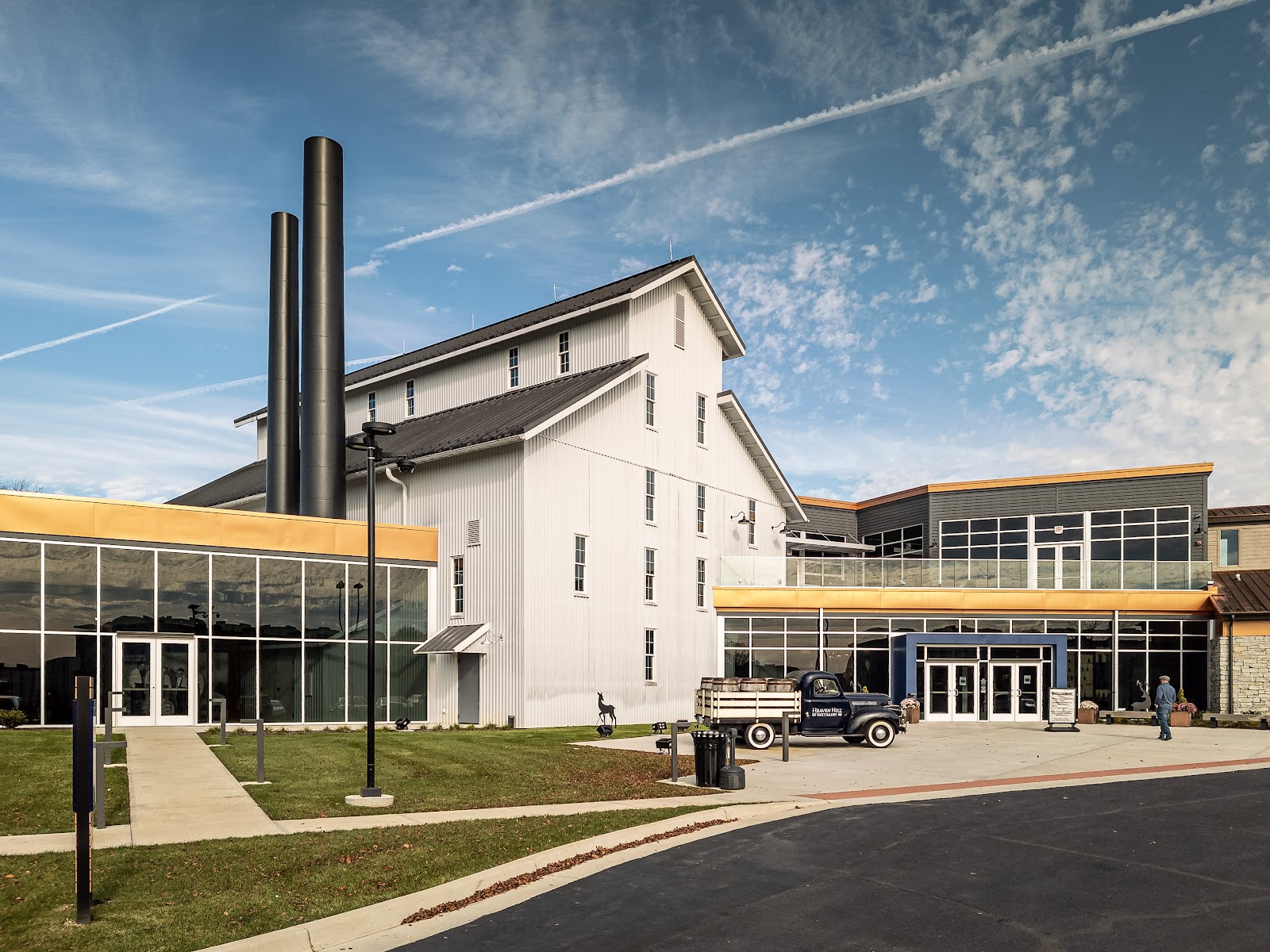
The Heaven Hill Distillery, Bardstown: What It Suits, and What It Does Not
A working distillery is the most photogenic industrial site there is and the most rule-bound. Both facts matter.
A working distillery is an unusually rewarding place to photograph and an unusually constrained one, and both halves need stating clearly because the constraints are not negotiable.
What it gives is drama. Copper stills, stainless vessels, timber barrel ricks, slatted warehouse walls that turn sunlight into bars, and the scale and repetition of an industrial process. Those are subjects rather than backdrops, and a gallery made here is identifiable at a glance in a way a hotel gallery is not.
What it asks is compliance. This is a site where flammable spirit vapour is present in quantity, which means the rules about ignition sources, equipment, footwear and access are safety rules rather than house preferences — and a photographer who treats them as negotiable is the wrong person to have on site. No open flame, no sparklers, no smoke machines, and whatever restrictions apply to electrical equipment in a given building.
Beyond that the site is a working operation, which means production takes priority over a wedding party and access varies by building and by day.
We have not photographed a wedding at the Heaven Hill Distillery; working distilleries behave consistently. Which buildings are included, what the safety and equipment rules are, and which areas are accessible on a given date are questions for their team — and they are the first questions rather than the last.
The Heaven Hill Distillery at a glance
| Where | Bardstown, Kentucky |
| Suits | Copper, stainless, barrel ricks, and slatted-wall light bars |
| Resists | Safety rules, variable access, very dark interiors, specular surfaces |
| Non-negotiable | No flame, sparklers or smoke anywhere near spirit vapour |
| Ask first | Buildings included, safety and equipment rules, access on the date |
What it suits
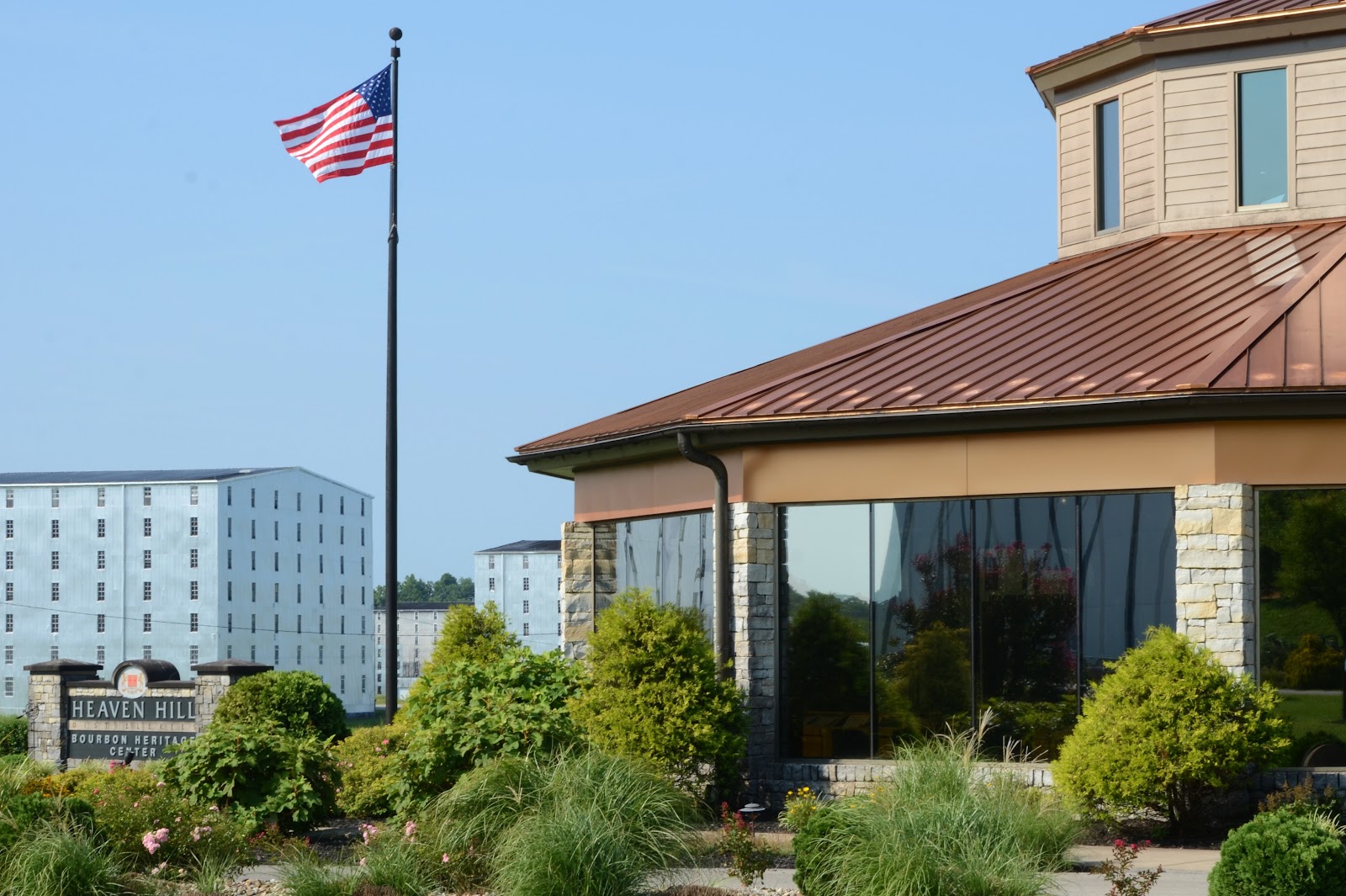
The slatted-wall light bars are the site’s signature and they exist for a functional reason. Barrels age by breathing, so a barrel warehouse has louvred walls to let air move through the ricks — and where the sun strikes that elevation, the result is a wall of parallel light bars crossing a very dark interior. Nothing else in American architecture looks like it.
It is a sunny-day frame on a specific elevation: east in the morning, west in the afternoon, and absent under cloud. Low sun stretches the bars horizontally across the space rather than steeply onto the floor, which is the version worth having — and at this latitude, about thirty-eight degrees north, that means a couple of hours at each end of a summer day and most of a winter one.
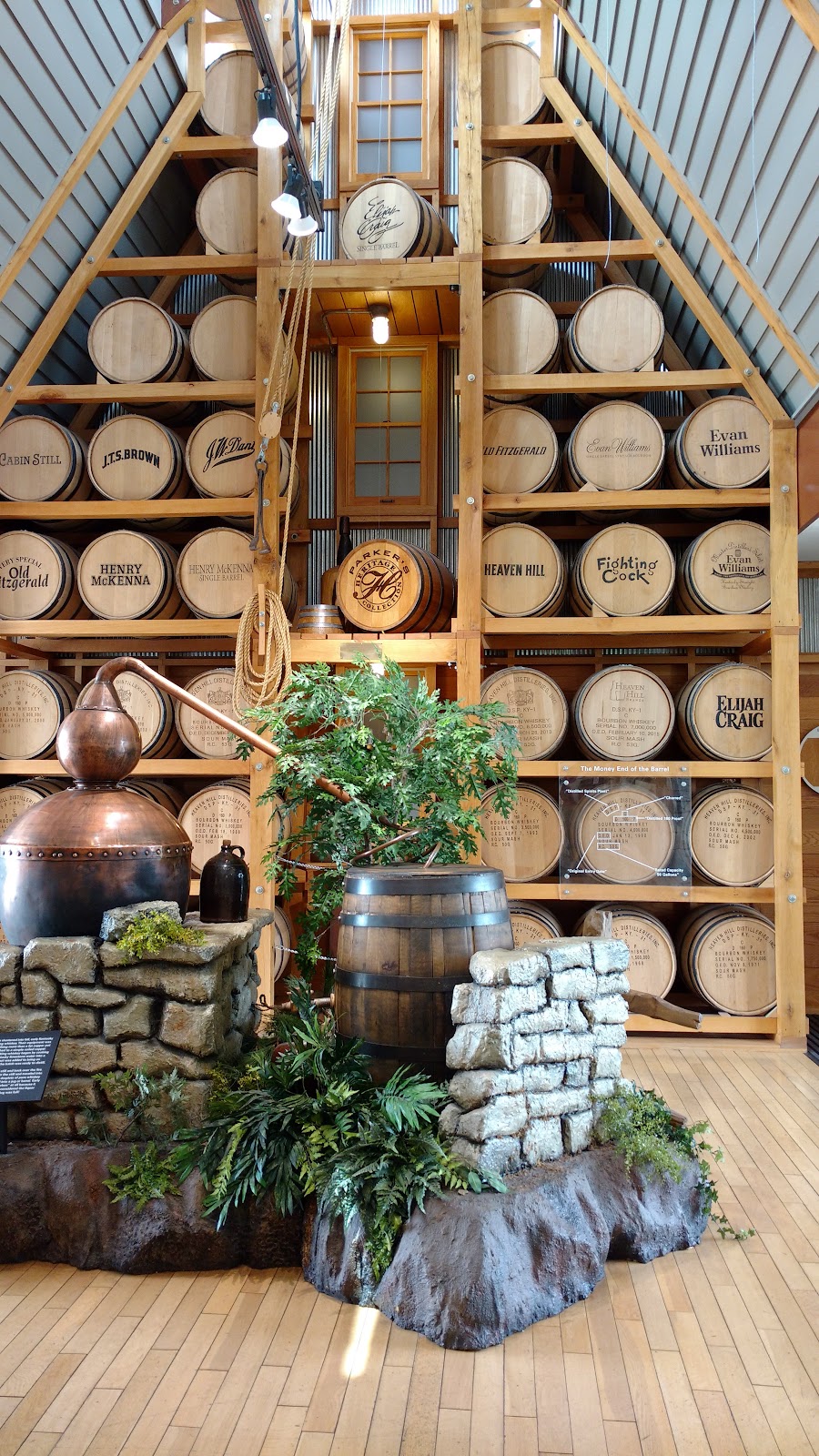
Copper suits the place and it photographs unlike anything else. A polished still is warm, curved and strongly specular, which means it behaves as a mirror rather than a surface — and used deliberately, a couple reflected in a still is a frame no other venue type gives. The condition is the fifteen-second check from the camera position, because a specular curve shows a badly placed light from a very wide range of angles.
Barrel ricks suit repetition and depth. Timber ricks with barrels stacked in tiers recede into a frame with enormous regularity, which gives a background that organises itself and darkens with distance — and a subject at the end of a rick aisle is separated by the perspective alone.
The darkness suits drama, which is the point of an industrial interior. A rickhouse or a production floor with a single source on a face and blackness everywhere else gives the steepest separation available in any building, and it needs one light rather than several. Fall-off does the rest.
The materials suit raking light, all of them. Timber, brick, stone, stainless and copper read only when light runs along them — lifting every joint, course, rivet and seam — and flatten into fields of one tone when light faces them square. The two or three positions where existing light already grazes a surface are worth finding on arrival and they carry a disproportionate share of the good frames.
And the scale suits couple-as-figures compositions. Two people small against a rickhouse wall or a row of vessels says something about the process that a portrait cannot, and the requirement is only that the figures be readable — separated by tone, placed where the eye lands, and ideally lit.
What it does not suit
The rules are the first refusal and they are the ones that matter most. A distillery holds flammable spirit vapour in quantity, which makes ignition sources a genuine hazard rather than an inconvenience — so no open flame, no sparklers, no smoke machines, and whatever electrical restrictions apply in a given building.
That has practical photographic consequences worth planning for rather than discovering. The atmospheric beam frames that a smoke machine would produce elsewhere are not available here, and should not be attempted. Anything requiring mains power in a production space needs clearing in advance. And footwear, high-visibility requirements and escorting may all apply, which affects how fast a photographer can move between positions.
Variable access is the second. This is a working site, which means production takes priority and a building available in March may not be available in September, or on a Tuesday but not a Saturday. The list of accessible spaces is a question with a definite answer and it should be asked close to the date rather than at booking, because it changes.
Very low ambient is the third and it is lower than photographers expect. A rickhouse is lined with oak that has darkened over decades from the ethanol vapour the barrels release — the evaporation the industry calls the angel’s share — which leaves a near-black bloom on the timber. Those surfaces reflect almost nothing, which means the ambient is very low and a bounced flash returns essentially nothing.
One test frame aimed at a rickhouse ceiling confirms it in five seconds, and the answer is to light directly into a modifier, close, because light falls off with the square of distance and there is nothing at all to help. A modifier at two metres needs a quarter of the output of the same modifier at four.
Specular surfaces are the fourth and they are everywhere. Copper, stainless, glass and polished concrete all behave as mirrors, and a curved vessel shows a badly placed light from a very wide range of angles — which means the fifteen-second habit is not optional here and nothing fixes it afterwards.
Colour is the fifth. Production spaces are typically lit by high-bay fittings, which historically meant discharge lamps that render skin poorly because their energy sits in a few narrow spectral bands, and increasingly mean LED of variable quality. Either way, one gelled source should own the faces with white balance set to it, and the building’s own lighting treated as background illumination rather than as key.
And a working distillery does not suit large formal groups in its production spaces, because the floors are working floors with equipment, pipework and thresholds on them. Groups belong in whatever visitor, hospitality or event building the site has, or outdoors — which is not a limitation once it is the plan.
The one genuinely unforced error available here is over-lighting. A face two stops above a dark industrial interior floats in blackness and discards the reason for choosing the venue. A stop is a lot.
- The safety rules are the first questions, not the last — and they are absolute
- Ask which buildings are accessible close to the date; it changes
- Don’t bounce in a rickhouse; ethanol-darkened oak returns nothing
- Check every copper and stainless surface from the camera position
- Groups in the hospitality building or outdoors, never on a production floor
Outside, and the Kentucky year
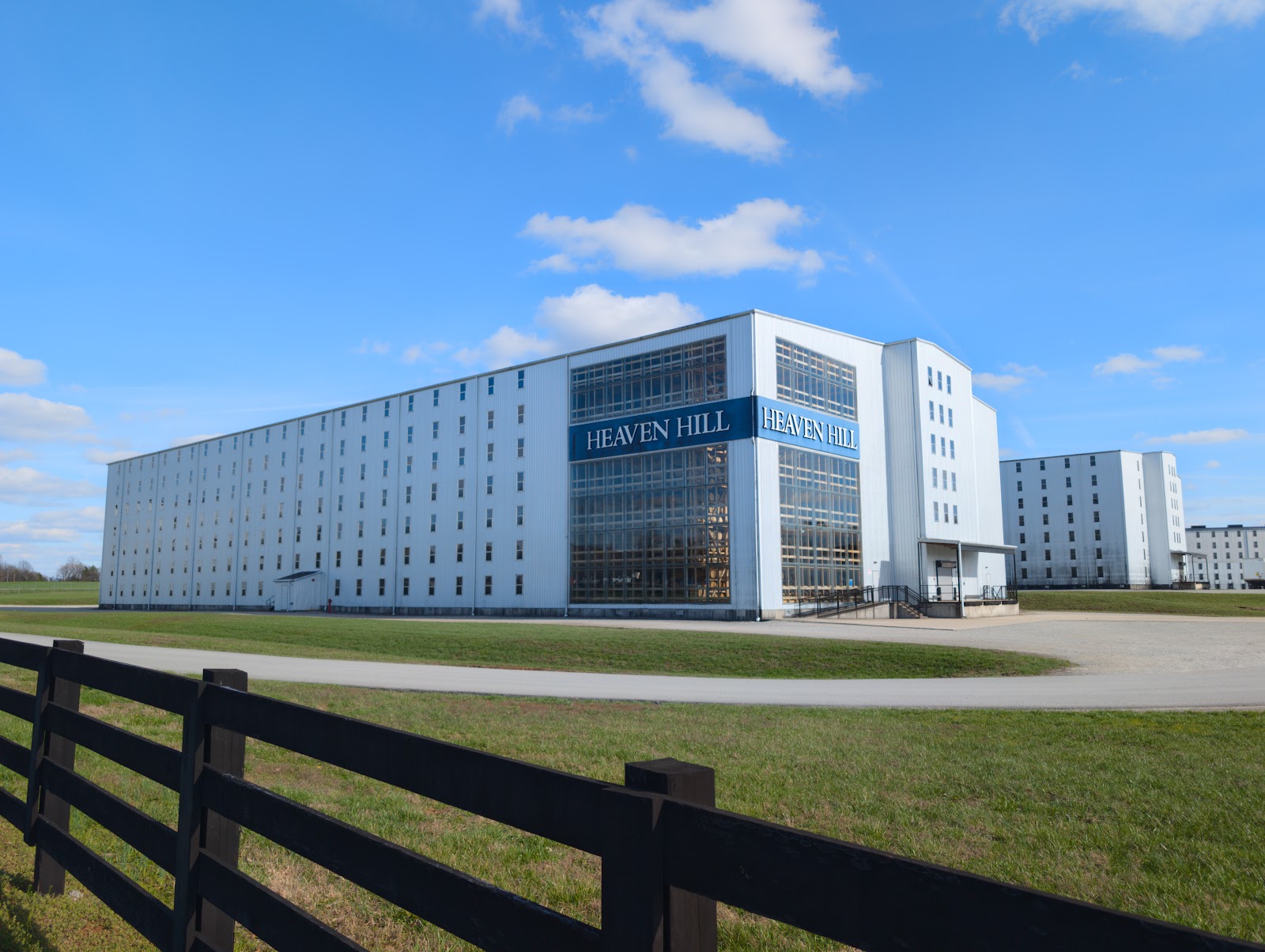
Outside, this is rolling Kentucky country — pasture, dense deciduous woodland, and limestone underneath, which is the reason distilling happens here at all: the region’s limestone aquifer gives water free of iron, which spoils fermentation. The same limestone appears as outcrop and as building stone, pale and warm, which means a sunlit limestone wall is a reflector rather than a background and a couple standing three or four metres out from one, facing it, is lit by a source the size of the wall.
That needs a custom white balance set on a face in position, because limestone bounce is markedly warmer than daylight and a daylight setting renders it orange.
The warehouses themselves are the strongest exterior subject. A rickhouse is a very large, very simple building — tall, long, black or dark-clad, with a regular rhythm of slats or openings — and low sun raking along one gives a repeating texture that is genuinely striking. They are also big enough to need real distance to photograph whole, which a rural site allows.
The shade rule applies as everywhere and it is absolute in this humid climate: full shade under a dense crown is excellent, while dappled light through a thin one puts bright patches and deep shadow on the same face at a ratio nothing holds. At this latitude the summer sun reaches about seventy-five degrees at midday, which makes the difference severe rather than merely awkward.
Mown pasture and open ground take raking light well, and low sun across grass gives texture that midday flattens entirely. Mowing lines are graphic elements that lead into a frame or cut across it depending on where the camera stands.
The seasons are a humid transition between continental and subtropical. Summer is hot and genuinely humid, and the humidity rather than the heat is the photographic fact: moist air scatters light, softening shadows and slightly flattening the rolling distance. Severe afternoon thunderstorms are a real possibility, which at a site with substantial buildings costs a decision rather than a picture — though it removes the bar frames for the day, since they need direct sun.
The fogging problem behaves unusually here and it is worth knowing. A rickhouse is not climate-controlled, so its interior tracks the outside temperature fairly closely — which means the fogging risk is greatest moving between an air-conditioned visitor building and the warm outdoors rather than between the warehouse and the yard. A bag opened twenty minutes early is the fix.
Autumn is the best season overall: colour in this rolling wooded country usually peaks from late October into early November, the humidity drops, the air clears, and the low-sun bar frames become available for more of the day.
Winter is mild by northern standards, with frost rather than deep freeze, and it is the best season for the site’s signature frame. A December sun at about twenty-eight degrees above the horizon sends the light bars nearly horizontally across a rickhouse for most of the short day rather than for an hour at each end — and a bare canopy lets more sun reach the warehouse walls than a leafed one does.
The cost is that an unheated warehouse in January is cold, which is a matter for short excursions and coats rather than a photographic problem.
More frames from The Heaven Hill Distillery
The Heaven Hill Distillery wedding photography: common questions
What are the first questions to ask?
The safety and equipment rules, and which buildings are accessible on the date. A distillery holds flammable vapour, so those rules are absolute rather than preferences.
What is the site's signature frame?
Parallel bars of sunlight from a slatted warehouse wall crossing a very dark interior — a ventilation feature that happens to be extraordinary.
Why can't you bounce flash in a rickhouse?
Because the oak has darkened over decades from ethanol vapour, so the surfaces reflect almost nothing. Light directly into a modifier, close.
How should copper be handled?
As a mirror rather than a surface. Check it from the camera position before lighting — a curved vessel shows a badly placed light from a very wide range of angles.
Where do large groups go?
The hospitality or visitor building, or outdoors. Production floors have equipment, pipework and thresholds on them and are not places to arrange thirty people.
What is the best season?
Winter for the bar frames, because a low sun sends them horizontally across the space for most of the short day. Autumn for everything outdoors.
More Bardstown, KY venue guides
We are writing a photographer’s guide to every venue we would happily shoot in Bardstown, KY. Here are three more, plus the full index:
- My Old Kentucky Home, Bardstown: The One Decision That Governs Everything
- The Old Talbott Tavern, Bardstown: A Walk Through a Stone Inn
- The Bardstown Bourbon Company: One Frame, and How It Is Made
Planning a wedding at The Heaven Hill Distillery?
Dramatic, and rule-bound. Tell us your date and we will ask the right questions first.