 The Henry Clay: Lighting a 1920s Lodge Building
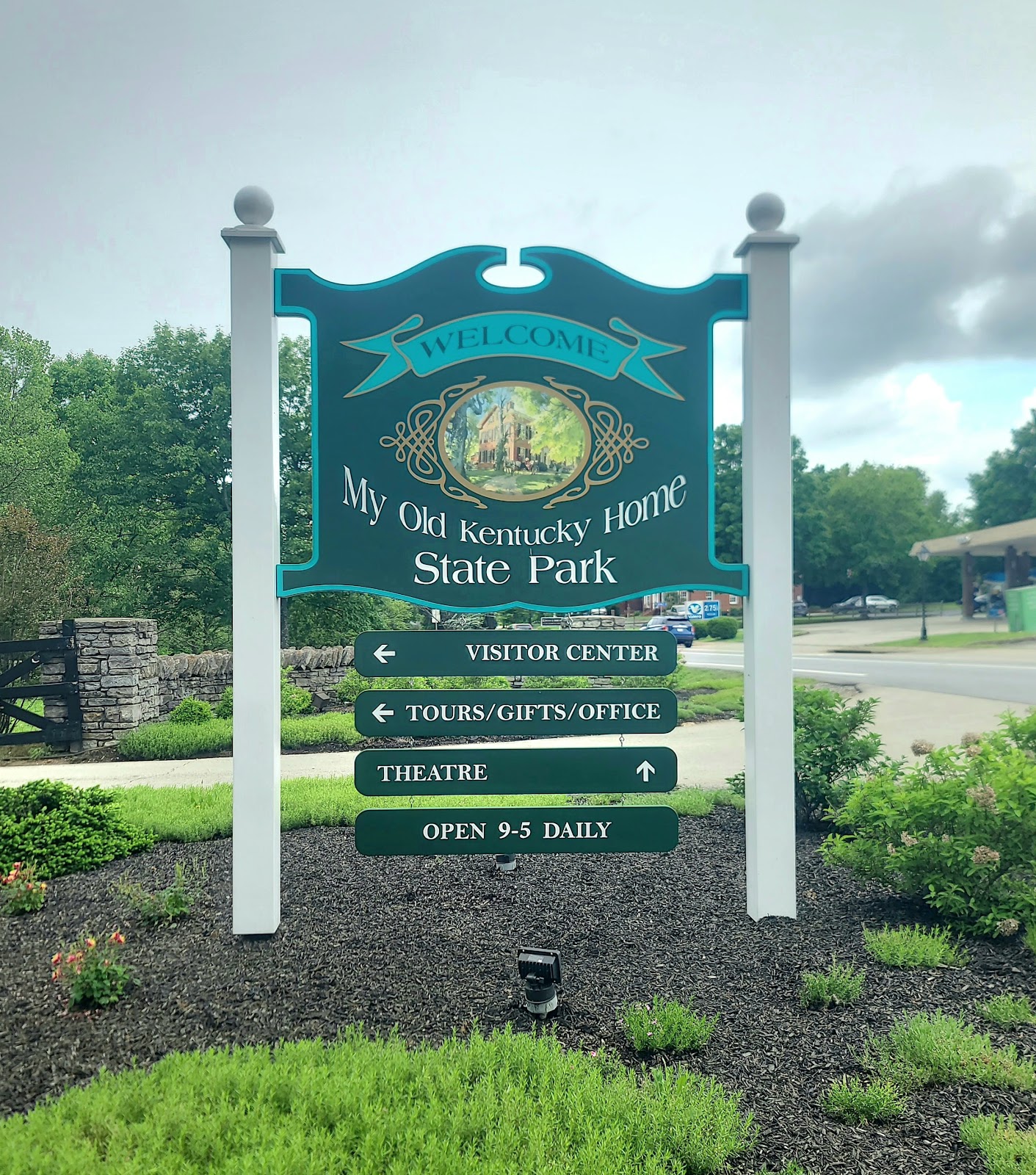
My Old Kentucky Home, Bardstown: The One Decision That Governs Everything
At a preserved house museum the rules decide as much as the light. Plan the day around that honestly.
At a historic house preserved as a museum and set in parkland, the governing decision is where the photographic work actually happens — inside or outside — and it is a decision that the building’s rules make for you more firmly than most couples expect.
A preserved interior contains original textiles, paper, painted surfaces and finishes, all of which fade or damage irreversibly. So expect restrictions on flash, on where stands may be placed, on whether furniture may be moved, on food and drink, and on how many people may be in a room at once. Those are the terms of using the building rather than obstacles to negotiate.
The practical result is that the interiors give a handful of careful frames and the grounds give the volume. That is not a compromise — a historic house in mature parkland has better outdoor light than most dedicated outdoor venues — but it does need agreeing in advance, because a couple expecting a day of interior portraits in period rooms will be disappointed and a couple who knew will not.
Everything else follows from that allocation. We have not photographed a wedding at My Old Kentucky Home; preserved house museums in parkland behave consistently. Which rooms and areas are included, the rules on flash, furniture and numbers, and what the covered alternative is are questions for their team.
My Old Kentucky Home at a glance
| Where | Bardstown, Kentucky |
| The decision | Inside or outside — and the rules answer it more than the light does |
| Inside | A handful of careful frames; no stands, nothing moved, small numbers |
| Outside | The volume: mature parkland, which beats most outdoor venues |
| Ask first | Rooms and areas included, flash and furniture rules, covered space |
Inside: what the few frames need
If the interiors are in the plan, they should be planned as a handful of deliberate frames rather than a session, and four things make them work.
The window is the first and it is the only light worth using. A period sash extends close to the floor, which means the light wraps upward as well as sideways and fills under the chin — something a small high casement cannot do. Two to three metres back is the working distance: at half a metre the fall-off across two faces darkens the far one, while at two or three it is directional and even. Past four metres a furnished period room has absorbed almost everything.
Every overhead and lamp fitting should be switched off, because a room lit by both daylight and warm lamps puts two colour temperatures on the same face. And the shaded side is the requirement, since a window carrying direct sun becomes a hard source with a hard edge and a brilliant stripe across a dark room. At this latitude, about thirty-eight degrees north, a north-facing room is shaded all year and is the most reliable, while a south-facing one is a high source in summer and a low directional one through a winter afternoon.
The doorway is the second and it is the camera position rather than the subject. Standing in a doorway rather than inside a furnished room gains two or three metres at no cost — the difference between a wide lens distorting a face at two metres and a moderate lens at four — and it frames the subject naturally with the doorway darkening the edges. Where rooms open into one another, shooting through gives two or three planes of depth, which reads as a house rather than as a wall.
The source is the third and it should be close, modest and gelled, assuming flash is permitted at all. In a furnished room there is nowhere to put a light back and no need: a modifier at a metre and a half is a large soft source relative to a face, and distance is what makes a source soft rather than the size of the modifier. Gelled warm, because the room’s own register is warm and an ungelled flash produces a face that looks pasted into the room, with white balance set to that gel.
Exposure is the fourth and it needs measuring rather than estimating. Timber, deep paint, heavy drapery and dense upholstery put a room a stop or two below a pale one with identical fittings, and eyes adapt where meters do not. Then the face goes about a stop above the ambient, because two stops floats it in blackness and discards the reason for being in a historic house at all.
Test bounce once per room, because the answer varies: principal ground-floor rooms with tall ceilings return little while upstairs rooms are frequently lower and work well. Thirty seconds each, and it changes what has to be carried.
And texture needs raking light — panelling, moulding and patterned textile read only when light runs along them, so the positions where the window light already grazes a wall are the ones worth using.
Outside: where the volume is
The grounds are where the day actually happens and mature parkland is a better outdoor venue than most places built to be one. Three assets and one rule.
Mature specimen trees are the first. A tree planted alone to be seen from all sides has a broad crown, a clean trunk and space around it — which gives full shade across a large area, and makes it a subject in its own right rather than part of a mass. A couple beneath a single enormous crown is a composition with a clear centre.
The rule that governs all of it is absolute: full shade only. Dappled light through a thin crown puts bright patches and deep shadow on the same face at a ratio nothing holds, and at this latitude, with a June midday sun around seventy-five degrees above the horizon and a humid haze that does nothing to soften it, the difference is severe rather than merely awkward. Ten minutes on arrival identifying which areas genuinely qualify is the most valuable ten minutes of the day.
Dense canopy also throws green onto skin from whichever side it is thickest, localised so global white balance cannot remove it. A custom white balance set on a face in the actual position is the fix, and a metre further from the foliage roughly halves it.
Broad lawn is the second asset and low sun is what makes it work. Mown grass at midday is a flat green field; the same ground in the last hour has texture in every blade and every mowing line, and those lines either lead into a frame or cut across it depending entirely on where the camera stands.
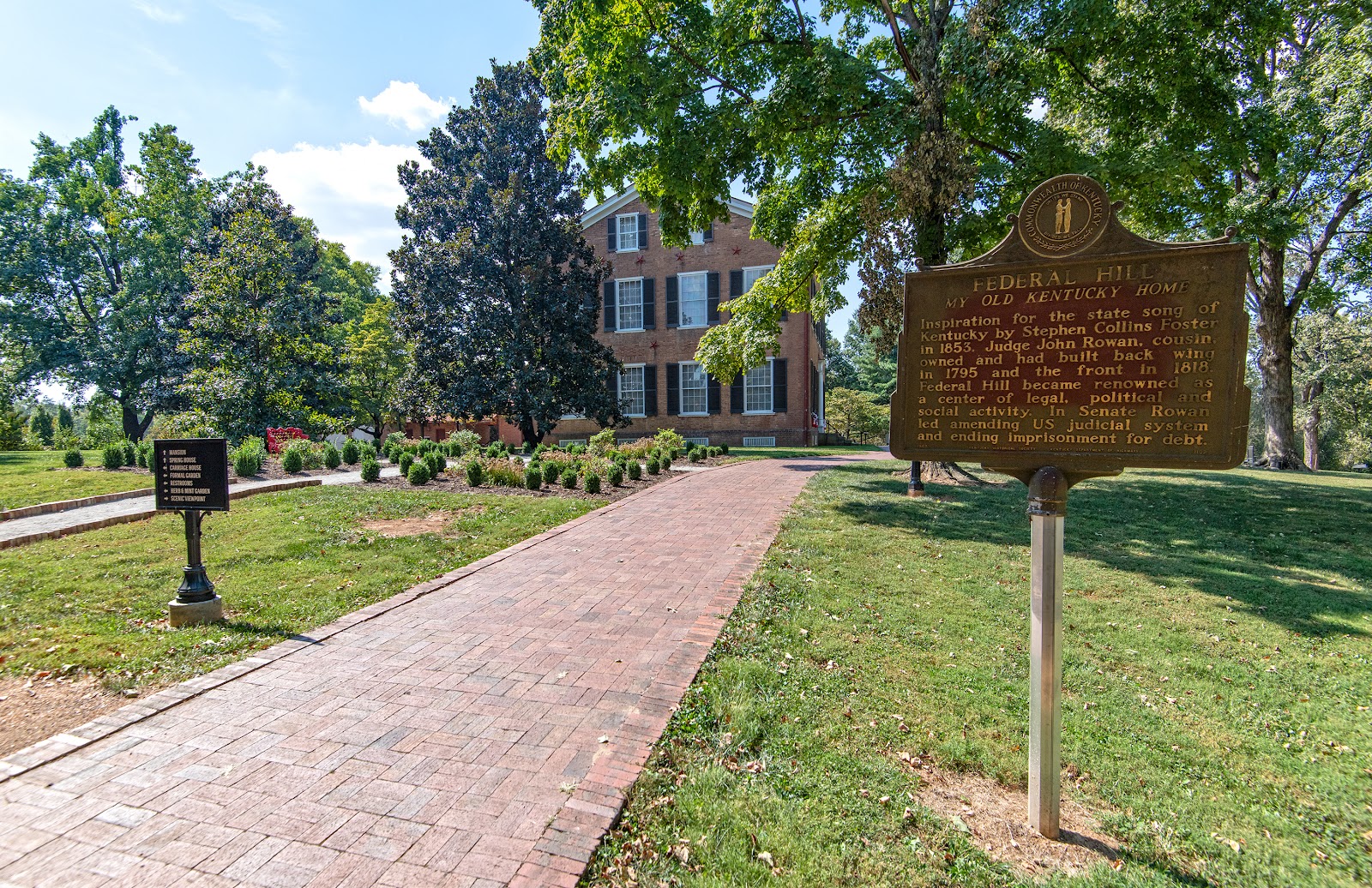
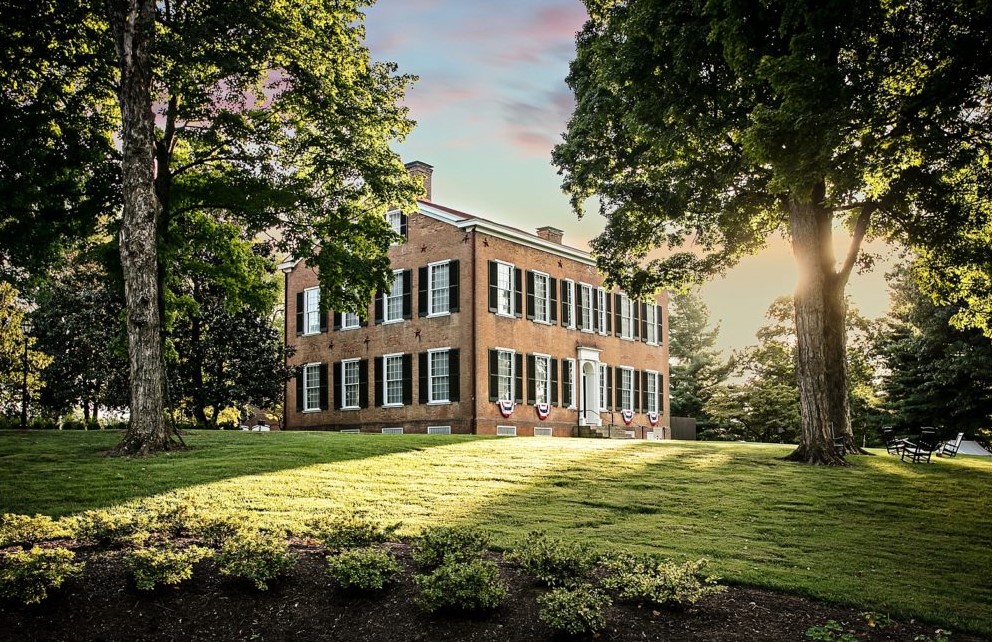
The house’s exterior is the third, and unlike an urban venue there is room to stand back, so it can be photographed whole. Local building stone and brick both read only under raking light — a short walk to find which elevation the sun is skimming is worth more than any accessory. And where the house has a portico or a veranda, that is the best light on the property: a roof with an open face removes the overhead component that ruins faces while the floor bounces it back to fill, which makes a soft directional source at the scale of two people, available at any hour and rainproof.
That last point matters, because a venue whose asset is its grounds needs a named covered alternative with a known capacity, agreed at booking — severe afternoon thunderstorms are a real possibility here from late spring onward.
And the timed frame is the crossing: twenty-five to forty minutes after sunset, when the sky still holds colour at about the brightness of the house’s own lighting so one exposure holds couple, house and sky. That is the one unmovable frame of the day, and since the interiors are available at other hours, taking ten minutes for it costs nothing.
- Plan the interiors as a handful of frames, not a session
- No stands, nothing moved, small numbers — settle the rules at booking
- Two to three metres from a period sash; past four there is nothing left
- Full shade only outdoors; a metre of walking beats any accessory
- The portico or veranda is the best light on the property, and rainproof
The Kentucky year
The seasons matter more at a parkland venue than at a building, because half the site is planting.
Spring is the best outdoor window and it is short. Mid-April into May gives new foliage — thin, bright, translucent, the best green of the year — plus flowering trees, and a canopy that has not closed, so more light reaches the ground and the dappling problem is at its mildest. It also means more light reaching the house’s windows than in high summer, when a leafed canopy over an approach cuts it noticeably.
Summer gives the densest canopy, which means the most reliable full shade and the strongest dappling at its edges. It is hot and genuinely humid, and the humidity rather than the heat is the photographic fact: moist air scatters light, which softens shadows and slightly flattens the rolling distance — a gift for faces and a mild nuisance for a long view.
Comfort is a real consideration in a humid Kentucky summer and it argues for the shade positions, the veranda and a short portrait block rather than an ambitious one.
The fogging problem is severe in this climate and it runs the opposite way from a cold one: a body carried from an air-conditioned interior into July air fogs on every surface at once, and in high humidity it does not clear quickly. A preserved house museum is also climate-controlled for its collection, which makes the difference larger — so a bag opened twenty minutes before going out is the whole fix, and at a venue whose one unmovable frame is a timed crossing, a fogged lens means missing it.
Autumn is the other good window and for this landscape it is the stronger one. Colour in this rolling wooded country usually peaks from late October into early November, and in parkland it behaves differently from woodland: specimen trees turn individually at their own times, which means a single enormous crown in full colour above a still-green lawn is a frame a uniform wood cannot give — and the effective season is longer because the peak is less sharply defined.
Morning fog is frequent here in autumn, because rolling country with moisture in it produces it readily. Fog is diffusion at landscape scale: it separates successive trees and treelines into grey layers, softens everything, and gives a frame no clear morning does. It burns off, so it is an early opportunity rather than something to schedule.
Winter is mild by northern standards, with frost rather than deep freeze, and it is quietly the best season for the interiors. The December midday sun at about twenty-eight degrees above the horizon comes into tall period windows at a low angle rather than from overhead, which means the interior light is directional and usable through the whole short day instead of for two hours at each end. In a house whose main interior problem is dark absorbent rooms, that is a substantial gain.
The bare canopy helps too, letting far more light reach the windows than summer foliage does, and opening the sightlines so the house and the park’s structure become fully visible rather than half-screened.
The winter constraint is the short day, which compresses the outdoor block into a couple of hours and means the positions should be decided in advance rather than explored.
More frames from My Old Kentucky Home
My Old Kentucky Home wedding photography: common questions
What decides where the work happens?
The rules, more than the light. A preserved interior restricts flash, stands, moving furniture and numbers, which means the interiors give a handful of frames and the grounds give the volume.
Is that a compromise?
No. A historic house in mature parkland has better outdoor light than most dedicated outdoor venues. It just needs agreeing in advance rather than discovering.
How should the interior frames be lit?
One warm-gelled source at about a metre and a half, a stop above the ambient, with white balance set to the gel. Two stops floats a face in blackness.
Where should the camera stand indoors?
In the doorway. It gains two or three metres at no cost and lets you shoot through rooms, which gives depth and reads as a house rather than a wall.
What is the best light on the property?
The portico or veranda — a roof with an open face removes the overhead component and the floor bounces it back, and it works in rain.
When are the interiors at their best?
Winter. A December sun at about twenty-eight degrees comes into tall windows at an angle all day, so the rooms are usable throughout the short day.
More Bardstown, KY venue guides
We are writing a photographer’s guide to every venue we would happily shoot in Bardstown, KY. Here are three more, plus the full index:
- The Old Talbott Tavern, Bardstown: A Walk Through a Stone Inn
- The Bardstown Bourbon Company: One Frame, and How It Is Made
- The Heaven Hill Distillery, Bardstown: What It Suits, and What It Does Not
Planning a wedding at My Old Kentucky Home?
A few frames inside, the day outside. Tell us your date and we will plan it honestly.