 Roxy’s Downtown: Photographing a Small Stage Room
The Granada Theatre, Emporia: The Problem, and Four Ways Out
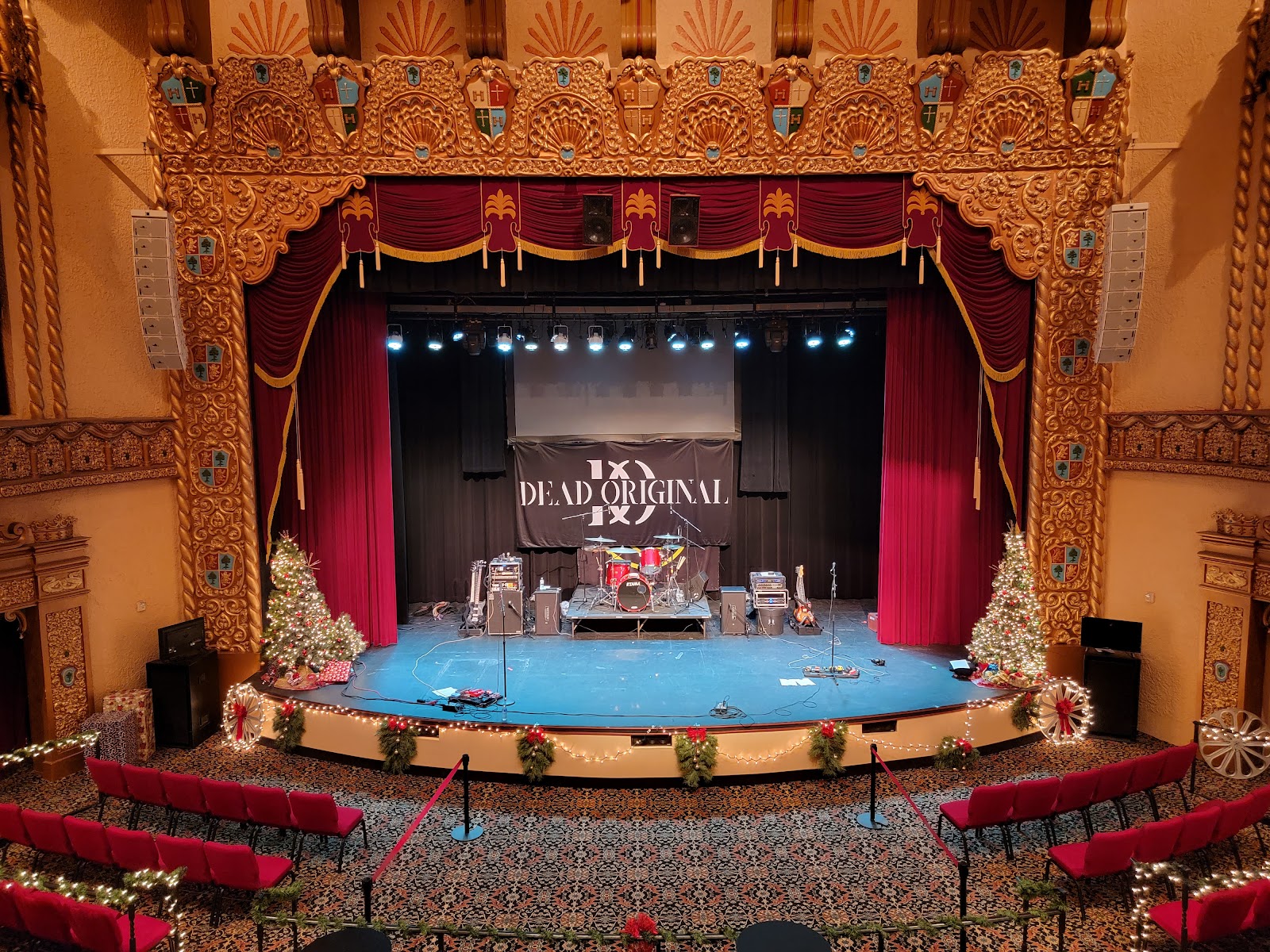
A small theatre is a dark room with fixed seats and a sloping floor. All three are the same problem.
A small-town historic theatre presents a tight set of constraints and they compound rather than sitting side by side.
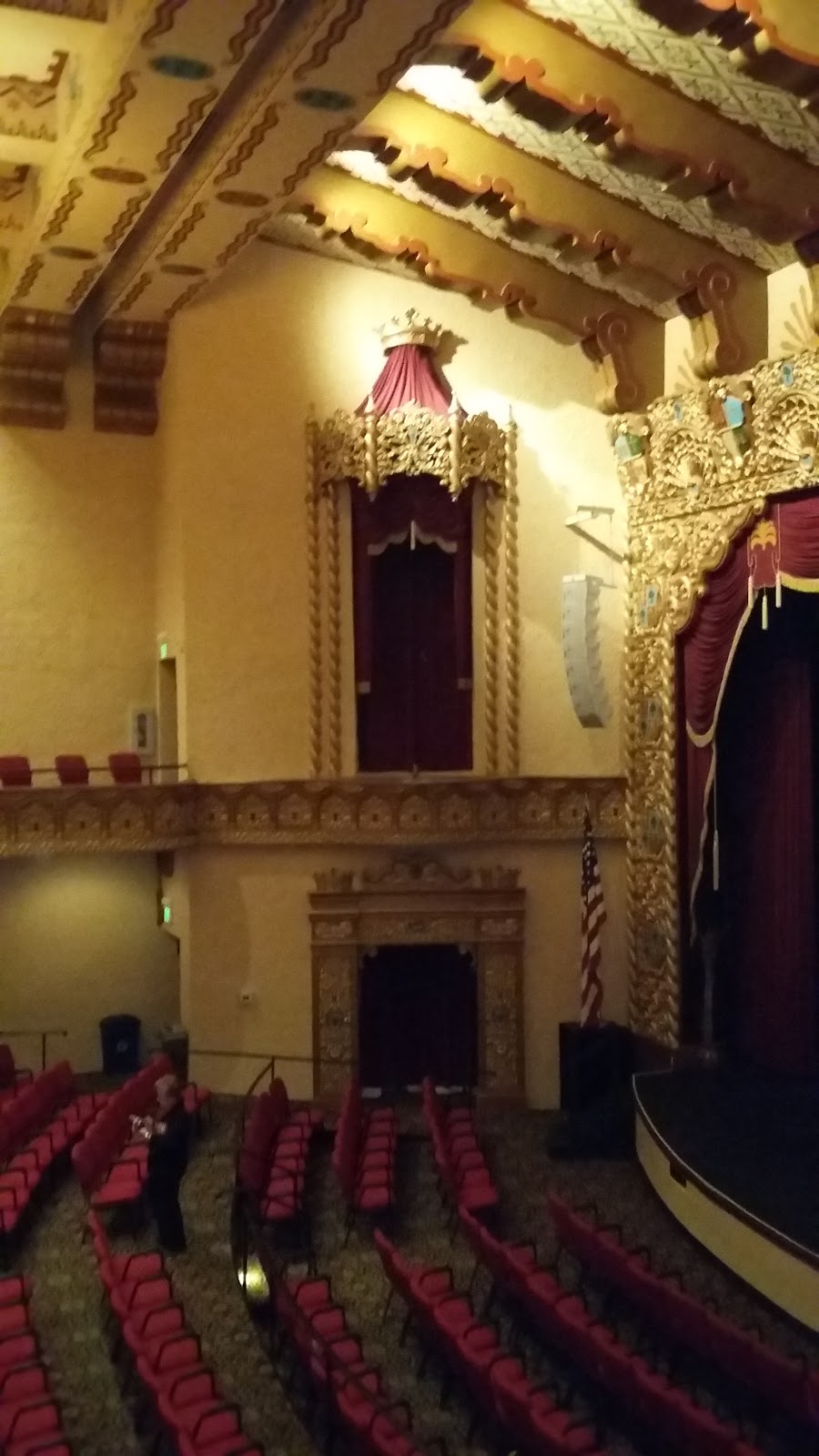
The floor slopes, so there is nowhere level to put anything. The seating is fixed, so there is no open floor to arrange people on. The surfaces are deliberately dark and absorbent, because a house is built so that a lit stage reads from a dark room — which means the ambient is several stops below a normal interior and a bounced flash returns essentially nothing. And the ceiling is high, which removes the last possibility of bouncing.
Taken together those mean a photographer cannot get back, cannot spread out, cannot bounce and cannot put down a stand. That is a genuinely constrained room and it is worth knowing before the day rather than discovering on it.
There are four ways out and all of them work. We have not photographed a wedding at the Granada Theatre; small historic theatres behave consistently. Which spaces are included, whether the stage lighting can be set, and whether there is a lobby available are questions for their team.
The Granada Theatre at a glance
| Where | Emporia, Kansas |
| The problem | Sloping floor, fixed seats, dark absorbent surfaces, high ceiling |
| Way one | Use the stage lighting — it is a portrait rig already installed |
| Way two | One close handheld source. Way three: the lobby |
| Way four | Go outside; a small-town theatre can be photographed whole |
Ways one and two: the rig, and one close source
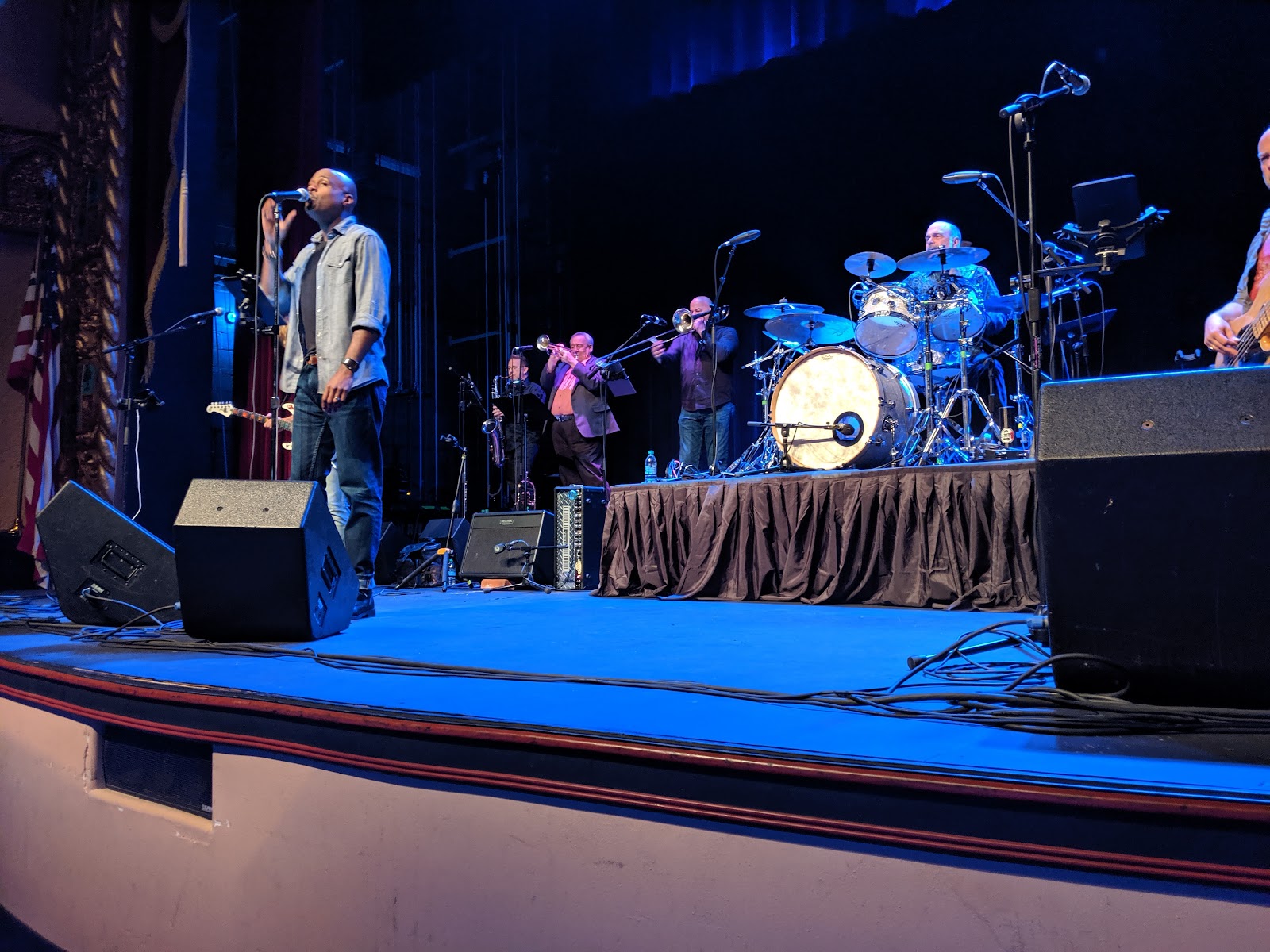
The first way out is the stage lighting, and it is the best answer available because it removes every constraint at once. A subject on a lit stage photographed from the house sits in a pool of light with absolute darkness around and behind — which is the most complete separation available in any building, and it needs no equipment, no stand and no level floor.
The part worth asking about is whether the rig can be set, because a stage lighting rig is a controllable instrument and most venues will help. Three requests cover it. A warm wash from the front at a low angle, which is a better portrait light than anything else in the building. A backlight from above, which separates hair from the darkness. And a side light, which rakes across faces to give shape. Those three amount to a professional portrait setup that happens to be permanently installed.
What to avoid is the default, which is a rig set for a play and frequently downlit from directly overhead — that fills eye sockets with shadow and cuts a hard line under every chin. Asking for the front wash rather than accepting the overhead is the single most useful request available here.
Coloured gels deserve a specific warning. A saturated gel is a narrow-spectrum source: it puts most of its energy into one part of the visible spectrum, which means skin lit by it has almost no information in two of its three colour channels, and no editing recovers data that was never recorded. Coloured light belongs behind or above a couple, never on their faces — and asking for the wash to be set open white is entirely reasonable.
The second way out is one close handheld source, and the emphasis is on both words. Close, because there is nothing at all to bounce off and light falls off with the square of distance — a modifier at a metre and a half is a large soft source relative to a face and needs almost no power, while the same modifier at four metres is hard and needs seven times as much.
Handheld, because a raked floor between fixed seats has nowhere safe or level for a stand, and because a stand in an aisle is a genuine hazard in a dark room full of people. A bracket or an assistant’s hand is the correct answer here rather than a compromise.
The exposure judgement matters as much as the position. The ambient should be measured on arrival rather than estimated, because eyes adapt and meters do not, and a darkened house can be four stops below a normal room. Then the face goes about a stop above it — two stops floats a face in blackness and discards the building entirely, which at a venue chosen for its character is the opposite of the point.
Colour is the standing difficulty, because theatres carry fittings from several eras: original tungsten-register house lights, later fluorescents in the aisles, modern LED exit and safety lighting, and a rig that may be tungsten, LED or both. Pick the temperature that should be correct, set white balance to it, and let the gelled source own the faces.
Ways three and four: the lobby, and outside
The third way out is the lobby, and in a small theatre it is more important than its size suggests, because it is the only part of the building with daylight and level floor at the same time.
A glazed street frontage behaves like a large window: the working conditions are the shaded side or an overcast day rather than direct sun, and about three metres back from the glass so a row of people is evenly lit rather than dropping off the far end. That makes the lobby where the large groups belong, and in a small theatre it is the only place they will fit at all.
Lobby ceilings are also normal rather than cavernous, which means bounce flash works — a distinction worth confirming with one test frame, because the auditorium behind will return nothing.
At Emporia’s latitude, about thirty-eight degrees north, the midday sun reaches roughly seventy-five degrees above the horizon in June and about twenty-eight in December — so a south-facing frontage is a high soft source in summer and carries direct low sun through much of a winter afternoon. Which condition applies is a seasonal question with a definite answer.
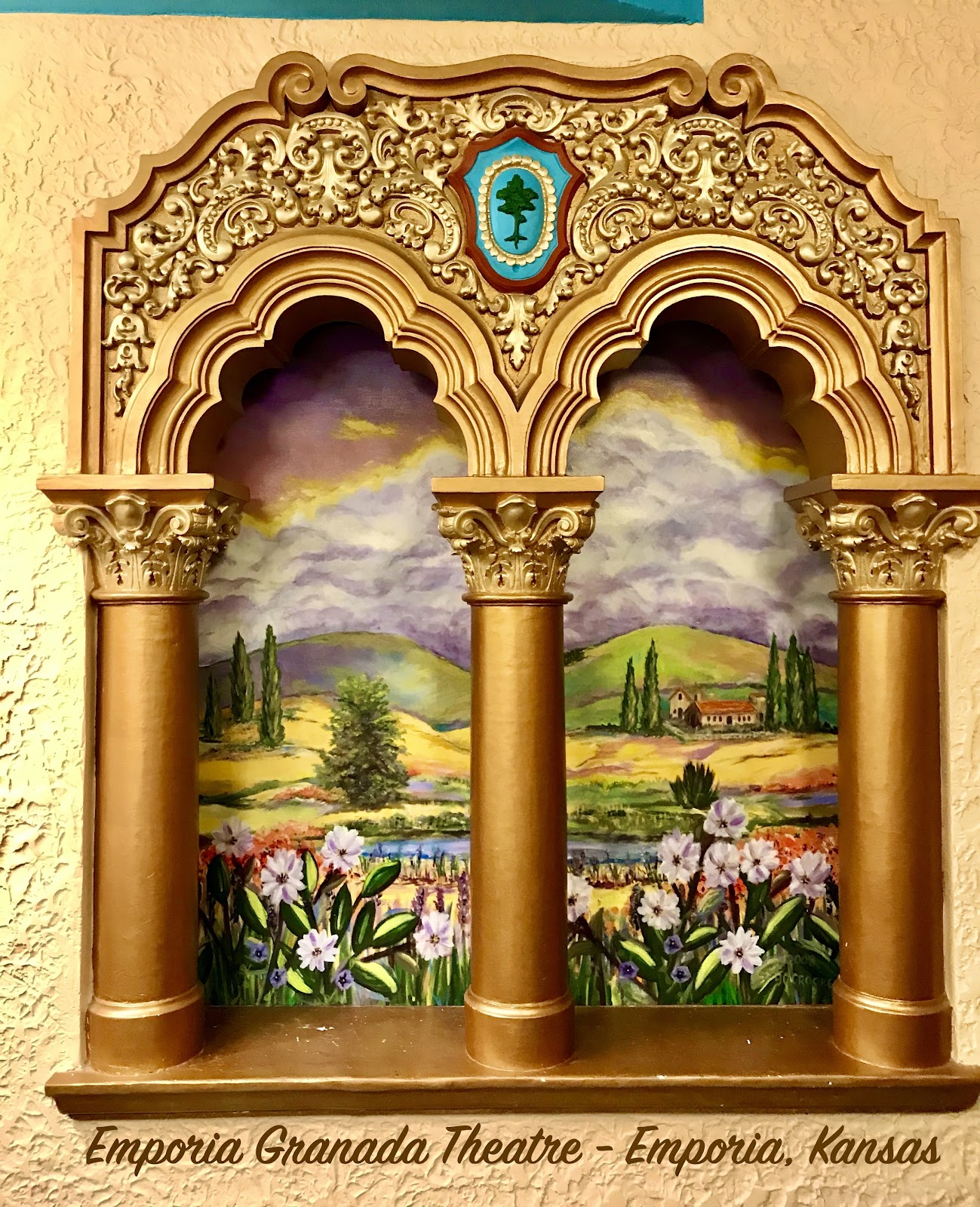
The ornamental surfaces in a lobby or foyer are the building’s architectural asset and they need raking light: plasterwork, painted decoration and metalwork read only when light runs along them, while a source pointed at them flattens everything to one tone. The two or three positions where the existing light already grazes a surface are worth finding on arrival.
Mirrors and gilded metal will show a badly placed light at full brightness in a way nothing removes afterwards, so the fifteen-second check from the camera position applies: look at every reflective surface in the frame and place the source where none of them sees it.
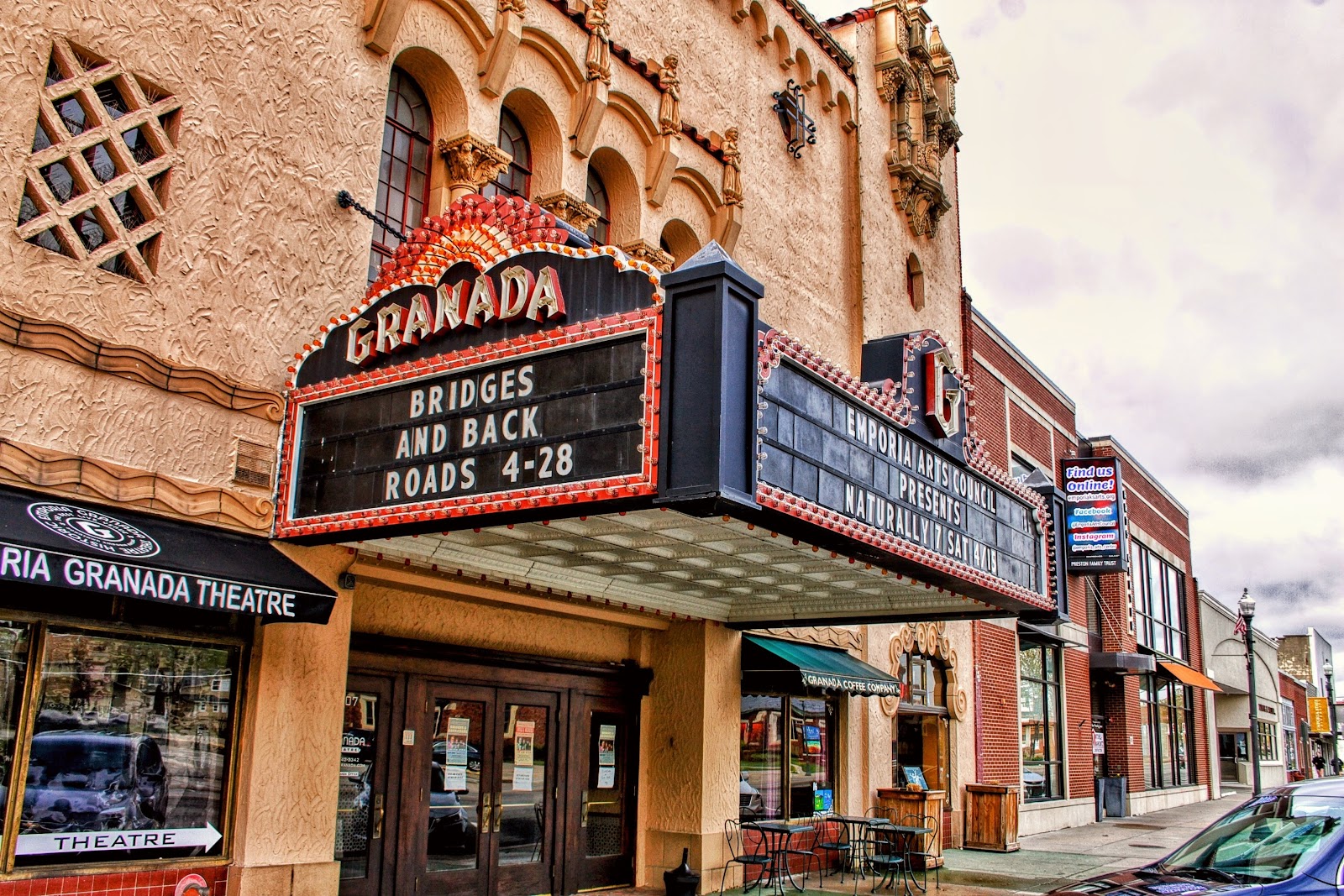
The fourth way out is to go outside, and in a small city this is a genuine advantage rather than a fallback. The streets are wide and there is room to stand back, which means a historic theatre can actually be photographed whole — something almost no venue in a large city allows.
The facade and the marquee are the identifying frames and they are worth two versions. Daylight, where the lettering and the architecture read; and after dark, where the marquee is the light in the picture. The second needs the usual rule, because illuminated signage is narrow-spectrum and does not render skin: the marquee goes behind or above the couple, with one gelled source of your own on the faces, gelled warm to match the signage.
The timed frame is the twenty-five to forty minutes after sunset, when the sky still holds colour while the marquee and facade lighting come up, so one exposure holds couple, building and sky. That is the one picture the interior cannot give, and since the auditorium does not change through the day, taking it costs nothing indoors.
- Ask for a warm front wash at a low angle, not the overhead default
- Ask for the wash open white — saturated gels leave two channels empty
- One source at a metre and a half, handheld; no stands on a raked floor
- Large groups in the lobby, three metres back from the glass
- Photograph the whole building outside; a small city allows what a big one does not
Outside, and the Flint Hills year
Emporia sits in the Flint Hills, the largest remaining expanse of tallgrass prairie in North America — preserved because layers of flint-bearing rock close to the surface made the hills unploughable, so they were grazed rather than cultivated and the original grassland survived.
For a photographer that means a rolling open landscape with very little tall cover and an enormous sky, a short drive from the town centre. The sky is the main subject in any wide frame, which means the exposure should be set for it with faces lifted by a close source — metering on skin gives a white sky, and that is the commonest failure in this country.
Tallgrass is the ground and it changes more through the year than almost any other surface. Big bluestem and Indian grass grow through the summer and by late August stand well above head height, which makes them foreground and background at once — a couple in tallgrass is enclosed by it rather than posed in front of it, a frame available almost nowhere else. In autumn it turns bronze and russet and holds that colour standing through winter, so the prairie has warm colour in January when nothing else does.
Spring brings the burning, and it is worth knowing before a date is chosen: ranchers burn the grassland in late March and April to control woody growth, giving blackened ground, smoke on the horizon, and then an intense green flush within a few weeks. Three completely different landscapes inside two months.
Wind is the constant and on open ground there is very little to break it. A lightstand outdoors is a liability, a veil behaves unpredictably, a held diffusion panel is a sail — which conveniently matches the handheld configuration the theatre already requires. And tall grass or fabric moving in wind is a genuinely good picture when it is anticipated rather than fought.
The seasons are emphatic. Summer is hot and humid, with the humidity softening shadows and slightly flattening the rolling distance, and severe thunderstorms a real possibility from spring onward — which on open prairie is a genuine hazard and at an indoor venue costs a decision rather than a picture. A storm approaching over open ground is visible for a long time before it arrives, which is both a warning and the most dramatic sky the landscape gives.
The fogging problem is the equipment issue in this climate: a body carried from an air-conditioned interior into July air fogs on every surface at once and does not clear quickly, and a theatre is cooled hard, which makes the difference larger. A bag opened twenty minutes before going out is the whole fix — and at a venue whose one unmovable frame is a timed dusk crossing, a fogged lens means missing it.
Autumn is reliable and comfortable, with the grass at its bronze best from October, clear air and low sun at a civilised hour. Winter is cold with a December midday sun at about twenty-eight degrees, which makes the whole short day raking light; snow is the best natural fill available outdoors, lifting exactly the shadows a low sun carves while fooling a meter by about two stops, and a lit marquee above snow at dusk is the strongest exterior frame this kind of venue gives anywhere.
More frames from The Granada Theatre
The Granada Theatre wedding photography: common questions
What makes a small theatre difficult?
A sloping floor, fixed seating, dark absorbent surfaces and a high ceiling — so there is nowhere to stand back, nothing to bounce off and nowhere to put a stand.
What is the best answer?
The stage rig. A subject lit on stage against a dark house gives the most complete separation available anywhere, and it needs no equipment of your own.
What should be asked of the rig?
A warm front wash at a low angle rather than the overhead default, a backlight, and the wash set open white rather than gelled.
Why must the source be close and handheld?
Close because nothing bounces and light falls off with the square of distance; handheld because a raked floor between fixed seats has nowhere safe for a stand.
Where do large groups go?
The lobby — the only part of the building with daylight and a level floor, and the only place they will fit. Three metres back from the glass.
What can you do outside that a big city would not allow?
Photograph the whole building. Small-city streets are wide enough to stand back from a facade, which almost no urban venue permits.
More Emporia, KS venue guides
We are writing a photographer’s guide to every venue we would happily shoot in Emporia, KS. Here are three more, plus the full index:
- The Lyon County History Center, Emporia: Field Notes on a Museum Venue
- Emporia State University: The Light Through a Prairie Day
- The Flinthills Mall, Emporia: A Building Lit From Above
Planning a wedding at The Granada Theatre?
Four ways out of a tight room. Tell us your date and we will use all four.