 The Ozark Mountain Lodge, Eureka Springs: The Problem, and Four Ways Out
The Garden at The Grand, Hot Springs: The One Decision That Governs Everything
In this valley, aspect is destiny. A north-facing garden and a south-facing one are different venues.
At an outdoor garden venue in Hot Springs the governing decision is not a lighting technique or a time of day. It is a question to ask before booking: which way does the garden face?
That matters more here than almost anywhere, because of an unusual local geography. The Ouachita Mountains run east to west rather than north to south, which means the slopes in this valley face north and south rather than east and west — and a north-facing garden is shaded all day, every day, all year, while a south-facing one has sun on it from morning to evening.
Those are not two versions of the same venue. A north-facing garden is a permanently soft, permanently directional light source at landscape scale, usable at any hour, with no timing pressure at all. A south-facing garden in a humid southern summer, with a June midday sun about seventy-nine degrees above the horizon, is unusable through the middle of the day and needs the whole schedule built around its two ends.
Everything else follows from the answer. We have not photographed a wedding at The Garden at The Grand; garden venues and Ouachita valley light behave consistently. Which areas are included, what the aspect is, and what the indoor or covered alternative is are questions for their team.
The Garden at The Grand at a glance
| Where | Hot Springs, Arkansas, in the Ouachita valley |
| The decision | Which way the garden faces — north or south |
| North-facing | Permanent soft shade, usable at any hour, no timing pressure |
| South-facing | Unusable midday in summer; the day must be built around two ends |
| Ask first | Aspect, areas included, covered alternative, canopy density |
If it faces north, and if it faces south
A north-facing garden in this valley is the easiest outdoor venue a photographer can be handed. It is never in direct sun, which means the light is soft, comes from the sky rather than the sun, and is identical at ten in the morning and four in the afternoon. There is no golden hour to chase and no midday to avoid.
Its one deficiency is direction. Light from the sky arrives downward at an angle and lacks shape, which means the middle of an open north-facing lawn is the flattest light on the property. The fix is geometry rather than equipment: standing near a wall, a hedge, a treeline or a structure blocks the light from one side and restores the modelling. Three metres from something solid is the position worth finding, and it is worth finding two or three of them on arrival.
The second thing worth doing with permanent shade is exploiting the freedom. Because nothing is time-critical, the portraits can happen whenever suits the couple — before the ceremony, during the drinks, in a gap after the meal — which is a scheduling luxury almost no outdoor venue offers.
A south-facing garden is a different proposition and it needs the schedule built around it. At this latitude the summer sun is high enough that the middle of the day puts eye sockets in shadow and a hard line under every chin, and in a humid climate with a dense hardwood canopy the shade that exists is frequently dappled rather than full — which is worse than open sun, because bright patches and deep shadow on the same face exceed what any sensor holds.
So a south-facing garden has three usable conditions. The first hour after sunrise and the last hour before sunset, when low sun comes across faces rather than down onto them — and the valley’s east–west alignment helps here, because the sun runs along the valley rather than being blocked by a ridge, so that last hour is longer and cleaner than in most hilly country.
Full shade under a dense canopy or against the shaded side of a building, which is the midday answer and needs locating rather than assuming. And overcast, which in this humid climate is frequent enough to plan for and is the best soft light there is.
The rule that applies in either case is the same and it is absolute: full shade only. A metre of walking to move a couple from dappled light into complete shade is worth more than any piece of equipment, and it is the single most common failure at garden weddings everywhere.
What follows: planting, water and the covered plan
Once the aspect is known, the planting becomes the main variable and it does two things.
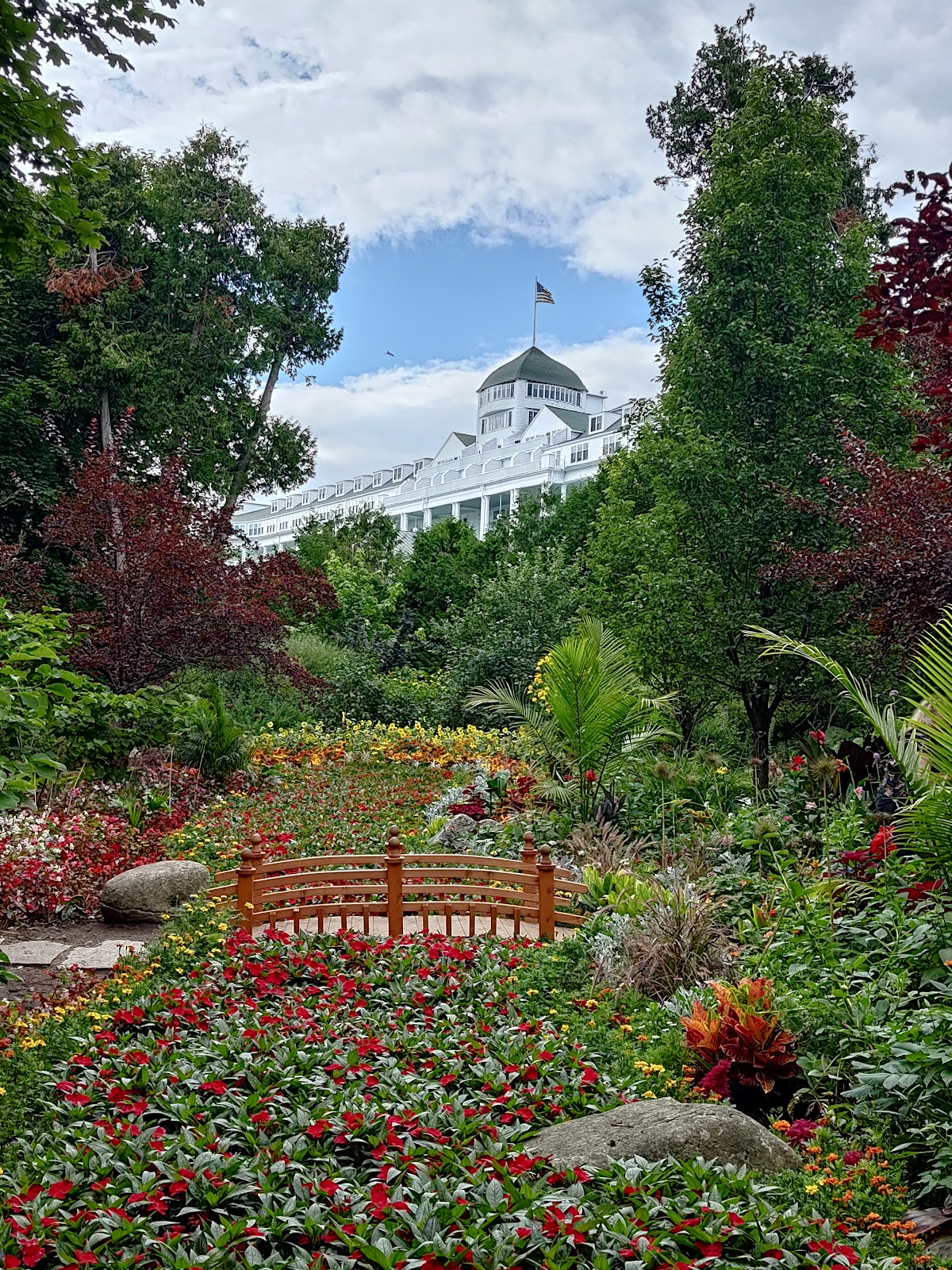
It gives shade, which is the most valuable outdoor commodity in a humid southern summer, and the density matters. A mature hardwood canopy in full leaf gives complete shade over a large area; ornamental planting and young trees give dappled light, which is unusable. Walking the garden and noting which areas are genuinely full shade takes ten minutes and it determines every position worth using.
And it throws colour. Dense green foliage puts a green cast on skin from whichever side it is thickest, localised enough that global white balance cannot separate it from the subject. A custom white balance set on a face in the actual position is the fix — not on a grey card in the middle of the lawn — or one gelled source owning the faces. A metre further from the foliage roughly halves what it throws.
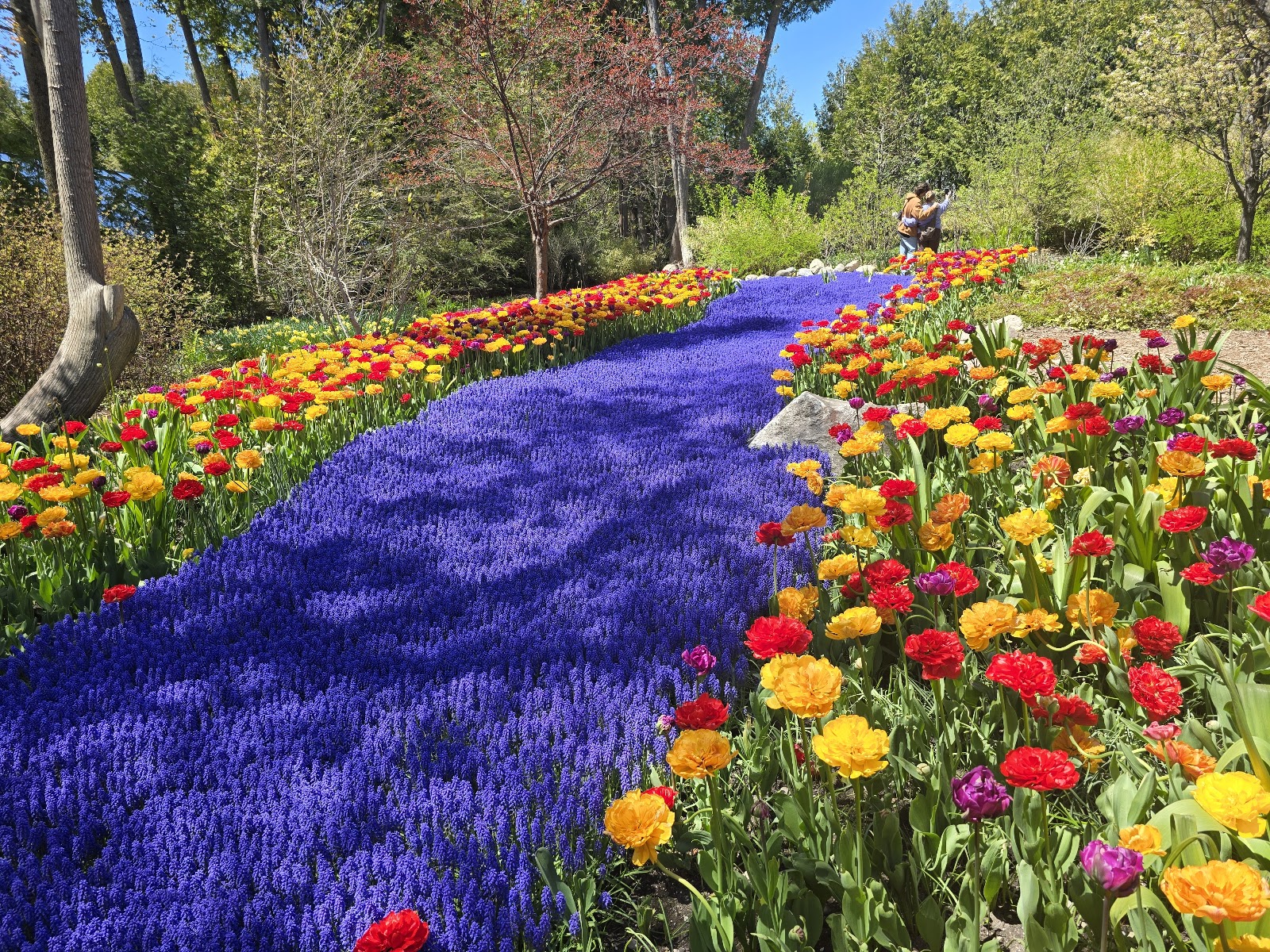
Flowering planting is the other half of that and it needs a compositional decision rather than a policy. A mass of strong colour behind a couple will compete: commit deliberately, placing them so both they and the planting read, or subordinate it with a long lens at a wide aperture so it becomes a field of colour. Half-in is the failure and with dense flowering shrubs it happens easily.
Where there is water — a pool, a fountain, a stream — it is worth using properly. It reflects, which doubles anything lit; it bounces light upward, filling exactly the shadows a high sun carves; and camera height decides which of those you get. A low camera looking across the surface sees a mirror; a high one looking down sees through to the bottom. Half a metre changes the frame completely.
The covered alternative is the last thing that follows and it is a requirement rather than a courtesy. This is a humid subtropical climate with severe afternoon thunderstorms a real possibility from late spring through summer, and a garden venue without a named covered space has a single point of failure.
A specific covered space with a known capacity, agreed at booking, is the answer. And a covered space with an open side is not merely shelter but good light: a roof above with an open face removes exactly the overhead component that ruins faces, while the floor bounces light back to fill — which makes it a soft directional source at the scale of two people, available at any hour and in any weather.
Wet planting also photographs better than dry: foliage darkens and saturates, and a garden after a shower with the sun returning at a low angle is the best light of any day, because the air is washed clean and everything is glistening. A shower is an opportunity delayed rather than a day lost.
- Ask the aspect before booking; north and south are different venues
- In permanent shade, stand three metres from something solid for direction
- Walk the garden and note which shade is full rather than dappled
- Custom white balance on a face in position where the planting is dense
- Name the covered alternative at booking, with a capacity
The Arkansas year, and the springs
Spring is the garden’s own season and it is short and specific. Dogwood and redbud through late March and April, azaleas alongside them, mild temperatures and the clearest air of the growing year — and, importantly, a canopy that has not yet closed, so more light reaches the ground than at any other time and the dappling problem is at its mildest.
That combination makes April the best month for a garden wedding here, and it is worth saying plainly rather than leaving to chance.
Summer is hot and genuinely humid, and the humidity is the photographic fact rather than the heat. Moist air scatters light, which softens shadows and slightly flattens distance — a gift for faces, a nuisance for a long view along the valley. It also makes the fogging problem severe and it runs the opposite way from a cold climate: a body carried from an air-conditioned interior into July air fogs on every surface at once and does not clear quickly, so a bag should be opened twenty minutes before going out rather than at the door.
Comfort is a real consideration in a summer garden in this climate, and it argues for the shade positions and a short portrait block rather than an ambitious one — which in permanent north-facing shade is easy, and in a south-facing garden means the edges of the day.
Autumn is the other good window and for this landscape arguably the stronger one. The oak and hickory colour usually peaks from late October into the first week of November, and in a valley with ridges on both sides that colour reads in bulk rather than in patches — whole hillsides rather than a few trees. With the humidity dropped, the air at its clearest, and low sun running down the valley axis, it is the best light the town gets all year.
Morning fog is the autumn bonus and it is frequent here, because a humid valley with water in it and ridges on both sides produces it readily. Fog is diffusion at landscape scale: it separates successive treelines into grey layers and softens everything, and it gives a frame no clear morning does. It burns off, so it is an early opportunity rather than something to schedule.
Winter is mild with frost occasional rather than constant, and the garden is bare — but two things compensate. The canopy is open, which means more light reaches the ground and the sightlines to the ridges open up; and the December midday sun at about thirty-two degrees above the horizon is a genuinely useful raking angle all day rather than a compromise, so the whole short day is good light.
And the town’s defining feature gives a frame only winter offers: the thermal springs produce visible steam when hot water meets cold air, which is soft, moving, backlights beautifully and is entirely specific to this place. A couple marrying here in January can have a picture a couple marrying in July cannot, which reverses the usual assumption about seasons.
More frames from The Garden at The Grand
The Garden at The Grand wedding photography: common questions
What is the one governing decision?
Which way the garden faces. In this valley the ridges run east–west, so a north-facing garden is shaded all day all year and a south-facing one is in sun all day.
What is the advantage of permanent shade?
No timing pressure at all. The light is identical at ten and at four, so the portraits can happen whenever suits the couple.
What does permanent shade lack?
Direction. The fix is geometry — standing three metres from a wall, hedge or treeline restores the modelling that open sky light does not give.
What is the most common garden failure?
Dappled light. Bright patches and deep shadow on the same face exceed what any sensor holds, and a metre of walking into full shade fixes it.
Is a covered alternative really necessary?
Yes. This climate has severe afternoon thunderstorms from late spring, and a garden without a named covered space has a single point of failure.
When is the garden at its best?
April, when dogwood and redbud flower and the canopy has not closed, so more light reaches the ground and the dappling is at its mildest.
More Arkansas venue guides
We are writing a photographer’s guide to every venue we would happily shoot in Arkansas. Here are three more, plus the full index:
- Garvan Woodland Gardens, Hot Springs: A Walk Through the Site
- The 1886 Crescent Hotel, Eureka Springs: Field Notes on a Hillside Hotel
- The Ozark Mountain Lodge, Eureka Springs: The Problem, and Four Ways Out
Planning a wedding at The Garden at The Grand?
Ask which way it faces. Tell us your date and we will plan from the answer.